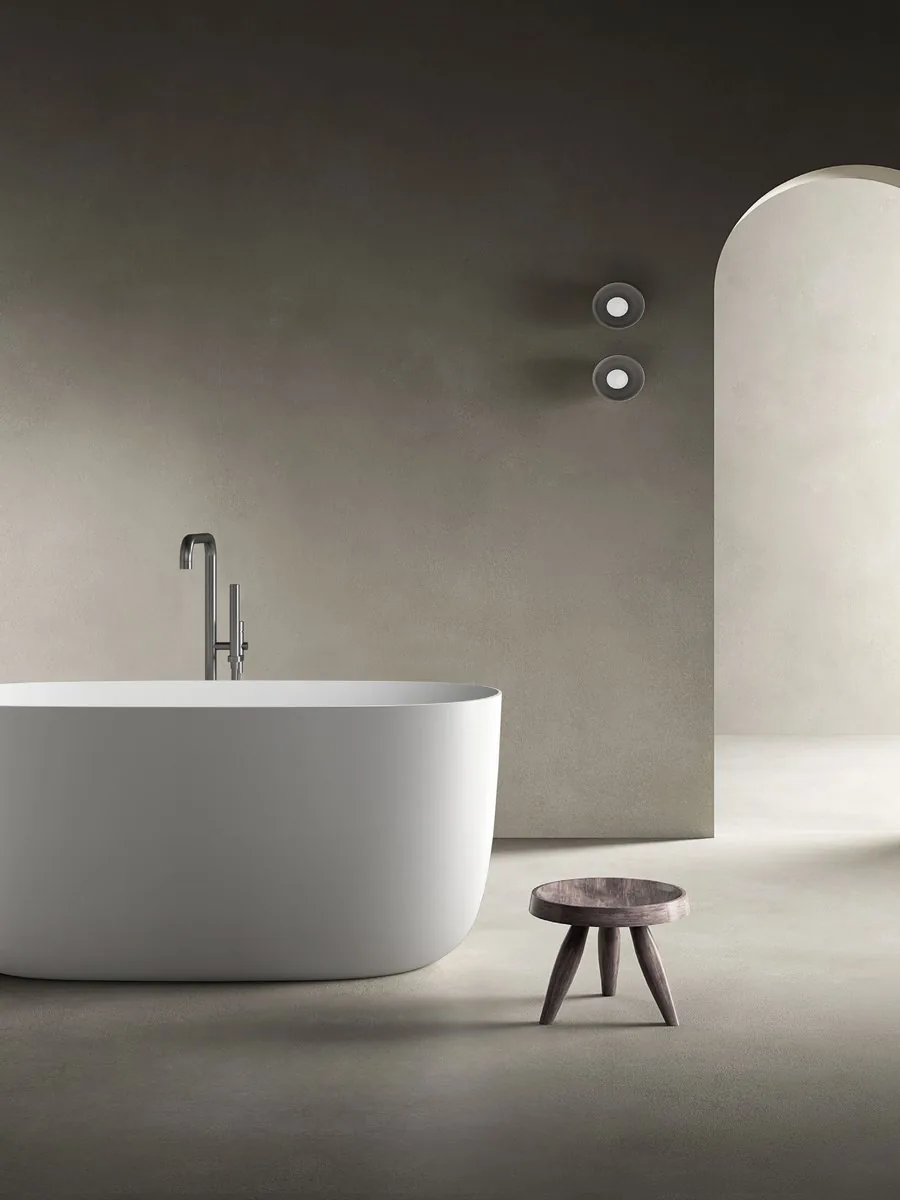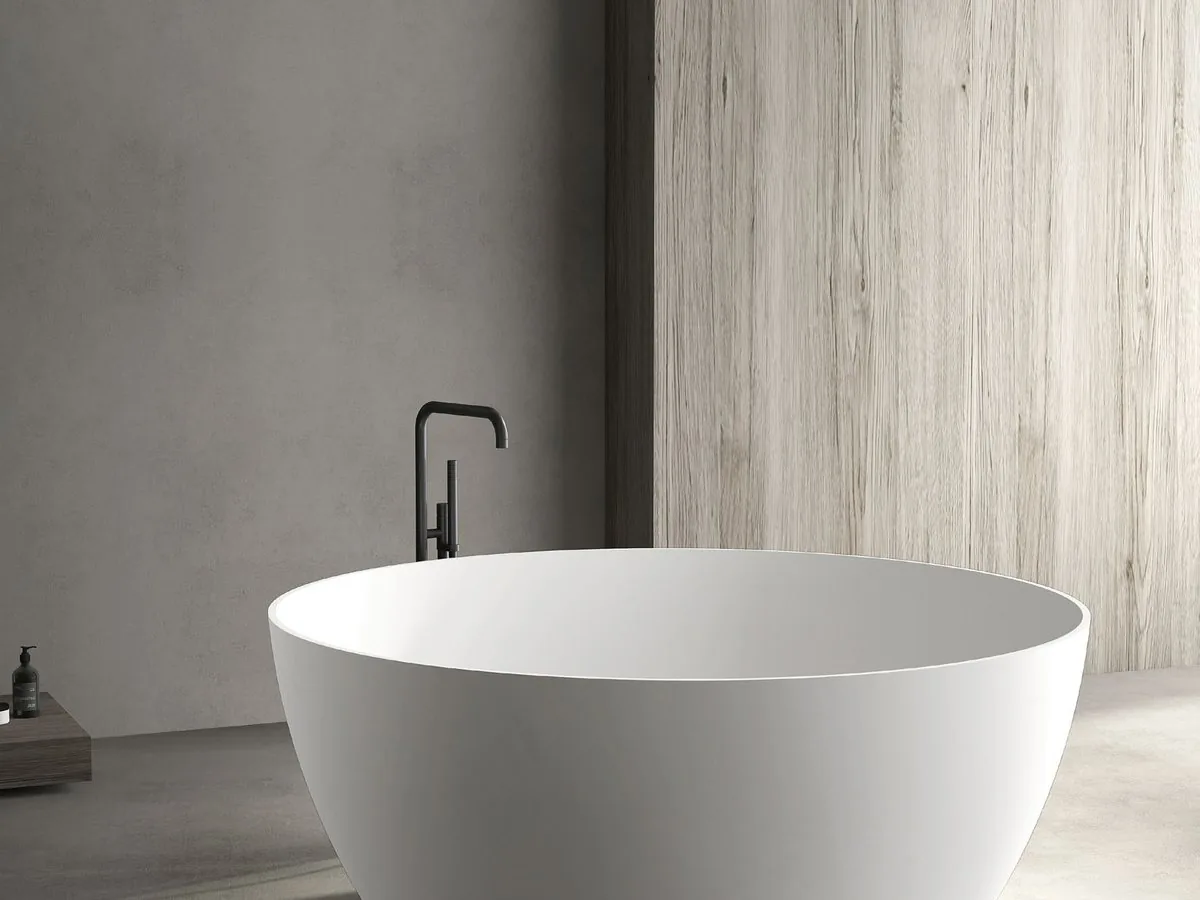


What Exactly Is a Solid Surface Bathtub?

A solid surface bathtub is made by mixing a resin with a fine mineral powder, pouring that blend into a mold, and letting it cure into a single solid piece. The result is a tub whose wall is the same material from the outer face all the way through to the inside. If you were to cut through the edge, it would look the same in the middle as it does on the surface.
This is the key difference from the more common acrylic bath. An acrylic tub starts as a thin plastic sheet that is heated and shaped, then stiffened with a layer of fiberglass or resin on the back. That leaves a hollow space behind the surface. A solid surface tub has no hollow space and no separate backing; it is solid, which is exactly what the name is telling you.
Because it is cast rather than stretched from a sheet, the walls can be made thick, the rim can be shaped into crisp squared or softly rounded edges, and the whole tub can be sculpted into forms that a thin sheet simply cannot hold. That is why so many of the sculptural, thick-walled designer baths you see are made this way.
In One Sentence
- Resin plus mineral powder, cast into one solid piece
- Solid all the way through, with no hollow backing
- Non-porous, so it does not soak up water
- Thick, shapeable walls and seamless edges
What Is It Made Of?

There are really only three ingredients, and knowing them makes everything else about the material easier to understand. The resin binds everything together and decides whether the finished tub is opaque or see-through. The mineral powder, often a natural stone-based filler, gives the tub its weight, its warm and solid feel, and its ability to hold heat. The pigment adds the color, mixed right into the blend so the color runs through the whole body rather than sitting on top.
That last point matters more than it sounds. Because the color is part of the material and not a coating, a solid surface tub does not have a thin painted or gel-coat surface that can chip off to reveal a different color underneath. What you see is what the tub is made of.
| Ingredient | What it does |
|---|---|
| Resin | Binds the mix into a solid body and sets whether it is opaque or translucent |
| Mineral powder | Gives weight, the warm solid feel, and good heat retention |
| Pigment | Carries color through the whole body, so repairs blend in |
Adjusting the balance of these three is how a maker moves the material between a warm opaque stone-like white and a clear, light-catching translucent color. Those are recipe choices, decided before the tub is cast.
How to Tell Solid Surface from Acrylic

This is the question most people actually have, because in a photo the two look identical. In person there are a few reliable tells, and none of them need any special tools.
- Weight: a solid surface tub is noticeably heavier. It is solid, so there is simply more material. An acrylic tub is light enough for one person to lift.
- The edge: look at the rim thickness. Solid surface rims are usually thick and feel dense; an acrylic rim is thin because it is a folded-over sheet.
- The tap test: tap the side. Solid surface gives a dull, solid sound. A hollow acrylic shell sounds lighter and more echoey, and may flex slightly under a push.
- Warmth and feel: both feel warmer than metal, but solid surface has a denser, more stone-like touch, while acrylic feels more like plastic.
- The surface: solid surface is often a soft matte; standard acrylic is usually a high gloss.
None of these make acrylic a bad product. Acrylic is light, affordable, and perfectly good for a lot of bathrooms. The tells simply help you know which material you are actually looking at, so the price makes sense.
Is a Solid Surface Bathtub Worth It?

Solid surface costs more than acrylic, so the honest answer is: it depends on what you value. It earns its price for buyers who want a long-lasting, repairable, design-led bath and plan to keep it for years. It is less obviously worth it if the main goal is the lowest price for a rental or a short-term fit-out. Here is the balanced view.
What You Get for the Extra Money
- A warm, solid feel and better heat retention for long soaks
- A repairable surface, so small damage does not mean replacement
- Color through the body, matte finishes, and translucent options
- Thick, sculptural shapes that look and feel premium
- A long service life, which suits hotels and forever homes
The Trade-offs to Weigh
- A higher purchase price than acrylic
- More weight, so delivery and installation need a little planning
- Best kept to gentle cleaning rather than harsh abrasives
For a hotel, a villa, or a main bathroom you intend to enjoy for a decade, the repairability and feel usually justify the cost. For a budget or temporary bathroom, acrylic may be the more sensible choice. Neither is wrong; they are aimed at different jobs.
Do Solid Surface Bathtubs Crack, Scratch, or Discolor?

This is the worry that stops a lot of people, so it is worth answering plainly. Solid surface is a durable material, but no bath is indestructible, and it helps to know how it behaves.
Scratches: everyday use can leave fine surface marks over time, as it can on most materials. The good news is that because the material is solid and colored throughout, light scratches and dull spots can usually be buffed out with a fine abrasive pad, restoring the finish. An acrylic or gel-coated surface gives less room for this: light marks may polish out, but heavy sanding can cut through the thin top layer.
Cracks: a quality solid surface tub is strong and does not crack under normal use. Cracks generally come from a heavy sharp impact or from being installed on an uneven, unsupported base. Setting it on a level, properly prepared floor avoids almost all of this.
Discoloring and yellowing: because the color is mixed through the body and the surface is non-porous, solid surface resists staining and does not yellow the way a cheap coating can. Wiping it down after use and avoiding harsh chemicals keeps a white tub looking white.
The Honest Summary
- Light scratches can be sanded out and the finish restored
- It does not crack under normal, well-supported use
- Non-porous, so it resists staining and yellowing
- A sharp heavy impact can still chip any bath, this one included
- A level, supported installation prevents most damage
- It is repairable rather than disposable
How to Clean and Care for a Solid Surface Bathtub

Caring for solid surface is genuinely easy, and easier than many people expect. Because the surface is non-porous, dirt sits on top rather than soaking in, so most days need nothing more than a rinse and a wipe.
- Day to day: rinse after use and wipe dry with a soft cloth to prevent water spots and soap film building up.
- Regular clean: use warm water with a mild liquid soap or a non-abrasive bathroom cleaner, and a soft cloth or sponge.
- Avoid harsh products: skip strong solvents, bleach-heavy cleaners, and abrasive scouring powders or pads, which can dull a matte finish over time.
- For a matte finish: a soft cloth is all you need; matte surfaces hide water marks well and do not need polishing.
- Refreshing the finish: if fine scratches or dull patches appear after years of use, a gentle rub with a fine abrasive pad in a circular motion can bring the surface back. Test a hidden area first, or ask your supplier for their recommended pad.
That repair step is the quiet advantage of solid surface: rather than living with wear or replacing the bath, you can restore it. Kept to gentle cleaning, a solid surface tub stays looking new for a very long time.
Colors, Matte Finishes, and Translucent Baths

This is where solid surface really separates itself from a plain white shell. Because the color is mixed into the material, it comes in a genuine palette rather than one glossy white, and the finish can be a soft matte instead of a shine.
The colors designers reach for most are warm off-whites and oat tones, muted stone grays, soft sage, and deep matte charcoal, usually in a matte finish that reads as calm and contemporary. These are the shades that turn up first in high-end bathroom schemes, which is a big part of why the material is popular with designers.
Then there is translucency, the material's showpiece. By using a light-transmitting resin, a tub can be made to glow softly when lit, in ambers, greens, blues, and other tones. A translucent bath is a genuine centerpiece; it photographs beautifully and is often the reason a bathroom gets remembered.
| Look | Where it suits |
|---|---|
| Matte warm white or oat | The most popular choice for calm, high-end bathrooms |
| Stone gray | Neutral schemes and stone-coordinated bathrooms |
| Matte charcoal or black | Bold, design-led statement bathrooms |
| Translucent color | A glowing centerpiece for feature bathrooms and suites |
The Main Types: Freestanding, Built-In, Compact, and Custom

Solid surface is a material, not a single shape, so it comes in several tub styles. Choosing between them is mostly about your room and how you like to bathe.
- Freestanding: the sculptural, standalone tub that sits away from the wall as a centerpiece. Explore Freestanding Solid Surface Bathtubs.
- Built-in: designed to sit inside a surround or deck, coordinating with tiling and stone. See Built-In Solid Surface Bathtubs.
- Compact soaking: a shorter tub with generous depth, made for small bathrooms and apartments where you want a deep soak without a long footprint. See Compact Soaking Bathtubs.
- Colored and translucent: the same material in a color or a glowing translucent form. See Colored & Translucent Bathtubs.
- Custom: made to a specific size or shape for a particular bathroom or project. See Custom Solid Surface Bathtubs.
Because every one of these is the same material underneath, a single bathroom or a whole hotel can use different shapes that still feel like one family, with matching color and finish throughout.