


Why Bathtub Packaging Matters

Two costs sit behind every bathtub shipment, and packaging drives them both.
Damage in transit. A bath is large, rigid, and has vulnerable edges and rims. A single knock during handling can chip a corner or scratch a surface, and a damaged tub usually cannot be sold. Replacing it means a new unit, new freight, and a delay that can hold up a whole bathroom or project. Packaging that fails once can wipe out the margin on several good units.
Freight charged by volume. Sea freight is priced largely on the space a shipment occupies, not just its weight. Bulky, inefficient packaging means fewer baths per container and a higher cost per unit landed. So packaging that is oversized does not just waste cardboard; it quietly raises the price the buyer pays to get the goods home.
Get packaging right and both problems shrink together: fewer claims, and more product in every container. That is why experienced buyers look almost as hard at how a bath is packed as at the bath itself.
What a Bathtub Goes Through in Transit

To see why packaging is designed the way it is, it helps to picture the journey a bath actually makes from factory to bathroom.
- Handling: the tub is lifted, carried, and set down many times by different people and machines, each a chance for a knock or drop.
- Stacking: in a container, cartons bear weight from above, so packaging must hold its shape under load.
- Road and sea movement: constant vibration and the occasional hard jolt work at anything loose inside the box.
- Humidity and temperature: a sea container can be hot and damp, so moisture and condensation have to be kept away from the surface and any fittings.
- The final lift: the last carry into the bathroom, often up stairs and around corners, is where a poorly protected tub is most exposed.
Good packaging is designed against this whole chain, not just the gentle parts. That is why it is tested against drops, stacking, and climate rather than assumed to work.
Anatomy of Good Bathtub Packaging
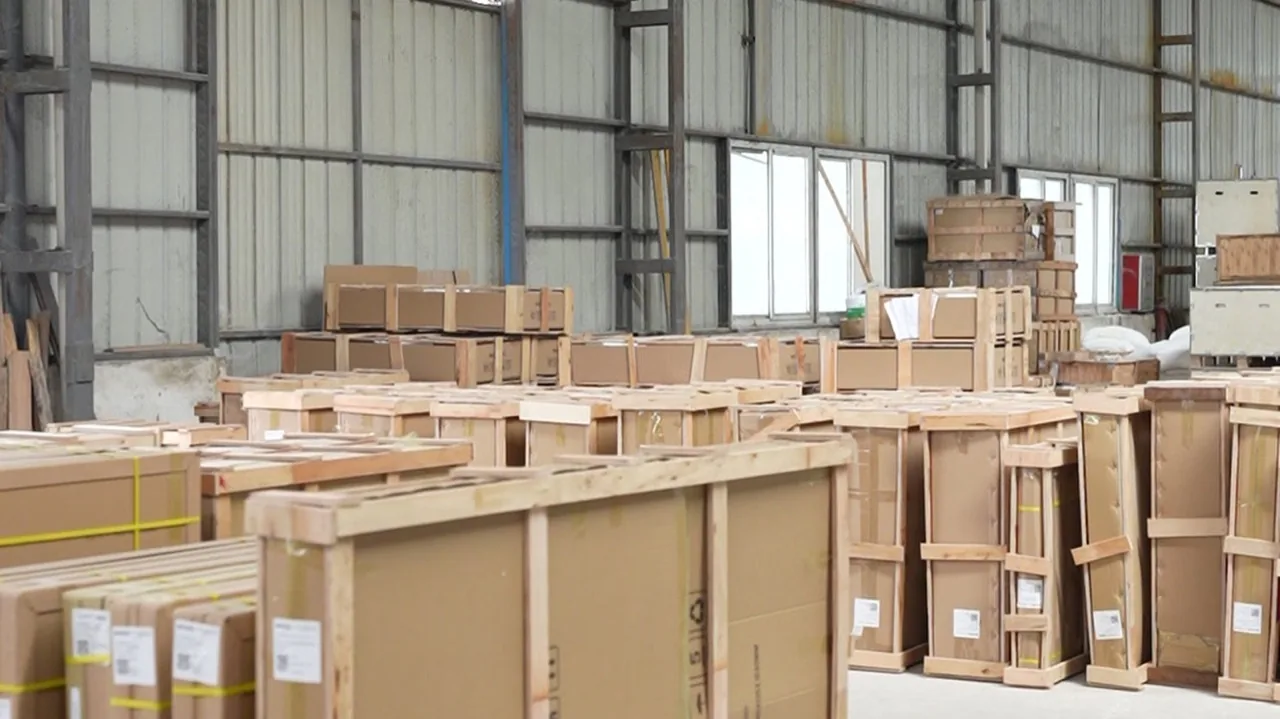
Solid protection is built up in layers, each doing a specific job. Here is what a well-packed bath typically includes.
| Layer | What it does |
|---|---|
| Surface film or wrap | Keeps the finish clean and guards against light scuffs |
| Foam around the body | Cushions the whole tub against knocks and vibration |
| Corner and edge protection | Reinforces the most vulnerable points, where chips start |
| Rigid outer (carton or crate) | Holds the shape and takes the stacking load in the container |
| Moisture barrier | Keeps humidity and condensation off the surface and fittings |
| Pallet or base (where used) | Lets the unit be moved by forklift and keeps it off the floor |
The exact mix depends on the tub and the route, but the principle is constant: cushion the whole body, reinforce the edges, hold the shape, and keep moisture out. Miss any one of these and the weakest link decides the outcome.
Protection vs Container Volume: The Balance

The hard part of packaging is that its two goals pull against each other. More material means more protection, but also more volume, and volume is what the buyer pays freight on. The skill is getting full protection in the least space.
We learned this directly. A dealer once told us our wood-crate packaging was eating his margin, so over about three months we put a redesign through drop tests, climate cabinets, and real shipping trials rather than guessing. The result kept the same protection but took roughly twenty percent less container volume, and his freight cost dropped with it. Same safety, more baths per container, lower landed cost.
The lesson is that packaging is worth engineering, not just wrapping. When a supplier can show that their packaging has been tested and refined for both protection and volume, it usually means fewer damage claims for you and a better cost per unit at the same time. It is one of the clearest signs that a factory thinks past the factory gate.
- More protection and less volume pull against each other
- Testing, not guessing, is how you get both
- Efficient packing means more baths per container and lower landed cost
Labeling and Documentation

Protection keeps a bath intact; labeling makes the shipment easy to handle when it lands. Clear marking and paperwork save time and prevent mistakes at the other end.
At a minimum, cartons should carry fragile and handling marks, the model, and a packing list that matches the shipment. For a hotel or a multi-room project, good suppliers go further and label each carton with its own detail: the project and room it belongs to, the specification, and packing photos. Then the installers can unpack each box straight into the right bathroom instead of opening everything to work out what goes where.
This kind of per-carton labeling turns a pile of identical boxes into an organized delivery. For a twenty-five-room project, it is the difference between a smooth install and a warehouse puzzle, and it is worth asking whether a supplier can provide it.
- Fragile and handling marks on every carton
- A packing list that matches the shipment exactly
- Per-carton room and spec labels for project orders
Checking a Shipment on Arrival

Even with the best packaging, it pays to check a shipment promptly when it arrives, so that any rare transit damage is caught and documented while it can still be acted on.
A simple routine works well. Open and inspect the goods soon after delivery rather than leaving cartons sealed for weeks. Look over the surfaces, rims, and corners, and photograph anything that is not right, along with the packaging it came in. If there is damage, raise it with the supplier quickly with those photos, because most fair suppliers work to a short open-test window for reporting transit damage and can only help while the evidence is fresh.
- Open and inspect soon after delivery, not weeks later
- Check surfaces, rims, and corners in good light
- Photograph any damage and the packaging, and report it promptly
What to Ask a Supplier About Packaging

Because packaging affects both risk and cost, it is worth a few direct questions before you place an order. The answers tell you a lot about how a factory operates.
- How is the tub protected? Ask about cushioning, corner protection, the outer, and moisture control.
- Has the packaging been tested? Drop, stacking, and climate testing show it is engineered, not assumed.
- How efficient is it by volume? How many units fit a container, and how that affects your freight.
- What labeling is provided? Packing lists, fragile marks, and per-carton room labels for projects.
- What happens if something arrives damaged? The open-test window and how claims are handled.
A supplier who answers these clearly, and can show photos or a specification, is one who has thought about your delivery, not just their production line.
Packaging as a Sign of a Serious Supplier

Packaging is easy to overlook when you are choosing a bath by its looks, but it is one of the truest signals of a supplier worth working with. Anyone can make a tub look good in a photo; getting it to your customer intact, in efficient boxes, with paperwork that makes the install easy, takes real thought and testing.
When you assess a bathtub supplier, treat packaging as part of the product. Ask how it is protected, whether it has been tested, how it packs by volume, and how damage is handled. A factory that has clearly engineered its packaging tends to be a factory that engineers everything else well too.
Get that right, and the bath you chose for its quality actually reaches your customer as the bath you chose, which, in the end, is the whole point.


