


The Main Bathtub Materials at a Glance

Most bathtubs on the market are made from one of five materials. Here is the quick version before we compare them properly, so the names are clear.
| Material | What it is | Best known for |
|---|---|---|
| Solid surface | A solid cast blend of resin and mineral powder | Warm feel, repairable, matte colors and translucency |
| Acrylic | A shaped plastic sheet with a fiberglass backing | Light, affordable, and the most common |
| Cast iron | Iron coated in baked enamel | Extremely durable and heavy, classic look |
| Steel (enameled) | A steel core coated in enamel | Tough enamel at a mid-range price |
| Cultured marble | Crushed stone in resin with a gel-coat surface | A stone look at a lower price than solid surface |
A quick but important note: cultured marble is often confused with solid surface, but they are not the same. Cultured marble has a thin gel-coat surface over a different core, while solid surface is one material all the way through. That difference shows up years later, which we come back to below.
Solid Surface vs Acrylic: The Main Comparison
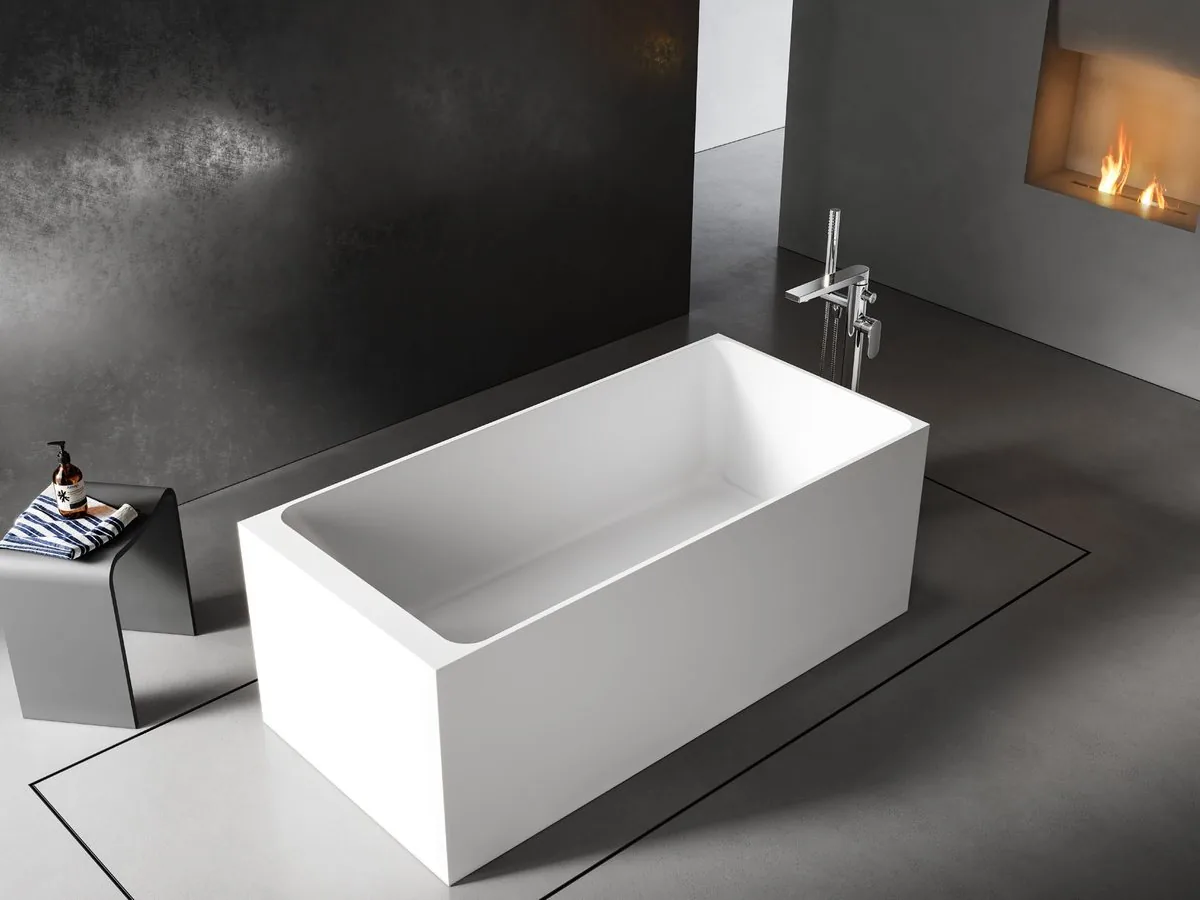
This is the comparison most people are really asking about, because these two dominate the freestanding market and can look the same in a photo. In person and over time they are quite different.
How they are made: acrylic starts as a plastic sheet that is heated, shaped, and stiffened with a fiberglass or resin backing, leaving a hollow space behind the surface. Solid surface is cast from resin and mineral powder into one solid piece with no hollow and no separate backing.
Feel and warmth: both feel warmer than metal. Solid surface has a denser, more stone-like touch and takes little heat from the water at the start; acrylic feels lighter and more like plastic.
Durability and repair: acrylic can scratch and, being hollow, may flex slightly; light marks can often be polished out, but deep damage is hard to fix invisibly. Solid surface is solid and colored throughout, so light scratches can be sanded out and the finish restored.
Looks and color: acrylic is usually glossy white. Solid surface comes in matte finishes, a palette of colors running through the body, and even glowing translucent forms.
Weight and price: acrylic is light and cheaper, easy to carry and install. Solid surface is heavier and costs more, which buys the feel, the repairability, and the design options.
| Solid surface | Acrylic | |
|---|---|---|
| Structure | Solid cast piece | Hollow shaped shell |
| Feel | Warm, dense, stone-like | Warm, light, plastic-like |
| Repairable | Yes, sanded and restored | Limited |
| Colors and finish | Matte, color-through, translucent | Mostly gloss white |
| Weight | Heavier | Light |
| Price | Premium | Budget-friendly |
Neither is simply better. Acrylic is the right answer when budget and light weight lead. Solid surface is the right answer when you want a bath that feels premium, lasts, and can be repaired rather than replaced.
Solid Surface vs Cast Iron

Cast iron is the traditional heavyweight, an iron shell coated in baked enamel. It is exceptionally durable and has a classic look, and a good one can last for generations. The trade-offs are real, though.
Cast iron is extremely heavy, often needing a reinforced floor and several people to move, which limits where it can go and raises installation cost. The enamel surface feels cold to the touch at first and takes some heat from the water as it warms, although once warm, cast iron is known for retaining heat well. If the enamel chips, the iron beneath can rust, and repairs are difficult. Shapes are also more limited than what casting a resin material allows.
Solid surface gives you much of cast iron's solid, quality feel with a warmer first touch, far more shape and color freedom, and a surface that can be sanded to repair. Cast iron still wins on outright toughness and its heritage look, and it holds heat well once warm; solid surface wins on warmth to the touch, versatility, and repairability, usually at a more manageable weight.
- Cast iron: most durable, classic, but cold at first, very heavy, and hard to repair
- Solid surface: warm, versatile, repairable, and easier to handle
- Both sit above acrylic in feel and price
What About Steel and Cultured Marble?

Two more materials round out the picture, and it helps to know where they sit.
Enameled steel is a steel core with a baked enamel surface, like a lighter, cheaper cousin of cast iron. The enamel is hard and easy to clean, and it costs less than iron or solid surface. But steel is still cold to the touch, can be noisy as water runs in, and the enamel can chip if something heavy is dropped. It is a practical mid-range choice, common in built-in baths.
Cultured marble (also called cast marble) is crushed stone mixed with polyester resin, finished with a thin gel-coat surface. It gives a stone look for less than solid surface. The catch is that gel-coat: it is only a surface layer, so over years it can crack, craze, or yellow, and once it wears through, the different-colored core shows. This is the key difference from solid surface, where the color and material run all the way through and the surface can be renewed.
In short, steel is a sensible budget-to-mid option, and cultured marble looks like solid surface for less but does not age the same way. If long-term looks matter, that gel-coat distinction is worth understanding before you choose.
Choose by What Matters Most to You

Rather than crown one winner, it is more useful to match the material to what you personally care about most. Find your priority and the strongest choice follows.
| If you care most about... | Strongest choice | Why |
|---|---|---|
| Lowest price | Acrylic | Cheapest to buy and to install |
| A warm, premium feel | Solid surface | Dense and warm to the touch |
| Repairability | Solid surface | Scratches can be sanded out |
| Outright toughness | Cast iron | Extremely durable enamel over iron |
| Color and design | Solid surface | Matte colors and translucent forms |
| Light weight | Acrylic | Easy to carry and install anywhere |
Notice how often solid surface appears when the priority is feel, repair, or design, and how acrylic wins whenever price and weight lead. That is the honest shape of the choice.
Which Material Suits Which Bathroom

The room and the job change the answer too. The same material can be the obvious pick in one setting and the wrong call in another.
- Main or master bathroom: a bath you will use and enjoy for years rewards the warmth and repairability of solid surface.
- Budget or rental bathroom: acrylic keeps the cost down where the bath does not need to be a centerpiece.
- Hotels and design projects: solid surface suits repeatable quality, a long service life, and coordinated colors and shapes.
- Small bathroom or apartment: a compact solid surface or acrylic soaking tub gives depth without a long footprint.
- Heritage or classic bathroom: cast iron fits the traditional look, if the floor can take the weight.
For a project buyer choosing across many rooms, one material family, like solid surface, can cover freestanding, built-in, compact, and custom shapes while keeping a consistent look throughout.
So, Which Should You Choose?

If you want the short, honest recommendation: choose acrylic when price and weight are the priority and the bath just needs to do its job well. Choose solid surface when you want a bath that feels premium, feels warm to the touch, comes in the color or translucent finish you love, and can be repaired rather than replaced over a long life.
Cast iron is for those who value classic toughness above all and can handle the weight and cost. Steel is a sensible budget-to-mid step up from acrylic. Cultured marble looks like solid surface for less, but the gel-coat surface will not age the same way, so weigh that if you plan to keep the bath for years.
For most people weighing solid surface against acrylic, it comes down to a simple question: is this a bath you want to last and feel special for the long term, or a practical, affordable bath for now? Answer that, and the material chooses itself.


