Acrylic and fiberglass bathtubs are built differently, and the name on a quotation may not tell you how a tub’s shell is made. This guide explains how each shell is typically built, as Kohler describes it, and what to ask the maker. It does not rank how long either material lasts.
Published • Last updated
The short answer
Quick Reference
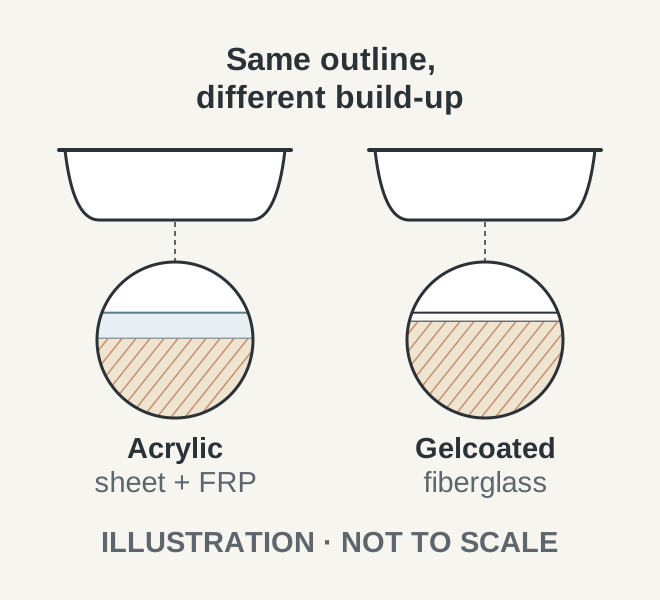
Kohler: acrylic tubs are heated sheets formed in a vacuum mold and backed with FRP.
Kohler: its own gelcoat tubs have gelcoat sprayed onto a mold, then strengthened with a fiberglass-resin mix.
Ask for the finished surface-layer specification of the model.
Kohler describes both as relatively inexpensive next to steel or cast iron.
Install and clean the tub to the maker’s instructions for that model.
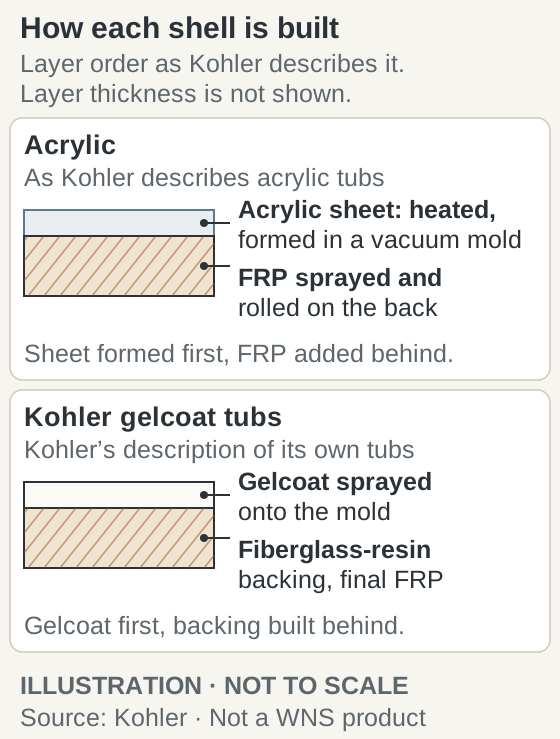
Layer order as Kohler describes it; the gelcoat build-up is Kohler’s description of its own tubs. Not to scale.
Start here
Two Constructions to Tell Apart
Kohler describes fiberglass tubs in general as glass fiber combined with a polyester resin mix, and describes its own gelcoat tubs as gelcoat sprayed onto a mold and then strengthened with a fiberglass-resin mix. Ask the maker what the visible surface layer of the specific model is and what thickness it specifies.
Kohler describes acrylic tubs as an acrylic sheet that is heated, formed in a vacuum mold and then backed with sprayed and rolled FRP. Kohler also notes that forming can leave weak, thin spots, so ask for the finished shell specification of the model, not just the name of the sheet.
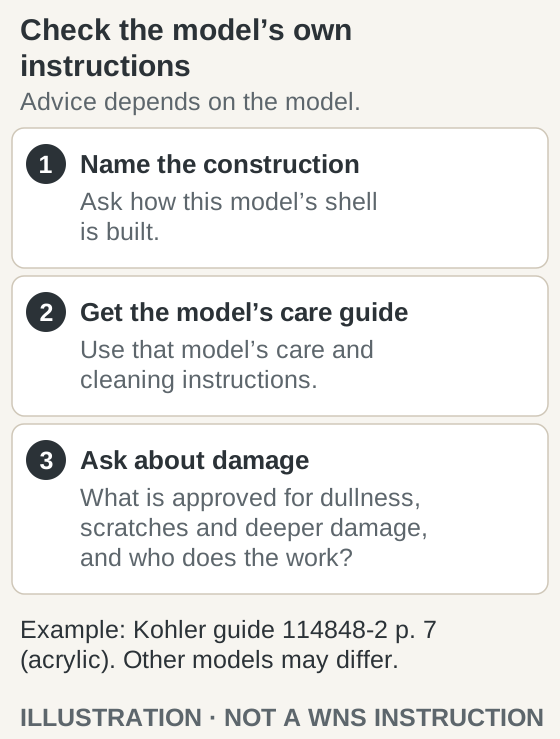
For acrylic baths, Kohler’s and Sterling’s care instructions say a dull surface may be treated with an automotive rubbing or polishing compound. For a fiberglass or gelcoat tub, follow the maker’s care and repair instructions for that model; this guide has no source that compares repair outcomes between the two.
Kohler’s own gelcoat tubs: gelcoat sprayed onto a mold, then strengthened with a fiberglass-resin mix
Acrylic, as Kohler describes it: formed sheet, FRP sprayed behind
Ask for the model’s finished surface-layer specification
Ask for the model’s care and installation instructions
How Each Is Built
Illustration, not to scale; layer order only, thickness not shown. Source: Kohler. The gelcoat build-up is Kohler’s description of its own tubs, not of all fiberglass tubs. Not a WNS product or process. Open desktop diagram · Open mobile diagram
Follow the instructions for the selected model. As a historical example, Kohler’s 114848-2-BA(A) manual (1998, pages 4–5) lists several bath-setting options, including gypsum cement and construction adhesive; it is not a universal installation specification.
Ask how the maker reinforces and checks the shell of the model you are offered.
On narrow screens, scroll the table sideways to compare both columns.
Comparison point
Fiberglass / gelcoat
Acrylic
Visible surface
Kohler’s own gelcoat tubs: sprayed gelcoat
Formed acrylic sheet (Kohler)
Color over time
Kohler: “can lose color over time”
No comparative statement in our sources
Dull surfaces
Follow the maker’s care guide for the model
Kohler and Sterling care guides allow a rubbing or polishing compound
Cost
Kohler: less expensive to purchase and to repair
Compare quotations for the specific models
How They Age in Service
Illustration. No comparison between materials is made; the example is limited to Kohler’s acrylic bath guide 114848-2-BA(A), 1998, p. 7. Open desktop diagram · Open mobile diagram
Kohler notes that fiberglass can lose color over time. How a surface wears depends on the product, its cleaning and its use; follow the maker’s care guide for the model.
Acrylic surfaces can also dull. Kohler’s and Sterling’s care guides for their acrylic baths describe using a rubbing or polishing compound on dull areas and warn against abrasive cleansers or abrasive materials.
Put the maker’s support and bedding requirement for the model into the fitting instructions rather than assuming it.
Acrylic: Kohler and Sterling describe treating dull areas with a rubbing or polishing compound
Both: install to the maker’s support and bedding instructions
Beyond price, the choice depends on the specific model.
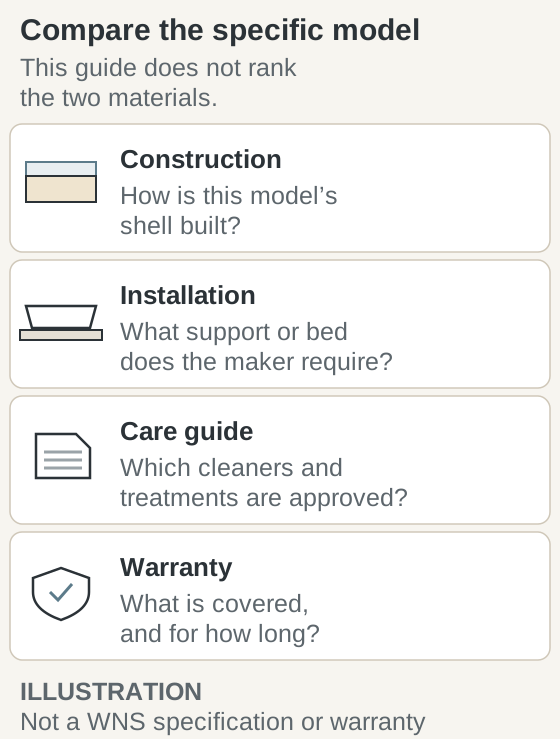
Kohler states that fiberglass is less expensive to purchase and to repair. Compare the specific model’s construction, installation requirements, care guide and warranty; this guide does not rank the two.
Price: compare quotations for the specific models
Installation: the maker’s support and bedding requirement
Care: the maker’s approved cleaners and treatments
Verify what you are buying: ask how the shell is built
One buying note that applies to both: do not rely on the product name. Ask which construction the shell uses, the finished surface-layer specification, and the installation and care instructions for that model. A supplier who can answer is telling you something a product page cannot.
Common questions
Acrylic and Fiberglass Questions
What is the difference between acrylic and fiberglass bathtubs?
Kohler describes acrylic tubs as a heated acrylic sheet formed in a vacuum mold and backed with FRP, and its own gelcoat tubs as gelcoat sprayed onto a mold and then strengthened with a fiberglass-resin mix. For any tub, ask the maker how the specific model is built.
Which lasts longer, acrylic or fiberglass?
This guide can’t answer that from the material name. Compare the specific model’s construction, care instructions and warranty.
Do acrylic bathtubs hold heat well?
This guide has no source that compares heat retention. Ask the maker for any information it publishes for the specific model.
Can a scratched acrylic bath be repaired?
Kohler’s and Sterling’s care guides for their acrylic baths say a dull or lightly scratched surface may be treated with a rubbing or polishing compound. For deeper damage, ask the maker what it approves and who should do the work. Kohler also notes that reglazing acrylic is normally a temporary fix.
Why can a fiberglass tub lose color?
Kohler notes that fiberglass can lose color over time. Ask the maker which cleaners and care steps it approves for the model.
How can I tell which one I am being offered?
Ask the maker directly how the shell is built, the finished surface-layer specification, and the care and installation instructions for that model. The product name alone may not tell you.
In short
How Each Shell Is Built
Kohler describes acrylic tubs as formed sheets backed with FRP, and its own gelcoat tubs as sprayed gelcoat strengthened with a fiberglass-resin mix. How a tub performs depends on the specific model, its installation and its care.
Kohler describes both as relatively inexpensive next to steel or cast iron. This guide does not rank them; compare the specific models.
Acrylic: formed sheet with FRP behind (Kohler)
Kohler’s gelcoat tubs: sprayed gelcoat strengthened with a fiberglass-resin mix
Kohler: fiberglass can lose color over time
Install and clean to the maker’s instructions
Ask for construction and surface-layer specification, not the label
Kohler and Sterling describe their own products and processes. They are cited as examples, not as the specification of any WNS product. Obtain current instructions for the exact model before installation or repair.
Confirm the project detail
Talk to WNS Global
Tell us the project, the market and the models you are comparing. Include the shell specification and any installation or care questions in your request.