

Why There Are So Many Names

The confusion is not an accident, and it is not really dishonesty either. Several forces push the same material toward different labels.
- Not reserved terms: unlike a stainless steel grade, none of these words is tied to one recipe in trade use. ISO 19712-1 does classify "decorative solid surfacing materials" as a category, but a seller’s label and a standard’s terminology are not the same thing. Conformity to a standard is shown by the supplier’s own documentation for that model, and should not be assumed from the word used in a listing.
- Regional habit: "solid surface" is the common term in North America, partly because a famous countertop brand made it familiar. "Stone resin" and "cast stone" appear more often in UK and European listings.
- Marketing preference: a seller who wants a bath to feel natural will lean on the word "stone." One who wants it to feel engineered and modern will say "solid surface" or "composite."
- Different emphasis in the same recipe: some names highlight the mineral filler (mineral cast, stone resin), others highlight the finished result (solid surface, engineered stone).
So the vocabulary tells you more about who wrote the listing than about what is in the bath. That is exactly why you need a better test than the name, which we come to below.
Solid Surface: The Name That Describes the Structure

Of the seven, "solid surface" is the one that points at construction rather than at ingredients, which is why it is the more useful starting point.
A solid surface bathtub is cast from a blend of mineral powder and resin into a single piece; how that casting is actually done explains why wall thickness varies between suppliers. The published summary of ISO 19712-1 describes decorative solid surfacing materials as characterized by homogeneous appearance, renewable surfaces and inconspicuous seams. Whether a particular product has a backing layer, a surface coating or color carried through the body is a property of that model, not of the word — confirm it from the supplier’s documentation. The category is explored further in what a solid surface bathtub actually is. Where a maker documents a refinishing procedure for a model, that procedure and its limits are the thing to read — thermal behavior and repairability vary by product and are not implied by the name.
When you see "solid surface," you are being told about construction rather than about ingredients. That makes it a more useful question than a name that only evokes stone — but it is still a question to put to the supplier, not an answer the word supplies.
Source. The published summary of ISO 19712-1:2008, Plastics — Decorative solid surfacing materials — Part 1: Classification and specifications describes decorative solid surfacing materials as characterized by homogeneous appearance, renewable surfaces and inconspicuous seams, and lists solid surface shapes as including tubs and spas. "Renewable surface" is that summary's own wording for the property described above.
ISO 19712-1 is a paid standard, and the sentence above is taken from its public summary rather than the standard text — so no classification tier, test method or limit value from inside it is quoted here. The same applies to ANSI/IAPMO Z124.1.2, an earlier US performance standard for plastic bathtub and shower units that ANSI now lists as historical. Neither is cited as a claim about any particular WNS product. Checked 2026-09-10.
- Points at construction; backing or coating depends on the model, not the word
- Through-body color and refinishing are per-model; check the maker's documents
- Common in North American listings and specifications
Stone Resin, Cast Stone, Artificial Stone, Mineral Cast
This cluster of names looks at the material from the ingredients side. Each one emphasizes that the bath contains mineral content bound in resin. They are used loosely and often overlap, but overlapping names do not make two products equivalent.
Stone resin is the plainest description: stone powder plus resin. Cast stone emphasizes that the mixture is poured into a mold rather than carved. Artificial stone and engineered stone distinguish it from quarried stone. Mineral cast is common in European technical writing and means the same casting process. Composite stone simply notes that it combines two materials.
None of these names states the mix, the wall thickness or how the surface is finished — and those belong to a specific product, not to a word. A name cannot stand in for a specification.
The practical takeaway: read the names as pointing to a family, then ask the maker for what a name cannot carry — the construction through the section, a material data sheet or composition statement, and the written care and repair instructions for that model. Those three, on paper, tell you more than any of the seven words.
The One That Is Genuinely Different: Cultured Marble

Here is the distinction that actually costs people money. Cultured marble (also sold as cast marble) sits in the same aisle, is also made of crushed stone in resin, and can look almost identical in a photograph. But it is built differently.
A cultured marble piece is finished with a thin gel coat: a separate glossy surface layer sprayed over a different-looking core. Everything you see and touch is that coating, not the body of the material. Over years, a gel coat can craze, crack, or yellow, and once it wears through, the mismatched core shows. Sanding a gel coat removes the layer that carries the appearance rather than working into the body of the material, so it is not the same repair as refinishing a solid-through surface. What any specific product will tolerate should be confirmed with its maker.
This is why the useful dividing line is not "stone or not stone," but solid-through or coated. A solid surface bath and a cultured marble bath can share the same mineral-and-resin description and still age completely differently. If a listing is vague about which one it is, that vagueness is itself informative.
Source. The industry's own trade body keeps these as separate names. The International Cast Polymer Association describes its membership as manufacturers of "cultured marble, cultured granite, cultured tile and solid surface" — four listed categories rather than one interchangeable term. That listing is evidence about vocabulary only: it shows the trade uses these as distinct labels, and says nothing on its own about the formulation, performance or applicable standard behind any particular product. A supplier answering "it is cast polymer" has named the family, not which of these you are being quoted.
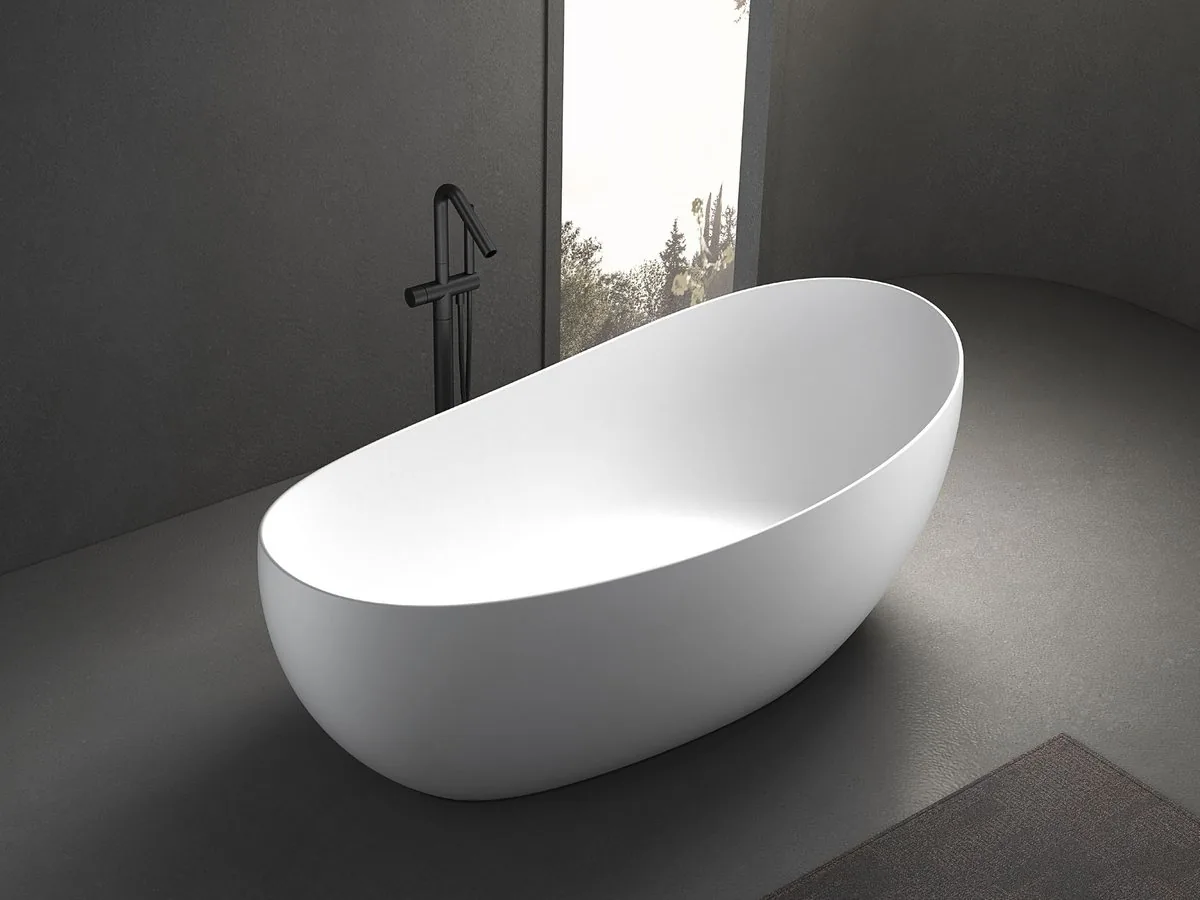
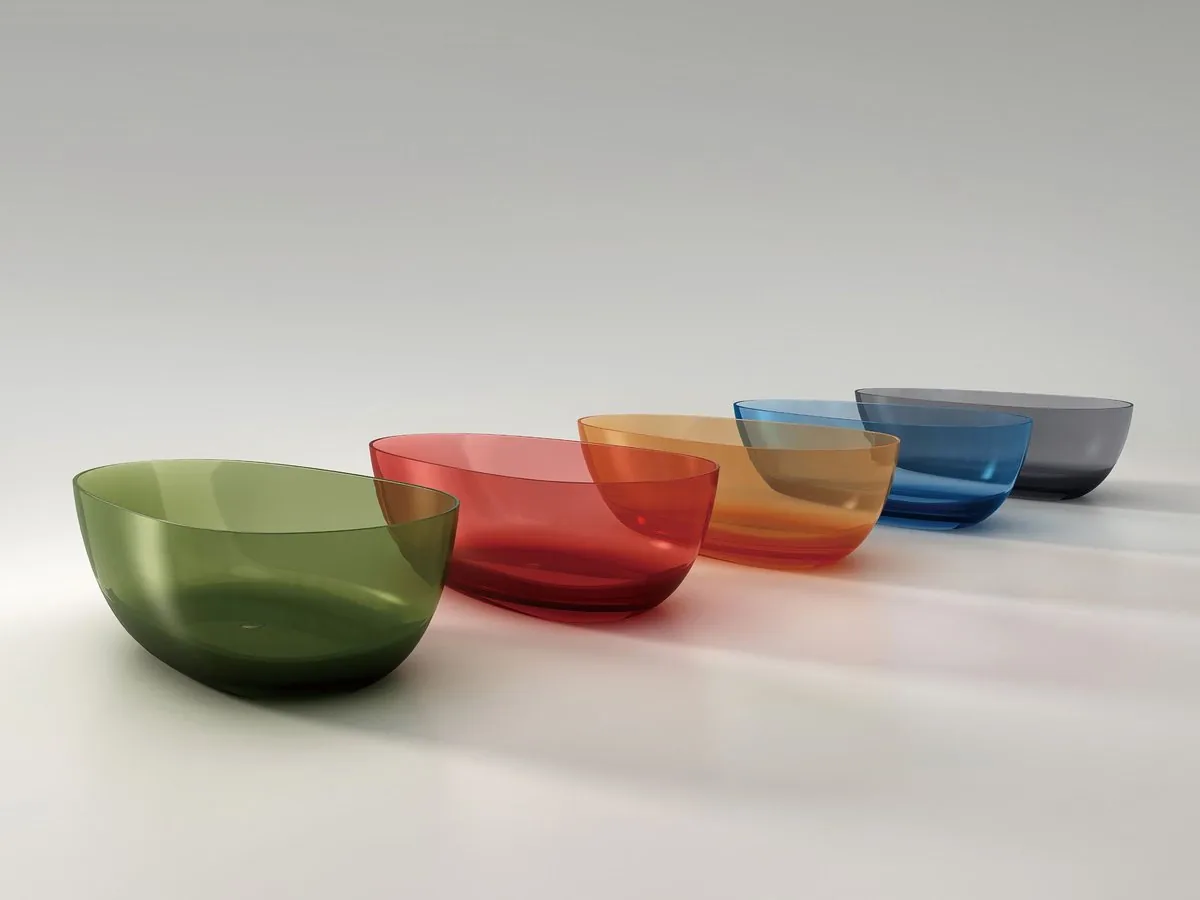
About the photographs on this page. A photograph shows appearance only. It cannot establish what a bath is made of or how it is built — a solid-through piece and a gel-coated one can be indistinguishable in an image, which is the whole difficulty this article is about. Do not read any picture here as an example of either construction. On a real product the two are told apart at a cut or drilled edge, or by asking the supplier directly and getting it in writing.
For our own part: the bathware line WNS produces at its Foshan base is solid surface, alongside solid wood vanities and shower enclosures. That is the same split stated on our what we make and what is partner-supplied page. What any individual product in a photograph is made of still has to be confirmed per order, ours included.
- Cultured marble = a gel-coat surface over a different core
- The coating is a surface layer, so refinishing it differs from sanding a solid-through surface
- Same ingredient story, very different long-term behavior
All the Names, Mapped

Here is the whole vocabulary in one place, with what each term emphasizes and whether it belongs to the solid-through family.
| Term | What it emphasizes | Construction to verify |
|---|---|---|
| Solid surface | The construction, not the ingredients | Ask whether the body is uniform through the section, and for the care and repair instructions |
| Stone resin | The ingredients: stone powder in resin | Ask for a composition statement and whether any surface coating is applied |
| Cast stone | The process: poured into a mold | Casting says nothing about the surface — ask whether the piece is coated or uniform through |
| Artificial stone | Not quarried, made by people | Ask what the binder and filler are, and whether the color runs through |
| Engineered stone | Designed rather than natural | Ask for the data sheet; the word is used for several different materials |
| Mineral cast | Mineral filler, cast process (EU usage) | Ask for the composition statement and the surface finish specification |
| Composite stone | Two materials combined | Ask which two, in what proportion, and whether either forms a separate surface layer |
| Cultured / cast marble | A marble look at lower cost | Normally supplied with a gel-coat surface layer — confirm the coat and ask how it is maintained and repaired |
Read down the last column and the pattern is that every row ends in the same place: something to confirm about the product, not something the name has already settled. Use the vocabulary to understand a listing, then get the construction, the composition and the care instructions in writing before the name matters.
A Useful First Question

Because a label alone will not settle a comparison, start with construction instead of the name. This is a first question, not a complete specification.
"Is the color solid all the way through, or is there a surface coating?"
A supplier who knows their own product will answer this plainly and can point to the care and repair instructions that go with it. Hesitation, or an answer about "premium finish" that never addresses the coating, tells you what you need to know. A few follow-ups sharpen the picture further.
- Can light scratches be sanded and blended, and is there a written repair procedure? Ask for the document rather than the assurance.
- What is the wall thickness, and is it stated on the drawing? A figure on an approval drawing is checkable; an adjective is not.
- Is the color carried through the body, or applied to the surface? This is the same structural question from another angle.
- What is the surface finish, and how is it to be cleaned? The care instructions often reveal the construction more plainly than the sales description.
None of these requires you to know chemistry. They move the conversation from marketing vocabulary to documents you can keep on file.
Why the Label Matters for Buyers and Importers

For a homeowner, getting this wrong means a bath that looks tired sooner than expected. For anyone buying to resell or to fit out a project, the stakes are higher and more specific.
If your listings say "stone resin" and your supplier's documents say "solid surface," a customer may reasonably ask whether they are the same thing, and you need a clear answer. If your market's buyers search one term and your product pages use only another, you may miss relevant queries. If two suppliers quote similar-looking baths at different prices, compare the specifications, what each quotation includes and the commercial terms — a price gap does not by itself indicate a difference in material.
Describe only the construction and care properties confirmed for that model in its technical documents. If through-body color or a refinishing procedure is documented, state it with its limits; otherwise request confirmation before using the claim in a listing.
So What Should You Look For?

Read solid surface, stone resin, cast stone, artificial stone, engineered stone, mineral cast and composite stone as overlapping trade vocabulary, and do not pay a premium for one word over another. Treat cultured or cast marble separately, because its gel-coat surface behaves differently over time.
Then judge the individual bath on what you can actually verify: is it solid through, how thick and heavy is the cast, what finish does it have, and will the supplier discuss the construction openly? Those answers tell you more about how a bath will wear than a product photograph can.
Standard terminology and seller labels can differ. Where conformity to a standard matters for your project, ask for the supplier’s documentation for that specific model rather than reading it from the name.