


Standards explained

WaterSense Certification Explained for Commercial Buyers

WaterSense comes up often in commercial and hospitality sourcing conversations about water efficiency, and it's frequently treated as a general "eco" label rather than what it actually is: a specific EPA program with defined product categories and certified flow-rate thresholds. Knowing exactly what it covers, and what it doesn't, is what separates a real specification requirement from an assumption.

Factory quality documentation reviewed alongside a product sample

The short answer

Quick Reference

Point 01
WaterSense is a voluntary U.S. EPA labeling program, not a mandatory code requirement.
Point 02
It covers specific plumbing categories — bathroom faucets, showerheads, and toilets and urinals among them — each with its own certified maximum flow rate.
Point 03
Labeled products pass independent third-party testing for performance, not just a flow-rate number.
Point 04
It does not cover bathroom vanities, shower enclosures or freestanding bathtubs, since those are not flow-rate fixtures.
Point 05
Confirm WaterSense status per exact SKU with the supplier of the specific faucet, showerhead or toilet involved — not from a general marketing claim.
Production floor documentation reviewed during a factory evaluation

Start here

A Water-Efficiency Label, Not a Code Requirement

WaterSense is a voluntary labeling program run by the U.S. Environmental Protection Agency, similar in structure to ENERGY STAR but focused on water use rather than energy. A labeled product has to use meaningfully less water than the current federal baseline while still performing as well as, or better than, a conventional product in the same category. The program is organized by fixture category, with its own specification document and flow-rate ceiling for each one — there is no single "WaterSense compliant" threshold that applies across every kind of product.

  • Administered by the U.S. EPA as a voluntary program, not a building code
  • Organized by fixture category, each with its own specification and flow-rate ceiling
  • A labeled product must perform as well as, or better than, a conventional one — not just use less water

What It Certifies

Certification documentation reviewed against a product specification

WaterSense-labeled bathroom faucets are certified to a maximum flow rate of 1.5 gallons per minute (gpm), against a conventional flow rate of 2.2 gpm — roughly a 30 percent reduction. WaterSense-labeled showerheads are certified to a maximum of 2.0 gpm, against a standard showerhead's 2.5 gpm, a 20 percent reduction. WaterSense-labeled tank-type toilets are certified to a maximum of 1.28 gallons per flush (gpf), against the federal baseline of 1.6 gpf set by the Energy Policy Act of 1992 — also a 20 percent reduction — with a minimum of 1.0 gpf built into the specification to keep drainline waste transport adequate. Flushometer-valve toilets, the type common in commercial restrooms, are held to the same 1.28 gpf ceiling.

  • Bathroom faucets: 1.5 gpm maximum (vs. 2.2 gpm conventional)
  • Showerheads: 2.0 gpm maximum (vs. 2.5 gpm conventional)
  • Tank-type and flushometer-valve toilets: 1.28 gpf maximum (vs. 1.6 gpf federal baseline), 1.0 gpf minimum
  • Figures are set by EPA's own published WaterSense specifications for each category

How Certification Works

Testing documentation for a certified product model

A product earns the WaterSense label through independent, third-party certification rather than a manufacturer's own declaration — a structure similar in principle to how cUPC listing works for plumbing code compliance, though the two programs test for entirely different things. Certifying bodies test the specific model against the relevant EPA specification, which covers more than the flow-rate number alone: for toilets, for example, testing includes mixed-media flushability, bowl-surface cleaning and drainline waste transport, so a lower-flow product still has to prove it performs the job adequately at that reduced flow.

Because certification attaches to the specific tested model, the same caution that applies to any listing mark applies here: one certified product from a supplier does not mean every product in that supplier's range carries the same label.

  • Certification is granted by independent third-party testing bodies, not self-declared
  • Testing covers performance — cleaning, flow adequacy, waste transport — not only the flow-rate figure
  • Certification attaches to the specific tested model, not a supplier's full catalog

What It Doesn't Cover
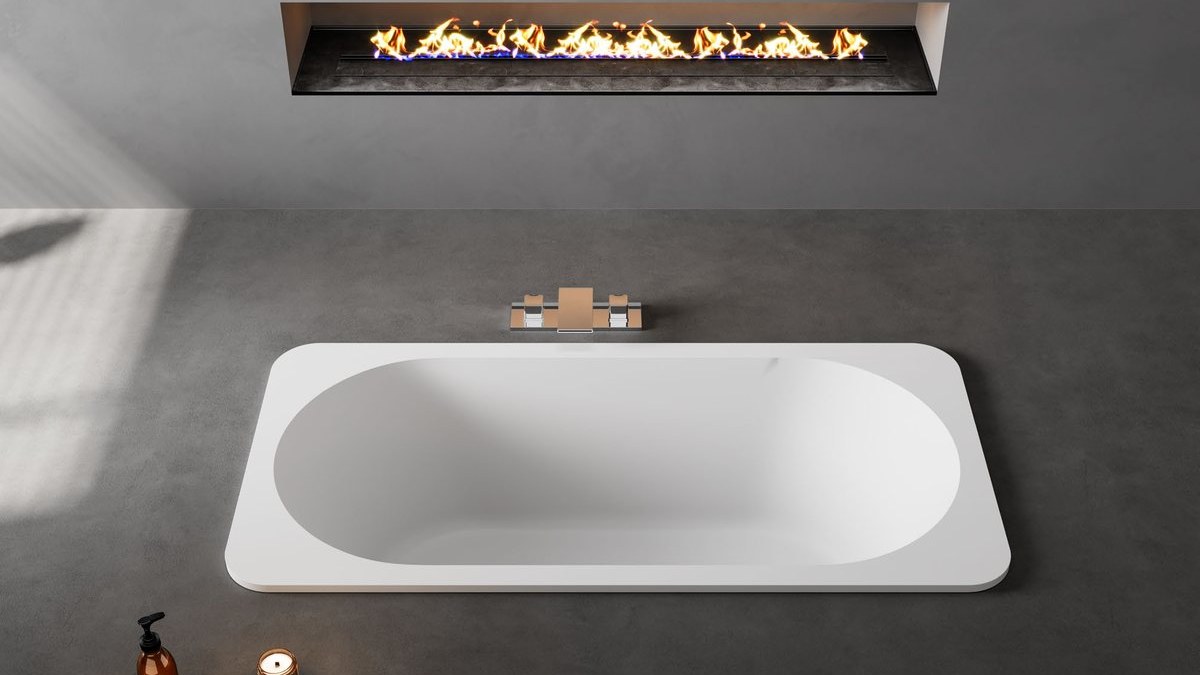
Bathtub specification reviewed against market requirements

WaterSense governs water-using fixtures — faucets, showerheads, toilets and urinals, along with irrigation equipment and point-of-use reverse osmosis systems on the non-plumbing side of the program. It does not extend to bathroom vanities, shower enclosures or freestanding bathtubs, because none of those are flow-rate fixtures in the first place; there is no WaterSense specification for cabinetry, glass enclosures or tub shells to be tested against. Where a vanity ships with an integrated faucet, or a shower system includes a showerhead, that specific component could carry a WaterSense label on its own merits — the cabinet or the glass around it never would.

For scale, EPA's own materials illustrate the commercial case: a 10-story office building with roughly 1,000 occupants replacing older toilets with WaterSense-labeled models could save close to 1.2 million gallons of water and around $10,000 a year, and EPA estimates nationwide toilet replacement could save on the order of 39 billion gallons annually. Many water utilities and green-building programs reference WaterSense as a benchmark in their own rebate or credit criteria, but the specific terms are set locally — confirm current rebate or credit eligibility directly with the utility or certifying body rather than assuming it from the label alone.

  • Does not cover vanities, shower enclosures or freestanding bathtubs — not flow-rate fixtures
  • A component such as an integrated faucet or showerhead can carry its own label even where the surrounding fixture doesn't
  • Rebate and green-building credit terms are set locally — confirm with the utility or certifying body directly

Certification documentation reviewed against a product specification

Common questions

WaterSense Questions

Answers to the checks buyers most often make before using this guide for a project or sourcing decision.

Is WaterSense a legal requirement?

No. It's a voluntary EPA program, not a building code mandate. Some water utilities and green-building programs reference it in their own rebate or credit criteria, but the underlying purchase isn't legally required to carry the label in most cases.

What's the actual flow-rate cutoff for faucets versus showerheads?

Bathroom faucets are capped at 1.5 gpm and showerheads at 2.0 gpm under the current EPA specifications — different categories, different thresholds, each set against that category's own conventional baseline.

Does a WaterSense label mean a product is also code-compliant, like cUPC?

No. The two programs test for different things entirely. WaterSense certifies water efficiency and performance at that reduced flow; cUPC certifies compliance with the Uniform and Canadian Plumbing Codes. A product can need one, both, or neither depending on the market and category, and each has to be confirmed separately.

Why don't vanities or shower enclosures carry a WaterSense label?

Because they aren't flow-rate fixtures. WaterSense's plumbing-side categories are limited to faucets, showerheads, toilets and urinals — there's no specification for cabinetry or glass enclosures to be tested against.

Do utility rebates or LEED-type credits depend on WaterSense?

Many do reference it, but the specific rebate amount or credit eligibility is set by the individual utility or certifying body, not by EPA's WaterSense program itself. Confirm current terms directly with whichever body administers the incentive.

Does WNS Global hold WaterSense certification?

No, and it wouldn't apply to our core product lines in any case — WaterSense doesn't certify vanities, shower enclosures or bathtubs, which is what WNS Global manufactures. Where a project specifies a WaterSense-labeled faucet or showerhead as part of that fixture package, that component's certification should be confirmed directly with whoever supplies that specific fitting.

Sourcing checklist reviewed for a commercial project

In short

Ask About the Fixture, Not the Whole Project

WaterSense certifies specific water-using fixtures — faucets at 1.5 gpm, showerheads at 2.0 gpm, toilets at 1.28 gpf — through independent third-party testing against EPA's published specifications. It says nothing about vanities, shower enclosures or bathtubs, because those were never in scope to begin with. The useful question for a commercial buyer is never "is this project WaterSense," it's "is this exact faucet, showerhead or toilet model currently certified."

  • Voluntary EPA program, organized by fixture category
  • Faucets 1.5 gpm, showerheads 2.0 gpm, toilets 1.28 gpf — each vs. a stated conventional baseline
  • Independent third-party testing, attached to the specific model
  • Does not cover vanities, shower enclosures or bathtubs
  • Confirm rebate or credit terms locally, and certification status per SKU

Verification sources

Official Sources and Further Reading

EPA specifications and certification requirements are product-category specific. Confirm the current WaterSense label and the exact model rather than extrapolating from a supplier’s product family.

Specifying fixtures for a commercial project?

Talk to WNS Global

Tell us the destination market and which fixtures need to meet a water-efficiency or listing requirement, and we can confirm what applies to the specific components involved.

Packed units prepared for a commercial project shipment

Sourcing checklist reviewed for a commercial project

Published: Last updated:

  • This guide is a sourcing and planning reference. Confirm the applicable product, contract, authority and project requirements before making a final decision.

START WITH THE PRODUCT DETAILS

Tell Us What You Need

Share the bathroom products, project requirements, target market, dimensions, materials, finishes, quantities, or customization details currently available. WNS Global will review the request and identify the information needed for the next step.