Definition

What Is a Pedestal Basin?

A pedestal basin is a bowl supported by a column to the floor — the oldest freestanding basin form and still one of the most specified, because it needs no cabinet, hides the plumbing without a wall build-out, and fits a room where a vanity would not. This guide explains what it is, how the full-pedestal, semi-pedestal and column forms differ, how it is plumbed and fixed, and where it suits.

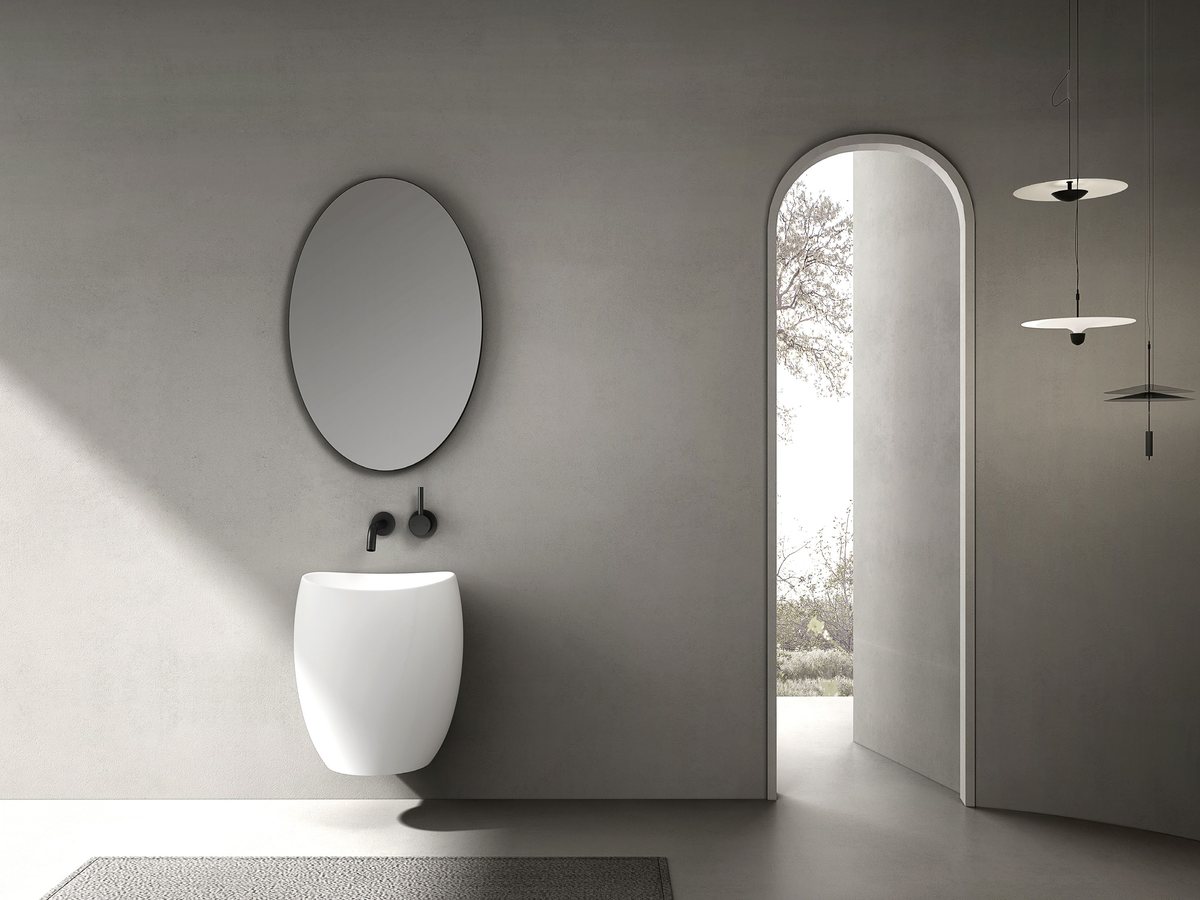
Hotel guest bathroom with a freestanding pedestal basin

The short answer

Quick Reference

Point 01
A pedestal basin is a basin whose bowl is supported by a column standing on the floor; the column conceals the waste and, in most designs, the supply pipes.
Point 02
Three forms are common: the full pedestal (column to the floor), the semi-pedestal (a short shroud below a wall-fixed bowl), and the one-piece column or freestanding basin cast as a single form.
Point 03
The bowl is fixed to the wall as well as resting on the column, so wall backing and a level floor both matter.
Point 04
It suits powder rooms, small bathrooms, hotel guest rooms and any layout where storage is provided elsewhere.
Point 05
It gives up the countertop and storage a vanity provides, and its clearance to walls and other fixtures is governed by the applicable plumbing and accessibility codes.
Single-bowl pedestal basin

Start here

A Basin That Stands on Its Own

Most basins are carried by something else — a vanity top, a wall bracket, a console frame. A pedestal basin carries itself on a column, and the column does two jobs at once: it takes part of the load to the floor, and it hides the trap and pipes that would otherwise be visible beneath a wall-hung bowl. That combination — no cabinet, no exposed plumbing, no wall build-out — is why the form has lasted, and why it appears wherever a room needs a basin but not the furniture around it.

  • Bowl supported by a column to the floor
  • The column conceals the trap and pipes
  • No cabinet, no exposed plumbing, no build-out

Three Forms

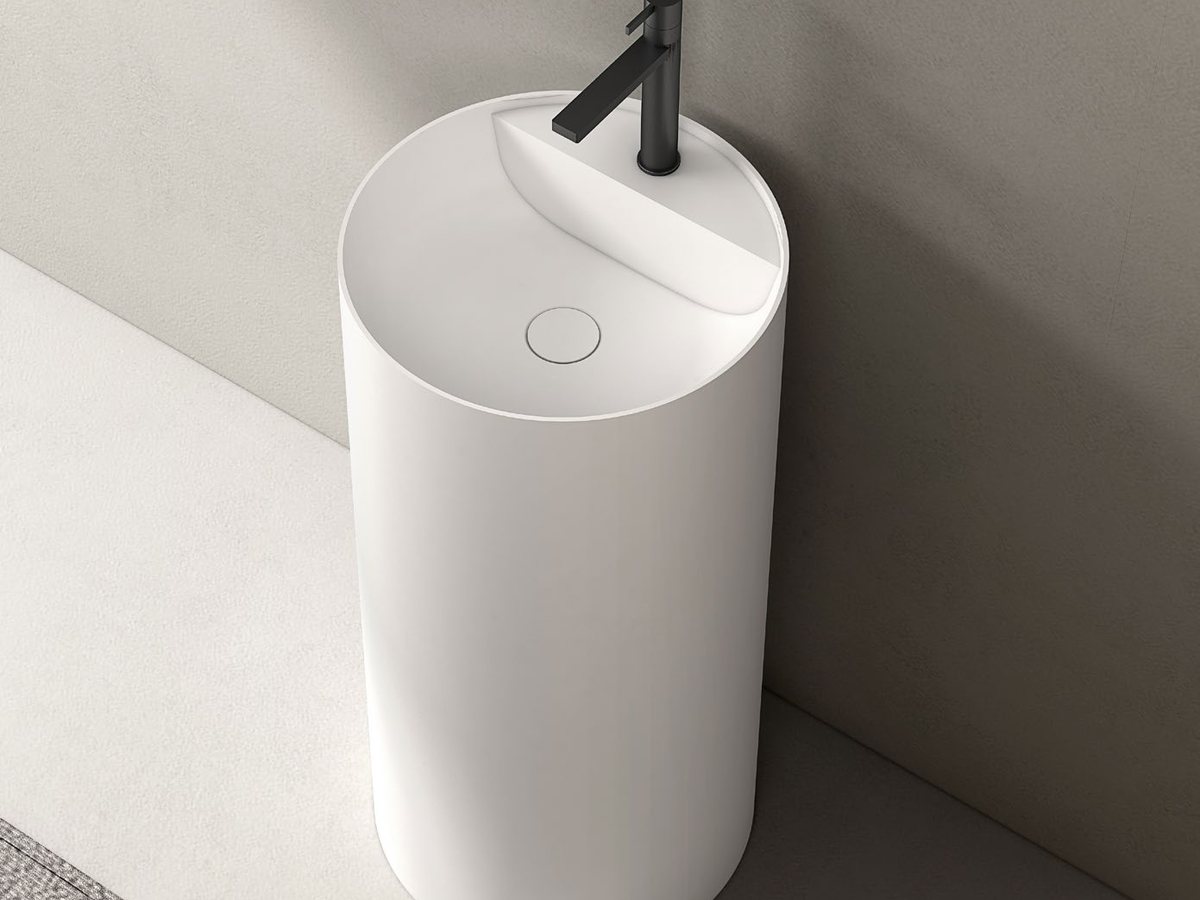
Freestanding pedestal basin with concealed trap inside the column

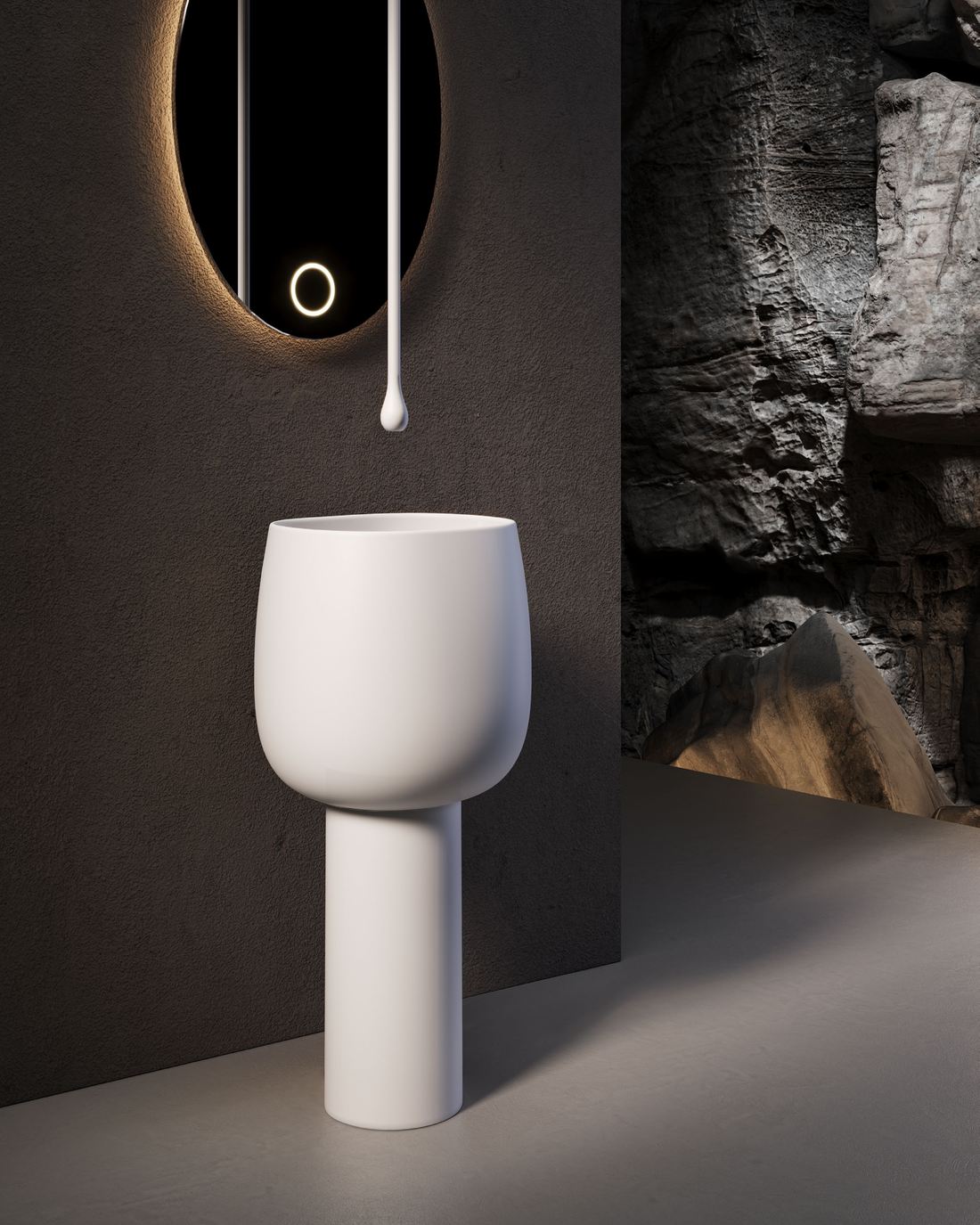
The full pedestal is the classic form: a separate bowl and a separate column, the bowl fixed to the wall and resting on the column, the column standing on the floor and hiding the pipework from bowl to floor. The semi-pedestal keeps the bowl wall-fixed but replaces the column with a short shroud fixed to the wall below it, hiding the trap without reaching the floor — the floor stays clear for cleaning, and the wall carries the whole load, so it needs solid backing. The column or freestanding basin is a single piece, bowl and column cast together as one form, common in solid surface where the material can be cast in one piece; it reads as sculpture, has no joint between bowl and column, and is fixed to the floor and often to the wall for stability.

  • Full pedestal: separate bowl and column; column to the floor
  • Semi-pedestal: wall-fixed bowl with a short shroud; floor clear
  • Column / freestanding: bowl and column cast as one piece

Plumbing and Fixing

The pipework of a pedestal basin runs behind or inside the column, so the rough-in has to land where the column will hide it: the waste and the supply points are positioned from a fixed wall reference to match the basin's dimensioned drawing before the wall is finished. The bowl is fixed to the wall — the column supports it but does not by itself hold it in place — so the wall needs backing at the fixing height, and the floor needs to be level so the column and the wall fixings agree. A cast one-piece basin is heavier than a ceramic bowl and column, and its fixing to the floor and wall is specified on its drawing. Because the pipes are concealed, the trap should be accessible for servicing, either from behind the column or by removing it; a design that seals the pipework away completely is one that will one day be taken off the wall to clear a blockage.

  • Rough-in positioned from a wall reference to match the drawing
  • Bowl fixed to the wall; backing needed at fixing height
  • Level floor so column and wall fixings agree
  • Trap accessible for servicing

Where It Suits

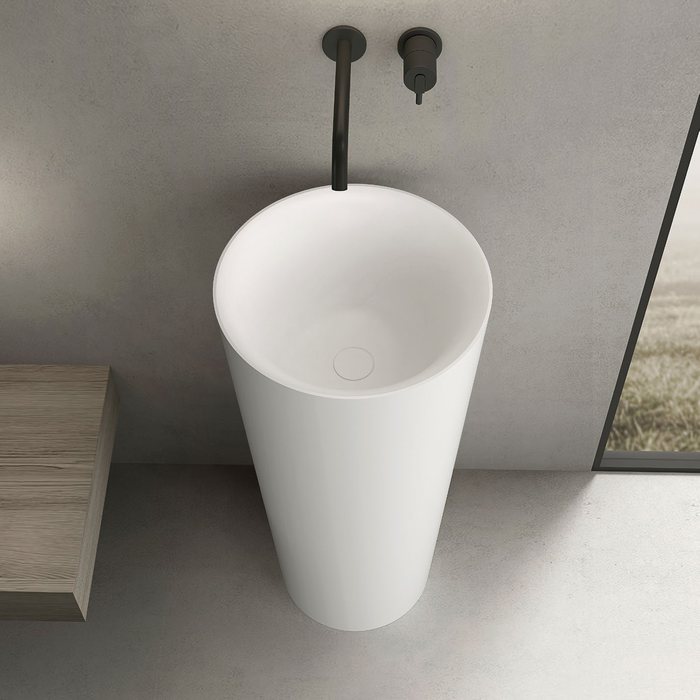
Powder room with a slim column basin

A pedestal basin suits rooms that need a basin and not a vanity: powder rooms and guest cloakrooms, small bathrooms where a cabinet would crowd the floor, hotel guest rooms where storage is in the wardrobe rather than under the sink, and any design that wants the basin to read as an object rather than furniture. It gives up the countertop and the storage a vanity provides, so it works best where those are supplied elsewhere. Its position relative to walls and other fixtures is governed by the applicable plumbing code and, where an accessible fixture is required, by accessibility standards — a pedestal's column has to clear the required knee and toe space, which is why wall-hung basins are more often used for that role. This site's clearance guide covers those figures and their jurisdictional caveats.

  • Powder rooms, small bathrooms, hotel rooms with storage elsewhere
  • Designs that want the basin as an object, not furniture
  • Gives up countertop and storage
  • Clearance and accessibility governed by local code — see the clearance guide
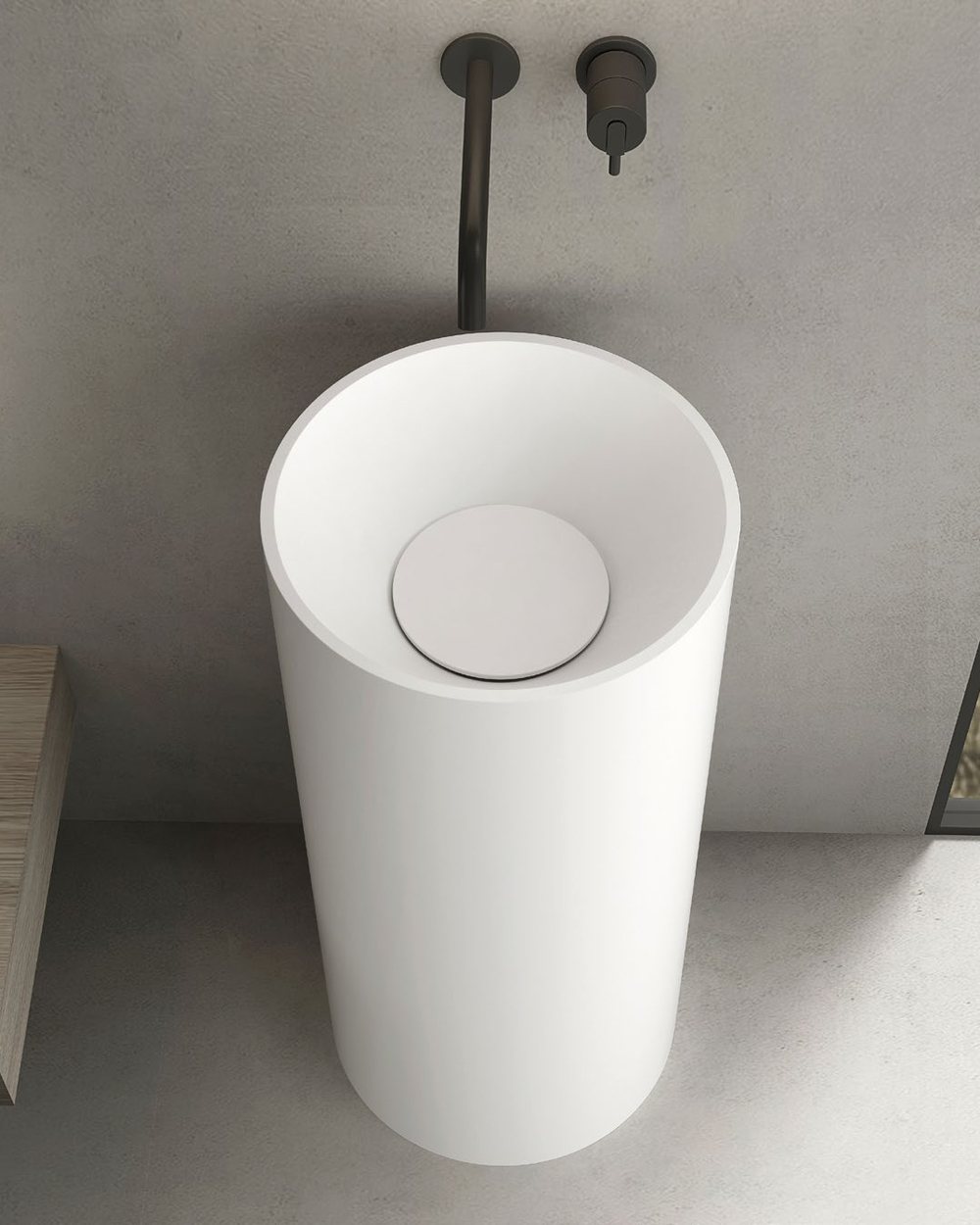
Freestanding pedestal basin with concealed trap inside the column

Common questions

Pedestal Basin Questions

Answers to the checks buyers most often make before using this guide for a project or sourcing decision.

What is the difference between a pedestal and a semi-pedestal?

A full pedestal's column reaches the floor and hides all the pipework; a semi-pedestal is a short shroud fixed to the wall below the bowl, hiding the trap while leaving the floor clear. The semi-pedestal puts the whole load on the wall.

Does the column hold the basin up?

It supports the bowl, but the bowl is also fixed to the wall and needs backing there. Column and wall fixings work together, which is why the floor needs to be level.

Is a pedestal basin a good choice for a hotel guest room?

Often, where storage is provided in the wardrobe rather than under the basin. It keeps the bathroom uncluttered and hides plumbing without a vanity. Confirm clearance and any accessible-room requirements separately.

Can the plumbing be serviced?

It should be. Specify a design where the trap is accessible from behind the column or by removing it, rather than sealed away completely.

What is a column or freestanding basin?

A one-piece form with bowl and column cast together, common in solid surface. It has no joint between bowl and column and is fixed to the floor and usually the wall for stability.

Does WNS Global make pedestal basins?

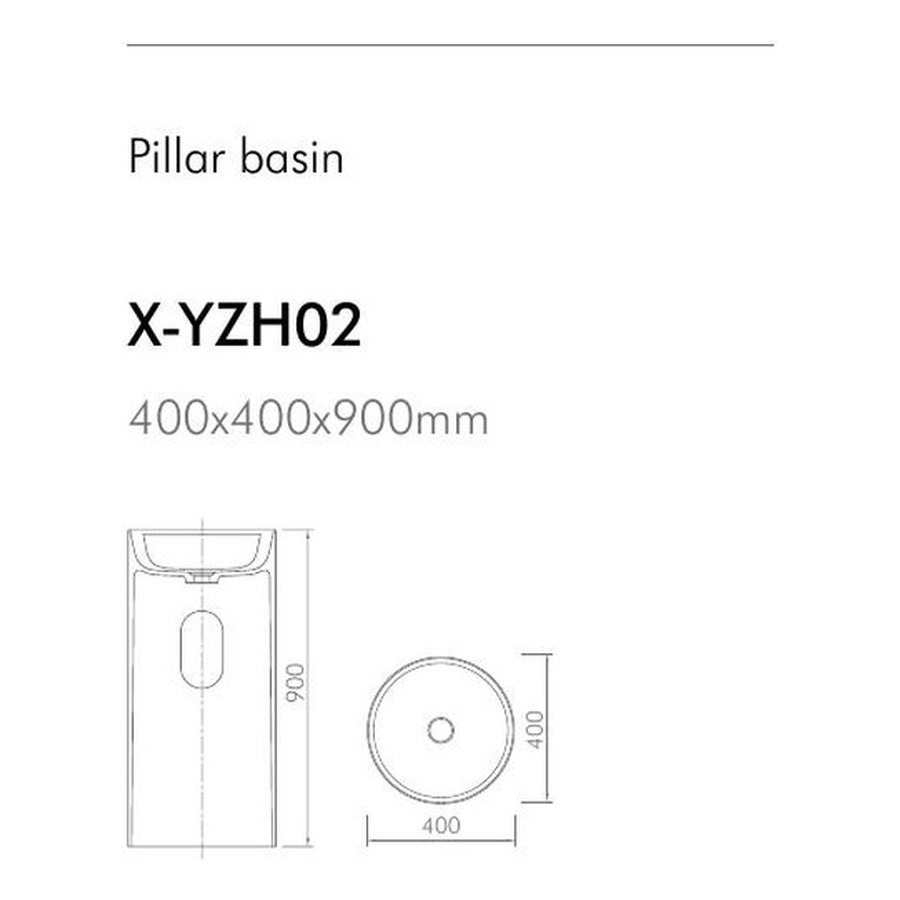
Yes — cast solid surface pedestal and freestanding basins, with the overall height, column footprint, drain outlet and water rough-in confirmed on a dimensioned drawing for each project.

A white solid surface pedestal basin against a plain wall

In short

A Column That Carries and Conceals

A pedestal basin is a bowl on a floor-standing column that hides the plumbing and needs no cabinet. It comes as a full pedestal, a semi-pedestal or a one-piece cast form, is fixed to the wall as well as the column, and suits rooms that need a basin without furniture. Position its rough-in from the drawing, keep the trap serviceable, and check clearance against the applicable code.

  • Bowl, column, concealed plumbing
  • Full, semi and one-piece forms
  • Wall-fixed as well as floor-supported
  • Best where storage is elsewhere

Verification sources

Official Sources and Further Reading

Clearances and accessibility provisions vary by the adopted code, project type and authority having jurisdiction. Verify the exact project requirement before using a general layout guide as a compliance decision.

Specifying pedestal basins for a project?

Talk to WNS Global

Tell us the room type and the rough-in positions, and we will return a dimensioned drawing with height, column footprint, outlet and supply positions for the specific model.

Bathroom project specification, drawings and finish samples prepared for quotation

A white solid surface pedestal basin against a plain wall

Published: Last updated:

  • This guide is a sourcing and planning reference. Confirm the applicable product, contract, authority and project requirements before making a final decision.

START WITH THE PRODUCT DETAILS

Tell Us What You Need

Share the bathroom products, project requirements, target market, dimensions, materials, finishes, quantities, or customization details currently available. WNS Global will review the request and identify the information needed for the next step.