From seal type to acceptance
How does each kind of trap block drain gas?
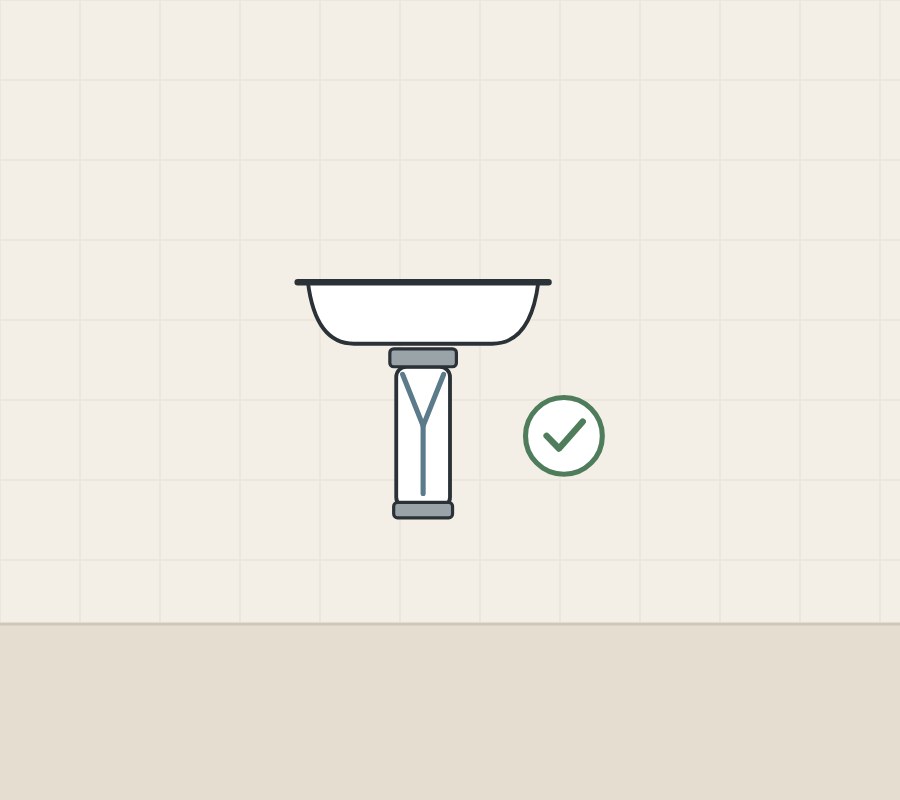
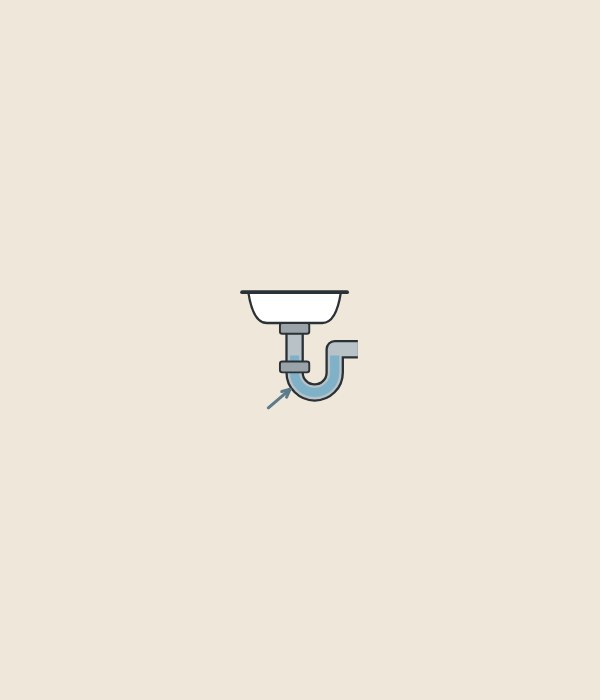
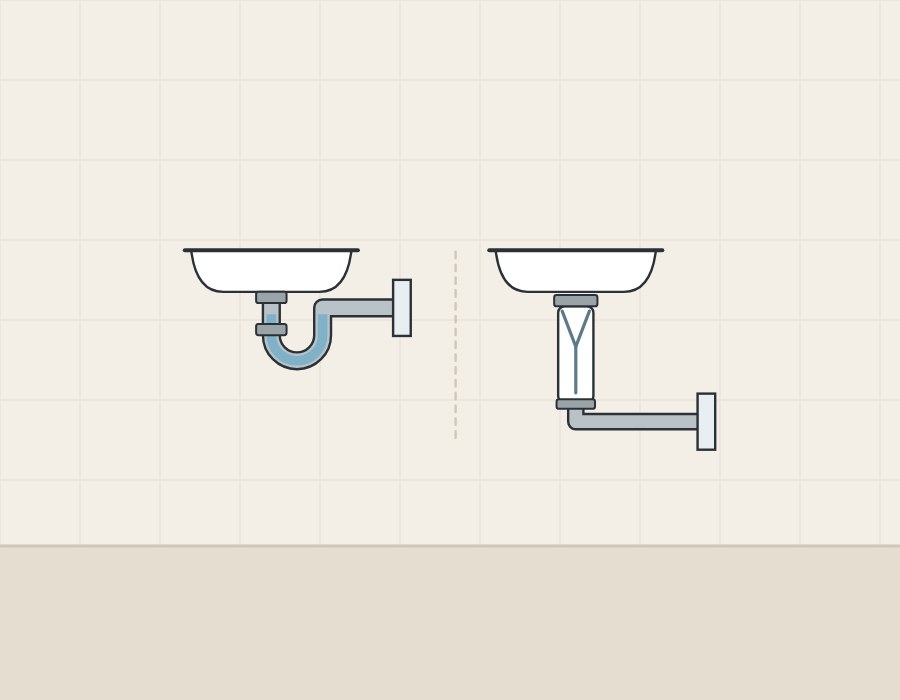
A water-seal trap blocks drain gas with standing water; a waterless trap blocks it with a membrane that stays closed until water flows. Oatey says the water held in the bend of a P-trap forms a seal that keeps sewer gas and odor out of the home.
Wirquin calls its SENZO basin trap a waterless membrane trap. Wavin’s HepvO manual says its membrane opens and closes to stop foul sewer odour from returning.
These statements describe named products, not every membrane device.
| Term | What it means |
|---|---|
| P-trap | A trap whose bend collects water in the curve. |
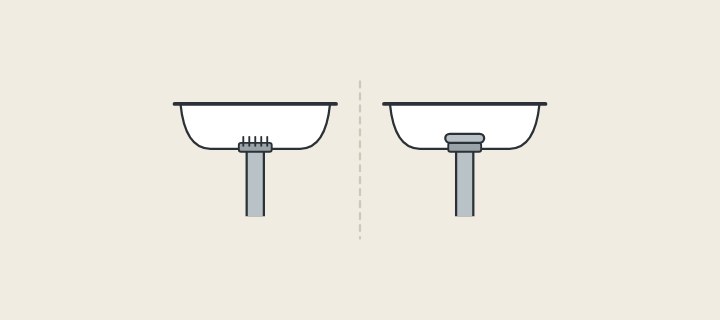
| Bottle trap | A water trap with a dip tube, as in Geberit’s washbasin model. |
| Sanitary waste valve | ASME’s term for a valve used as an alternate to a tubular P-trap. |
| Liquid seal | The water a trap holds; Chicago’s code sets a depth range. |
How does a membrane valve open and close?
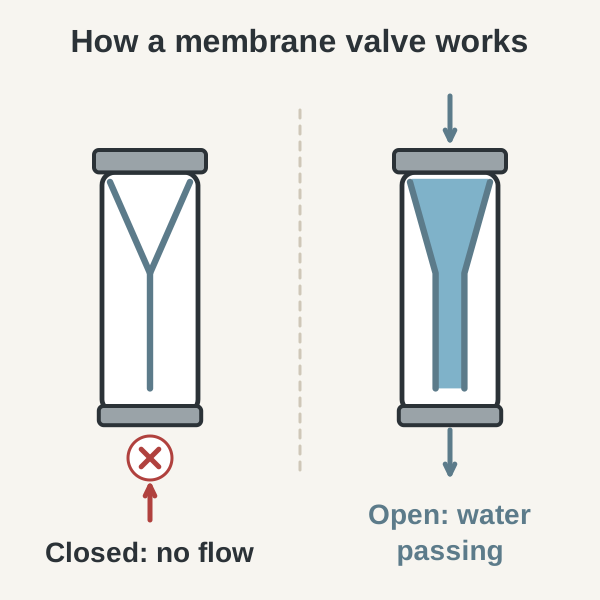
A membrane valve is closed at rest, opens under water pressure and closes again afterwards. The steps follow Wavin’s UK manual for HepvO and describe that product only.
- With no flow, the membrane is closed and seals the waste connection.
- The basin discharges.
- Water pressure opens the membrane and water passes.
- When the discharge ends, the membrane closes and seals.
- Under negative pressure, the valve opens and admits air until the pressure balances.
- The valve then closes again.
McAlpine describes its WHB-1 self-closing waste valve in similar terms: an internal membrane opens under water pressure, then closes to keep foul odour or sewer gas out of the building.
How can a water seal be lost?
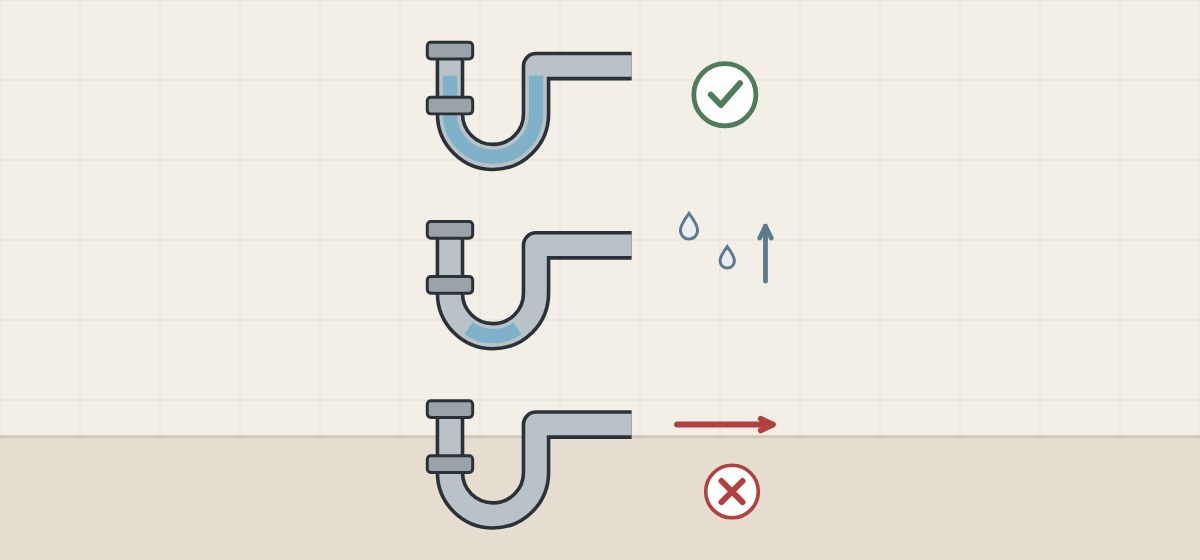
A water seal can be lost when the water evaporates or pressure changes in the pipework pull or push it out. Wavin’s UK manual lists the mechanisms.
| Cause or response | What the source says |
|---|---|
| Evaporation | Wavin’s UK manual gives an average UK seal loss of 2.5 mm per week. |
| Self and induced siphonage | Wavin: the water seal is sucked out of the trap. |
| Compression and foaming | Wavin: pressure fluctuation or backed-up detergent foam depletes the seal. |
| Resealing bottle trap | McAlpine: retains an adequate seal under extreme syphonic conditions. |
| Deep seal or primer | Chicago: where evaporation is a risk, a 4-inch seal or other means, such as a trap seal primer. |
Wavin’s US and Canada guide says the HepvO membrane does the job of a water-seal trap without the risk of evaporation or siphonage. McAlpine says its WHB valve, having no water seal, can never dry out through evaporation or lack of use. Both are makers’ claims.
What do makers offer for a basin?
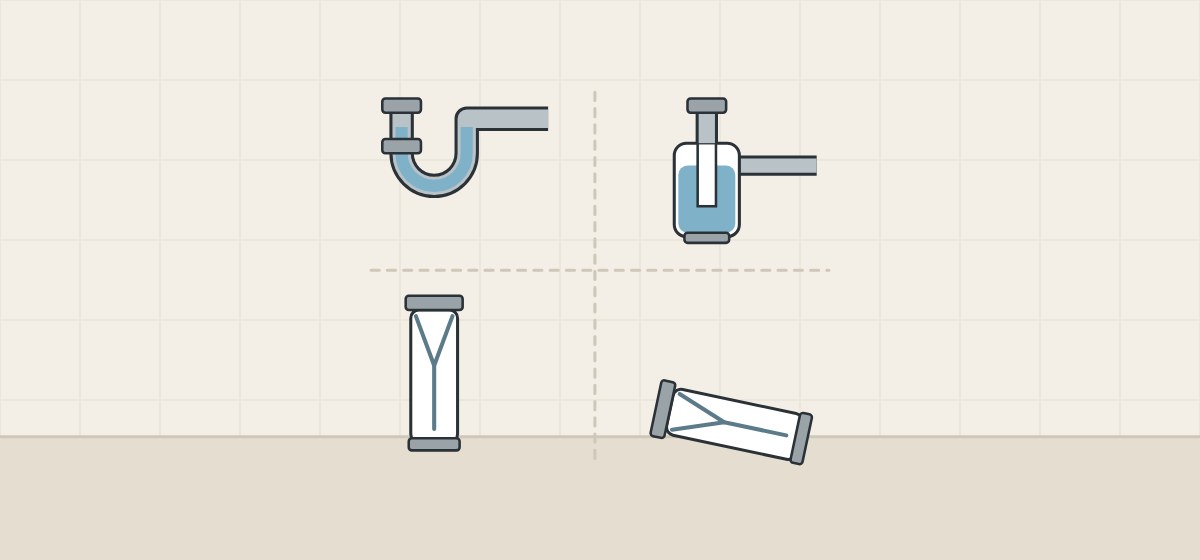
Between them, the makers below sell both kinds for basins, and most describe their product as space-saving. Each row uses the maker’s own terms.
| Type | Named example | What the maker says |
|---|---|---|
| Bottle trap with dip tube | Geberit space-saving model | For washbasins; 50 mm water seal; 32 mm diameter; polypropylene. |
| Odour trap for furniture | Viega model 5634.15 | For wall mounting, for example in bathroom furniture; 50 mm water seal; tool-less cleaning. |
| Membrane trap | Wirquin SENZO | Waterless membrane; push-fit connection; supplied with a 90-degree elbow. |
| Self-sealing waste valve | Wavin HepvO | Elastomeric membrane; connects to 1¼ in and 1½ in BSP thread, per the UK manual. |
| Self-closing waste valve | McAlpine WHB-1 | Overall height 62 mm; made to free storage space below the basin. |
Geberit’s UK catalogue also tells buyers to order an adaptor for UK pipework with this trap.
How much space and access does each need in a vanity?
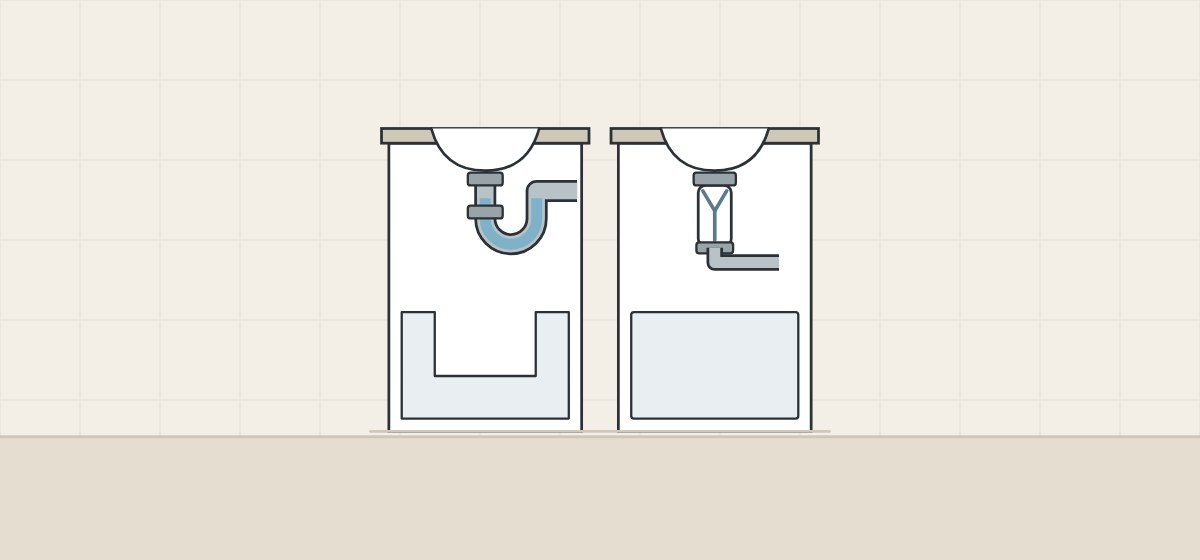
It depends on the named product. McAlpine and Wavin each describe a space benefit; check the position rules of the product chosen. Four points to check:
Straight drop
Wavin’s UK manual says the waste pipe can drop in a straight line from the appliance outlet, which improves installation access for slimline pedestals.
Height below the basin
McAlpine gives the WHB-1 an overall height of 62 mm and says it allows full use of the storage space below the basin.
Position
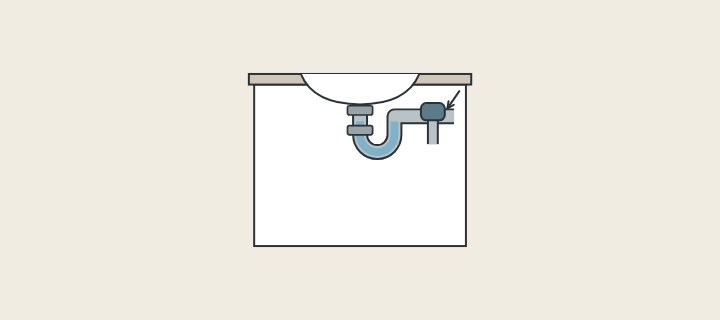
Wavin’s US product page says HepvO can be installed vertically, horizontally or at any angle between, with “ribs down” whenever it is not vertical and a minimum slope of 1/8 in per foot when horizontal. Its UK manual instead asks for the flow arrows underneath and a fall of around 10°. Use the document for the project’s market.
Cleaning access
England’s Approved Document H says a trap that is not part of an appliance should be removable or have a cleaning eye.
- Basin drain size and thread
- Wall or floor outlet position
- Permitted position of the trap
- Space for removal or cleaning
- Drawer and shelf cut-outs
Is a waterless trap maintenance-free?
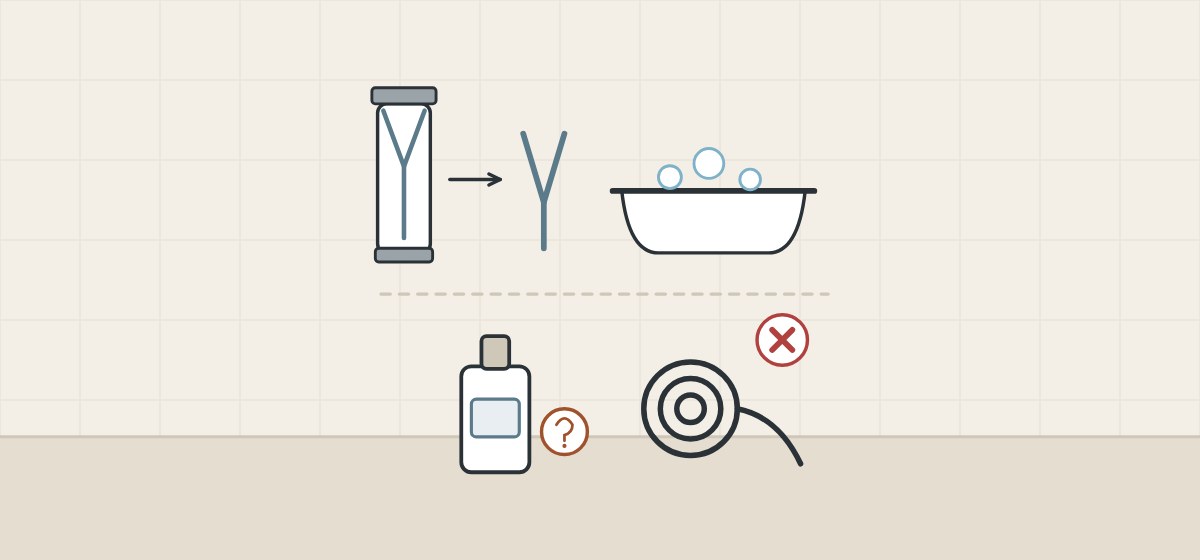
Not in general. Wavin says HepvO needs no routine or seasonal maintenance, yet Wavin and McAlpine both set cleaning and clearing rules. Four points:
Cleaning the membrane
McAlpine says the WHB-1 is cleaned without dismantling the pipework: remove the split pin, then wash the plug and membrane in hot soapy water.
Drain cleaners
Wavin’s US and Canada design guide says HepvO resists standard caustic-based drain cleaners and acid-based cleaners up to 10% concentration. Its UK manual says strong acids must not be used on it.
Mechanical clearing
The US and Canada guide says the valve must be removed before spiral cables, rippers or water jetters are used.
Routine care
Wavin’s US product page says HepvO needs no routine or seasonal maintenance.
Venting is separate. Wavin’s UK manual says an air admittance valve is no longer necessary with HepvO; the FAQ in its US and Canada guide says the venting requirements of the applicable plumbing code must still be followed. Do not carry cleaning or venting advice between products or markets.
Is a waterless trap accepted by the local code?
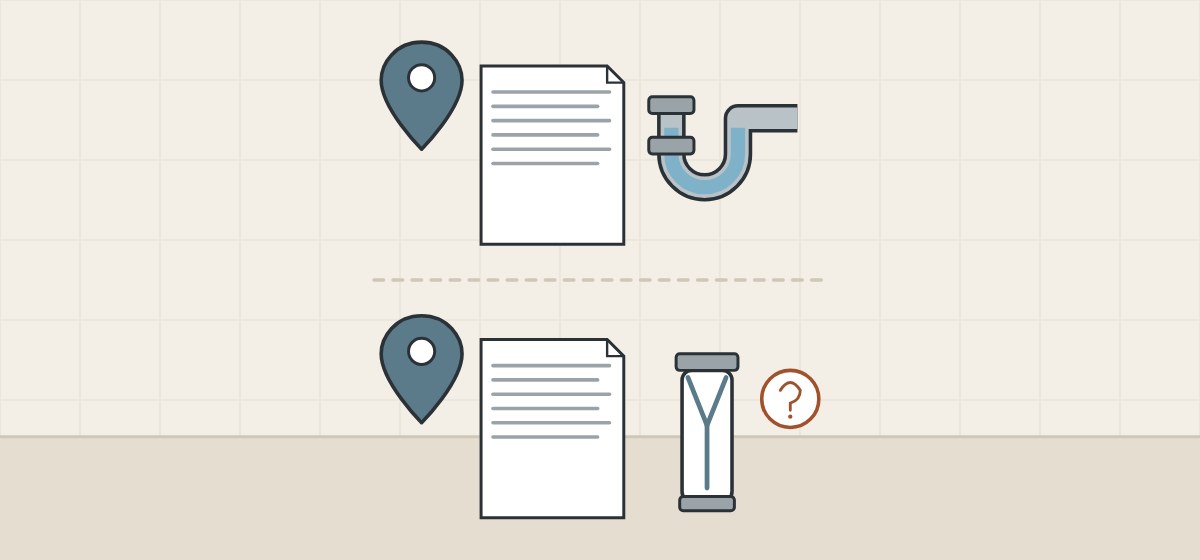
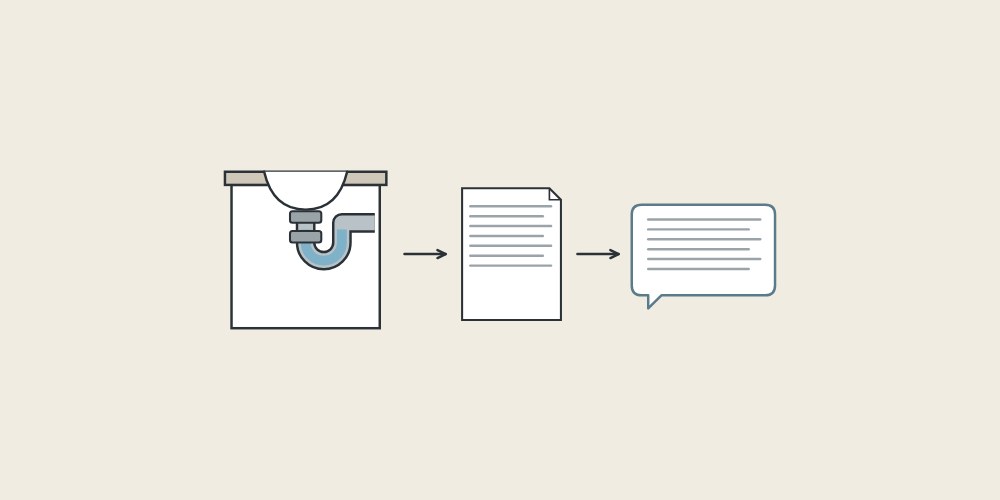
It depends on the code adopted where the project is built; a product standard or a maker’s page does not settle it.
| Source | What it says |
|---|---|
| ASME A112.18.8-2020 | Sets material and test requirements for sanitary waste valves used as an alternate to tubular P-traps. |
| Wavin, US and Canada | States that HepvO meets ASME A112.18.8. Its own article says some limitations exist under North American building codes. |
| England, Approved Document H | A trap, for example a water seal trap, keeping at least 25 mm of water or equivalent. Washbasin: minimum 32 mm trap and 75 mm seal of water or equivalent. |
| Chicago, 18-29-1002.4 | A liquid seal of not less than 2 in and not more than 4 in. |
| Wavin, UK manual | HepvO is Kitemarked to ATS 5200-047:2005; the manual is based on UK regulations. |
| ASSE 1072-2025e1 | ASSE describes it as covering barrier devices that help protect the trap seal of floor drains by minimizing evaporation. |
How should a buyer specify a basin trap?

These steps are procurement guidance, not a code review.
- Start with the local code. Ask the local authority whether a membrane valve is accepted.
- Name the mechanism. Water seal or membrane, not only a shape or size.
- Name the product. Maker, model, size and document edition.
- Record the seal or standard. Seal depth for a water trap; standard and listing for a membrane valve.
- Fix the position. Vertical, horizontal or angled, as the maker permits.
- Draw the access. Show how the trap is reached with drawers in place.
When the trap changes
A swap between a water-seal trap and a membrane valve changes the mechanism, connections and care rules. Review acceptance, layout and venting again.
What should you send and ask before a quotation?
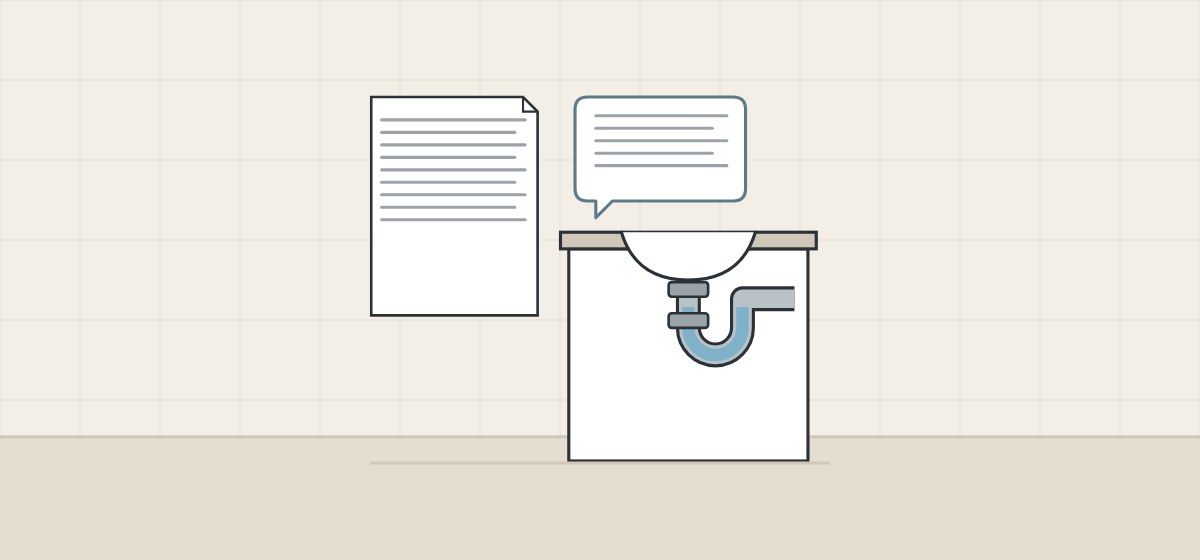
Name the trap, not just the basin.
| Question | Why it matters |
|---|---|
| Which trap is proposed, by maker and model? | Claims belong to named products. |
| Does it seal with water or a membrane? | Shape does not show the mechanism. |
| Which standard or listing applies, and where? | Acceptance is local. |
| Which positions are permitted? | HepvO needs its ribs down when not vertical. |
| How is it cleaned, and with what access? | Chemical and tool limits differ by product. |
| Does it fit the cabinet and drawers? | The trap shares the vanity with storage. |
Include with your request
- Project location and adopted code
- Basin model and drain size
- Cabinet and drawer drawing
- Wall or floor outlet position
- Quantity per room type
WNS Global confirms any offered basin, vanity, trap and commercial terms separately in writing. This guide does not state that WNS Global supplies any trap named above, or that its products have the named features, seal depths, standards or listings.