From function to cabinet record
What does an air admittance valve do on a basin drain?
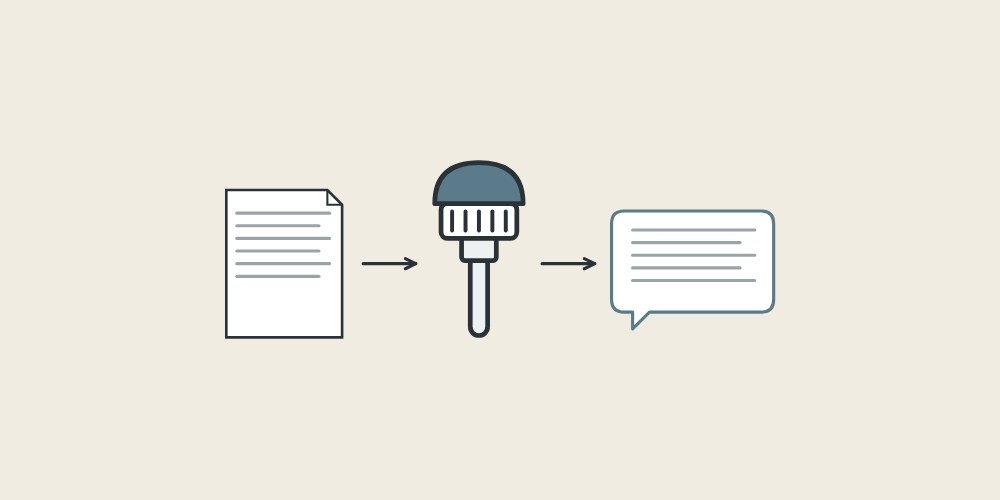
An air admittance valve lets air into the drain to protect the trap seal. ASSE’s description of ASSE 1051-2021 calls individual and branch type valves devices that prevent the siphonage of water trap seals.
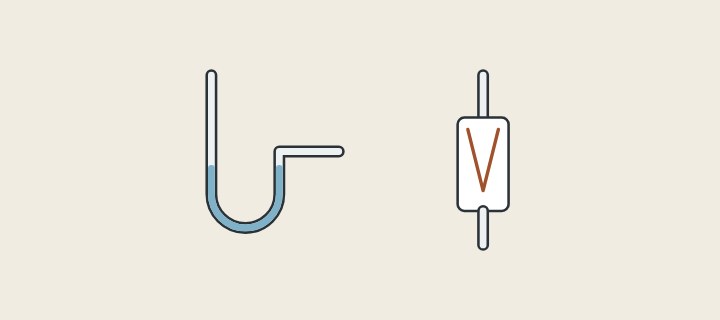
The same description says these devices only allow air to enter and do not relieve back pressure. So the valve is not the trap and not an exhaust.
The BBA certificate (2013 issue) says each OsmaVent valve stays closed under increased pressure, preventing the release of foul air into the building.
| Term | What the source says |
|---|---|
| Air admittance valve | Oatey: a one-way valve that admits air under negative pressure. |
| Negative pressure | Oatey: created when fluid flows through a drain or fixture. |
| Trap seal | ASSE (on 1051): the water seal the valve protects from siphonage. |
| Branch type | ASSE (on 1051): for a horizontal branch serving several fixtures. |
| Open vent | ASSE (on 1051): at least one vent open to the outside air. |
How does the valve open and close?
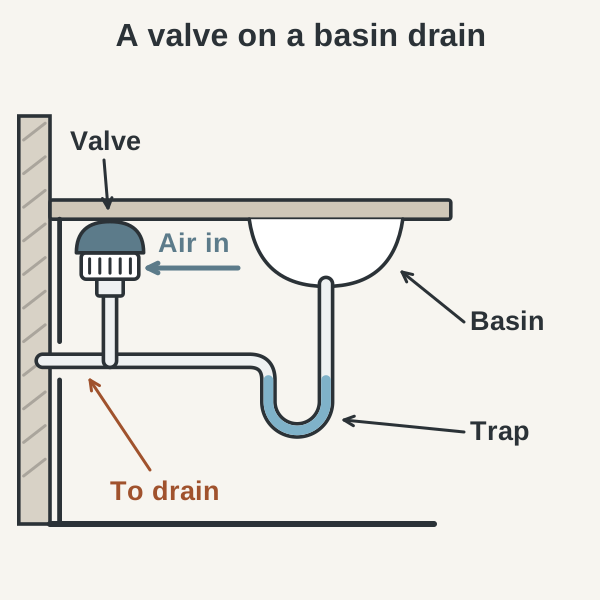
Oatey and Studor describe a valve that opens under negative pressure and closes when pressure evens out. The steps combine Oatey’s page and the Studor manual.
- Water leaves the basin and flows through the trap.
- The flow creates negative pressure in the drain.
- The valve opens; Studor says a minimal vacuum is enough.
- Air enters the drain through the valve.
- Pressures equalize and Studor’s valve closes by gravity.
- Positive pressure presses Studor’s valve tighter shut.
These steps describe those makers’ valves. Wavin TR’s leaflet describes a seal that lifts and falls with negative pressure.
Where can the valve sit inside a vanity?
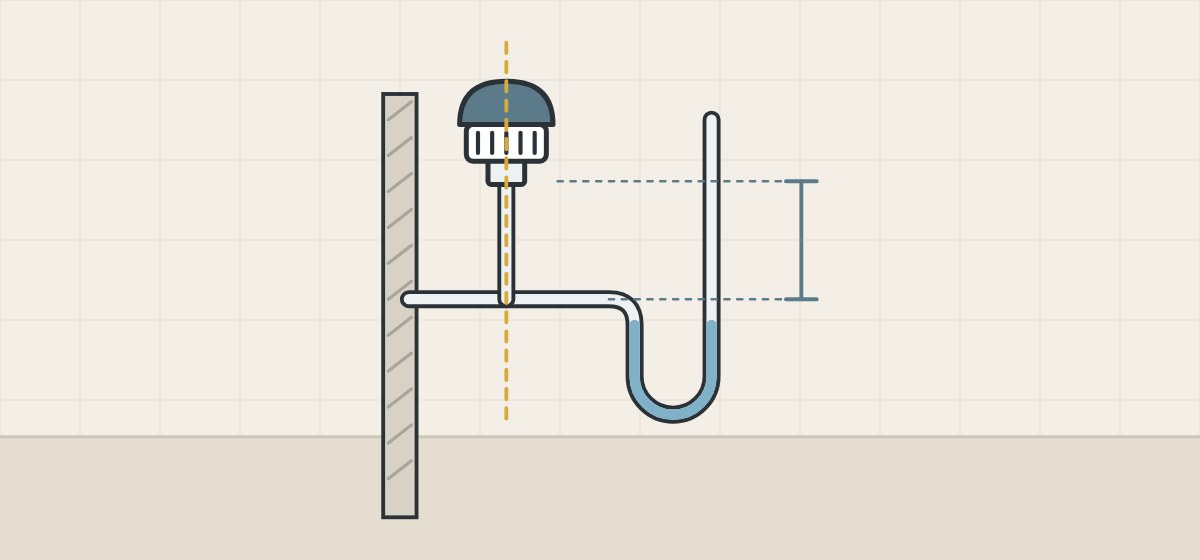
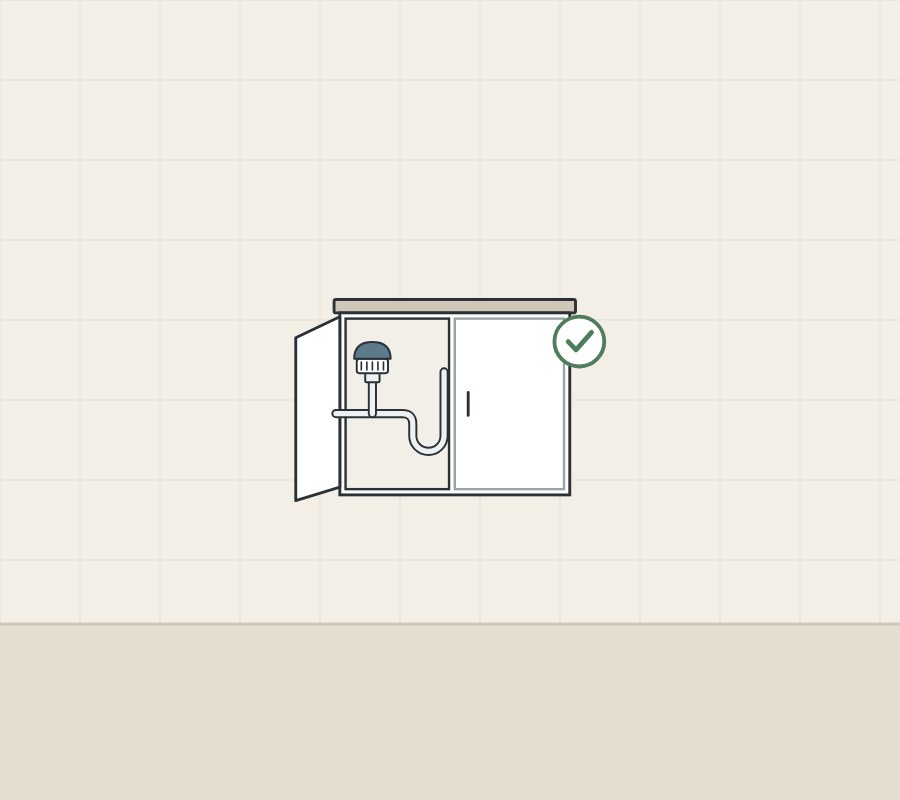
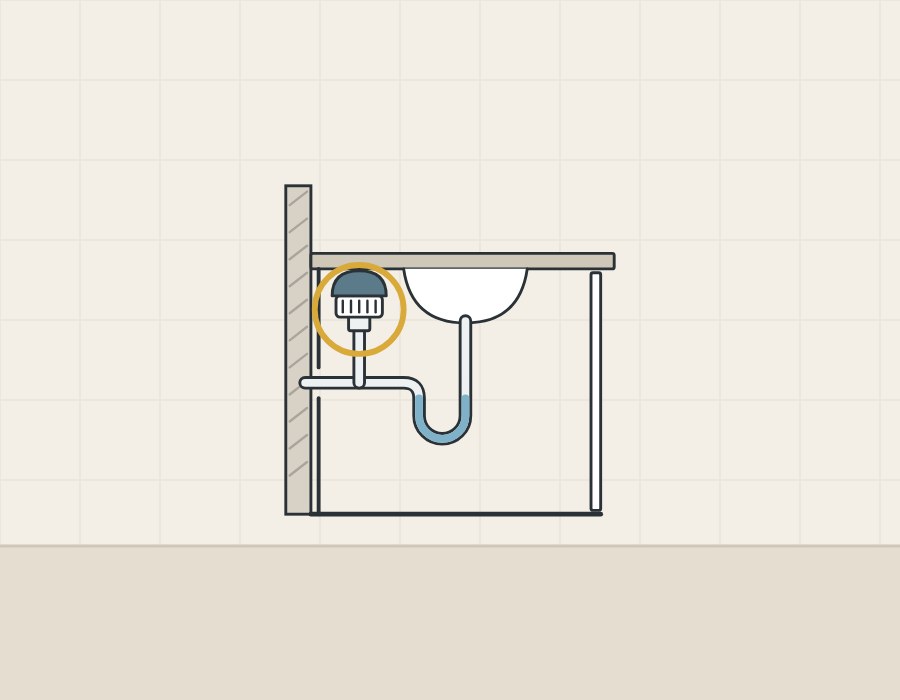
Studor’s installation criteria say that locating its valve in a sink or vanity cabinet is acceptable. Each document sets its own height and angle:
| Source | Height | Angle |
|---|---|---|
| Studor manual | At least 4 in above the horizontal branch drain or fixture drain | Upright, within 15° of plumb |
| Oatey installation article | At least 4 in above the horizontal branch drain | Within 15° of vertical |
| BBA certificate, OsmaVent 40 | 100 mm above the pipe being ventilated | Vertical |
| Western Australia note | 100 mm air cushion from the graded pipe’s soffit to the valve inlet | Upright, within 5° of vertical |
Wavin TR’s leaflet says EN 12380 designates a valve A if it may sit below the flood level of connected appliances, B if not. Draw the cabinet from the selected valve’s instructions.
What access and air path does the valve need?
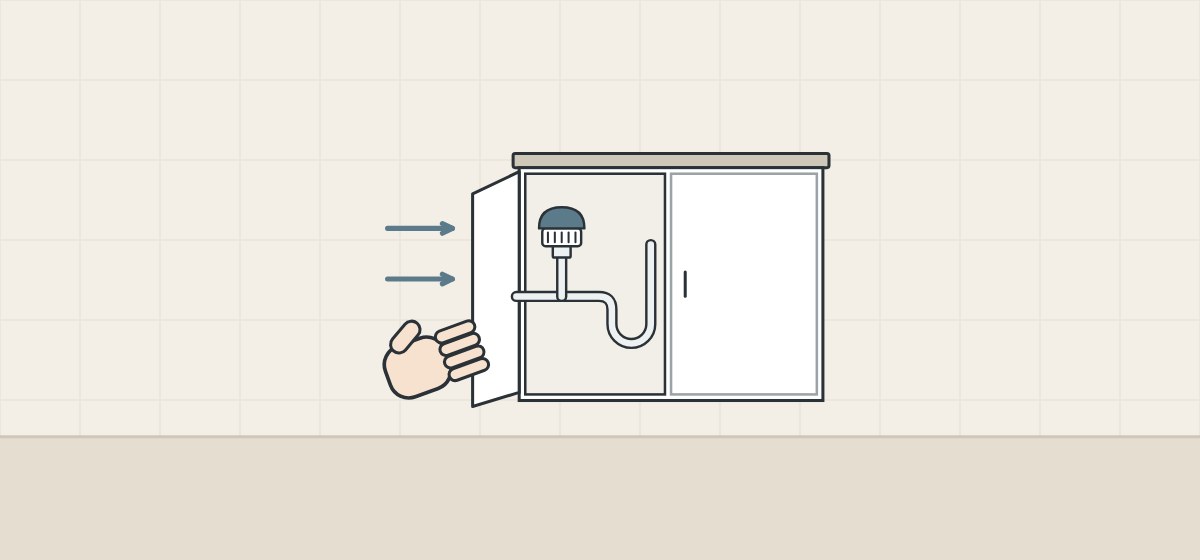
The valve must stay reachable and able to draw air. Oatey’s article says AAVs cannot be permanently covered.
| Source | Access | Air |
|---|---|---|
| Oatey | Accessible for inspection, maintenance or replacement | An area that allows air to enter the valve |
| Studor manual | Accessible should replacement be required | Adequate air; an opening for unventilated wall or attic spaces |
| Approved Document H (England, stacks ending indoors) | Accessible for maintenance; removable to clear blockages | Areas with adequate ventilation |
| Western Australia note | Accessible for repair or replacement | Ventilation openings within a wall or roof space |
| Wavin TR leaflet | Accessible, and removable if necessary | Clearance around the valve for airflow |
No passage read for this guide gives an opening size for a cabinet; ask the valve maker.
What do the product standards cover?
The documents read for this guide name ASSE 1051 for individual and branch type valves and the European standard EN 12380.
ASSE 1051-2021
Individual and branch type valves for sanitary drainage systems. ASSE’s description requires at least one open vent terminal to the outside air.
EN 12380
Wavin TR’s leaflet says EN 12380 designates valves A or B by position relative to the flood level and I, II or III by temperature range. Approved Document H names BS EN 12380:2002.
North American makers
Oatey says its Sure-Vent valves comply with ASSE 1050 and 1051 and are IAPMO listed. Studor’s Mini-Vent sheet lists ASSE 1051, ASSE 1050 and NSF 14.
A certificate example
The BBA certificate (2013 issue) designates OsmaVent 40 as AI under BS EN 12380:2002, for use on branch discharge pipes.
- The standard and edition on the data sheet
- The valve type: individual, branch or stack
- The rated capacity; Oatey rates in DFUs
- The certifier’s listing, if one is claimed
What limits apply to an air admittance valve?
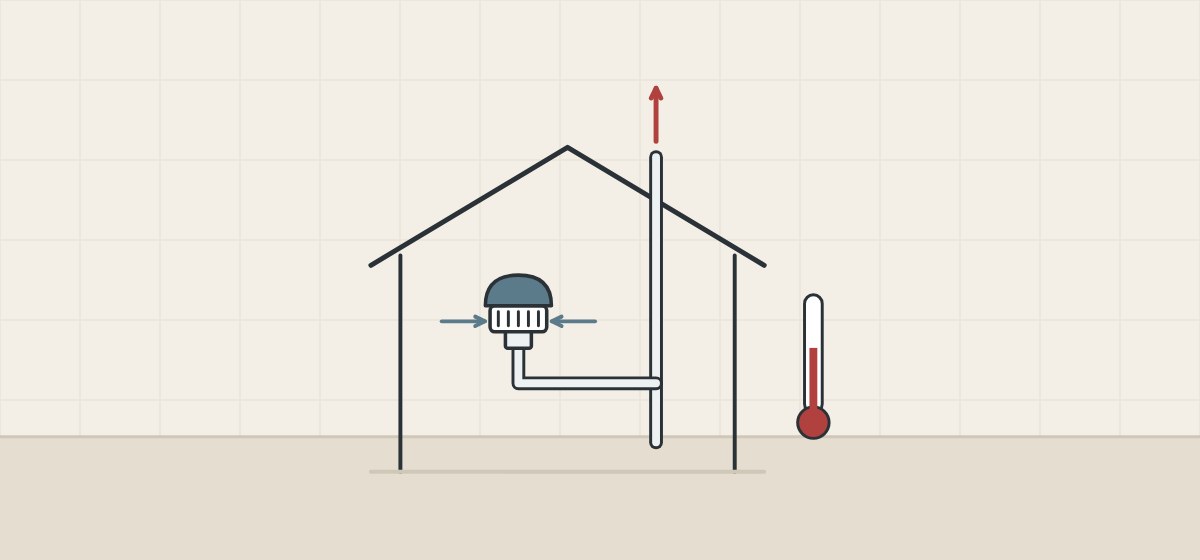
An AAV only admits air; ASSE’s description of ASSE 1051-2021 says it does not relieve back pressure. Four more limits:
It does not replace every vent
Studor requires at least one vent pipe to the open atmosphere for each building drainage system.
Temperature
Studor’s Mini-Vent sheet gives −40 to 150 °F. The Western Australia note gives 0 to 60 °C ambient unless the valve is designed to work outside that range.
It can fail
Oatey says a Sure-Vent can fail over time; a foul sewer odor near the fixture means it should be replaced.
Maintenance
Wavin TR says air admittance valves need no periodic maintenance but must be replaced if damaged.
Studor also says its valves are installed at finish, after the rough-in and pressure test.
What do codes and regulators say about the valve?

Rules differ by place, and a vanity supplier cannot settle them. Three examples:
| Source | What it says |
|---|---|
| Approved Document H, England | Stacks may end indoors with valves to BS EN 12380:2002, in ventilated, accessible places. |
| Western Australia technical note | At least one open upstream vent off the main drain. |
| 24 CFR 3280.611, US manufactured homes | A vent ending outside the home is still required. |
| Your project | Confirm with the local authority whether an AAV is permitted and where. |
How should a buyer plan the vanity around the valve?
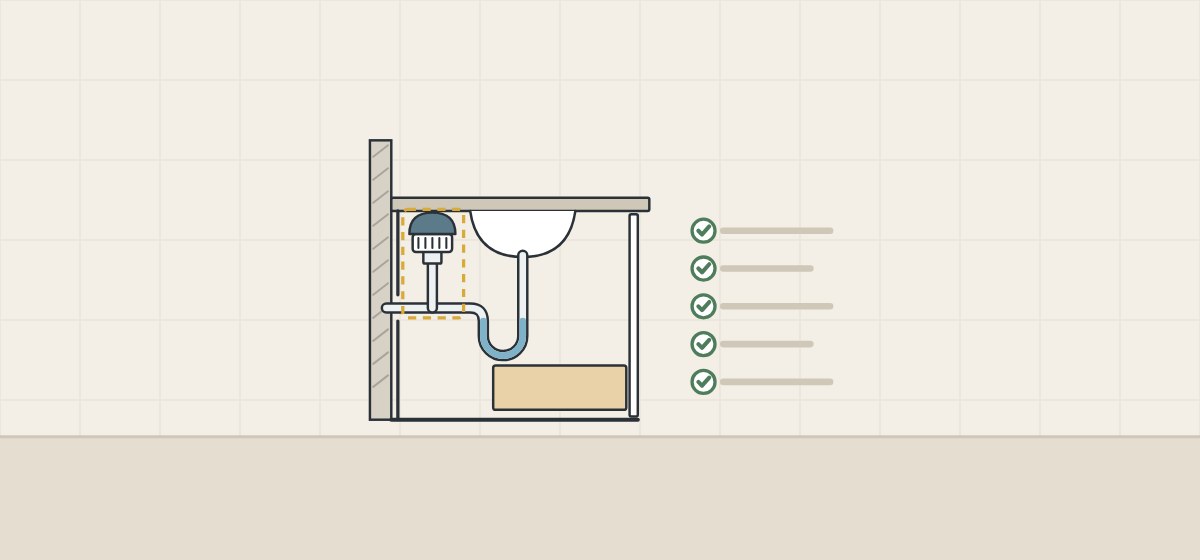
Plan the cabinet from the reviewed plumbing layout. These steps are procurement guidance, not a plumbing design.
- Confirm permission first. Ask the local authority whether an AAV is allowed and what other venting is needed.
- Name the valve. Record the maker, model and its installation instructions.
- Fix its position. Mark the valve height and its upright position on the plumbing layout.
- Draw the keep-clear zone. Show the valve, trap and backsplash on the cabinet drawing.
- Show the air path. State how room air reaches the valve inside the enclosure.
- Show the way in. State what is opened or removed to reach and unscrew the valve.
What a cabinet drawing leaves out
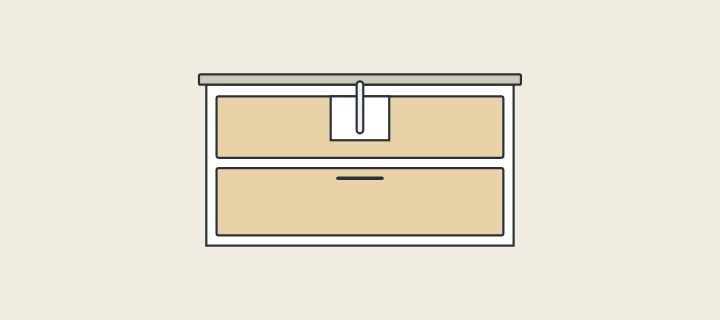
Approving a cabinet elevation is not approving a drainage design. A small decorative opening, or a drawer that happens to come out, does not by that fact give the air or access the valve maker asks for.
What should you record and ask before a quotation?
A complete request states where the valve is and what it needs.
| Question | Why it matters |
|---|---|
| Is an AAV permitted here? | Only the local authority can say. |
| Which valve and which instructions? | Height and angle differ by document. |
| Where is the valve in the cabinet? | Drawers and shelves must clear it. |
| How does air reach the valve? | Oatey and Studor ask for air to reach the valve. |
| How is the valve reached and removed? | Oatey and Studor require access for replacement. |
| Who fits the valve, and when? | Studor: valves go on after the pressure test. |
Include with your request
- Reviewed plumbing layout with valve position
- Valve maker, model and instructions
- Trap type and drain height
- Vanity size, drawers and back panel
- Project location and quantity
WNS Global confirms any offered vanity, interior layout and commercial terms separately in writing. This guide does not state that WNS Global supplies air admittance valves, or that any WNS Global product has the features, ratings or listings named above.