From function to fit
What is the difference between a closing and a non-closing basin drain?
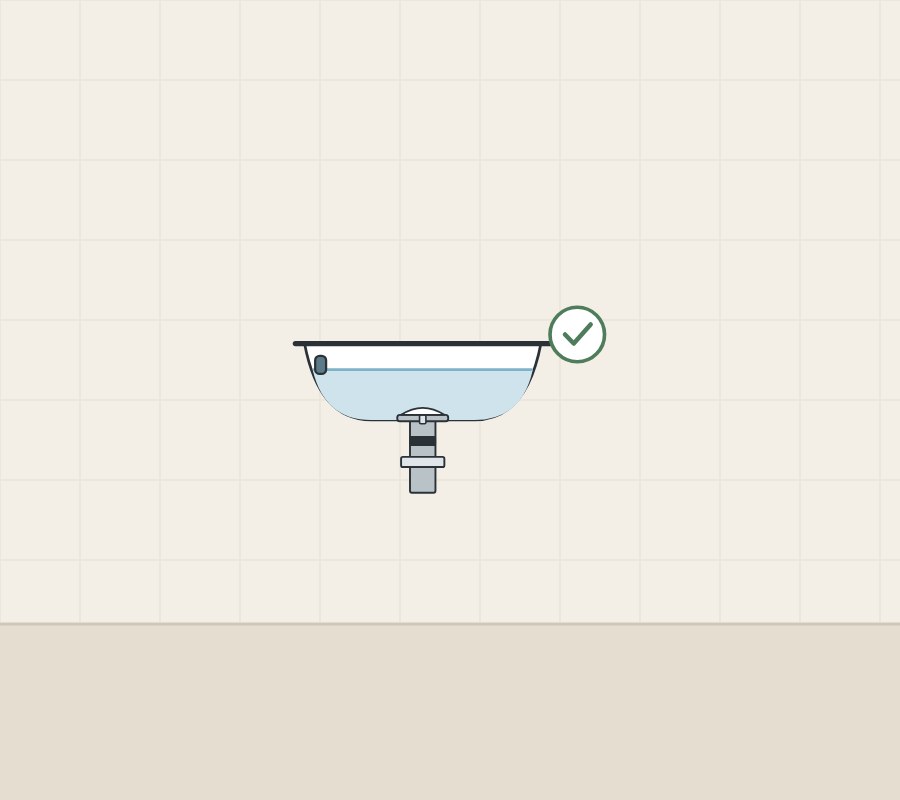
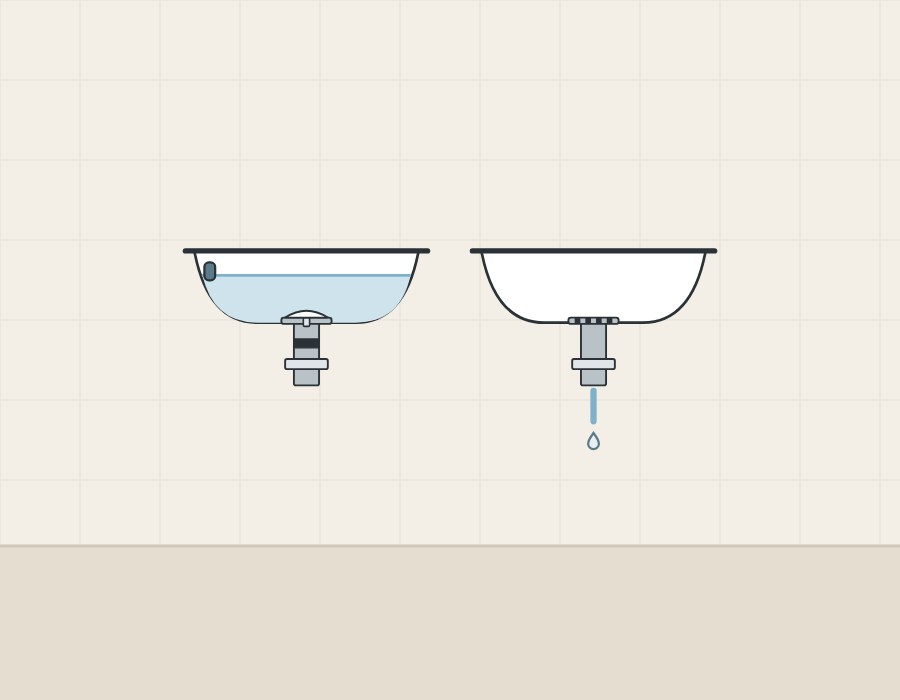
A closing drain can be shut so the basin holds water; a drain named non-closing or free-flow is, as the name says, not meant to be shut. GROHE describes its push-open drain set as closable and says it opens and closes with a single push.
hansgrohe names one of its washbasin drain sets non-closing, and Kaldewei lists free-flow drains. Only the product names were read. Start from the maker’s name and description, not the look of the cap.
| Term | How the sources use it |
|---|---|
| Push-open, click-clack, clicker | Pressed to close, pressed again to open (Kohler, Bristan: clicker; GROHE, hansgrohe: push open; Ideal Standard: click-clack). |
| Pop-up with lift rod | Stopper moved by a rod and link (Kohler K-7114, K-7126). |
| Non-closing, free-flow | Product names used by hansgrohe and Kaldewei. |
| Grid drain | Kohler K-7129, for non-overflow applications. |
| Slotted | Has a gap for overflow water (Crosswater). |
| Unslotted | For basins without an overflow (Crosswater). |
How does a push-open or lift-rod pop-up drain open and close?
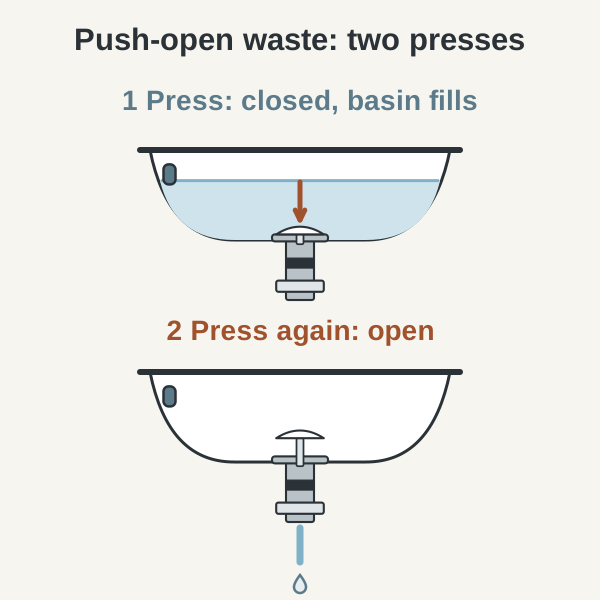
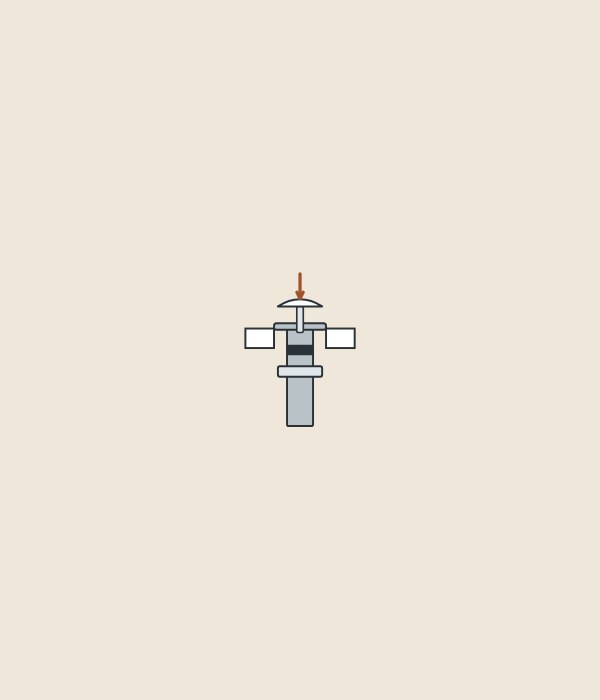
A push-open waste is worked at the cap; a lift-rod pop-up, such as Kohler’s K-7114 and K-7126, by a lift rod and link. Some makers also call push-operated wastes pop-up. The steps follow Kohler’s UK clicker drain guide and Kohler’s pop-up guide for those two models.
- Push-open: press and release the cap once to close the drain.
- The basin can now fill.
- Press and release the cap a second time to open the drain.
- Do not pull the cap up to open it; Kohler warns against this.
- Lift-rod pop-up: the lift rod passes through a link fixed with a thumbscrew.
- Kohler’s guide sets the stopper to lift about 3/8 in when opened.
hansgrohe says a push open valve suits lavatory faucets without a pull rod, and GROHE’s 48656 spec sheet says no lift rod is required.
Which drain suits a basin with or without an overflow?
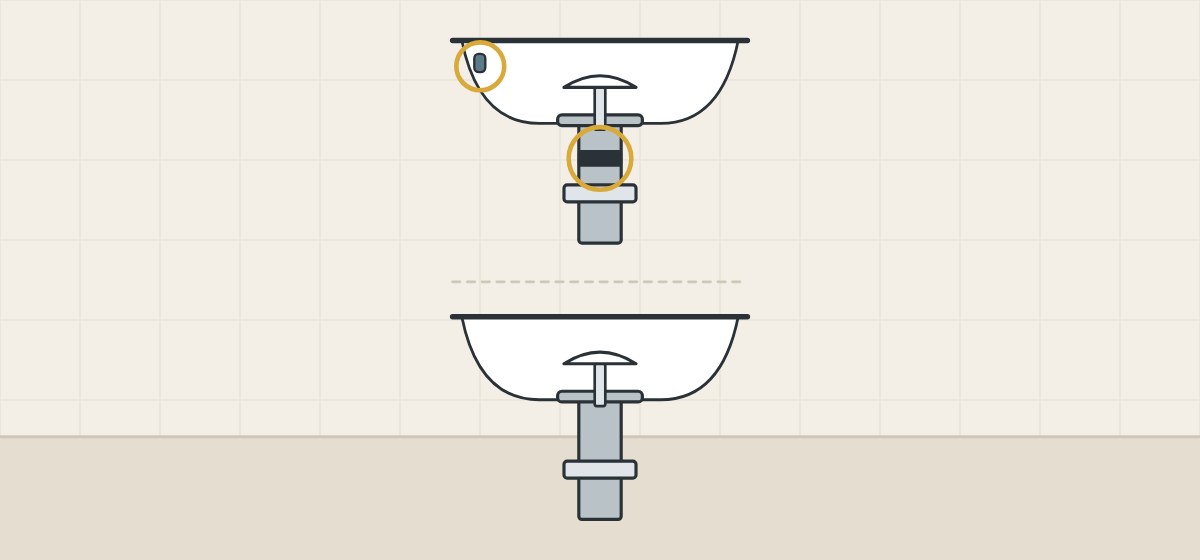
A basin with an overflow takes a slotted waste and a basin without one an unslotted drain, according to Crosswater’s FAQ. The slot is a gap that lets overflow water drain away.
| Overflow type | Drain as the maker describes it |
|---|---|
| With overflow | Slotted drain (Crosswater). |
| With overflow | Push-to-open drain (Kaldewei 3915). |
| With overflow | Clicker drain K-7124-A (Kohler). |
| Without overflow | Unslotted drain (Crosswater). |
| Without overflow | Free-flow drain (Kaldewei). |
| Without overflow | Clicker drain K-7124 or grid drain K-7129 (Kohler). |
| Without overflow | Lever-operated CLOU fitting that takes over the overflow function (Kaldewei). |
Bristan states that its slotted vanity basin drain lets water from the overflow drain whether the drain is open or closed.
How do makers name and describe these drains?
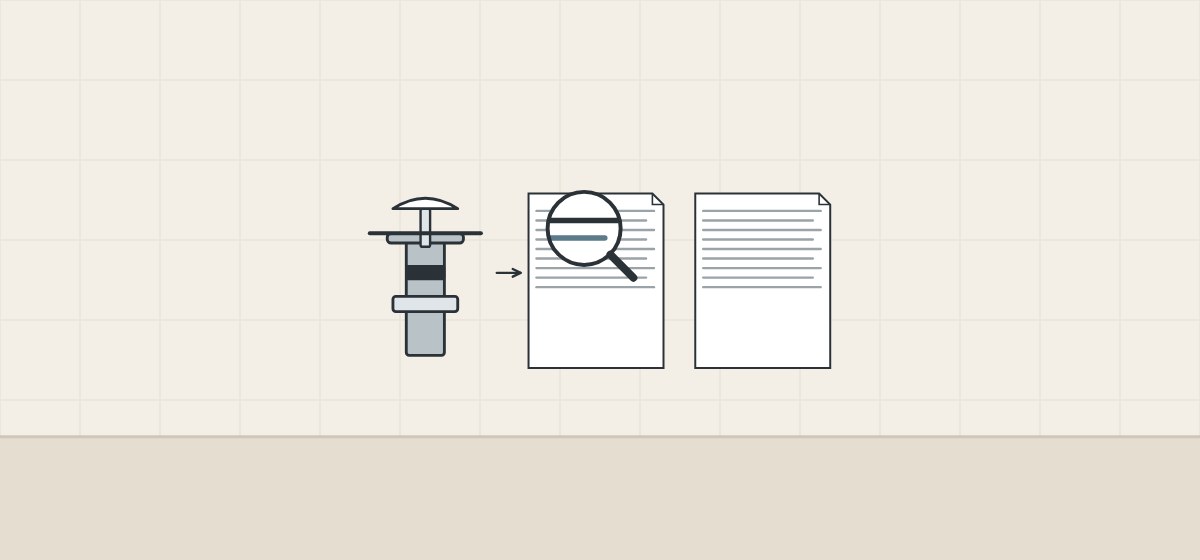
The products below carry the closing type and the overflow type in the product name or data sheet. Read both before comparing offers, and check that the product is still current.
| Maker and product | Maker’s description | Overflow wording |
|---|---|---|
| GROHE 65807000 | Push-open plug, closable | For wash basins with overflow |
| GROHE 48656 | One-touch, spring-action pop-up | With overflow |
| American Standard 8888095, 8888112 | Push pop-up drain | With overflow; less overflow |
| Ideal Standard E1482AA | Click-clack drain | With overflow: yes |
Kohler’s K-7124 and K-7124-A spec sheets both give a 1-1/4 in (32 mm) connection; one drain is without overflow and the other with. Here the connection size does not show the overflow type.
Which standards and codes apply to basin drains?
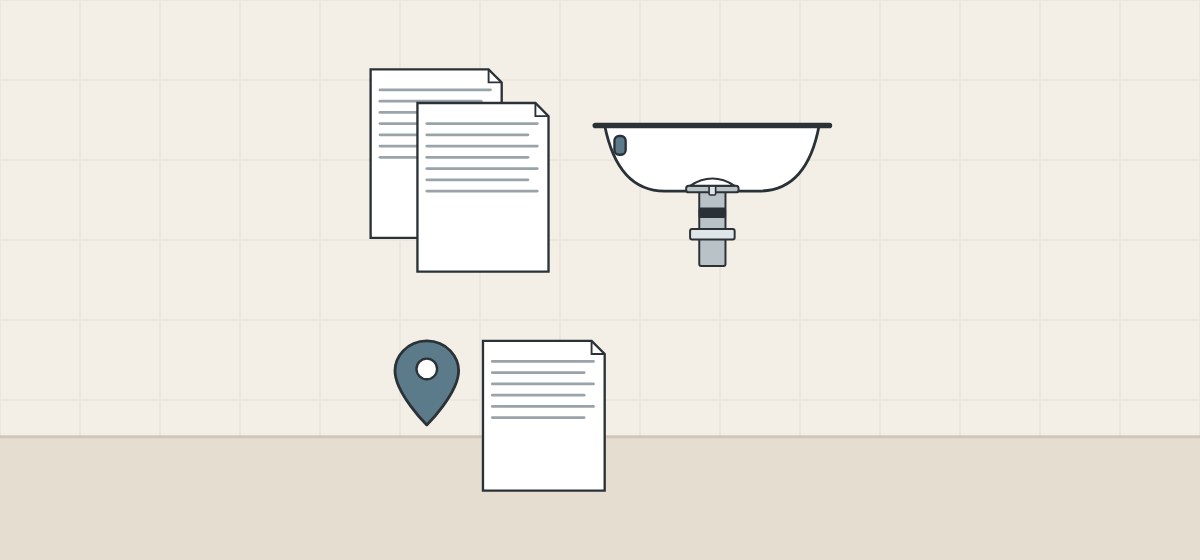
The Kohler and GROHE spec sheets used here cite a drain-fittings standard, and one city code adds a rule on stoppers.
ASME A112.18.2/CSA B125.2
ASME lists the 2020 edition, reaffirmed in 2025, for plumbing waste fittings of NPS 2 and smaller. The Kohler and GROHE spec sheets used here cite it.
EN 274-1
SIS describes Part 1 as requirements for waste outlets, traps and overflows on gravity drainage, wash basins included.
New York City Plumbing Code 416.3
Lavatory waste outlets must be at least 1 1/4 in (32 mm) with a strainer, pop-up stopper, crossbar or other device. Where a stopper is used, a built-in overflow must be provided. Confirm other places with the local authority.
Water-fittings approval
Ideal Standard’s E1482AA data sheet lists a WRAS certificate for that product.
- The standard named on the data sheet
- Its edition or year
- The code adopted at the project
- Any local rule on stoppers and overflows
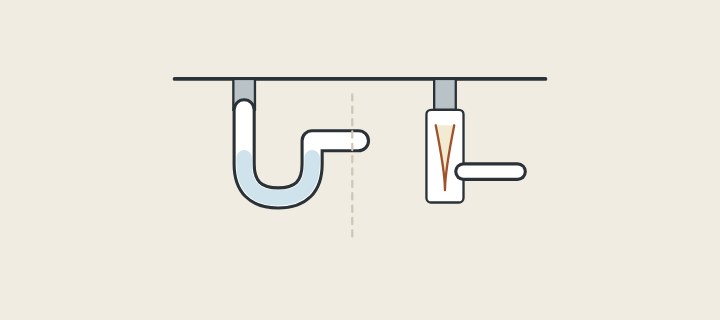
Does a non-closing drain stop a basin from overflowing?
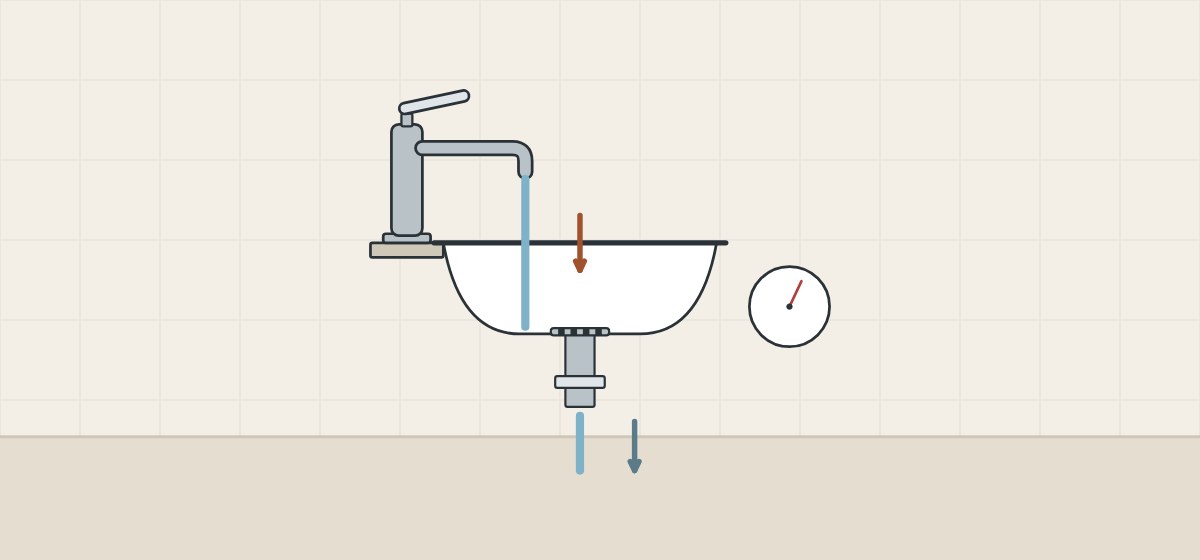
The sources used here do not present a non-closing drain as overflow protection, so do not specify it as one. They give figures only for closing or slotted drains:
Drain rate is a product figure
Bristan’s product data for its W BASIN10 C slotted push drain gives a drainage rate of 32.9 litres per minute.
Inflow can be limited
On a Duravit US price-list page for Vero Air, a footnote to its Design Siphon says that, in combination with a pop-up basin drain or push-open valve, a flow of max. 2 gallons per minute per faucet should not be exceeded.
The overflow needs a route
Bristan says its slotted vanity basin drain carries away overflow water whether the drain is open or closed.
Review the basin, the drain, the faucet flow and the pipework together. This guide does not size drainage.
Which parts of a basin drain are serviced or replaced?
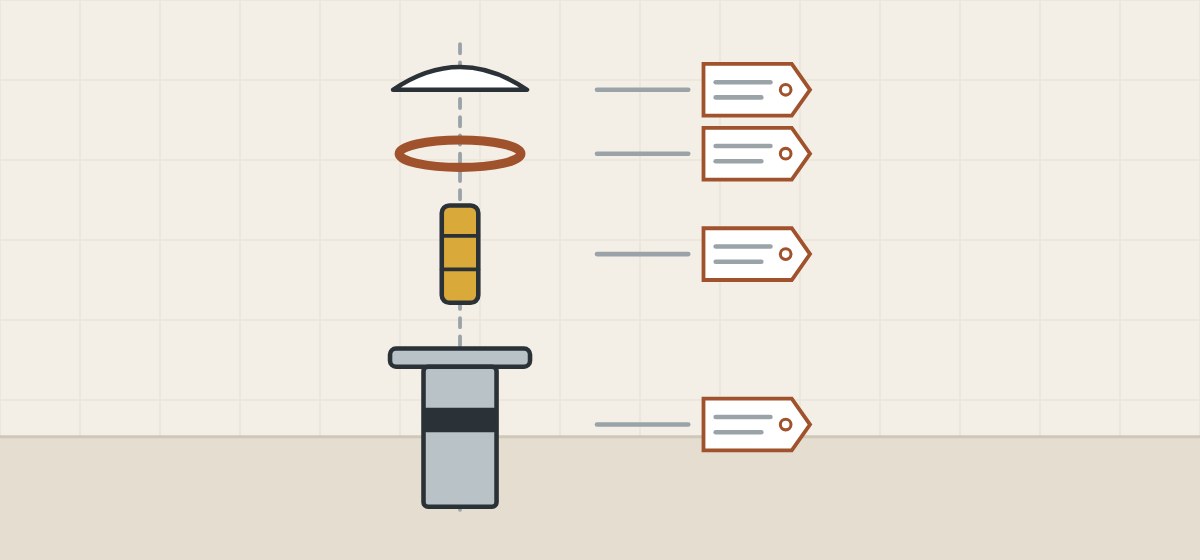
Kohler’s UK clicker drain guide has the cap and seal removed, and the seal and the clicker assembly inspected and replaced if necessary. Ask for the part reference of each.
| Source | What it says |
|---|---|
| Kohler UK clicker drain guide | With the cap open, turn counterclockwise to remove the cap and seal. |
| Same guide | Inspect the seal and the clicker assembly; replace them if necessary. |
| Same guide | Refit finger-tight; do not use a spanner. |
| Kohler spec sheets for K-7124 and K-7124-A | K-7124 is replaced by model 33151 and K-7124-A by model 25322. |
| Bristan clicker instructions | Clean with warm water and mild pH-neutral soap; avoid bleach and abrasives. |
How should a buyer specify a basin drain?
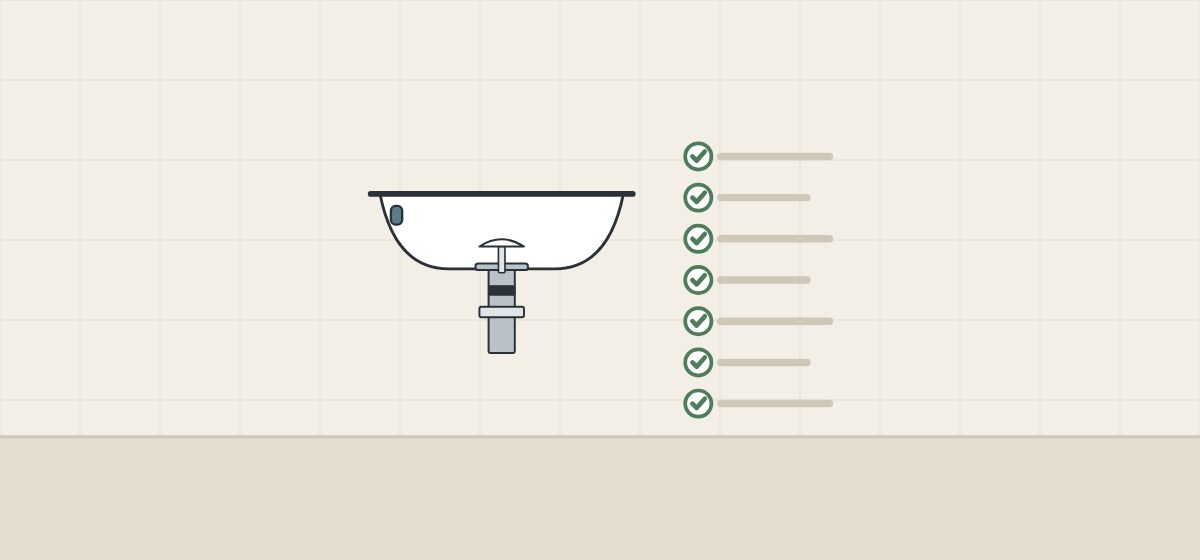
These steps are procurement guidance, not a code review.
- Decide whether the basin must hold water. Closing or non-closing; check local rules on stoppers.
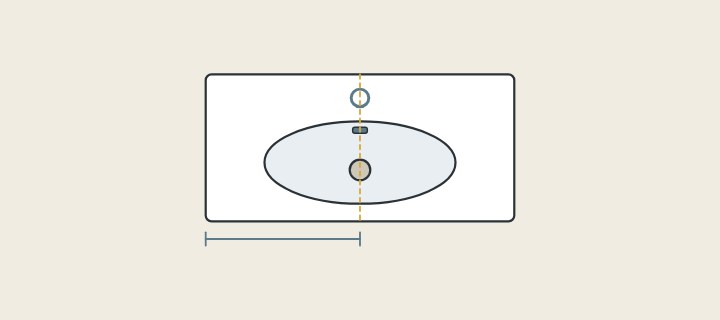
- Record the overflow. Does the basin have a built-in overflow?
- Match the drain. Slotted or “with overflow”; unslotted or “without overflow”.
- Choose the operation. Push-open at the cap, or a lift rod.
- Record connection and standard. As printed on the data sheet.
- Check flow. Faucet flow against any published drain rate or limit.
- Identify service parts. Seal and clicker references.
When the finish matches but the function does not
A matching finish and thread size are not a complete match.
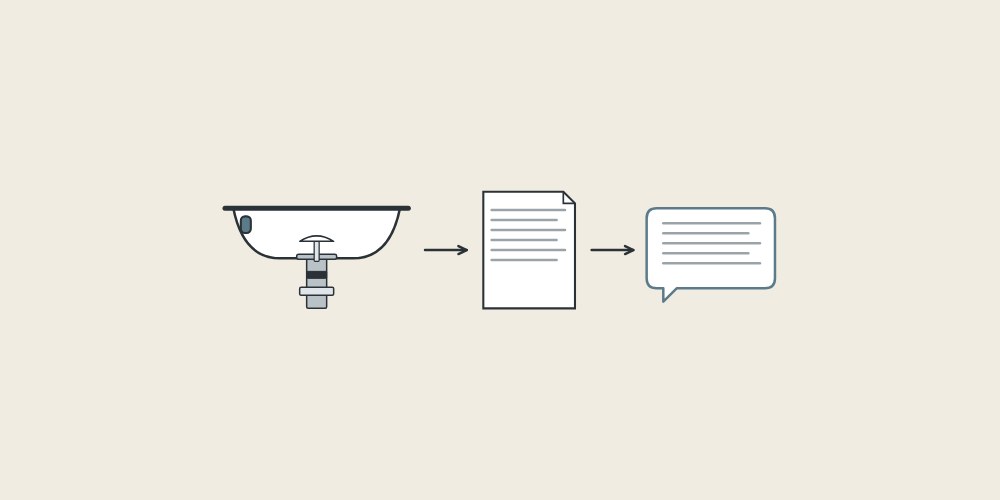
What should you send and ask before a quotation?

Name the function and the fit, not only the finish.
| Question | Why it matters |
|---|---|
| Does the drain close? | A closing drain lets the basin fill. |
| Is it slotted or “with overflow”? | It has to suit the basin’s overflow. |
| How is it operated? | At the cap or by a lift rod. |
| Which standard is on the data sheet? | Not every data sheet names one; record it as printed. |
| What is the connection size? | Size alone does not show the overflow type. |
| Which parts can be replaced? | Ask for seal and clicker references. |
Include with your request
- Basin model and drawing
- Whether the basin has an overflow
- Whether the basin must hold water
- Faucet model, with or without a lift rod
- Project location and adopted code
- Quantity and finish
WNS Global confirms any offered basin, waste and commercial terms separately in writing. This guide does not state that WNS Global products include any drain named above or meet any standard, rating or approval named above.