From reverse flow to listing
What does backflow mean for a hand shower?
Backflow is water running the wrong way, from a fixture back into the drinking-water supply. Watts defines a cross-connection as piping that lets the potable supply connect to a line containing a contaminant.
The EPA’s Cross-Connection Control Manual describes backsiphonage as atmospheric pressure pushing a liquid toward a supply that is under a vacuum. Watts lists nearby fire-fighting, repairs and main breaks as causes of such a vacuum.
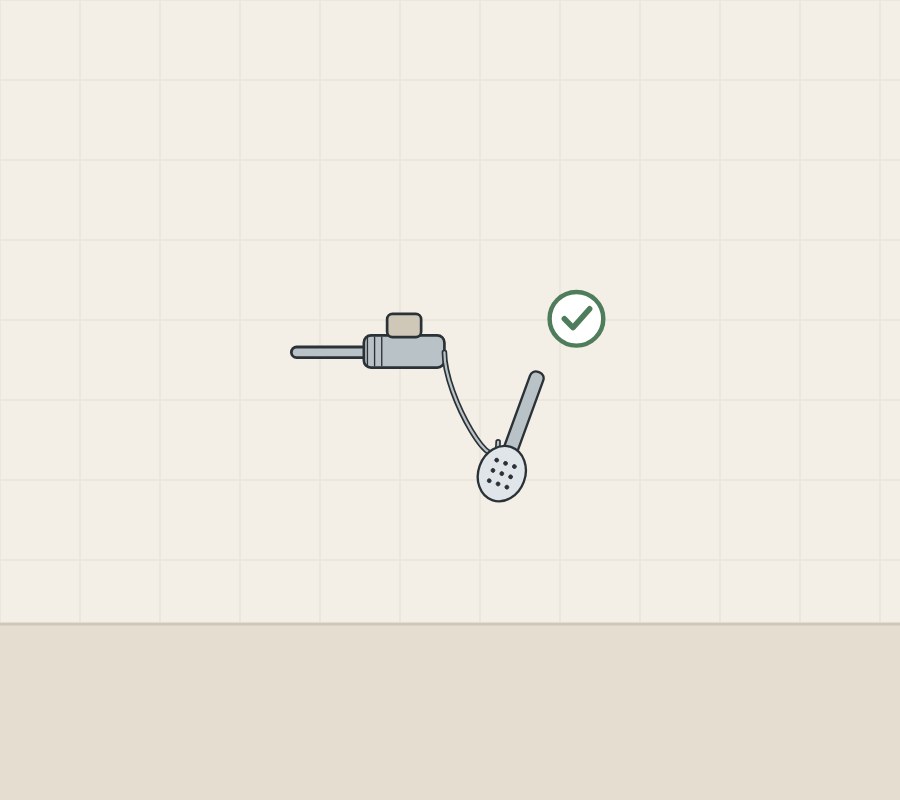
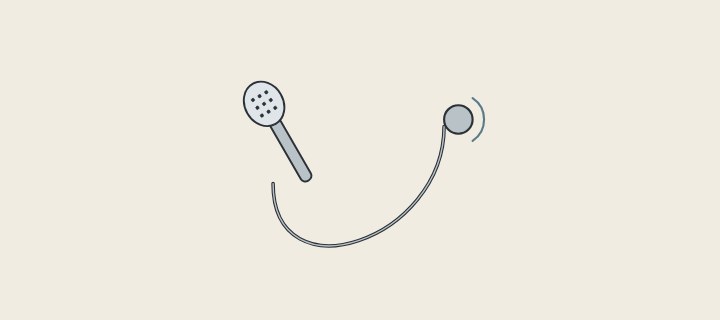
The EPA also notes that old bathtubs had supply inlets below the flood rim, a hazard modern fixtures have reduced. A hand shower on a hose can put an outlet back below the rim.
| Term | What it means |
|---|---|
| Backsiphonage | Reverse flow caused by a vacuum or partial vacuum in the supply. |
| Backpressure | Reverse flow caused by downstream pressure rising above supply pressure. |
| Cross-connection | Piping that connects the potable supply to a possible contaminant. |
| Vacuum breaker | A device that vents to the air when supply pressure is lost. |
| Check valve | A valve that lets water flow in one direction only. |
| Air gap | A physical gap between the outlet and the flood rim; no mechanical parts. |
How can a hand shower draw water back?
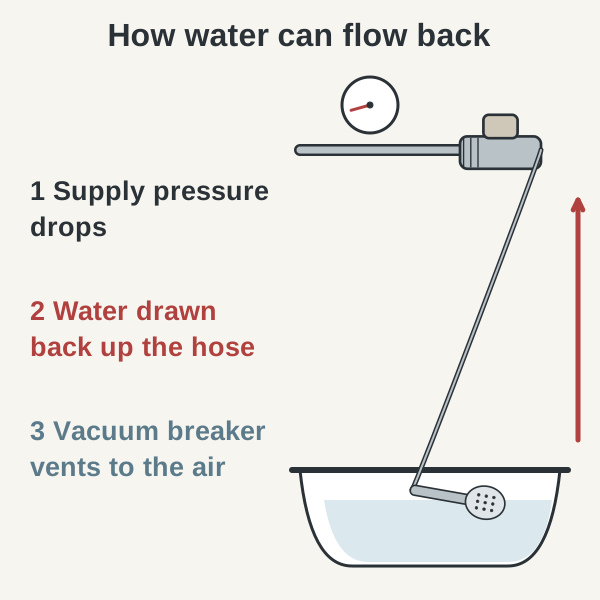
The sequence below combines the EPA’s description of backsiphonage with Watts’ explanation of how a vacuum breaker responds. It is a general mechanism, not a record of any product.
- The hand shower lies below the flood rim, for example in a filled tub.
- Supply pressure falls, for example during a main break or nearby fire-fighting.
- A vacuum forms in the supply piping.
- Atmospheric pressure pushes water from the tub up the hose.
- Without protection, that water can enter the supply.
- With a vacuum breaker, the vent opens and the supply side closes.
The last step is described in Watts’ vacuum breaker guide: when supply pressure is lost, the vent disc drops, opening the atmospheric vent and closing the supply-side orifice.
Which devices protect against which condition?
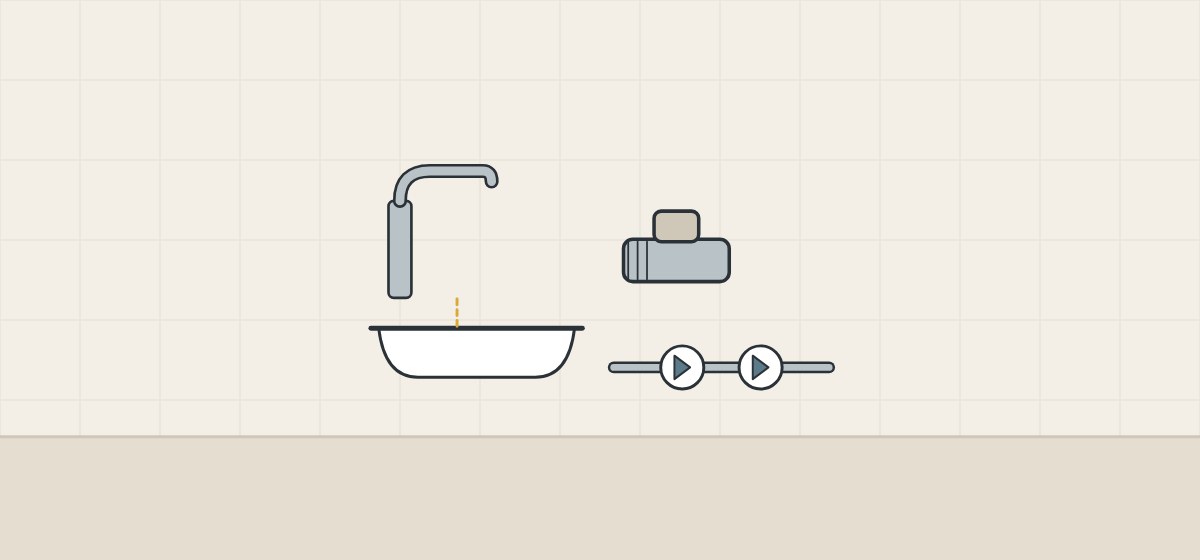
The table follows the Louisiana amended IPC backflow table, ASSE’s preview pages and the EPA manual. Hazard levels are those sources’ own.
| Device | What the source lists it for |
|---|---|
| Air gap | EPA: very effective against both backsiphonage and backpressure. |
| Atmospheric vacuum breaker (ASSE 1001) | High or low hazard; backsiphonage only. |
| Hose connection vacuum breaker (ASSE 1011) | High or low hazard; low-head backpressure or backsiphonage. |
| Dual check (ASSE 1024) | Low hazard; backpressure or backsiphonage. |
| Hose connection backflow preventer (ASSE 1052) | Two checks with a vent; low-head backpressure only, up to 12 hours under pressure. |
| Hand-shower device (ASSE 1014) | Backsiphonage and backpressure in hand-held showers. |
ASSE 1014 accepts either two independent check valves in series or a check valve in series with a vacuum breaker. The name on a device therefore says less than its configuration and listing.
Where does the backflow device sit in a hand-shower set?
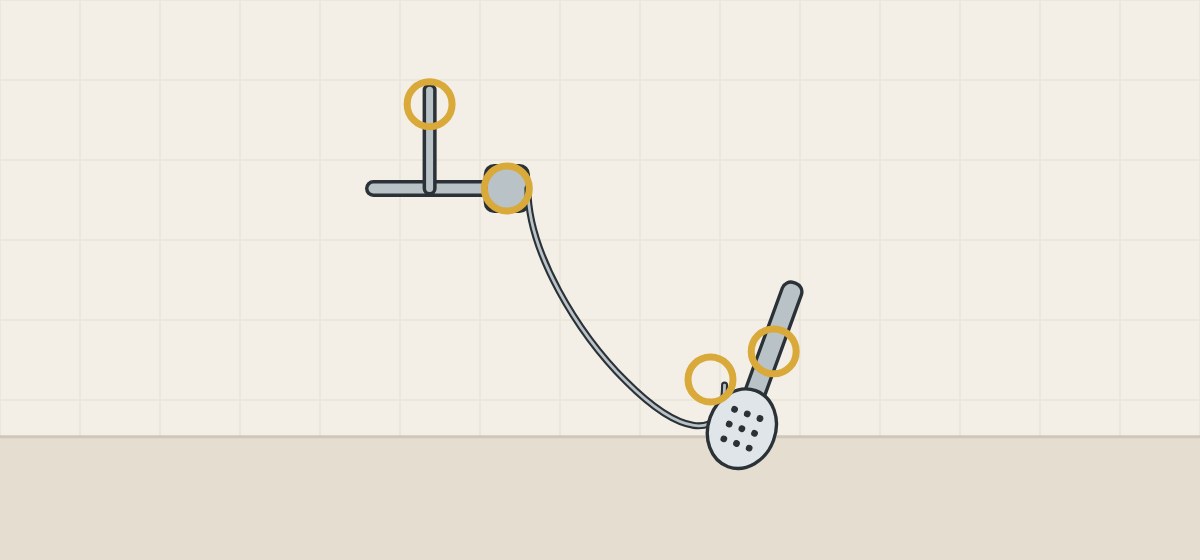
ASSE 1014 covers devices that are separate or built into the hand shower, hose or other attached parts. Named products show the range.
| Location | Named example | What the maker says |
|---|---|---|
| Hose end | Delta 75582 hand shower | Vacuum breaker fixed in the hose end; do not remove it. |
| Between head and hose | Watts S8C | Made for hand sprays; listed to ASSE 1011, CSA B64.2 and IAPMO. |
| Wall supply | Kohler K-98355 | Includes a check valve for backflow prevention. |
| In the hand shower | Kohler K-45415-A | A flow-regulating check valve; Kohler adds that codes require an in-line vacuum breaker. |
| In-line | Chicago Faucets E24JKCP | Described as ASSE 1014 compliant, for non-continuous pressure. |
| Shower arm | Delta U4900 | Atmospheric type, at least 2 in above the flood rim. |
The Watts example shows that a device sold for tub and shower hand spray sets may be listed to a hose-connection standard rather than to ASSE 1014.
See also: Sources and scope
What do the hand-shower standards cover?
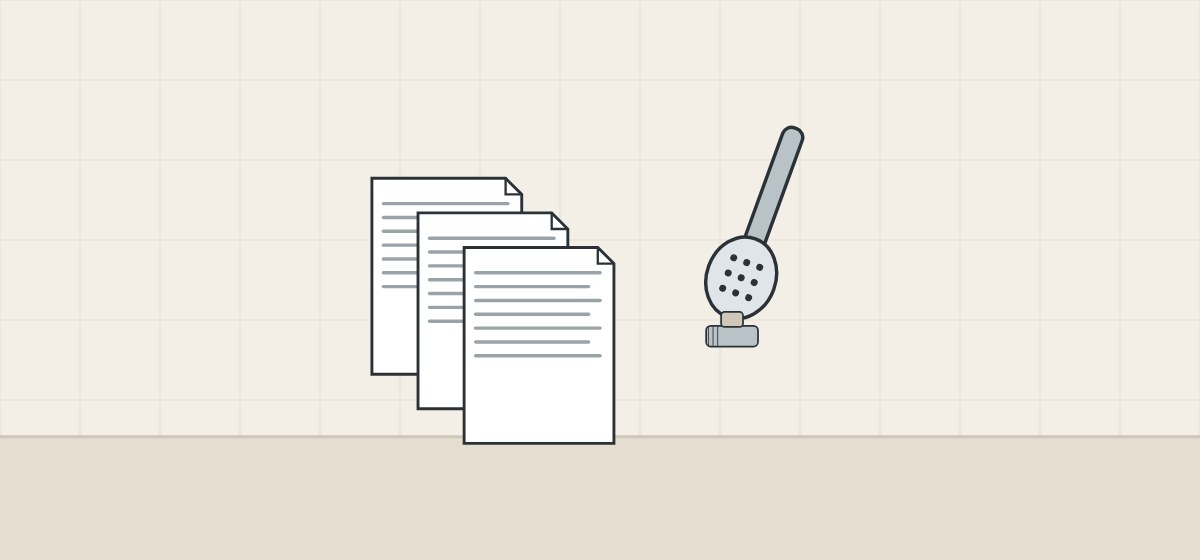
Three standards appear on hand-shower data sheets and in codes. Each has a different scope, and a matching hose thread shows fit, not protection:
ASSE 1014-2020
Performance requirements for backflow devices for hand-held showers, covering backsiphonage and backpressure. Its preview gives a design basis of at least 125 psi inlet pressure and operation from 40 to 120 °F.
ASME A112.18.3
Backflow devices in fixture fittings whose outlets are not protected by an air gap. ASME lists the 2002 edition as reaffirmed in 2022 and on stabilized maintenance.
ASME A112.18.1/CSA B125.1
Supply fittings between the supply stop and the terminal fitting; an ANSI summary says this includes hand-held showers. ASSE 1014 requires compliance with its applicable parts.
Related ASSE standards
ASSE’s standards list includes 1001, 1011, 1024 and 1052 alongside 1014.
- The standard the device is listed to
- Its configuration: checks or vacuum breaker
- The conditions it is listed for
- The certifier’s listing entry
What limits apply to vacuum breakers?
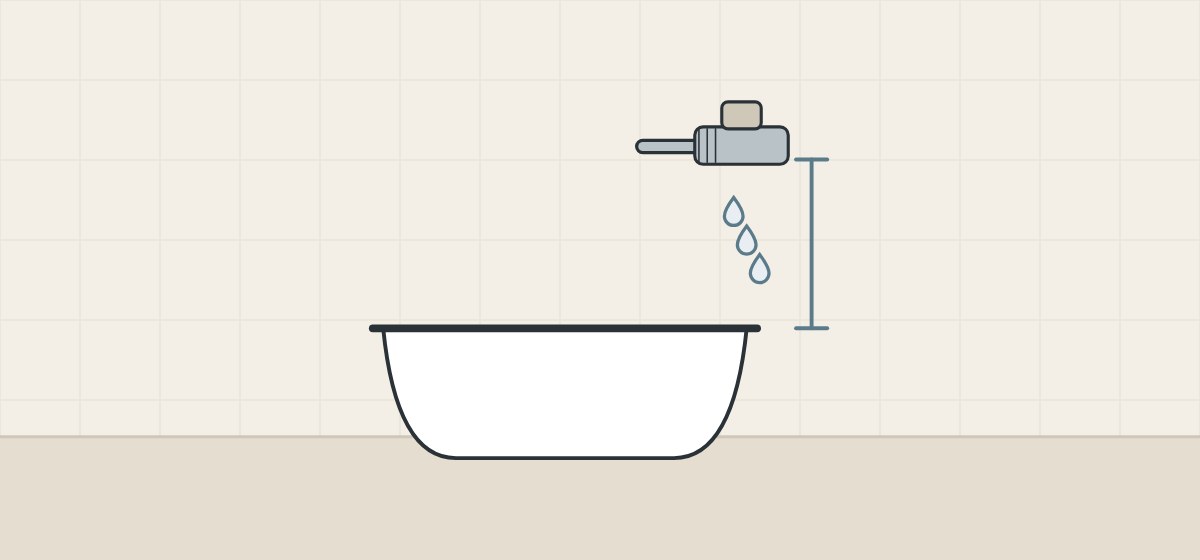
Vacuum breakers appear on several of the hand-shower products above, but the makers and the EPA set clear limits. Four points:
Not for backpressure
Watts says atmospheric vacuum breakers will not protect against backpressure; the EPA says hose bibb vacuum breakers should not be used as backpressure devices.
Continuous pressure
Watts says a vacuum breaker should not stay under continuous pressure unless designed for it, and notes codes prohibit atmospheric types under pressure for more than 12 hours.
Height and mounting
The EPA says atmospheric vacuum breakers go vertical, with no shutoff downstream, at least 6 in above the outlet. Delta’s shower-arm breaker must sit 2 in above the flood rim and not be concealed.
Drips are normal
Delta says small discharges are normal when the valve opens or closes, and when a hand shower sits below the breaker with the supply off.
A check valve that stops hot and cold water crossing over is a different function. Moen’s 8342 system lists backflow compliance through ASME A112.18.3 and, separately, check valves against cross flow.
What do local codes and utilities ask for?

Requirements come from the code adopted where the project is built. Three examples, and one maker’s note:
| Source | What it asks for |
|---|---|
| Chicago, 18-29-424.2 | Hand showers conform to ASME A112.18.1/CSA B125.1 with its backflow protection, or use an ASME A112.18.3 device. |
| Minnesota plumbing code | Its referenced-standards table cites ASSE 1014-2020 and ASME A112.18.3 in section 417. |
| WSSC Water, Maryland | Hand spray heads comply with ASME A112.1.2, as the utility states, or carry an ASSE 1014 device; dual checks where a vessel fills below the flood rim. |
| Kohler specification note | States that plumbing codes require an in-line vacuum breaker with its hand showers; this is the maker’s statement. |
| Model codes (IPC, UPC) | Section text could not be retrieved for this guide; confirm with the local authority. |
How should a buyer specify hand-shower backflow protection?
These steps apply the facts above to a hotel or residential order. They are procurement guidance, not a code review.
- Start with the local code. Identify the adopted code and any utility rule for the project, and who reviews the installation.
- Name the conditions. Say whether backsiphonage, backpressure or both must be covered.
- Name the device and its place. Hose end, head, wall supply, hand shower, in-line or shower arm.
- Record the standard. ASSE 1014, ASME A112.18.3 or another, as the code requires.
- Check the listing. Find the product in the certifier’s directory, not only on a product page.
- Check installation limits. Height above the flood rim, continuous pressure and concealment.
- Keep cross-flow separate. Record cross-flow check valves apart from backflow protection.
When a page says “compliant”
Maker pages use wording such as “ASSE 1014 compliant”. CSA Group and NSF say their directories show which products are currently listed, so check the claim against a directory entry.
What should you send and ask before a quotation?
A complete request names the protection, not just the hand shower. Each question maps to a point earlier in this guide.
| Question | Why it matters |
|---|---|
| Which backflow device is included? | Devices cover different conditions. |
| Where in the set does it sit? | Hose end, head, wall, arm or in-line. |
| Which standard is it listed to? | A hand-spray device may be listed to ASSE 1011, not 1014. |
| Can the listing be found in a directory? | “Compliant” on a page is not a listing. |
| Does it cover backpressure? | Atmospheric vacuum breakers do not. |
| What installation limits apply? | Height, pressure duration and access differ by device. |
Include with your request
- Project location and adopted code
- Required standard or device type
- Fixture layout and flood-rim heights
- Hand-shower and hose specification
- Quantity per room type
WNS Global confirms any offered hand shower, backflow device and commercial terms separately in writing. This guide does not state that WNS Global products include any backflow device or are listed to any standard named above.