

From route to request
What decides the right hose length?
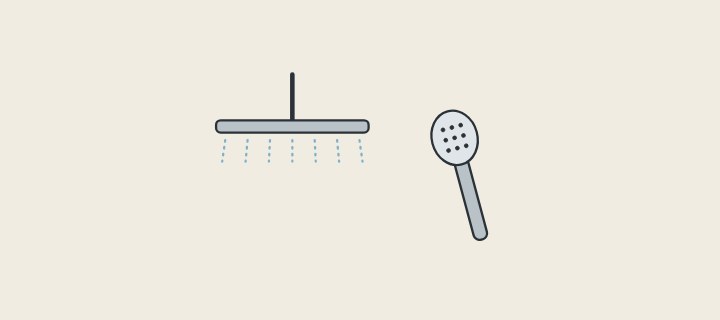
The layout decides it: where the water outlet is, where the holder sits and where the hand shower must reach. A hose that reaches the parked holder may still be short for seated use or for rinsing the floor.
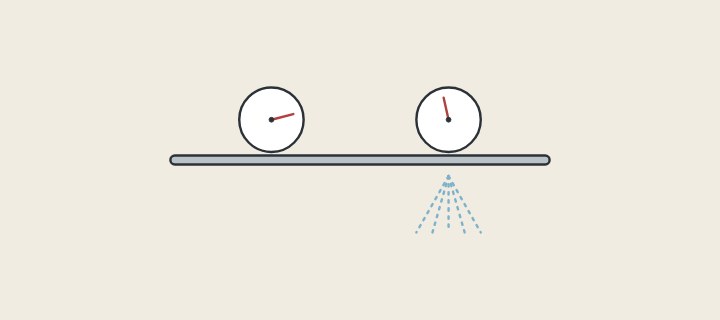
Holder height matters too: the U.S. Access Board’s bathing-room guide notes that an adjustable-height vertical bar may leave the hand-held unit out of reach unless it is returned to a lower position.
| Input | Record | Answers |
|---|---|---|
| Water outlet | Position and direction | Where the route starts |
| Holder | Highest and lowest positions | How the route changes |
| Use points | Standing, seated, cleaning | Reach needed |
| Free space | Where slack hangs; fittings | Whether length gets in the way |
| Connections | Thread, nut, swivel per end | Fit and movement |
How do you trace the working path?
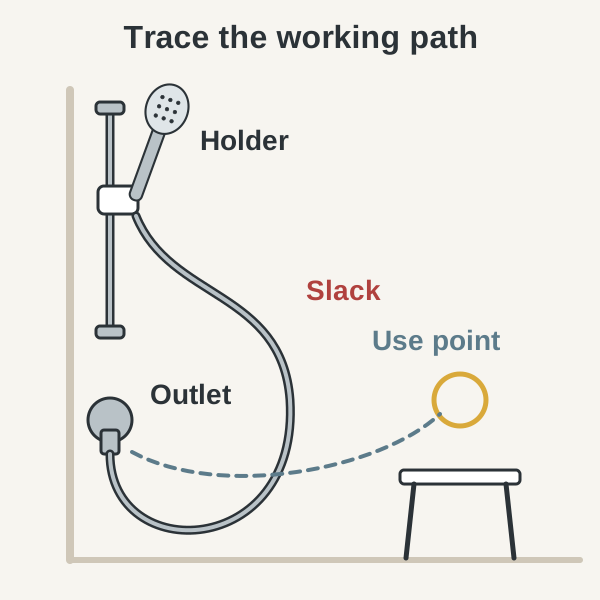
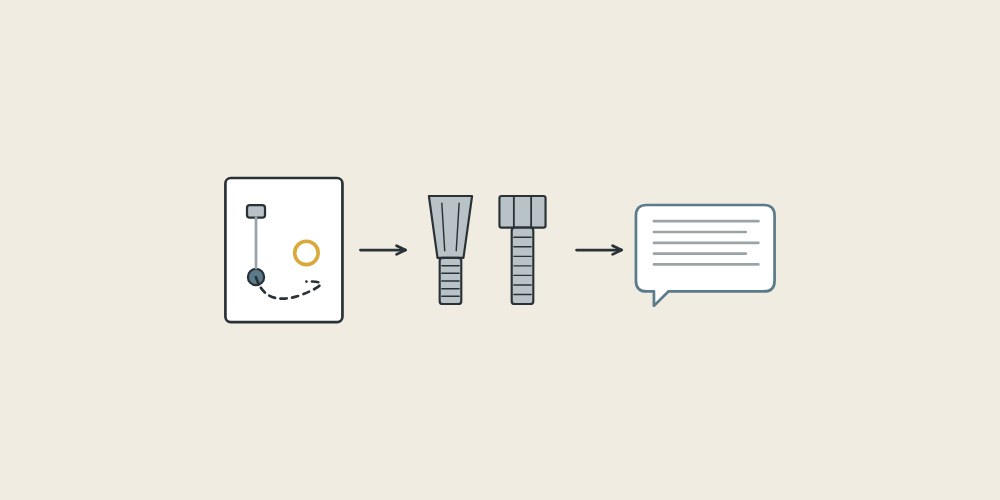
Draw the route on one sketch first. The steps are this guide’s own method, built on the factors hansgrohe lists.
- Mark the water outlet and the way it faces.
- Mark the holder at its highest and lowest positions.
- Mark each use point: standing, seated, cleaning.
- Measure from the outlet to the farthest use point.
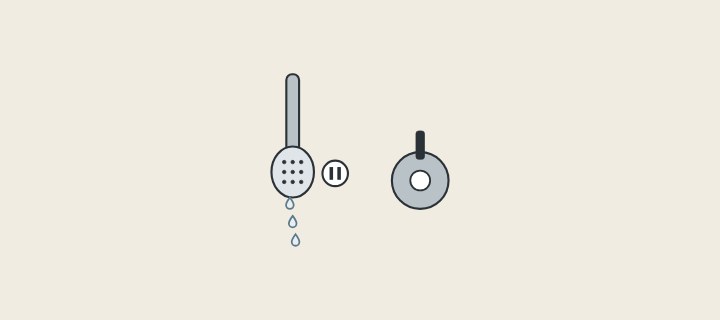
- With the hand shower parked, see where the slack hangs.
- Note fittings, a door or a tub rim the loop could catch.
Use the real layout. The diagram shows reach and slack only, not an installation method.
Which hose lengths do makers list?
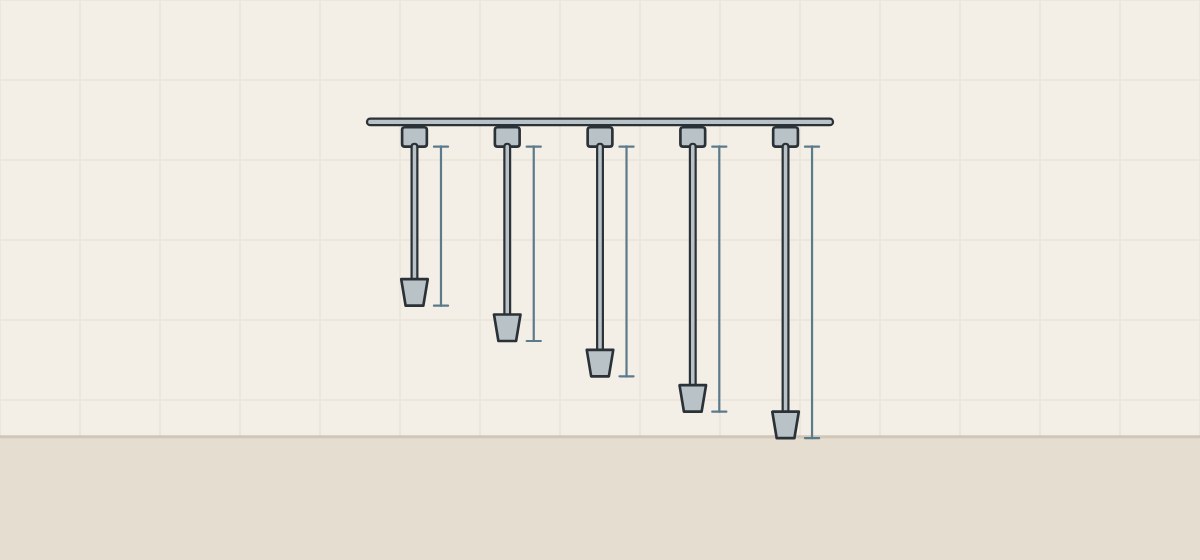
One page below is an advice page, one a collection page and the rest single products. The table gives each page’s own figures:
| Maker and page | Length(s) on that page |
|---|---|
| hansgrohe USA advice page | 63 in and 80 in |
| hansgrohe Isiflex; AXOR textile hose | 1.60 m; 2.00 m |
| GROHE Relexaflex collection | 49, 59, 69 and 79 in |
| Kohler K-9514 | 60 in (1524 mm) |
| Delta U495S-69-PK | 69 in |
| Moen 155748 | 59 in |
hansgrohe USA gives a use for each of the two lengths it names: 63 in as the optimal dimension for the shower, 80 in for standing in the bathtub. That is one maker’s recommendation, not a rule.
Which thread and nut does each end have?
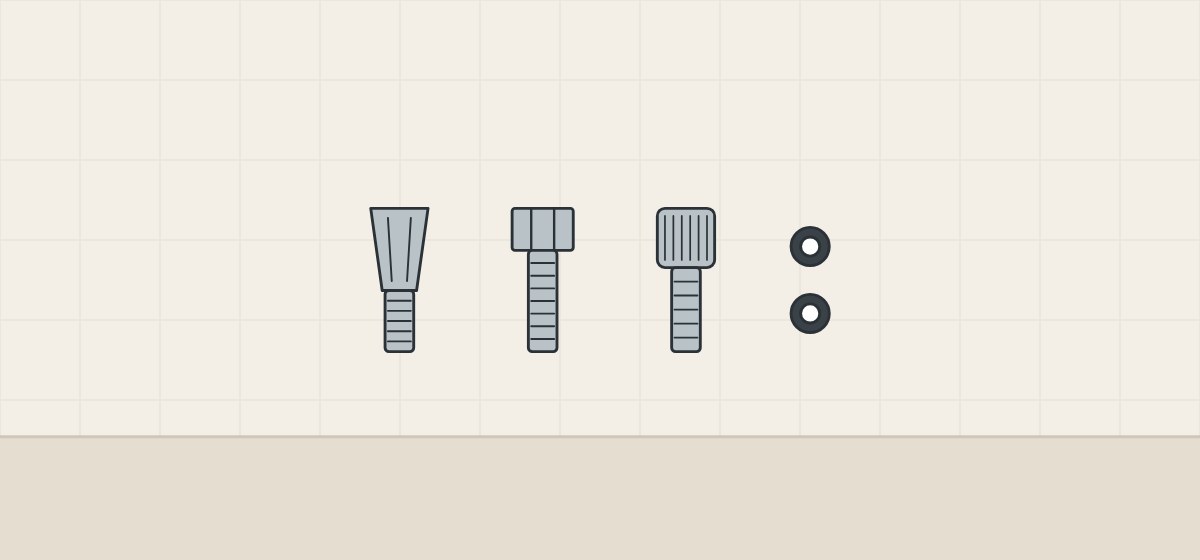
It depends on the product. hansgrohe USA’s advice page says most shower faucets have a 1/2-inch thread and most hoses match it on both sides.
| Product | Thread stated | Nuts stated |
|---|---|---|
| hansgrohe Techniflex 80 in | G ½ | Not stated |
| hansgrohe Isiflex 1.60 m | G ½ | Conical on both ends |
| AXOR textile hose 2 m | G ½ | One conical, one cylindrical |
| GROHE 69 in metal hose (listed as discontinued) | G 1/2″ x 1/2″ | Not stated |
| Delta U495S-69-PK | Not in features or specifications | One conical, one hex |
| Moen 155748 | 1/2″; type IPS | Not stated |
| Speakman Neo hand shower | 1/2-14 NPSM | A hand shower, not a hose |
ISO 228-1 covers parallel pipe threads that are not suitable for a pressure-tight joint on the thread; such a joint is made by compressing surfaces outside the threads with a seal between them. No source used here says a G ½ nut and a 1/2-14 NPSM thread interchange, so ask the supplier.
What does an anti-twist swivel do, and where is it?
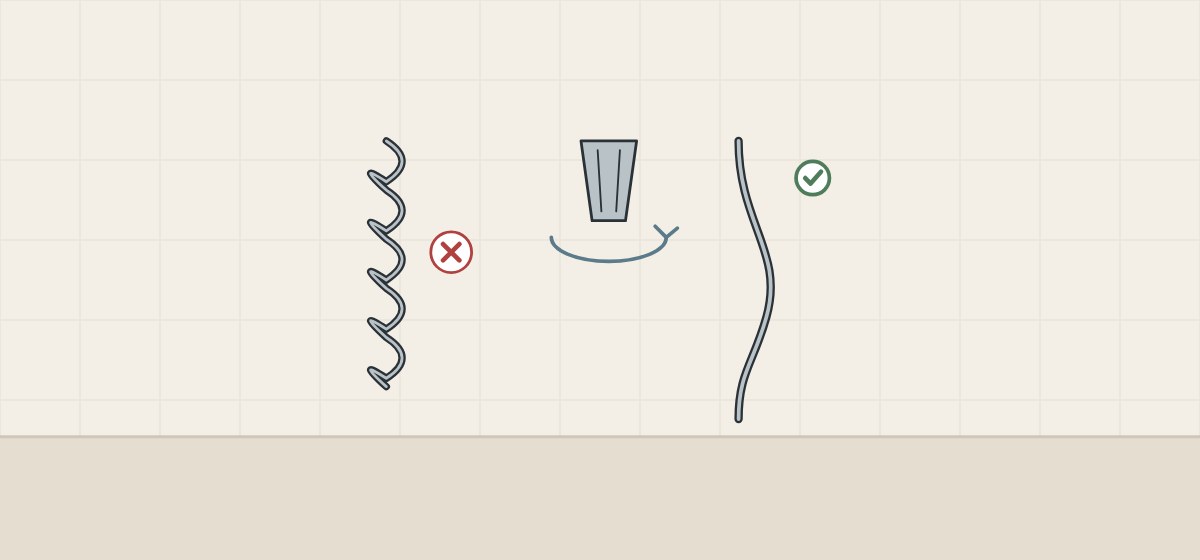
Three makers below describe a connector or feature meant to stop the hose twisting or tangling; Kohler names a swivel base for a different stated purpose. Each uses its own term:
hansgrohe: pivot connector
The Techniflex page says a pivot connector prevents the hose from tangling. The advice page credits a ball-bearing swivel on Isiflex and Comfortflex hoses.
GROHE: rotation cone
The page for GROHE’s 59 in metal twist-free hose, listed there as discontinued, says a rotation cone gives twist-free convenience.
Neoperl: one side
Neoperl’s shower hose page lists an anti-twist feature on one side.
Kohler: swivel base
Kohler’s K-9514 sheet says a swivel base helps reach target areas.
For any offered hose
Ask the supplier for these four points:
- The maker’s name for the feature
- The model it is stated for
- Which end turns
- Which end goes to the hand shower
What do makers state about hose materials and ratings?

The pages below describe hose materials; only one gives strength, pressure and heat ratings:
Plastic and metal
hansgrohe says the metal hose once stood for quality and that good plastics are now also durable and softer on the skin.
Delta: two constructions
Delta describes U495S-69-PK as a stainless steel hose. Its 69 in UltraFlex hose, sold in a Stainless finish, is vinyl spiraled over a rubber inner liner.
Textile
AXOR describes a braided textile hose with yarns of recycled PET.
Stated ratings
GROHE’s page for one 69 in metal hose, now listed as discontinued, gives tensile strength 500 N, pressure resistance up to 5 bar and heat resistance 160 °F. These figures belong to that hose.
The cover does not tell you what is inside: hansgrohe USA’s advice page describes Isiflex as a plastic hose with metal optics. If construction matters, ask for the selected model’s data.
Which standards and accessibility rules cover shower hoses?

EN 1113 is written for shower hoses, and the U.S. ADA Standards set a minimum hose length at accessible bathtubs and showers. Confirm what applies with the local authority.
| Document | What its published text says |
|---|---|
| EN 1113:2015, per DIN Media | Dimensional, leaktightness, mechanical and hydraulic requirements for shower hoses of any material, downstream of the faucets’s control valve. |
| EN 1113, exclusions | Hoses that are part of sink or basin mixers; hoses connecting faucets to the supply. |
| ASME A112.18.6/CSA B125.6-2017 (R2021) | ASME: flexible water connectors under continuous pressure, in accessible locations only. Its published scope does not name shower hoses. |
| U.S. ADA Standards 607.6 and 608.6 | Shower spray unit with a hose 59 in (1500 mm) long minimum, usable fixed and hand-held. 608.6 has an exception for some facility types. |
| Neoperl hose page | Lists EN 1113 and ASME A112.18.1/CSA B125.1 for one shower hose. |
How should a buyer specify a hand-shower hose?

These steps are procurement guidance, not installation instructions.
- Sketch the route. Outlet, holder and every use point.
- Set the length from the route. Check where the slack hangs.
- Check any length rule. Confirm accessible-room rules with the local authority.
- Record both ends. Thread and nut at the outlet and the hand shower.
- Name the swivel. Maker’s term, model and the end that turns.
- State the construction. Inner hose, cover and any ratings.
- Ask for seals and instructions. Tightening instructions differ by product.
When replacing a hose
Record the model, length, end connections and any swivel against the room, and replace like for like. Instructions differ: a Delta installation sheet says to hand tighten both ends without a wrench; a Kohler guide says to tighten the wall-elbow end with a wrench without overtightening. Follow the selected product’s instructions and do not force or modify a connector.
What should you send and ask before a quotation?

A complete request describes the route as well as the hose.
| Question | Why it matters |
|---|---|
| What length is offered? | Makers list different lengths. |
| What thread is on each end? | Makers state G ½, 1/2″ IPS or, for one hand shower, 1/2-14 NPSM. |
| Which nut is on each end? | Conical, hex or cylindrical. |
| Is there a swivel, and on which end? | One maker states one side only. |
| What are the inner hose and cover? | A metal look can cover plastic. |
| Which standard is the hose tested to? | EN 1113 is written for shower hoses. |
Include with your request
- Route sketch: outlet, holder, use points
- Outlet and hand-shower connections
- Project location and accessibility needs
- Finish and quantity per room type
WNS Global confirms any offered hose, its connections and commercial terms separately in writing. This guide does not state that WNS Global products have the lengths, threads, swivels, materials, ratings or listings named above.