From reading to request
What is the difference between static and flowing pressure?
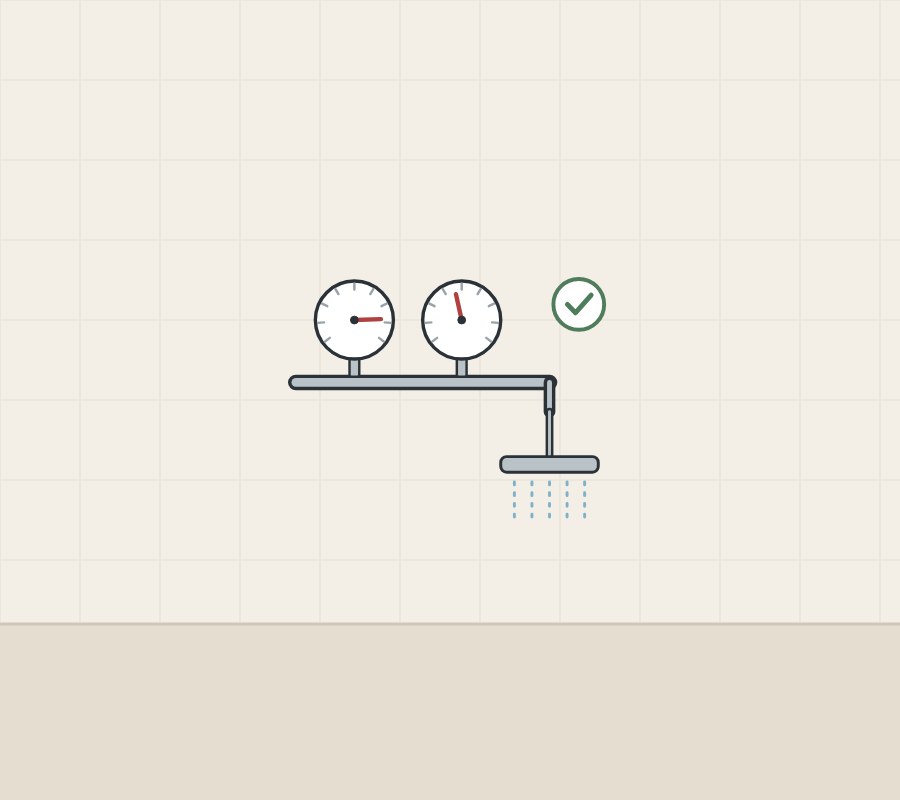
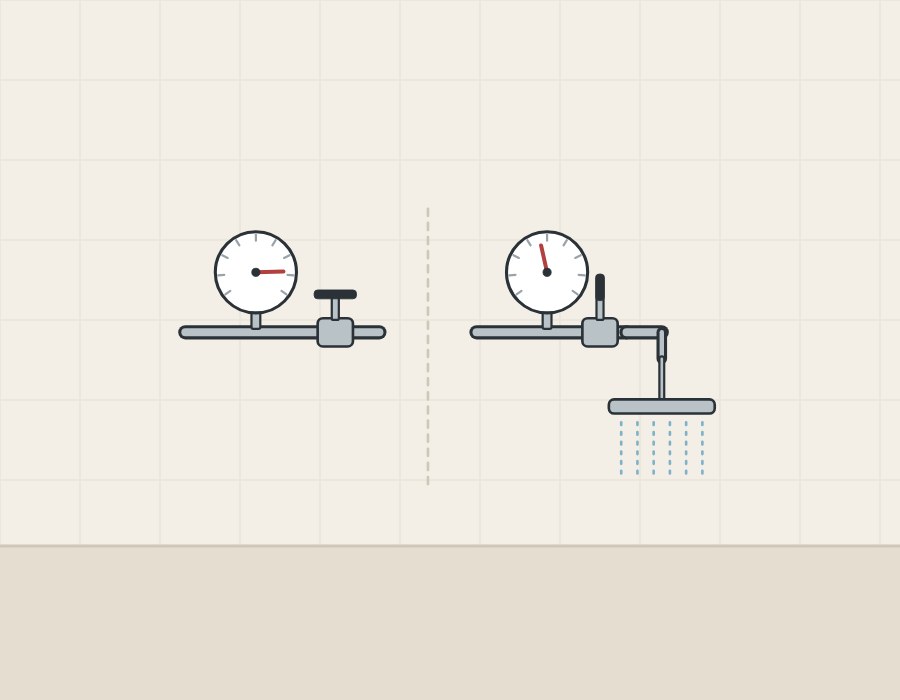
Static pressure is read with no water moving; flowing pressure is read while water runs. The EUA-hosted article says plumbers typically measure with all faucets closed and no water flowing, which gives the static pressure.
| Term | How the named source uses it |
|---|---|
| Static pressure | EUA article: all faucets closed, no water flowing. |
| Dynamic pressure | Bristan data sheet: a minimum and a maximum field. |
| Maintained pressure | Mira Select guide: at the appliance inlet while running. |
| Flowing pressure | EPA testing explanation: the showerhead test pressures. |
| Operating pressure | Kohler sheet and hansgrohe’s general data: the label on a limit. |
What happens to the pressure reading when water runs?
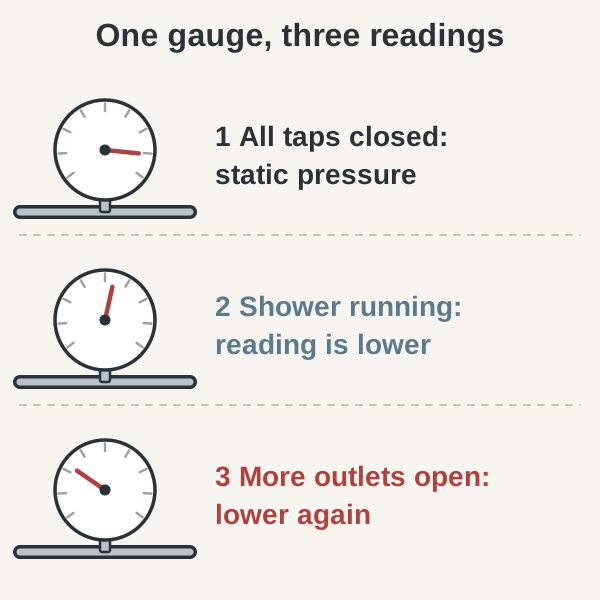
The EUA article says dynamic pressure is always lower than static, is a function of available flow rate and reduces further with every extra outlet opened.
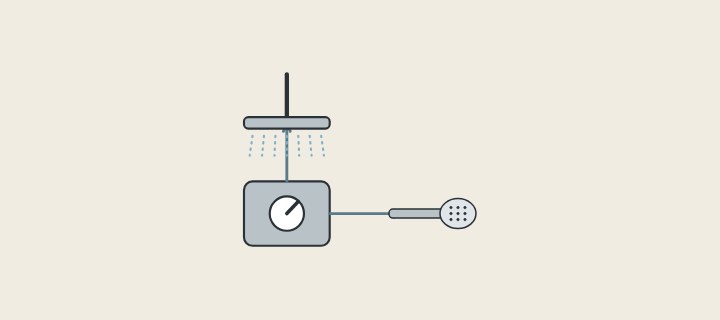
- All faucets are closed; the gauge shows static pressure.
- The shower is opened; the reading is now a dynamic pressure, lower than static.
- Another outlet is opened; the EUA article says the reading reduces further.
- The shower works on the pressure that remains while water runs.
To see what a supply delivers, the article suggests opening three or four cold outlets together, measuring the flow of each while all run and adding the results. Severn Trent lists peak demand, the property’s height, the service pipe’s size and condition and a shared service pipe among things that affect pressure.
Which pressure limits does a shower data sheet state?
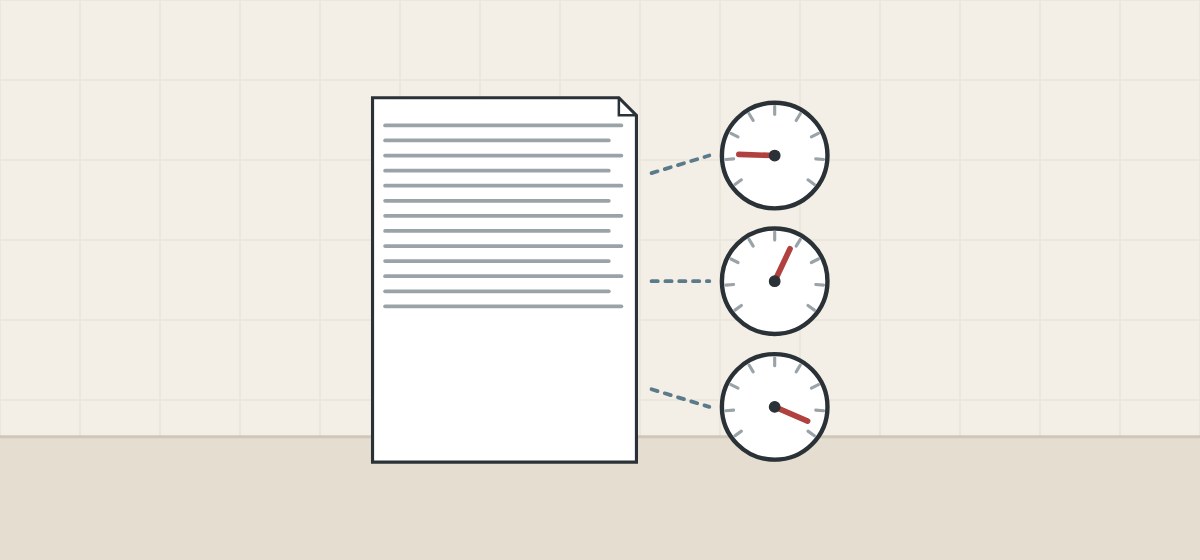
Five named documents label their pressure limits differently; each gives a static and a running limit as separate fields, the hansgrohe one only in its UK section. Each figure belongs to that product only.
| Document | Static limit | Running limit |
|---|---|---|
| Bristan Frammento shower pack | Maximum static 10 bar | Dynamic 0.2 to 5.0 bar |
| Mira Select, high pressure setting | Maximum static 10 bar | Maintained 1.0 to 5.0 bar; minimum with Mira fittings |
| Mira Select, low pressure setting | Maximum static 10 bar | Maintained 0.1 to 1.0 bar; minimum with Mira fittings |
| GROHE Grohtherm 1000 Special | Static up to 10 bar | Dynamic at least 0.5 bar; recommended operating range 1 to 5 bar |
| Kohler Rite-Temp K-8304-K | Maximum static 125 psi | Minimum operating 20 psi |
| hansgrohe ShowerTablet Select 400 | UK section: maximum static 10 bar | Operating max. 1 MPa, 0.1 to 0.5 MPa recommended; UK section: flow pressure 0.5 to 5 bar (TMV2), 1 to 5 bar (TMV3) |
The hansgrohe sheet notes that 1 MPa equals 10 bar, and Mira equates 1.0 bar with a 10 metre head. Compare a site reading with the field for the same state and unit.
How much flow does a shower give at a stated pressure?
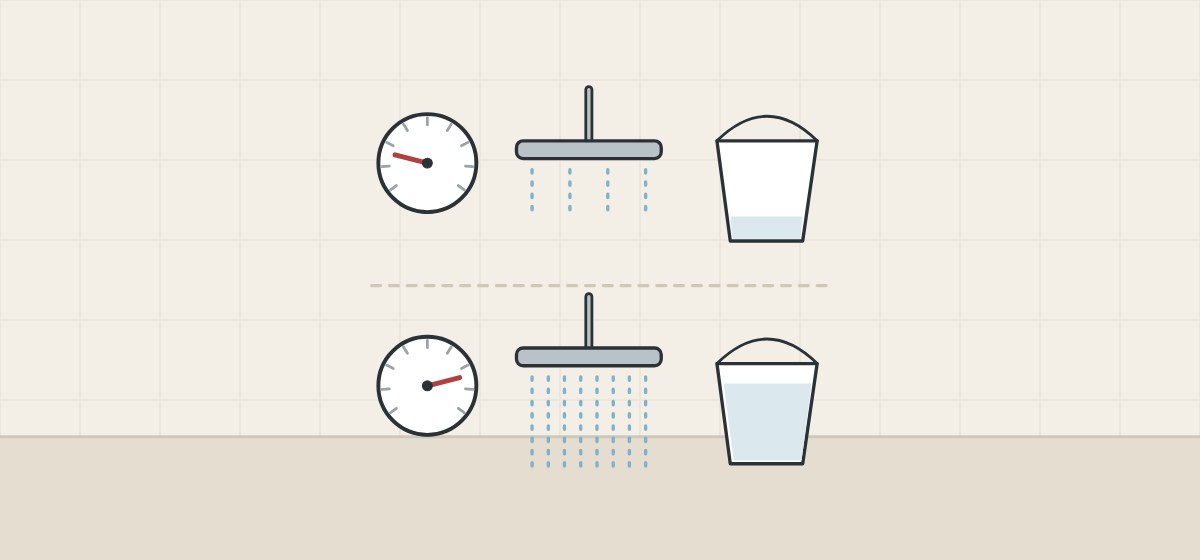
Flow changes with the pressure it is quoted at, so a flow figure needs its pressure beside it. The Bristan sheet gives flow at six pressures from 0.2 to 5 bar.
| Product and outlet | Pressure | Stated flow |
|---|---|---|
| Bristan handset, no flow limiter | 0.2 bar | 2.61 l/min |
| Bristan handset, no flow limiter | 3 bar | 13.66 l/min |
| Bristan handset, with flow limiter | 3 bar | 8.56 l/min |
| hansgrohe ShowerTablet Select 400, shower outlet | 3 bar | 18 l/min |
| Kohler Rite-Temp K-8304-K valve (no outlet named) | 45 psi | 5 gpm maximum |
With the limiter, Bristan’s handset gives 8.85 l/min at 5 bar.
What pressures does WaterSense test showerheads at?
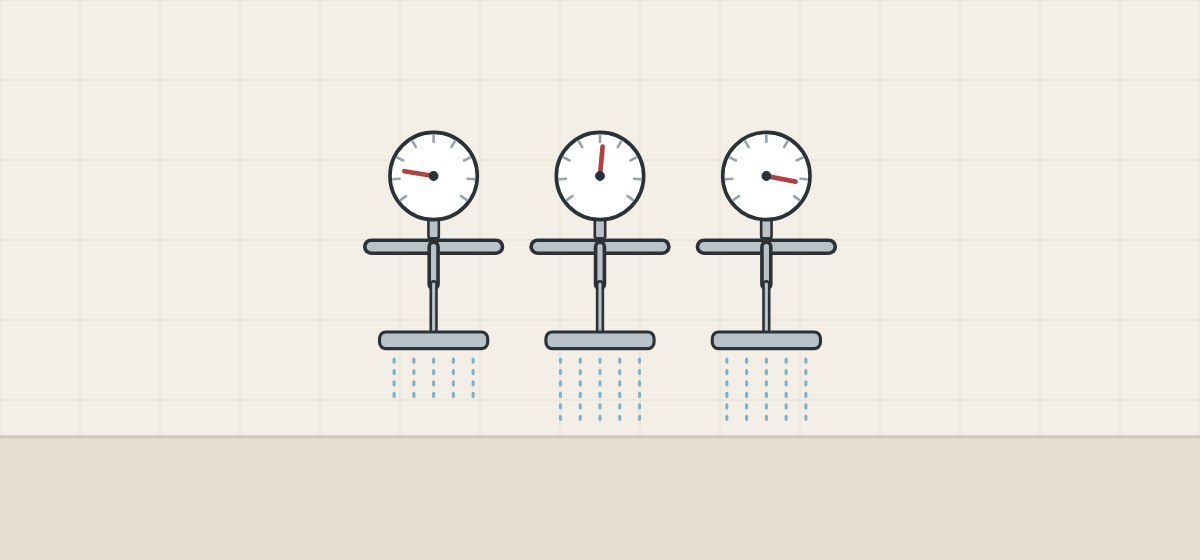
The EPA’s WaterSense showerhead specification, version 1.1, tests flow at 20, 45 and 80 psi, each within 1 psi.
Maximum flow
The specification sets the maximum flow rate at 2.0 gpm (7.6 L/min) or less.
Minimum flow
At 20 psi the flow must be at least 60 percent of the maximum flow rate value; at 45 and 80 psi, at least 75 percent.
Why 20 and 80 psi
The EPA’s testing explanation calls the test pressures flowing pressures and says the 20 and 80 psi requirements evaluate flow at minimum and maximum flowing pressures.
- Three flowing pressures
- Minimum flow as a share of maximum
- Test conditions, not site readings
When do makers call for a pressure reducing valve?
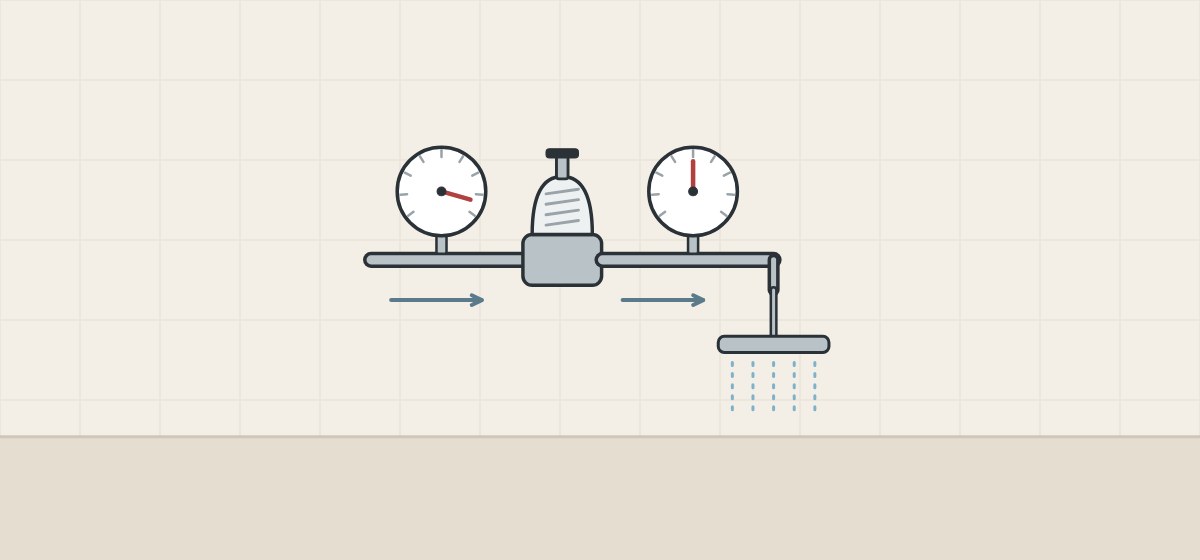
Three makers below ask for one above a stated pressure, not always on the same reading. A fourth entry describes the valve.
Mira Select
For instantaneous heated supplies the guide says a drop-tight pressure reducing valve must be fitted if supply pressures exceed 5 bar maintained; above 5 bar maintained, its fault table says to fit one just after the incoming mains stopcock.
GROHE Grohtherm 1000 Special
The sheet says a pressure reducing valve must be fitted if static pressure exceeds 5 bar.
hansgrohe ShowerTablet Select 400
The UK section of the instructions says a pressure-reducing valve should be fitted if pressure is above 3.5 bar.
Watts
Watts’ reducing-valve FAQ describes the valve as automatically reducing high incoming mains pressure and maintaining a set pressure in the home, usually 50 lbs.
Mira’s figure is a maintained pressure; GROHE’s is a static pressure. Compare each with the matching site reading, and leave the choice of valve to the installer.
What do utilities and codes say about supply pressure?
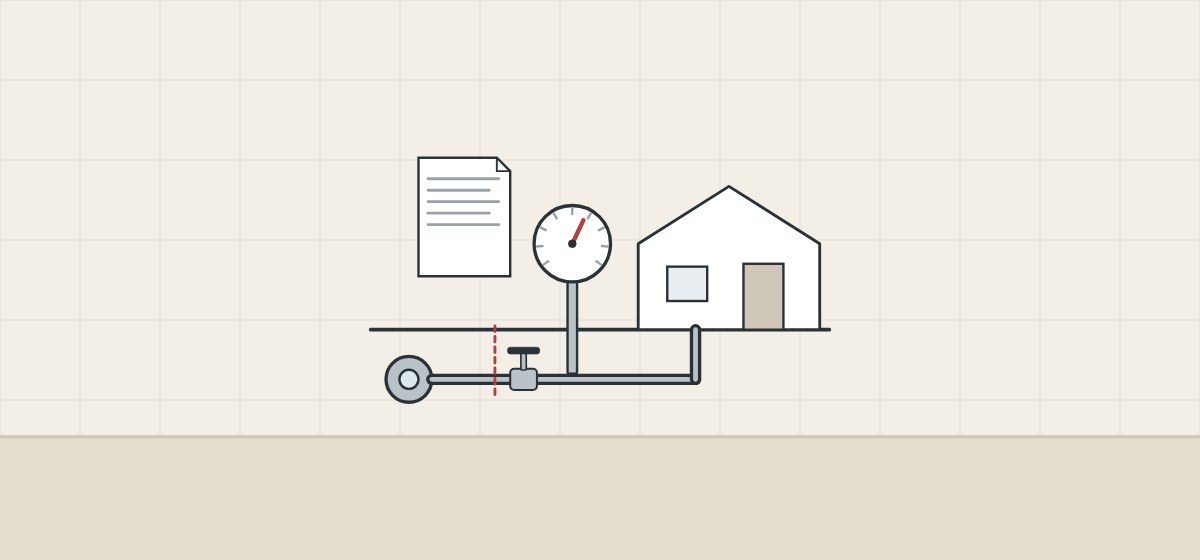
The sources below state pressure mostly at the supply connection or building entry, each for its own area. CCW adds that a water company has no obligation to meet pressure requirements inside the customer’s private supply pipe. Confirm the applicable rule with the local authority.
| Source | What it states |
|---|---|
| CCW | Says Ofwat has set that companies should maintain seven metres static head (0.7 bar) in the communication pipe; no regulated upper limit. |
| Regulation 10, 2008 Regulations | A Welsh water undertaker must maintain seven metres static head in a communication pipe. |
| Severn Trent | 1 bar, or 10 metres of static head, at the point of connection to its network. |
| Illinois Plumbing Code, 890.1210 | A pressure reducing valve where water main pressure exceeds 80 psi, with stated exceptions; at least 8 psi at each fixture, or the fixture maker’s minimum. |
| Rainbow Municipal Water District | Says the California Plumbing Code requires regulators where local static pressure exceeds 80 psi. |
How should a buyer record site pressure for a shower order?

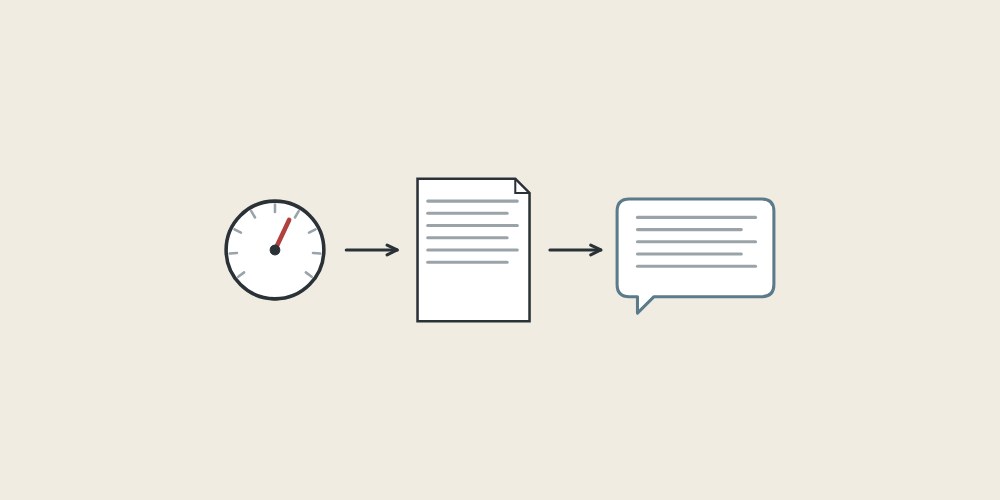
Record each reading with its state, place and unit, then compare it with the same-named field. This is procurement guidance; measuring a live system is a job for a qualified installer.
- Label every reading. Write “no flow” or “flowing” beside each pressure, with its unit.
- Record the measuring point. Building entry, floor level or the shower connection.
- Record the supply state. All faucets closed, one outlet, or the agreed simultaneous use.
- Test what will run together. Only outlet combinations the system is designed to run.
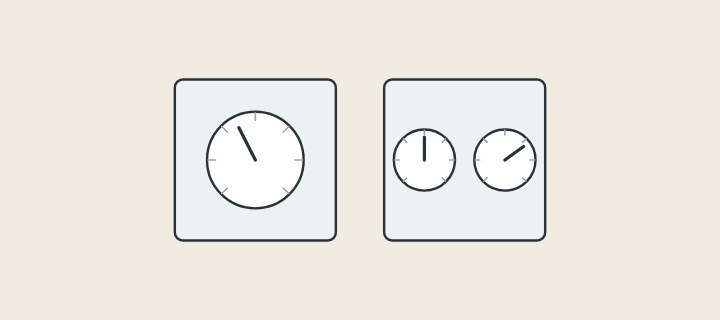
- Compare like with like. Static against the static limit; flowing against the running range.
When the site and the product do not match
Name the gap: a missing reading, an unconfirmed outlet setup or a limit the site exceeds. Never relabel a static reading as a flowing one.
What should you send and ask before a quotation?

Send the labelled readings and ask for the model’s own fields.
| Question | Why it matters |
|---|---|
| What is the maximum static pressure? | It is compared with the no-flow reading. |
| What is the pressure range with water running? | Labelled dynamic, maintained, operating or flow pressure on the sheets cited. |
| Is there a flow table, and at which pressures? | A flow figure needs its pressure. |
| Is a flow limiter fitted? | Bristan’s table differs with and without one. |
| Above what pressure is a reducing valve required? | Mira and GROHE state it on different readings. |
Include with your request
- Project location and supply type
- Static and flowing readings, labelled
- Where each was taken
- Outlets to run together
- Quantity per room type
WNS Global confirms any offered shower, its pressure and flow data and commercial terms separately in writing. This guide does not state that WNS Global products have any pressure range, flow rate, label or listing named above.