The Legal Definition
The Safe Drinking Water Act defines "lead free" for pipes, fittings and fixtures as a weighted average of not more than 0.25% lead calculated across the product's wetted surfaces — the surfaces that contact water — and not more than 0.2% lead for solder and flux. The weighting matters: a fixture is made of several components, and the calculation weights each component's lead content by the proportion of wetted surface it represents, so a single small part with higher lead content does not automatically fail the product, and a large one does not automatically pass it. The current requirements trace to the 2011 Reduction of Lead in Drinking Water Act, and the EPA issued its final rule codifying them in September 2020.
- Not more than 0.25% lead, weighted average across wetted surfaces
- Not more than 0.2% lead in solder and flux
- Weighted by each component's share of wetted surface area
- Codified by EPA final rule, September 2020, following the 2011 Act
NSF/ANSI/CAN 372 and 61
Two standards operationalize the definition. NSF/ANSI/CAN 372 establishes the methodology for calculating the weighted average lead content of wetted surfaces, and certification to it is the formal evidence that a product meets the lead-free requirement. NSF/ANSI/CAN 61 is broader: it evaluates drinking-water system components for contaminants that may leach into water — not only lead — and it requires that lead content be evaluated under 372 as part of that assessment, with specific exemptions carried over from the Act. A faucet used for drinking water in a US installation is typically expected to carry both, and the two are frequently cited together on a product's certification listing for that reason.
- NSF/ANSI/CAN 372: the lead-content calculation method and certification
- NSF/ANSI/CAN 61: leaching evaluation for drinking-water components, incorporating 372
- Basin faucets for US drinking-water use are typically expected to carry both
What to Ask For
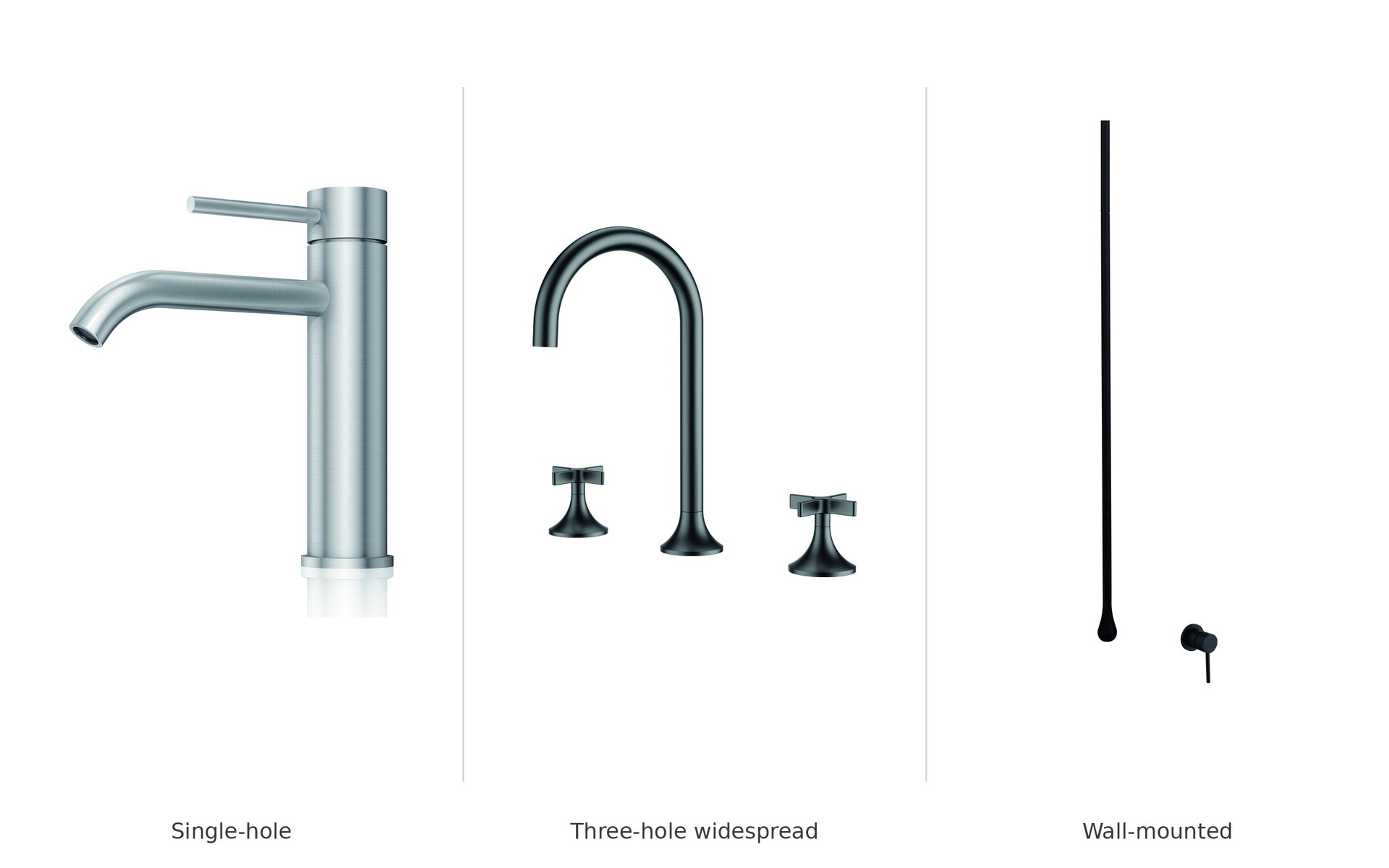
Certification attaches to a specific model produced by a specific manufacturer, not to a brand generally and not to a category. Ask for the certification listing for the exact faucet model, check it in the certifier's public database, and confirm the listed manufacturer matches the actual production source. Ask separately about the alloy — a lead-free brass, or a stainless steel — because the alloy decides both compliance and corrosion behavior, and a "lead-free" claim without a listing behind it is a marketing statement. Requirements also differ outside the United States: other markets have their own drinking-water contact rules, so confirm the destination's requirement rather than assuming the US definition applies everywhere.
WNS Global coordinates basin faucets and shower systems through established production partners rather than manufacturing them in-house, and does not itself hold NSF certifications. Where a project requires NSF/ANSI/CAN 61 or 372, the listing for the specific faucet model is confirmed with the producing partner before it is quoted.
- Ask for the listing for the exact model and verify it in the certifier's database
- Confirm the listed manufacturer is the actual production source
- Ask which alloy is used, not only whether it is "lead-free"
- Confirm the destination market's own drinking-water contact rules