

Why a Tub and a Basin Don't Automatically Match
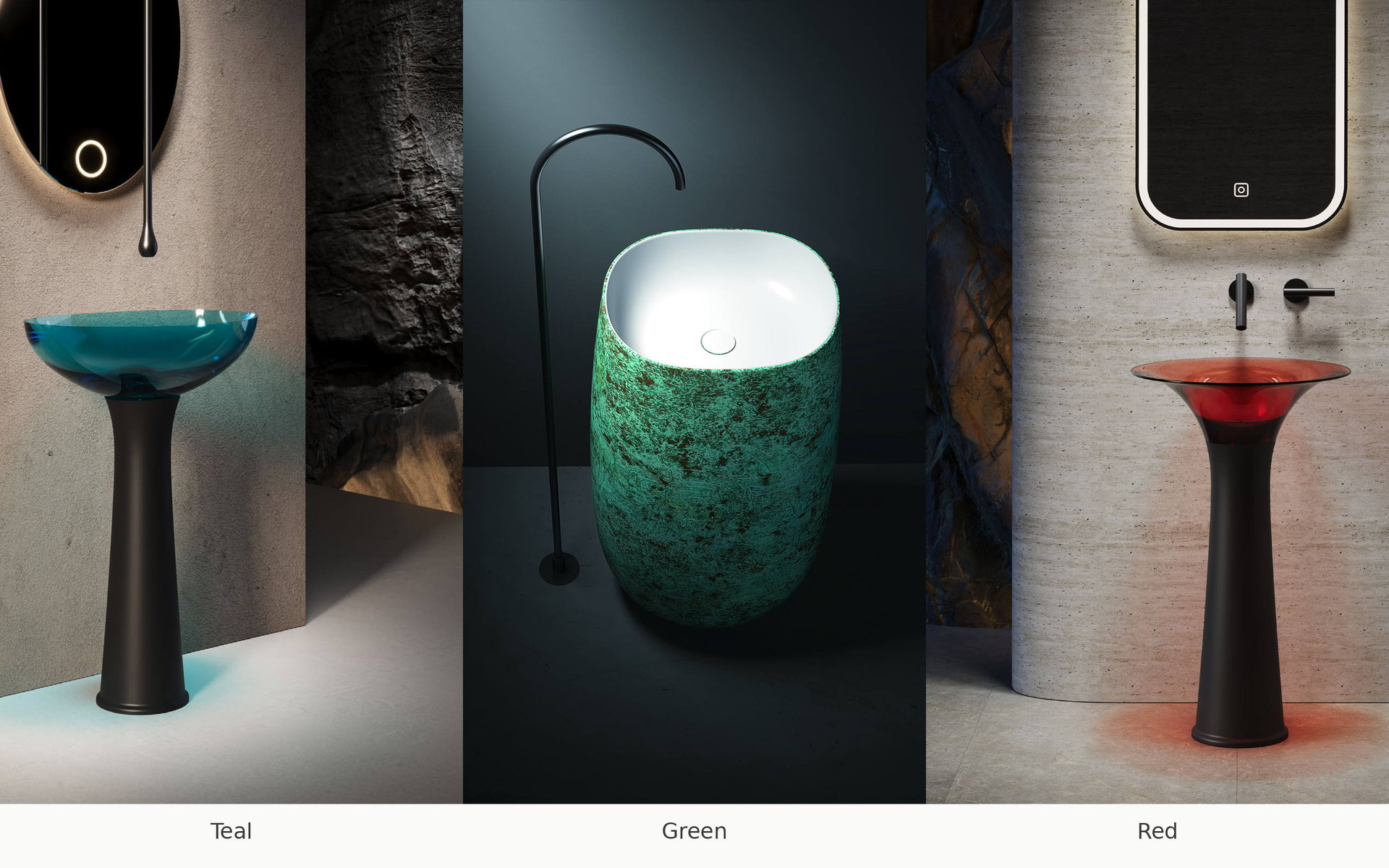
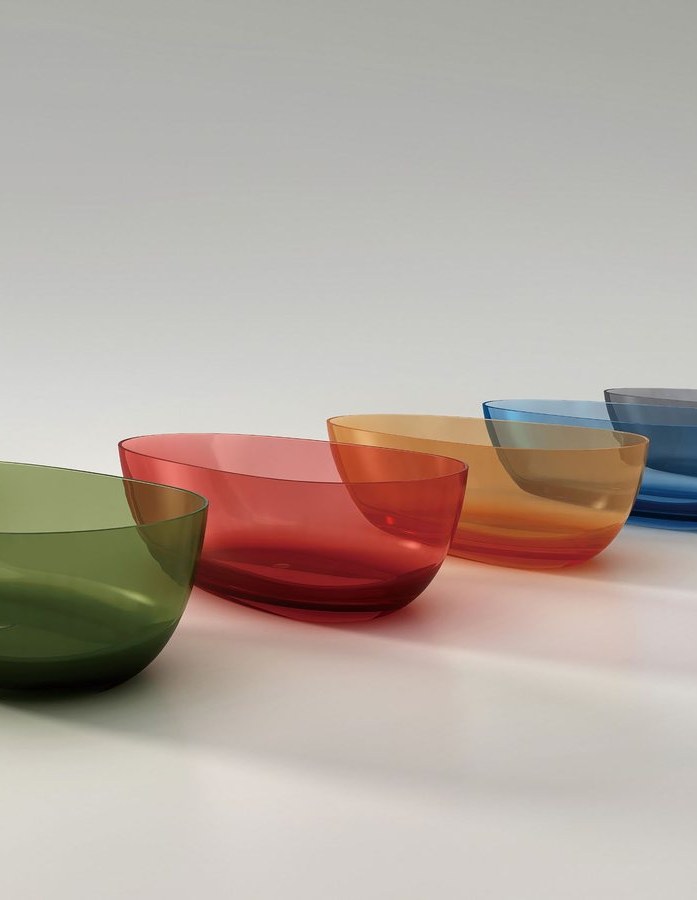
A bathtub and a basin are different products, cast in different molds, and there is no default reason they would be produced in the same batch unless that is specifically requested and confirmed. Pigmented cast materials vary slightly between production batches in the same way ceramic tiles and fabric dye lots do; that variation is normal and is often invisible in isolation. It becomes visible the moment two pieces from different batches are installed next to each other in the same room, which is exactly the situation a matching tub-and-basin order creates.
- Separate products almost always mean separate molds and separate runs
- Batch-to-batch variation is normal for cast material, not a defect
- The risk is specific to installing two pieces together, not to either piece alone
Specifying for a Match
The way to manage this is contractual. Agree that the tub and basin are produced from a single batch where the order quantity allows it. Approve a signed physical reference sample that covers both pieces, and keep it on file rather than relying on memory or a photo. Order any spares at the same time as the main pieces rather than later, since a replacement ordered a year on will come from a different batch and can read as an obvious mismatch. And agree in writing what degree of variation is acceptable, so a judgment call later has a reference point instead of becoming a dispute.
- Single batch production where quantity allows
- One signed physical reference sample covering both pieces
- Spares ordered with the main pieces, not after
- A written variation standard agreed before production
Lighting Coordination
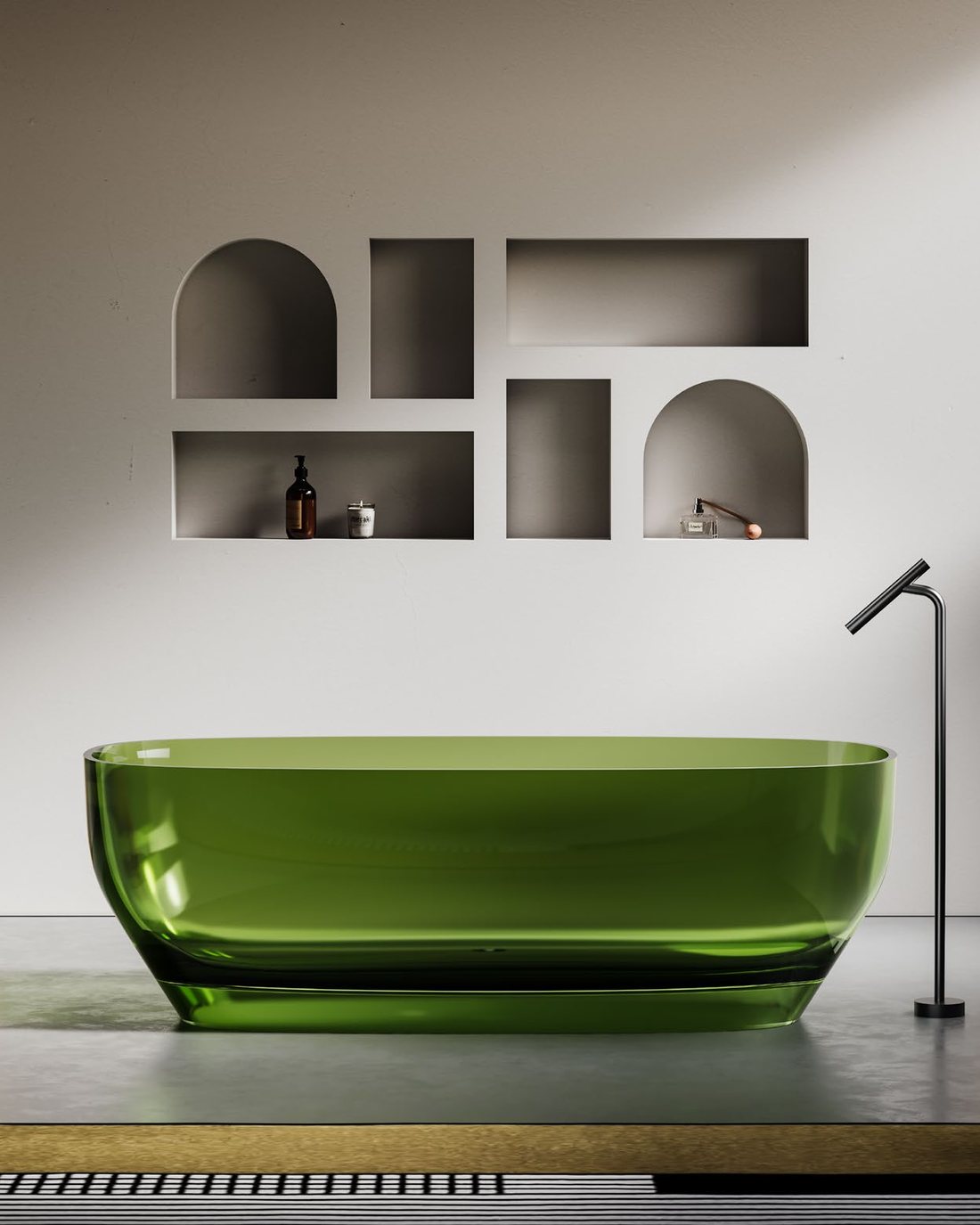
Translucency is a separate property from color; it comes from the resin and filler formulation and allows light to pass through the vessel wall rather than simply reflecting off it. Because a translucent piece is reporting the light passing through it as much as the pigment inside it, a tub and basin lit from different angles, different color temperatures, or different fixture types can look like different colors even when they came from the exact same batch. Light sources for a translucent piece need to be specified and positioned as part of the same decision as the color itself, not added afterward as a separate finishing touch.