From pan to seat
What are top fixing and bottom fixing?
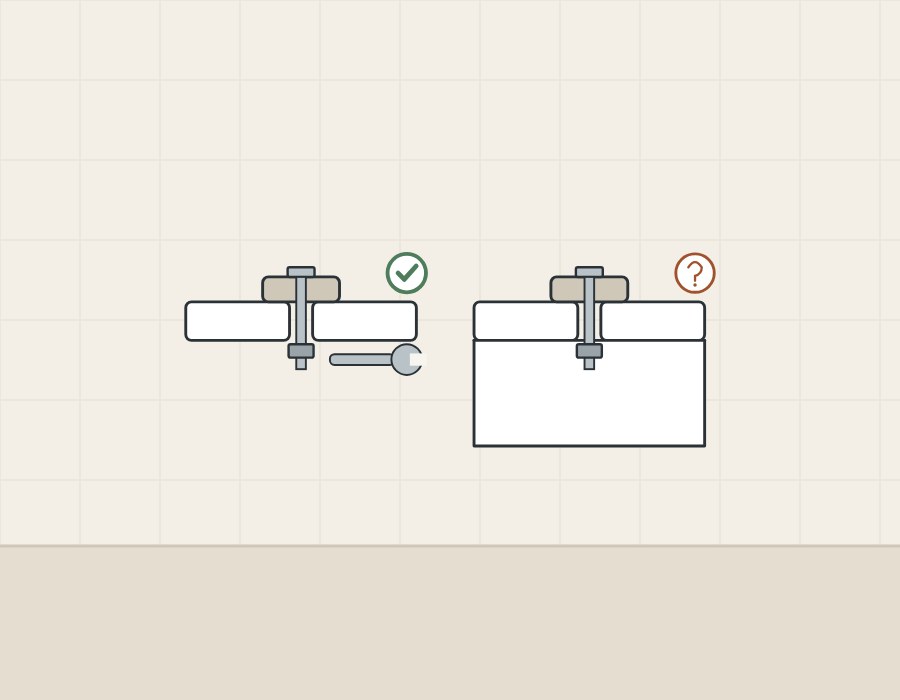
The difference is where the fastener is tightened. In bottom fixing, bolts pass through the pan holes and nuts are tightened from below. In top fixing, the seat is secured through the same holes but tightened from above.
Makers offer both routes, sometimes for the same seat. Armitage Shanks lists its Contour 21 seat with top-fixing and bottom-fixing hinges as separate versions. TOTO sells one seat with anchors tightened from above and another with plastic nuts tightened underneath.
Some ranges mount entirely from the top. Kohler states that its ReadyLatch seats mount from the top of the bowl with a household screwdriver, and Bemis describes its Top-Tite STA-TITE system as installing from the top.
| Term | What it means |
|---|---|
| Bottom fixing | Bolts through the pan holes, nuts tightened from under the pan. |
| Top fixing | Fasteners tightened from above, for example into a plug, anchor or blind nut in the pan hole. |
| Blind fixing | A fixing that holds without access to the underside of the pan. |
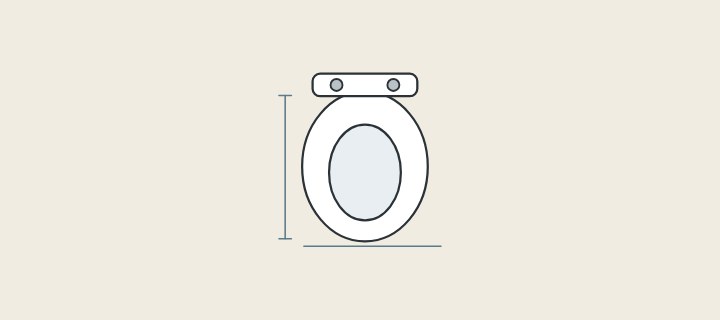
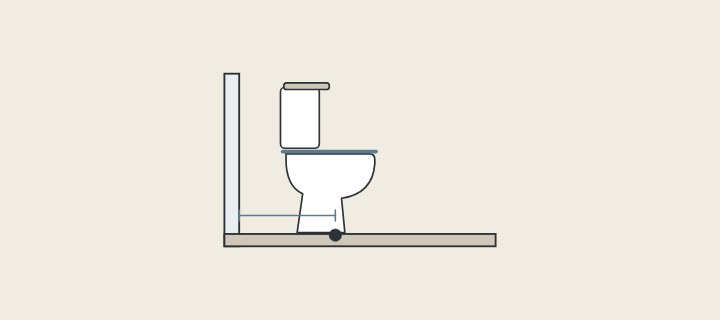
| Hole spacing | The distance between the centers of the two pan holes. |
| Convertible seat | A seat sold with, or for use with, both fixing routes. |
How does a top-fix installation work?
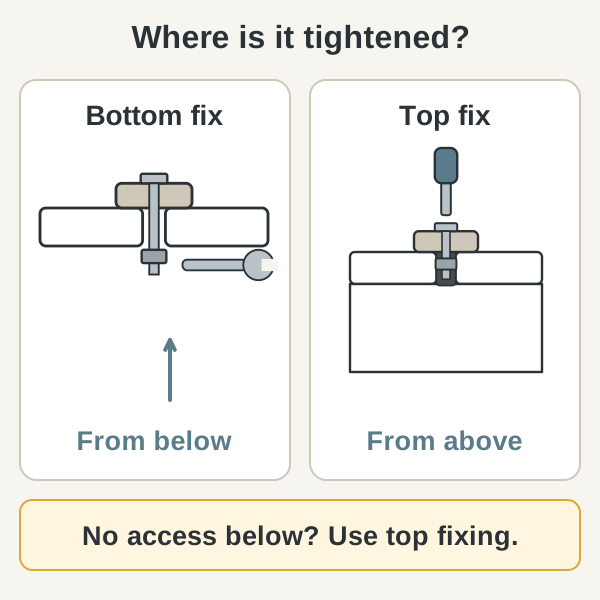
In Croydex’s top-fix route, rubber plugs go into the pan holes and the bolt is then screwed in from above and fully tightened. TOTO’s SS124 follows the same pattern with anchors, washers and screws tightened from above. A sequence built from these documents is:
- Measure the hole spacing and check that the seat’s range covers it.
- Insert the anchors or plugs into the pan holes.
- Place the hinge brackets over the holes.
- Insert the bolts or screws from above.
- Tighten them without overtightening.
- Fit the bracket or hinge covers.
Not every blind fixing uses a rubber plug. FIX-A-TAP’s blind fixing kit uses paddle nuts: each is pushed through the hole, its paddles are realigned below, a collar is pushed flush and the paddles are snapped off before the bolt goes in from above.
Which parts make up a seat fixing?
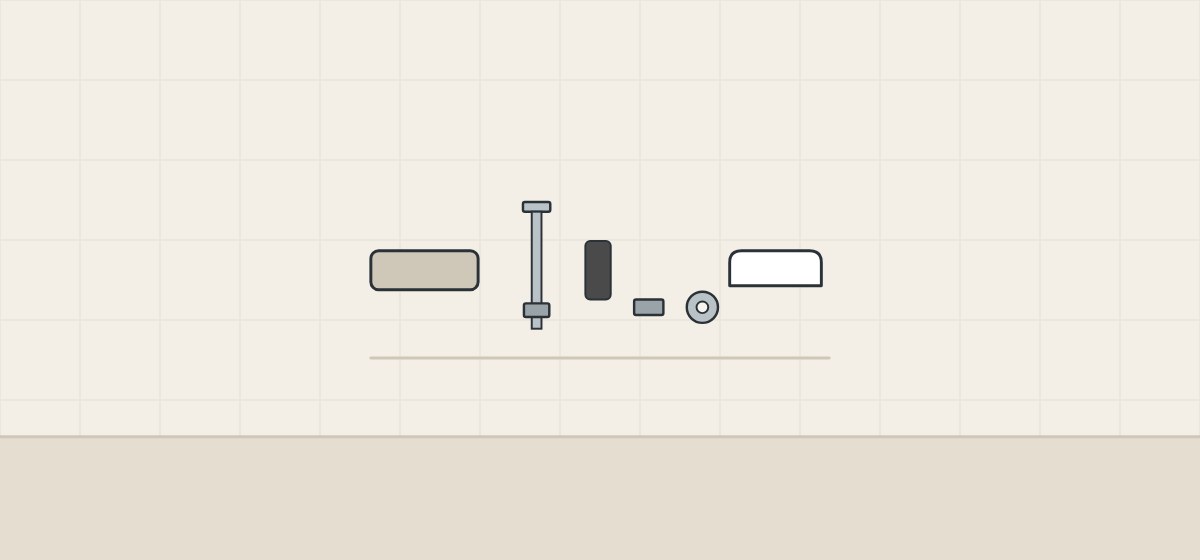
The parts differ by route and by maker. The examples below come from named installation guides.
| Part | Role and example |
|---|---|
| Hinge or bracket | Joins the seat to the fixing; quick-release and soft-close mechanisms sit here. |
| Bolt or screw | Passes through the pan hole; FIX-A-TAP’s kit uses M6 × 50 mm bolts. |
| Anchor, plug or blind nut | Grips the pan hole for top fixing; TOTO uses anchors, FIX-A-TAP paddle nuts. |
| Nut | Tightened under the pan for bottom fixing; TOTO’s oval seat uses plastic nuts. |
| Washers and gaskets | Kohler’s Quiet-Close seats use a metal washer and a gasket on each bolt. |
| Covers and bumpers | Hinge covers hide the hardware; bumpers under the seat rest on the bowl. |
The M6 × 50 mm figure belongs to that FIX-A-TAP kit only. No fetched source gave a general pan hole diameter for anchors.
Top, bottom or convertible: which suits the pan?
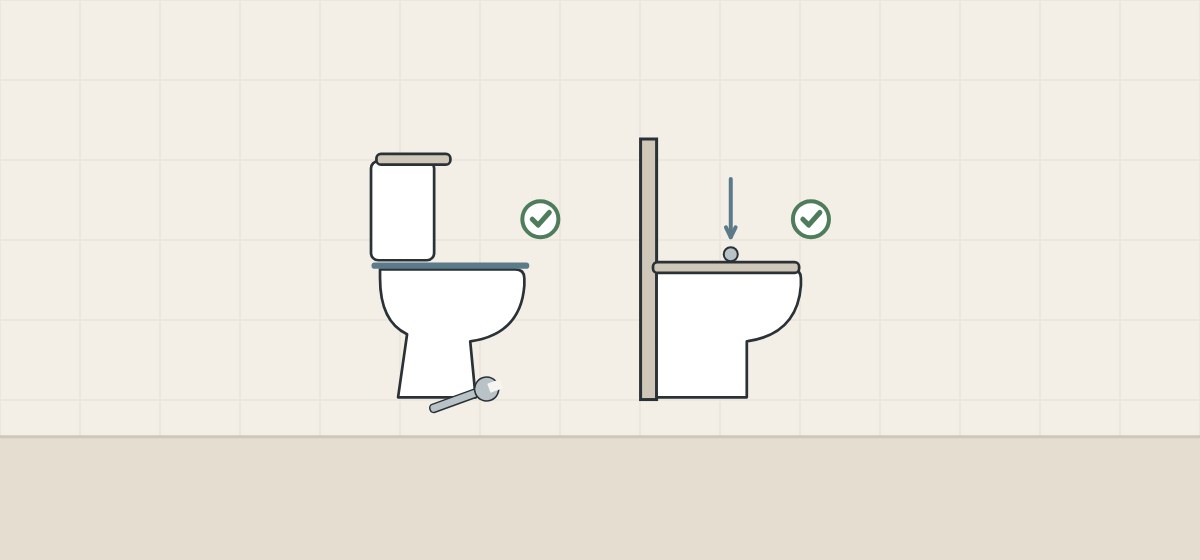
The deciding question is access. The comparison below uses the makers’ own descriptions; no source compared the strength or life of the two routes.
| Route | What the sources say | Suits |
|---|---|---|
| Bottom fixing | Nuts are tightened from under the pan; Croydex describes it as the faster installation. | Pans with open access to the underside of the holes. |
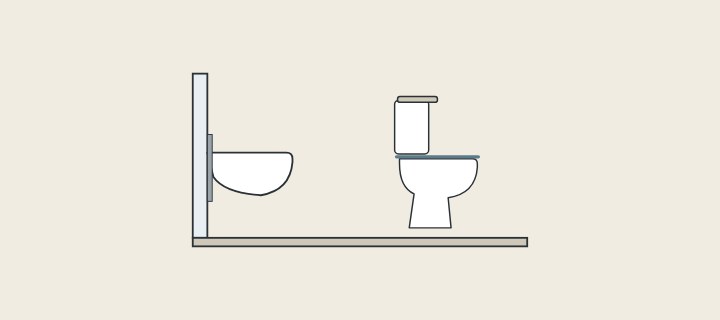
| Top fixing | No access under the pan is needed, according to Croydex. | Back-to-wall and concealed-fixing pans with no access below. |
| Convertible | FIX-A-TAP’s Econo seat is bottom-fixing but converts to top fixing with a separate kit; Croydex’s Constance Flexi-Fix offers both. | Stock seats for mixed or unknown pans. |
| Seats for inaccessible fixings | Armitage Shanks describes Bakasan and Saturn seats for back-to-wall WCs where standard pillars are inaccessible. | Pans already installed with no access below. |
Concealed-trap pans can change the route even for special seats. Bemis states that its bidet seats on such toilets need an alternative top-mounting kit instead of the standard mounting.
Which seat features are separate from the fixing?
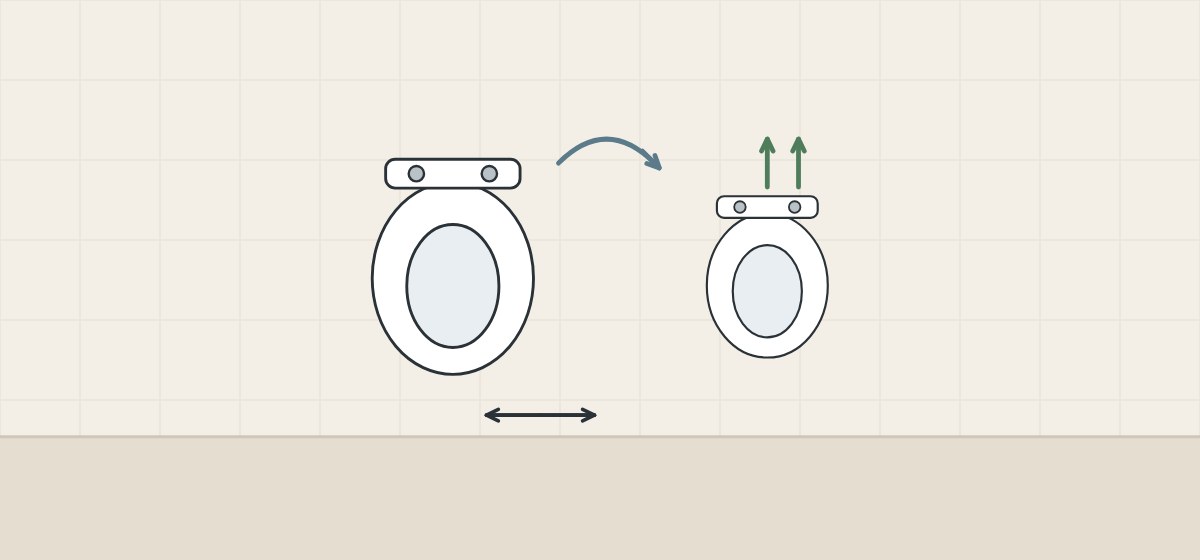
Soft close, quick release and hinge adjustment are hinge features. The Bemis Linden seat, for example, combines top fixing with a slow-closing hinge and an adjustable hinge, so a feature list does not tell you the fixing route.
Soft close
Kohler places Quiet-Close dampers inside the hinge to stop the seat slamming. Bemis calls its version Whisper-Close.
Quick release
Geberit says its quick-release seats come off and go back in a single motion for cleaning. On Kohler Quiet-Close seats the mounting hardware stays on the bowl when the seat is pulled forward.
Release by button or turn
Croydex’s quick-release seat lifts off after a button is pressed and held, and Kohler’s ReadyLatch releases with a quarter turn.
Hinge adjustment
Bemis’s Precision Seat Fit hinge adjusts front to back. Armitage Shanks states that its Bakasan and Saturn fixings adjust between 15 and 18 cm nominal centers.
Bumpers
Kohler’s Grip-Tight bumpers grip the bowl to reduce shifting.
- Fixing route: top, bottom or convertible
- Closing: standard or soft close
- Removal: fixed or quick release
- Adjustment range of the hinge
What decides whether a seat fits and can be tightened?
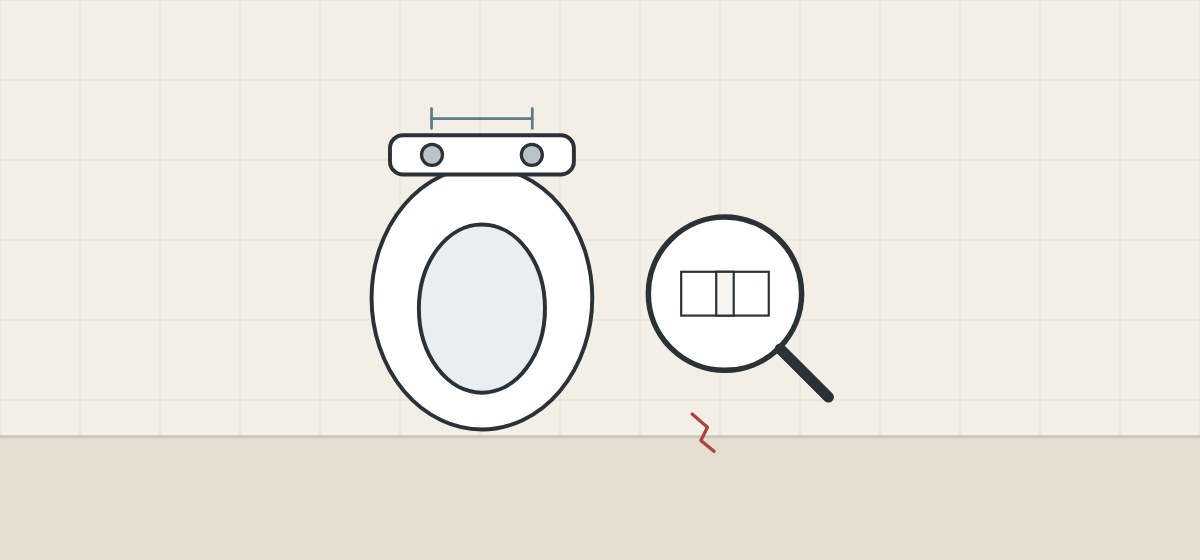
Four checks come from the named makers’ own documents. None of them is a universal dimension.
Hole spacing
Bemis tells buyers to measure between the centers of the mounting holes and gives 5½ in. as its North American standard. FIX-A-TAP’s Econo seat suits holes 145–175 mm apart.
Access under the pan
If the nuts under the pan cannot be reached, FIX-A-TAP recommends a top-fixing seat.
Closed-back and concealed designs
Geberit notes that designer WCs with a closed exterior are themselves fastened from below or through the seat holes. That concerns fixing the pan, but it shows the seat holes may serve more than the seat.
Tightening
TOTO warns that overtightening the SS124 screw will damage the hinge. Crane’s toilet installation instructions warn that vitreous china chips and cracks if the bowl or tank nuts are overtightened. Neither gives a torque value.
BSI’s abstract of BS EN 33:2019 says the standard covers WC pan connecting dimensions and an angle meant to keep the seat and lid stable when raised. Its hole dimensions were not accessible, so this page does not quote them.
What do “fits all” and “universal” claims show?
Some seat marketing promises broad fit. The statements below show how narrow those promises can be.
| Claim | What it actually covers |
|---|---|
| Bemis says its Linden seat fits all manufacturers’ round bowls. | Round bowls only; its own measuring guide says its seats fit “most” bowls. |
| Bemis announced a “Universal Fit” seat. | The adjustable hinge covers round and elongated bowl shapes; the release lists no other limits or data. |
| TOTO says its SS124 fits any toilet. | It is specially designed for TOTO’s WASHLET+ toilets; no compatibility list is given. |
| Spare hinges are sold for seats. | Duravit ties its spare hinge set to one specific seat number. |
| Ideal Standard offers a seat lookup. | Ideal Standard links a seat finder from its site; its contents could not be checked. |
How should a buyer specify replacement or project seats?
These steps apply the facts above to a hotel or project order. They are procurement guidance, not installation instructions.
- Identify the pan. Record the pan model, or photograph and measure it if the model is unknown.
- Check access. Confirm whether the underside of the seat holes can be reached after installation.
- Measure the holes. Record the spacing between hole centers.
- Choose the route. Specify top, bottom or convertible fixing from the access check.
- Name the seat. Record the seat model and its stated hole-spacing range.
- List hinge features. Specify soft close, quick release and adjustment separately from the fixing.
- Order matching spares. Tie spare hinges and fixing kits to the seat model number.
When the pan model is unknown
Measure between the centers of the holes and check the underside for access. A top-fix or convertible seat avoids relying on nuts that may not be reachable, but its stated spacing range still has to cover the measured holes.
What should you send and ask before a quotation?
A complete request lets the supplier match the seat to the pan and the access on site. Each question maps to a point earlier in this guide.
| Question | Why it matters |
|---|---|
| Which seat model is offered? | Fit, hinge and spares are model-specific. |
| Is it top, bottom or convertible fixing? | The route must match the access under the pan. |
| What hole spacing does it cover? | Stated ranges differ between seats. |
| Which hinge features are included? | Soft close and quick release are separate from fixing. |
| What does the fixing kit contain? | Anchors, blind nuts and bolts vary by maker. |
| Which spare parts are tied to it? | Replacement hinges are sold for specific seats. |
Include with your request
- Pan model or photographs of the pan
- Hole spacing, center to center
- Access to the underside of the holes
- Bowl shape: round or elongated
- Required hinge features and quantity
WNS Global confirms any offered seat, fixing kit and commercial terms separately in writing. This guide does not state that WNS Global supplies, stocks or matches any brand named above.