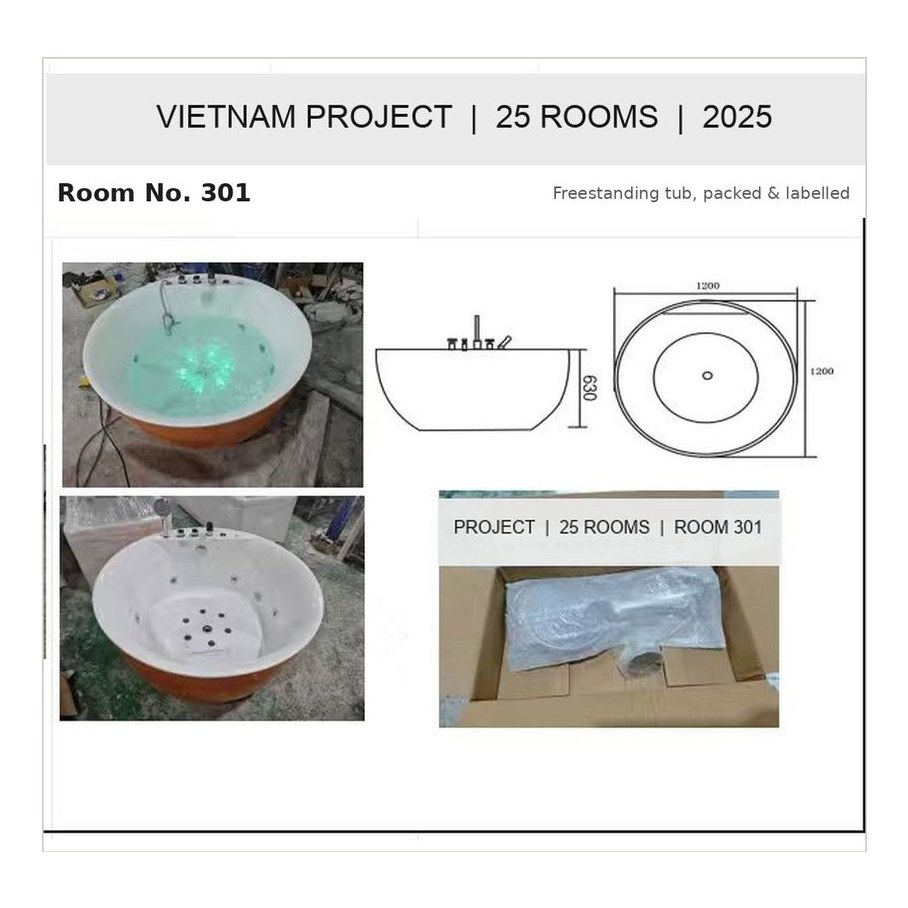
Rows, Columns and References

The rows are room types: standard king, twin, accessible, suite, and any variant that changes a fixture. Within each room type, one row per item, from vanity to toilet and accessories. The columns are the facts someone has to act on: item identity with its specification sheet reference and drawing number; quantity per room and the room count, which give the total; finish, stated as the finish reference on the approved sample; supplier; and the status columns for drawing revision, sample, lead time and production.
The status columns make the schedule a management tool rather than a list. A row whose drawing is at a superseded revision, or whose sample is not yet approved, is visible at a glance. Lead time is recorded as the factory states it, subject to the current production schedule, typically 45–60 days for WNS products, and updated when a production slot is confirmed.
- Rows: room types, then fixture items within each
- Columns: spec sheet reference, quantity per room, total, finish reference, supplier
- Status columns: drawing revision, sample, lead time, production
- The status columns show which rows are holding the order
Tying It to the Mock-Up and to Labeling
The mock-up room is built from the schedule and approves it. Every item in the mock-up should trace to a schedule row, and every change made in the mock-up, a different handle, a moved niche, a changed finish, goes back into the schedule as a revision before the order is placed. The approved mock-up and the current schedule should describe the same bathroom; if they do not, it is usually the schedule that was not updated.
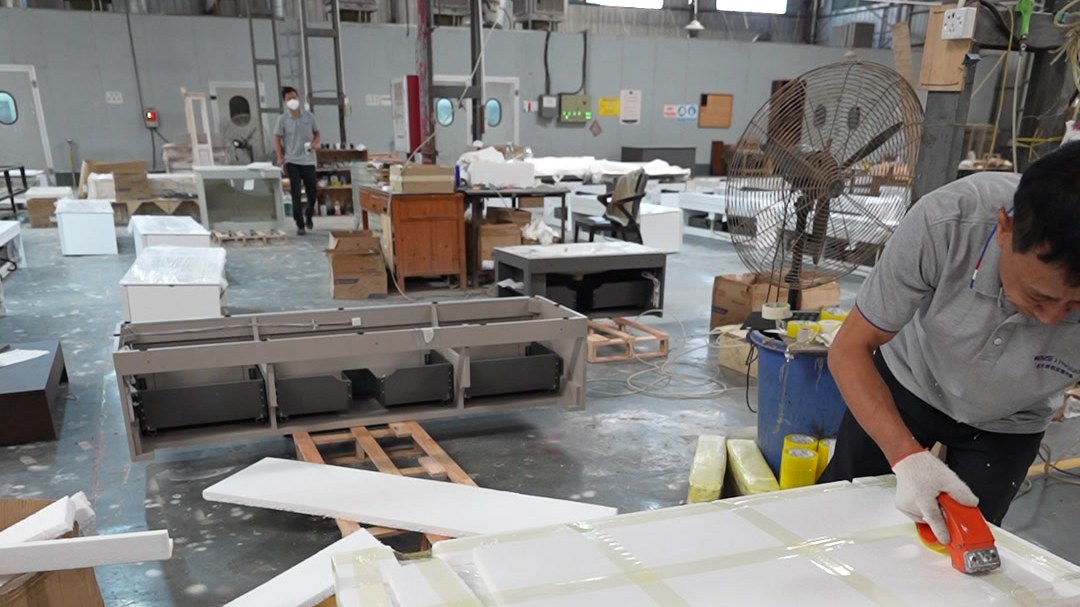
The schedule also defines the labeling. The factory can label each carton with the room type, the item and the schedule reference, and sort the packing list the same way. A site that receives cartons labeled by room type can stage them by floor and wing without opening them; a site that receives cartons labeled only by model number has to work out the allocation itself.
- Every mock-up item traces to a schedule row; every mock-up change updates the schedule
- Approved mock-up and current schedule must describe the same bathroom
- Label cartons by room type and schedule reference, not by model number alone
- The packing list is sorted the way the schedule is
Versions, Packing List and Receiving
A schedule changes throughout a project: a room count moves, a finish is revised, an item is substituted. It has to carry a version number and date on every page, a change log that says what changed and who approved it, and a rule that only the current version goes to the factory. Superseded versions are kept, because a dispute about what was ordered is settled by the version the order referenced. The factory confirms which version it is producing to, and its drawings reference it.
At shipment, the packing list is generated from the schedule and reconciled to it: totals per item match, and any partial shipment is shown against the schedule total. At the site, the receiving team counts the delivery against the packing list and records shortages and damage against the schedule row. The schedule then becomes the handover document: as installed, it tells the operator what is in each room.
- Version number and date on every page; change log with approvals
- Only the current version goes to the factory; superseded versions are kept
- Packing list reconciles to the schedule totals, partial shipments shown
- The as-installed schedule becomes the operator's room-by-room product list