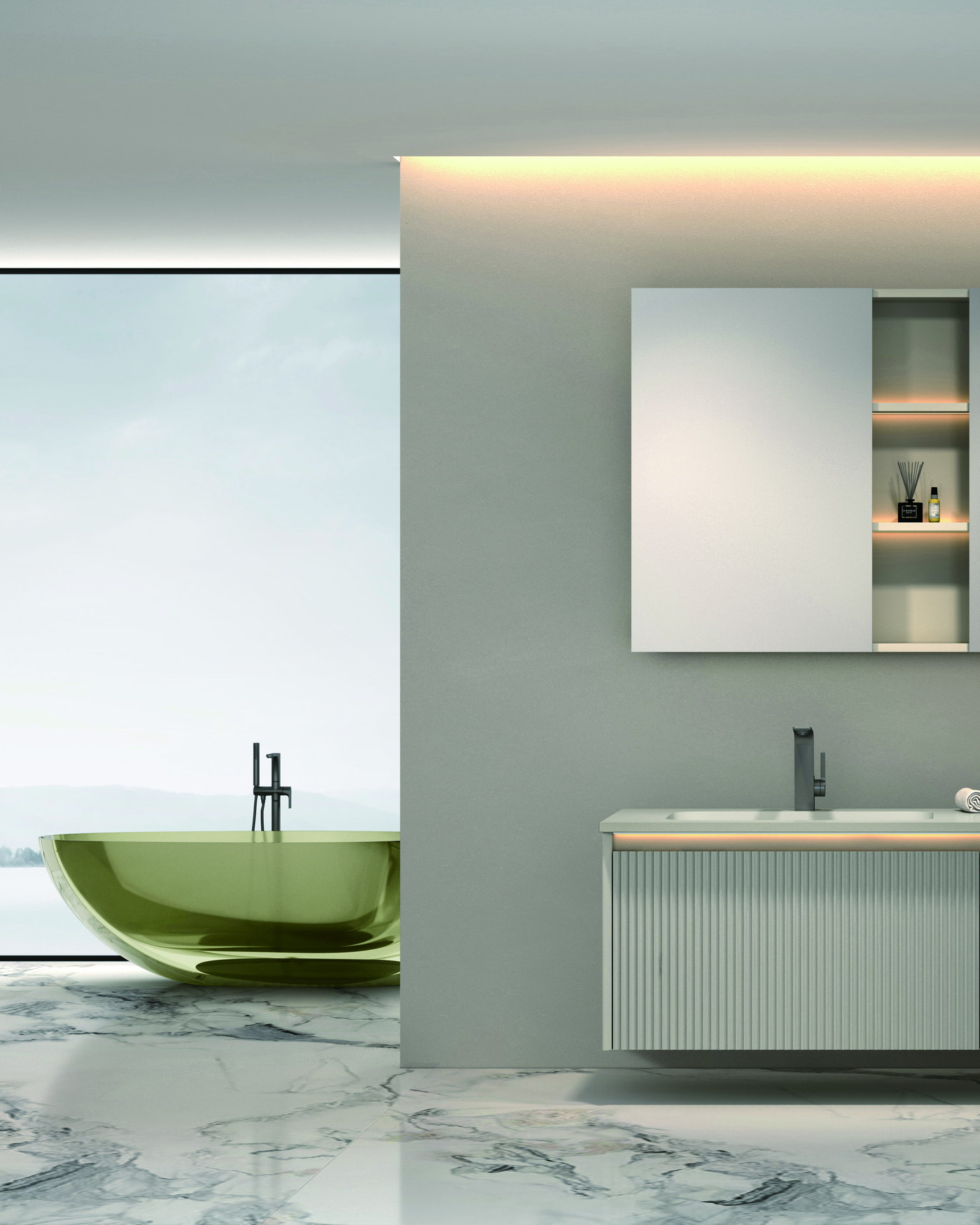
Where Cost Comes Out Safely
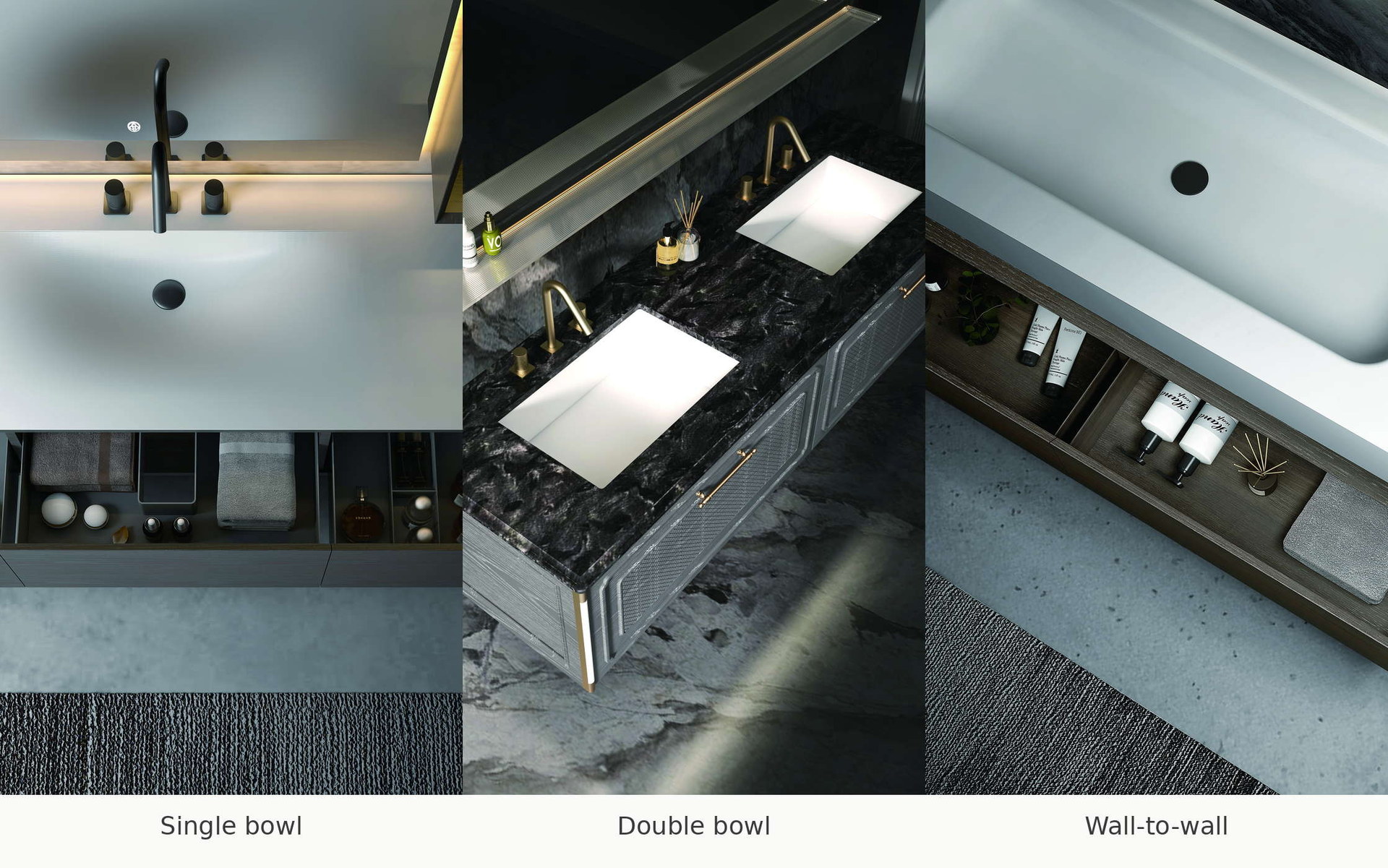
Standardization is the largest safe saving: fewer bathroom types, one vanity configuration, one hardware specification and one enclosure configuration per type reduce tooling, setup, sample cycles, drawings, spares and installation training all at once. Configuration simplification is next: a single-bowl top where a double adds nothing, a fixed panel where a return panel was decorative, a simpler drawer layout. Standard sizes and standard finishes remove custom tooling and finish batches. Order consolidation — one release instead of several, mixed SKUs sharing a container — reduces unit cost and freight. And logistics: a full container instead of a part load, nestable packaging where a product allows it, delivery sequenced to avoid double handling. None of these change what the guest touches.
- Standardize bathroom types, configurations and hardware
- Simplify configurations that add nothing in use
- Standard sizes and finishes over custom tooling and batches
- Consolidate releases and fill containers
Where It Does Not
Material grade is the first thing a late value-engineering exercise reaches for and the first thing that reappears as a claim: a lower grade of stainless steel in a humid room, a veneer where solid timber was specified for moisture stability, a thinner solid surface section, a lower glass thickness than the configuration needs. Hardware is second — a hinge or runner without a published cycle rating in a room opened by a new guest every night. Packaging is third; the saving on cartons is smaller than the first transit claim. And process: the sample, the mock-up room, the pre-shipment inspection and the dimensioned drawings are the cheapest items on the project and the ones whose absence costs the most. A saving in any of these categories is not a saving; it is a cost moved to a later date and a larger amount.
- Material grade, section thickness and glass specification
- Hardware without a published durability basis
- Packaging
- Samples, mock-up, inspection and drawings
A Method That Works

Do it at specification stage, before drawings are issued, when a change is a decision rather than a rework. Ask the supplier to break the quotation down — material, finish, hardware, configuration, packaging, freight — because the cost usually sits somewhere other than where the buyer assumed, and a change to the wrong line saves little. Test every proposed saving with three questions: does it change what the guest or the operator experiences, does it change the maintenance cost over the fit-out's life, and does it change the risk of a claim or a callback? If the answer to all three is no, take it. If any answer is yes, price the consequence rather than the saving. Then lock the result in the specification and the golden sample so it is not re-opened at the mock-up.
- At specification stage, before drawings
- Break the quotation down to find where the cost actually is
- Three tests: experience, whole-life maintenance, claim risk
- Lock the result in the specification and sample