How It Sits
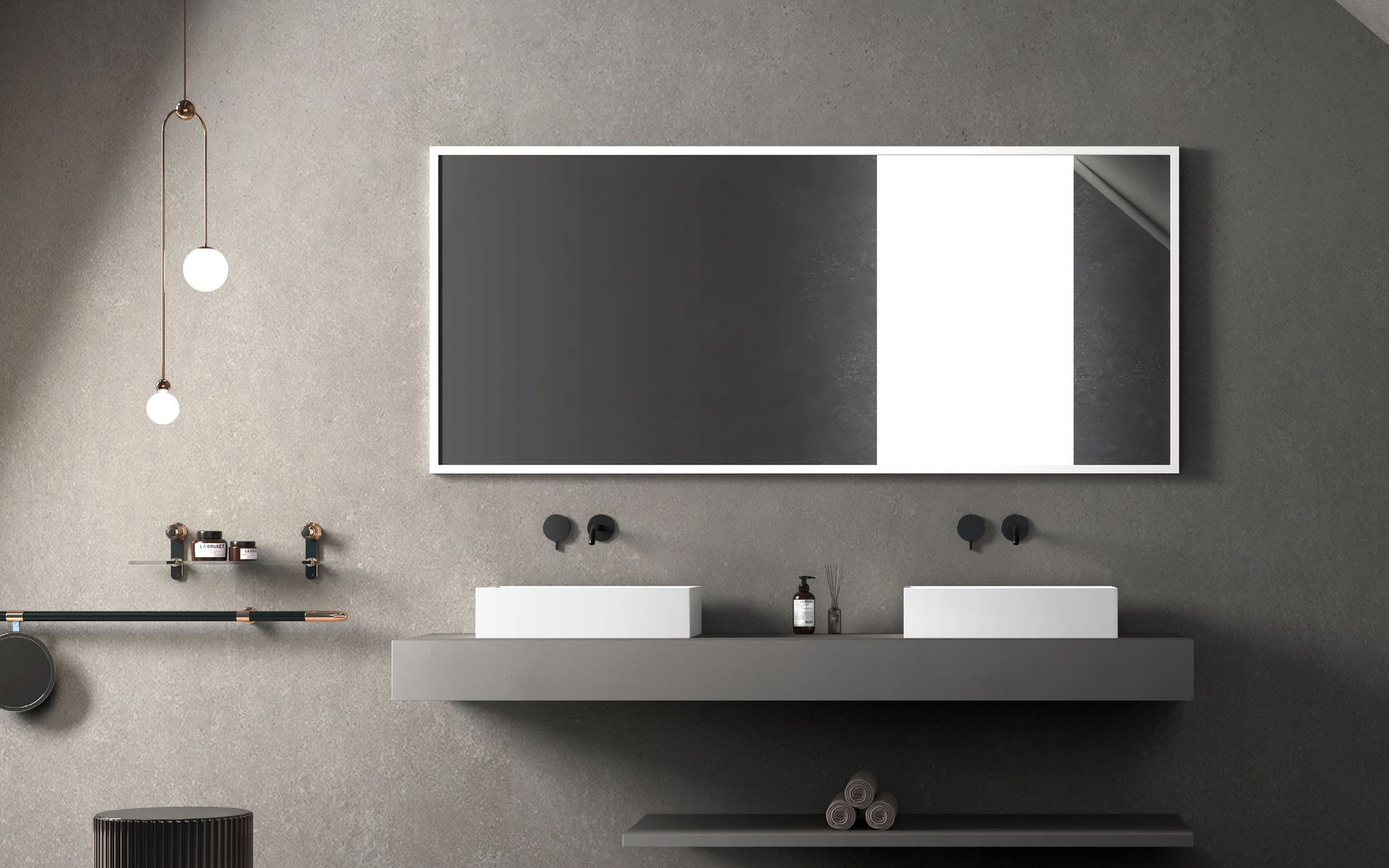
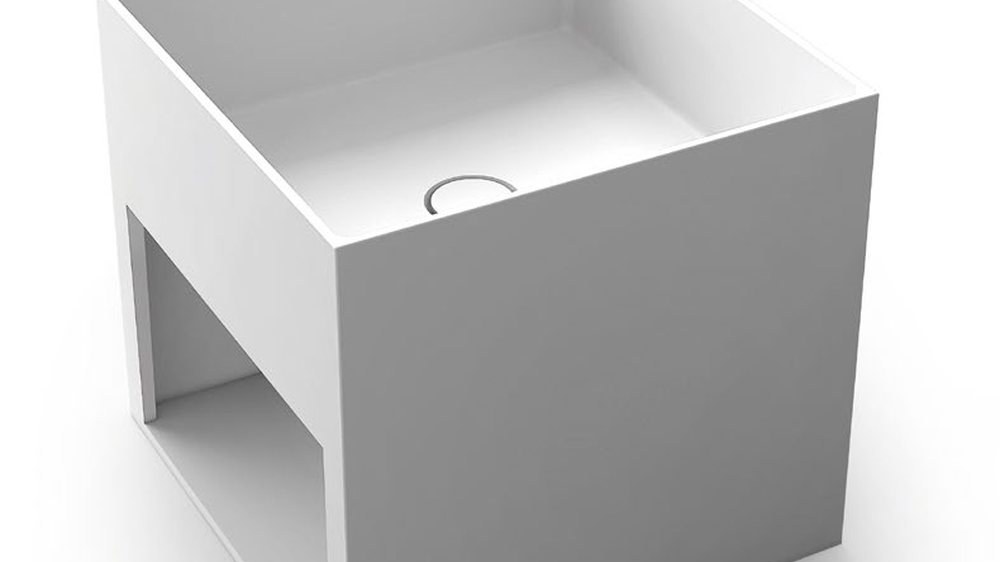
The basin is designed with a rim that rests on the top around the back and the sides, and a front that carries on past the cabinet face. The top, or the unit's top panel, is cut out to the basin's outline, and the basin drops into that cut-out so the rim bears on the top and the bowl hangs through it. Because the front of the bowl overhangs the cabinet, the front edge is exposed to the room and to the user, which is why semi-recessed basins are finished on the outside face and not only inside the bowl. The depth of the unit can then be reduced to what the plumbing and the rim need, which in a narrow bathroom is the difference between a vanity with storage and a wall-hung bowl with none. The basin is fixed to the unit and sealed at the rim.
- Rim bears on the top at the back and sides; front overhangs
- Cut-out in the top to the basin's outline
- Front edge exposed, so the outer face is finished
- Unit depth reduced to what plumbing and rim need
Cut-Out, Taps and Waste
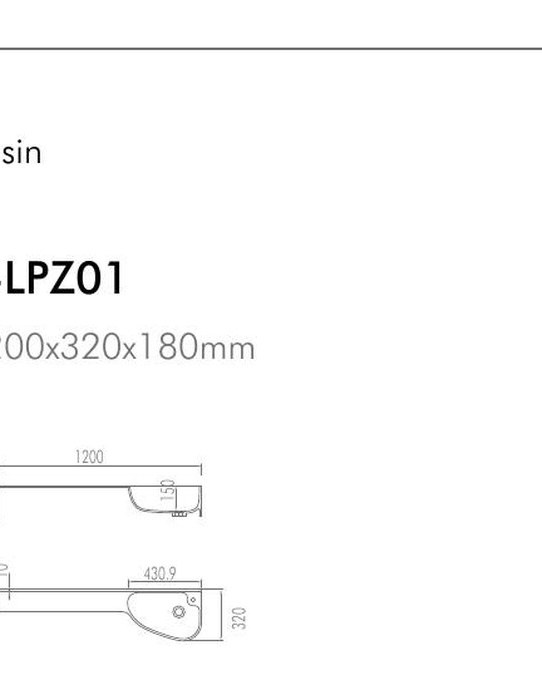
The cut-out is made from the supplier's template, not from the basin's overall dimensions, because the outline the rim has to cover is specific to the model; a cut-out drawn by eye leaves a gap at the sides or a rim with nothing to bear on. WNS Global issues the template with the dimensioned drawing for approval, and the cabinet maker or the site cuts to it. The tap is usually deck-mounted on the basin itself, on a ledge at the back of the bowl, since the shallow top behind the basin may have no room for a tap hole; the alternative is a wall-mounted tap with its outlet above the bowl, which frees the ledge and is easier to clean around. The waste passes through the bottom of the bowl into the unit, where the trap sits; the unit's back panel or floor is cut to make room for the trap and supply pipes, and an overflow, if there is one, is matched with a slotted waste. All of this is fixed on the drawing, because the unit is made to suit the basin, not the other way round.
- Cut-out from the supplier's template, not from overall dimensions
- Tap deck-mounted on the basin ledge or wall-mounted above
- Trap and supplies housed in the unit; overflow matched to a slotted waste
- Unit made to suit the basin, fixed on the drawing
Compared with the Alternatives
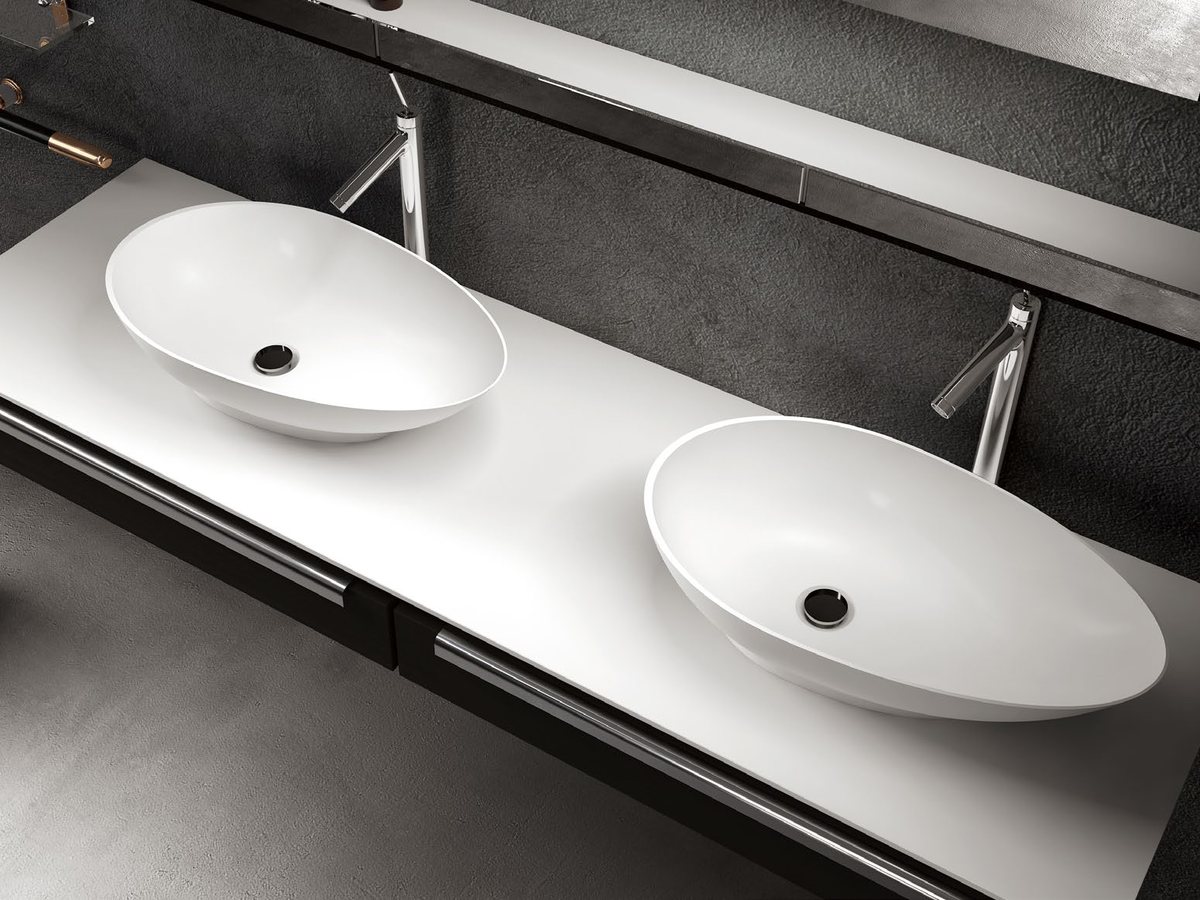
A countertop basin sits entirely on the top, so the top has to be deep enough to carry it and a tall tap has to reach over its rim; it is the choice where the basin is meant to be seen as an object and cabinet depth is not a constraint. An undermount basin hangs below the top and needs a full-depth cabinet to hide it, giving a clean top but no help in a narrow room. An integrated basin, where bowl and top are cast as one piece, has no seam at all and is the easiest to clean, but it is a full-depth top with the bowl inside it. The semi-recessed basin trades appearance for depth: it is less sculptural than a countertop basin and has a rim seam that an integrated basin lacks, but it delivers a full bowl on a cabinet shallower than any of the others allow. Choose it for the room, not for the look.
- Countertop: basin as an object, needs a deep top and a tall tap
- Undermount: clean top, but a full-depth cabinet
- Integrated: seamless, but a full-depth top
- Semi-recessed: full bowl on the shallowest cabinet