From code to rated part
What do the two digits of an IP code mean?
The two digits answer two questions: the first is about contact and solid objects, the second about water. Rittal, an enclosure maker, says so on its protection categories page and lists the numerals in the table below.
A Siemens white paper gives the same split. An IP code is two pieces of information, not one quality score.
| Numeral | As first digit: contact and solids | As second digit: water |
|---|---|---|
| 1 | Objects 50 mm and larger | Vertically falling drops |
| 2 | Objects 12.5 mm and larger | Drops, tilted up to 15° |
| 3 | Objects 2.5 mm and larger | Spraying water |
| 4 | Objects 1.0 mm and larger | Splashing water |
| 5 | Dust-proof (Rittal’s term) | Water jets |
| 6 | Dust-tight | Powerful water jets |
| 7 | – | Occasional submersion |
| 8 | – | Continuous submersion |
| 9 | – | High-pressure or steam jet cleaning |
How do you read a code such as IP44 on a mirror document?
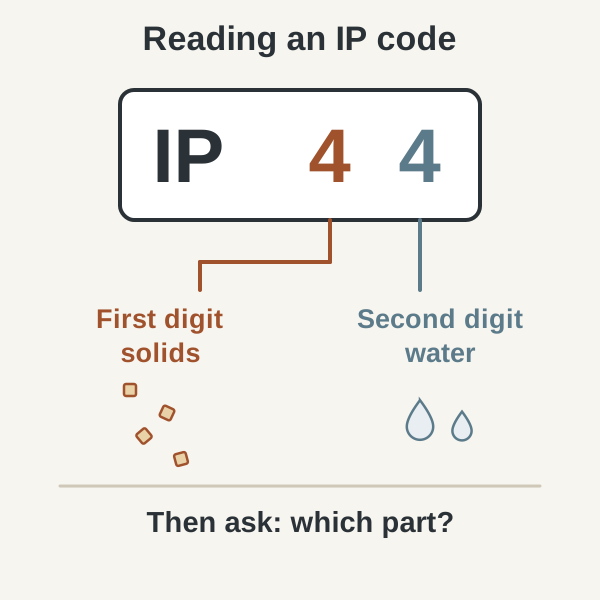
Read each digit on its own, then ask what the code was given for. Rittal’s worked example is IP 43: a first numeral of 4 for solid objects of 1.0 mm and larger, and a second numeral of 3 for spraying water.
- Find the letters IP and the two digits.
- Read the first digit: contact and solids.
- Read the second digit: water.
- Ask what any added letters mean.
- Ask which enclosure the code covers.
- Check for an IK code separately.
By Rittal’s tables, IP44 reads as protection against solid objects of 1.0 mm and larger and against splashing water. The contents list of ANSI/IEC 60529-2020 also has clauses for additional and supplementary letters; their text is not in the free extract.
What does an IK code rate?
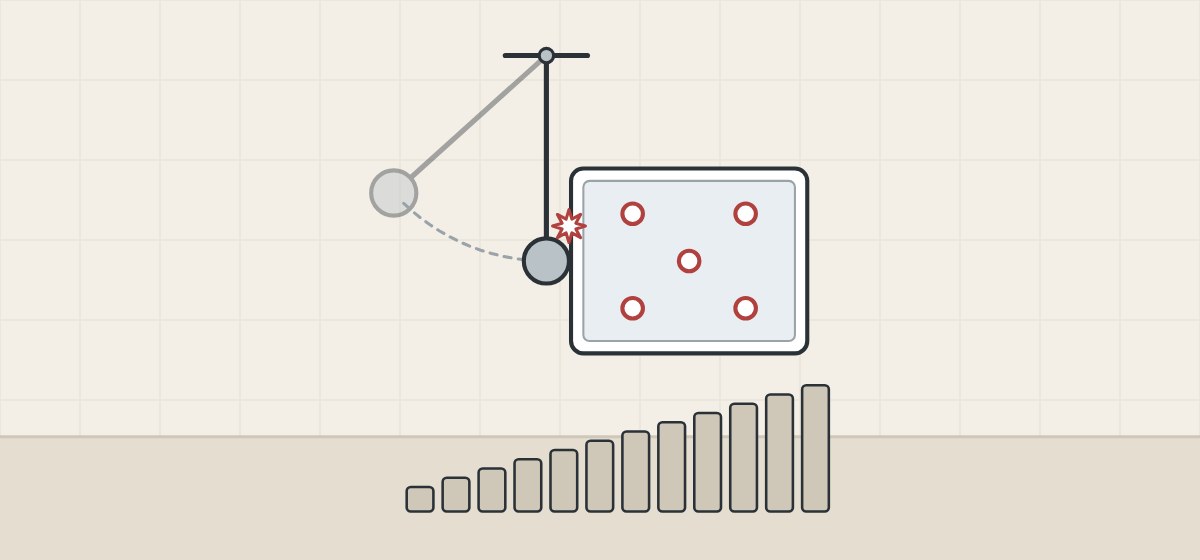
An IK code rates an enclosure’s protection against external mechanical impacts. The IEC webstore lists IEC 62262 as consolidated edition 1.1, the 2002 text with a 2021 amendment.
| Point | What the source says |
|---|---|
| Subject | IEC: enclosures against external mechanical impacts. |
| Class numbers | Auer Signal: 00 to 11; a higher number means better impact resistance. |
| Lowest class | Auer Signal: IK00 is no protection against mechanical impact. |
| One energy figure | Auer Signal: IK08 is tested with 5 joules. |
| Test points | Auer Signal: impacts on at least 5 points on the device. |
Auer Signal, a signalling-equipment maker, says IP and IK are independent of each other. For luminaires, the abstract of IEC TR 62696 treats an IK rating as a performance issue, not directly related to the safety provisions of the IEC 60598 luminaire standards.
What does an IP code leave out?
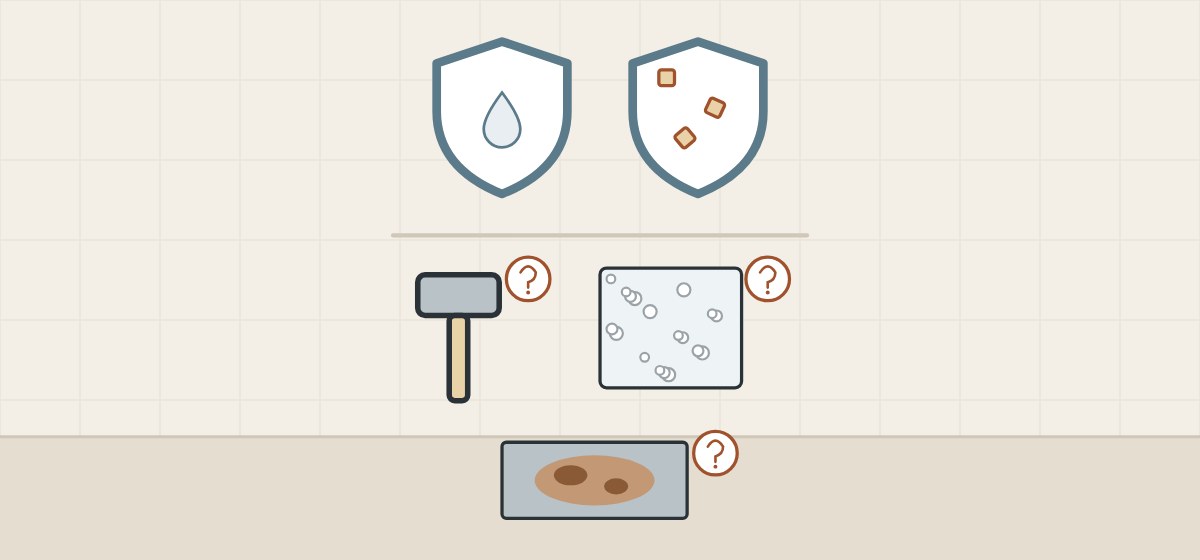
An IP code leaves out impact, corrosion and condensation, among other conditions. The scope of ANSI/IEC 60529-2020, the US national adoption of IEC 60529 published by NEMA, lists the conditions below, with fungus, vermin and explosive atmospheres, as external influences separate from the three protections the code classifies.
| Outside the IP code | This guide’s question |
|---|---|
| Mechanical impacts | Is there an IK code, and for which part? |
| Corrosion | What is stated for metal parts and the mirror edge? |
| Moisture, for example from condensation | What does the maker state about humid rooms? |
| Corrosive solvents | Which cleaners does the maker allow? |
| Solar radiation, icing | Is it stated for indoor use only? |
The condensation line matters in a bathroom. Rittal’s second-digit table describes drops, splashes and jets; the scope lists moisture from condensation among the conditions outside the code.
How do IP codes relate to North American markings?
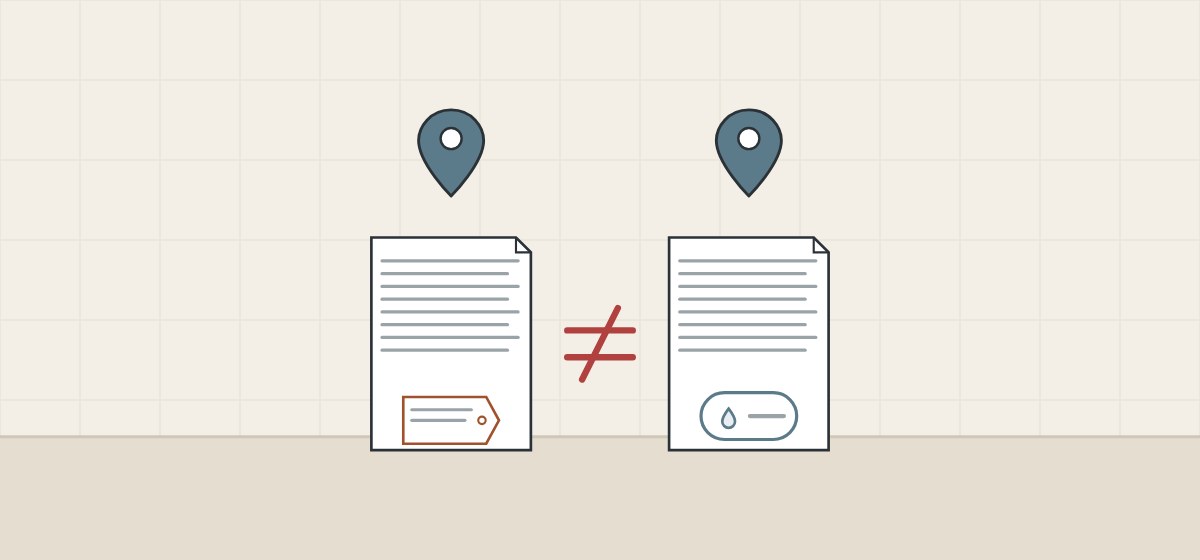
NEMA and Siemens say IP codes cannot be equated with or converted to NEMA Types. North American documents use their own terms:
NEMA enclosure Types
NEMA’s enclosure FAQ says an IP rating cannot be stated as equivalent to a NEMA Type. It quotes the National Electrical Code as saying IP ratings are not a substitute for Enclosure Type ratings.
Conversion
Siemens says IP degrees cannot be converted or recoded into NEMA Enclosure Types, or the reverse.
Luminaire location markings
A UL marking guide, updated to the 2014 National Electrical Code, says only luminaires marked suitable for damp locations or for wet locations are intended for damp locations, and only those marked suitable for wet locations are intended for wet locations. Check the current edition for the project.
What damp and wet mean
The UL guide defines a damp location by condensation of moisture on or near equipment, and a wet location by water that may drip, splash or flow on it.
What to ask on a North American project
Ask the supplier for:
- The marking system the project uses
- The exact wording of the marking
- The product or part it applies to
Which part of the mirror does a rating cover?
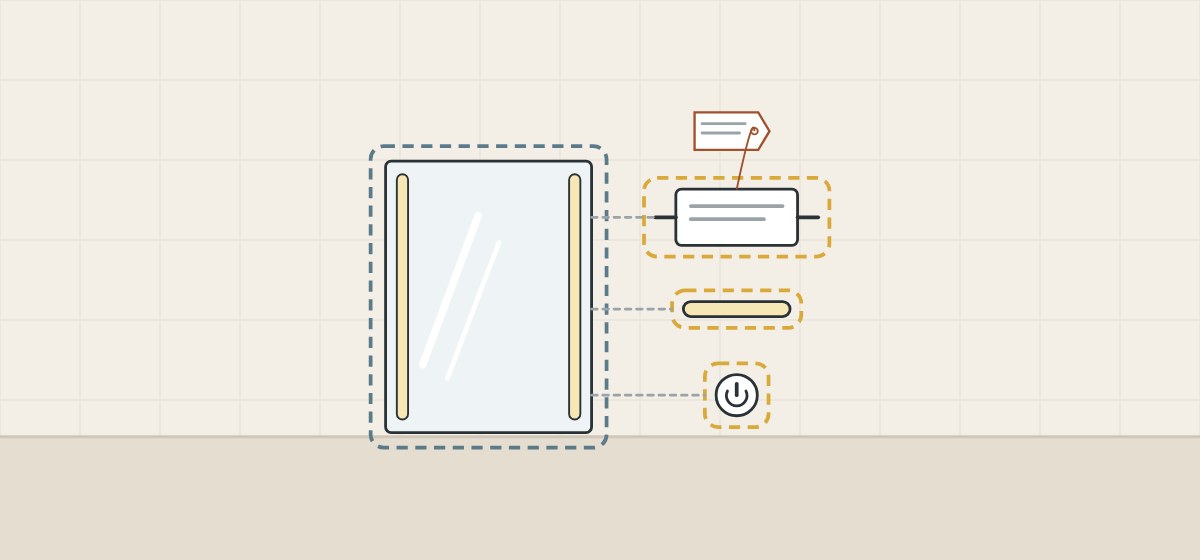
A rating covers the enclosure it was given for, so the document has to name that enclosure.
The enclosure is defined per equipment
The scope of ANSI/IEC 60529-2020 leaves each technical committee to decide how the classification is used and to define “enclosure” for its equipment.
A maker’s range statement
Duravit says its mirror cabinets have no open edges and have IP44 splash protection. That statement is about its mirror cabinets only.
A maker’s product statement
Robern’s instructions for its Vitality lighted mirror say the mirror is UL listed for damp locations, conforms to UL 962 and is for indoor use only.
Buyer note: component or assembly
If a code appears only on a component label or data sheet, such as a driver’s, ask in writing whether it also applies to the assembled mirror.
Keep the rated object named when documents are compared. A code without an object is not yet a specification.
Is an IP or IK rating an approval for a bathroom location?
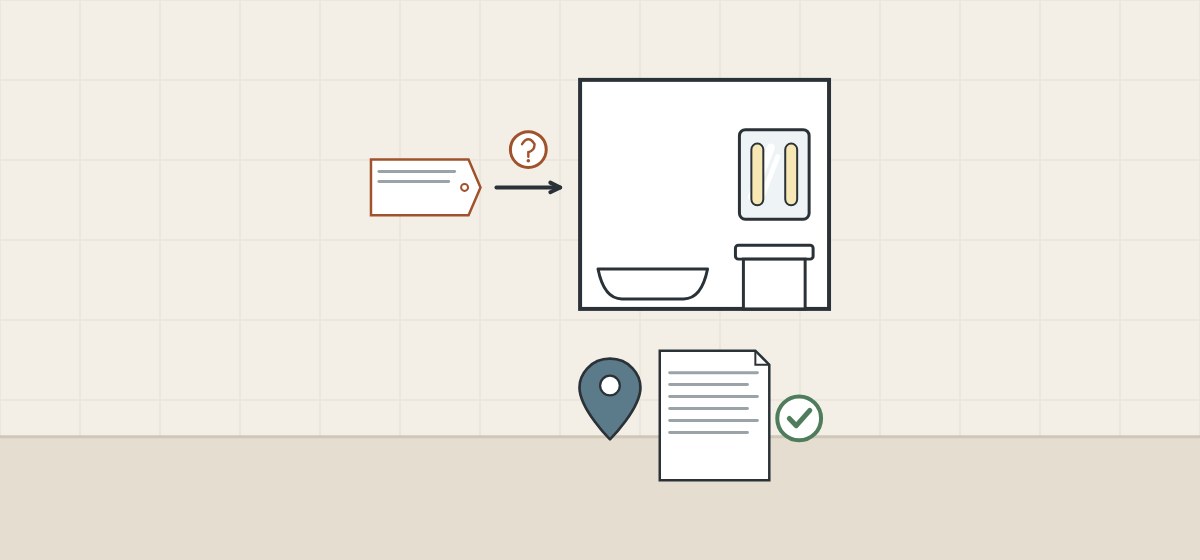
Neither standard text used here says a rating approves a product for a location. The scope of ANSI/IEC 60529-2020 and the abstract of IEC 62262 describe classifications; the rule for a location comes from other documents.
| Source | What it says |
|---|---|
| ANSI/IEC 60529-2020 scope | Technical committees decide how the classification is used. |
| IEC 62262 abstract | Applies where the equipment standard sets impact degrees. |
| NEMA FAQ | NEMA is not a test laboratory or certification body. |
| Robern, Vitality mirror | Needs a 120 VAC 20 amp GFCI circuit; observe local electrical and building codes. |
| Bathroom zones | Not set in this guide; confirm with the local authority. |
How should a buyer specify mirror ratings?
These steps apply the facts above to a mirror order. They are procurement guidance, not a code review.
- Start with the project rule. Ask the local authority which rating or marking applies.
- Name the system. IP code, IK code, or a damp or wet location marking.
- Write the exact code. Both digits and any letters, not “waterproof”.
- Name the rated part. Whole mirror, cabinet, light housing, driver or switch.
- Ask for the evidence. A document naming the same model and part.
- Treat impact separately. Request an IK code if the project asks.
- Keep other questions open. Condensation and corrosion need their own documents.
When the installed mirror differs from the tested one
If cable entries, cutouts or mounting are changed for the project, ask the supplier in writing whether the rating still applies to that configuration.
What should you send and ask before a quotation?
A complete request names the rating, the system it belongs to and the part it must cover.
| Question | Why it matters |
|---|---|
| What is the exact IP code? | Each digit answers a different question. |
| Which part does it cover? | The enclosure is defined per equipment. |
| Is there an IK code? | Impact is outside the IP code. |
| Which document shows it? | A code needs a named model and part. |
| Is there a damp or wet marking? | The UL guide ties damp and wet locations to luminaire markings. |
| What is stated about condensation? | Condensation is outside the IP code. |
Include with your request
- Project country and adopted code
- Where the mirror sits in the room
- Rating or marking required
- Mirror type: plain, lighted or cabinet
- Quantity per room type
WNS Global confirms any product and terms it offers separately in writing. This guide does not state that WNS Global products have the features, ratings or listings named above.