From driver to confirmed combination
What makes an LED mirror dimmable?
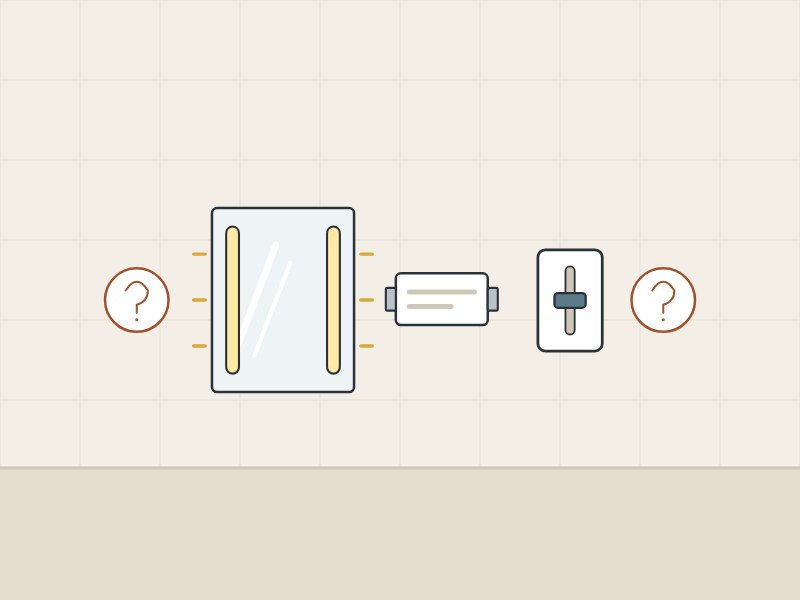
Whether an LED mirror dims depends on its driver. The US Department of Energy (DOE) says LEDs usually have drivers connected with them, and that these drivers are designed in different ways.
Lutron’s Controlling LEDs white paper calls the driver the primary component that determines the best possible dimming capability of an LED lamp or fixture.
| Term | What the source says |
|---|---|
| Driver | DOE: the electronics usually connected with LEDs. |
| Forward phase | PNNL: removes the leading edge of the AC waveform. |
| Reverse phase | PNNL: removes the trailing edge; also called ELV or trailing edge. |
| 0-10 V | Electric Mirror: a DC control voltage between zero and ten volts. |
| DALI | DALI Alliance: a digital lighting control protocol specified in IEC 62386. |
| Flicker | DOE: changes in light output over time. |
How does the dimming signal reach the LEDs?
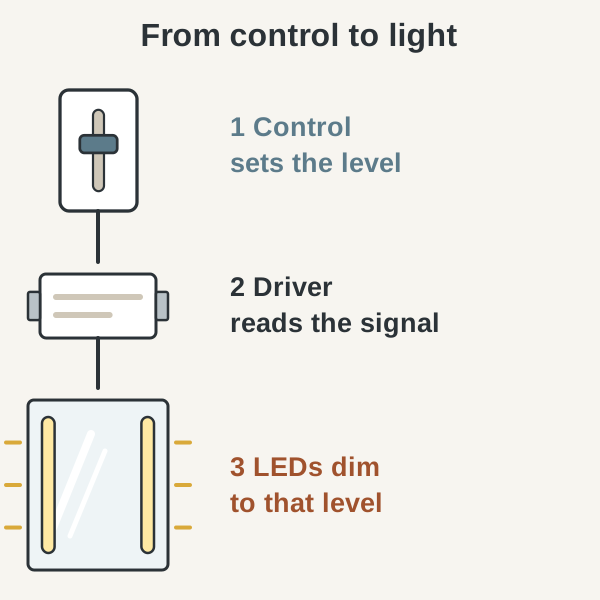
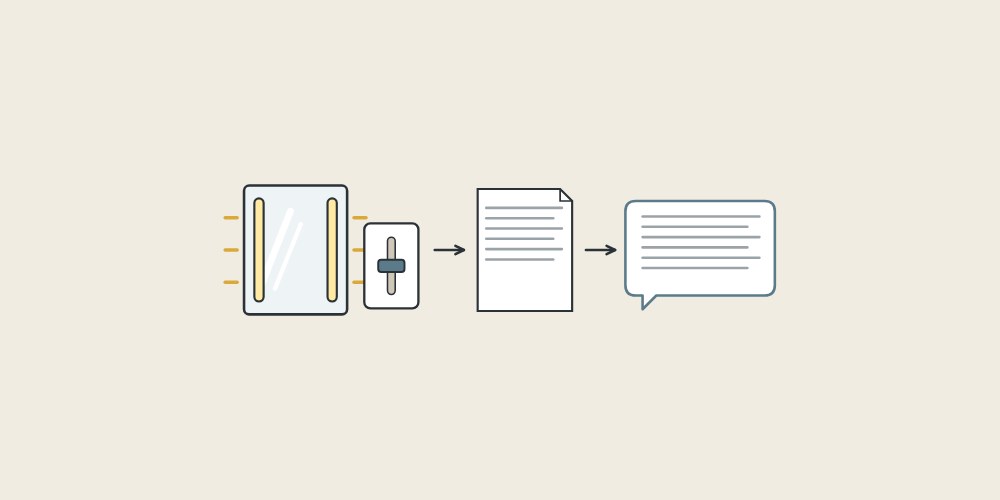
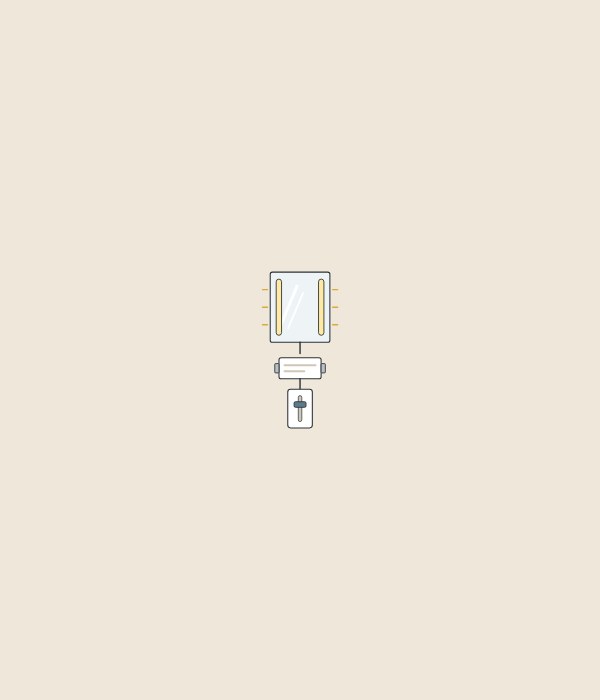
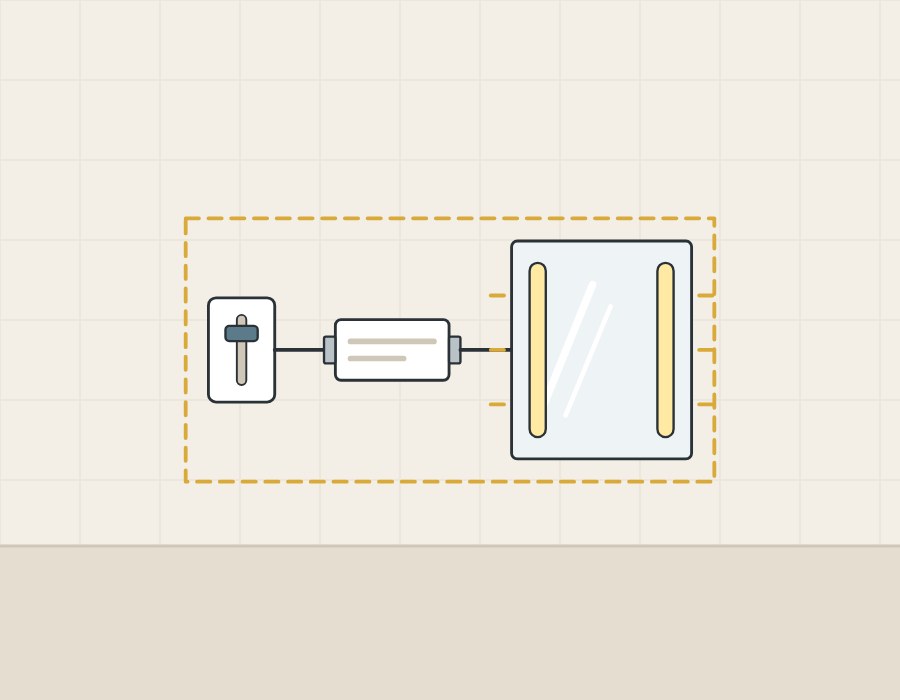
The signal goes from the control to the driver, and the driver changes the LED output. The steps follow Electric Mirror’s lighted mirror installation guide, PNNL’s specifier report and Lutron’s white paper. They are not wiring instructions.
- The user sets a level at the control.
- A phase-cut dimmer removes part of the AC waveform.
- In two-wire phase control, the signal reaches the driver on the dimmed hot wire.
- With 0-10 V control, a DC voltage carries the level on low-voltage wires.
- Lutron describes two ways a driver dims the LEDs: pulse-width modulation, or constant-current reduction on constant-current drivers.
- The light level follows, if the driver is designed for that signal.
Electric Mirror adds that the 0-10 V wires must run in conduit separate from the line-voltage supply. Kohler requires a qualified electrician to route all wiring for its lighted mirror.
Which control methods can a mirror driver be built for?
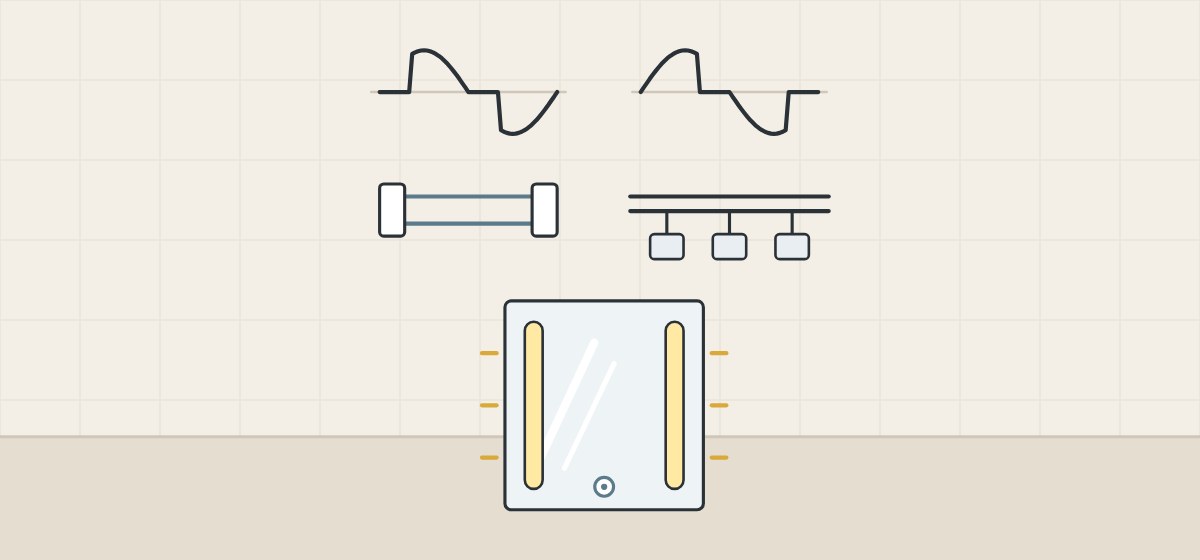
Lutron’s white paper lists two-wire forward phase, two-wire reverse phase, three-wire forward phase, 0-10 V, EcoSystem/DALI digital, DMX512 and RF control. Each row is shortened from the named source.
| Method | What the source says |
|---|---|
| Forward phase | Lutron: typically for incandescent and magnetic low-voltage sources; the most common dimming method. |
| Reverse phase | Lutron: typically for electronic low-voltage sources; often effective on capacitive loads such as LED drivers. |
| 0-10 V | Lutron: hot and neutral, plus two low-voltage control wires. |
| DALI | DALI Alliance: each device can have its own address. |
| Touch on the mirror | Electric Mirror: Keen touch dimming on some cabinet models. |
Lutron’s residential LED guide says some integrated drivers work well with forward-phase dimmers while others perform better with reverse phase. The published scope of NEMA SSL 7A-2015 (R2021) names one case only: a forward phase-cut dimmer combined with dimmable LED light engines.
What do mirror makers state about dimmers?
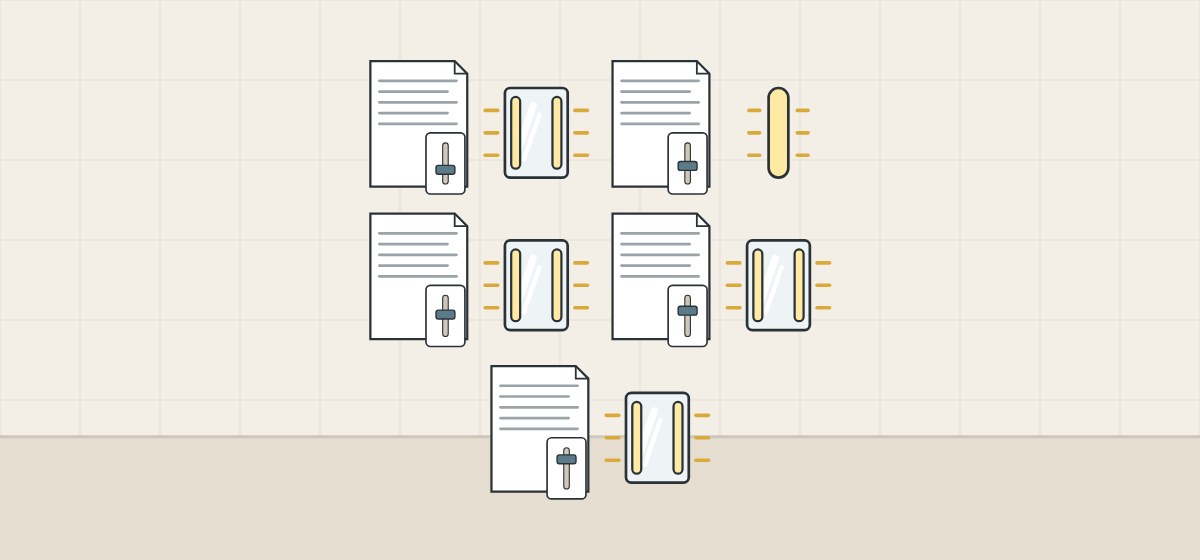
The three makers read for this guide address wall dimmers in their installation documents. Robern and Electric Mirror name dimmer models; Kohler names a type of dimmer switch. Five examples:
| Product | Control stated | What the maker says |
|---|---|---|
| Robern Vitality wall mirror | Five recommended dimmers | Needs an approved compatible dimmer, not included. |
| Robern Inline dimmable light | Five recommended dimmers | Dims to 5%; a standard wall switch gives on/off only. |
| Kohler K-99572-TLC, K-99573-TLC | Wall dimmer switch | Dimmer required; suits most residential dimmers for incandescent and dimmable LED bulbs. |
| Electric Mirror lighted mirrors | 0-10 V or forward phase | Recommends one named Leviton dimmer for each method. |
| Electric Mirror mirrored cabinets | External 0-10 V wall dimmer | 0-10 V lines not available on Keen touch-dimming models. |
Electric Mirror’s lighted mirror guide also says the dimming switches will not be compatible with Ava or Keen technology upgrades. Kohler, by contrast, states broad compatibility.
What does “dimmable” not tell a buyer?
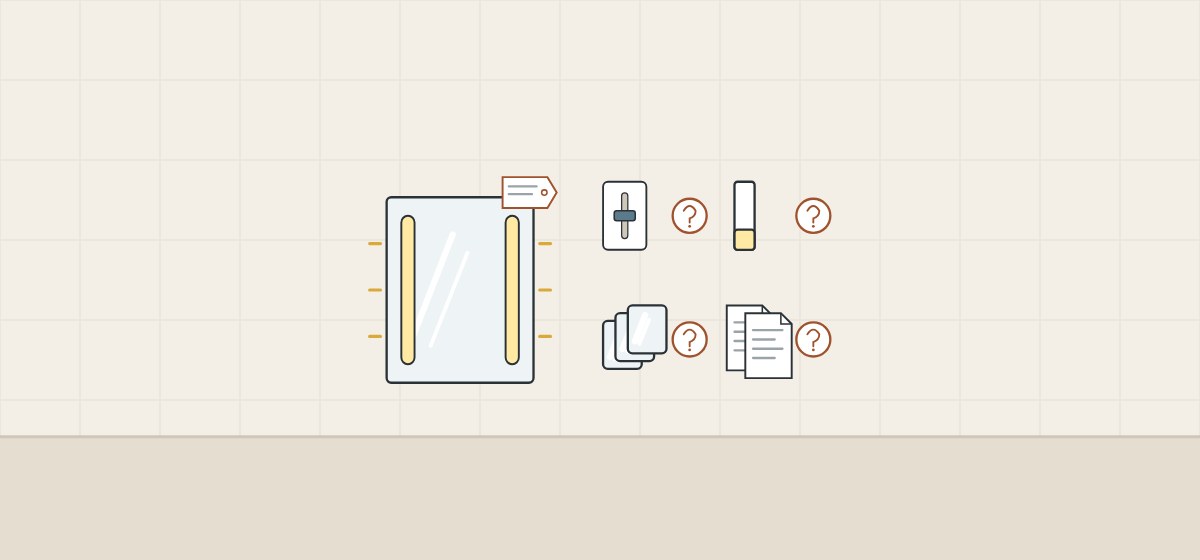
The word names neither the control, the range nor the load. PNNL says most dimming claims describe only potential performance, and that actual performance with a phase-cut dimmer often depends on the dimmer make and model.
Which control
Robern says dimmers outside its recommended list for the Vitality mirror have not been tested or verified.
How low
Lutron says some LEDs dim only to 20% while another product may reach 1%. Robern states 5% for its Inline dimmable models.
How much load
PNNL says phase-cut dimmers have minimum and maximum load ratings. For best dimming, Kohler recommends a programmable digital-fade dimmer switch intended for LED lighting, rated at least 150 W, with its lighted mirror.
Which revision
PNNL warns that after a project pause the LED or driver generation, or the dimmer model, may have changed.
- Mirror model and revision
- Driver, or the integrated assembly
- Control model or control method
- Lowest stated dimmed level
- Number of mirrors per control
What goes wrong when driver and control do not match?
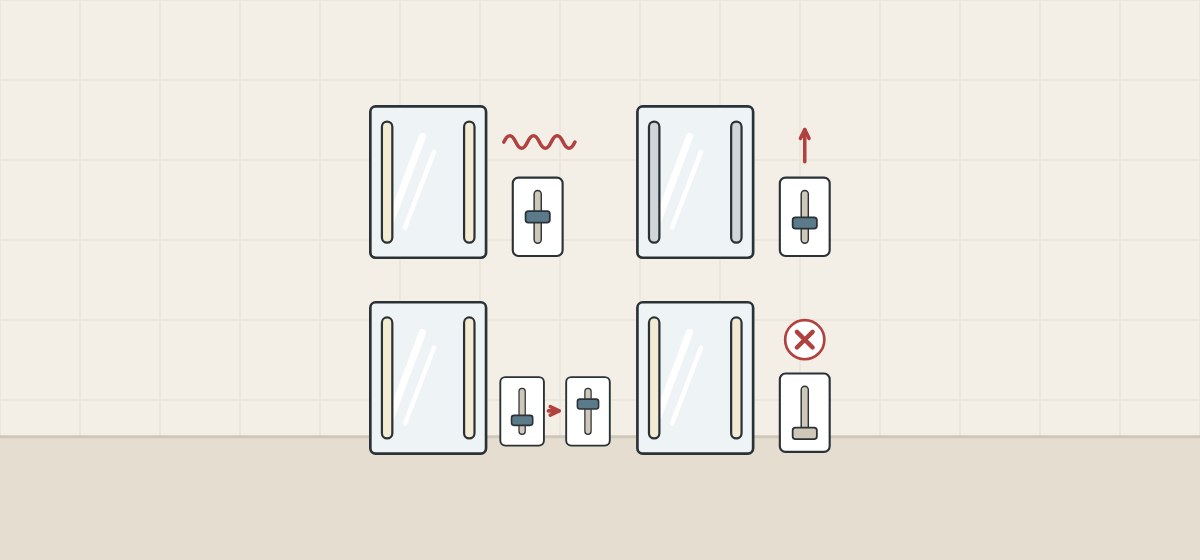
The light may dim badly, start badly or fail to go out. PNNL and Lutron describe four outcomes:
Erratic dimming
PNNL reports that DOE’s GATEWAY program has encountered LED products on dimming controls that do not dim, dim erratically, have a limited range, flicker or make audible noise.
Pop-on and drop-out
Lutron describes pop-on: after being dimmed low and switched off, the LEDs sometimes will not come on until the dimmer is raised. It says the light should go off only when the dimmer is turned off.
Dead travel
Lutron calls it undesirable when the control is adjusted without a matching change in light level.
Ghosting
PNNL describes a driver that keeps a low level of operation, so the light appears on when it should be off.
Lutron’s residential guide says adjusting the low-end and high-end trim removes potential issues such as flicker, shimmer, pop-on or dead travel.
How is flicker on a dimmed mirror judged?
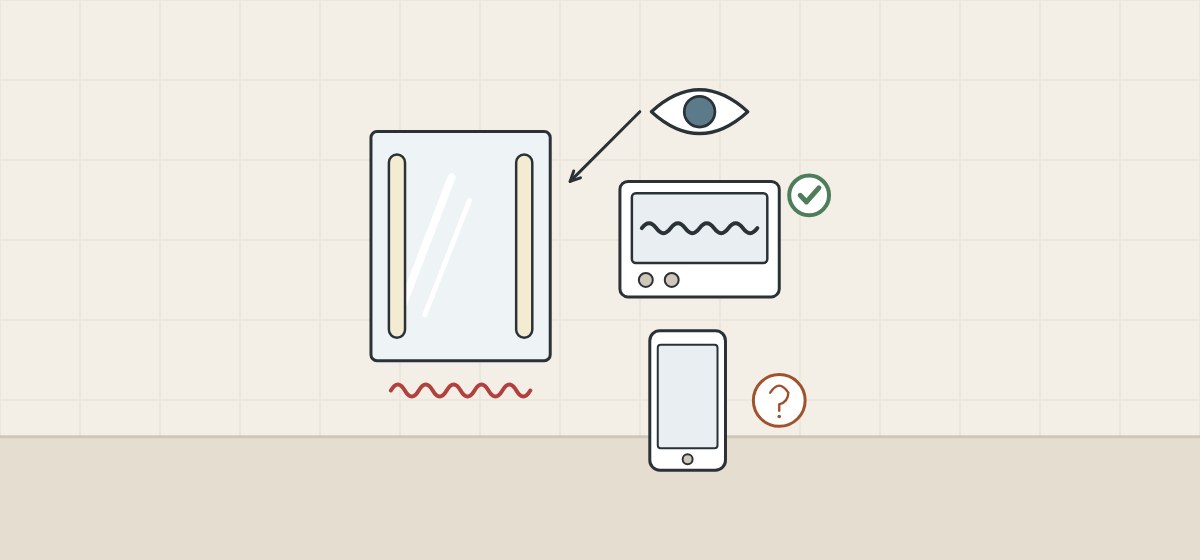
Flicker is observed first and measured if the project sets a requirement. PNNL says compatibility alone does not guarantee lack of flicker, smoothness or a specific minimum level, and that these are best evaluated by observation. A presentation hosted by DOE says a digital camera “sometimes” picks up flicker, so this guide does not treat a clean phone video as proof.
| Source | What it says |
|---|---|
| DOE flicker explainer | Up to 80 Hz is visible flicker; about 80 to 2,000 Hz is the stroboscopic effect. |
| DOE-hosted IEEE 1789 presentation | Manufacturers should test for flicker over the dimming range. |
| NEMA 77-2017 scope | A method to quantify visible temporal light artifacts; control recommendations only for phase-cut dimming. |
| IEEE 1789-2015 | Recommended practice on LED modulation frequencies; IEEE lists it as inactive-reserved. |
How should a buyer confirm mirror, driver and control?
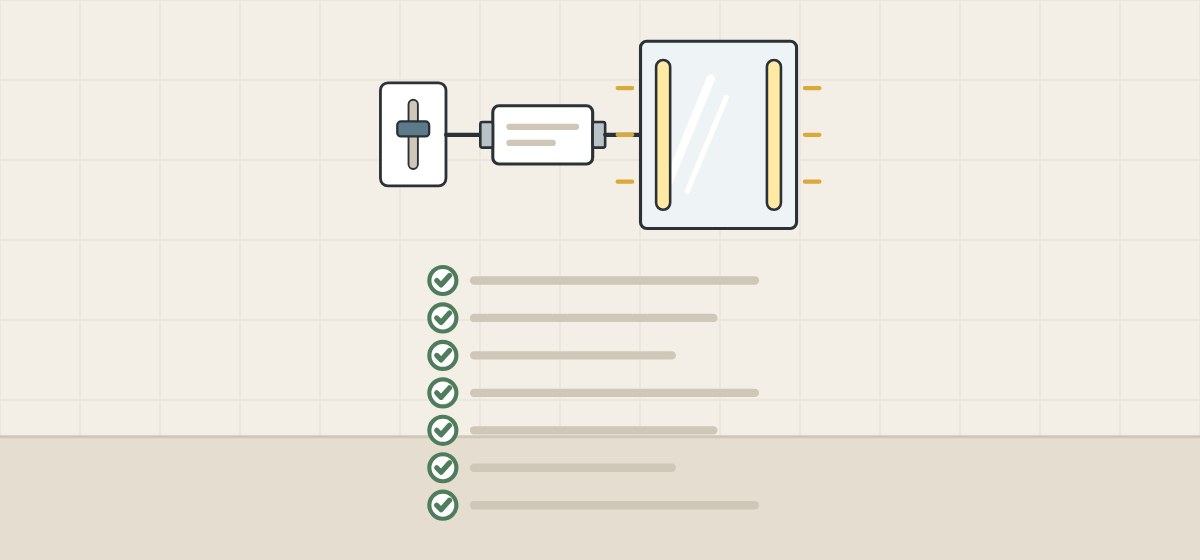
Confirm one named combination and check it on site. These steps are procurement guidance, not electrical advice or a test standard.
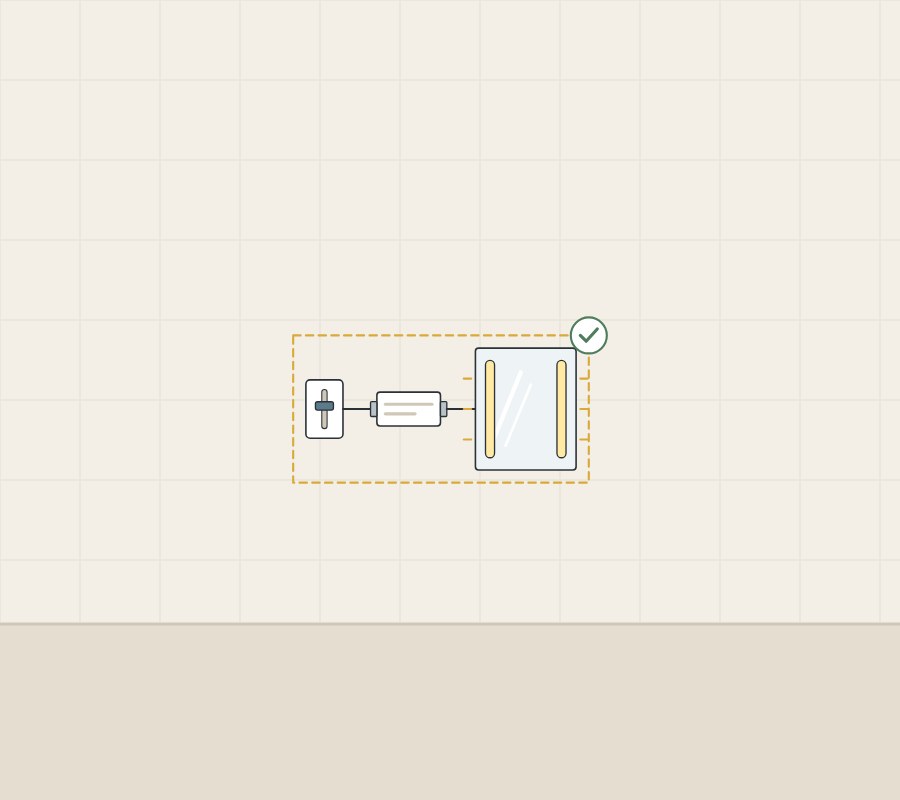
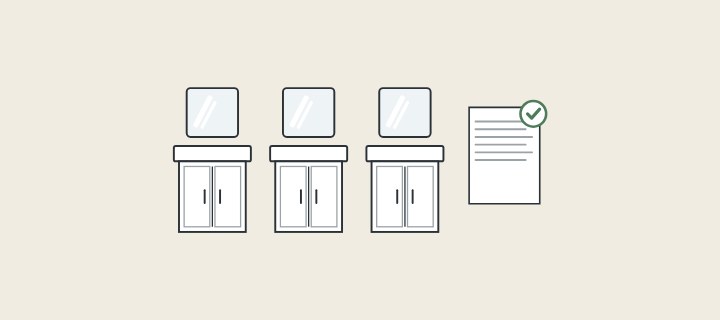
- Name the three parts. Mirror model and revision, driver, and the control model or method.
- Ask which controls were tested. Request the maker’s list in writing.
- Check the control maker too. Look for the mirror or driver in the dimmer maker’s compatibility information.
- Count the load. Mirrors per control, against the dimmer’s minimum and maximum.
- Mock up the combination. Switch on, dim through the range, hold the lowest level, restore power.
- Record the result. The combination tested, any trim setting and anything unusual.
- Recheck after changes. A substituted mirror, driver or control reopens the question.
When the control is not on the list
PNNL says compatibility needs re-evaluating whenever dimmers, luminaires, lamps or transformers are substituted, and Lutron says the only way to know for sure is to test. If the planned control is not one the maker names, ask for a supported combination. Robern and Kohler both say wiring is for a qualified electrician.
What should you ask before ordering a dimmable LED mirror?
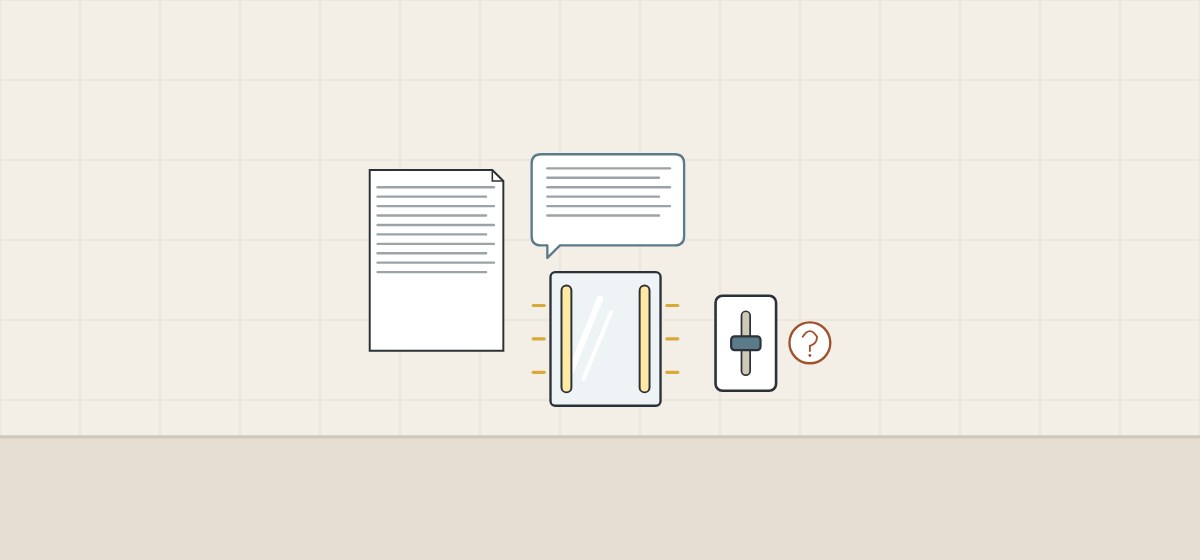
Ask for the combination, not the label.
| Question | Why it matters |
|---|---|
| Which driver is fitted? | The driver sets the dimming capability. |
| Which control method does it accept? | Phase-cut, 0-10 V, DALI and touch differ. |
| Which control models were tested? | Robern says dimmers outside its list are not tested or verified. |
| Can a wall dimmer be used with the touch control? | One maker’s touch models lack 0-10 V lines. |
| What is the lowest dimmed level? | Stated levels differ by product. |
| Is there measured flicker data when dimmed? | Observation is not a measurement. |
| Can the driver be replaced on its own? | If not, record the replacement assembly. |
Include with your request
- Mirror model, size and quantity
- Planned control make and model
- Supply voltage and project location
- Mirrors per control circuit
- Any flicker requirement in the specification
WNS Global confirms any product and terms it offers separately in writing. This guide does not state that WNS Global products have the features, ratings or listings named above.