Material science

Engineered Quartz vs Natural Stone vs Terrazzo for Vanity Tops

These three materials get compared on looks and price, and rarely on what they are actually made of. Composition is what decides porosity, repairability, seam behavior, weight — and, in one notable case, whether a material can legally be fabricated in a given market at all. This is a materials-science comparison, written to help a specifier understand the substance before choosing the surface.

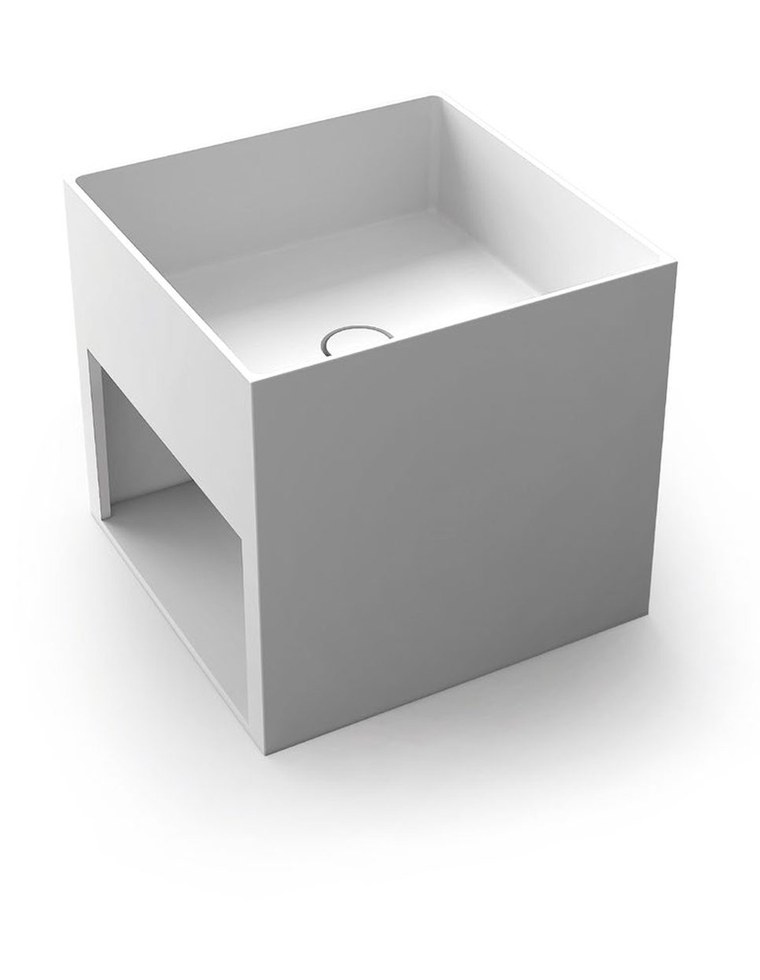
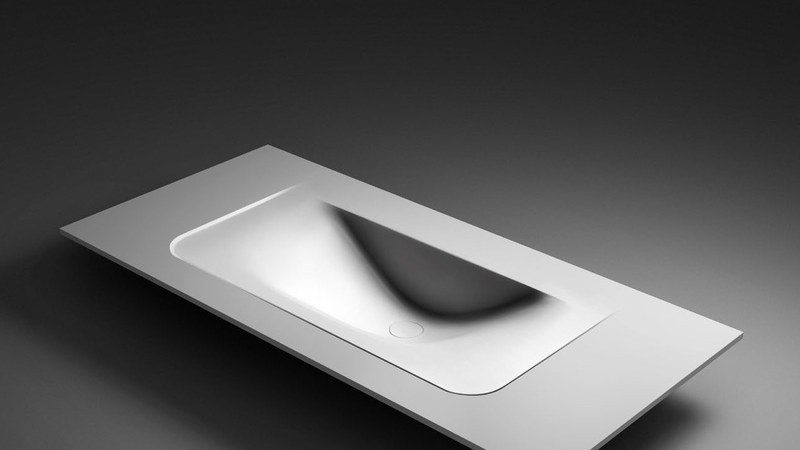
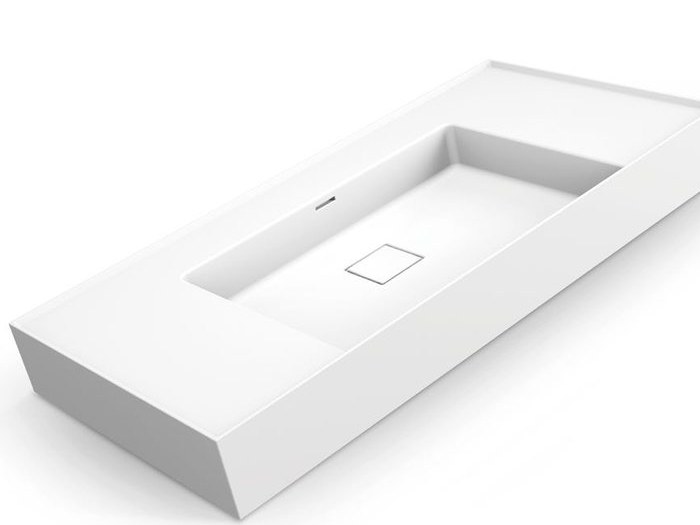
A rectangular integrated basin form shown against a dark background

The short answer

Quick Reference

Point 01
Engineered quartz is roughly 90–93% crushed quartz aggregate bound in about 7–10% polymer resin, compacted under vacuum and vibration into slabs — a factory material with a uniform structure.
Point 02
Natural stone (granite, marble) is quarried rock: no binder, natural porosity and veining, and the possibility of hidden flaws that engineered materials do not have.
Point 03
Terrazzo is aggregate — marble chips, glass or other fragments — set in a cement or epoxy binder, poured in place or precast, then ground and polished.
Point 04
Fabricating quartz releases respirable crystalline silica; the hazard is serious enough that Australia banned the manufacture, supply and installation of engineered stone benchtops, slabs and panels from 1 July 2024.
Point 05
Solid surface — the material WNS Global casts its own tops and basins in — is a different category again: mineral filler in acrylic or polyester resin, formable and repairable.
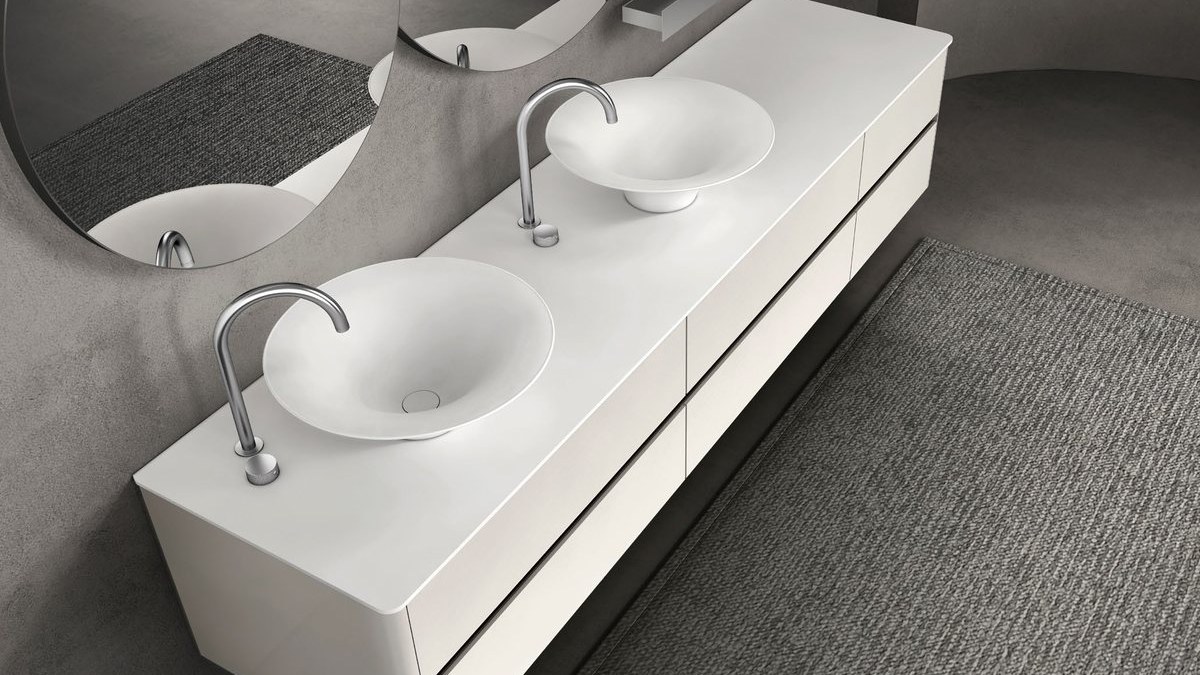
A long integrated basin vanity top

Start here

Binder, Aggregate, or Neither

The simplest way to understand these materials is to ask what holds them together. Natural stone holds itself together — it is one mineral mass with whatever porosity and veining the quarry produced. Engineered quartz and terrazzo are both composites: an aggregate held in a binder. The difference between them is the ratio and the binder chemistry, and those two facts explain most of how each behaves on a vanity. This site's separate guide compares quartz, marble and solid surface as purchase choices; this article stays on the material science.

  • Natural stone: quarried mineral mass, no binder
  • Engineered quartz: high aggregate ratio in a polymer resin binder
  • Terrazzo: aggregate in a cement or epoxy binder, poured or precast

Composition Compared
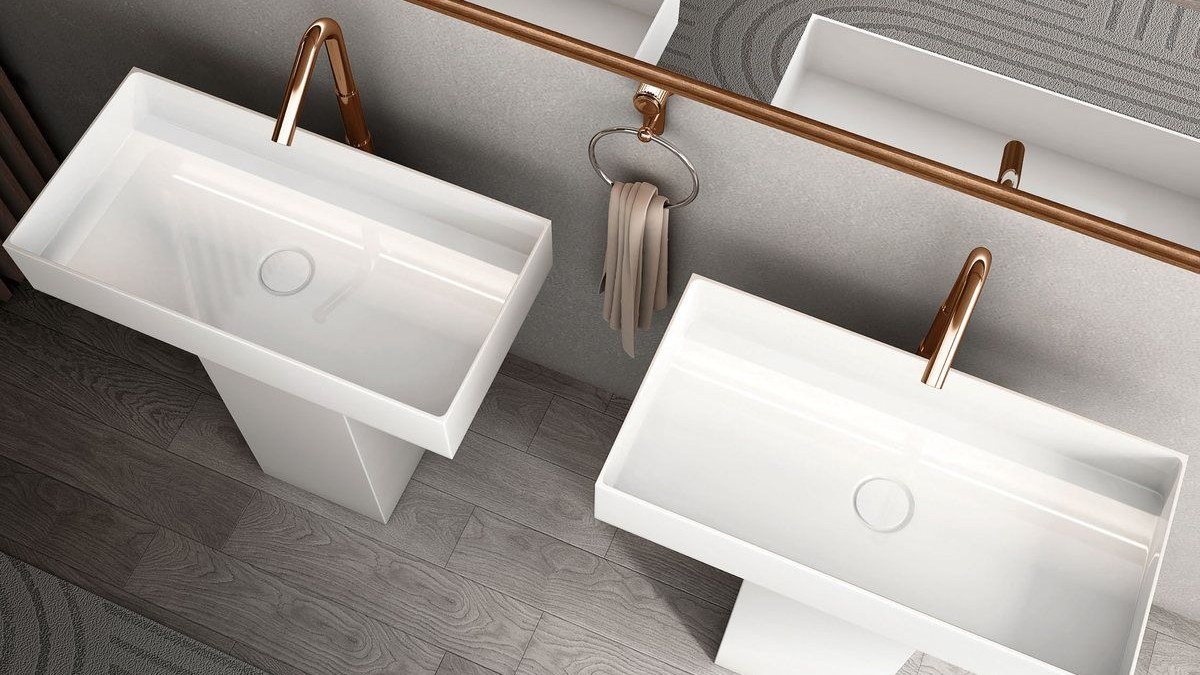
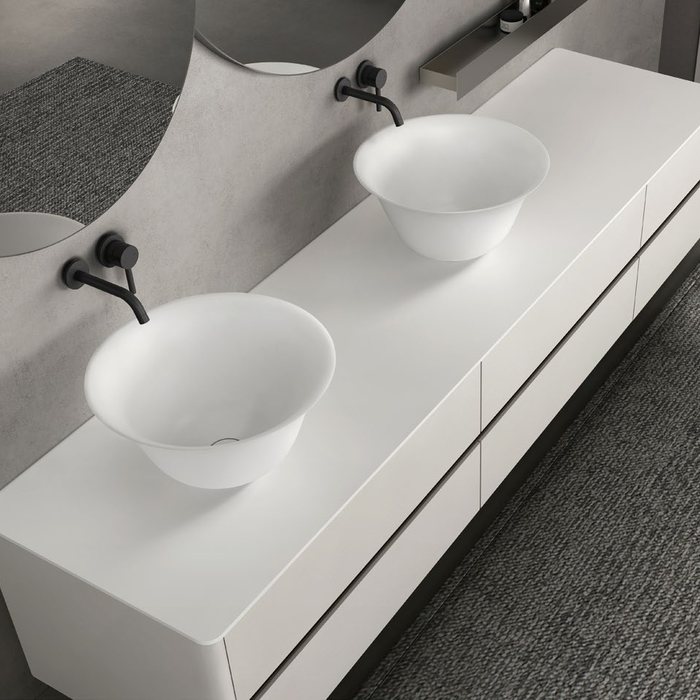
A vanity top produced for a project

Engineered quartz surfacing is typically made from crushed quartz in grits and powders — around 90–93% of the body by weight — dispersed in an unsaturated polyester resin matrix of roughly 7–10%, with pigments, and compacted in a vacuum vibrocompression process into slabs before curing and polishing. The high aggregate ratio is why it is hard and dense; the resin is why it is non-porous and why it does not tolerate high heat the way stone does.

Natural stone is quarried and cut, with no binder at all. Granite is an igneous rock, hard and comparatively dense; marble is metamorphosed limestone, softer, more porous, and reactive to acids. Both can contain natural fissures or inclusions that a uniform factory material does not.

Terrazzo is a composite going back centuries: aggregate such as marble chips, granite, glass or shell set in a binder. Traditional terrazzo uses a cementitious binder and is poured in place, ground and polished; modern epoxy terrazzo uses a resin binder, is thinner and lighter, and is more often precast into tiles or slabs. The binder decides most of its properties — cement terrazzo is porous and needs sealing; epoxy terrazzo is much less so.

  • Engineered quartz: ~90–93% quartz aggregate, ~7–10% polyester resin, vibrocompressed
  • Natural stone: quarried mineral, no binder, natural porosity and inclusions
  • Terrazzo: aggregate in cement (porous, poured) or epoxy (denser, often precast) binder

How Composition Shows Up in Use

Porosity follows the binder. Resin-bound quartz and epoxy terrazzo are effectively non-porous and do not need sealing; cement terrazzo and natural marble are porous and do. Heat tolerance runs the other way: natural stone tolerates heat that would damage a resin binder. Repairability depends on whether the surface can be worked in place — natural stone and terrazzo can be reground and re-polished; resin-bound quartz is harder to repair invisibly once chipped. Weight tracks density: granite and cement terrazzo are heavy, epoxy terrazzo and quartz somewhat less so, and all three need cabinet support specified for the actual slab weight. Seams appear wherever a slab ends, in all three materials, which is where solid surface — formable and bondable — differs from the whole group.

  • Porosity and sealing follow the binder
  • Heat tolerance favors natural stone over resin-bound materials
  • Stone and terrazzo can be reground in place; quartz chips are harder to hide
  • All three are cut, not formed, so seams appear at every slab end

The Silica Question
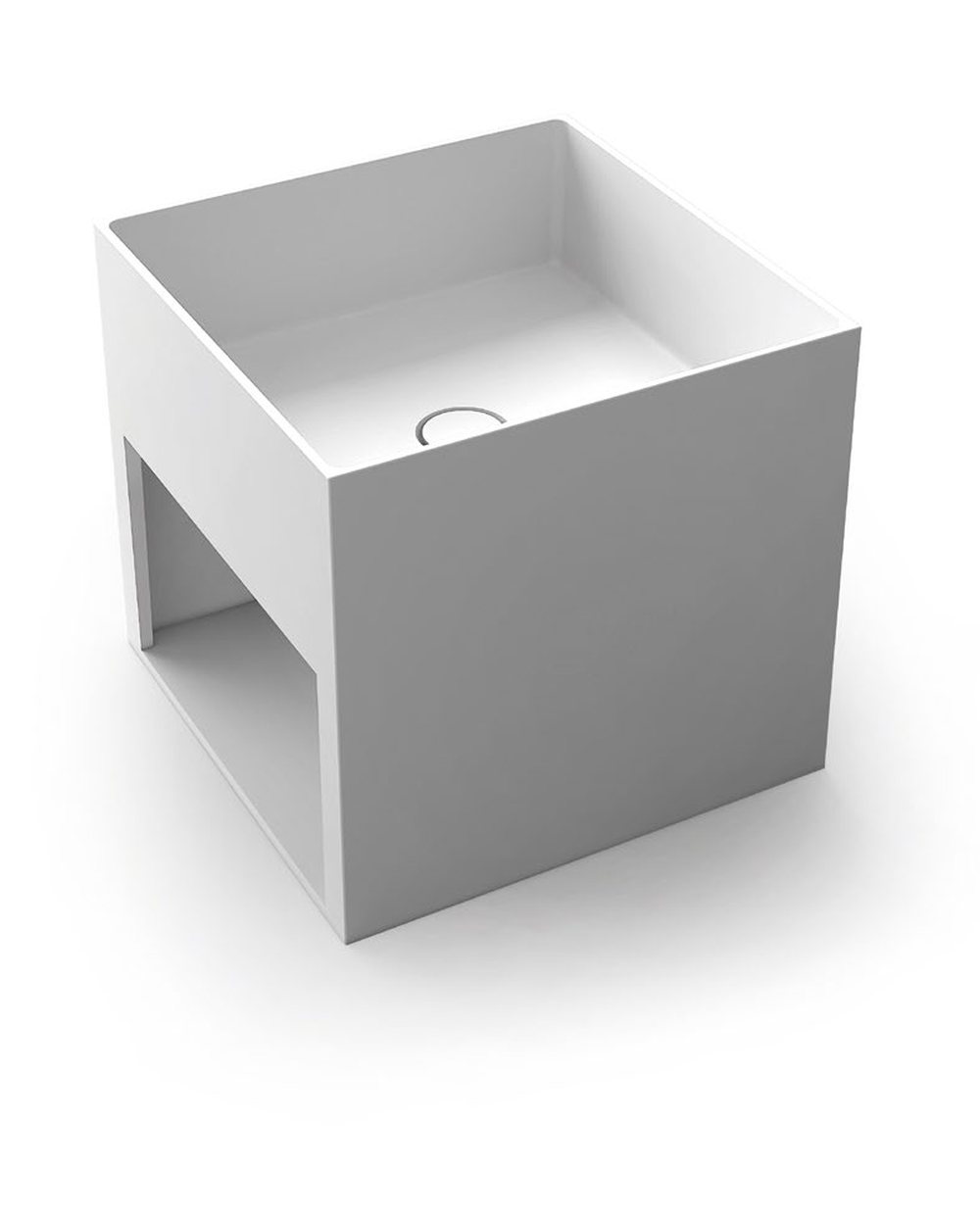
Integrated Basins & Vanity Tops shown with related bathroom components for specification coordination

Because engineered quartz is mostly crystalline silica, cutting, grinding and polishing it generates respirable crystalline silica dust, and silicosis among fabrication workers has become a documented occupational disease in several countries. The regulatory response has been sharpest in Australia, where work health and safety laws prohibited the use, supply and manufacture of engineered stone benchtops, slabs and panels from 1 July 2024; porcelain and sintered stone products, and finished items that need no further processing, are outside that prohibition. Elsewhere the material remains legal but fabrication is subject to silica exposure controls that a specifier should expect a fabricator to demonstrate.

For a project specifier this is a real consideration: whether a material can be fabricated on site or by a local shop in the destination market, and under what controls, now varies by jurisdiction. It is also one of the reasons a cast, resin-based solid surface — which is not a crystalline silica material and is shaped by casting rather than cutting slabs — sits differently in this conversation.

  • Quartz fabrication releases respirable crystalline silica
  • Australia prohibited engineered stone benchtops, slabs and panels from 1 July 2024
  • Porcelain and sintered stone are outside that prohibition
  • Check local fabrication rules and controls for the destination market
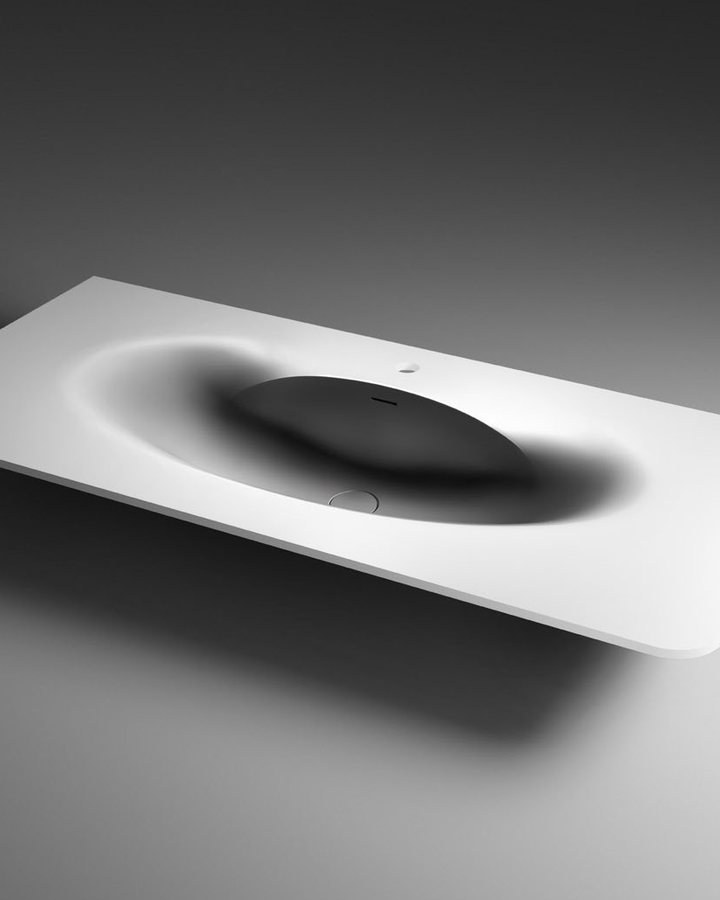
A vanity top produced for a project

Common questions

Material Questions

Answers to the checks buyers most often make before using this guide for a project or sourcing decision.

What is engineered quartz actually made of?

Roughly 90–93% crushed quartz aggregate by weight bound in about 7–10% polyester resin, with pigments, compacted under vacuum and vibration into slabs. The aggregate makes it hard; the resin makes it non-porous.

Is terrazzo the same kind of composite as quartz?

Structurally similar — aggregate in a binder — but the binder differs. Terrazzo uses cement (porous, poured in place) or epoxy (denser, often precast), and its aggregate is larger and more visible. Quartz uses fine silica in polyester resin.

Which of the three needs sealing?

Cement terrazzo and natural marble, because they are porous. Resin-bound quartz and epoxy terrazzo are effectively non-porous and generally do not.

Why did Australia ban engineered stone?

Because fabricating it releases respirable crystalline silica, linked to silicosis among workers. From 1 July 2024 Australian work health and safety laws prohibited the use, supply and manufacture of engineered stone benchtops, slabs and panels; porcelain and sintered stone are not covered.

Can any of these be repaired in place?

Natural stone and terrazzo can be reground and re-polished. Resin-bound quartz is harder to repair invisibly once chipped. Solid surface, by contrast, can be sanded and refinished, which is one reason it is a separate category.

Which of these does WNS Global make?

None of the three. WNS Global casts its own tops and basins in solid surface — mineral filler in a resin matrix, formed rather than cut. This comparison exists to help specifiers understand the alternatives; our separate guide covers quartz, marble and solid surface as purchase choices.

A vanity top made to a custom length

In short

Understand the Binder Before Choosing the Look

Engineered quartz is quartz aggregate in polyester resin; natural stone is quarried mineral with no binder; terrazzo is visible aggregate in cement or epoxy. Porosity, heat tolerance, repairability and weight all follow from that. Fabricating quartz carries a silica hazard serious enough that Australia has prohibited engineered stone benchtops, slabs and panels since 1 July 2024 — a jurisdiction-specific fact worth checking for any destination market.

  • Quartz: ~90–93% aggregate in ~7–10% resin
  • Natural stone: no binder, natural porosity and flaws
  • Terrazzo: cement or epoxy binder decides its behavior
  • Silica rules vary by market — check before specifying

Verification sources

Official Sources and Further Reading

Material performance depends on the exact grade, construction, finish, use environment and test method. Confirm the material specification and any applicable test report for the exact supplied model before final selection.

Comparing top materials for a project?

Talk to WNS Global

Tell us the project and the destination market, and we will explain where a cast solid surface top fits against these alternatives for the specific application.

A run of integrated basin vanities in a hotel bathroom

A vanity top made to a custom length

Published: Last updated:

  • This guide is a sourcing and planning reference. Confirm the applicable product, contract, authority and project requirements before making a final decision.

START WITH THE PRODUCT DETAILS

Tell Us What You Need

Share the bathroom products, project requirements, target market, dimensions, materials, finishes, quantities, or customization details currently available. WNS Global will review the request and identify the information needed for the next step.