From wall section to niche order
What changes when a shower niche sits in an exterior wall?
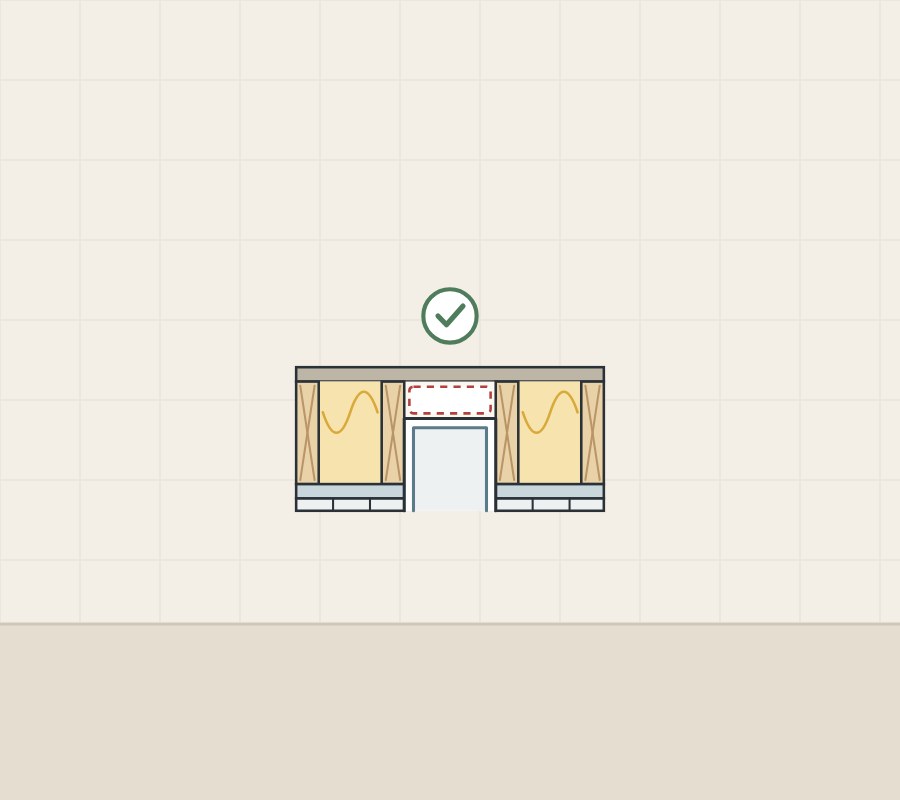
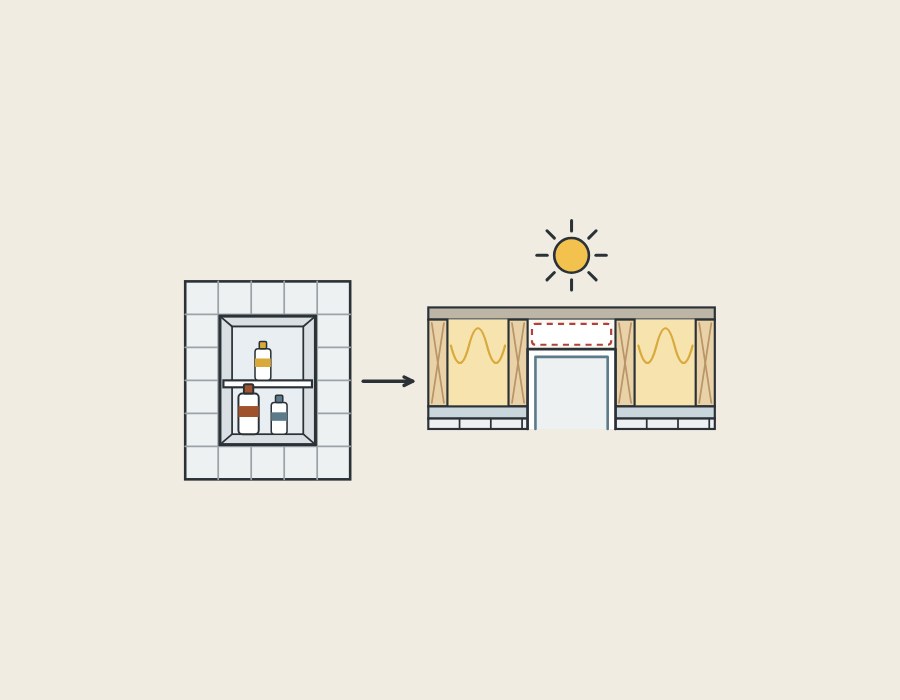
The recess is cut into a wall that also has to hold insulation and block air. A DOE Building America guide on cement board behind tub and shower enclosures says that with a shower or tub on an exterior wall it is essential to air seal and insulate the cavities behind the enclosure.
| Term | What the source says |
|---|---|
| Air barrier | ENERGY STAR checklist: any durable solid material that blocks air flow between conditioned and unconditioned space. |
| Vapor barrier | DOE Building Science Education: a layer that prevents water vapor entering the wall cavity. |
| Thermal bridge | Natural Resources Canada: solid material linking the warm side to the cold side, such as a stud. |
| Waterproofing | Schlüter: the layer a shower niche must connect to. |
In what order should the wall and the niche be reviewed?
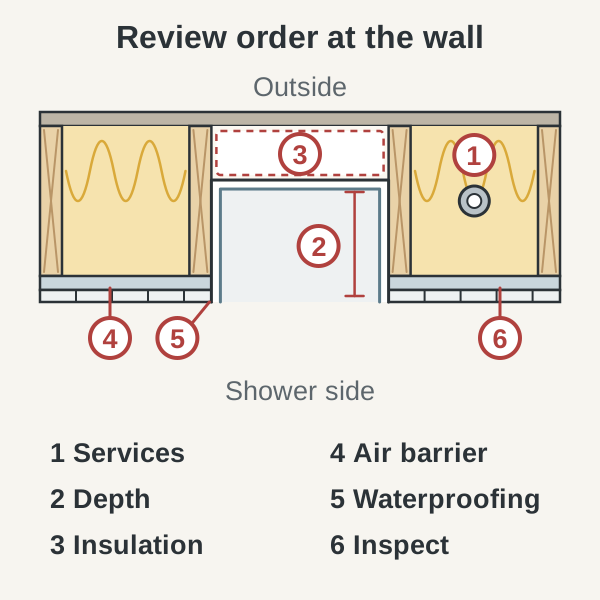
Review the wall first and the niche second. This order combines Schlüter’s niche-planning page with the DOE guide; the arrangement is this guide’s own.
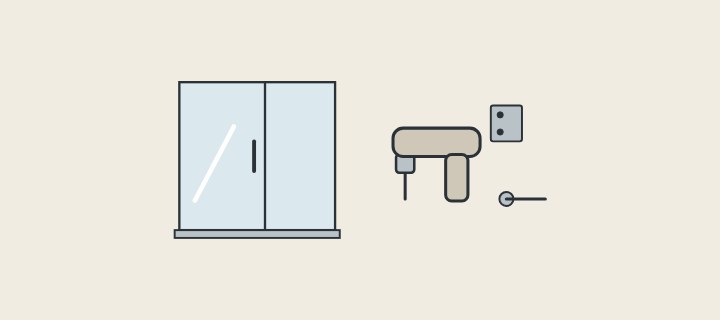
- Check for pipework or electrical runs at the niche position.
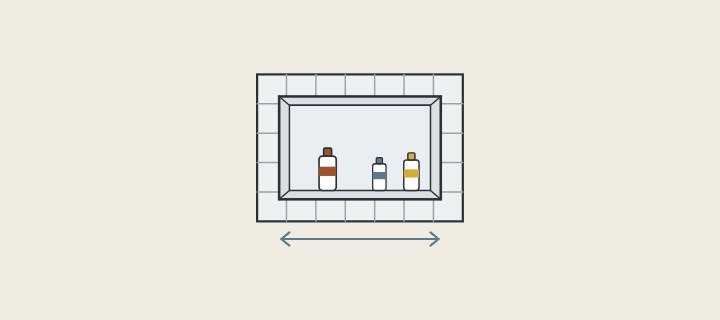
- Compare the niche depth with the wall thickness.
- Show the insulation behind and around the recess.
- Show the air barrier and its sealed seams.
- Show how the niche joins the shower waterproofing.
- Inspect insulation and air barrier before the shower goes in.
Schlüter says services in the wall must be checked before position and size are set.
What does DOE guidance ask for behind a shower on an exterior wall?
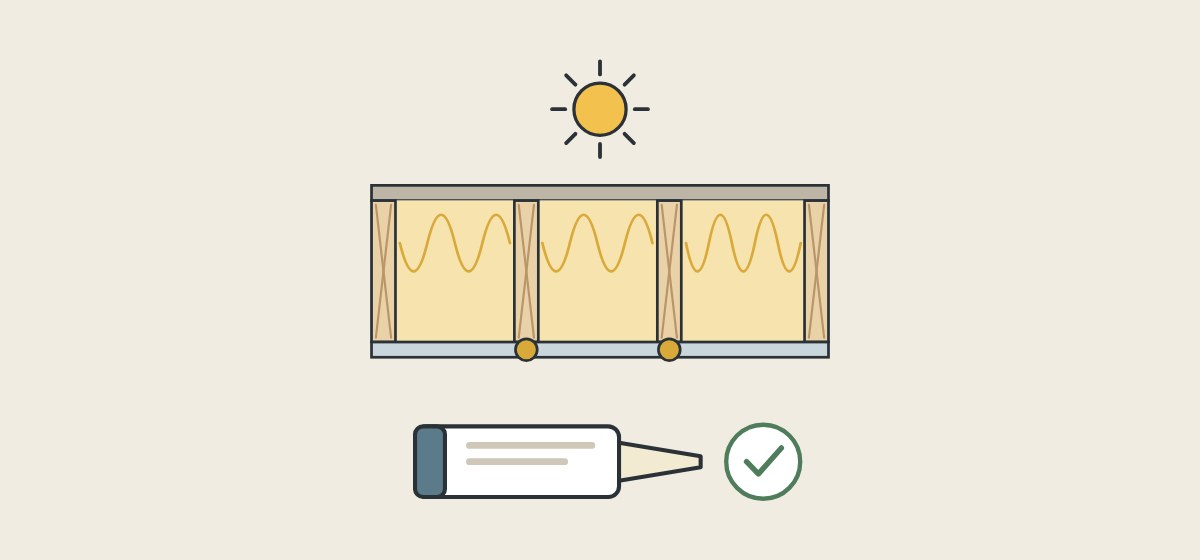
It asks for a fully insulated cavity covered by a sealed rigid air barrier or other supporting material, in place before the shower. The rows are from the DOE Building America guide.
| Item | What the guide says |
|---|---|
| Insulation fit | No misalignments, compressions, gaps or voids. |
| Insulation level | The R-value local code requires, or higher. |
| Air barrier | A rigid air barrier or other supporting material over the cavities, so insulation cannot sag. |
| Sealing | Seams, gaps and holes sealed with caulk or foam before installation. |
| Checking | Site supervisor inspection; an infrared camera can be used with blower door testing. |
The guide covers tubs and showers, not niches.
What do niche makers state about depth, framing and sealing?
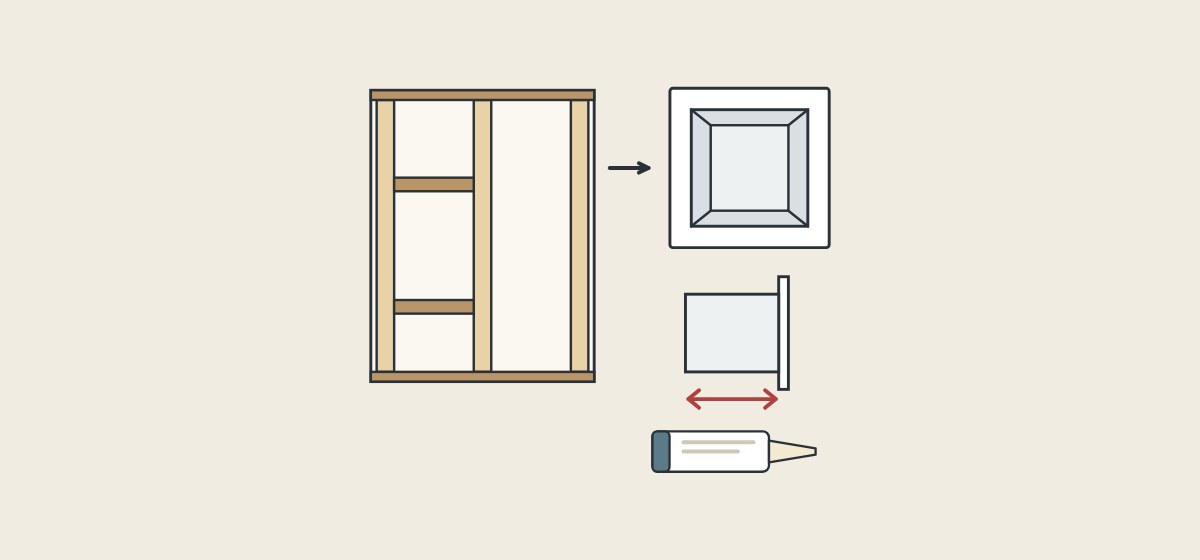
The maker documents read for this guide describe fixing and waterproofing. Each statement belongs to the named maker.
| Maker document | What the maker states |
|---|---|
| Schlüter planning page | Wall thickness should significantly exceed the niche depth. |
| Schluter (US) KERDI-BOARD-SN | Prefabricated and fully sealed; supported on both sides by studs or other framing. |
| wedi data sheet | Extruded polystyrene core; most listed sizes 4 in deep outside and 3 in inside; flanges rest on studs. |
| LATICRETE HYDRO BAN Preformed Niche | Expanded polystyrene with a waterproof finish; horizontal cross bracing is installed to support the niche (in existing walls, only if accessible). |
None of the passages used here gives an insulation value for the wall behind the niche.
Does a shower niche in an exterior wall need a vapor barrier?

Not by default: the sources tie vapor control to climate and the wall, not to the niche. The documents below name different climate zones; confirm with the local authority. Four points:
Climate decides
DOE Building Science Education says no vapor barrier is required in mild or hot climates and that code requires one in zones 5 through 8, where a Class III or Class II barrier is adequate in many cases. It adds that an interior barrier can potentially keep a wall from drying if moisture condenses in it in summer.
Warm-humid climates
A DOE Building America guide says not to put Class I vapor retarders on the interior side of air-permeable insulation in above-grade walls there, except at shower and tub walls.
One DOE brief
The 2011 brief on tubs says that, except in severely cold climates (IECC Climate Zones 6 or higher), Building America scientists do not recommend vapor retarders in the exterior bathroom wall.
Air carries more
Natural Resources Canada says far more moisture is carried by airflow through a small hole than by diffusion through a much larger area.
- Project climate zone
- Vapor class of each wall layer
- Local code requirement
Is a waterproof niche the same as an insulated, air-sealed wall?
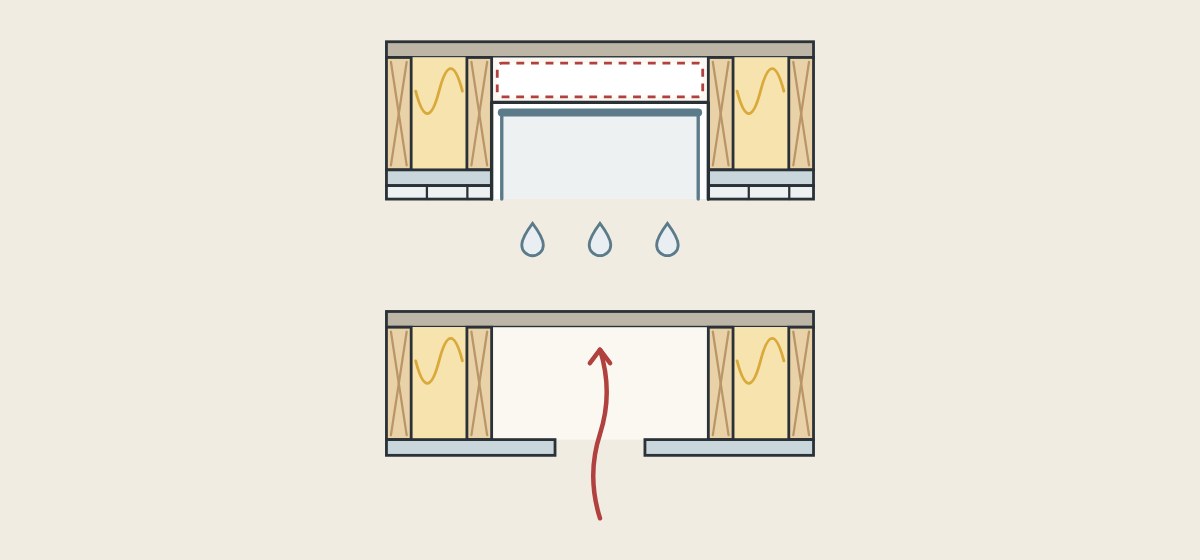
The sources set separate requirements for each. Four points:
Waterproofing
Schlüter says (on its European site, under DIN 18534) that a niche in a shower must be watertight and connected to the waterproofing layer of the wall surface.
Backer boards
The DOE cement board guide says cement board is water resistant but not waterproof unless made as a waterproof product.
Air barrier
A DOE guide to air barriers says the barrier must be continuous around the whole envelope, with insulation in full contact with it.
Insulation quality
A DOE guide to Grade 1 insulation says gaps, voids and compressions can cause cold spots that may encourage condensation.
TCNA says its Handbook leaves the membrane and backer board combination for shower methods B421 and B422 to the manufacturers to declare and the design professional to select.
Which programs and codes name the wall behind a shower?

Two US programs address walls at showers.
| Document | What it asks for |
|---|---|
| ENERGY STAR rater checklist, Rev. 14 | A complete, fully aligned air barrier at walls behind showers and tubs: at the exterior surface of wall insulation in all climate zones, and also at the interior surface in Climate Zones 4-8. |
| EPA Indoor airPLUS, Version 2 | Cement board or equivalent moisture-resistant backers for wall tile and wall panels in tub and shower enclosures. In Warm Humid counties, no Class I vapor retarder on the interior side of vapor-permeable insulation in above-grade exterior walls, except at shower and tub walls. |
| Local building code | Not retrieved for this guide; confirm with the local authority. |
How should a buyer release a niche order for an exterior wall?
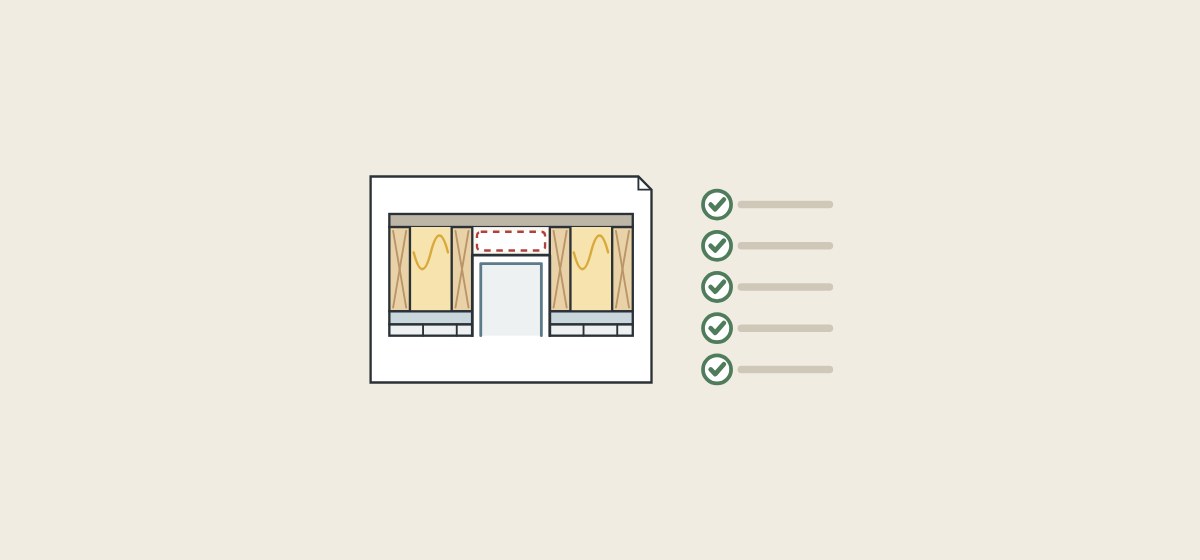
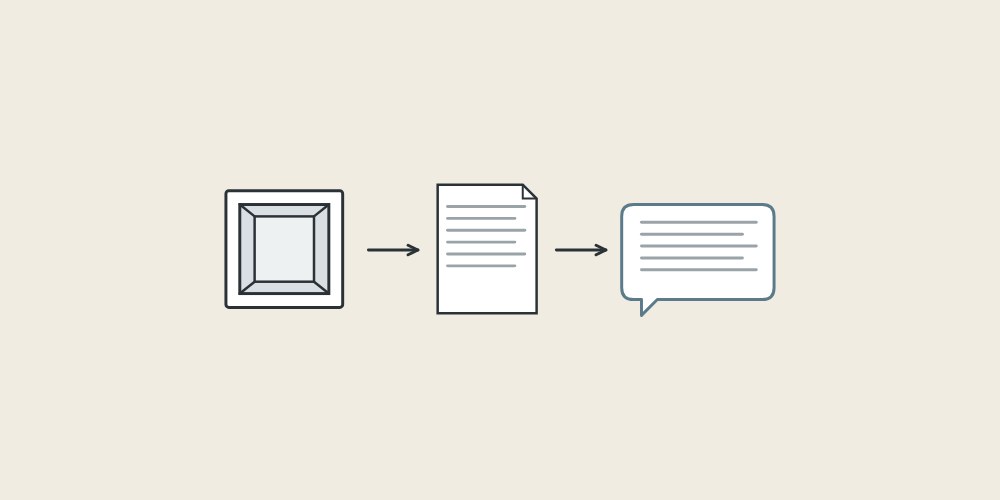
Keep the order provisional until the wall section with the recess is reviewed. These steps are procurement guidance, not a wall design.
- Flag the wall. Mark the niche wall as an exterior wall.
- Ask for the wall section. It should show insulation and air barrier at the recess.
- Check the services. No pipe or cable at the niche position.
- Match depth to wall. Compare the niche drawing with the reviewed wall.
- Settle the waterproofing joint. Record how the niche joins the shower waterproofing.
- Then release. Order against the approved drawing revision.
If the recess does not work
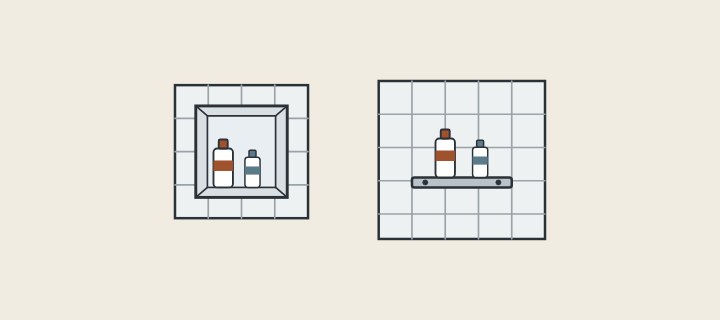
Ask the design team to evaluate another wall, a surface-mounted shelf or a wall furred out on the room side.
What should you send and ask before a quotation?

A complete request states the wall, not only the niche. Keep the table as a dated review record.
| Question to close | Who answers | Record to keep |
|---|---|---|
| How do insulation and air barrier continue at the recess? | Building designer | Reviewed wall section |
| Does the recess change framing or support? | Structural reviewer, if needed | Approved opening detail |
| How does the niche join the waterproofing? | Waterproofing designer or installer | Specified interface |
| Do pipes or cables cross the position? | Services coordinator | Coordinated position |
| Does the niche ordered match the reviewed wall? | Buyer | Niche drawing and revision |
Include with your request
- Project location and climate zone
- Reviewed wall section at the niche
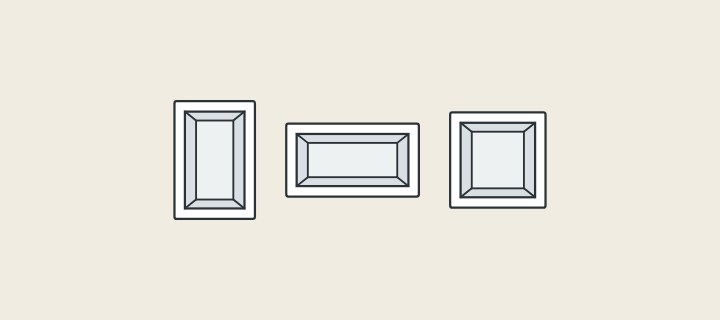
- Niche size, depth and orientation
- Waterproofing system on the wall
- Items still open
WNS Global confirms any offered niche, its dimensions and commercial terms separately in writing. This guide does not state that WNS Global products have any of the features, ratings or listings named above, or that any niche suits a given exterior wall.