Design decisions

Shower Niche vs. Open Shelf: Making the Call Before the Wall Is Built

The choice between a recessed niche and an open shelf is usually presented as a style preference. It is really a construction-sequence decision, and it has to be made before the wall in question is closed up, not after.

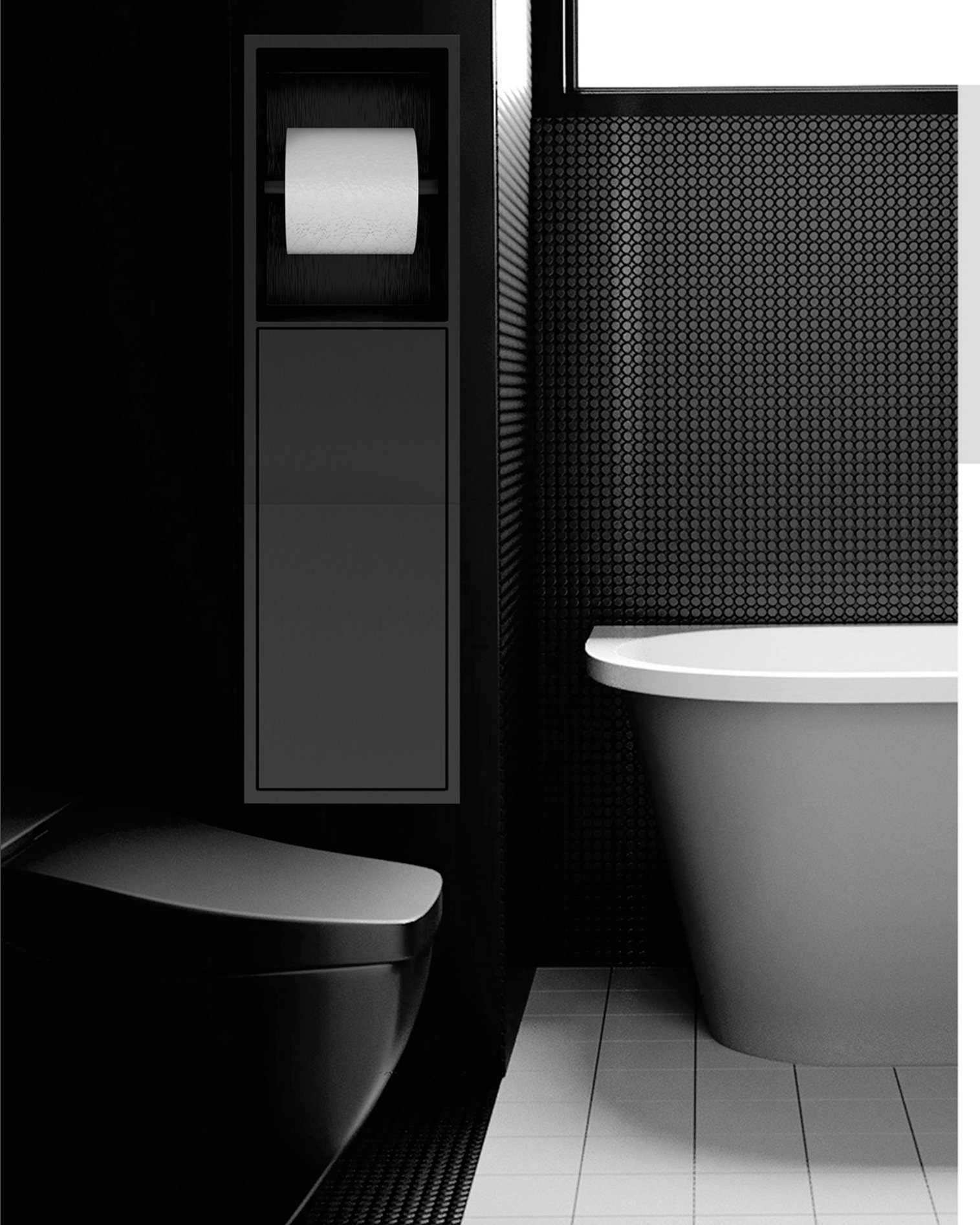
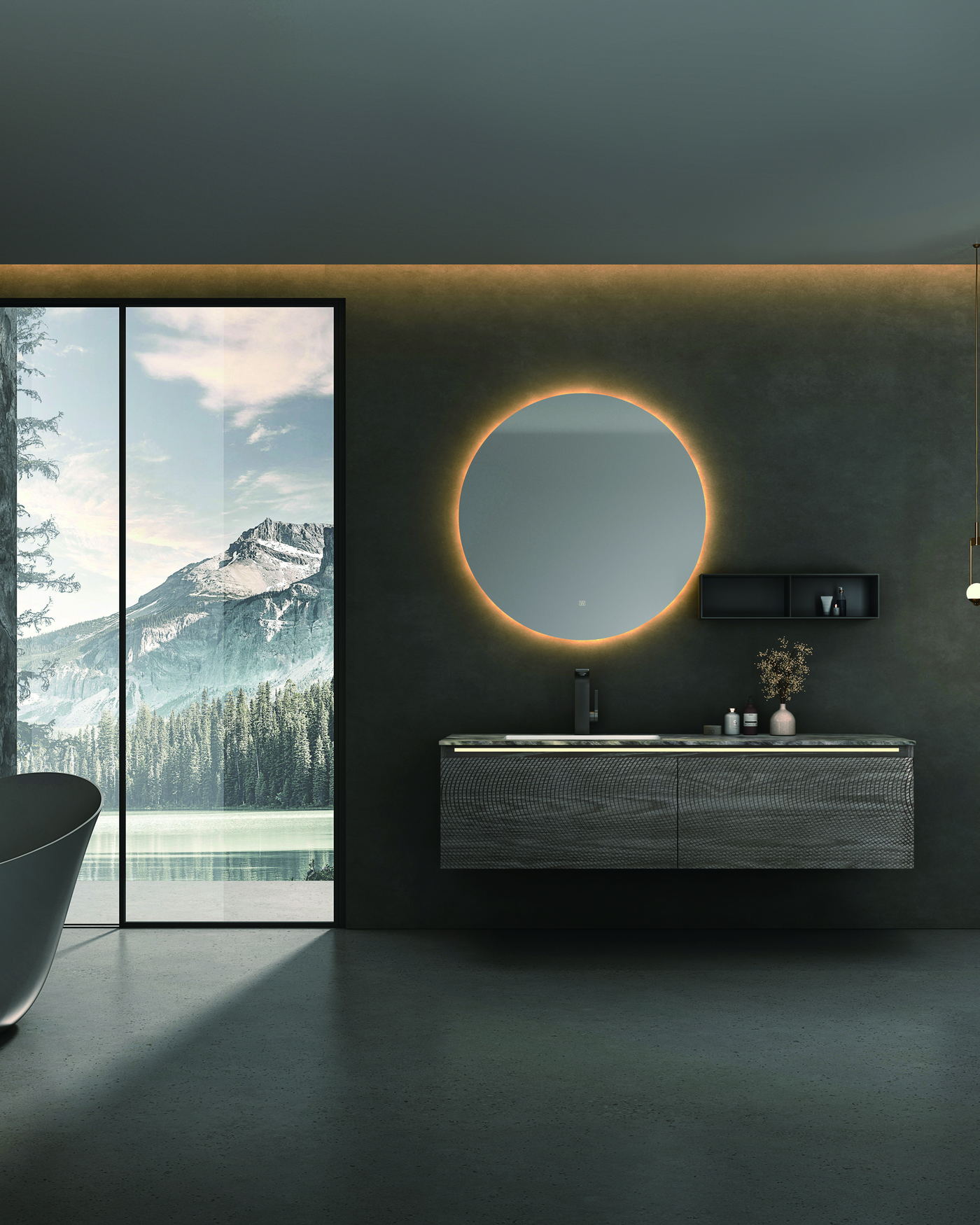
Recessed stainless steel niche in a dark tiled bathroom

The short answer

Quick Reference

Point 01
A shelf is added to a finished wall; a niche is subtracted from the wall during framing.
Point 02
A niche has no projecting edge and no applied seal to maintain; a shelf projects into the shower and its wall junction has to be sealed indefinitely.
Point 03
A niche must be decided before the wall is closed; a shelf can be added, moved or removed almost any time.
Point 04
A niche costs little beyond planning if decided early; adding one after tiling means reopening the wall.
Point 05
Choose a shelf when timing, wall access, or an undecided storage need rules out subtracting from the wall.
Niche position compared against the finished wall layout

Start here

The Real Difference Is Timing, Not Looks

A shelf is added to a wall that already exists. It sits on top of the finished surface, projects into the shower, and creates a permanent junction between the shelf and the wall that has to be sealed and kept sealed. A niche is the opposite: it is a recess built into the wall while the wall itself is being framed and waterproofed, so it projects nothing into the room and has no separate seal to fail once it is tiled as part of the wall.

  • A niche can only be formed while the wall is open
  • A shelf can be fitted to a wall that is already finished
  • Neither option is universally correct; the wall's construction stage usually decides it

What Favors a Niche

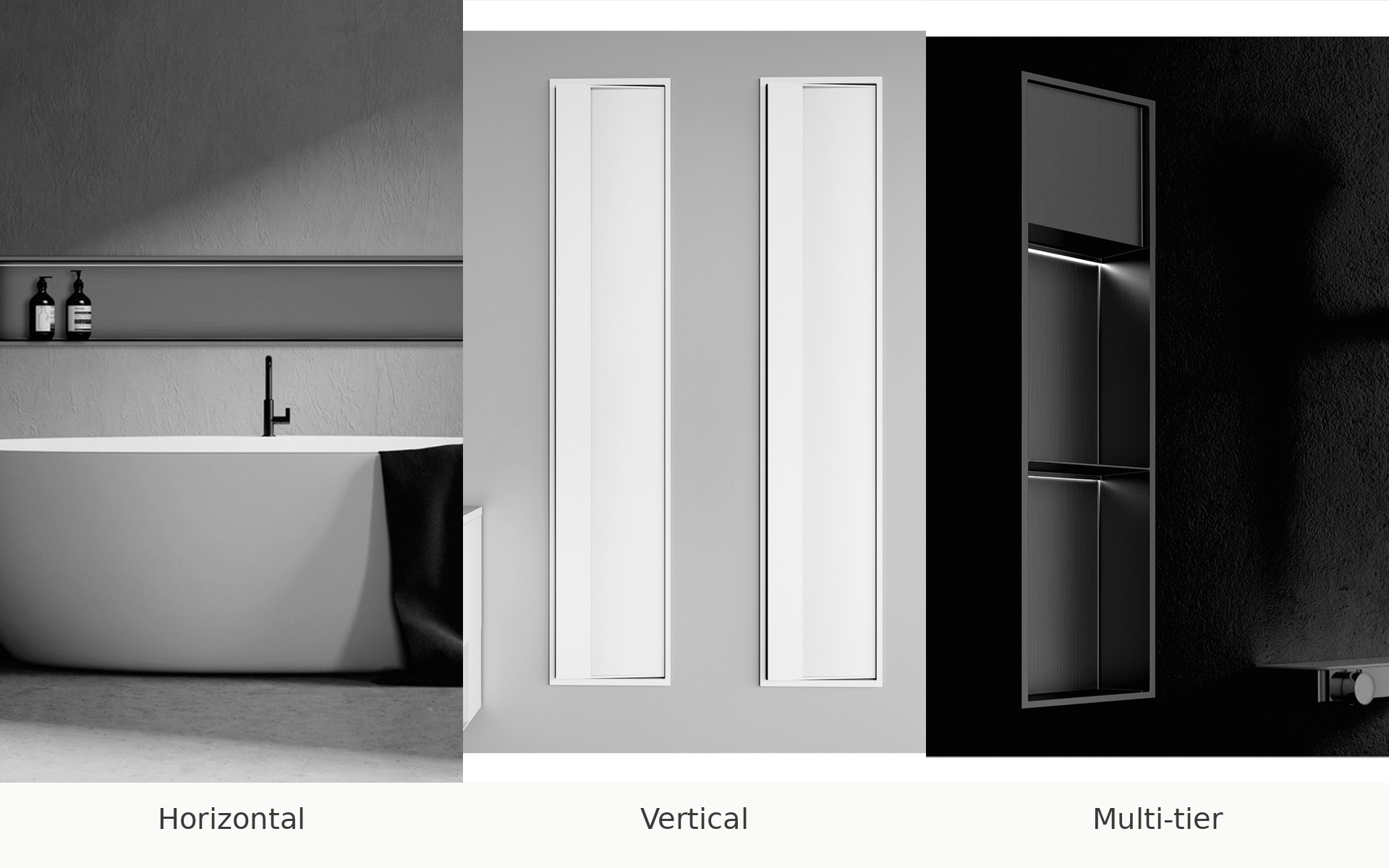
Comparison of horizontal, vertical and multi-tier bathroom niches

A niche is close to free if it is decided while the wall is still open, because the labor to frame, waterproof and tile a recess is not much more than what the wall needed anyway. It leaves no visible bracket, no projecting edge to clean around, and no separate wall junction to reseal over the life of the room. It can be tiled to match the surrounding wall exactly, which is what most designers actually want, or lined in a contrasting material as a deliberate feature.

  • New construction or a full strip-out, where the wall is open anyway
  • A clean, low-maintenance look with nothing projecting into the shower
  • Repeat rooms, where one approved niche module keeps every unit consistent

What Favors an Open Shelf

A shelf earns its place in exactly the situations where a niche cannot be formed. If the wall is already finished, tiled, or made of a material that cannot be opened without a disproportionate amount of work, a niche is off the table regardless of preference. A shelf also stays flexible in a way a niche does not: it can be repositioned, resized or removed later without touching the waterproofing behind it, which matters on a project where the storage need is not fully settled yet, or on a rental or resale property where a future occupant may want something different.

  • An existing wall that cannot be reasonably opened (masonry, a party wall, no service void)
  • A storage need that has not been finalized and may change
  • A design that wants a visible material or hardware detail rather than a hidden recess

Making the Call in Practice
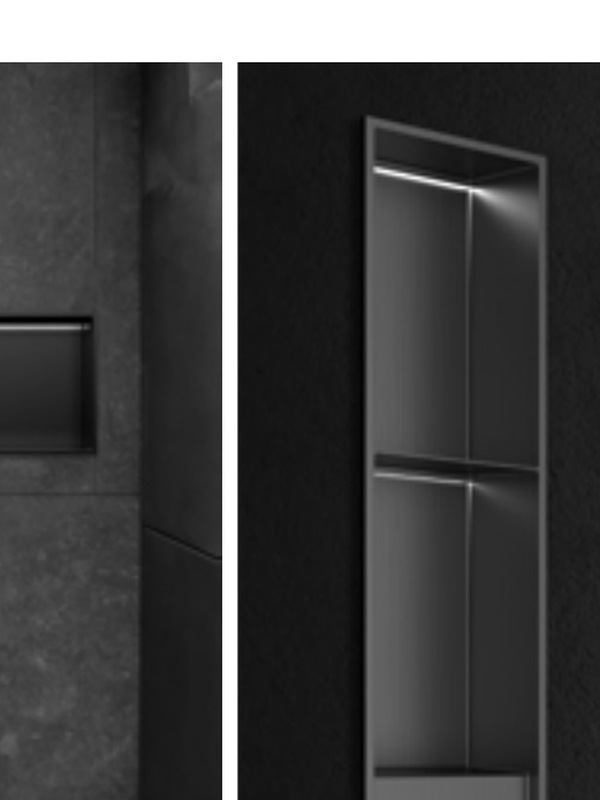
Recessed niche and wall junction shown in close detail

The practical test is simple: is the wall still open, and is the storage requirement settled? If both are true, a niche is usually the better long-term choice, because it removes a maintenance point from the room permanently. If either is false — the wall is already closed, or the brief is still likely to change — a well-specified shelf avoids committing the room to a fixed configuration it might outgrow, and avoids the cost of reopening a finished wall to chase a design preference.

The two are not mutually exclusive on the same project. A primary niche for the main wash items, sized and positioned early, combined with a small corner shelf or caddy added later for something that was not anticipated, is a common and reasonable combination.

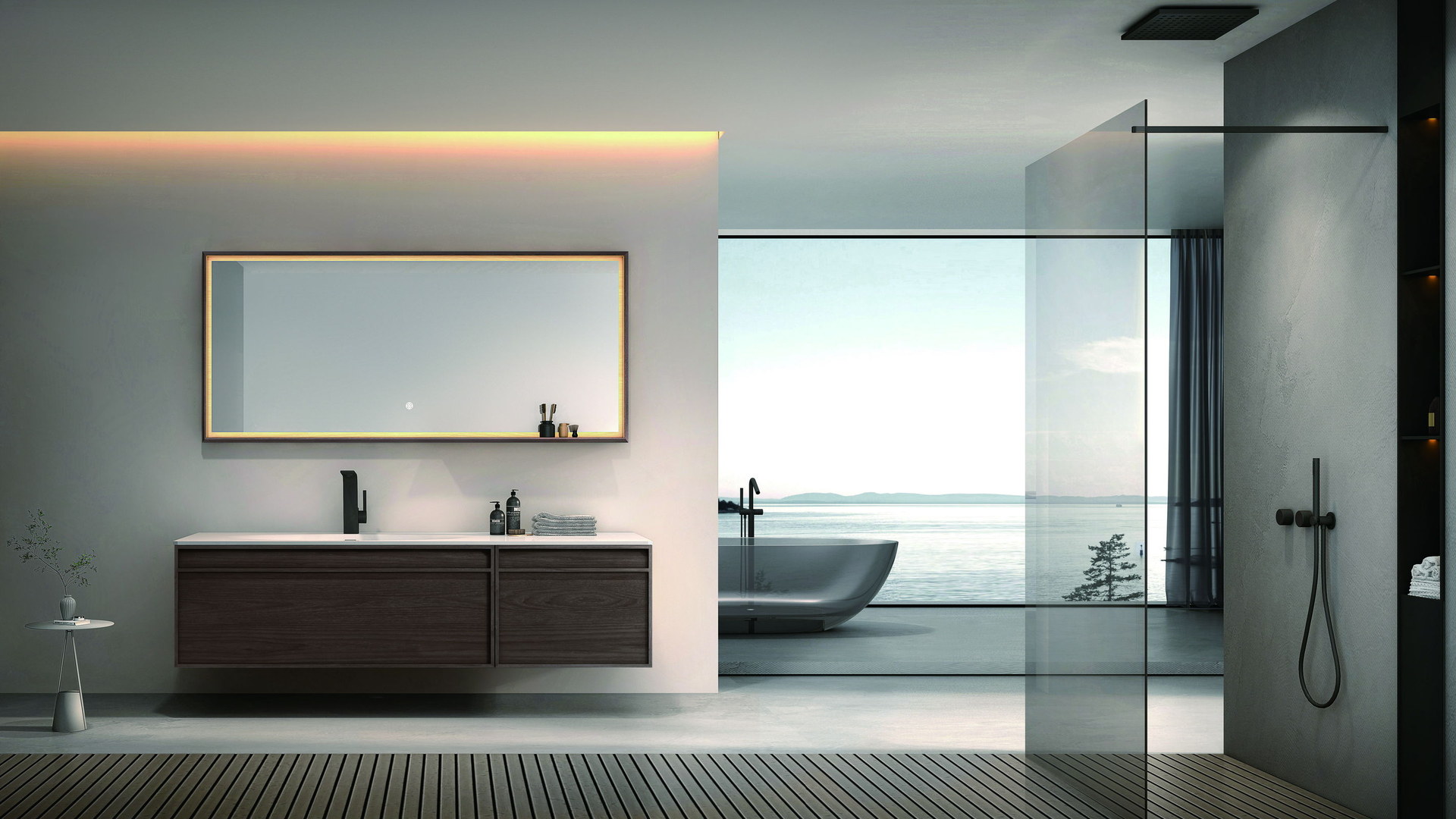
Comparison of horizontal, vertical and multi-tier bathroom niches

Common questions

Niche vs. Shelf Questions

Answers to the checks buyers most often make before using this guide for a project or sourcing decision.

Is a niche always the better choice than a shelf?

No. It depends on whether the wall is still open and whether the storage need is settled. A niche is usually better long-term when both are true; a shelf is the practical choice when either is not.

Can I add a niche to a wall that has already been tiled?

Effectively no. A niche has to be formed while the wall is being built and waterproofed. Adding one to a finished tiled wall means opening the wall, re-waterproofing and re-tiling, which is rarely worth it for the storage gained.

Does a shelf need waterproofing too?

Yes, at the point where it fixes to the wall. That junction has to be sealed and the seal has to be maintained indefinitely, which is the ongoing maintenance point a niche does not have.

What if I haven't decided what I need to store yet?

A niche configuration is harder to change once it is built into the wall. A shelf, especially a small corner or floating one, is easier to add, reposition or remove later if the requirement is still likely to change.

Is one option more expensive than the other?

A niche is close to free if it is planned before the wall is framed, since the extra labor is small. A shelf avoids reopening a finished wall, but the fixture, its bracket and its seal have their own recurring cost.

Can a bathroom have both a niche and a shelf?

Yes. A common approach is a primary niche sized for the main wash items, combined with a small corner shelf or caddy added later for anything that was not anticipated at the planning stage.

Does the interior finish differ between the two?

Usually. A niche interior is typically tiled or lined to match or deliberately contrast the surrounding wall. A shelf is its own material, visible from every side, so its finish quality is more exposed to scrutiny.

WNS Global manufacturing base in Foshan, China

In short

Decide While the Wall Is Still Open

A niche is subtracted from the wall and has to be planned before the wall is closed; a shelf is added to a finished wall and stays flexible afterward. Neither is the universally correct choice — the wall's construction stage, and how settled the storage brief is, should decide it.

  • Niche: close to free if planned early, no projecting edge, no separate seal
  • Shelf: works on a finished wall, stays flexible, adds a visible fixture
  • Both can be combined on the same project
  • The wall's construction stage is usually the deciding factor

Verification sources

Official Sources and Further Reading

This guide explains planning concepts, not a substitute for the approved product drawing, installation instruction or requirement adopted by the authority having jurisdiction. Confirm those project-specific documents before ordering or installing.

Specifying niches or shower fittings?

Talk to WNS Global

Send your wall layout and the construction stage you are at, and we can confirm whether a niche is still practical or whether a shelf-based approach fits the project better.

Bathroom wall prepared for niche specification

WNS Global manufacturing base in Foshan, China

Published: Last updated:

  • This guide is a sourcing and planning reference. Confirm the applicable product, contract, authority and project requirements before making a final decision.

START WITH THE PRODUCT DETAILS

Tell Us What You Need

Share the bathroom products, project requirements, target market, dimensions, materials, finishes, quantities, or customization details currently available. WNS Global will review the request and identify the information needed for the next step.