From valve to bowl
What is a flushometer-valve toilet?
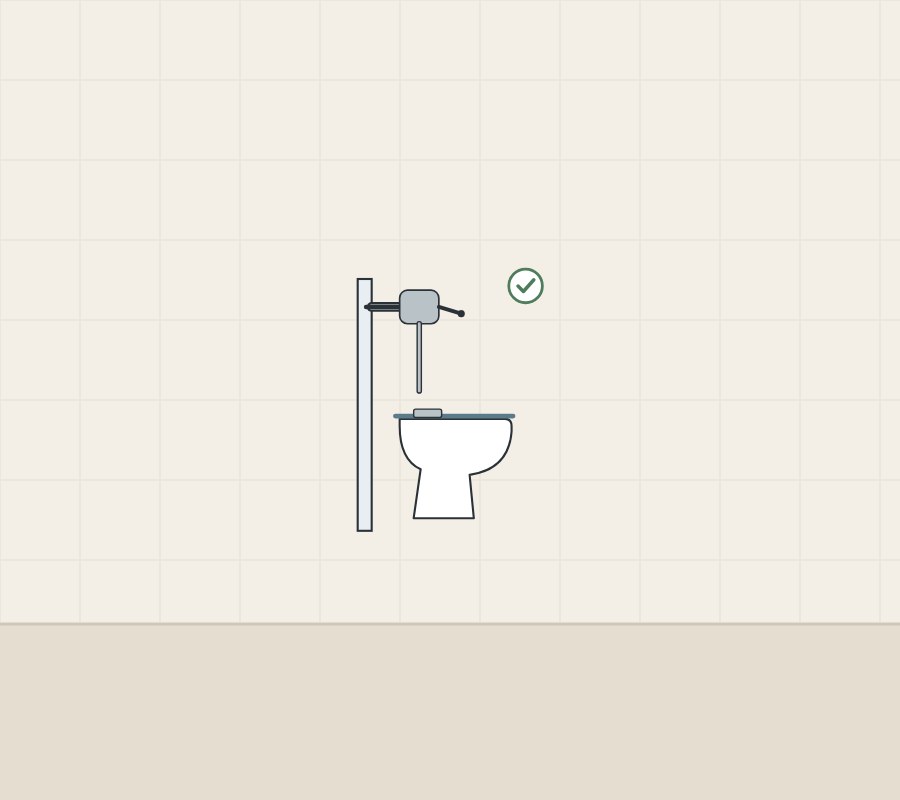
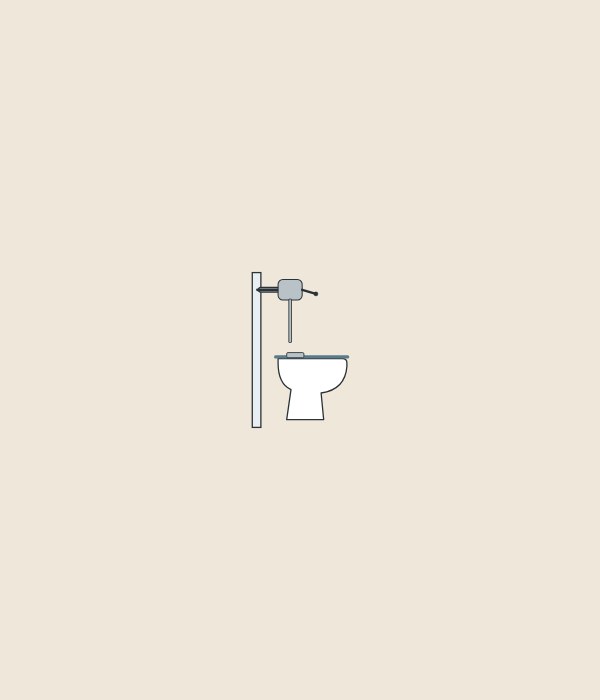
In plumbing standards, a flushometer toilet is a flushometer-valve water closet. The EPA’s fact sheet says they are typically found in airports, theaters, stadiums, schools and offices.
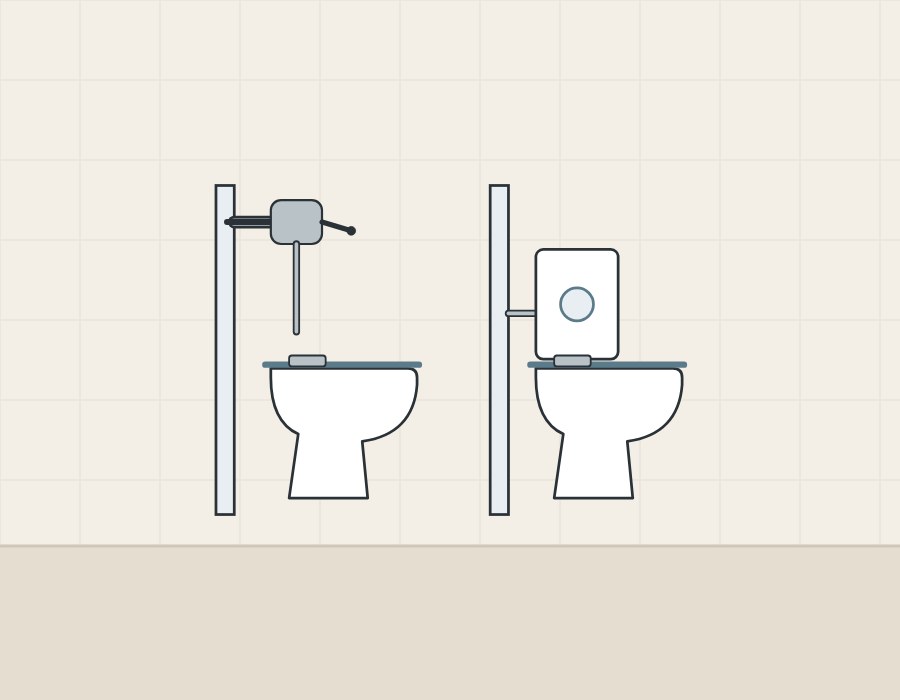
The EPA says tank-type toilets are common in homes and light commercial settings, while flushometer valves are used mainly where use is public and heavy. Tank types include gravity, pressure-assist and electro-mechanical hydraulic toilets.
A pressure-assist tank is not a flushometer valve. Flushmate says its units use compressed air in a vessel to push the bowl contents, where gravity toilets siphon them out.
| Term | What it means |
|---|---|
| Flushometer valve | A valve that releases supply water straight into the bowl; no tank. |
| Flushometer bowl | A bowl made to receive a flushometer valve rather than a tank. |
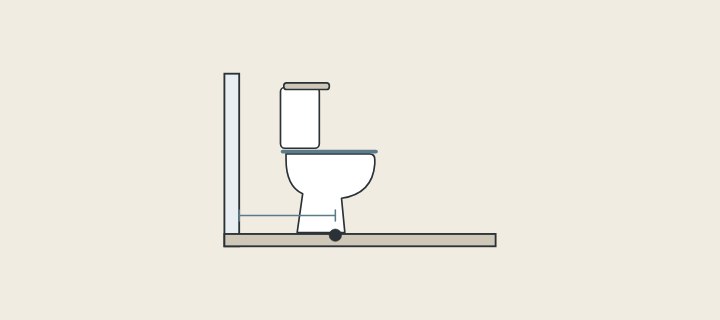
| Top spud | The valve connects to an inlet on top of the bowl. |
| Back spud | The valve connects to an inlet at the back, as on TOTO’s wall-hung CT708UV. |
| Pressure-assist tank | A tank toilet using compressed air; also called flushometer-tank. |
| Gravity tank | A tank toilet that relies on siphon action. |
How does a diaphragm flushometer open and close?
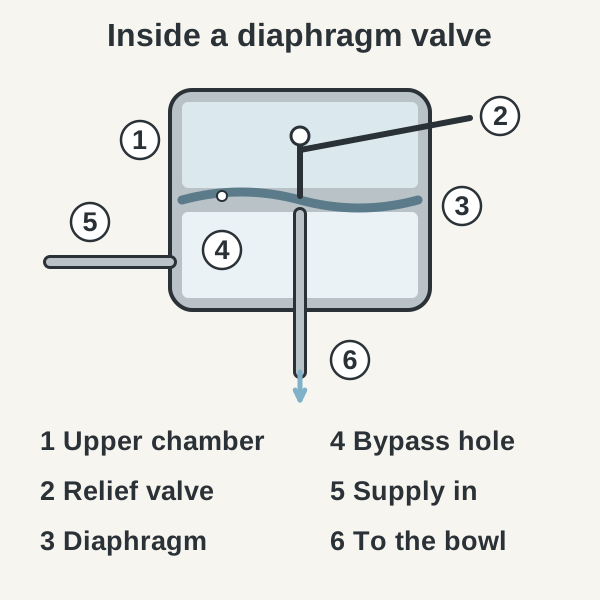
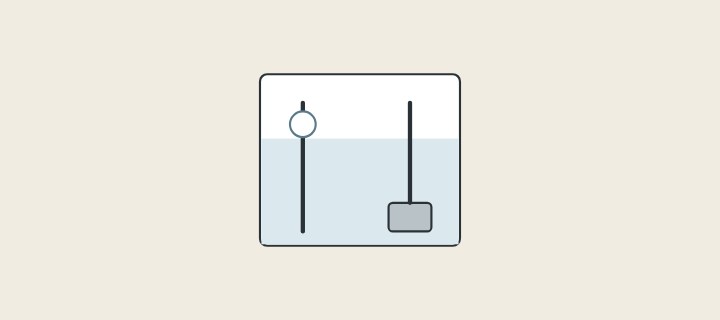
Flushometer valves use supply pressure both to stay shut and to open. Combining Sloan’s whitepaper and a LIXIL white paper, a diaphragm valve works like this:
- At rest, water in the upper chamber holds the diaphragm on its seat.
- Pressing the handle tilts the relief valve.
- The upper chamber vents, creating a pressure imbalance.
- Supply pressure lifts the diaphragm, and water flows to the bowl.
- Water refills the upper chamber through the bypass or refill orifice.
- The diaphragm reseats and the flush stops.
A piston valve does the same job with a molded cup and a lip seal; reducing pressure above the relief valve lets supply pressure lift the piston. LIXIL notes that a clogged refill orifice keeps a diaphragm open longer and can waste a gallon or more per minute.
Which parts make up a flushometer installation?
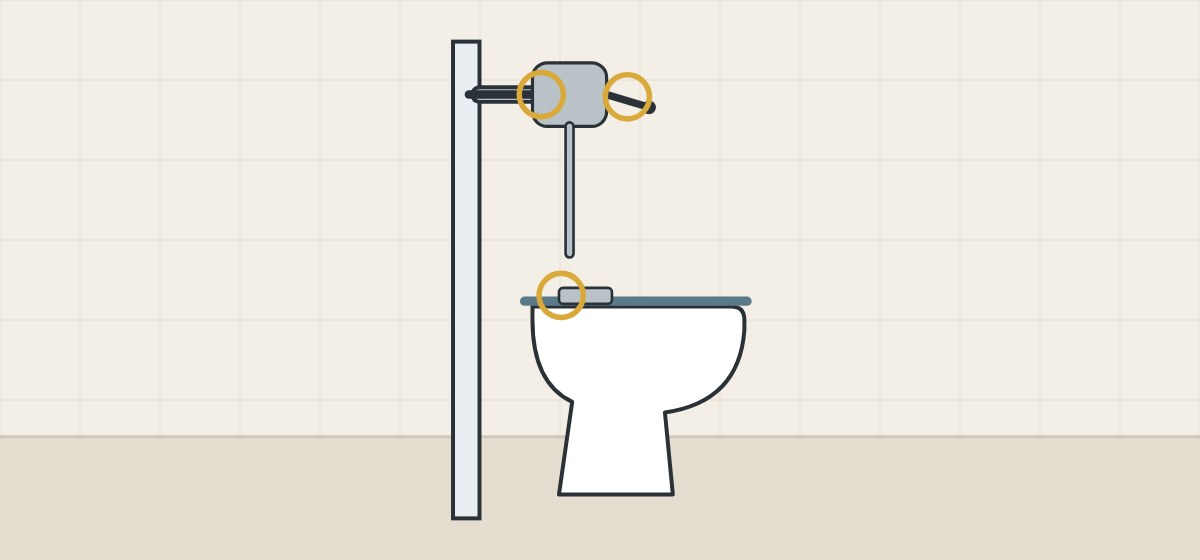
Maker data sheets list the same basic chain from the supply to the bowl. From Zurn’s Z6000 sheet, TOTO’s EcoPower manual and Sloan’s Royal 111 data sheet:
| Part | What the maker lists |
|---|---|
| Control stop | Listed by Zurn, TOTO and Sloan; TOTO’s inlet is 1 in NPT. |
| Valve body | Diaphragm or piston; Sloan’s Royal 111 uses a diaphragm with a filtered bypass. |
| Handle or sensor | Sloan specifies a non-hold-open handle, which it says prevents exceeding the flush volume. |
| Vacuum breaker | Zurn lists a high back pressure vacuum breaker on its exposed valve. |
| Tube and spud coupling | Tailpiece, coupling nut, spud coupling and flange connect the valve to the bowl. |
| Bowl spud | Top spud or back spud; TOTO’s wall-hung CT708UV has a 1½ in back spud. |
On TOTO’s EcoPower sensor valve, the flush follows a 3-second delay after a user who stayed over 6 seconds moves away. The EPA warns that poorly set or maintained sensors can cause double or phantom flushes.
Diaphragm or piston: how do the valves differ?
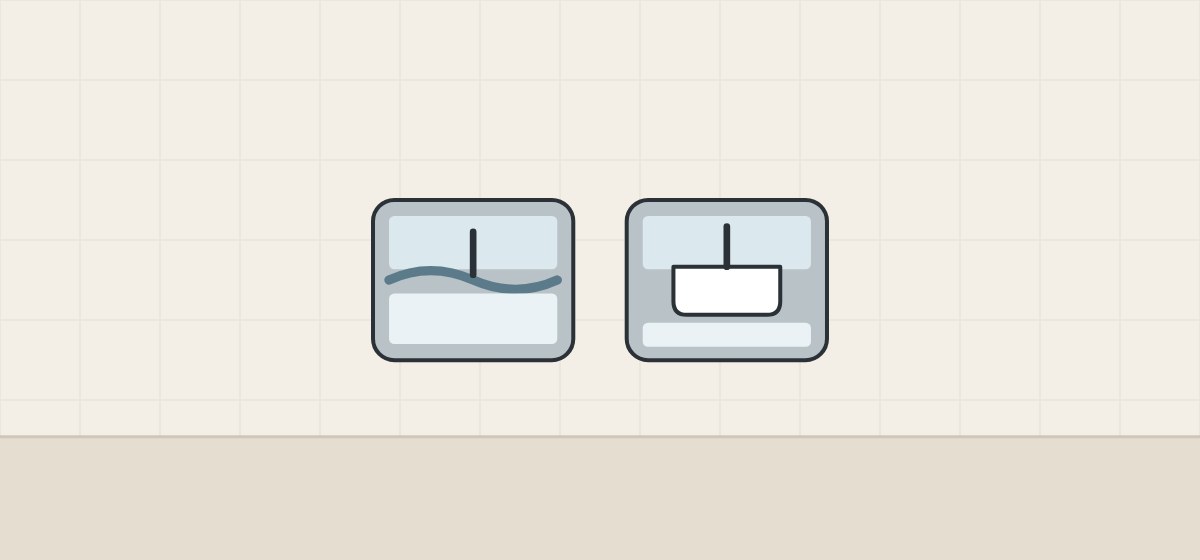
The comparison uses Sloan’s whitepaper and LIXIL’s material. Each maker describes the valves it sells.
| Aspect | Diaphragm valve | Piston valve |
|---|---|---|
| Moving part | A flexible diaphragm. | A molded cup with a lip seal. |
| How it opens | Venting the upper chamber lets supply pressure lift it. | Reducing pressure above the relief valve lifts the piston. |
| Suited to, per Sloan | High traffic, poor water conditions, high back pressure. | Low or weak pressure with cleaner water. |
| Failure noted | A clogged refill orifice can cause run-on. | Not stated in the sources. |
| Replacement | American Standard: most valves of either type can be replaced by its diaphragm valve. | Same statement; it cites industry-standard rough-in dimensions. |
Sloan’s conclusion is to match the valve to the installation, not to prefer one type everywhere. That is one maker’s view.
Why must the bowl and valve be matched?
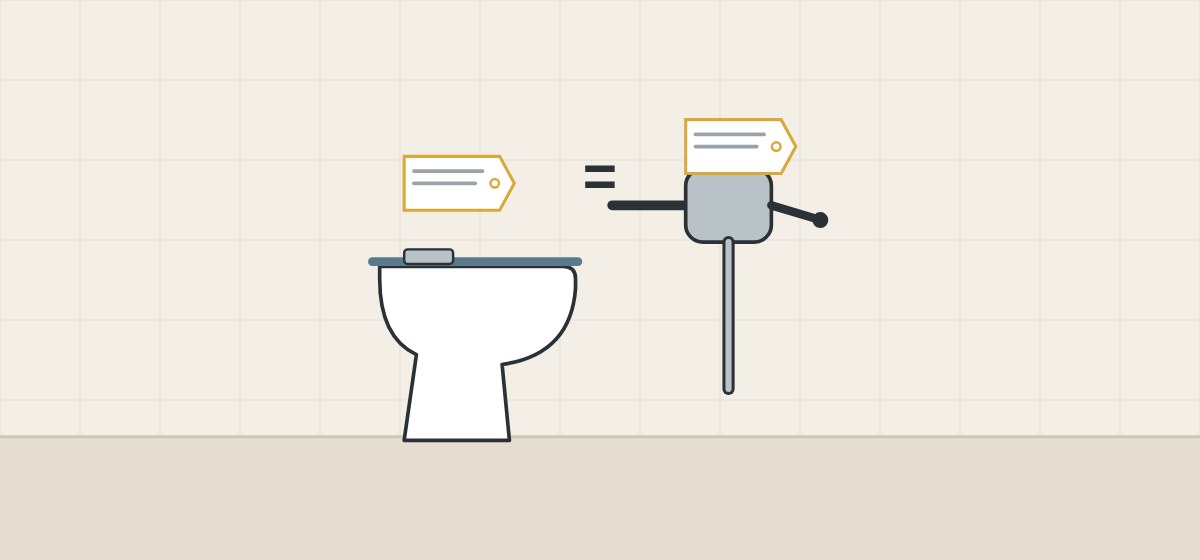
The bowl is designed around a flush volume, and the valve delivers it. Five points from makers and testers:
Same rated volume
TOTO’s CT725CU sheet says the bowl shall be paired with a valve of corresponding volume. Kohler’s Kingston sheet asks for a WaterSense counterpart of the same rated volume.
Bowls with several ratings
Some bowls are rated for more than one volume: TOTO’s CT725CU for 1.0, 1.28 or 1.6 gpf, and Kohler’s Highcliff Ultra for 1.0, 1.1, 1.28 or 1.6 gpf, depending on the valve.
Tested combinations
Sloan says that at 1.1 gpf the valve and fixture must work in harmony, and markets tested combinations.
MaP listings
MaP’s combination list names exact bowl and valve models, measured with its residential protocol.
Field mixing
A 2005 Veritec study noted that valves and bowls can be mixed in the field, and found most tested valves could be set to flush more than 6 liters.
- Bowl model and rated volumes
- Valve model and rated volume
- Top or back spud
- Any tested combination listing
What supply does a flushometer need?
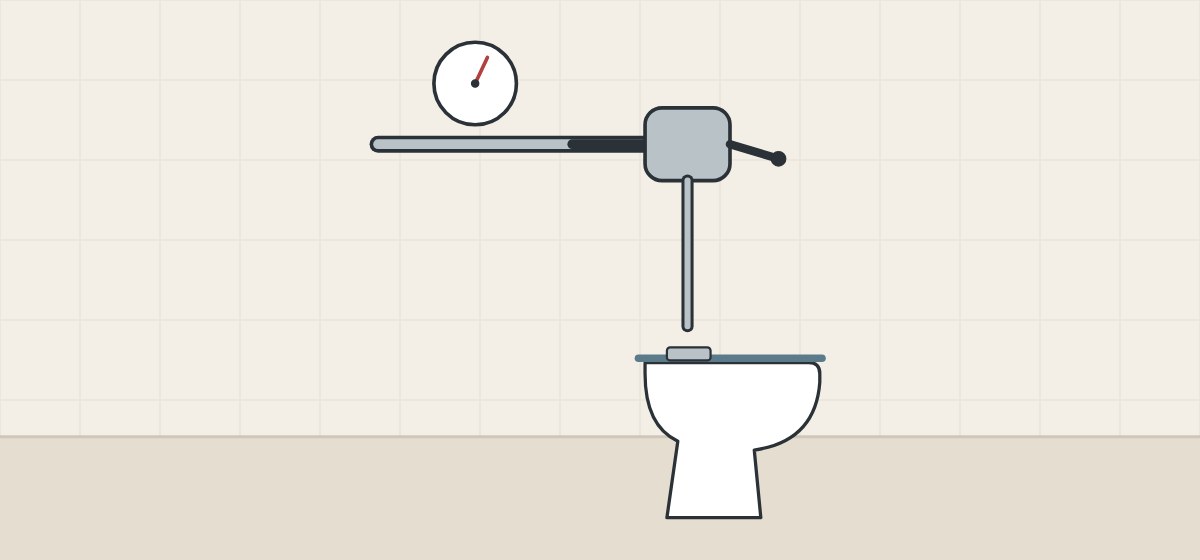
The sources give no single minimum for all flushometers, only figures for named models:
Bowl minimums
TOTO’s CT725CU lists 25 psi flowing and 80 psi static maximum; its CT708UV 35 psi flowing. Kohler’s bowls list 25 psi and 25 gpm.
Valve ranges
Sloan’s Royal 111-1.28 lists 15 to 80 psi with a 1 in supply; Zurn’s Z6000 recommends 10 to 100 psi; TOTO’s TET1LA 35 to 125 psi.
The fixture sets the minimum
Zurn says the pressure its Metroflush needs is set by the fixture, and supply lines must be sized for each fixture.
Pressure and volume
Veritec found higher flowing pressure did not always mean a larger flush. TOTO says its EcoPower valves need no adjustment within their range, and that over 80 psi is not recommended for most fixtures.
A pressure-assist tank has its own thresholds: Flushmate states 35 psi or more for its 1.0 gpf unit and 20 psi or more for its 1.28 and 1.6 gpf units.
What do WaterSense and the standards require?
WaterSense is a voluntary EPA program; the federal maximum sets the legal ceiling. The WaterSense specification treats the bowl and valve as a matched pair:
| Rule or standard | What it says |
|---|---|
| Federal maximum (EPAct 1992) | 1.6 gpf for flushometer-valve and tank toilets. |
| WaterSense label | No more than 1.28 gpf, with a minimum of 1.0 gpf. |
| Testing | Bowls are tested with a valve of the same rated volume; both are marked with it. |
| Adjustment | A labeled valve may not be adjustable by more than 10% from its rating. |
| Replacement parts | Documentation must name parts that keep the rated volume. |
| Bowl standard | ASME A112.19.2/CSA B45.1, including the waste extraction test in section 7.104. |
| Valve standard | ASSE 1037/ASME A112.1037/CSA B125.37 for pressurized flushing devices. |
How should a buyer specify a flushometer toilet?
These steps apply the facts above to a project order. They are procurement guidance, not a plumbing design.
- Confirm the supply first. Record flowing and static pressure and pipe size at the fixture.
- Choose the bowl. Note its spud type and every rated volume.
- Choose the valve. Match its rated volume and operating range to the bowl and supply.
- Name the combination. Record the exact bowl and valve models together; a matching volume number alone does not show that the pair performs.
- Decide handle or sensor. For sensors, plan settings and maintenance against phantom flushing.
- Record the parts. Control stop, vacuum breaker, spud coupling and replacement kits.
- Check labels and listings. Confirm any WaterSense or MaP listing for that exact pair.
When valves are replaced on existing bowls
The EPA advises caution when retrofitting existing toilets with high-efficiency models and asks for drainline conditions to be assessed first. It notes drainline performance becomes chaotic at 1.0 gpf and below.
See also: What supply does a flushometer need?
What should you send and ask before a quotation?
A complete request describes the supply as well as the fixtures. Each question maps to a point earlier in this guide.
| Question | Why it matters |
|---|---|
| Which bowl and which valve are offered? | Neither alone is a complete toilet. |
| Do their rated volumes match? | Makers and WaterSense require matching volumes. |
| Top spud or back spud? | The valve must suit the bowl inlet. |
| Diaphragm or piston, handle or sensor? | Each suits different conditions and maintenance. |
| What pressure and flow do both need? | Minimums are set by the models, not a universal rule. |
| Is the pair listed or tested together? | Listings apply to the exact combination. |
Include with your request
- Flowing and static pressure
- Supply pipe size at the fixture
- Floor or wall mounting
- Target flush volume
- Quantity per location
WNS Global confirms any offered bowl, valve and commercial terms separately in writing. This guide does not state that WNS Global supplies, pairs or tests flushometer products or holds any listing named above.