From function to spare part
What is the difference between a fill valve and a flush valve?
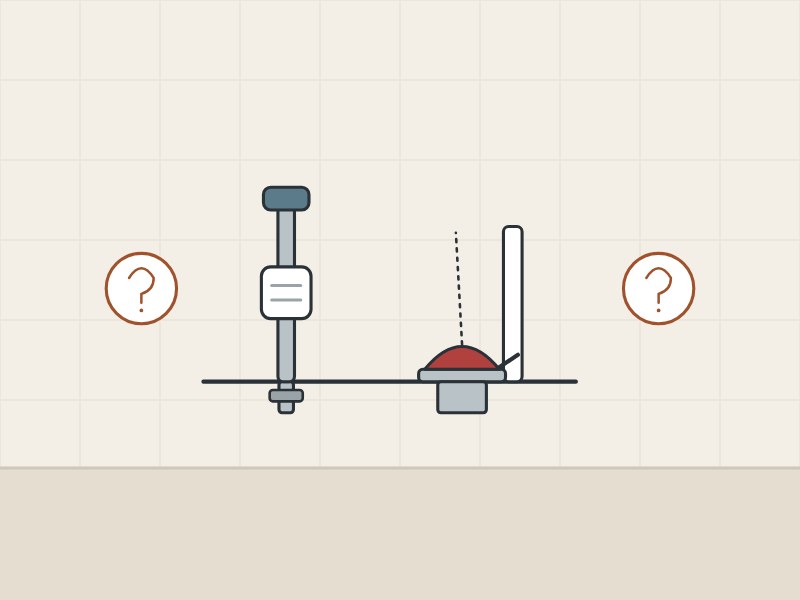
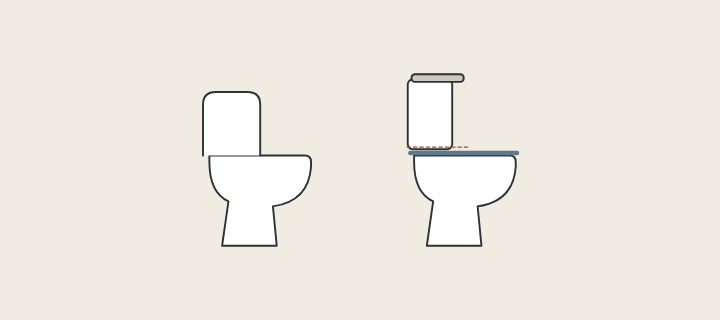
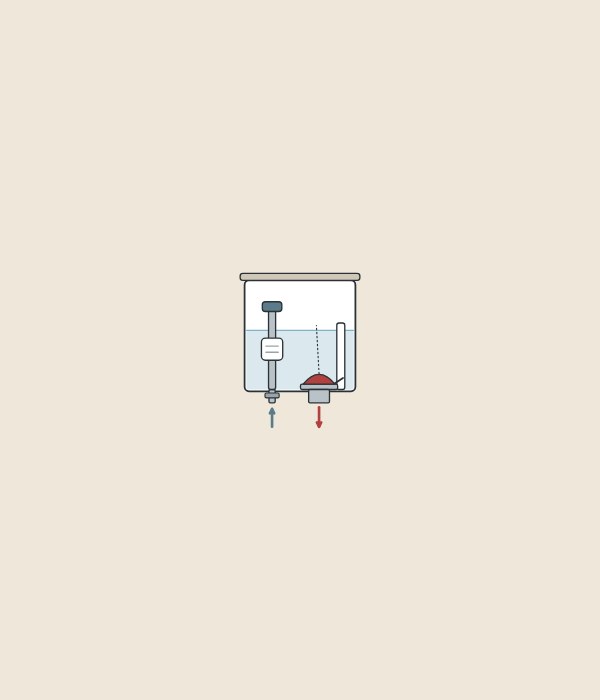
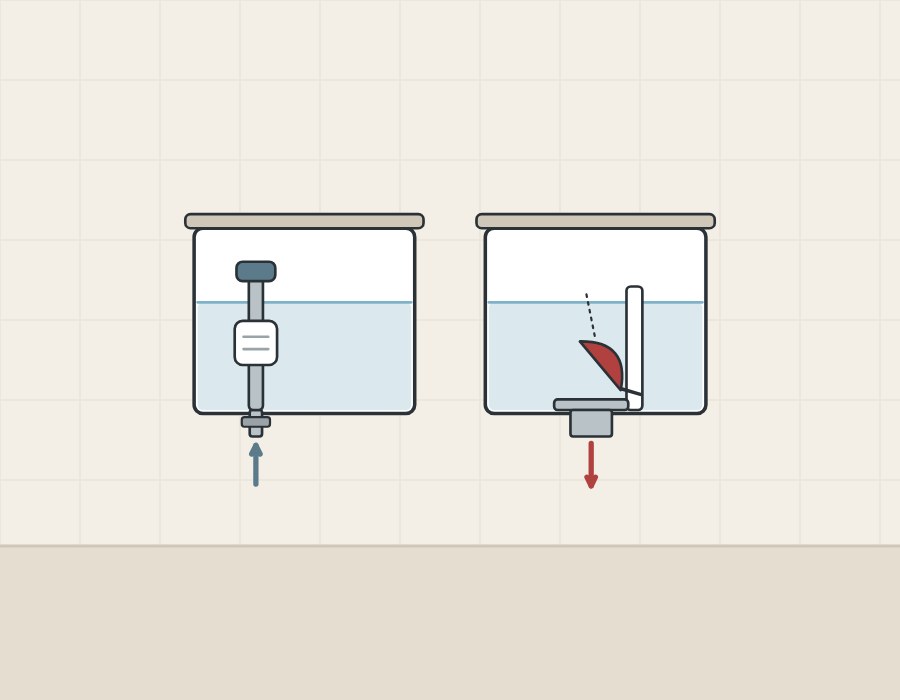
A fill valve lets water into the cistern; a flush valve lets it out into the bowl. Korky says the fill valve refills the tank after each flush, and that Korky fill valves use an internal float to set the water level.
Korky describes the flush valve as the connection between tank and bowl.
| Part | What it does |
|---|---|
| Fill valve | Refills the tank after each flush. |
| Flush valve | Connects tank and bowl; controls the flush flow. |
| Flapper | Sits on the flush valve opening; lifts to release water. |
| Overflow tube | Top of the flush valve; guards against flooding. |
| Tank-to-bowl gasket | Seals the joint under the flush valve. |
How do the two valves work together in one flush?
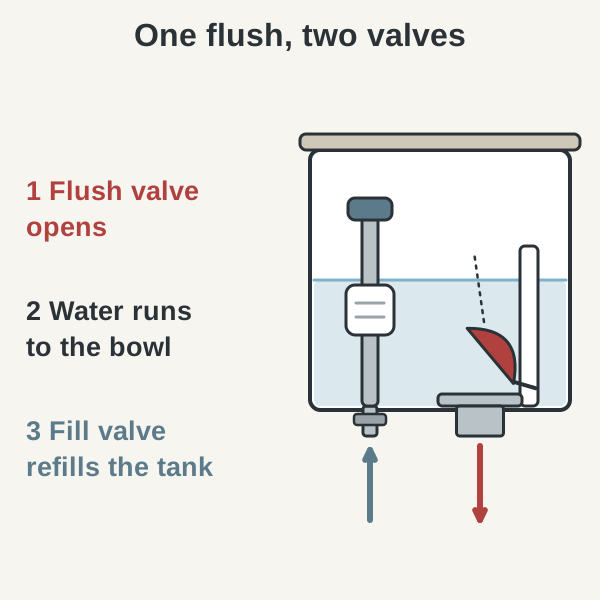
The flush valve opens first and the fill valve responds. The steps follow Korky’s description of the cycle for a flapper toilet.
- The handle lifts the flapper off the flush valve opening.
- Stored water runs through the flush valve into the bowl.
- As the tank empties, the flapper settles back and closes.
- The float has dropped with the water and opens the fill valve.
- The fill valve refills the tank; the refill tube refills the bowl.
- The water reaches the set level and the fill valve closes.
The overflow tube links the two valves: Korky says it prevents flooding if the fill valve malfunctions. Fluidmaster’s 540AKR instruction sheet puts the top of the overflow pipe at least 1 in below the “C.L.” mark on the fill valve.
What types of fill valve are there?
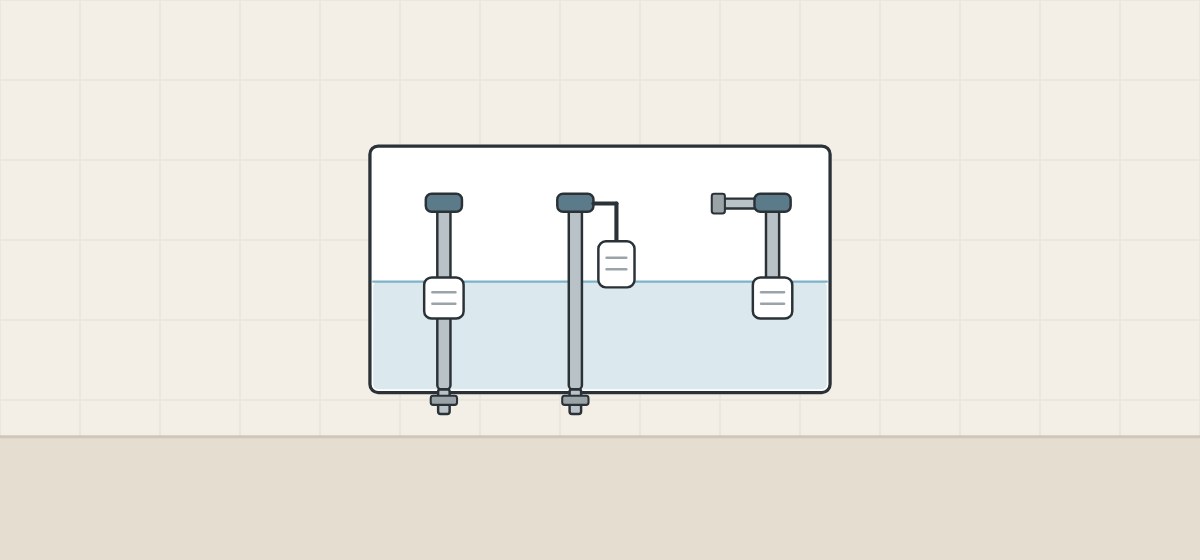
Fill valves differ in how they are operated, where the water enters the cistern and the thread on the tail. Each row gives what the named maker says.
| Feature | Named example | What the maker says |
|---|---|---|
| Float inside the valve | Korky fill valves | Korky fill valves use an internal float to set the water level. |
| Equilibrium inlet valve | Thomas Dudley Hydroflo | Works on an equilibrium principle; flow regulator pre-fitted; for 0.1 to 14 bar. |
| Side or bottom entry | Siamp 2 in 1 | Fits either entry; 1/2 or 3/8 insert; 0.5 to 10 bar. |
| Concealed cistern | Geberit fill valves | Compatible fill and flush valves offered for every Geberit concealed cistern made since 1964. |
A joint ASSE/ASME/CSA standard, ASSE 1002/ASME A112.1002/CSA B125.12-2020, has as its scope anti-siphon fill valves intended to be installed in water closet tanks.
What types of flush valve are there?
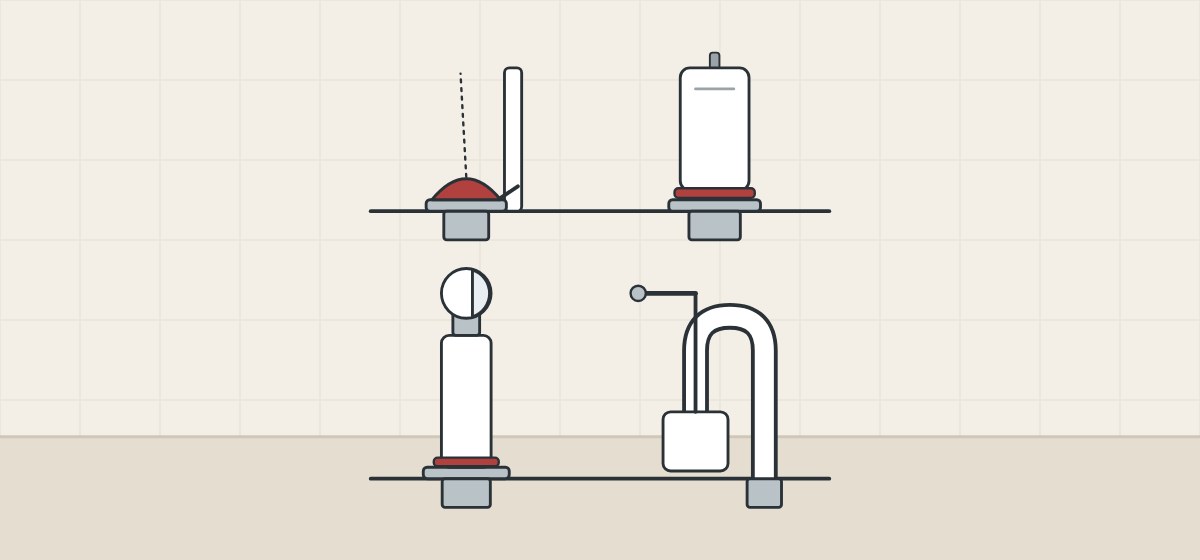
Flush valves differ in what closes the opening and how it is operated. The named products show six variations; they are not exclusive categories.
| Type | Named example | What the source says |
|---|---|---|
| Flapper | Fluidmaster 2" and 3" flappers | Snaps onto the flush valve; the EPA calls it a rubber device. |
| Canister | Kohler parts brochure | Lists a canister seal, and a separate seal for top-actuator dual-flush toilets. |
| Tower | TOTO CST743S parts list | Lists a flush tower and a drain valve for tower type. |
| Dual-flush valve | Geberit Type 212 | Geberit’s listed settings: large flush 4 to 7.5 litres, small flush 2 or 4 litres. |
| Cable or pneumatic | Wirquin flush valves | Cable-operated, pneumatic, mechanical and touchless models. |
| Siphon | Thomas Dudley dual-flush siphon | Press and release the lever for a full flush; hold it for a reduced one. |
Waterwise reports that siphon valves were found far less likely to cause a leaking toilet. In England and Wales the Water Supply (Water Fittings) Regulations 1999 limit a single flush to 6 litres for new installations and a lesser flush to two-thirds of the largest.
Which sizes and connections decide whether a part fits?
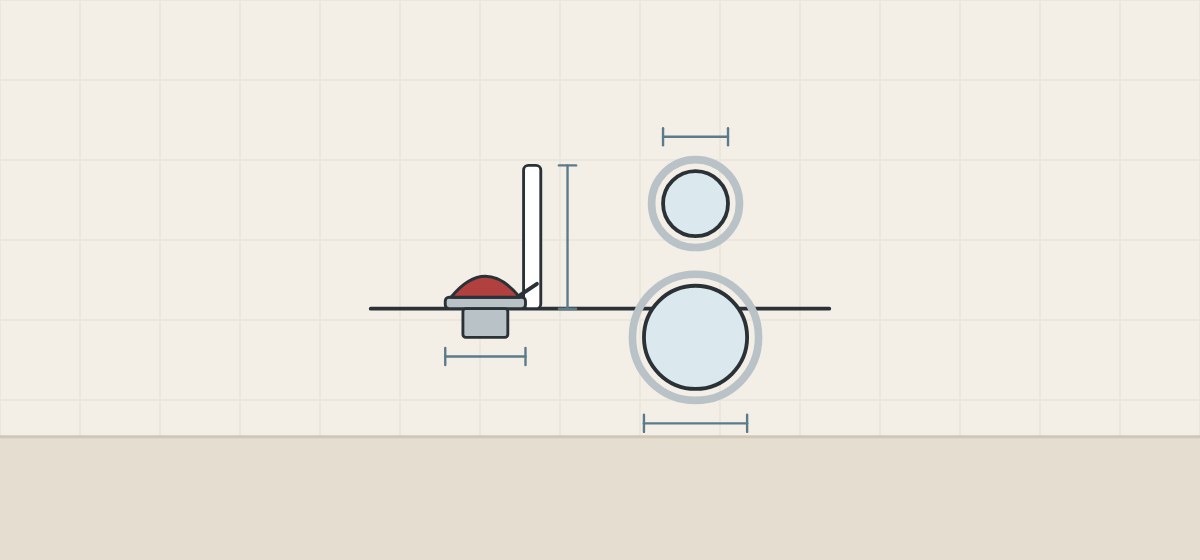
Fit depends on a few measurable interfaces, not on appearance. Each figure belongs to the named maker:
Flush valve opening
Fluidmaster says most toilets have a 2-inch or 3-inch drain. Its sizing article says a flapper about 3 in across takes its 2" flapper and one about 4 in across its 3" flapper.
Cistern outlet
Wirquin says its cable-operated valves suit both 1.5" and 2" cistern outlets, its pneumatic dual-flush valve 2" outlets and its pneumatic single-flush valve 1.5" outlets.
Height
Thomas Dudley measures a siphon from the flange of its threaded tail to the spill-over point.
Model-specific parts
Korky says the fill valve in its Fit-All kit is designed to fit 99% of toilets, then notes that Kohler one-piece toilets need a specialty flapper and repair kits will not fit them.
- Flush valve opening or outlet size
- Fill valve entry and tail thread
- Overflow or spill-over height
- Lever, button, cable or air actuation
Which valve is at fault when a toilet runs?
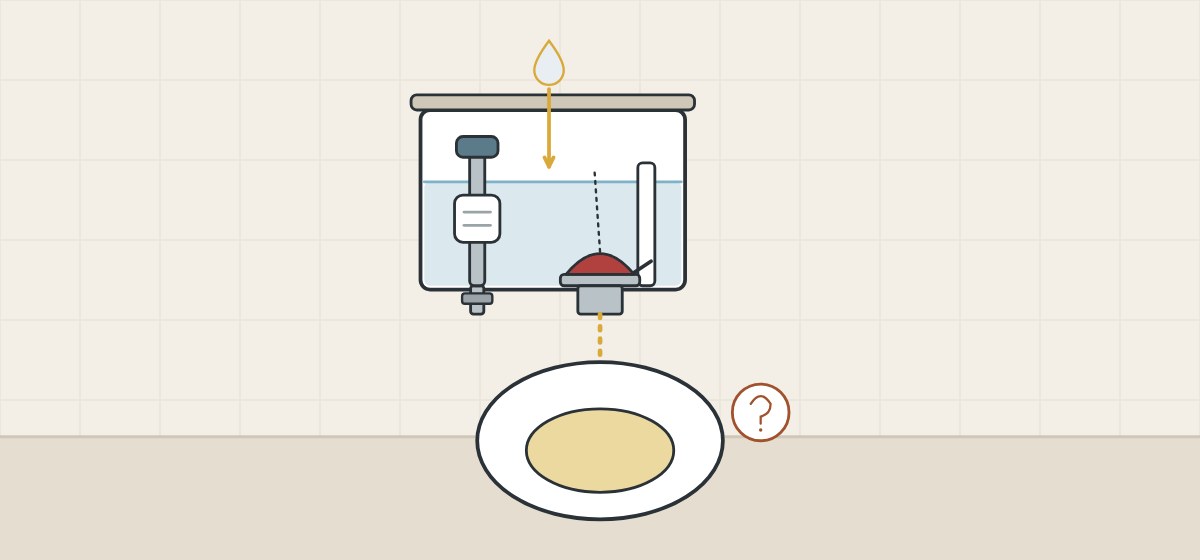
Either one can be; running water alone does not identify the part. Thames Water says leaking toilets are usually caused by a faulty flush valve or fill valve.
Flush valve side
Korky’s running-toilet guide says a worn flapper or seal lets water leak into the bowl; the float drops and the fill valve turns the water back on.
Fill valve side
Korky says that if the flapper seals but the toilet still runs, the fill valve may need service or replacement: its float may be set too high, clogged with debris or failing to shut off.
A check the EPA describes
The EPA says to put a few drops of food colouring in the tank and look for colour in the bowl after 10 minutes.
What wears
The EPA says to check the flapper periodically and replace it at least every five years.
Record the observation and the check used, not a guessed part.
How do you identify the cistern model and the matching part?
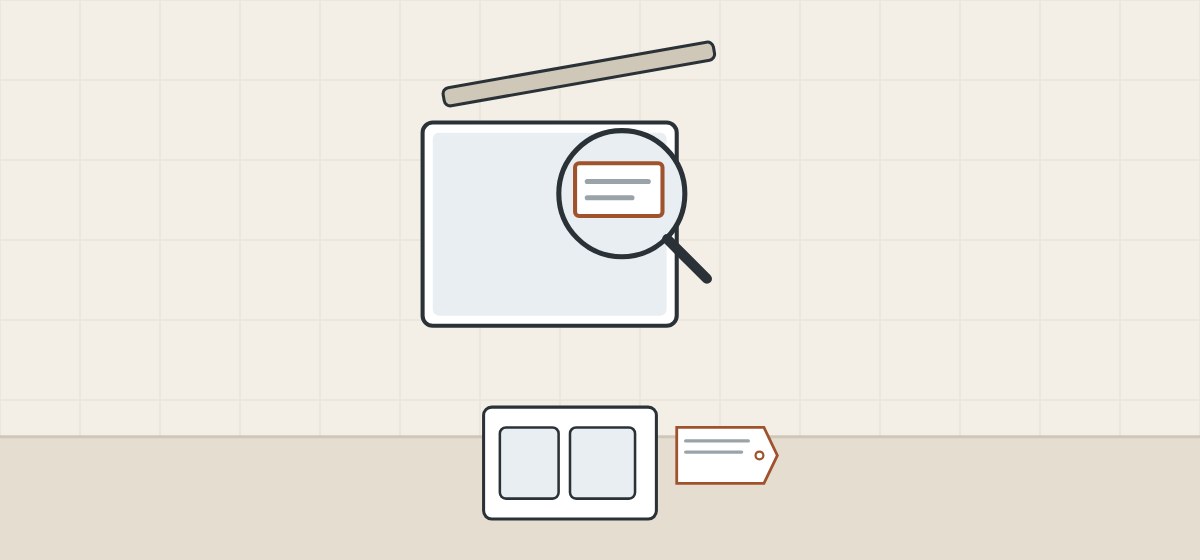
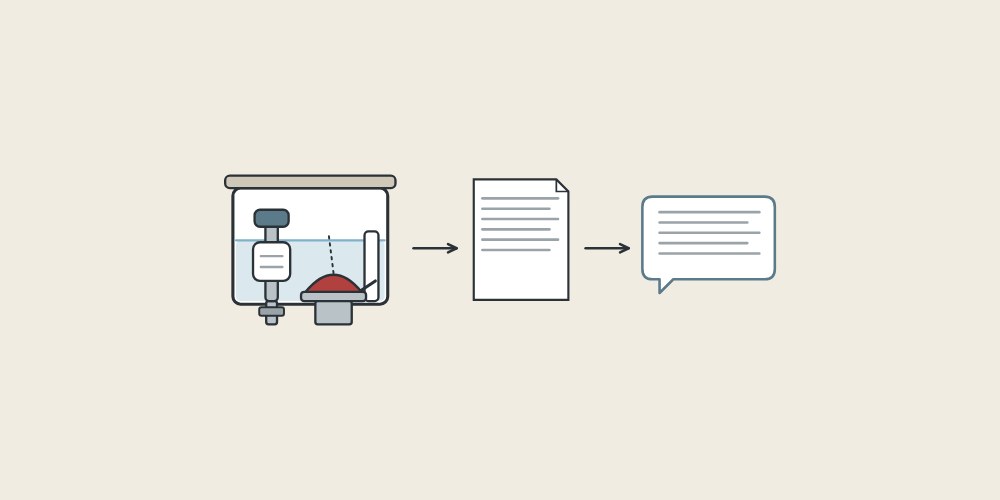
Find the maker’s model or cistern number first, then use the maker’s own parts list. Kohler’s brochure warns that a part marked “for”, “fits” or “replaces” Kohler is not thereby a Kohler Genuine Part.
| Source | What it says to check |
|---|---|
| Geberit | Cistern number usually behind the flush plate; parts by article number in its catalogue. |
| TOTO | Model number stamped in the porcelain inside the tank, or under the lid. |
| Kohler | Packaging, literature, specification sheet or a stamp on the product; then the parts diagram. |
| EPA | Take the old flapper, or a picture of it, when buying a new one. |
What should a project buyer specify for spare cistern parts?
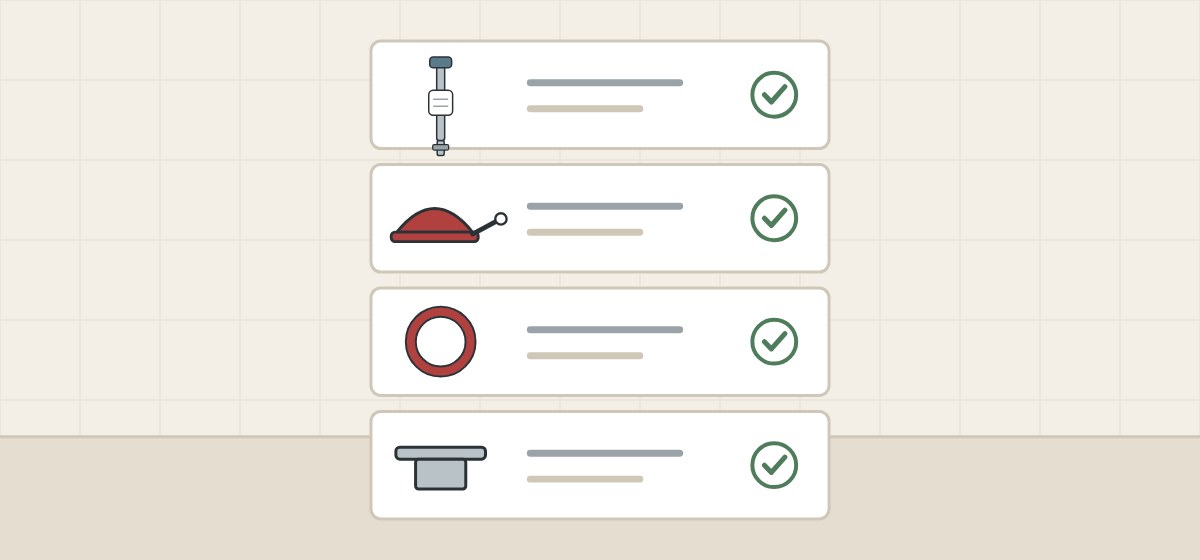
Specify spares by cistern model and maker’s part number for each toilet type. This is procurement guidance, not repair advice.
- List each toilet type. Record the toilet and cistern model per room type.
- Get the parts list. Ask for the maker’s diagram with part numbers.
- Name both valves. Fill valve and flush valve on separate lines.
- Name the wear parts. Flapper or seal, gasket and any valve washer.
- Record the interfaces. Opening or outlet size, entry, thread and actuation.
- Set quantities. State the spares per hundred toilets.
- Keep the record. File it with the handover documents.
When a part is sold as “universal”
Geberit says the suitable part depends on the cistern model. Have the supplier confirm fit in writing. Photograph only markings that are safely reachable; do not dismantle a concealed cistern to fill in a form.
What should you send and ask before a quotation?
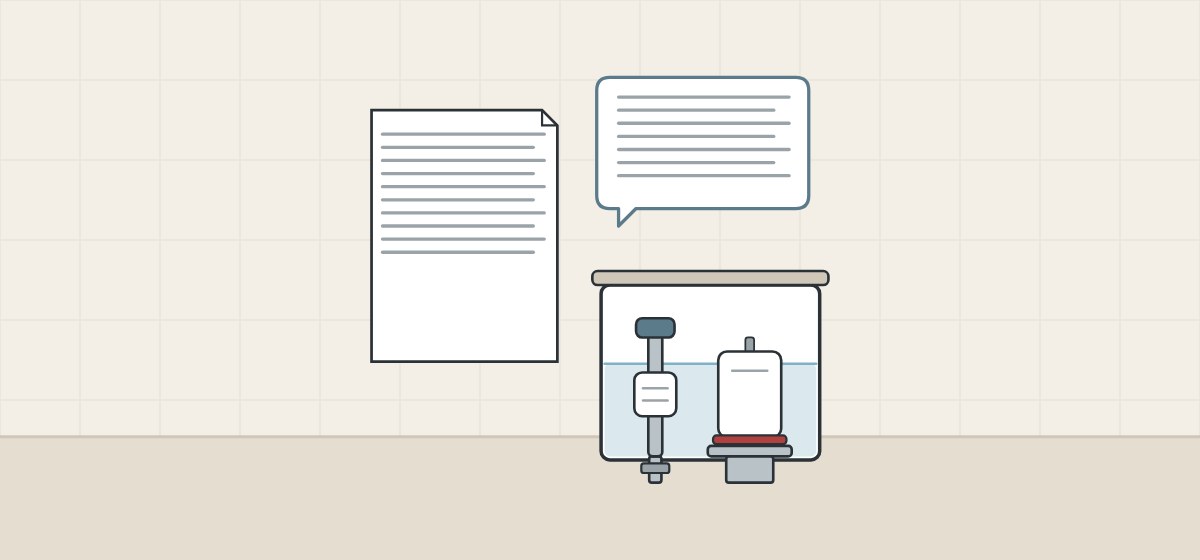
Name the cistern fittings in the request, not just the toilet.
| Question | Why it matters |
|---|---|
| Which fill valve is fitted, by part number? | Spares are ordered by number, not shape. |
| Which flush valve type is fitted? | Flapper and canister valves take different seals. |
| What size is the opening or outlet? | Fluidmaster quotes 2" and 3" flush valves; Wirquin 1.5" and 2" outlets. |
| Side or bottom entry, and which thread? | Inlet valves differ in both. |
Include with your request
- Project location and code authority
- Toilet models and quantities
- Supply pressure, where known
- Spare parts list and quantities
WNS Global confirms any offered toilet, cistern fittings, spare parts and commercial terms separately in writing. This guide does not state that WNS Global products use any valve named above, accept any named part or are listed to any standard, or that WNS Global holds spare parts for any period.