
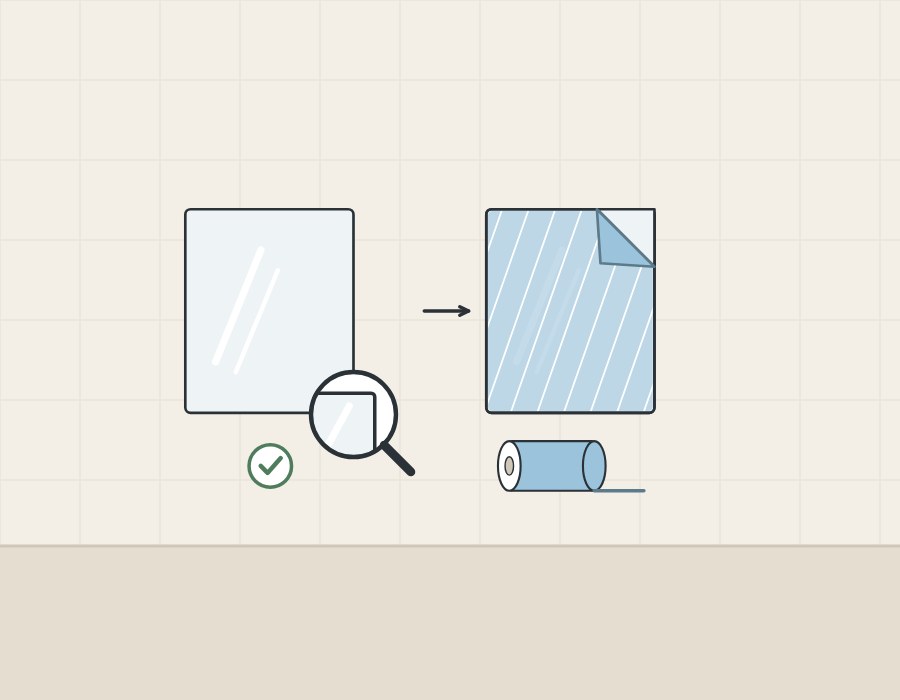
From edge work to packing
What is checked on a mirror before shipment?
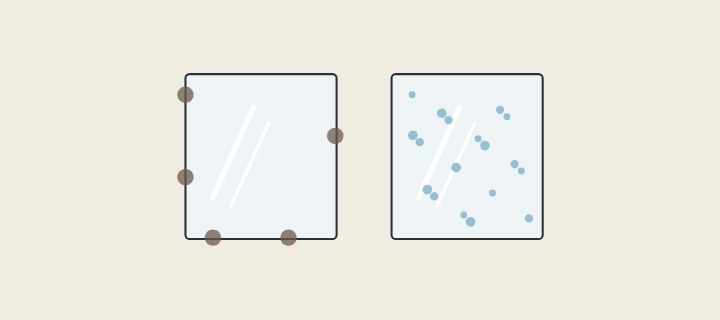
Four things are checked: the edges, the corners, the painted back and the reflective face. The NGA’s fabrication paper defines black edge as damage to mirror edges caused by liquid contacting the edge.
The published scope of ASTM C1503-24 covers mirrors to which no further processing, such as edgework, has been done. An edge finish therefore has to be written into the order.
| Term | What it means here |
|---|---|
| Backing paint | The paint that protects the silver film. |
| Black edge | NGA: edge damage caused by liquid contacting the edge. |
| Protective film | Novacel: guards against soiling, scratches and corrosion. |
| Safety backing film | Novacel 9212: stays on the back to hold broken pieces. |
| Interleaving | Material placed between stored sheets; Guardian names it for glass storage. |
In what order should a mirror be checked and packed?
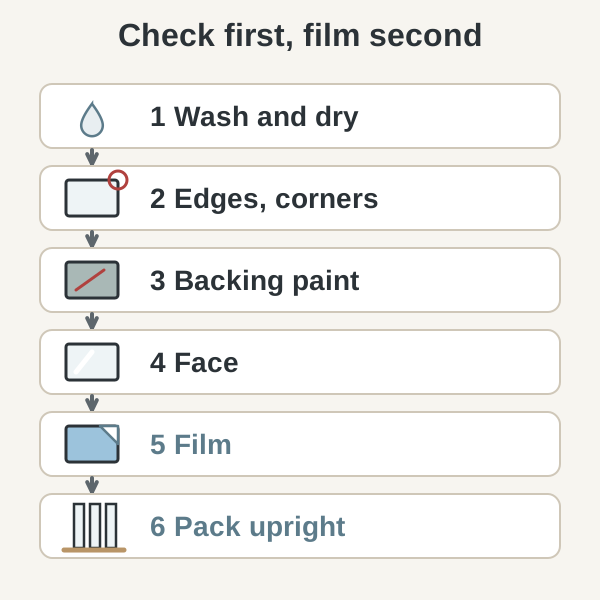
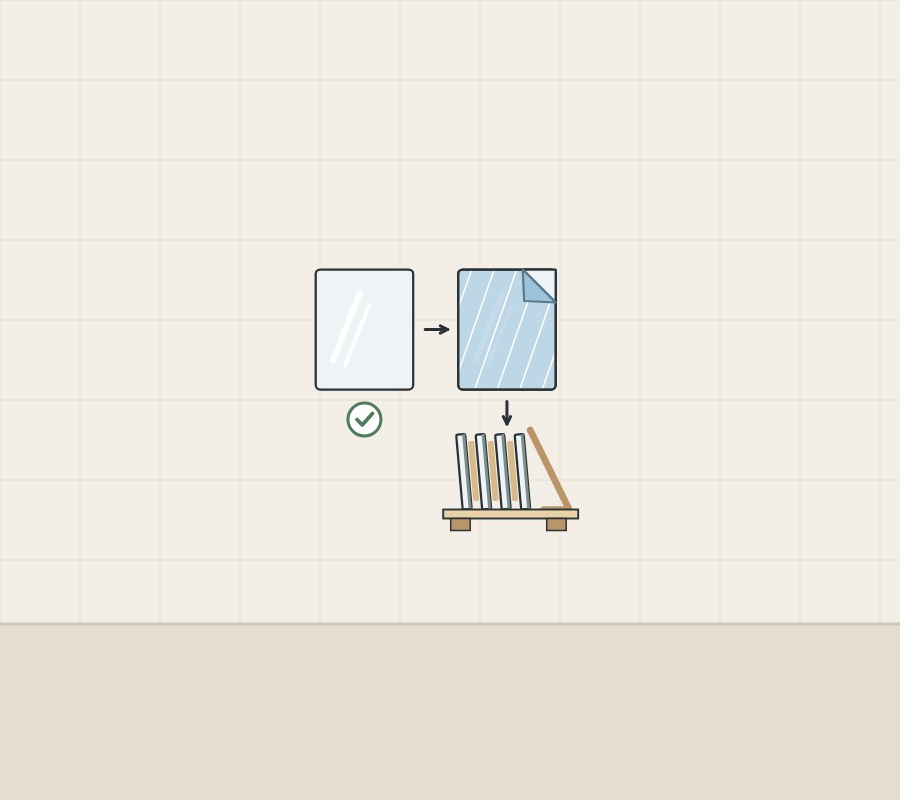
Check the glass first, apply any film second and pack last. The order is this guide’s own; steps 1 and 3 rest on sources, the gloves in step 2 come from the NGA, and step 6 borrows the NGA’s storage advice.
- Wash and dry the mirror after edge work.
- With gloves on, check edges and corners for chips.
- Check the backing paint for scratches.
- Check the face at an angle, then clean it.
- Apply any protective film to the clean face.
- Pack upright, dry and separated.
Step 1 follows the NGA fabrication paper, which wants backing, edges and glass washed and dried promptly after fabrication, and gloves worn for handling. Step 3 follows AGC. Step 6 applies to packing what the NGA storage paper says about storage: vertical and dry. Separation is this guide’s own advice.
What do the NGA and mirror makers say about edge work?

The NGA asks for clean, pH-controlled coolant, seaming from the paint side to the front, and prompt washing; Guardian gives its own pH range and asks for rinsing. Each row is one source’s statement.
| Source | Topic | What it says |
|---|---|---|
| NGA FB22-24 | Seaming | From the back (paint surface) to the front. |
| NGA FB22-24 | Coolant | Clean water with coolant, pH 6 to 9. |
| NGA FB22-24 | Afterwards | Remove all coolant and polishing compound from edges. |
| NGA FB22-24 | Edge sealant | The mirror maker may recommend a neutral pH edge sealant. |
| Guardian UltraMirror | Bevelling | Process water at pH 6 to 8; wheels cooled. |
| Guardian UltraMirror | Afterwards | Rinse with copious water directly after processing. |
| AGC Mirox | Cut edges | Lightly sand them to prevent injury. |
Guardian also recommends a named edge sealant where a frameless UltraMirror is at high risk of water splashing. A frameless mirror shows every edge, so name the finish, polished, bevelled or seamed, and check that it is uniform. A framed mirror hides its edges but needs sound corners.
Why does the back of the mirror need checking?
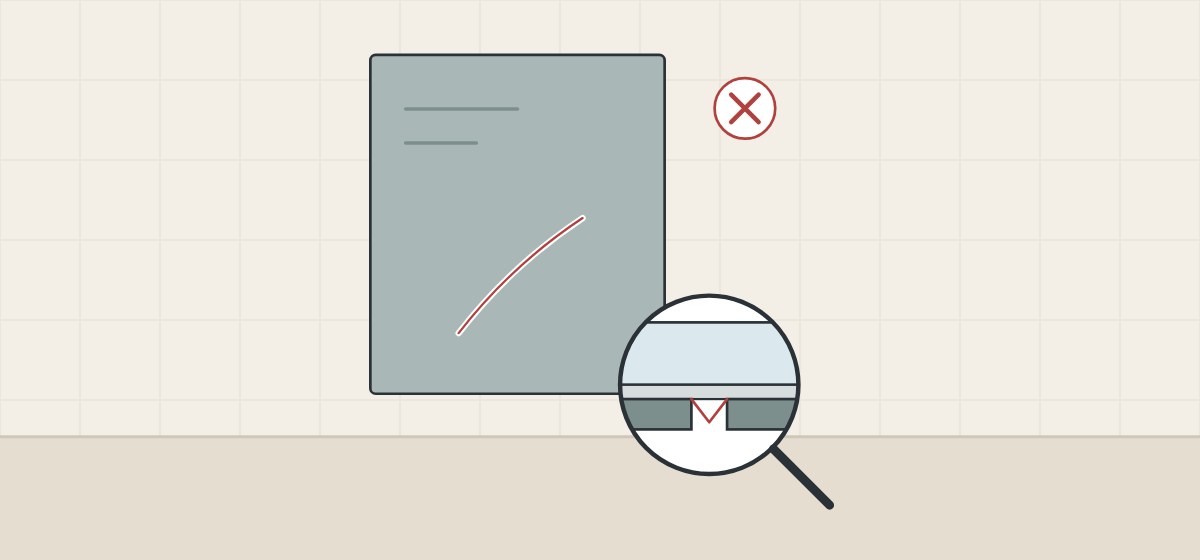
Two makers say a scratch in the backing paint can later show on the reflective side. AGC says a scratched back could cause oxidation, seen as black or brown traces on the reflective side.
| Source | What it says |
|---|---|
| AGC Mirox guide | Check the paint was not scratched in cutting and assembly. |
| Guardian UltraMirror | Do not accept UltraMirror with scratches on the paint face. |
| NGA FB22-24 | Vacuum or sweep surfaces that touch the backing; do not slide mirrors over each other. |
| AGC, SAFE+ film | This backing film protects the paint from scratching. |
A visual check shows only visible scratches. Pilkington says its Optimirror range surpasses the durability and site acceptance tests of EN 1036; that is a maker’s test claim, not something a photo can show. Ask how edges and backing are protected, and accept no durability promise based on a visual check.
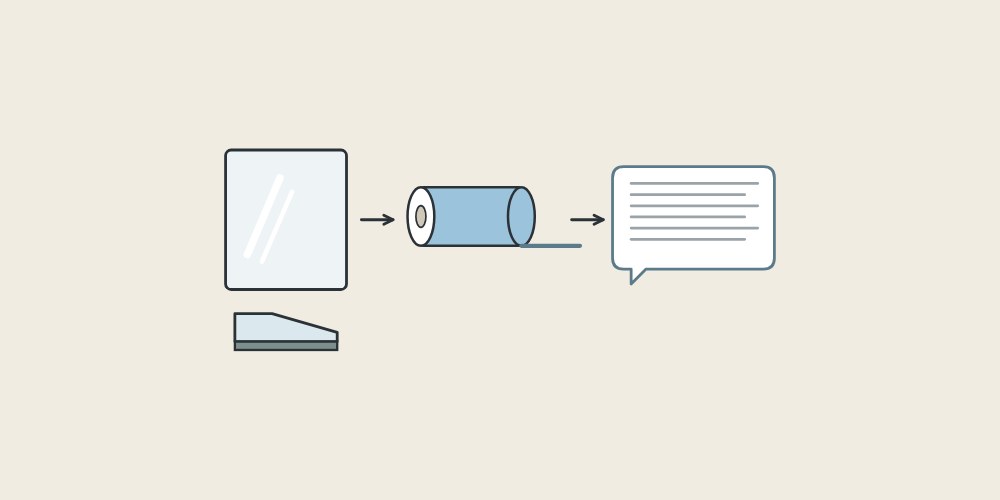
What do film makers publish about protective film on glass?

Three of the four film makers read here publish a figure, each for a different product and surface; POLIFILM gives none. None of the pages gives a removal time for film on a mirror face.
Novacel
Novacel says its glass films protect against soiling, scratches and corrosion, and offers up to 12 months of external resistance on insulating glass.
POLIFILM
POLIFILM lists mirrors among the glass it protects and says it matches a film to the glass, the processing, the desired duration of use and the weather resistance required.
tesa 4848 PV1
tesa names glass among the surfaces for this general surface-protection film and says its UV resistance allows outdoor use for four weeks. tesa warns that old and weathered substrates, PVC and coated metals in particular, can lead to residues or ghosting after removal.
Nitto SPV CGP
Nitto designs this series for heat-treatable coated glass in storage, transport and converting. Nitto measures its weatherability on steel and says it can differ on other substrates.
- Film maker and grade
- The maker’s stated outdoor or UV limit
- The surface that limit was measured on
- The date the film was applied
How should mirrors be stored and moved?

The NGA’s storage paper asks for mirrors to be stored upright and dry; Guardian asks for a sheltered, leak-free store and interleaving or spacing between sheets:
Upright, not flat
The NGA says to store mirrors vertically and not to lay them flat.
Dry and ventilated
The NGA rules out high humidity, chemical fumes and high heat, which it says can deteriorate the edges or backing.
Interleaved
Guardian says glass storage should always include interleaving materials or spacing between sheets, and notes that closely stacked vertical sheets let moisture linger.
Checked on arrival
The NGA says to check shipments on arrival and to unpack mirrors as soon as possible so that condensation can dissipate.
The NGA also says not to ship a partly unpacked case without proper repacking. Corner protection and labels by room and model are this guide’s own packing advice.
What evidence can be seen, and when?
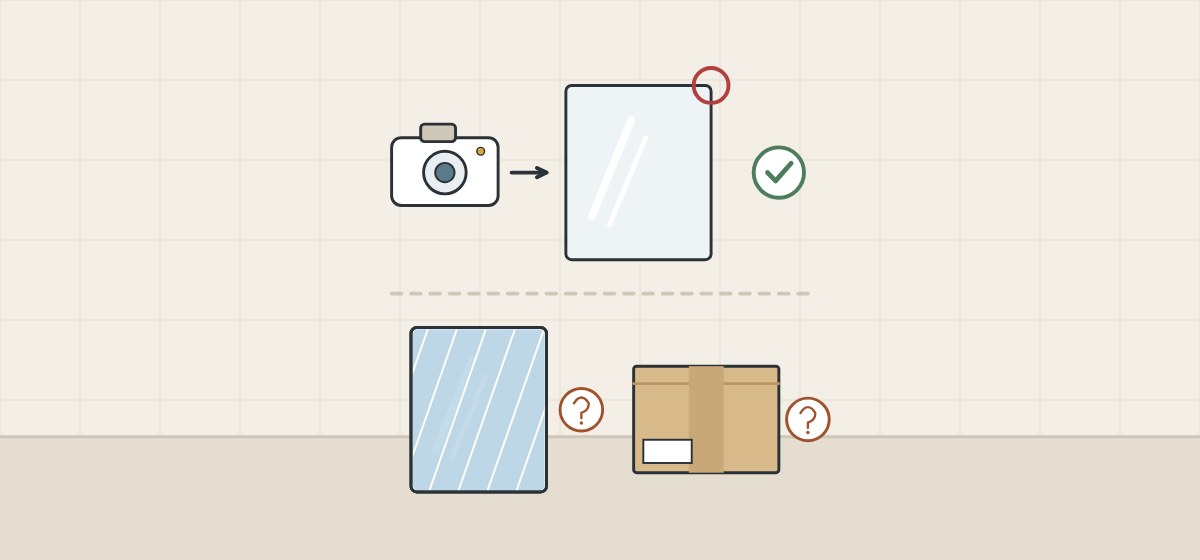
Most mirror evidence exists only before film and packing go on. Nitto lists transparency for substrate inspection as a feature of its SPV CGP films, so ask whether the film used is clear. The table is this guide’s own.
| Evidence | What it shows | What it cannot show |
|---|---|---|
| Edge and corner photos with mirror ID, before film | Finish and chips on that mirror | Edges not photographed |
| Photo of the back | Visible scratches in the paint | How the silver will age |
| Film maker and grade | The maker’s published limits | What lies under the film |
| Packing photo | Position, separators, corner protection | Condition inside the pack |
| Arrival check | Moisture or damage on receipt | When it happened |
How should a buyer set up the pre-shipment mirror check?

Write the check into the order before production. These steps are procurement guidance, not an inspection standard.
- Specify the edge finish. Polished, bevelled or seamed, for each mirror type.
- Ask about washing after edge work. The NGA wants all coolant traces off the edges.
- Require the check before film. Edges, corners, back and face, with mirror IDs.
- Reject scratched backing. Guardian and AGC both warn about it.
- Name the film. Maker, grade and stated outdoor limit; applied to a clean face.
- Agree the packing. Upright, separated, corners protected, labelled by room.
- Plan film removal. After installation, within the film maker’s limit.
Lit mirrors
A glass check does not cover wiring, drivers or switches. Confirm those per model and destination market with the supplier and the local authority.
What should you send and ask before a quotation?

A complete request names the edge finish, the film and the packing.
| Question | Why it matters |
|---|---|
| Which edge finish, on which edges? | ASTM C1503-24 covers mirrors without edgework. |
| How are mirrors washed after edge work? | The NGA asks for prompt washing and drying. |
| Which protective film, and what is its limit? | Limits belong to the named film. |
| How are mirrors packed and separated? | The NGA says to store mirrors vertically and dry. |
Include with your request
- Mirror sizes, thickness and quantity
- Framed or frameless, and edge finish
- Destination and expected storage time
- Photo record wanted, with mirror IDs
WNS Global confirms any offered mirror, edge finish, film, packing and commercial terms separately in writing. This guide does not state that WNS Global mirrors have any edge finish, backing, film, standard conformity or test result named above.