From output to the face
What do lumens, lux and watts each measure?
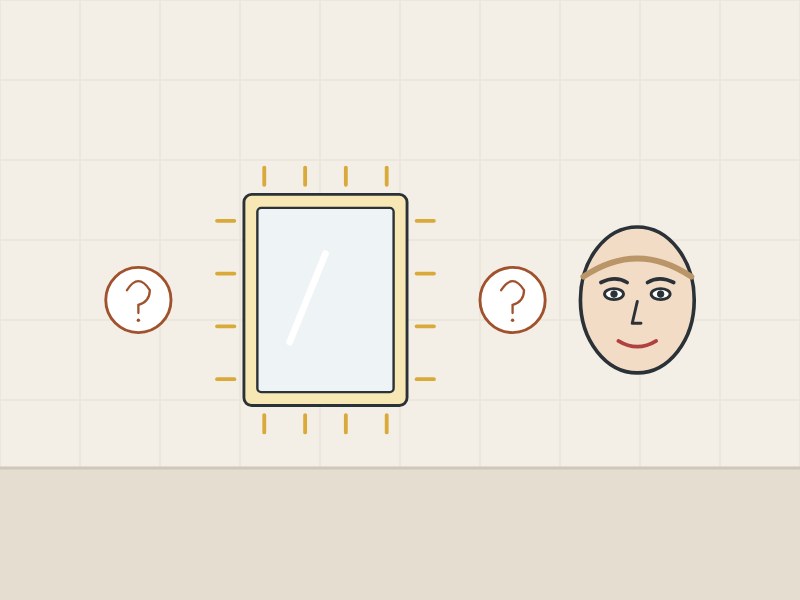
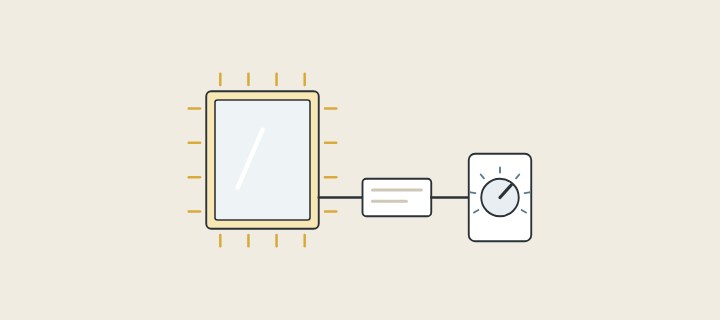
Lumens measure emitted light, lux measures light arriving on a surface, and watts measure electrical input. Konica Minolta says luminous flux measurement determines the total visible energy a light source emits.
The IES definition of illuminance is the areal density of luminous flux incident at a point on a surface. Konica Minolta’s photometry page gives its unit, the lux, as one lumen per square metre.
The US Department of Energy’s purchasing guidance calls wattage a measure of power input.
| Term | What it measures |
|---|---|
| Lumen (lm) | Luminous flux: total light emitted. |
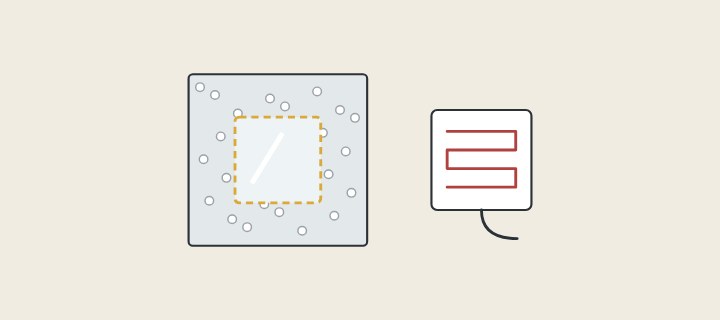
| Lux (lx) | Illuminance: one lumen per square metre. |
| Foot-candle | Illuminance: one lumen per square foot. |
| Candela (cd) | Luminous intensity: flux in one direction per solid angle. |
| Watt (W) | Power; for a lamp, the electrical input. |
How does emitted light become light on a face?
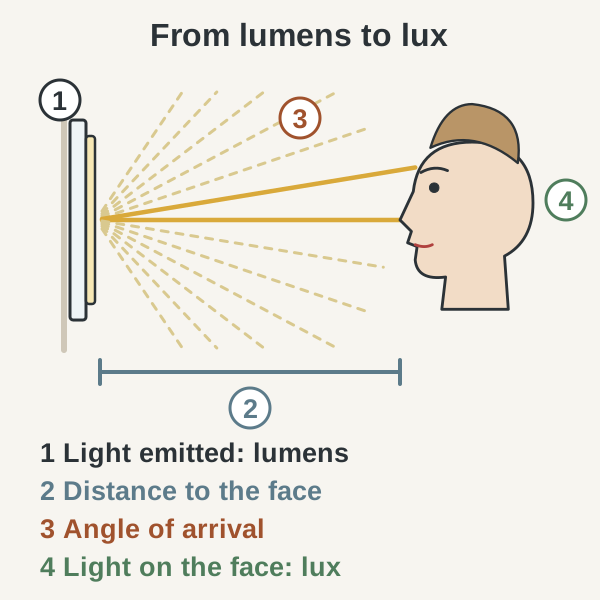
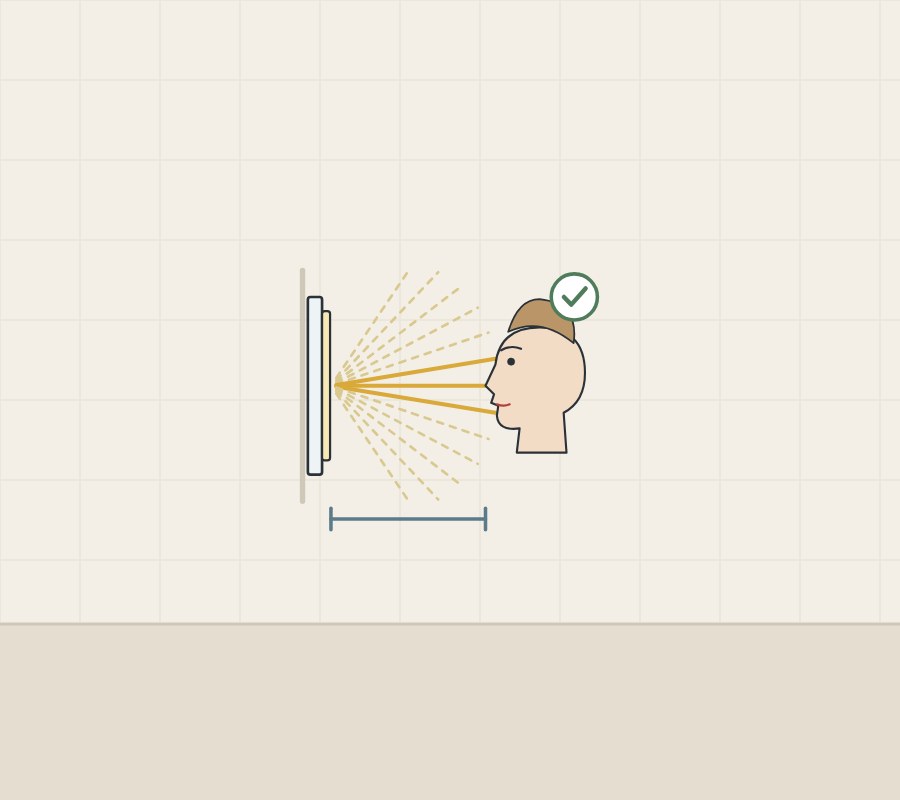
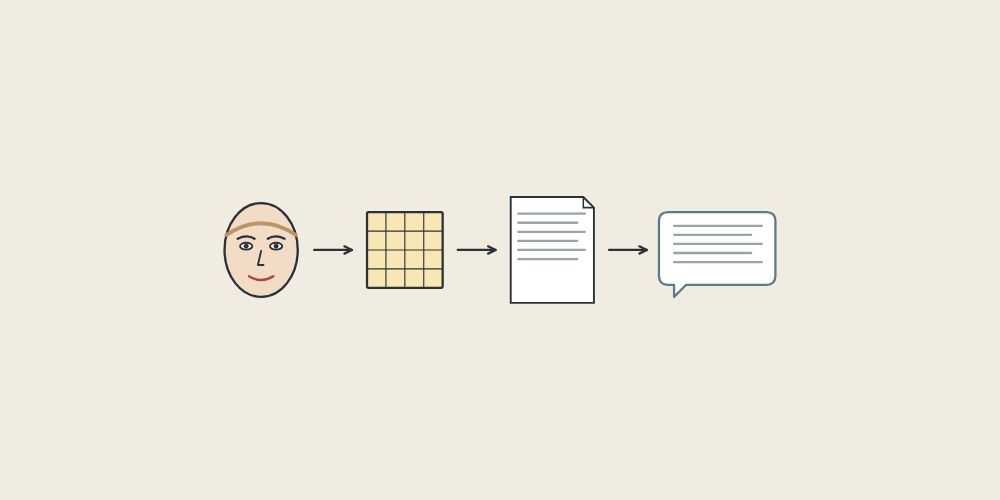
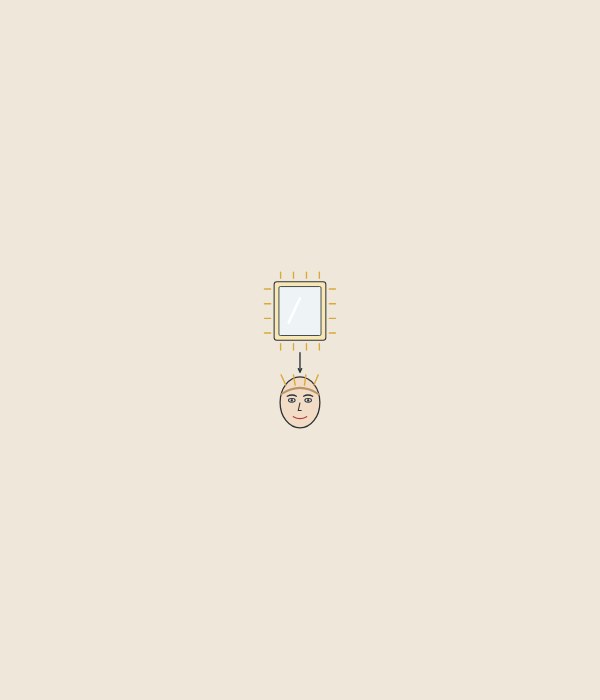
Emitted light reaches a face through direction, distance and angle, and lux is the flux arriving per unit of area at that point. The steps follow the IES and Konica Minolta definitions; they are a general chain, not a record of any mirror.
- The light source emits a total luminous flux, counted in lumens.
- Part of that flux leaves in each direction; the flux per unit solid angle in one direction is the luminous intensity.
- The light travels the distance from the source to the face.
- The light meets the surface at an angle of incidence.
- The flux landing per square metre at that point is the illuminance, in lux.
For a point source the IES inverse-square law ties illuminance to intensity and the square of the distance, and its cosine law adds the angle of incidence. Neither formula starts from total lumens.
Why can the same lumens light a face differently?
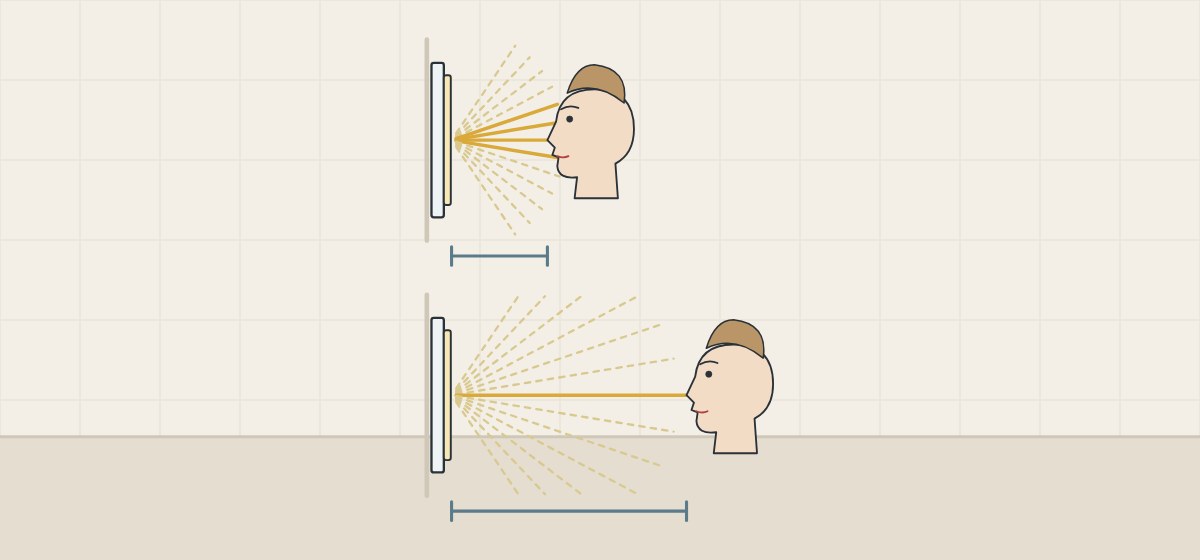
Because lux at a point depends on intensity towards that point, distance and angle, not on the total. The table lists what each definition says.
| Factor | What the source says |
|---|---|
| Direction | Konica Minolta: intensity is flux in a given direction per solid angle. |
| Distance | IES: varies inversely as the square of the distance from a point source. |
| Angle | IES: varies as the cosine of the angle of incidence. |
| Source size | IES: the law is accurate within 1% at 5 times the source’s maximum dimension or more, for uniform luminance. |
| Position named | Robern: approximate figures footnoted as measured 18 in from the mirror centre. |
The IES note matters for mirrors. If the user stands closer than five times the largest dimension of the lit area, that condition is not met.
How do named makers state mirror brightness?
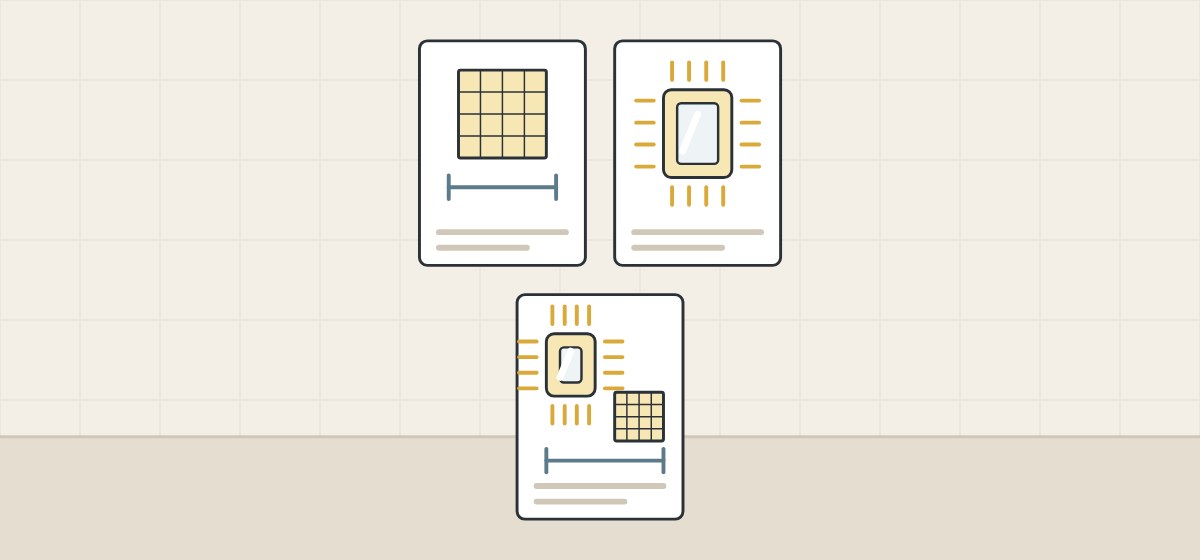
The maker documents read for this guide state brightness in different forms. Each row is that maker’s own statement about its own product.
| Document | Figure given | Position stated |
|---|---|---|
| Kohler K-99571-TL lighted mirror | 1100 lux; lights rated 96 W | At 22 in |
| Robern Vitality YM0040CIFPD | Approximate lumens, lux and foot-candles, all footnoted to one position | 18 in from the mirror centre |
| WarmlyYours Lumidesign article | Lumens by model and size, e.g. 2400 for Carol 24x36 | None in the article text read |
A lux figure with a distance and a lumen figure without one cannot be compared directly. WarmlyYours lists 2400 lumens for the Carol 24x36 and 4800 for the 48x48, so for that model the figure rises with mirror size. The Robern sheet prints lumens, lux and foot-candles at 18 in; read the sheet for the model ordered.
How are lumens and lux measured?
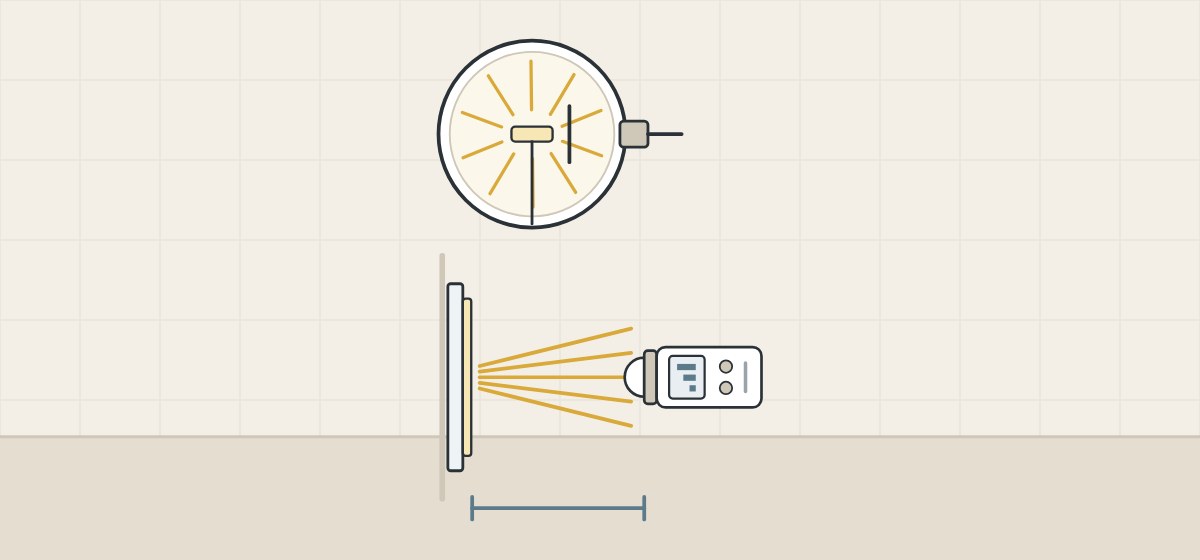
They are measured with different equipment: total flux is gathered from the whole source, illuminance is read at one plane.
Total flux
Konica Minolta says an integrating sphere is often used to bring all the emitted power to the detector, and must be large enough to enclose the source.
IES LM-79
The public scope of IES LM-79 lists total flux and intensity distribution as separate measurements of solid-state lighting products. The IES page read is headed LM-79-19; the IES store lists ANSI/IES LM-79-24 with the same scope sentence. That scope text does not name mirrors.
Illuminance meter
Konica Minolta’s illuminance measurement page says a cosine diffuser over the sensor provides cosine correction.
Off-axis light
The same page says illuminance readings are particularly open to off-axis errors, and that systems differ in cosine error. Conditions to record with any lux reading:
- Distance from the mirror
- Sensor height and direction
- Room lights on or off
- Dimmer and colour setting
What do lumen and watt figures leave out?
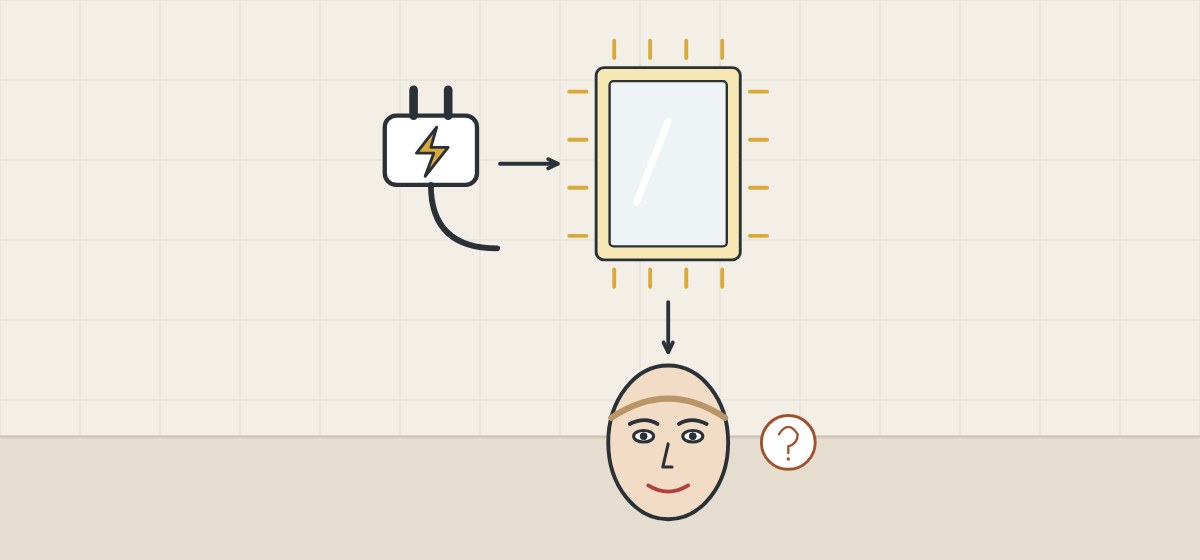
Both leave out where the light lands. Three limits follow from the sources:
Watts are input
Philips Hue says a 60 W incandescent bulb emits 806 lumens and that its own bulb gives the same light using 9.5 W. Equal watts therefore do not mean equal light.
Lumens are a total
The Department of Energy’s purchasing guidance defines lumens as the total visible light a source emits. A total carries no position.
Brightness is a sensation
The IES luminance entry notes that brightness commonly means the sensation of viewing a surface that sends light to the eye.
How bright a mirror looks in a photo or showroom is therefore not a lumen figure and not a lux figure.
Is there a recommended lux level at a mirror?
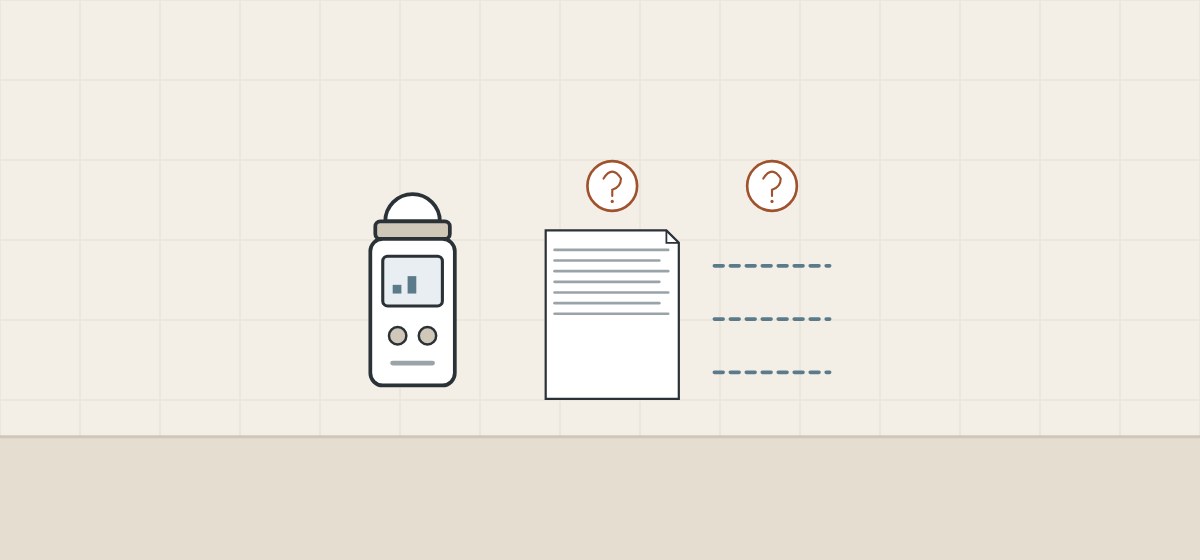
This guide found no public standard figure for light on a face at a mirror, and it sets none. The table lists the lux figures this guide quotes and who owns each.
| Source | What it gives |
|---|---|
| Kohler K-99571-TL sheet | 1100 lux at 22 in, which Kohler says “provides optimal brightness”. A maker’s statement about one model. |
| Konica Minolta | A comfortably lit desk at 300 lx. An example for a desk, not a face. |
| Project requirement | Set by the project’s lighting designer; confirm any code requirement with the local authority. |
How should a buyer specify mirror brightness?
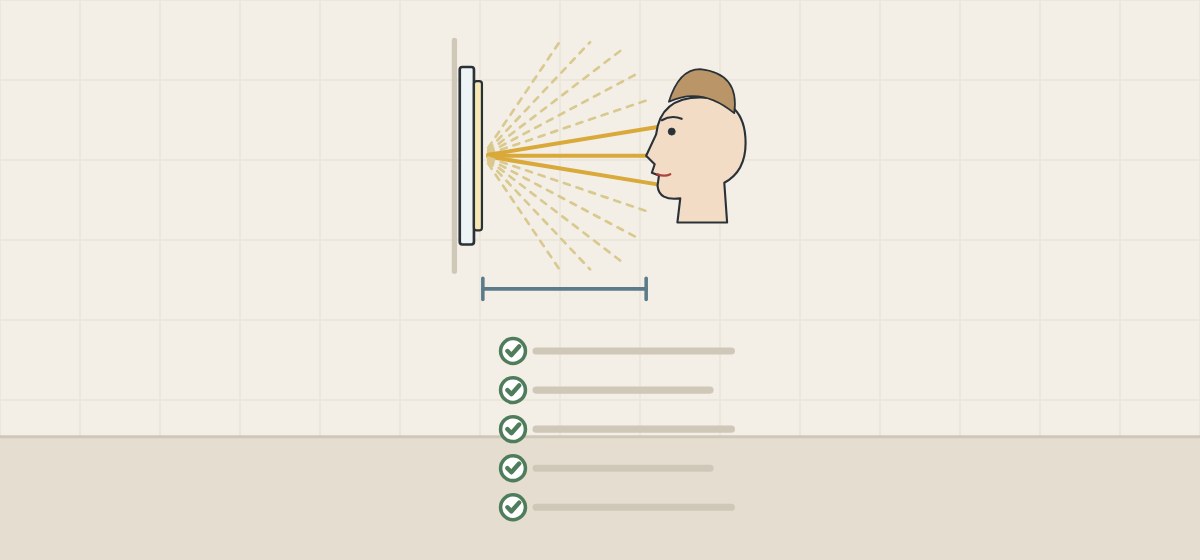
Specify the task and the measurement position first, then ask for figures that match. These steps are procurement guidance drawn from the definitions above.
- State the task. Face lighting, a background glow, or both.
- Fix the position. Distance, height and sensor direction. A countertop reading is not a face reading.
- Ask what each figure is. Lumens of the whole mirror or one source, or lux at a point.
- Ask for the conditions. Dimmer level, colour setting, room lights.
- Keep watts separate. Record power as an electrical value, not as brightness.
- Judge colour separately. Colour temperature and colour rendering are other fields.
- Check a sample in place. View it at the planned mounting height.
When a listing shows only a photo
A bright-looking product photo is neither a lumen nor a lux record. The IES luminance entry describes brightness as a sensation from viewing a surface; lux is flux arriving on a surface. Ask for the figure and its position.
What should you send and ask before a quotation?
Send the task and the user position, and ask what each brightness figure measures. Each question maps to a point earlier in this guide.
| Question | Why it matters |
|---|---|
| Is the figure lumens or lux? | They are different quantities. |
| If lux, at what distance and point? | Lux changes with distance and angle. |
| If lumens, of what? | Whole mirror, one strip or the bare LEDs. |
| How was it measured? | Flux and illuminance use different equipment. |
| At which setting? | Dimming and colour settings can differ. |
| What are the watts? | Input power is not light output. |
Include with your request
- Task: face light, glow or both
- User distance and mirror mounting height
- Mirror size and light position
- Other lighting planned in the room
- Any target set by the lighting designer
- Quantity per room type
WNS Global confirms any product and terms it offers separately in writing. This guide does not state that WNS Global products have the features, ratings or listings named above, or any lumen, lux or wattage figure named above.