From mirror back to wall finish
What does a mirror adhesive have to be compatible with?
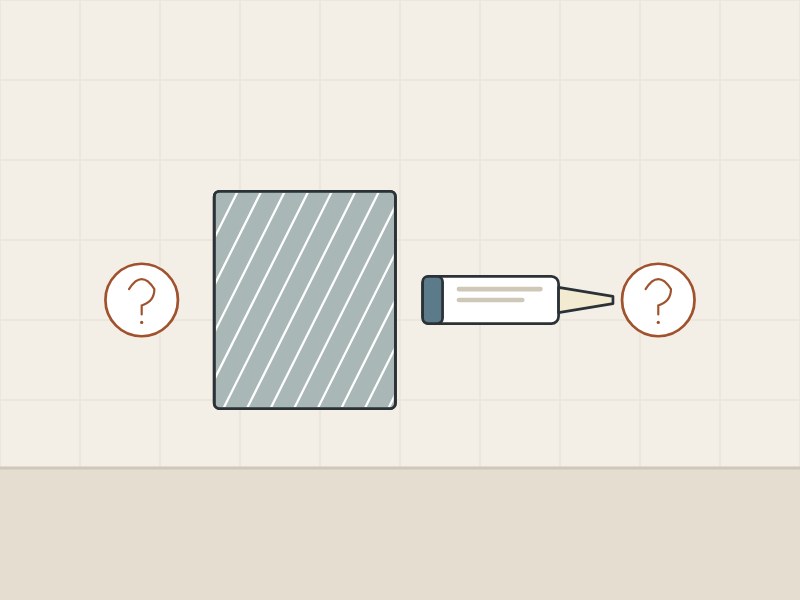
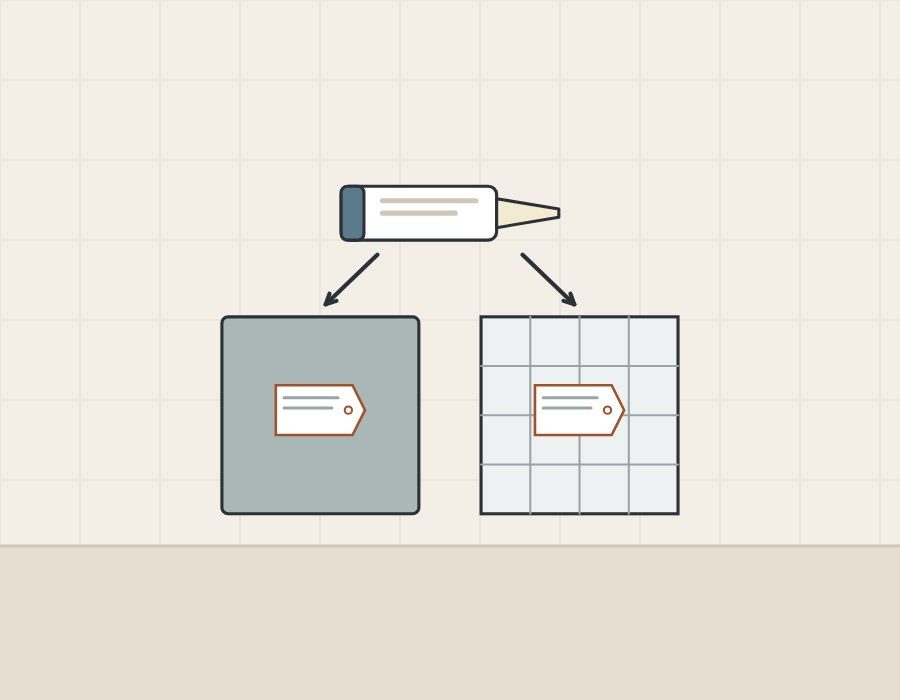
A mirror adhesive has to suit two surfaces: the back of the mirror and the exposed finish of the wall.
The published scope of ASTM C1503-24, a mirror specification, says it does not address requirements for mirror applications.
| Term | What it means here |
|---|---|
| Reflective layer | NGA: a thin film of metallic silver. |
| Backing paint | The paint that protects the silver. |
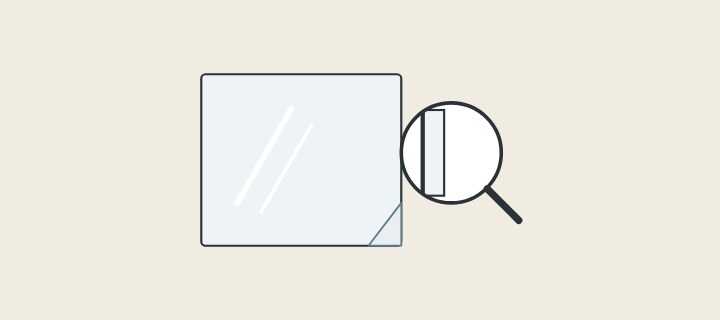
| Safety backing film | AGC: shards stick to its SAFE+ film if the glass breaks. |
| Substrate | The wall surface the adhesive touches. |
| Neutral cure | A cure description that Sika, Dow and Bostik use for products named below. |
How can an adhesive harm a mirror?
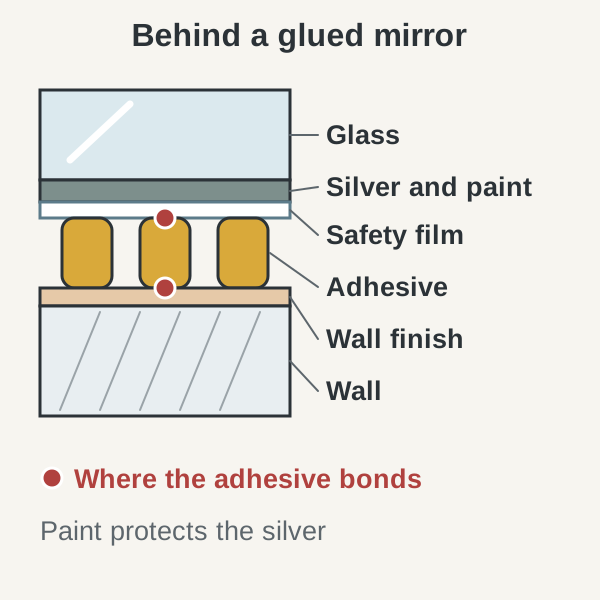
The silver can corrode if chemicals or excessive moisture reach it, and one adhesive maker warns of damage where the backing is scratched. The steps describe a risk, not a test result.
- Paint protects a thin silver film on the back of the glass.
- Chemicals or excessive moisture can corrode that silver.
- Where the backing is scratched, an adhesive may damage the reflective coating.
- Ventilation behind the mirror is recommended to avoid possible condensation problems.
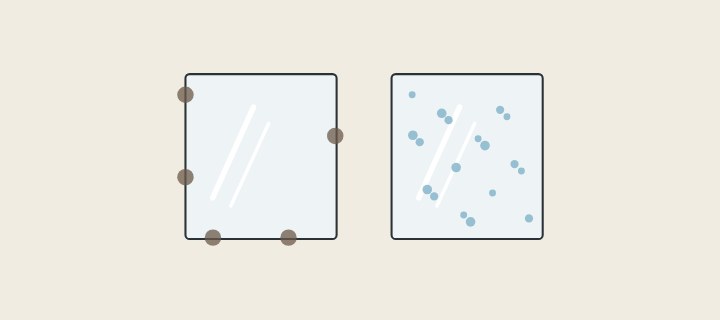
- AGC: adhesive goes on in vertical strips or dots so that air can circulate.
Step 3 is Henkel’s warning for Loctite PL 530. Step 4 follows Soudal’s Mirror Fix data sheet and step 5 AGC’s installation guide.
Which adhesive families do mirror makers accept?
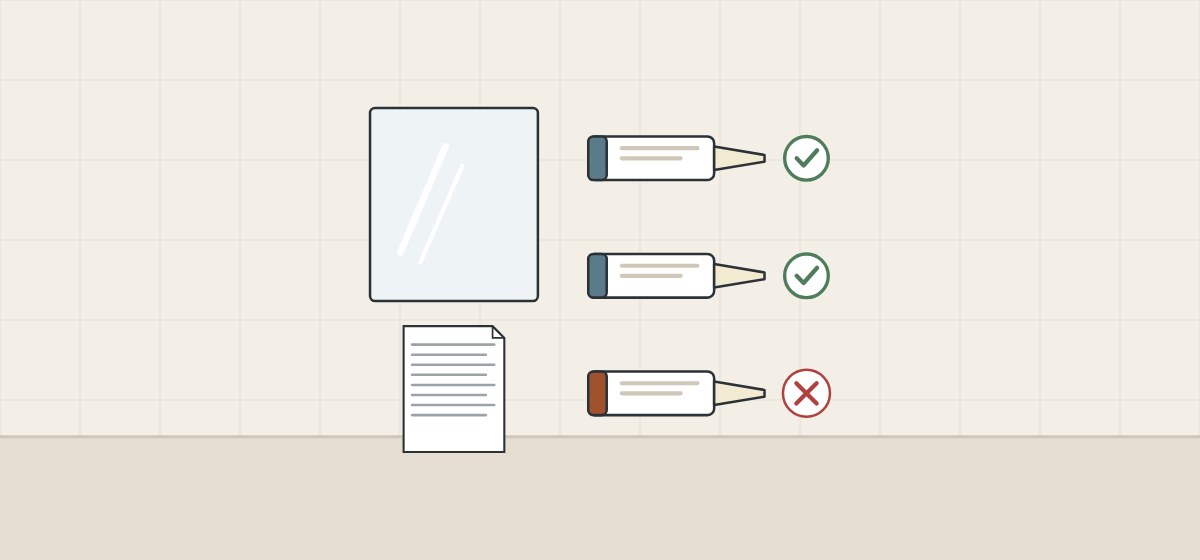
Guardian recommends, and AGC lists as compatible, alkoxy silicones, oxime silicones and MS polymers for their own mirrors; Guardian does not recommend, and AGC lists as not compatible, three other families. The table follows Guardian’s UltraMirror guidelines and AGC’s Mirox installation guide.
| Family | Guardian UltraMirror | AGC Mirox MNGE and 4Green |
|---|---|---|
| Alkoxy silicone | Recommended | Yes |
| Oxime silicone | Recommended; dries more slowly | Yes |
| MS polymer | Recommended | Yes |
| Hot melt | Recommended | Yes; no on SAFE+ film |
| Acetic acid silicone | Not recommended | No |
| Rubber silicone | Not recommended | No |
| Polyurethane-based | Not recommended as “polyurethane based silicones” | No |
AGC adds that a listed group does not mean every adhesive in it is suitable. Guardian says it cannot guarantee the effect of silicones on its mirror. Guardian’s file lists contacts in Saudi Arabia and the UAE, and AGC’s guide comes from AGC Glass Europe, so ask the maker of the mirror supplied for its own list.
What do adhesive makers say about the mirror back?
Each maker’s data sheet or product page makes its own statement about the mirror back:
| Product | Maker’s description | Mirror-back statement |
|---|---|---|
| SikaBond Mirror Adhesive | Neutral cure | Will not attack the mirror backing. |
| Sikaflex-124 | Polyurethane | Usable on most Category II safety films. |
| Soudal Mirror Fix | SMX hybrid polymer | For mirrors with an acetone-safe back. |
| Bostik H960 | Hybrid, neutral curing | Compatible with most common silver backing coatings. |
| DOWSIL 817 | Alkoxy neutral-cure silicone | Adheres to a range of mirror backings. |
| Loctite PL 530 | Synthetic resins and rubber | Only electro-copper plated glass mirrors to A-A-3002; not what Henkel calls acrylic, antique or painted mirrors. |
| Gunther Ultra/Bond | Mirror mastic | Not on vinyl safety backing or acrylic mirror. |
Sika describes Sikaflex-124 as a polyurethane adhesive for mirrors, while AGC lists polyurethane-based adhesives as not compatible with Mirox, and Guardian does not recommend what it calls polyurethane based silicones for UltraMirror. So check the named mirror and the named adhesive as a pair.
What do the sources require of the wall surface?
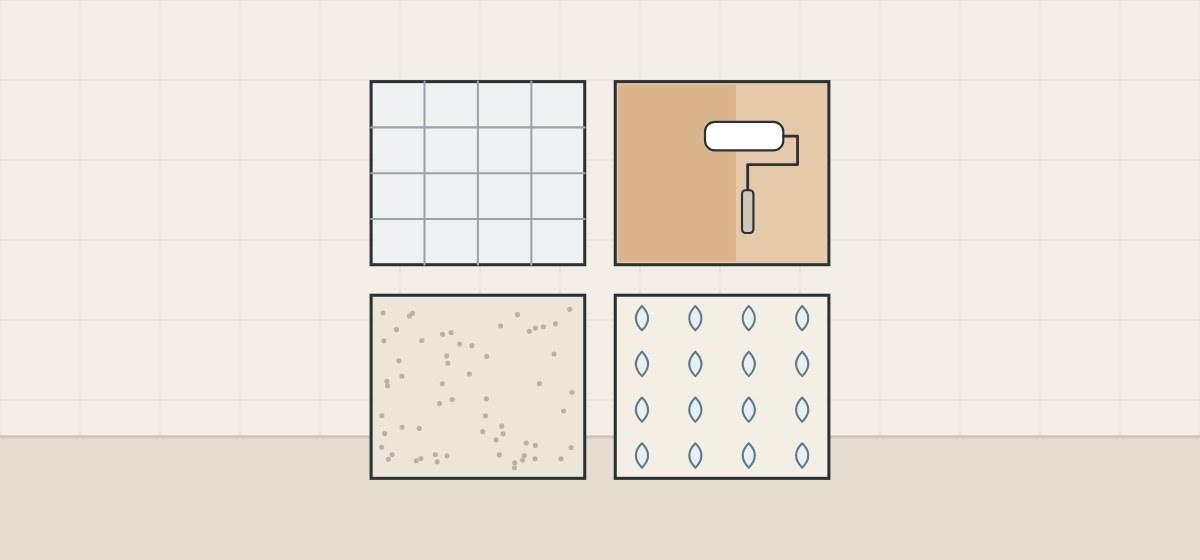
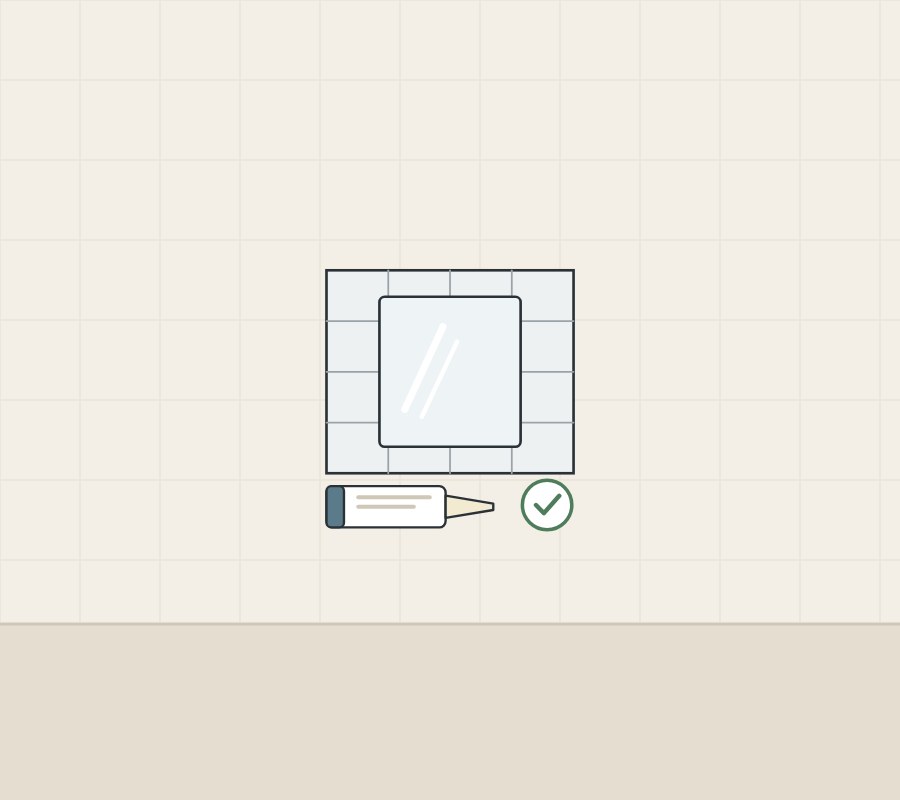
Three mirror makers ask for a clean, dry wall; adhesive makers then differ on dampness, paint and primer.
Clean and dry
Guardian, AGC and Saint-Gobain each ask for a clean, dry base. Sika UK allows damp surfaces without standing water for SikaBond Mirror Adhesive.
Paint and wallpaper
Sika lists painted drywall for Sikaflex-124 and recommends testing every painted wall surface first. H.B. Fuller excludes painted surfaces and wallpaper for Gunther Ultra/Bond, as Henkel does for Loctite PL 530. Guardian says to avoid freshly painted walls.
Porous surfaces
AGC asks for a primer on porous walls. H.B. Fuller requires unpainted plaster, wallboard, wood and concrete to be sealed with its own sealer.
Excluded materials
Soudal and Bostik each exclude polyethylene, polypropylene, PTFE and bituminous substrates. Guardian excludes bases that absorb moisture, such as wood or cork.
- The exposed finish, not the wall type
- Whether paint or plaster is fresh
- Any primer or sealer the data sheet names
What changes when the mirror has a safety backing film?
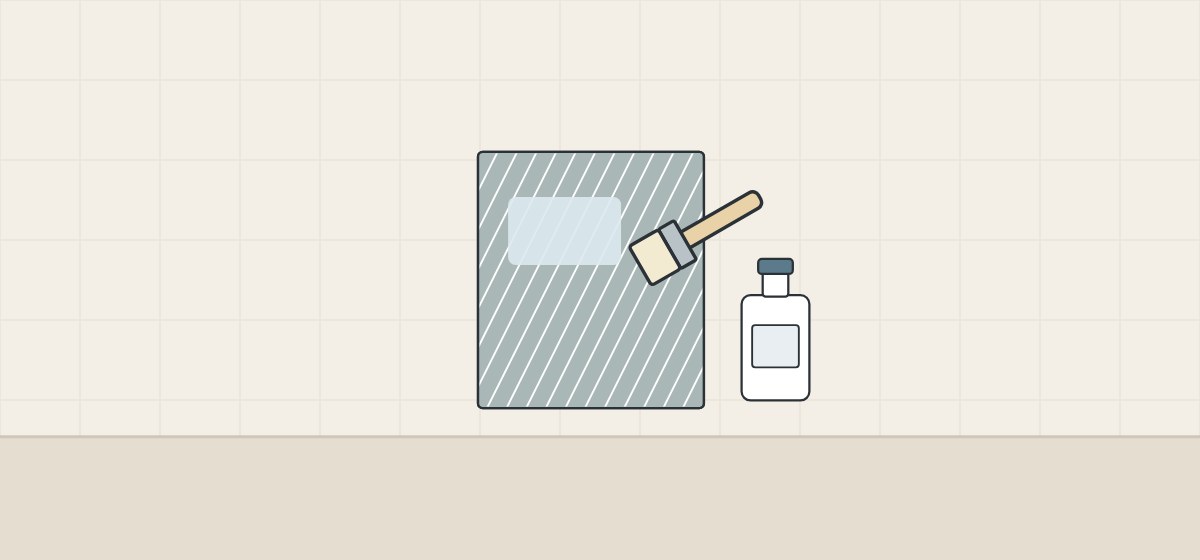
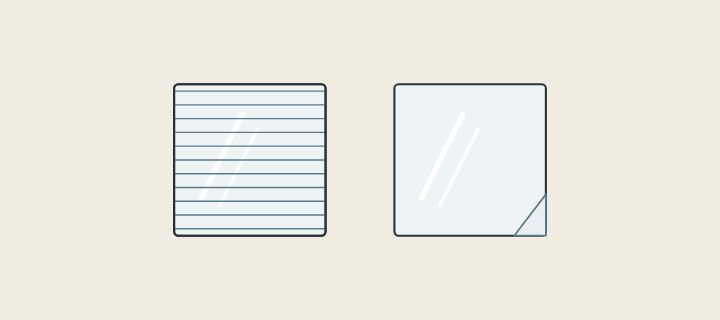
A safety backing film changes the surface the adhesive bonds to, from paint to film.
The film has a job
AGC says its SAFE+ film is PET and that splinters and shards stick to it if the glass breaks.
Primer on the film
AGC makes a primer on the SAFE+ film mandatory before bonding with an adhesive. Soudal requires an adhesion promoter on safety film for Mirror Fix.
Film material matters
Sika’s data sheet allows Sikaflex-124 on most Category II safety films but not directly on polyolefin films. H.B. Fuller excludes vinyl safety backing for Gunther Ultra/Bond.
The film’s own adhesive
Guardian says that where shatter-proofing sheets are applied to the backing, their adhesive must be mirror compatible.
AGC recommends its SAFE+ film in damp environments such as bathrooms, so ask whether a bathroom mirror has a film.
How do bead pattern, air gap and support differ by source?
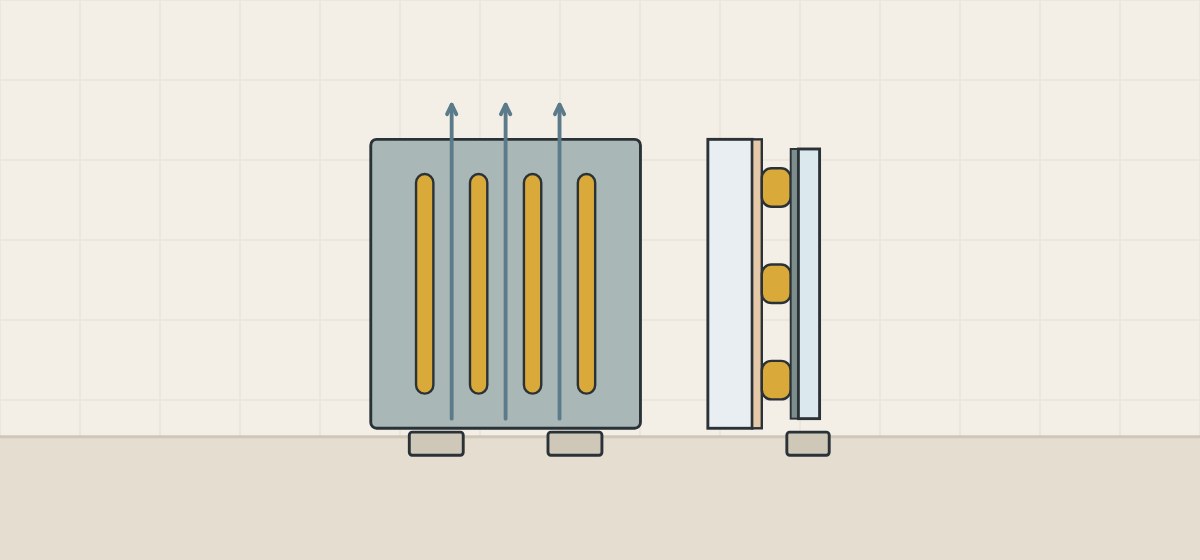
Bead pattern, air gap and support are set product by product.
| Source | What it says |
|---|---|
| AGC Mirox guide | Vertical strips or dots, never horizontal; non-metal blocks until the glue has set. |
| Guardian UltraMirror | About 3 mm gap for air; edge tape supports the mirror while silicone cures. |
| Soudal Mirror Fix | Vertical beads every 10 to 20 cm depending on mirror weight; 3 mm opening as a guideline; supported until fully cured; mirror tape too for larger mirrors. |
| Bostik H960 | Vertical stripes 20 to 40 cm apart, not dots; support usually not necessary. |
| Sikaflex-124 | Vertical beads 8 in apart or patties; mechanical support during and after. |
| Loctite PL 530 | Dollops, no horizontal or continuous beads; permanent mechanical fasteners. |
How should a buyer approve a glued mirror fixing?

Approve the combination, not the adhesive alone. These steps are procurement guidance, not a fixing design.
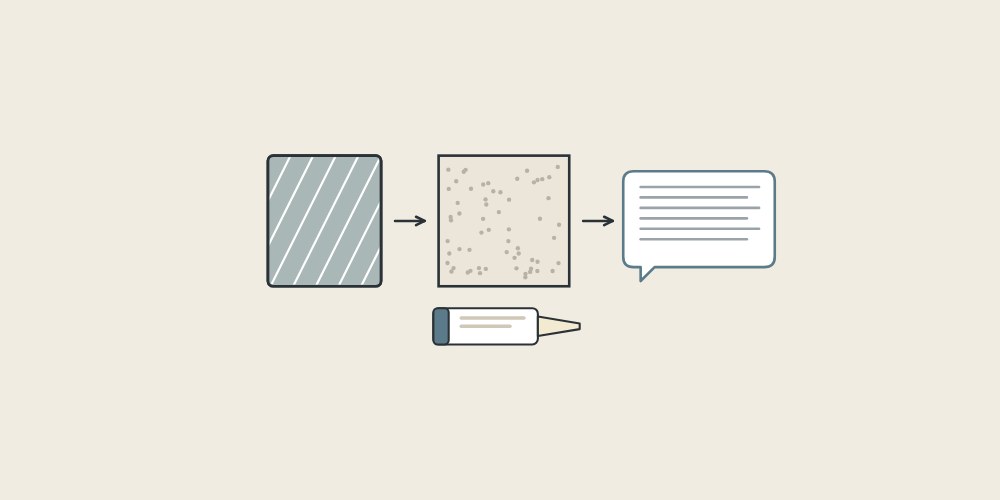
- Name the mirror. Maker, product and any safety film.
- Name the film. Its material and any primer required.
- Name the wall finish. Tile, paint, plaster or board, and its condition.
- Name the adhesive. The exact product and its current data sheet.
- Compare both documents. The mirror maker’s list and the adhesive’s limits.
- Take the pattern from the sheet. Beads, gap and support for that product.
- Keep the confirmation. File it with the mirror order.
When no document covers the combination
Leave it open; the absence of a prohibition is not approval. Guardian recommends the installer’s own test before installation, and AGC says a user of an adhesive it has not validated takes sole responsibility.
What should you send and ask before a quotation?

A complete request identifies the mirror back and the wall and leaves the fixing design to the approved system.
| Question | Why it matters |
|---|---|
| What is on the back of the mirror? | Paint and film are different bond surfaces. |
| Is a safety film fitted, and of what material? | Some adhesives exclude a film or need a primer. |
| Does the mirror maker list adhesive families? | One mirror maker’s list says no to a family that is sold for mirrors. |
| Which adhesive does the installer plan to use? | Limits belong to the named product. |
| What is the exposed wall finish? | Some data sheets exclude paint or wallpaper. |
| Who confirms the pair in writing? | A missing prohibition is not an approval. |
Include with your request
- Mirror size, thickness and quantity
- Room type and wall finish
- Safety backing requirement, if any
- Planned adhesive and its data sheet
WNS Global confirms separately in writing whether it can offer a mirror, with which backing or film, and on what commercial terms. This guide does not state that WNS Global mirrors have any backing, film, standard conformity or adhesive compatibility named above.