From the glass face to the reflective layer
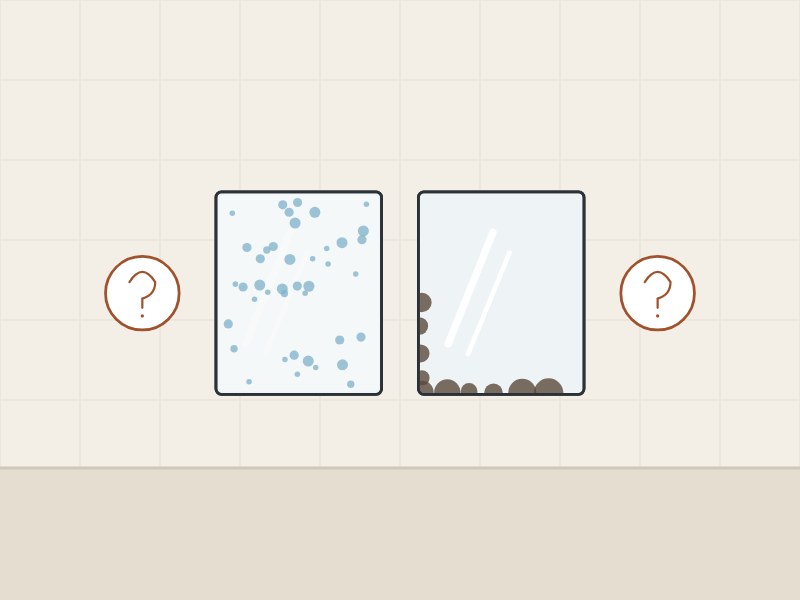
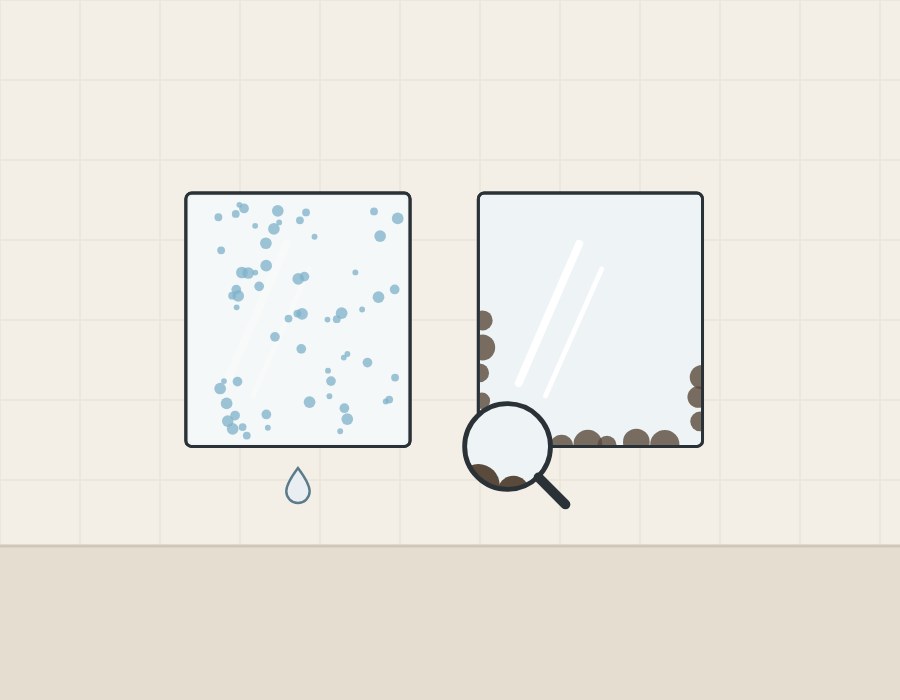
What is the difference between mirror condensation and edge corrosion?
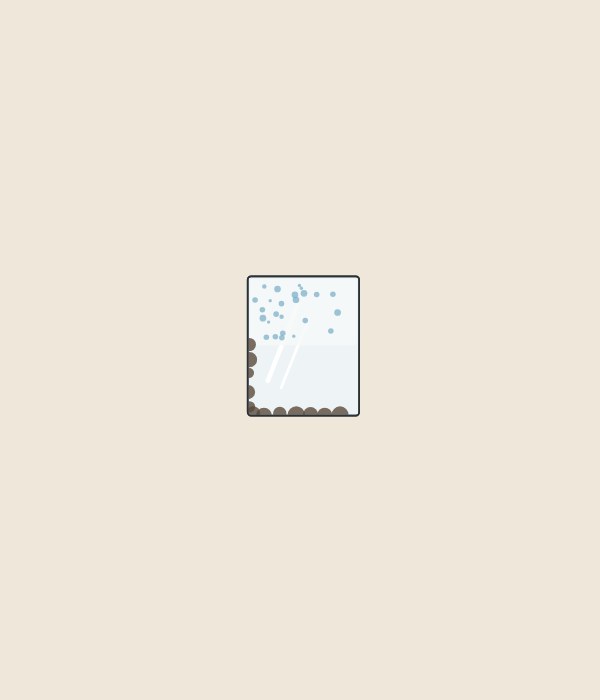
Condensation is moisture on the face of the mirror; edge corrosion is damage at its edges. The US EPA’s moisture guide calls condensation a possible sign of high humidity.
The National Glass Association (NGA), describing its installation paper, says a mirror’s reflective surface is a thin film of metallic silver, protected by paint but still vulnerable to corrosion if exposed to chemicals or excessive moisture.
NGA’s cleaning paper says wet edges can result in damage commonly called “black edge”.
| Term | What it means |
|---|---|
| Condensation | Moisture collecting on a surface. |
| Reflective layer | NGA: a thin film of metallic silver. |
| Backing paint | NGA: the paint that protects the silver film. |
| Black edge | NGA: common name for mirror edge damage. |
| Copper-free mirror | Saint-Gobain’s term for Miralite Pure; Guardian names a copper-free process. |
| Demister, defogger | A heating element fixed to the back of the mirror. |
How do you tell which problem a mirror has?
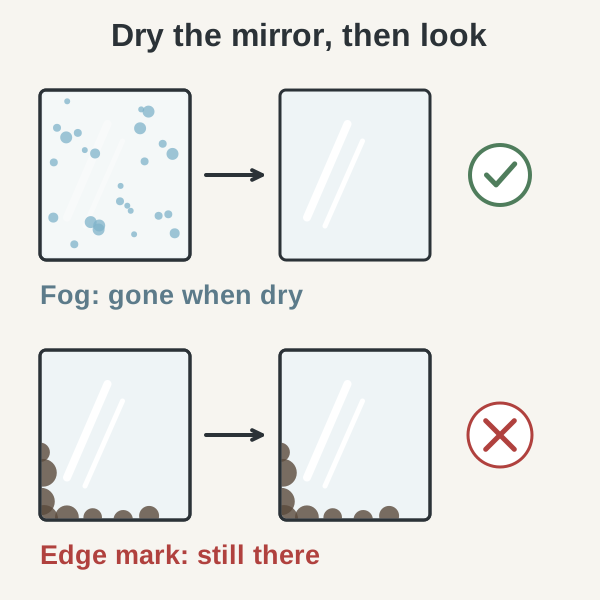
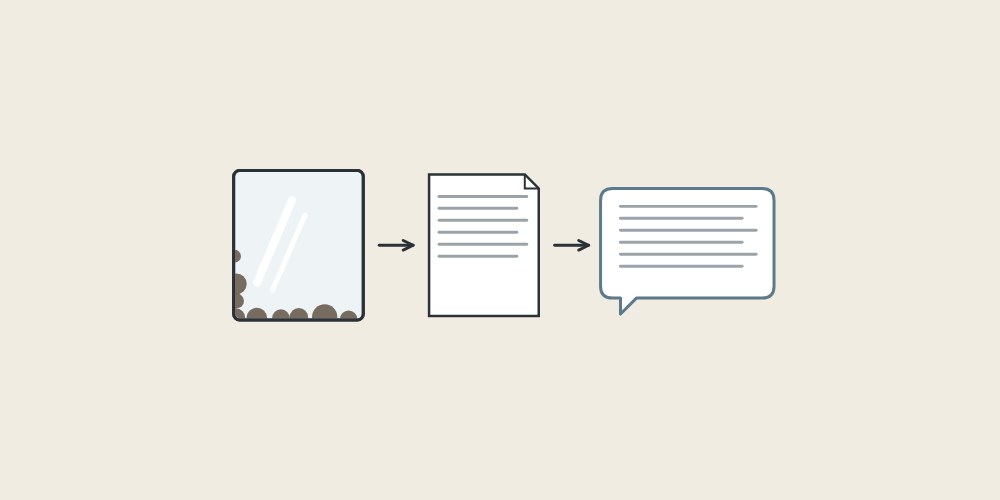
Watch what is left when the mirror is dry. These steps are this guide’s own routine, not a diagnosis.
- Let the mirror dry fully.
- Note whether the cloudy area has gone.
- Note where any remaining mark sits.
- Check the back, if reachable, for scratches.
- Record how the mirror is cleaned and where water splashes it.
- Photograph the mark and keep the order reference.
A mark that stays is not always from a wet edge. AGC’s installation guide and Guardian’s processing guide both say a scratch on the back can cause oxidation, seen as black or brown traces on the reflective side. A photo cannot identify a chemical cause.
What do the sources say causes mirror corrosion?
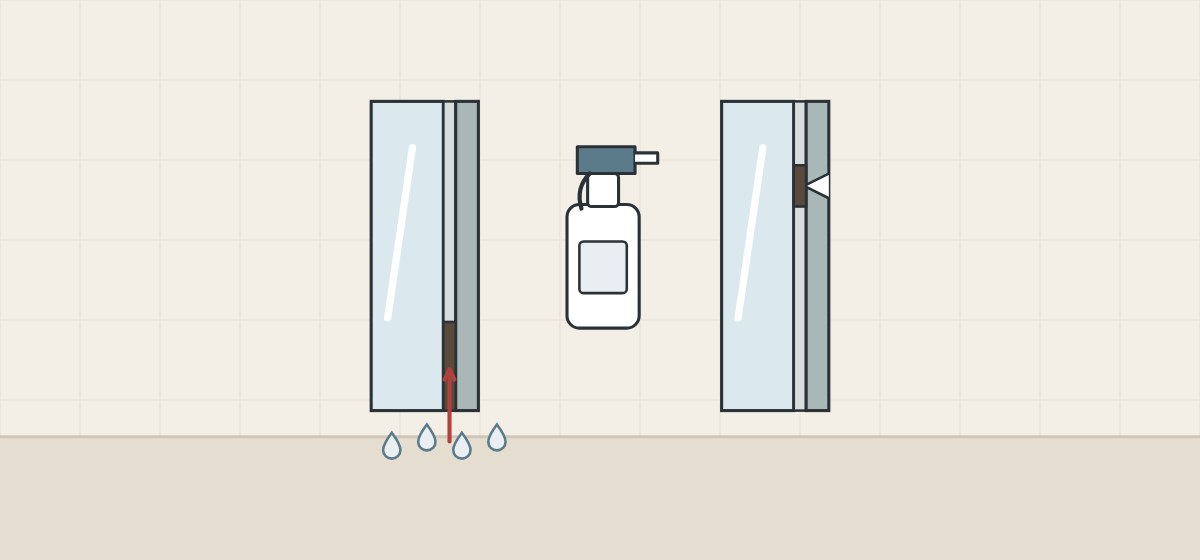
The sources name liquid at the edges, chemicals, humidity and damage to the back.
| Source | What it names |
|---|---|
| NGA installation paper | Chemicals or excessive moisture. |
| NGA cleaning paper | Wet edges; solvents attacking edges and backing. |
| Guardian UltraMirror page | Household cleaners, adhesives, humidity and other environmental conditions. |
| AGC guide and Guardian guide | Scratches on the back of the mirror. |
| Guardian processing guide | Fixing screws touching the mirror. |
For a mirror in a frame, Saint-Gobain’s Miralite Pure brochure says to set the mirror on blocks at least 3 mm thick, clear of condensation that might collect in the frame.
Which mirror products are described as corrosion resistant?

Six named products from four makers carry corrosion or damp-room statements. Each belongs to that product only.
| Named product | Maker’s statement | Condition or limit |
|---|---|---|
| Pilkington Mirropane Chrome | Chromium-based coated mirror, resistant to corrosion and humidity. | Applications include bathrooms and shower cubicles. |
| Pilkington Optimirror | Higher corrosion resistance than conventional copper mirrors. | The maker’s comparison; made to EN 1036. |
| Guardian UltraMirror | Said to withstand household cleaners, adhesives and humidity thanks to its copper-free process. | Maker’s own comparison with standard mirrors in accelerated tests. |
| AGC Mirox MNGE and 4Green | Usable in damp environments such as kitchens and bathrooms. | Never immersed in water; SAFE+ backing film recommended in damp environments. |
| Saint-Gobain Miralite Pure | Copper-free; paint protects against corrosion, abrasion and scratches. | Described as ideal for the home, including bathrooms. |
A branded example is not a statement about any other mirror, a finished cabinet or WNS Global stock.
What do mirror standards and corrosion tests cover?

Mirror standards set product requirements; salt spray standards define test methods.
ASTM C1503-24
Silvered mirrors for indoor use; ASTM’s page shows this edition as active. Its published scope says they are not intended for places where high humidity or airborne corrosion promoters are consistently present, such as swimming pool areas.
BS EN 1036-1:2007
BSI lists this standard for mirrors from silver-coated float glass for internal use.
ISO 9227:2022
Specifies neutral, acetic acid and copper-accelerated (CASS) salt spray tests. Its abstract says they are not meant for ranking materials or for predicting long-term corrosion resistance.
A maker’s test record
Saint-Gobain’s Miralite Pure brochure reports edge corrosion in millimetres after water condensation to EN 1036 Appendix A for 480 hours and CASS to ISO 9227 for 120 hours.
- Test name and standard
- Test duration
- What was measured
- Who tested which product
How do makers and NGA say to protect mirror edges?
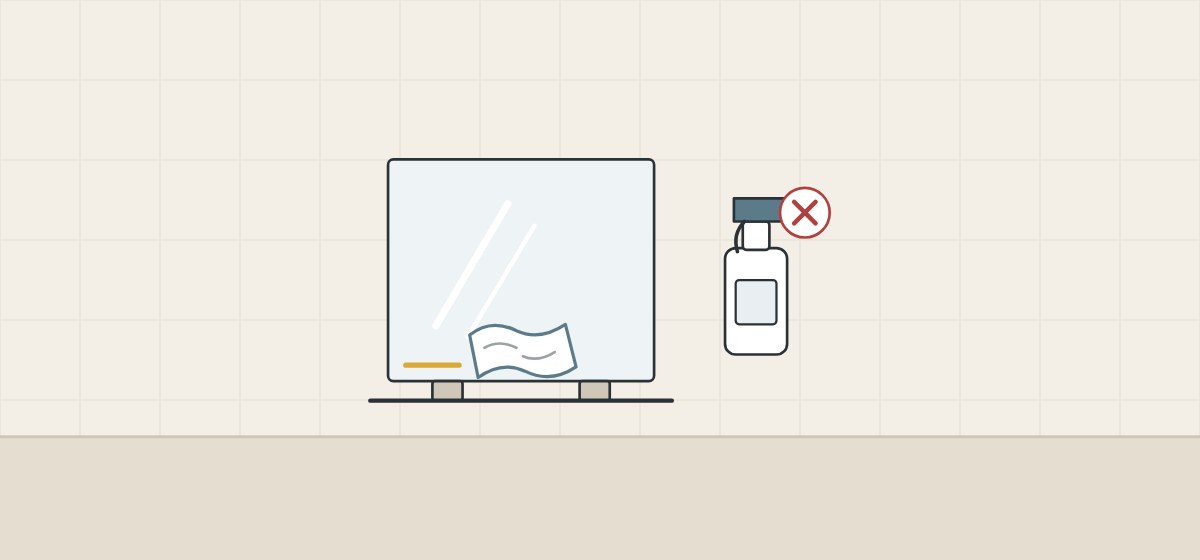
NGA, AGC and Guardian each say to dry the edges. Four points:
Dry the edges
NGA says wet edges should be dried off immediately. AGC says to dry edges quickly and thoroughly; Guardian says to dry the mirror, especially at the edges.
Use mild cleaners
NGA prefers clean, warm water on a soft cloth. It rules out abrasive cleaners, acid or alkali cleaners for cleanup after installation, and commercial mirror cleaners containing ammonia or vinegar. AGC bars ammonia-based and abrasive products, and detergents below pH 2 or above pH 12, on Mirox MNGE and 4Green.
Edge coating and sealing
Guardian says stock-sheet mirrors have coatings covering all edges, which it calls factory edges. For a frameless mirror at high risk of water splashing it recommends a named edge sealant, applied before installation.
Air behind and below
AGC recommends non-metal spacers at the bottom edge and the back so air can circulate, especially in very moist rooms such as bathrooms. Saint-Gobain asks for ventilation space behind Miralite Pure: 5 mm for mirrors under 1 m tall, 10 mm for larger ones.
These instructions belong to the named products. For any other mirror, ask for its maker’s own document.
What does a mirror demister cover?
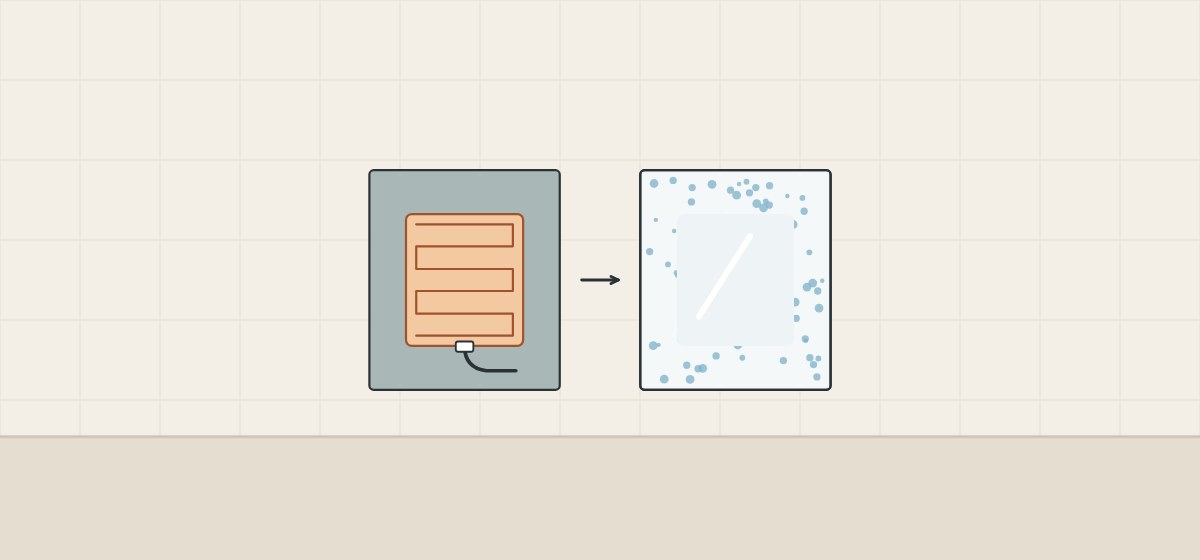
As Heat Mat and WarmlyYours describe it, a demister or defogger is a self-adhesive element fixed to the back of the mirror that keeps part of the face clear. Edge protection is a separate requirement.
| Source | What it says |
|---|---|
| Heat Mat factsheet | The covered area stays condensation free, plus a margin; normally choose the size closest to, but smaller than, the mirror. |
| Heat Mat factsheet | Wire through the lighting circuit or a separate switch; not on a dimmer. |
| WarmlyYours manual | A clear, steam-free section of mirror; defogging begins within 5 minutes; never cut or resize the defogger. |
| WarmlyYours manual | Wiring must follow the NEC and should be done by a licensed professional. |
| Robern Vitality instructions | Defogger on its own switch, separate from the lights; wiring by a qualified licensed electrician. |
| US EPA guide | To reduce humidity: run the bathroom fan or open the window when showering. |
How should a buyer specify a bathroom mirror for moisture?

Treat corrosion and fogging as two requirements. These steps are procurement guidance, not a maker’s instruction.
- Describe the room. Splash zones, ventilation, any pool or steam use.
- Name the reflective system. Maker and product, not just “mirror”.
- Ask for the durability record. Test name, duration and result for that product.
- State the edge condition. Factory or cut edges; framed or frameless; any sealing.
- Get the care instructions. The mirror maker’s own document.
- Specify any demister separately. Covered area, clear zone and switching.
- Review the electrics. Wiring goes to a qualified electrician; confirm with the local authority.
Two kinds of evidence
A durability record covers the reflective layer under its stated test conditions. A demister specification covers the part of the viewing area the demister keeps clear.
What should you send and ask before a quotation?

Put both subjects in the inquiry: the mirror material, then fogging.
| Question | Why it matters |
|---|---|
| Which mirror product is offered? | Corrosion statements belong to named products. |
| Which test record supports it? | A test name needs its duration and result. |
| Are the edges factory, cut or sealed? | Guardian addresses factory edges and edge sealing. |
| Which cleaners does the maker allow? | NGA and AGC each rule out named cleaner types. |
| What area does the demister cover? | Heat Mat says to normally choose a demister smaller than the mirror. |
| How is the demister switched? | With the lights or separately, by maker. |
Include with your request
- Room type and splash zones
- Mirror size, edge finish and framing
- Mounting method
- Zone that must stay clear of fog
- Photos of any existing problem
WNS Global confirms any offered mirror, demister and commercial terms separately in writing. This guide does not state that WNS Global products use any mirror named above, have passed any test named above or include a demister.