Mirror processing, step by step
What does “tempered mirror” actually mean?
Saint-Gobain describes tempered and toughened glass as the same product: glass heated to a very high temperature and then cooled rapidly, which makes it significantly stronger than ordinary glass. Pilkington’s UK pages say “toughened”; the US rule says “tempered”.
The US rule 16 CFR 1201 draws the line that matters for fabrication. Annealed glass is cooled slowly under control, so it can still be cut or otherwise worked. Tempered glass cannot be cut, drilled, ground or polished after treatment without fracturing.
The same rule defines a mirror simply as glazing that forms images by reflecting light. That definition says nothing about heat treatment. “Tempered mirror” therefore names two separate properties, and each has to be confirmed on its own.
| Term | What it tells you |
|---|---|
| Annealed glass | Slowly cooled; it can still be cut and fabricated. |
| Tempered (toughened) glass | Heat-treated; it cannot be cut, drilled, ground or polished afterwards without breaking. |
| Mirror | Glazing that reflects an image; the word says nothing about heat treatment. |
| Heat-treatable mirror | A named mirror product whose maker states that it can be toughened. |
| Safety-backed mirror | A mirror with a backing that holds fragments if it breaks; the backing does not temper the glass. |
In what order is a processed mirror made?
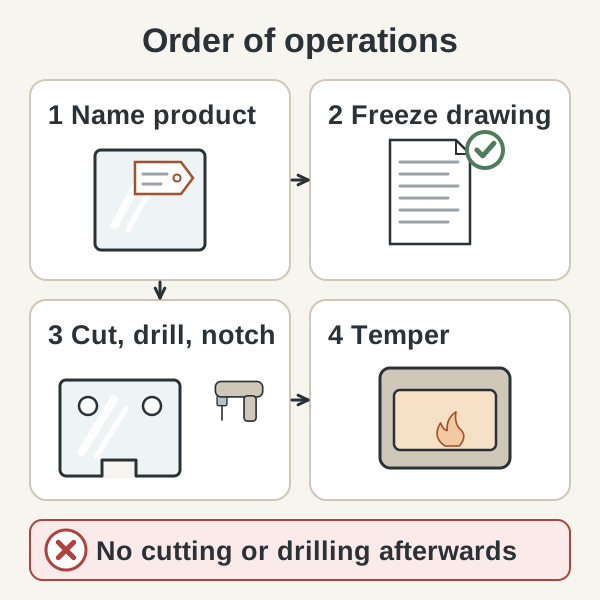
Heat treatment is the last shaping step. Saint-Gobain states that cutting, shaping and drilling must be done before tempering. The National Glass Association’s fabrication bulletin advises against edgework, drilling, notching, grooving, sandblasting or etching after heat treatment, because these can weaken or break the glass. A practical sequence for a buyer to confirm is:
- Identify the exact mirror product and confirm that its maker permits heat treatment.
- Freeze the drawing: size, thickness, edge finish, holes, notches and corner cutouts.
- Check each cutout against the tempering fabricator’s own rules.
- Cut, edge, drill and notch the mirror.
- Heat-treat the finished blank.
- Inspect the piece, including the reflected image, before packing.
Whether the reflective coating goes on before or after heat treatment depends on the product. Pilkington says its chromium-based Mirropane Chrome mirror can be toughened, while Walker Glass states that for its tempered mirror the glass must be tempered before it is silvered. We found no manufacturer statement that covers every silvered mirror, so ask the maker of the offered product rather than applying one rule to all mirrors.
Which layers make up a mirror?
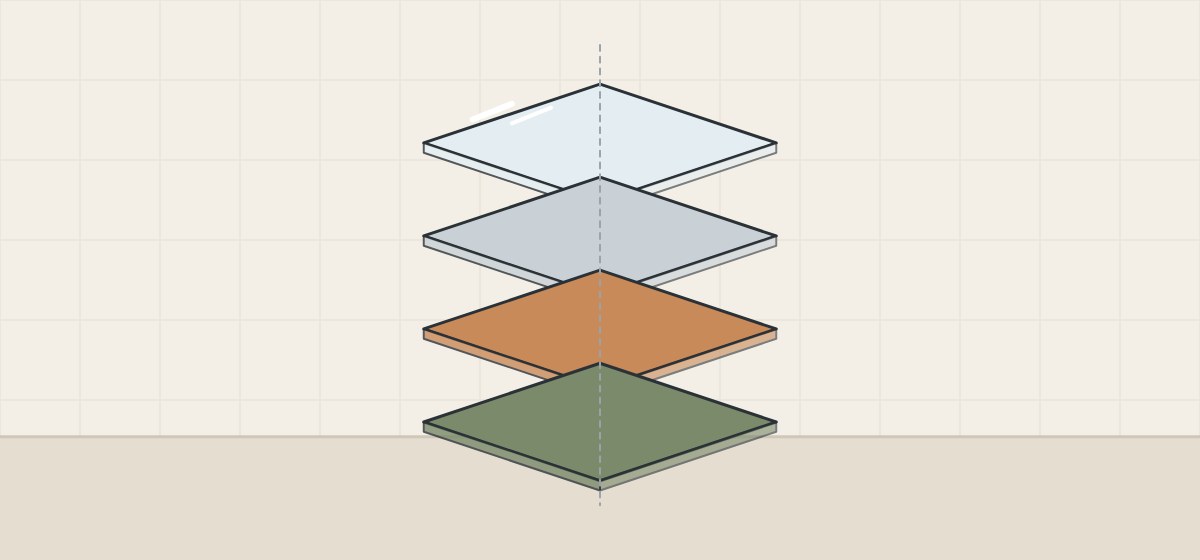
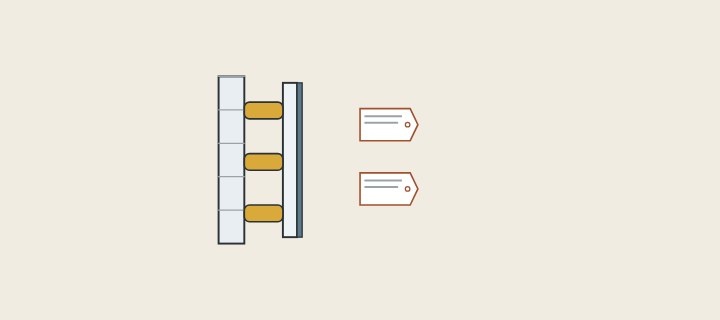
Guardian describes its mirror process as follows. Clear glass is washed, tin is applied to the future back, a silver layer turns the glass into a mirror, and two coats of paint seal the silver. Other makers use different stacks, so treat the table as a checklist, not a universal build.
| Layer | Role and question |
|---|---|
| Glass substrate | Carries the coating. Is it annealed, or will the finished mirror be heat-treated? |
| Reflective layer | Silver in Guardian’s process; Pilkington’s Mirropane Chrome is chromium-based instead. Which does the offer use? |
| Protective layer | Guardian and Pilkington describe copper (Pilkington adds lead) as the traditional layer over the silver, and offer copper-free alternatives in their own lines. |
| Paint backing | Seals the silver; Guardian applies two coats. What will it touch in the installation? |
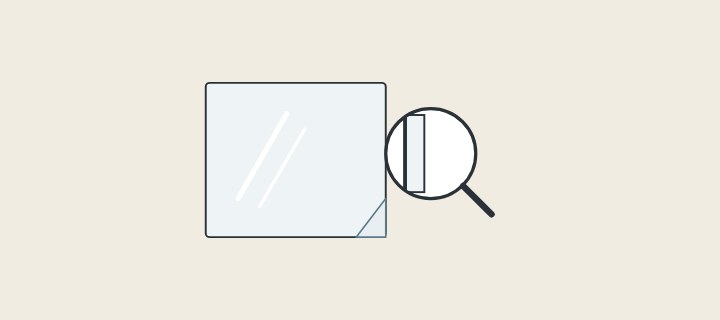
| Edges | Guardian says factory edges are coated; a cut edge lacks that factory coating. Which edges will be cut? |
A heat-treatment route has to keep every one of these layers intact. That is a property the maker claims for a specific product, not a property of glass in general.
Tempered, laminated or safety-backed: which route gives what?
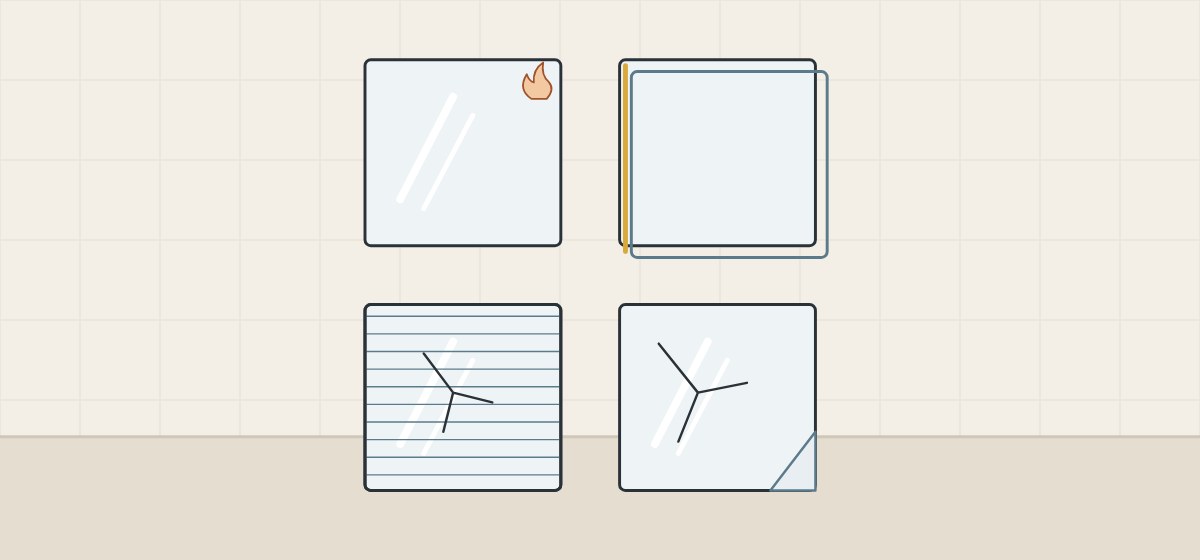
Saint-Gobain lists three routes to safety for standard mirrors: a resin-backed anti-shatter mirror, a laminated mirror, or an applied safety film. A heat-treatable mirror is a fourth route, where the maker states that the named product allows it.
| Route | How it works | What to confirm |
|---|---|---|
| Heat-treatable mirror | The coated mirror glass is itself toughened, because its maker states that the product allows it. | The maker’s statement for the named product; all cutouts made before treatment. |
| Laminated mirror | Mirror glass is bonded to a second pane with PVB; fragments stay on the film. See Miralite Stadip. | The build and its classification; Saint-Gobain lists EN 12600 classes for named builds. |
| Factory safety backing | A backing added during manufacture holds fragments. Saint-Gobain claims 98% splinter retention for EasySafe. | That the named backed mirror suits the job; EasySafe itself cannot be tempered. |
| Applied safety film | A film on the painted side holds fragments. AGC classifies its Mirox SAFE and SAFE+ mirrors to EN 12600 type B. | The standard and classification stated for that exact product. |
A backing or film holds broken pieces together; it is not a heat treatment of the glass. A safety classification applies only to the tested product that carries it.
Holes, notches and cutouts: whose rules apply?
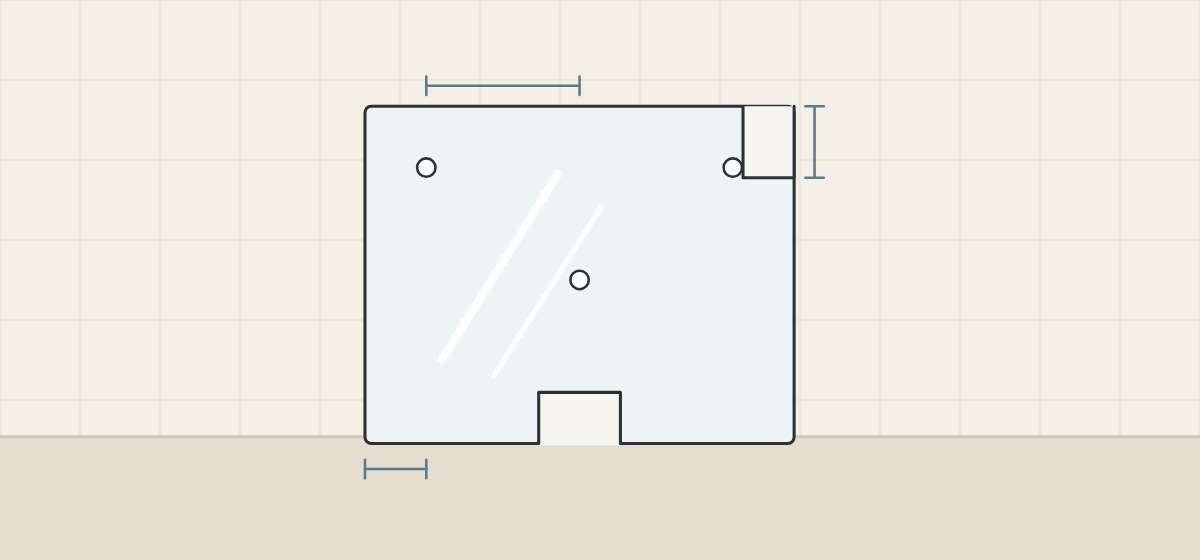
Fabricators publish their own cutout limits. The two below are architectural glass fabricators, and their figures differ, which is why the drawing has to be checked with the plant that will do the tempering.
Hole diameter
Viracon requires a hole at least 1/16 in. larger than the glass thickness, and never under 1/4 in. (6 mm). Tecnoglass also sets a 1/4 in. (6 mm) minimum.
Distance from an edge
Viracon keeps the hole rim at least 6 mm (1/4 in.) or twice the glass thickness from any edge, whichever is greater. Tecnoglass uses twice the thickness.
Distance from a corner
The two diverge. Viracon places the hole edge at least 6.5 times the thickness from the tip of a corner of 90° or more; Tecnoglass uses four times the thickness.
Spacing and number of holes
Viracon spaces holes at least 10 mm (3/8 in.) or twice the thickness apart. It also sets 8 in. as the minimum width of glass with holes that it can temper. Tecnoglass allows at most ten holes per piece.
Notches
Tecnoglass specifies an 8 mm (5/16 in.) inside radius and limits notch depth and width to one third of the narrowest dimension of the piece.
Processing the mirror itself
AGC says its annealed Mirox mirrors can be edge-ground, drilled and serrated. It asks for a neutral-pH, non-abrasive coolant so that the backing coatings are not attacked.
- Hole diameters and center positions
- Distances from edges and corners
- Notch sizes and inside radii
- Glass thickness and edge finish
- The fabricator whose rules were applied
What affects the finish and durability of a tempered mirror?
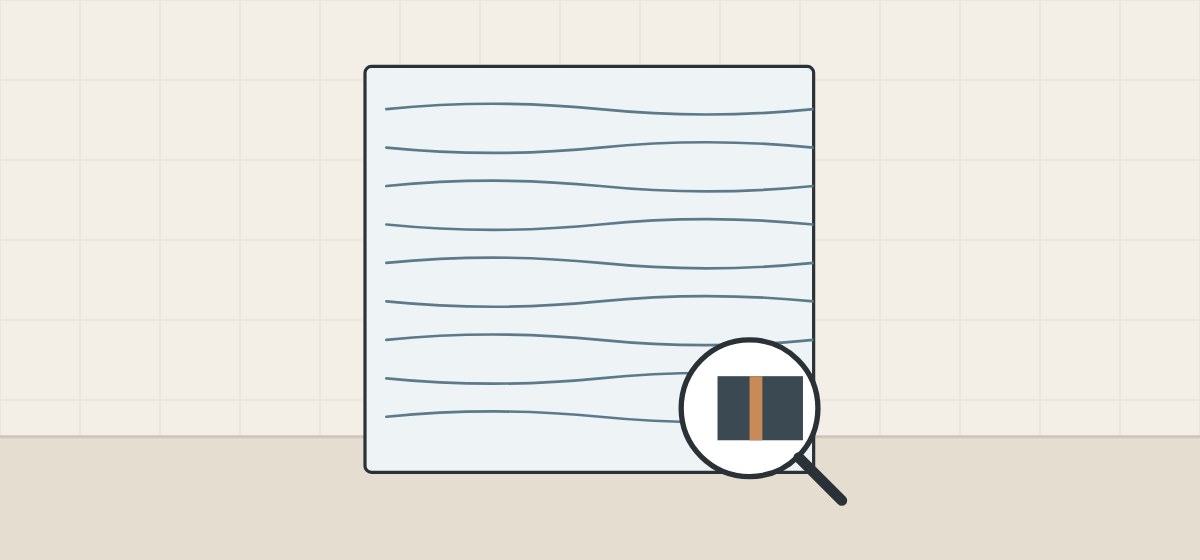
A tempered mirror is judged by what it reflects and by how its edges hold up in a wet room. Four factors deserve a separate line in the inspection plan.
Roller-wave distortion
During tempering the glass softens as it travels on rollers and sags slightly between them. IIBEC explains how the resulting curvature distorts perceived images. One US mirror supplier states that its mirror sources stopped producing tempered mirrors because tempering degraded the reflected image. That is one supplier’s account of its own supply chain, not an industry rule.
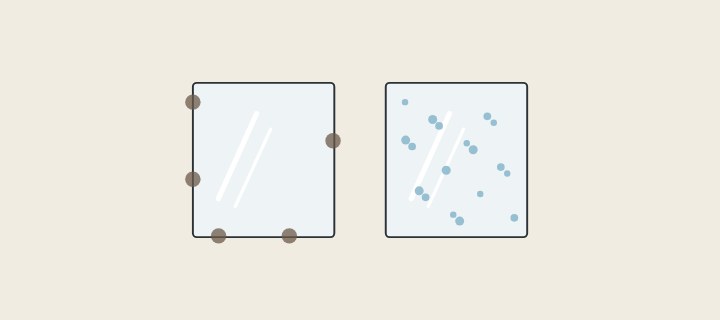
Spontaneous breakage
Pilkington North America lists nickel sulfide inclusions and edge damage as causes of spontaneous breakage in tempered glass. It adds that heat soaking uncovers most nickel sulfide inclusions but is never 100% effective.
Edges in humid rooms
Guardian notes that factory edges are coated; for high splash risk it recommends an edge sealer. The National Glass Association says fabrication should protect the backing and edges to reduce the chance of black edge developing.
The reference standard for annealed mirrors
ASTM C1503 covers silvered, annealed flat-glass mirrors up to 6 mm thick for indoor use. Its scope excludes environments that are consistently humid or corrosive, and it does not address safety glazing.
Even annealed mirrors can show slight distortion from the glass used or from the way they are installed, according to the National Glass Association’s bulletin description. Agree how the reflected image will be judged before production, not after delivery.
Does a bathroom mirror need safety glazing?
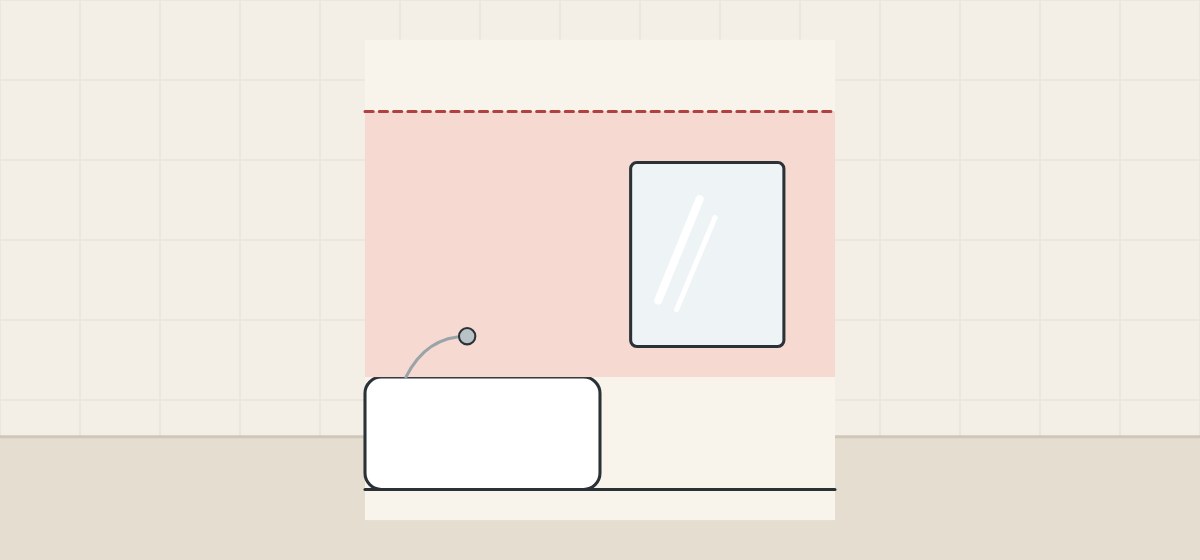
In the United States the answer depends on where the mirror is installed and which code applies. The points below come from the federal rule and a county’s copy of the 2023 International Residential Code. Commercial (IBC) and non-US requirements were not reviewed here.
| Rule or code | What it says about mirrors |
|---|---|
| 16 CFR 1201 (CPSC) covers glazing in doors, bathtub and shower doors and enclosures, and sliding patio doors. | Mirrors are defined in the rule but not listed as a covered product; testing follows ANSI Z97.1-2015. |
| ANSI Z97.1 covers glazing made to reduce cutting and piercing injuries if broken by human contact. | ANSI’s summary of the standard lists mirror glass among the glazing types in scope. |
| The 2023 IRC treats glazing near tubs and showers as a hazardous location when its bottom edge is under 60 in. (1524 mm) above the standing surface. | The exception is glazing more than 60 in. horizontally from the water’s edge. |
| In hazardous locations, the 2023 IRC requires glass mirrors to pass impact testing. | It exempts mirrors mounted on a surface that gives continuous backing support. |
| The IRC impact test is CPSC 16 CFR 1201 Category II unless the code’s table says otherwise. | Glazing not in doors or tub and shower enclosures may instead meet ANSI Z97.1 Class A. |
How should a buyer specify a processed mirror?

These steps turn the facts above into a purchase specification. They are procurement guidance, not a processing instruction.
- Name the product. Ask for the mirror product name and coating, not just “mirror” and a thickness.
- State the safety route. Say whether the design calls for a tempered, laminated or safety-backed mirror, or none.
- Freeze the drawing. Complete size, edge finish, holes, notches and corner cutouts before any heat treatment.
- Check cutouts with the processor. Ask whose fabrication rules were applied, because published limits differ.
- Plan the edges. Record which edges are cut and how they will be protected in a humid room.
- Agree the inspection. Define how the reflected image, edges and backing will be checked before packing.
- Control revisions. Tie each production lot to one drawing version.
When a mounting detail changes
If a hole has to move after the mirror has been tempered, it cannot simply be re-drilled. Treat the change as a new blank and a new drawing version, and confirm which version the processor is using so the order is not built to two different hole patterns.
What should you send and ask before a quotation?
A complete request keeps four records apart: the maker’s statement for the material, the machining drawing, the processor’s confirmation of the whole route and the project’s safety review. A heat-treatable material is not, by itself, an approved finished mirror. Each question below maps to a point earlier in this guide.
| Question | Why it matters |
|---|---|
| Which mirror product and coating are offered? | Heat treatment is permitted product by product. |
| Does the maker permit tempering or lamination? | Some named mirrors, such as EasySafe, cannot be tempered. |
| Which safety route and classification apply? | A classification belongs to the tested product, not to mirrors in general. |
| Whose rules were used for holes and notches? | Corner-distance rules differ between fabricators. |
| How are cut edges finished and protected? | Cut edges lack the factory edge coating. |
| How will the reflected image be inspected? | Tempering can add roller-wave distortion. |
| Which drawing version is in production? | A tempered piece cannot be corrected by re-drilling. |
Include with your request
- Mirror size, thickness and quantity
- Drawing with holes, notches and edge finish
- Installation location, for example beside a bathtub
- Any safety standard or code the project must meet
- Mounting method and wall substrate
WNS Global confirms any offered mirror specification, processing route and commercial terms separately in writing. This guide does not state that WNS Global supplies any brand named above.