From cut edge to quotation
What is the difference between particleboard and MDF?
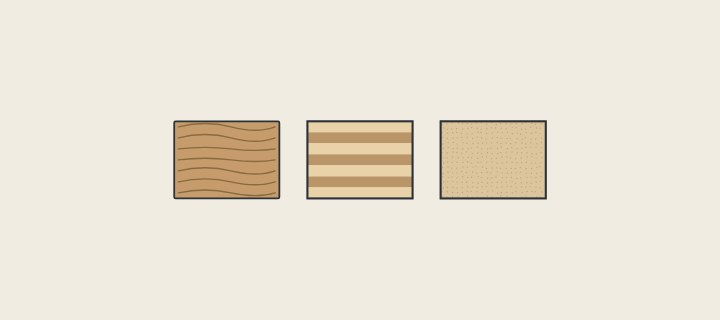
Both are panels bonded under heat and pressure; the difference is the form of the material. CPA defines particleboard as cellulosic particles of various sizes bonded with a synthetic resin or binder.
CPA defines MDF as typically consisting of cellulosic fibers combined with a synthetic resin or other suitable bonding system. The Architectural Woodwork Institute (AWI) glossary calls particleboard primarily discrete particles, “as distinguished from fibers”.
The glossary defines the core as the panel material on which an exposed surface material is applied.
| Term | What the source says |
|---|---|
| Particleboard | CPA: cellulosic particles of various sizes, bonded with resin or binder. |
| MDF | CPA: typically cellulosic fibers, bonded with resin or another system. |
| Core | AWI: the panel material that carries the exposed surface material. |
| Thin MDF | EPA: MDF with a thickness of 8 mm (0.315 in) or less. |
| Thermally fused laminate | CPA: resin-impregnated décor paper fused directly to a substrate. |
How do you check the core at a cut edge?
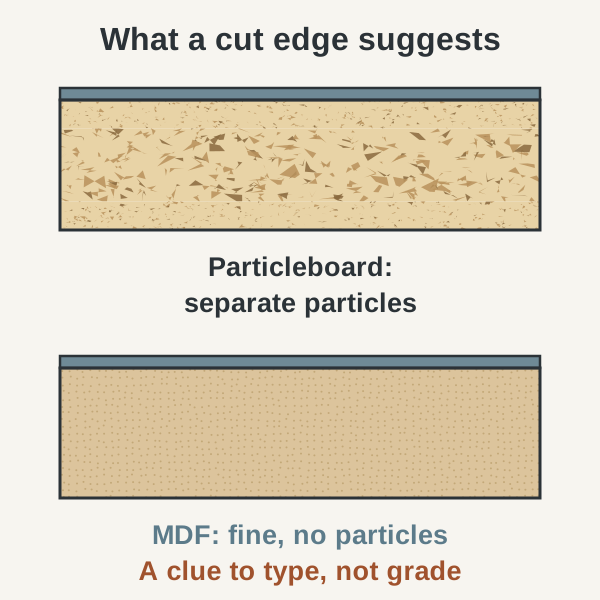
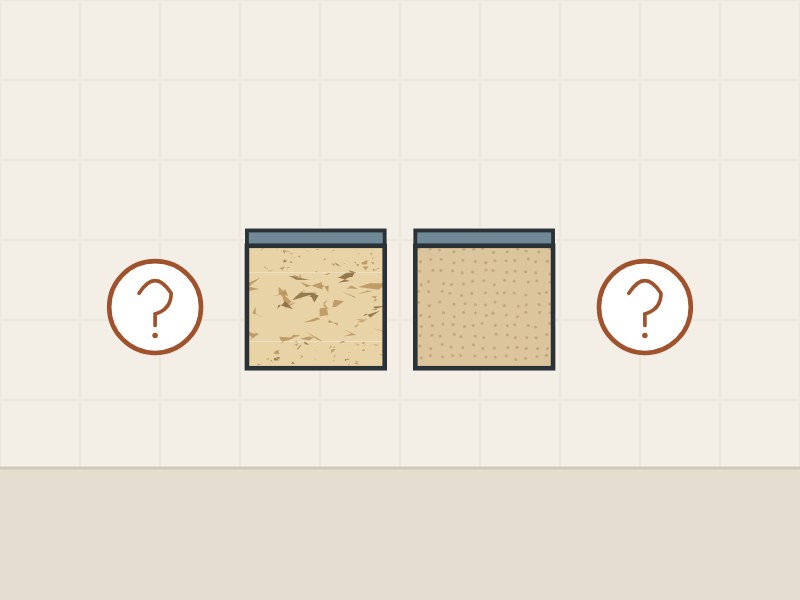
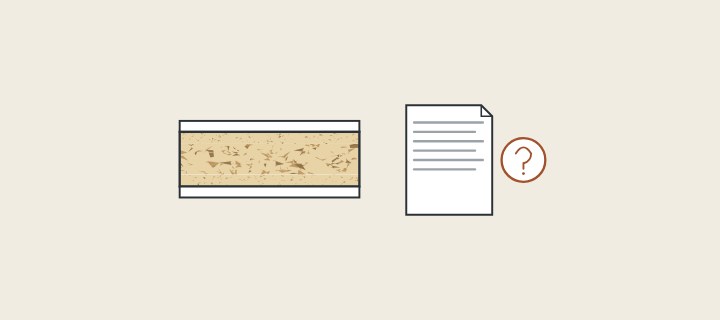
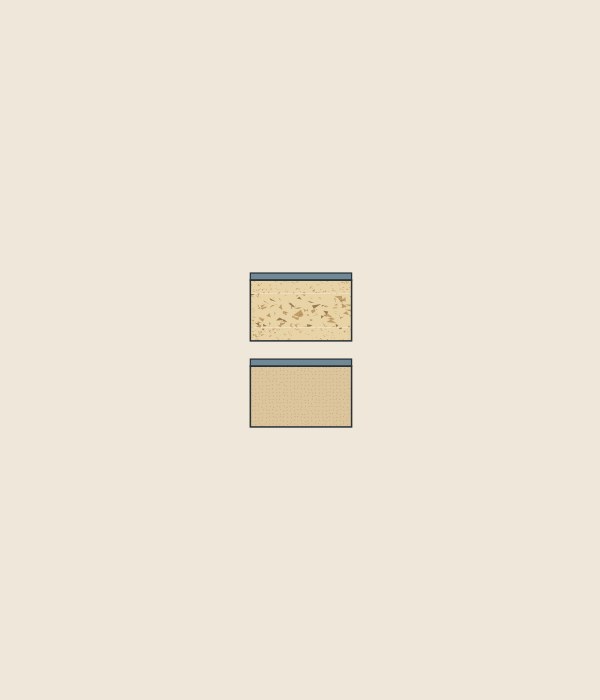
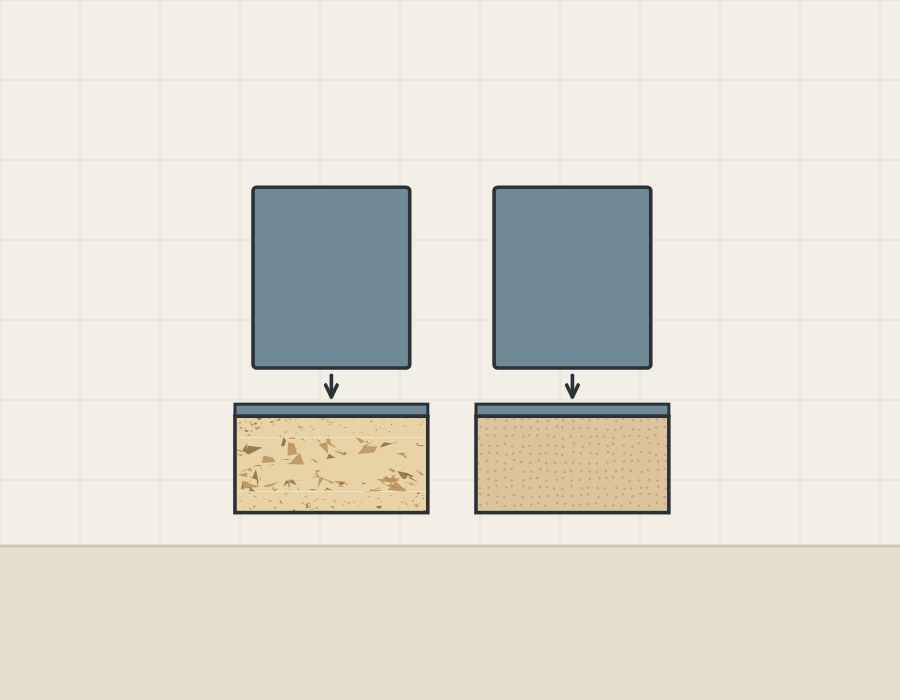
Look at a labeled cut edge for the construction the sources describe. The Wood Handbook’s composites chapter says particleboard is typically made in layers, with faces usually of fine particles and a core of coarser material; CPA calls MDF’s density profile homogeneous. The six steps are this guide’s, not a test method.
- Ask for an offcut from the panel stock proposed for the order.
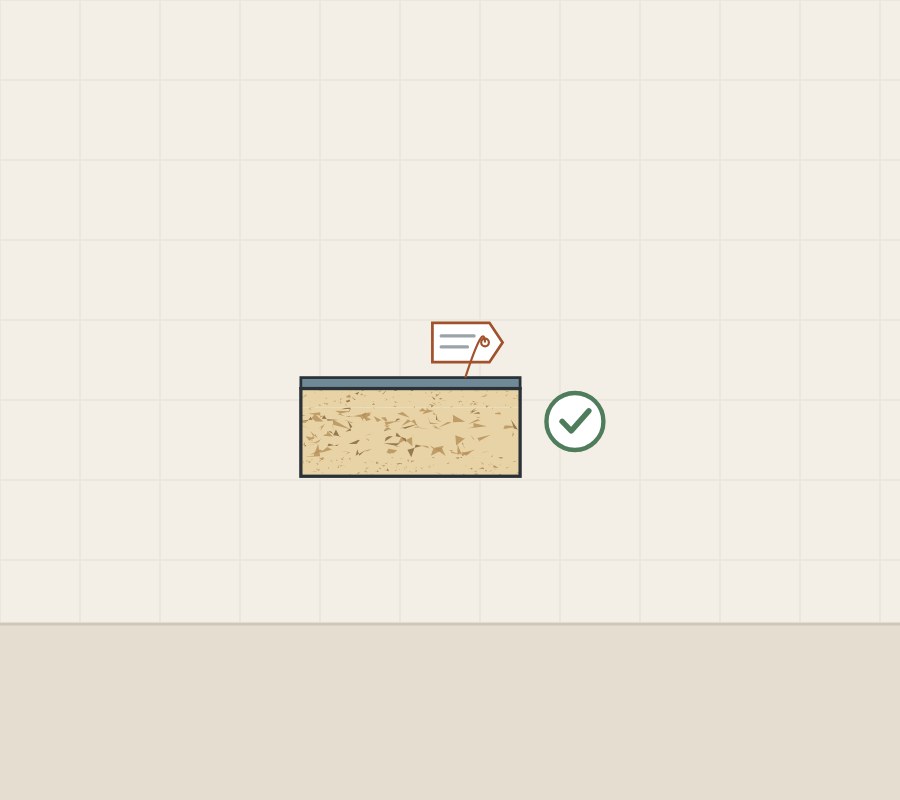
- Ask for a label naming the panel maker and product.
- Look at a clean cut edge, not the finished face.
- Note whether separate particles show.
- Note whether the edge looks fine, with no separate particles.
- Record the result as an indication, then confirm it against the maker’s data.
An edge is a first clue only. For particleboard, CPA says particle geometry, resin levels and board density may be modified for specific end uses, and that additives can add moisture resistance; for MDF it says additives may be introduced during manufacturing. So two similar-looking edges can belong to different products, in this guide’s reading.
Does the face finish tell you which core is underneath?
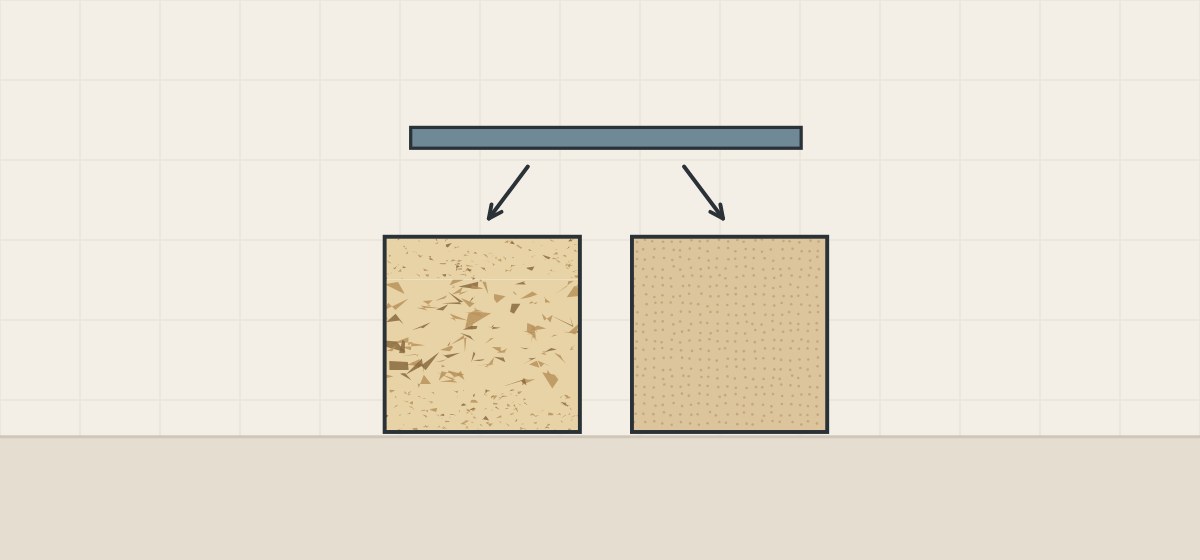
The face finish does not identify the core. CPA calls particleboard or MDF the preferred substrates for high-pressure laminate and ideal substrates for thermally fused laminate.
| Finish or product | What the source says about the core |
|---|---|
| High-pressure laminate | CPA: particleboard or MDF are the preferred substrates. |
| Thermally fused laminate | CPA: particleboard and MDF are ideal substrates. |
| Wilsonart TFL panels | Wilsonart: particleboard and MDF core materials are standard. |
| 3D laminate | CPA: formed over a substrate, generally MDF or particleboard. |
| Lacquer or paint | Wood Handbook: particleboards may be finished with lacquer or paint. |
A matching face therefore settles nothing; ask for the core as its own line.
Which evidence answers which question?

Each kind of evidence answers one question and leaves others open. The table is this guide’s; the label row follows the EPA’s stakeholder questions.
| Evidence | Shows | Does not show |
|---|---|---|
| Photo of the finished face | Color, pattern and sheen | What is underneath |
| Labeled cut-edge sample | Whether that sample looks like separate particles or a fine, even board | The grade, or what ships |
| Panel maker’s product data | Product name, standard and declared properties | Which cabinet part uses it |
| TSCA Title VI panel label | Producer, lot, certifier number | Which cabinet part uses it |
| Component schedule with sample ID | Which panel goes into which part | Whether production matches |
When two suppliers both quote “laminated board,” ask each for the core and panel product before comparing prices.
Which standards and grades apply to each panel?
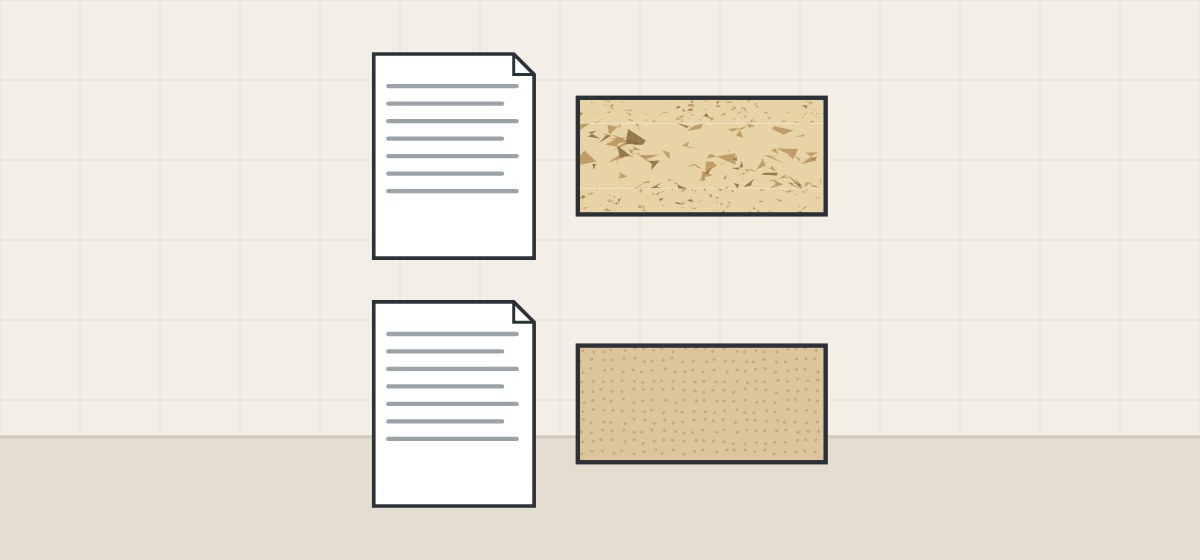
Each panel has its own North American standard, and a grade name comes from the standard or the maker. CPA’s standards page lists the 2022 editions of both. Four references follow, then this guide’s recording list.
ANSI A208.1-2022, Particleboard
CPA calls A208.1 a voluntary standard that classifies particleboard by physical, mechanical and dimensional characteristics and formaldehyde levels.
ANSI A208.2-2022, MDF for Interior Applications
CPA says A208.2 includes physical properties, dimensional tolerances, mechanical properties and formaldehyde emission limits.
AWI panel requirements
AWI’s panel products page calls for particleboard of Grade M-2 or better under ANSI A208.1 and MDF under ANSI A208.2, latest editions.
Maker designations
Roseburg labels its Medex MDF MR50 and its Arreis Ultra MDF MR30; Wilsonart lists moisture-resistant fabrications as an option for its TFL panels.
What to record
This guide suggests recording four things from the panel maker’s data:
- Panel maker and product name
- Standard and edition
- Grade designation as the maker writes it
- Any moisture-resistance designation
Is particleboard or MDF the better vanity core?
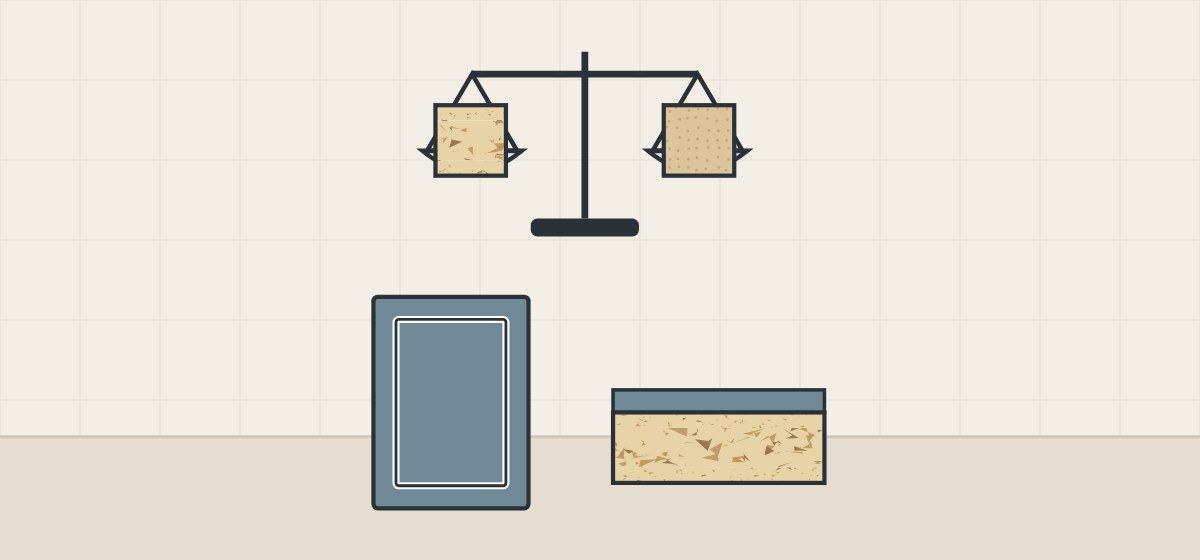
Neither name settles it: CPA lists kitchen cabinets among the applications of both panels. Four points from the sources:
Machined and shaped faces
CPA says MDF’s homogeneous density profile allows intricate and precise machining. Its 3D laminate page says routed MDF under such a laminate can form shaker cabinet doors.
Flat overlaid panels
The Wood Handbook says particleboard is widely used in furniture, typically overlaid for decoration, and that MDF is frequently used in its place in many furniture applications.
Moisture
Roseburg describes Medex as an MDF panel with MR50 moisture resistance and lists cabinetry for high-moisture areas among its uses. Wilsonart says its TFL panels are for interior use only and should not be subjected to extremes in humidity.
One maker’s figures
Uniboard’s sheet for its M-2 particleboard gives a density of 620–670 kg/m³ and screw holding of 900 N (face) and 800 N (the sheet’s “core” row), and includes bathroom use in its list of applications. The sheet does not say whether these are minimum or typical values; they are Uniboard’s figures for that product only.
Ask two questions in order: is this the panel that was specified, and does its documented grade suit this part and room?
What do panel labels and records show?
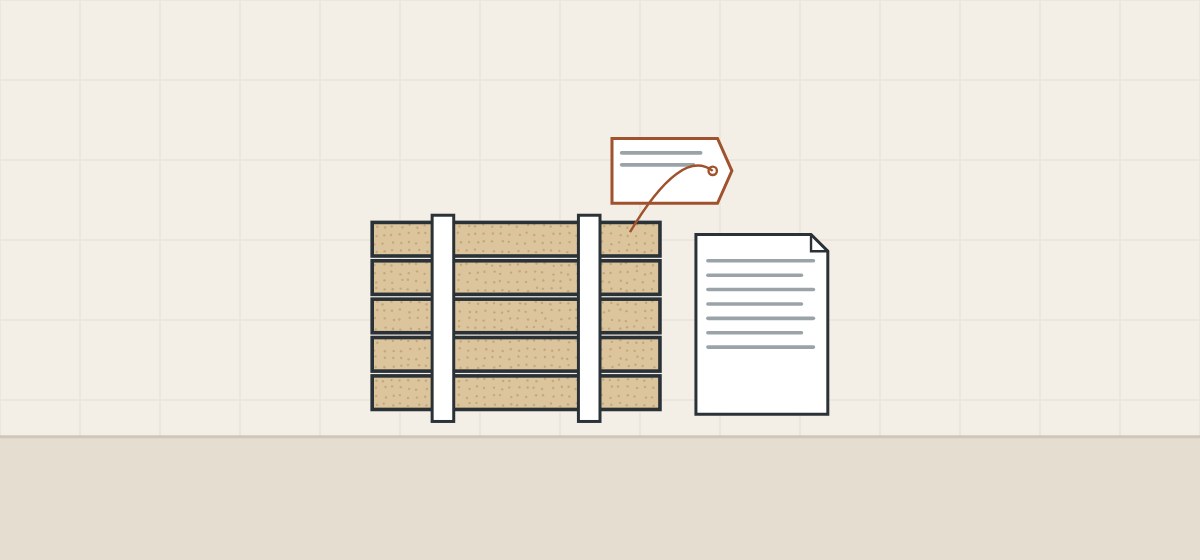
A formaldehyde label names the producer and lot, and fabricators keep supplier records. The rows follow the EPA’s stakeholder questions.
| Source | What it says |
|---|---|
| EPA, panel label | Producer’s name, lot number, third-party certifier number and a TSCA Title VI compliance statement. |
| EPA, label position | On each raw panel or on a bundle; a stamp, tag or sticker. |
| EPA, finished goods | At minimum the fabricator’s name, month and year of production and a compliance statement. |
| EPA, fabricators and downstream entities | Reasonable precautions to keep a chain of custody for records that identify the supplier of the composite wood products. |
How should a buyer record the core in a quote?
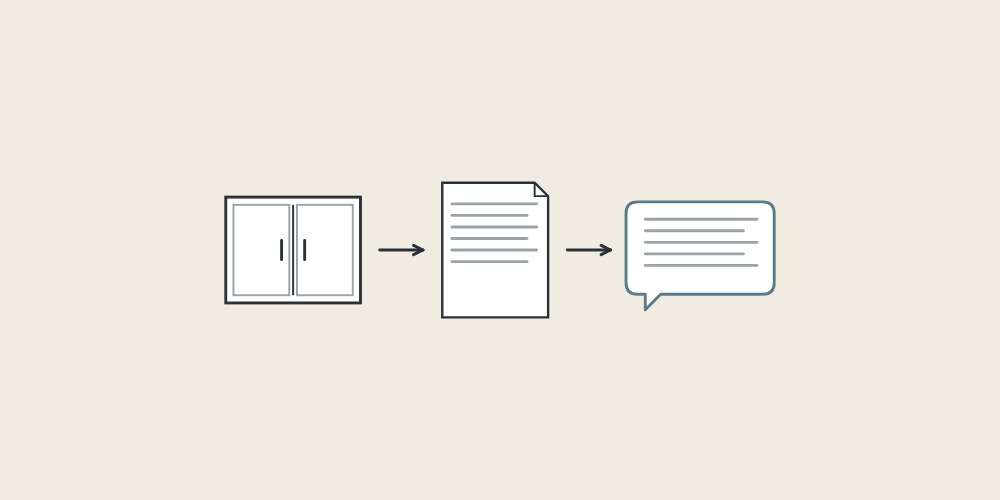
Record the core part by part, separately from the face finish. These seven steps are this guide’s procurement guidance.
- List the cabinet parts. Sides, back, shelves and doors can use different boards.
- Name the core for each part. Particleboard, MDF or another panel.
- Name the panel product. Maker, product name, standard and grade designation.
- State the thickness. Say whether the figure is the core or the faced panel.
- Name the face finish. Laminate, veneer or paint, on a separate line.
- Give each sample an ID. Tie the edge sample to part and product.
- Recheck at reorder. Compare the schedule with later batches.
When the sample and the quote disagree
If the label says particleboard and the quote says MDF, hold the material approval and ask which is correct. It could be a paperwork error, an old sample or a proposed substitution.
What should you send and ask before a quotation?
A complete request asks for the core by name and by part. The questions are this guide’s.
| Question | Why it matters |
|---|---|
| Which core is in each cabinet part? | Parts can use different boards. |
| Who makes the panel, and what is it called? | The edge is only a clue to the type, and does not name the product. |
| Which standard and grade does the maker state? | Grade comes from data, not appearance. |
| Is a moisture-resistance grade stated? | Roseburg uses designations such as MR50. |
| Can a labeled edge sample be sent? | It links the sample to the quoted product. |
| What do the panel labels and records show? | The EPA label names the producer and lot. |
This guide’s list for your request
- Cabinet drawings or a part list
- Face finish wanted for each part
- Room conditions and nearby water sources
- Required standard or grade, if any
- Quantity and destination market
WNS Global confirms any product and terms it offers separately in writing. This guide does not state that WNS Global products have the features, ratings or listings named above.