
From the word to the schedule
What can “solid wood vanity” mean in a quotation?
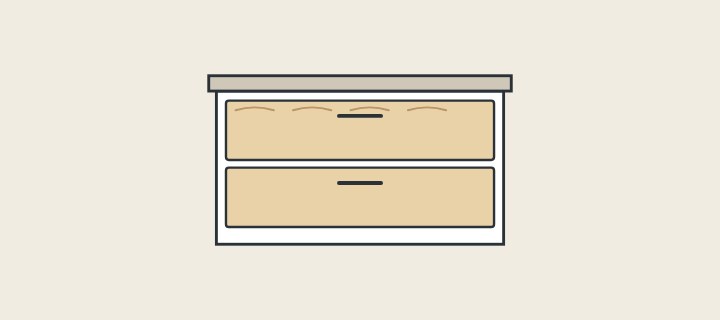
In a quotation, “solid wood vanity” names a material but not the parts made of it; that reading is this guide’s own. The Decorative Hardwoods Association (DHA) says hardwood plywood is typically used for products like furniture and cabinets.
The terms below come from DHA and the Composite Panel Association (CPA); the last row is this guide’s working definition.
| Term | What the named source says |
|---|---|
| Hardwood plywood | DHA: three or more thin veneer layers, grain perpendicular from layer to layer. |
| Veneer | DHA: an extremely thin hardwood sheet, usually thinner than 1/8 inch. |
| MDF | CPA: a composite panel, typically of cellulosic fibers and resin. |
| Solid wood (this guide) | Lumber of the stated species through the full thickness of the part. |
Which vanity parts can a solid-wood claim reach?
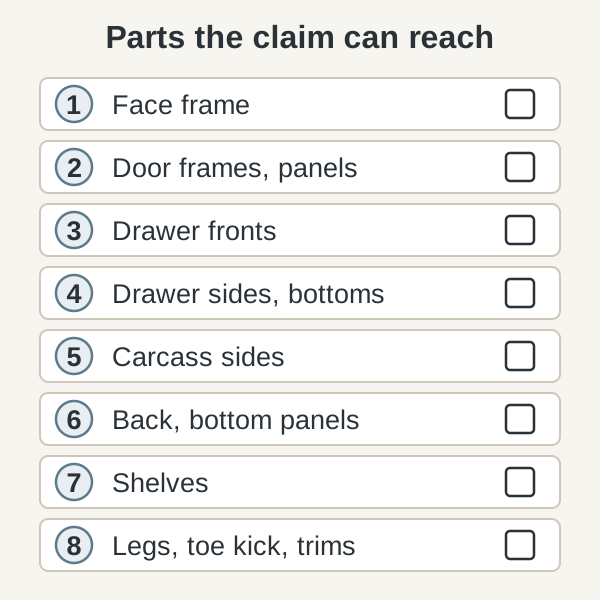
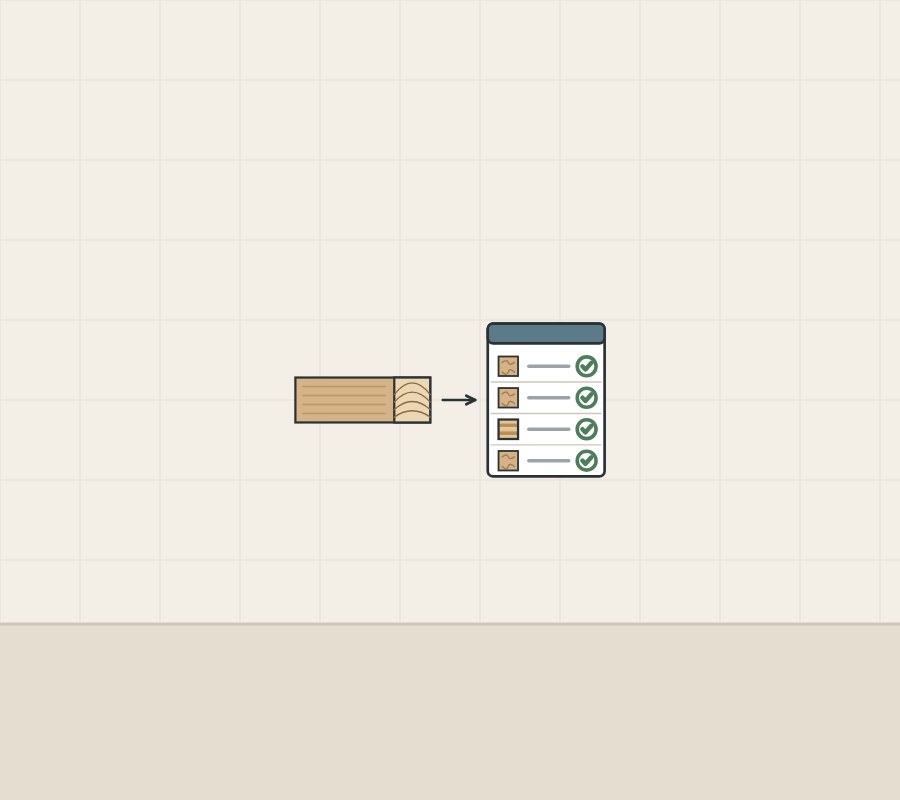
In this guide’s reading, every part of the cabinet unless the order limits the claim. The eight entries below are this guide’s own part list, not a standard’s.
- Face frame
- Door frames and door panels
- Drawer fronts
- Drawer sides and bottoms
- Carcass sides
- Back and bottom panels
- Shelves
- Legs, toe kick and trims
A casework standard also separates surfaces: the aesthetic section of ANSI/AWI 0641-2019 evaluates those that will be exposed or semi-exposed after installation.
Do edge-glued and finger-jointed parts count as solid wood?
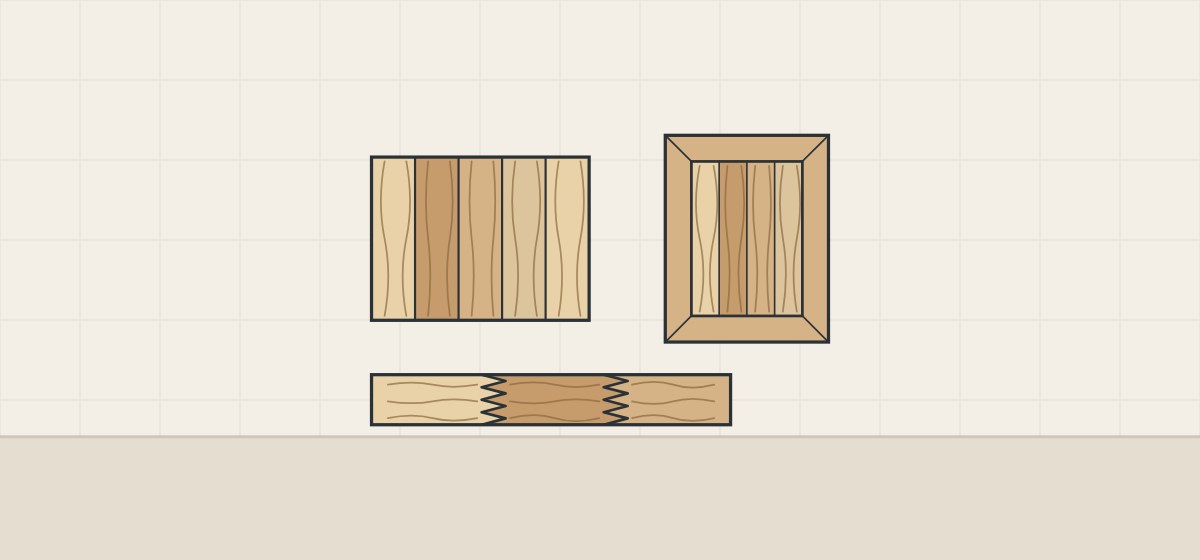
That is for the purchase order to say. The table reports statements from the Wood Handbook, an Architectural Woodwork Institute (AWI) standard and the US Environmental Protection Agency (EPA). No row is a rule on sales wording.
| Construction | What the source says | Source |
|---|---|---|
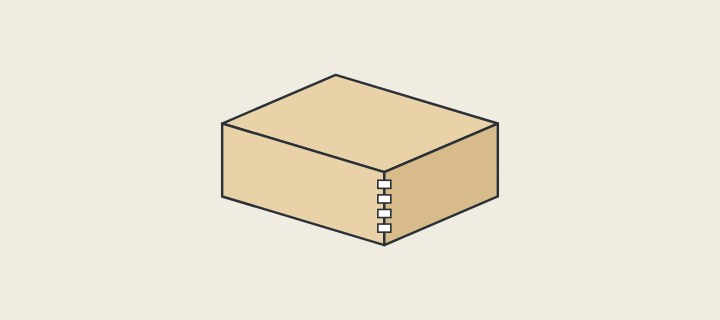
| Edge-grain joint | Can be as strong as the wood in shear parallel to grain, tension across grain and cleavage. | Wood Handbook |
| Flat panel, stile and rail door | Edge glued solid lumber permitted in Custom and Economy grades if at least 12.7 mm thick and 350 mm wide or less; no solid lumber panels in Premium. | ANSI/AWI 0641-2019 |
| Finger joint | Can become visible when adjacent pieces swell differently in large humidity changes. | Wood Handbook |
| Finger-jointed lumber | Listed among products not covered by the TSCA Title VI formaldehyde rule. | EPA |
The Wood Handbook adds that edge-grain joints glued with waterborne adhesive and surfaced before the moisture has evened out can leave sunken bondlines, which become very conspicuous under a high-gloss finish. If glue lines matter on show faces, say so in the order.
Which wood-look faces are not solid wood?
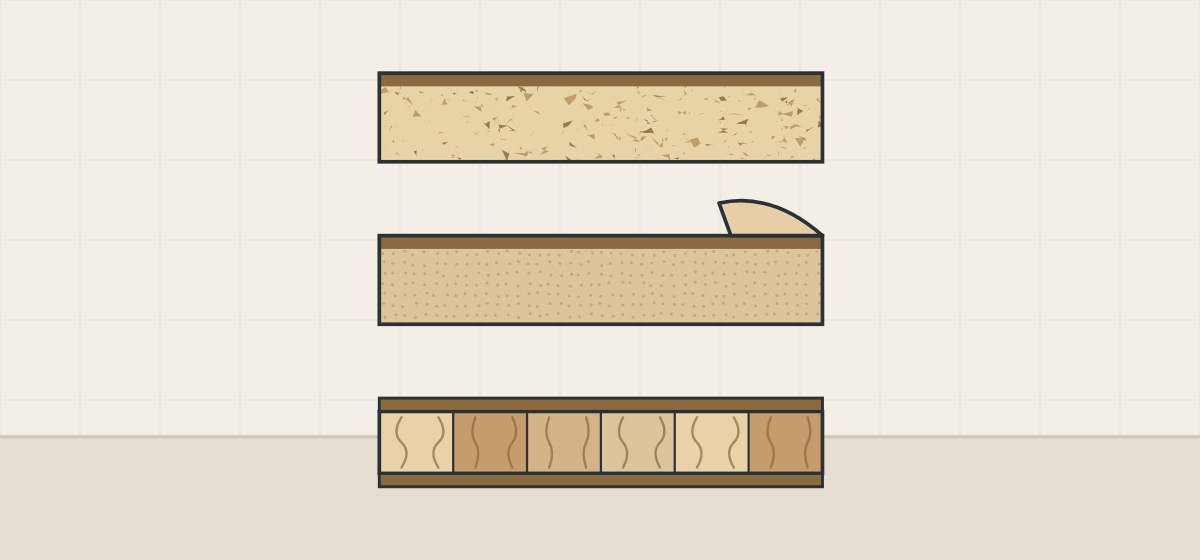
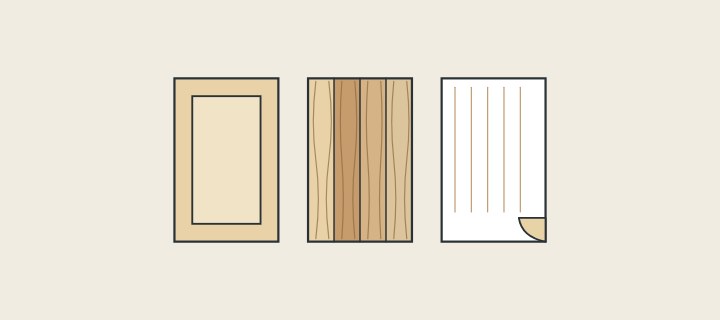
Any face applied to a different core is not solid wood under this guide’s working definition. The table gives the sources’ descriptions of four such builds.
| Build | How the source describes it | Source |
|---|---|---|
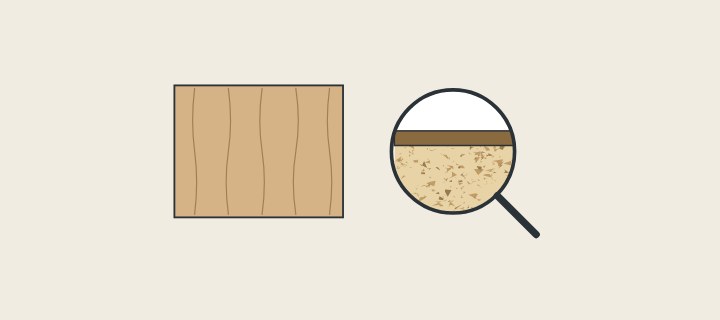
| Wood veneer on a panel | A thin hardwood sheet applied to a more durable, less expensive surface. | DHA |
| Laminated product | A wood or woody grass veneer affixed to a particleboard, MDF or veneer core. | EPA |
| 2D laminate | A film flexible enough to laminate in two dimensions; may be embossed for a realistic woodgrain. | CPA |
| 3D laminate | A foil heated and formed over a three-dimensional substrate. | CPA |
CPA says both laminates are applied over a substrate like MDF or particleboard. The order should therefore name face and core.
How should the species be named in the order?
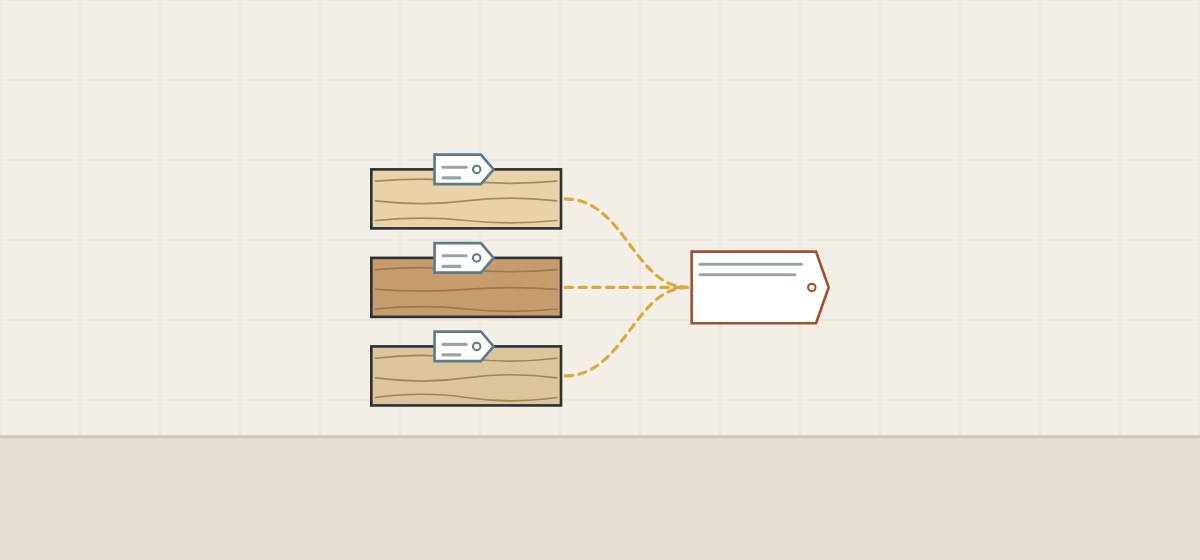
By trade name with the botanical name beside it. The four notes report published statements; the list after them is this guide’s suggestion:
Group names
ASTM D1165-25 lists commercial species group names with common tree and botanical names. ASTM’s page says individual species are frequently mixed in commercial species groups.
Oak
The Wood Handbook names eleven principal species for red oak and eight for white oak.
Walnut
The American Hardwood Export Council gives Juglans nigra as the Latin name of American walnut, also called black walnut.
Import paperwork
The USDA’s APHIS says a Lacey Act declaration includes the scientific name (genus and species) of any plant in the shipment. Confirm with a customs broker whether one applies.
- Trade name of the primary species
- Botanical name beside the trade name
- Parts that must be the primary species
- Any secondary species and its hidden parts
Should the purchase order match the sales description?
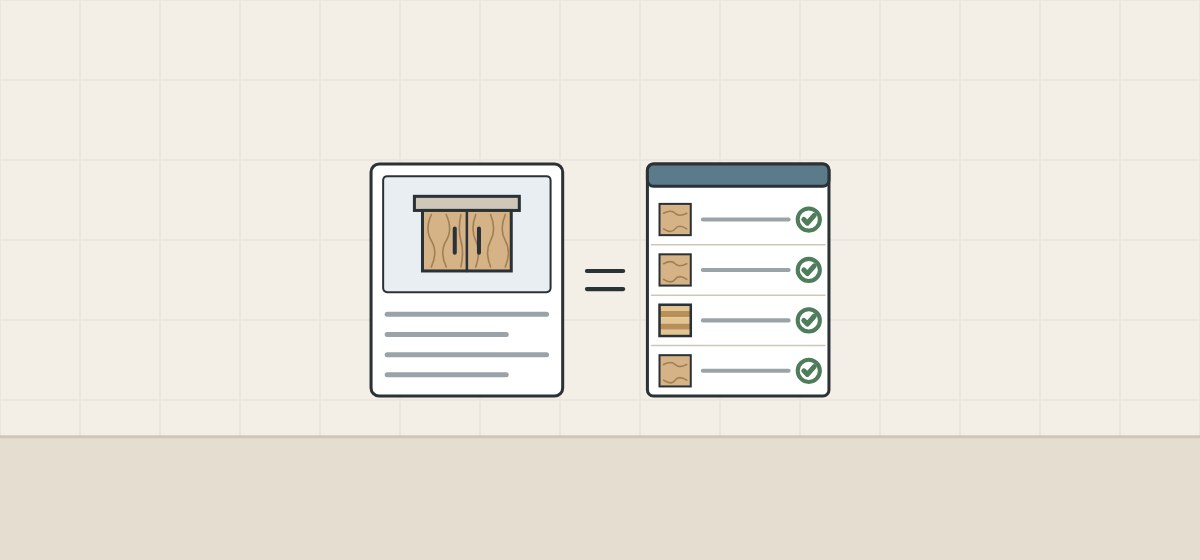
It should, in this guide’s view: the order stands behind the words a buyer publishes. Three points from an FTC notice give the US background:
FTC Furniture Guides
The FTC’s Guides for the Household Furniture Industry, issued in 1973, gave examples of deceptive and nondeceptive descriptions of wood and wood imitations.
Wood names on imitations
The Guides provided that wood names not be used for materials that simulate wood without clearly disclosing that the name describes only a color or simulated finish.
Rescinded in 2002
The FTC rescinded the Guides effective March 5, 2002, as no longer necessary, noting an industry comment calling them outdated and no complaints about covered practices in almost thirty years. It said its section 5 powers should deter misleading sellers.
Check each planned word against a schedule line. Description rules in the destination market are the buyer’s to confirm with an adviser.
Which documents and samples hold the word “solid” in place?
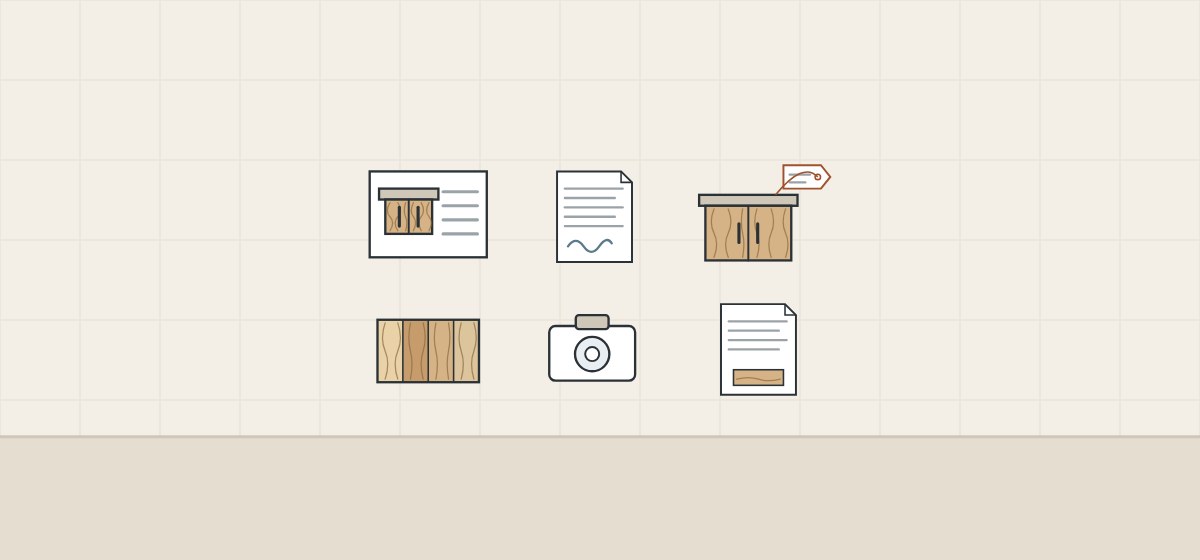
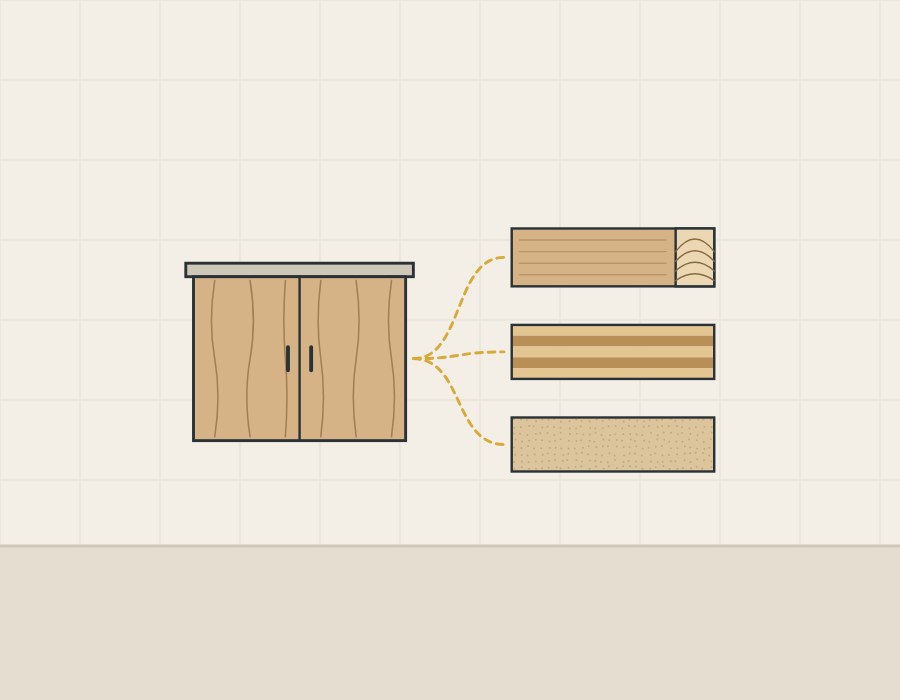
No single item does. The table is this guide’s own view. Behind its photo row: CPA says 3D laminates offer very realistic simulations of woodgrains.
| Evidence to ask for | Can establish | Cannot establish |
|---|---|---|
| Part schedule on the drawing | Which parts should be solid | What went into any unit |
| Signed part declaration | A written commitment per part | Physical fact |
| Sample labeled with its part list | How the parts look | That production will match |
| Offcut of an edge-glued panel | Board widths and joints in that piece | That every panel is built alike |
| Photos of parts before assembly | Which parts exist | Species, or what lies under a finish |
| Lumber purchase records | That the supplier bought that lumber | That it went into your units |
How should a buyer write the solid-wood scope?
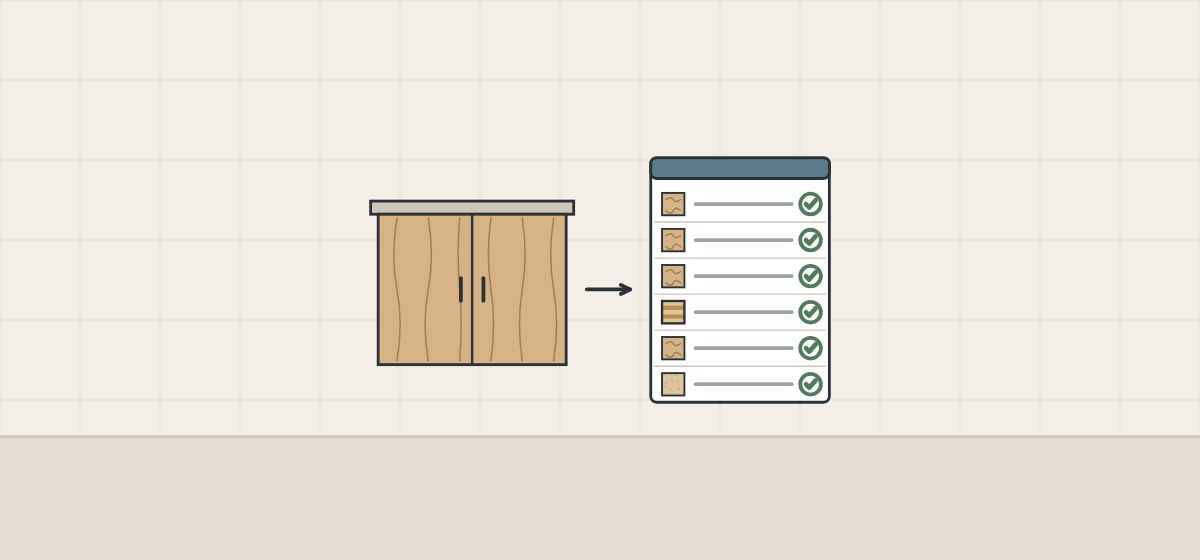
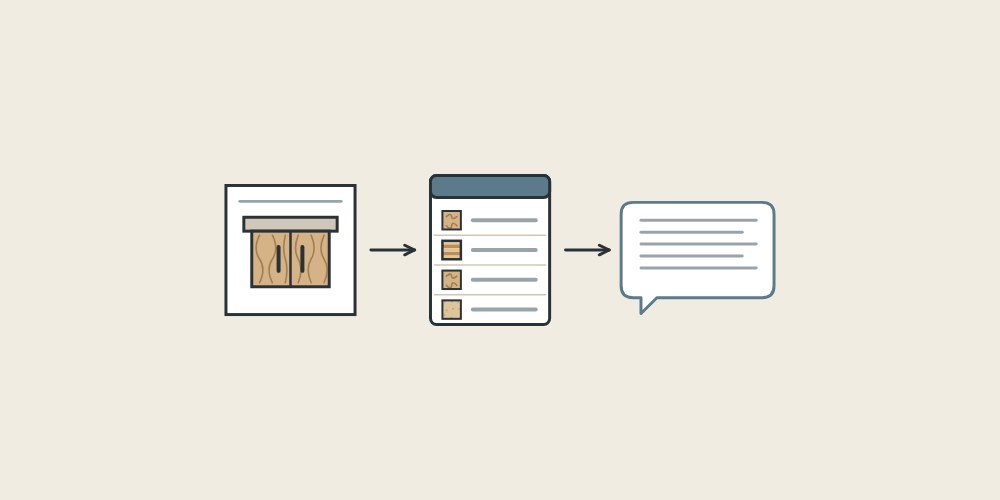
As a schedule plus a short clause. The six steps are this guide’s procurement guidance.
- List every part. Ask for an itemized quotation before comparing prices.
- Give each part one status. Solid required, engineered permitted, or either with disclosure.
- Define solid for this order. Say whether edge-glued and finger-jointed stock count.
- Name the species. Trade name plus botanical name, and any secondary species.
- Check the sales wording. Find the schedule line behind each word you plan to publish.
- Close the gaps. No material change without written approval; no sample approval without a signed part declaration.
A scope clause to adapt
This guide’s example, for an adviser to review: Solid wood means lumber of the stated species through the full thickness of the part. Edge-glued panels of that species count as solid; finger-jointed stock only in the hidden parts named in Schedule A. Veneer, printed film and laminate are not solid wood. No listed material or species may change without the buyer’s written approval.
What should you send and ask before a quotation?
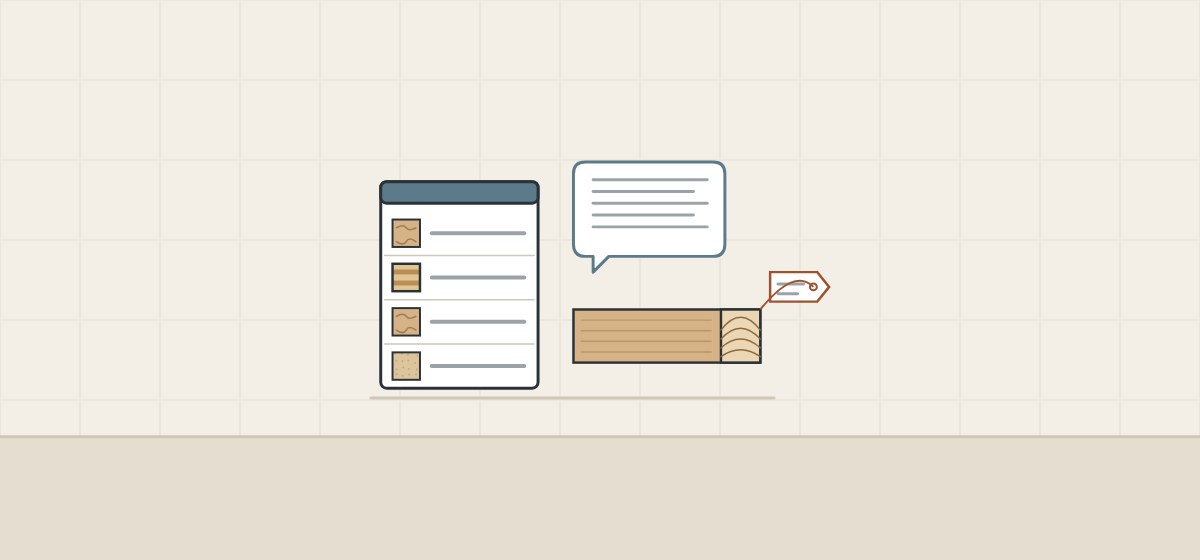
Send the part list and ask the supplier to fill it in. The questions and the request list are this guide’s own.
| Question | Why it matters |
|---|---|
| Which parts are solid lumber? | A heading binds no particular part. |
| What are the back and drawer bottoms made of? | Read plainly, a whole-cabinet claim covers them too. |
| Is any part edge-glued or finger-jointed? | Silence moves the argument to delivery. |
| What is each species’ botanical name? | A trade name can cover several species. |
| Does “solid wood frame” mean the frame only? | Other parts need their own lines. |
| What are the face and core of each engineered part? | A woodgrain face does not identify the core. |
Include with your request
- Drawing or model reference
- Part list with the status wanted
- Species, trade and botanical name
- Planned sales description
- Market and quantity
WNS Global confirms any product and terms it offers separately in writing. This guide does not state that WNS Global products have the materials or constructions named above.