From surface name to whole door
What is the difference between thermofoil and melamine fronts?
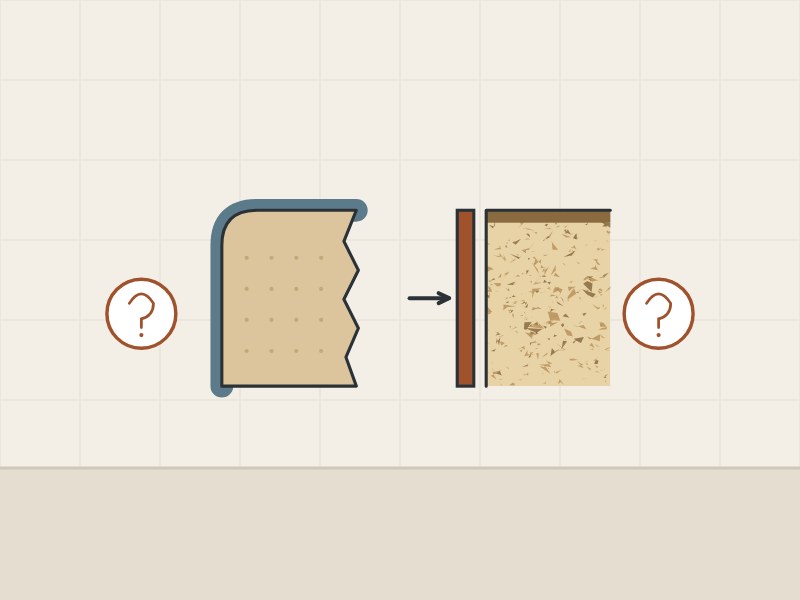
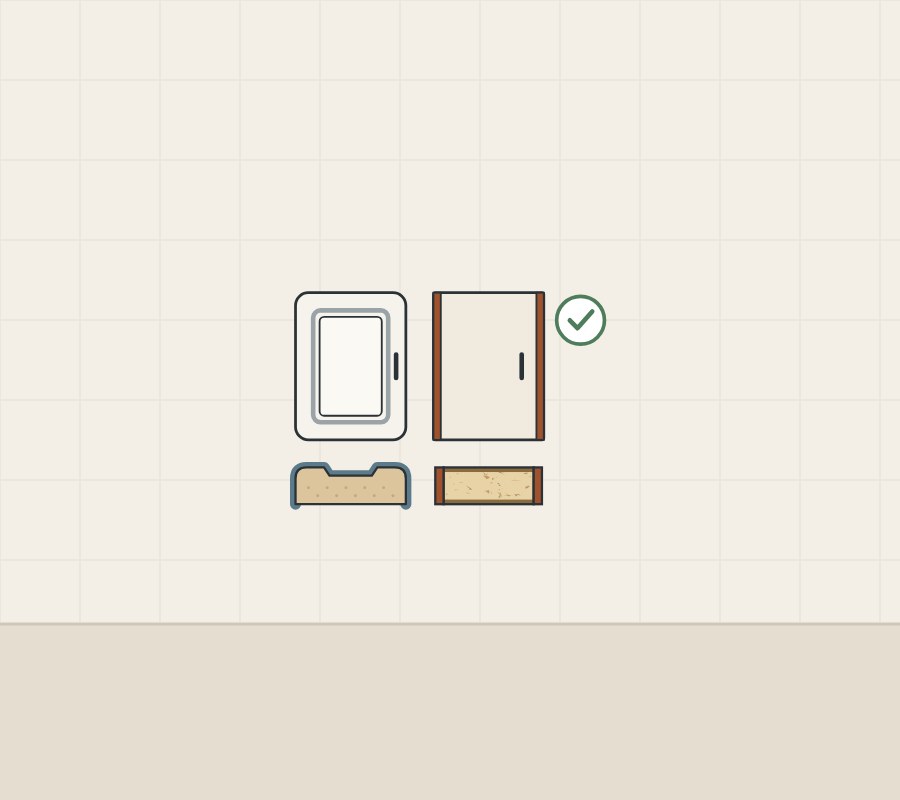
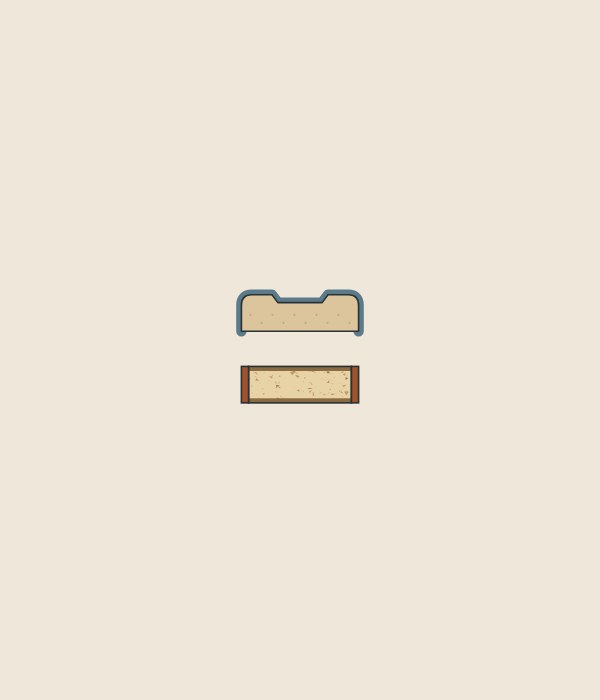
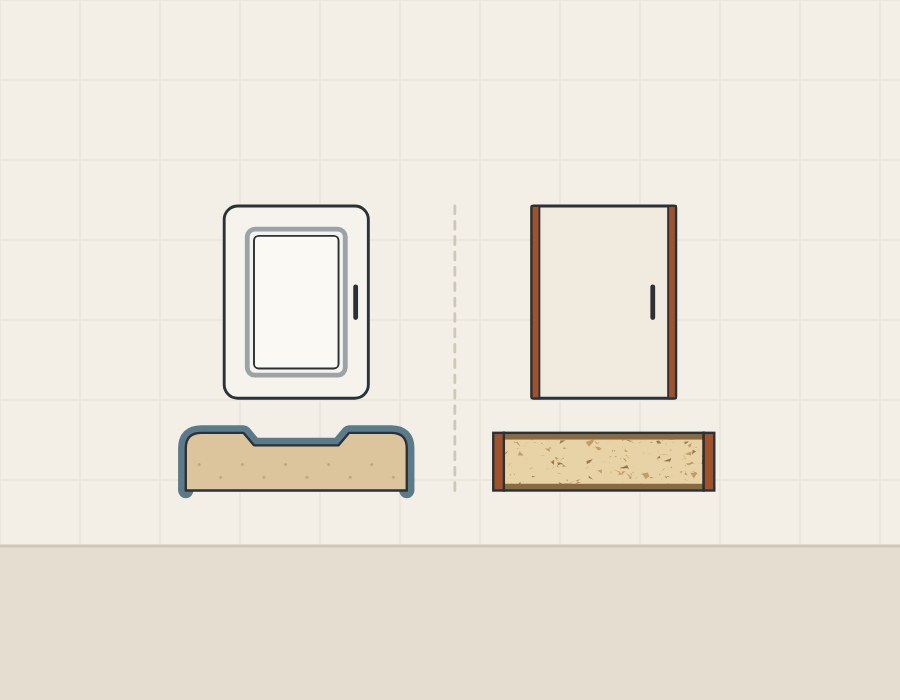
The difference is the facing and how it reaches the edges. On a thermofoil front a thermoplastic film is formed around a contoured board, including its edges; CPA says 3D laminate gives seamless edges without edge treatments.
On a melamine front the décor paper is fused to the faces of a flat board. CPA says TFL panels typically require a decorative edge treatment.
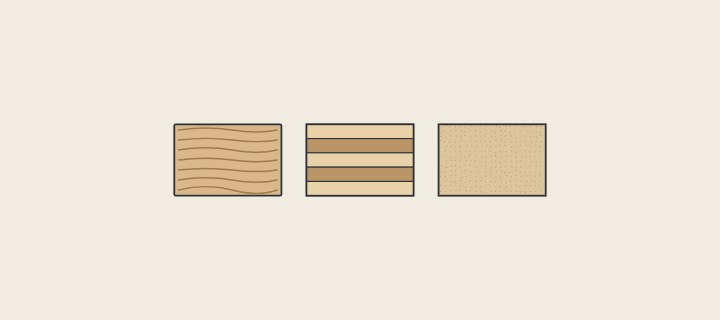
Both are facings on a core. CPA names MDF and particleboard as substrates for both.
| Part | Thermofoil front | Melamine-faced front |
|---|---|---|
| Face | Named PVC, PET or PETG film | Resin-impregnated décor paper |
| Core | Board the film is pressed over | Board the paper is fused to |
| Edges | Film formed over the routed edge | Separate edge treatment |
| Back | Not stated by the name; ask | Faced, where the board is faced both sides |
How is a thermofoil front made?
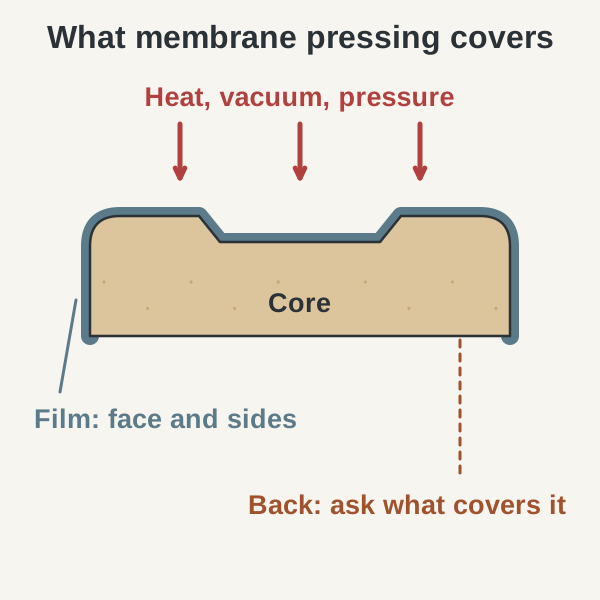
A thermofoil front is made by membrane pressing. The steps follow Northern Contours’ description of its own process, with one note from OMNOVA’s 2021 3D Laminates sheet.
- The core is cut and routed to the door style and profile.
- The routed board goes through a gluing process.
- OMNOVA’s note, not a Northern Contours step: its sheet recommends two or more adhesive coats on edges and routed areas.
- The film is pressed over the face and sides.
- Heat, vacuum and positive pressure bond it to the core.
- The pressed door has no edgebanding.
Northern Contours describes the face and sides only, so the back is a separate question for the supplier.
Is thermofoil always PVC?

No. Makers and CPA name several films, so “foil” alone does not identify the material.
| Source | Film it describes |
|---|---|
| RENOLIT 2D and 3D thermolaminates | PVC films for 3D thermoforming, 2D wrapping and flat lamination. |
| RENOLIT 3D PET thermolaminates | Thermoplastic PET films for three-dimensional shaping and wrapping of furniture. |
| CPA, 3D laminate | PVC or PETG, membrane-pressed. |
| CPA, 2D laminate | Primarily vinyl; also PET and polypropylene films and papers. Used flat and for profile wrapping. |
| Riken U.S.A. | 3D laminates for cabinet doors; also produces a non-PVC foil. |
| OMNOVA 3D Laminates, 2021 sheet | Film thickness 10 to 20 mil; best suited to vertical uses such as cabinet doors and drawer fronts. |
Ask for the film maker, the product reference and the polymer. The look of a profiled front does not show which film it carries.
What is a melamine-faced front made of?
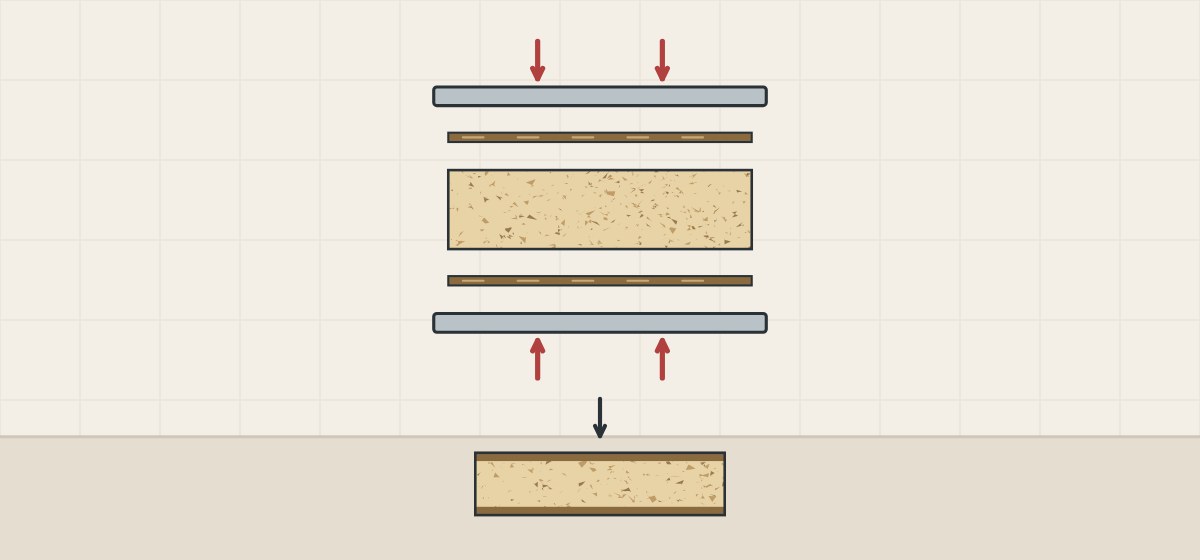
A melamine-faced front is cut from a wood-based board that already carries its decorative paper on the faces. Makers describe it this way:
| Source | What it describes |
|---|---|
| EGGER Eurodekor | Chipboard core for interior use, faced both sides with impregnated decorative paper. |
| Kronospan MF PB | Particleboard covered with decorative paper impregnated with melamine resin; names EN 14322. |
| Uniboard melamine (TFL) | Decorative paper thermally fused to the top and bottom of a composite wood-based panel. |
| Wilsonart TFL | Particleboard and MDF cores standard; moisture-resistant options listed. |
| EN 14322:2021 scope | Surface requirements and dimensional tolerances for melamine faced boards for interior use. |
Melamine names the facing, not the core. EGGER lists furniture grade (P2) and moisture-resistant (P3) versions of the same faced board, so keep facing and core on separate lines of a quote.
How are the edges finished on each front?
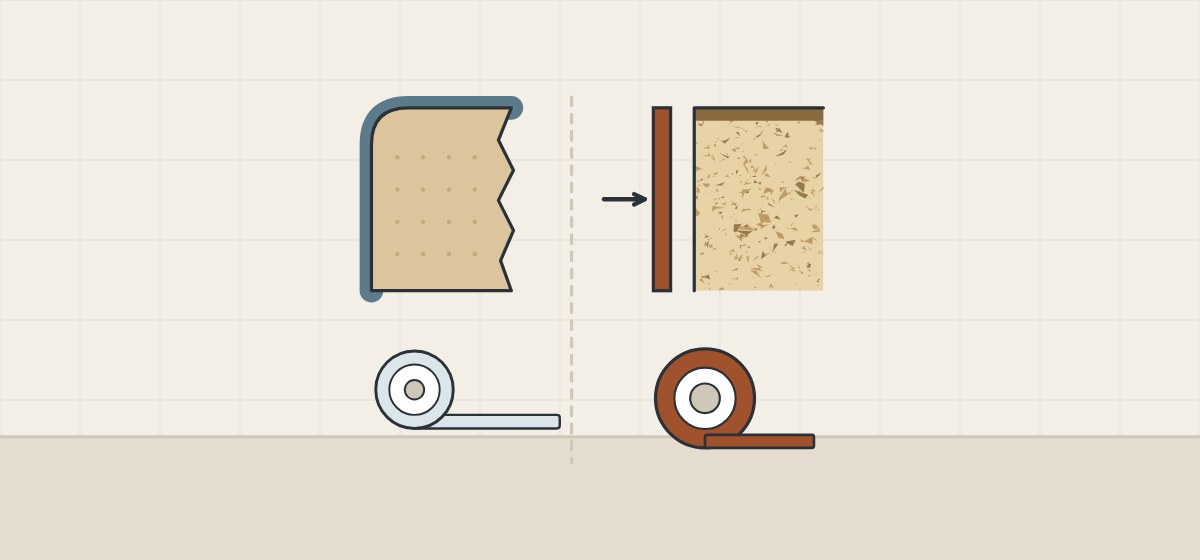
The edge is where the two systems differ most. Four points from the sources:
Thermofoil edge
Northern Contours says its membrane-pressed doors are seamless and free of edgebanding because the material is pressed over the face and sides.
Melamine edge
The AWI glossary defines edgebanding as material applied to the edge of panels to cover the exposed core, typically by machine.
Edgeband materials
REHAU describes edgeband as a narrow strip covering exposed edges and names PVC, ABS and PP among its materials.
Flat film faces
CPA says 2D laminate, used mainly in flat lamination and profile wrapping, is typically used with matching edgebanding.
- Edge material and thickness
- How the edgeband is attached
- Which edges are covered
- Flat or routed face
What heat and moisture limits do makers publish?
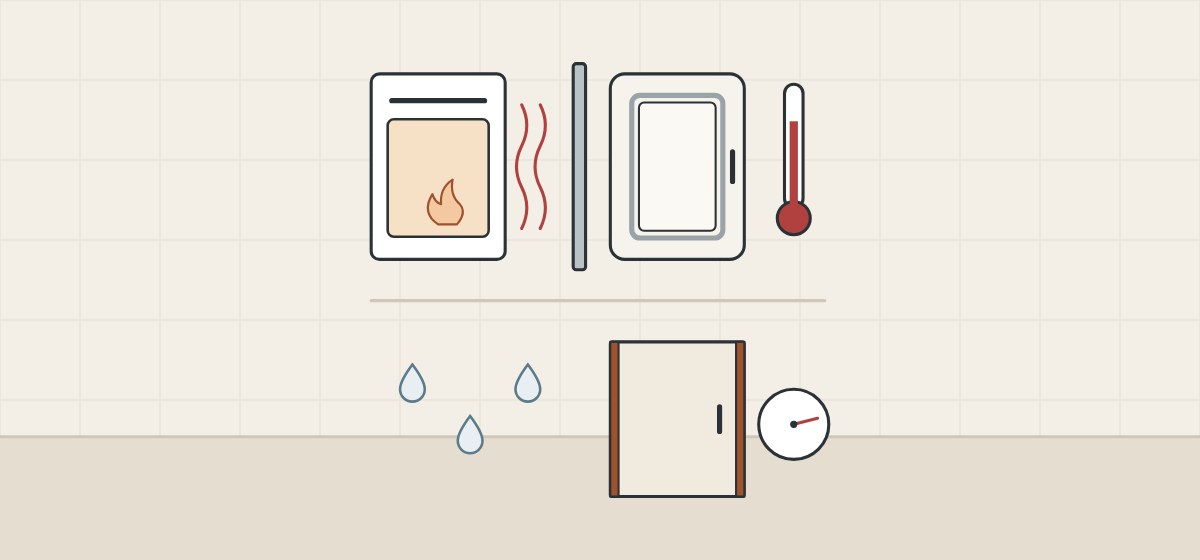
Makers publish limits for their own film, panel or component, not for a finished vanity door. Four examples:
OMNOVA 3D Laminates
The 2021 product sheet says not to expose the surface to temperatures exceeding about 140 °F.
Northern Contours warranty
Its limited warranty excludes products exposed to excessive heat and recommends heat shields between components and ovens or high-temperature lighting.
Wilsonart TFL
The technical data says interior use only: no extremes in humidity, no temperatures above 275 °F (135 °C) for substantial periods and no intense, continuous, direct sunlight. Its test table lists boiling water resistance as “No effect”.
Board scope
The published scope of EN 14322:2021 covers melamine faced boards for interior use.
A surface result is not a door result. KCMA describes finish tests on the door itself: 24 hours at 120 °F and 70 percent relative humidity, and a door edge exposed to a detergent formula for 4 to 24 hours, depending on door type. No source used here calls a finished door waterproof.
How do makers say the two surfaces should be cleaned?
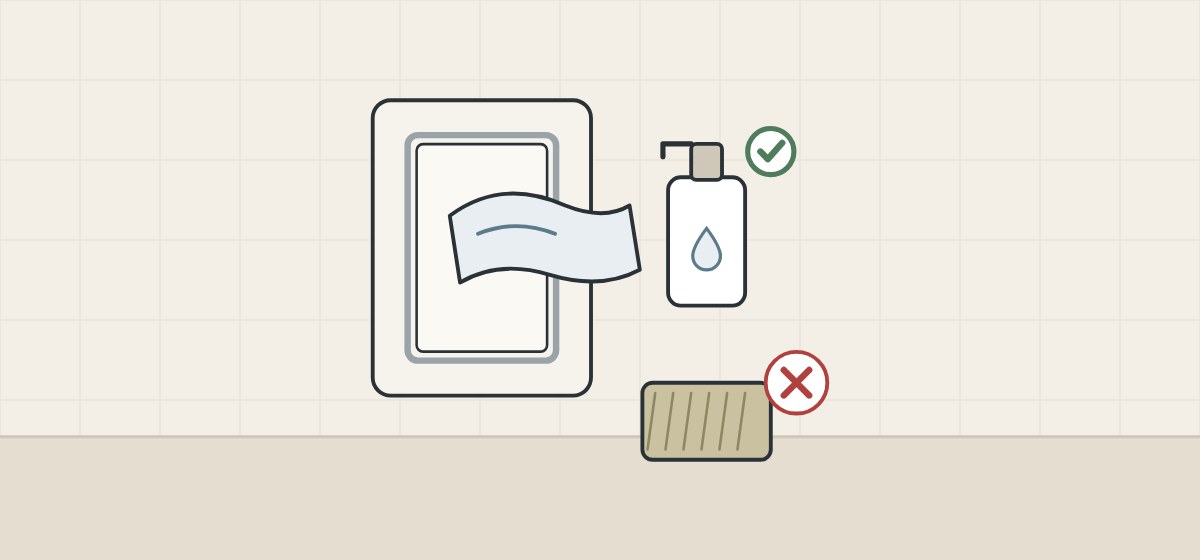
OMNOVA, for its film, and Uniboard, for its TFL and HPL laminates, both warn against abrasive cleaners. Each row is that maker’s advice for its own product.
| Source | What it says |
|---|---|
| OMNOVA 3D Laminates, 2021 sheet | Clean spills immediately; avoid abrasive agents; ketones and lacquer thinners can soften and remove the coating. |
| Uniboard cleaning instructions, TFL and HPL | Damp micro-fiber cloth right after soiling; water and mild soap for basic stains; no abrasive materials or strong concentrated acids or alkalis. |
| EGGER melamine resin surfaces | Generally easy to clean and can be disinfected; must be cleaned regularly. |
How should a buyer specify a vanity front?
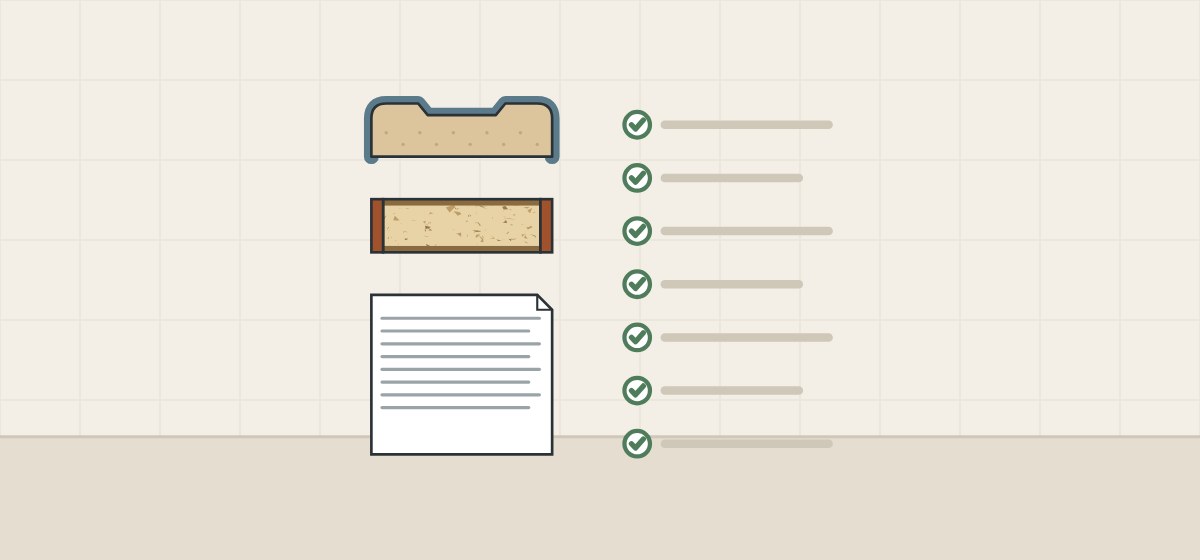
Describe the whole front as five lines: face, core, edges, back and limits. These steps are procurement guidance that follows from the facts above.
- Name the system. Membrane-pressed film, or paper-faced board with edgeband.
- Name the facing. Film maker, reference and polymer, or board maker and décor.
- Name the core. MDF or particleboard, and its grade.
- Describe the edges. Wrapped by the film, or banded; band material and method.
- Ask about the back. What covers it, and whether it matches the face.
- Ask for limits. The maker’s heat, humidity and cleaning statements.
- Check the room. Note heat sources and wet zones near the vanity.
When a substitute is offered
A color match is not a construction match. If a substitute changes the film, the core, the edge or the back, compare the whole revised door and ask for a new section or sample.
What should you ask before a quotation?
A front photo shows neither the back nor the edges. Each question maps to a point earlier in this guide.
| Question | Why it matters |
|---|---|
| Is the front film-wrapped or paper-faced? | They are different surface systems. |
| Which film or board, by maker and reference? | “Foil” and “melamine” name no product. |
| What is the core and its grade? | The facing name does not state it. |
| How are the edges finished? | Wrapped and banded edges differ. |
| What covers the back? | Northern Contours describes pressing over face and sides only. |
| Which heat and humidity limits apply? | Makers publish limits per product. |
Include with your request
- Door style: slab or routed profile
- Finish, color and gloss wanted
- Room type and nearby heat sources
- Cleaning products the operator uses
- Quantity and a request for a cut sample
WNS Global confirms any offered front construction, materials and commercial terms separately in writing. This guide does not state that WNS Global products use any film, board or edgeband named above, or meet any limit, test or standard named above.