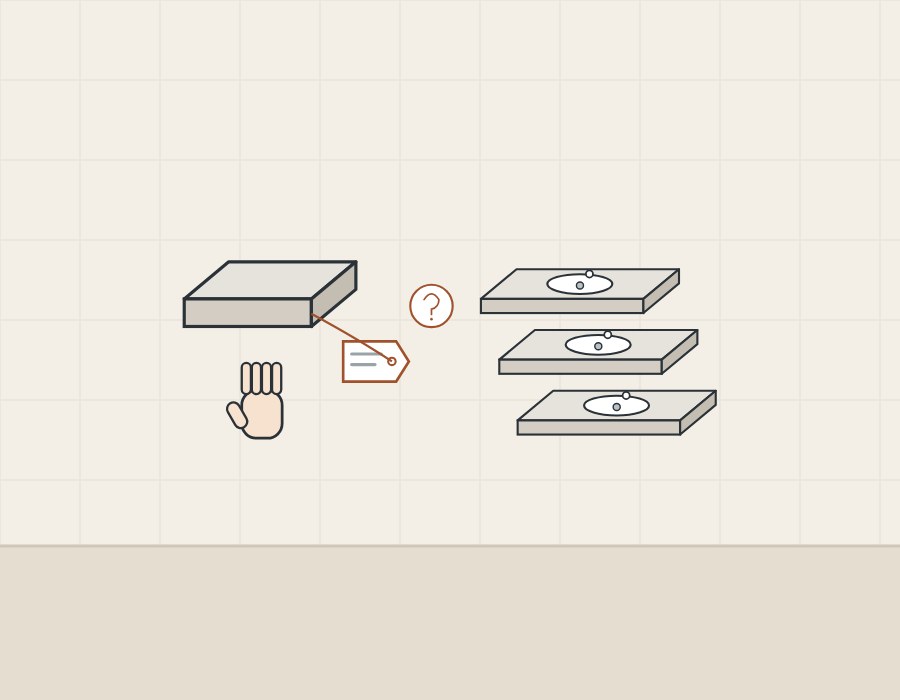
From sample to first top
What can a vanity top sample be asked to prove?
A sample can be asked to show color, shape, finish or the production method, and these are different jobs. UFGS 01 33 00 covers both fabricated physical examples and color samples from a maker’s standard line.
The US Federal Acquisition Regulation uses a wider term. Its definitions call a first article a preproduction model, initial production sample, test sample, first lot, pilot lot or pilot models. One term covers both a prototype and a first production unit, so write the role down. Both documents are for US government work; this guide only borrows their terms.
| Term | What the source says |
|---|---|
| Color sample | UFGS: from the maker’s standard line, or custom, for selecting or approving colors. |
| Sample | UFGS: a physical example that sets standards for judging the work. |
| First article | FAR: preproduction model, initial production sample, test sample, first lot, pilot lot or pilot models. |
How can a sample differ from a production top?
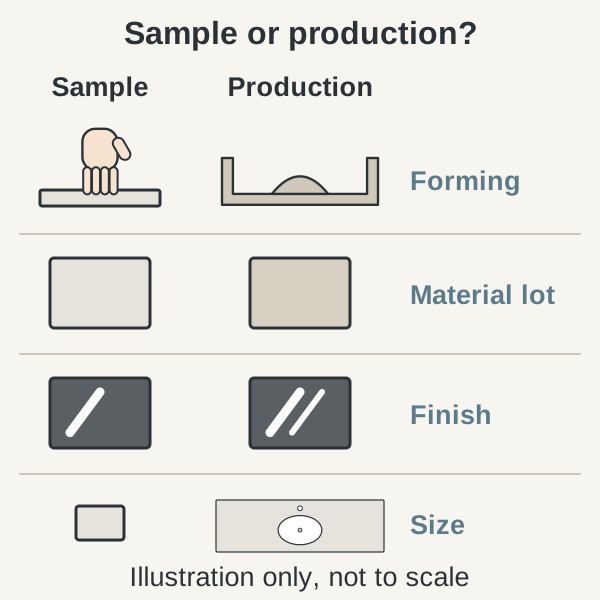
A sample can differ from production in forming, material lot, pattern, finish and size. Each point below is what the named source says about the material it covers; the link to samples is this guide’s.
- Forming: the International Cast Polymer Association says cultured marble is poured into polished molds coated with a clear gelcoat.
- Lot: LX Hausys reports slight color variation between production cycles of HIMACS sheet.
- Pattern: LX Hausys says a veined pattern differs within a sheet and from sheet to sheet.
- Finish: LX Hausys says finish quality depends on the fabricator’s skill, the tools and the process.
- Size: Caesarstone US gives its quartz sample as 3 x 5 inches and encourages buyers to view a full slab.
Caesarstone adds that actual product may differ slightly from the sample received.
Does the sample come from the production material lot?
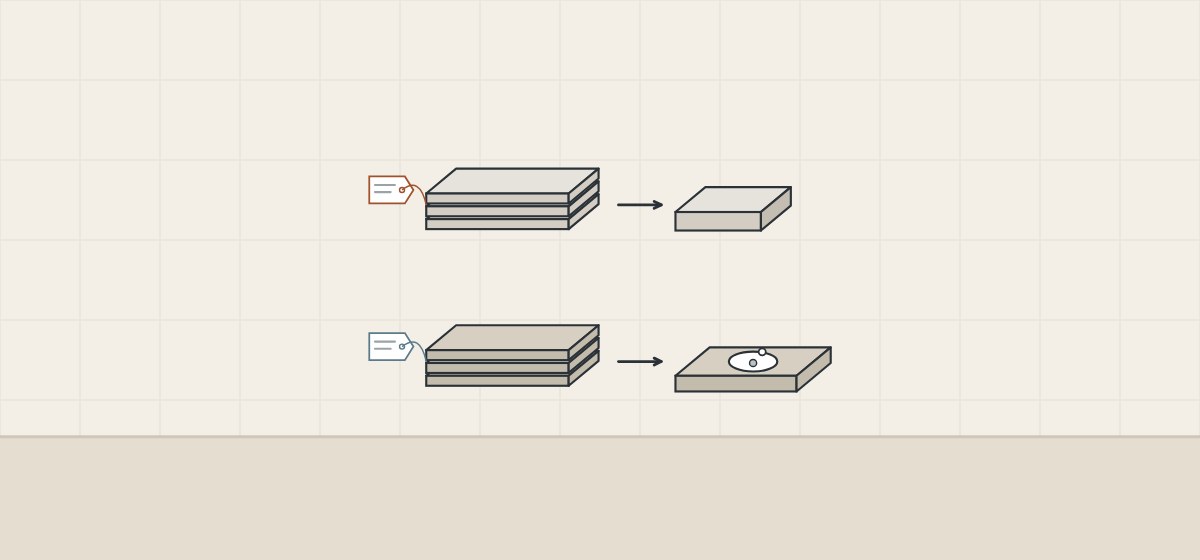
Ask for the lot or batch number of both the sample and the production material. LX Hausys, Wilsonart and Caesarstone each tie color match to a lot or batch.
| Source | What it says |
|---|---|
| LX Hausys, HIMACS | Use sheets of the same lot number; no guaranteed color match between lots. |
| Wilsonart fabrication guidelines | Solid surface sheets are color-matched by lot number and sequentially numbered. |
| Caesarstone guide specification | Project materials from the same batch, labeled with the same batch numbers. |
| ISFA 2-01 (2013) | Sets a standard for color match from sheet to sheet within the maker’s specified lot. |
LX Hausys gives a color difference of less than ΔE 0.8 between solid-color HIMACS sheets of the same lot. If the production lot is not yet made, the sample governs shape but not final color.
Was the sample formed and finished the production way?
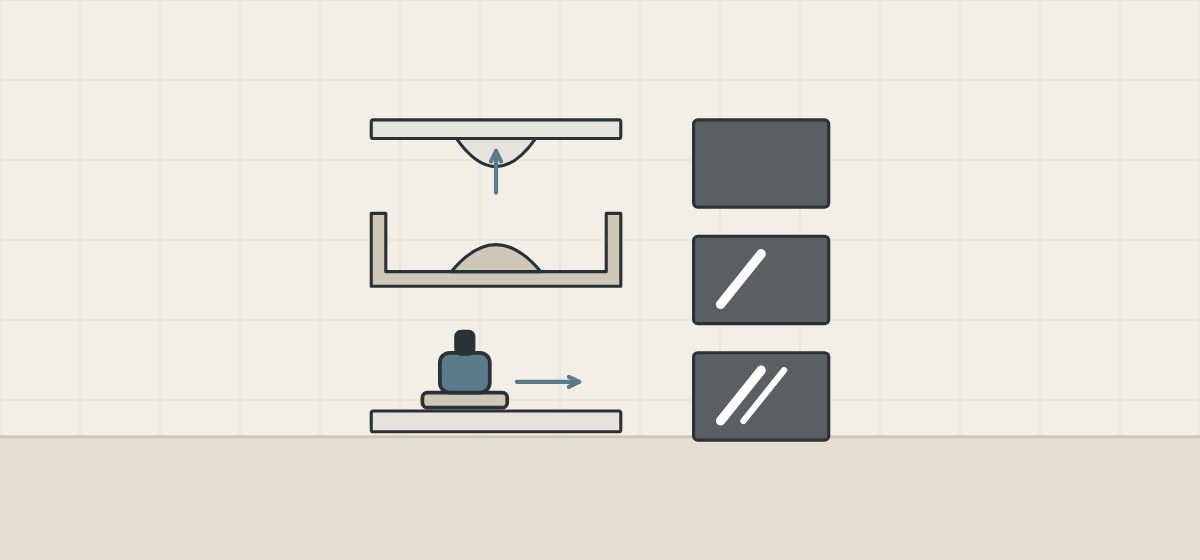
Ask whether the sample came from the production mold or cutting program and went through the normal finishing sequence.
| Step | Source | What it says |
|---|---|---|
| Casting | ICPA | Cultured marble is removed from the mold, then trimmed, ground, polished and inspected. |
| Thermoforming | Wilsonart | For the best result, a set of male and female molds should be used to thermoform its sheet to a radius. |
| Finish type | LX Hausys fabrication guidelines | HIMACS can be finished matte, semi-gloss or high-gloss. |
If the sample was shaped by hand, ask what will differ in production: bowl shape, radius, drain area and edge build. If it was finished differently, treat its surface as indicative only.
Which drawing revision and label does the sample carry?
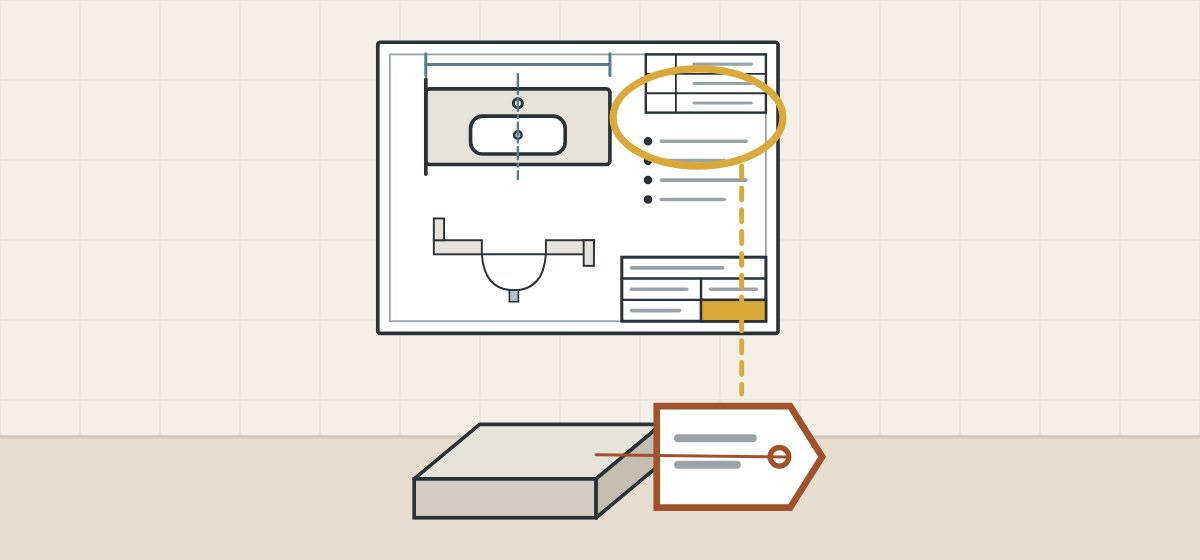
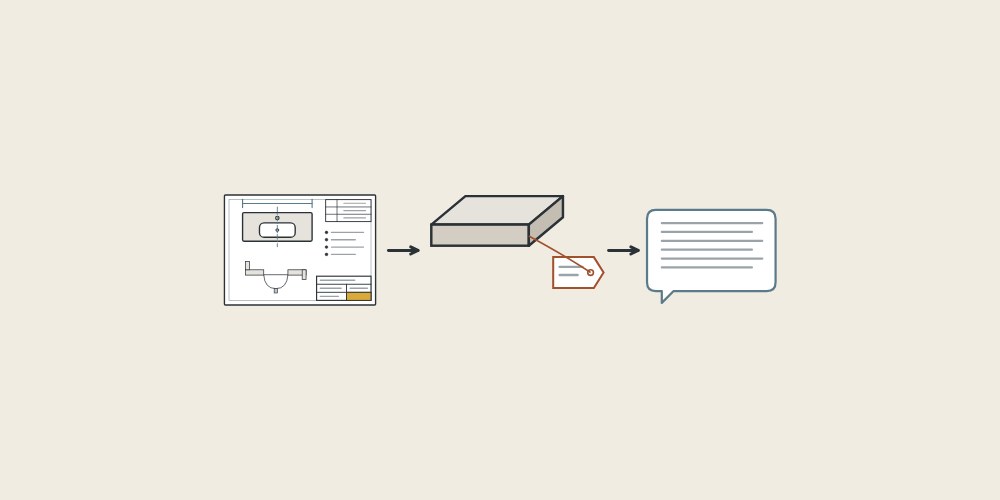
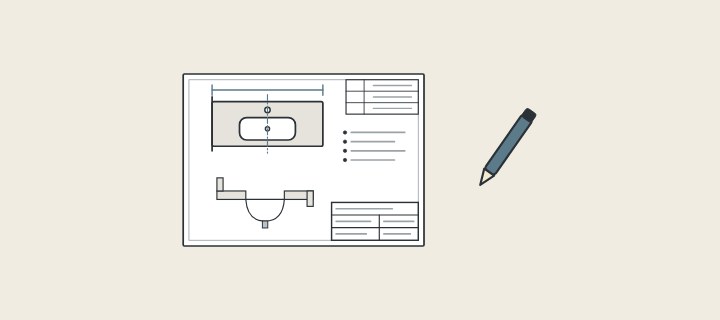
The sample label should name the drawing revision and how the sample was made. Published submittal rules show what to record:
What a label carries
The Architectural Woodwork Institute’s submittal standard, written for woodwork, asks for finish samples on representative material, labeled with, among other items, date, project, supplier, finisher and the steps used.
Range, not one piece
Caesarstone’s guide specification asks for samples that indicate the full range of color and pattern variation.
What the drawing shows
The same specification has shop drawings identify colors and finishes and show field-verified dimensions, cutouts and edge profiles.
Written acceptance
AWI calls for written acceptance of the representative visual qualities, including the methods and techniques used, before work proceeds.
- Drawing number and revision
- Material, color and lot number
- How it was formed
- Finish steps and gloss level
- Date and who made it
- Differences from the current drawing
When should the first production top become the reference?
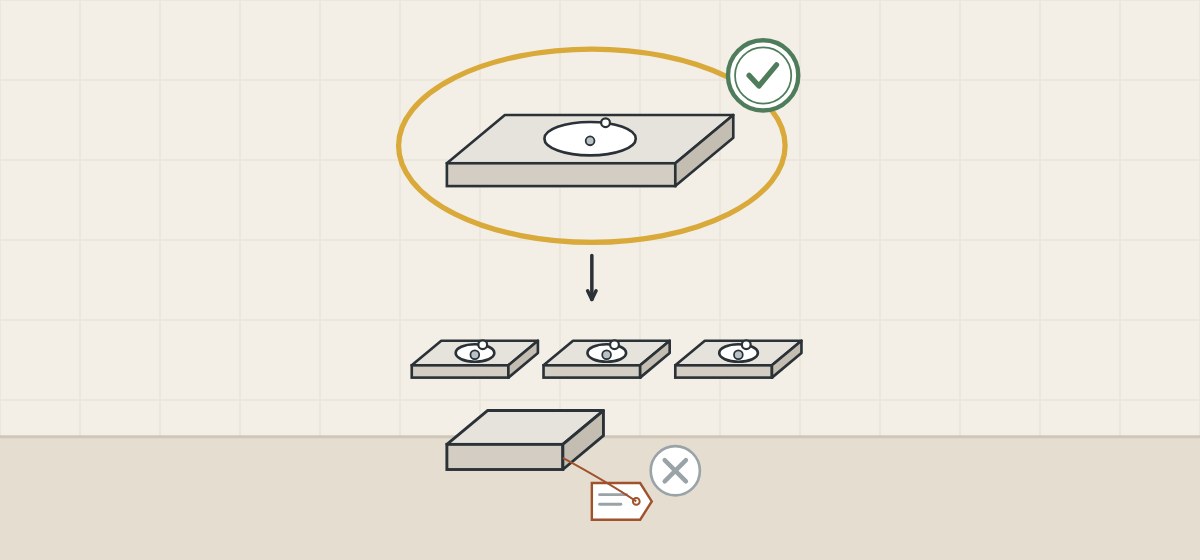
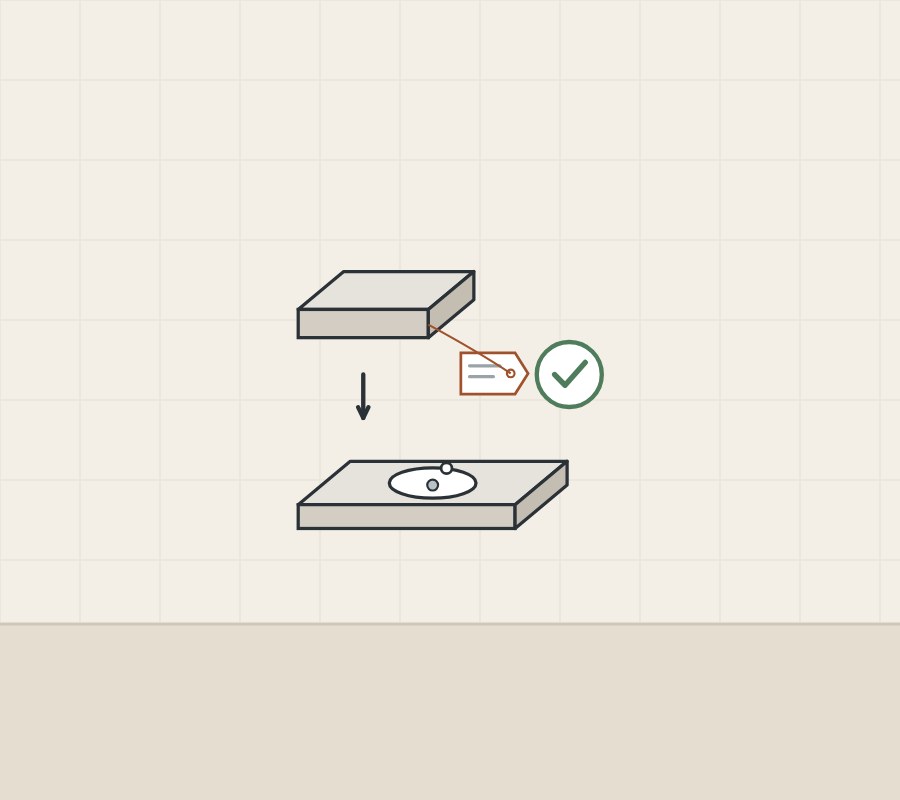
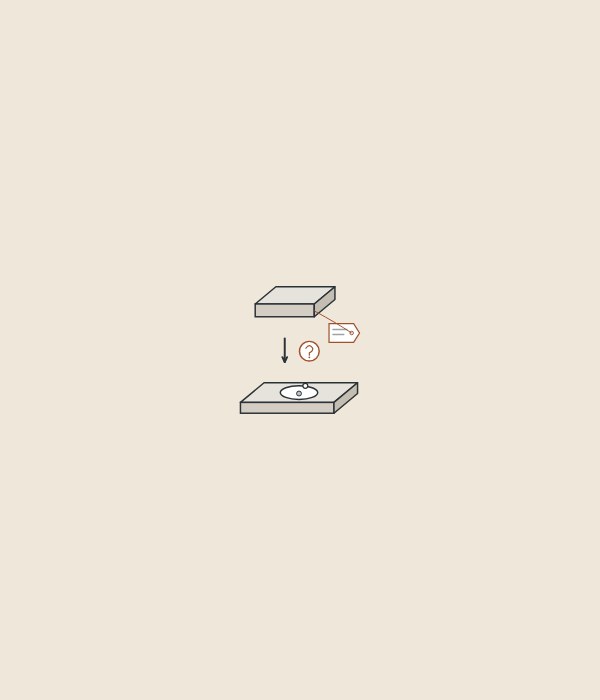
When the sample was not made the production way, the accepted first production top is the better physical reference. US federal first article rules offer a model for writing this down:
When it is used
FAR 9.303 says first article testing and approval may be appropriate when the contractor has not supplied the product to the Government before, or when processes or specifications have changed since.
As a standard
The same section lists the case where an approved first article is needed as a manufacturing standard.
Same facility
An alternate to contract clause 52.209-4 requires the first article and the production quantity to be produced at the same facility.
The clause also says that approval does not relieve the contractor from meeting the specifications. A private order can say the same: the drawing still governs, and the reference shows how the result should look.
How should the sample and the first top be compared?
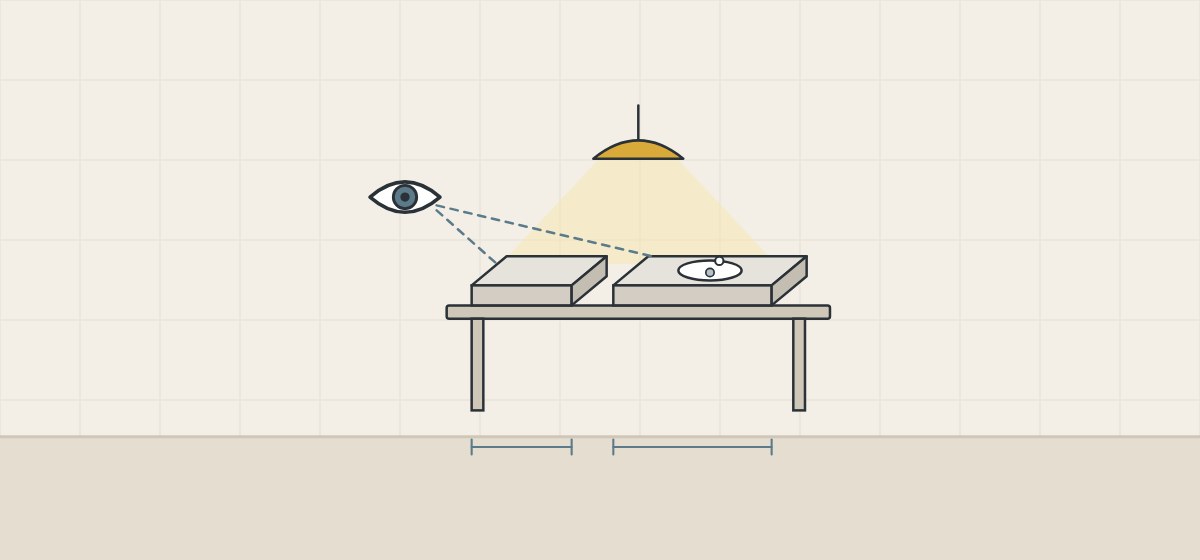
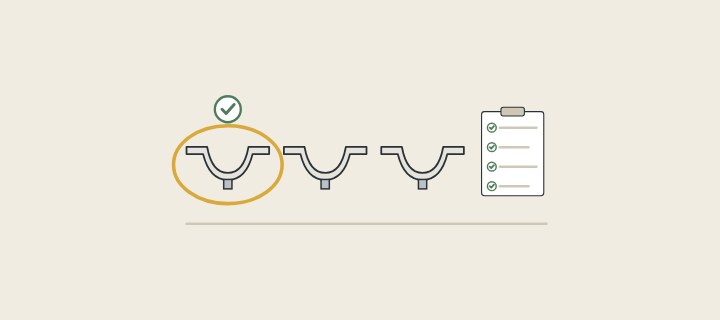
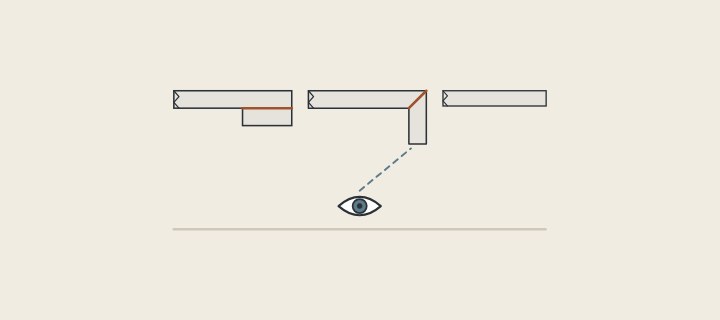
Compare them side by side, in one place and one light, and measure the same points on both. The sources below set conditions for their own tests or products.
| Source | Condition it sets |
|---|---|
| ISFA 2-01 (2013), visual defects test | Sheet specimen viewed from 610-750 mm under overhead white fluorescent light of 800 to 1100 lux. |
| ISFA 2-01 (2013), color test | Specimen viewed at about 10, 45 and 90 degrees. |
| LX Hausys, HIMACS | Never inspect color under bright light such as direct sunlight. |
How should a buyer approve a vanity top sample?
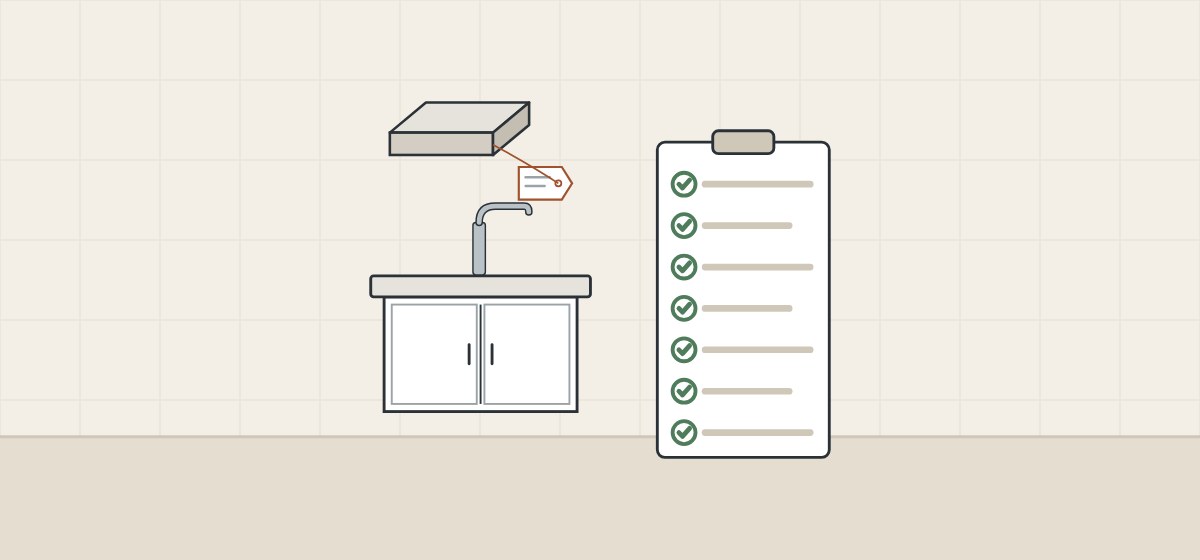
These steps apply the facts above to an order. They are procurement guidance, not a standard.
- Ask how it was formed. Production mold or cutting program, or built by hand.
- Ask which material. Same grade and color as production, and which lot.
- Ask about the finish. Same sequence and gloss level as production.
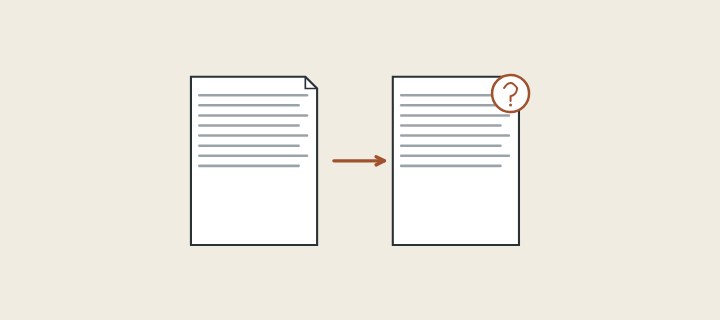
- Check the revision. List in writing every difference from the current drawing.
- Decide its role. Production reference if forming, finish, revision and lot color are confirmed; design reference if not.
- Compare the first top. Shape, holes, edge, color and surface, measured and viewed the same way as the sample.
- Fit the top on a cabinet. Overhangs and gaps only show there.
Approval errors with top samples
Common errors: a prototype approved as the production standard, a comparison under different light, an ignored revision gap and no measurements. Photographs are a comparison aid; measurements and a cabinet fit decide dimensional questions.
What should you ask before a quotation or sample order?
Ask for the process facts in writing, with the sample.
| Question | Why it matters |
|---|---|
| Was the sample made with production tooling? | A hand-built form may not be repeated. |
| Which lot is the sample from? | Named makers tie color match to the lot. |
| Which finish steps and gloss level? | LX Hausys ties finish quality to skill, tools and process. |
| Which drawing revision does it follow? | Changed features need a fresh check. |
| Will the first top be held for approval? | It can become the physical reference. |
| How will the two be compared? | Light, distance and measured points. |
Include with your request
- Current drawing and revision
- Material, color and finish wanted
- Cabinet size the top sits on
- Whether a first-top approval is required
- Order quantity and reorder plans
WNS Global confirms any offered vanity top, sample method and commercial terms separately in writing. This guide does not state that WNS Global samples or products are made by any method named above, or meet any standard, figure or rule cited here.