From application to use
What do skin time, tack-free time and full cure mean?
Sealant data sheets use several timing fields, and they measure different things. Sika’s data sheet for Sikasil-702, a sanitary silicone, gives a skinning time of about 10 minutes and a curing rate of about 4 mm per 24 hours, both at 23 °C and 50% relative humidity. It gives no single “full cure” time.
GE lists a 30-minute tack-free time and a 24-hour full cure for its Advanced Silicone 2 Kitchen & Bath sealant. The same sheet states a cure-through of 2–3 mm per 24 hours, so the 24-hour figure presumes a thin bead. Bostik’s Bath Silicone states full cure as about 24 hours per 2 mm of depth.
The tack-free test method, ASTM C679, treats tack-free time as a measure of surface cure. Surface cure and cure through the full bead are different milestones.
| Term | What it tells you |
|---|---|
| Skin time | When a surface film forms; cure continues underneath. |
| Tack-free time | Surface cure, measured by ASTM C679; not readiness for water. |
| Cure rate | How deep the cure advances per day, for example millimeters per 24 hours. |
| Full cure | When the whole bead has cured; it depends on bead depth and conditions. |
| Test conditions | The temperature and humidity the value was measured at, for example 23 °C and 50% RH. |
How does a moisture-cure silicone cure through the bead?
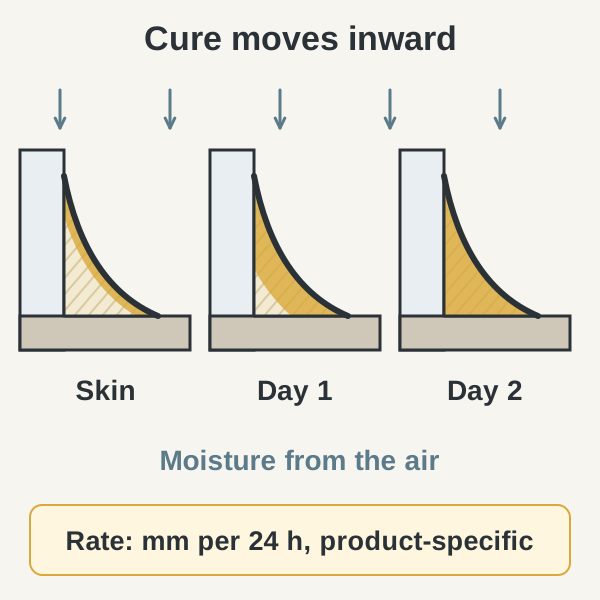
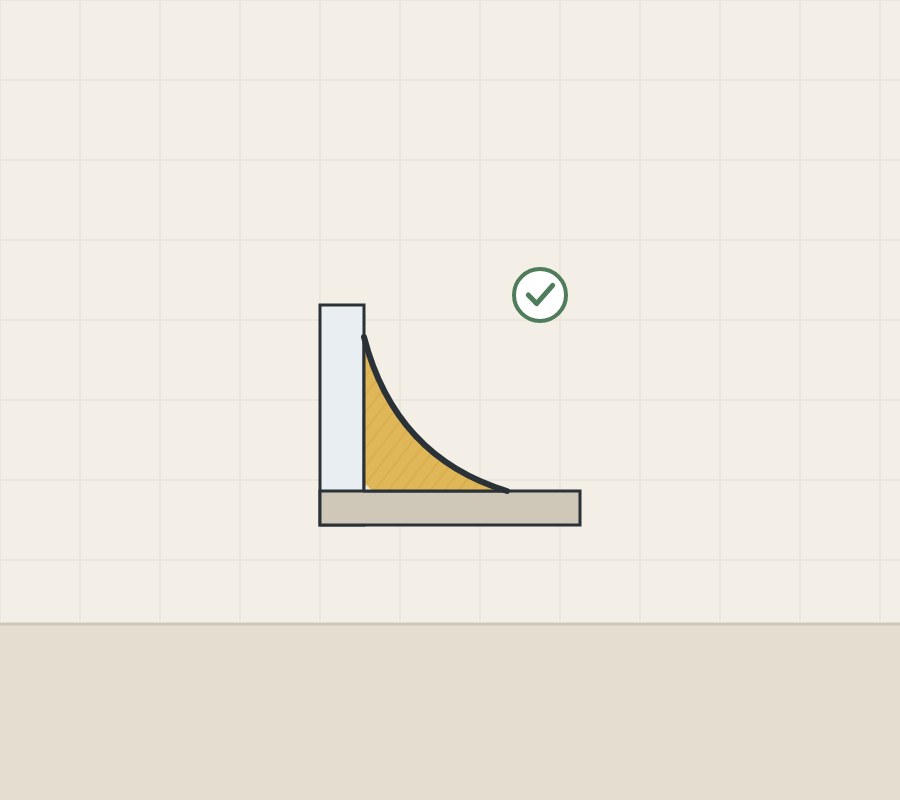
Dow states that its one-part sealants cure inward from the surface after the skin forms, reaching about 1/8 in. (3 mm) in 24 hours at room temperature and 50% humidity. Sika describes Sikasil-702 as curing by absorbing moisture from the air. For these one-part silicones the sequence is:
- The bead is applied and tooled before the skin forms.
- A skin forms at the surface.
- The surface becomes tack-free.
- Cure advances inward a few millimeters per day, at a rate set by the product and the conditions.
- The whole cross-section has cured.
- Water may reach the joint when the named product’s instructions allow it.
The day marks in the diagram show the direction of cure, not a release time. The last step is product-specific. GE states that its Advanced Silicone 2 can be exposed to water in as little as 30 minutes only with a bead no larger than 3/16 in., at 65 °F or warmer and 50% humidity or more. That rule belongs to that sealant and those conditions alone.
Which parts make up a sealed joint?
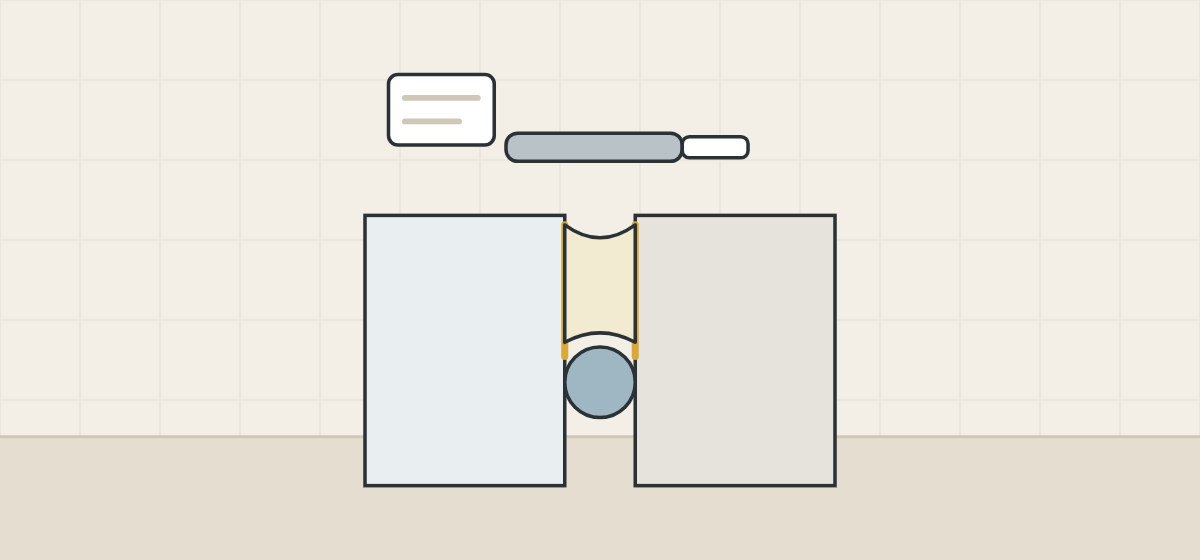
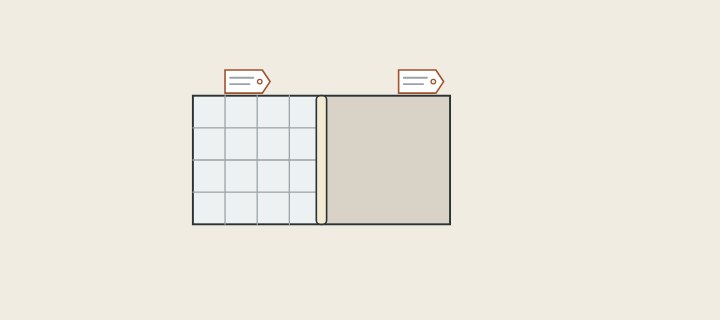
Sika’s joint-sealing guide lists the build-up in order: a cleaned substrate, primer where required, a backer rod, the sealant, and tooling. Joints must be free of processing agents, dirt and dust before priming and sealing.
| Part | Role |
|---|---|
| Substrate | The two surfaces the sealant must bond to, such as tile, glass, shower base or vanity top. |
| Cleaning | Removes processing agents, dirt and dust so the sealant can adhere. |
| Primer | Used where the named sealant requires it for that substrate. |
| Backer rod | Controls depth and prevents three-sided adhesion. |
| Sealant bead | The cured elastomer that seals and moves with the joint. |
| Tooling | Presses the sealant against both sides and shapes the surface; Sika asks for a compatible tooling agent. |
Backer rod sizing is set by the document you follow. Sika’s backer rod data sheet specifies closed-cell polyethylene foam 1/8 in. wider than the joint. Sika’s corporate guide says 20–30% wider, and GE specifies 25–50% wider.
Acetoxy, neutral-cure or hybrid: what changes?
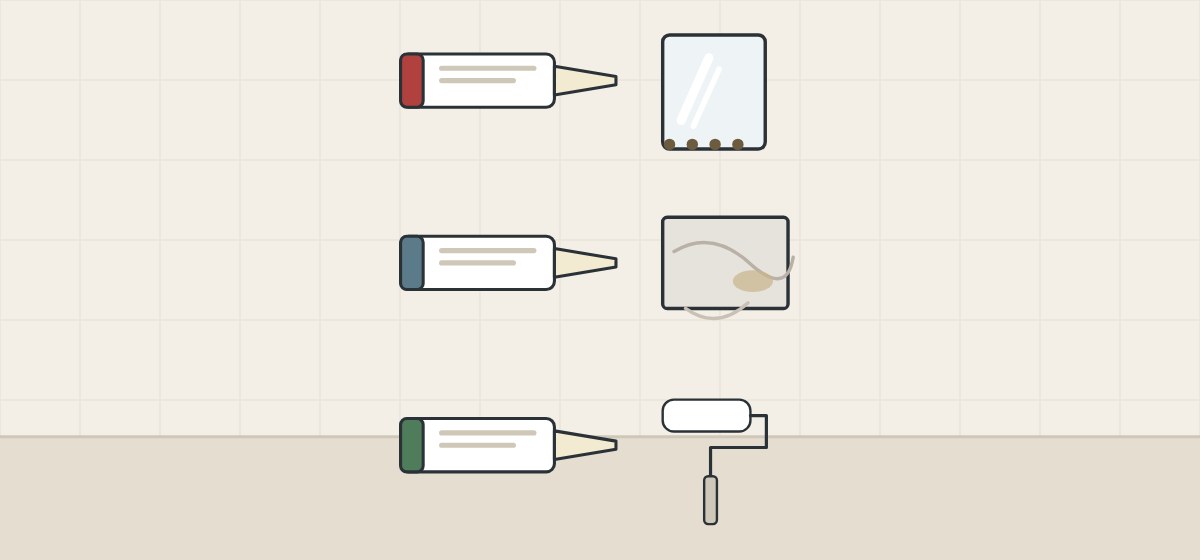
The cure chemistry affects which substrates a sealant may touch and whether it can be painted. The statements below are the manufacturers’ own, for their named products or product families.
| Type | What the sources say | Watch for |
|---|---|---|
| Acetoxy (acetic-cure) silicone | Sika warns that acid released by Sika Sanisil during cure can corrode mirror silver, copper, brass and lead. | Mirrors, metals, and alkaline surfaces such as concrete and plaster. |
| Neutral-cure silicone | Sika still states that its neutral-cure Sikasil-702 is not suitable for natural stone, some porous materials or copper. | Natural stone: Soudal also warns against marble and granite. |
| Stone-specific silicone | Bostik markets S960 as non-staining on natural stone, while still requiring an adhesion test and primer on porous substrates. | A test on the actual stone. |
| Hybrid (MS/SMP) sealant | Soudal says hybrids can be painted with most compatible water-based paints and can bond to slightly damp surfaces, while silicone generally cannot be painted. | Whether a sanitary rating and the paint system are both confirmed. |
Sika’s guide positions silicones for non-porous substrates such as metal and glass, polyurethanes for porous ones, and silane-modified polymers where a wide adhesion range is needed. Neutral cure alone does not make a sealant stone-safe.
How do joint depth, width and adhesion affect the seal?
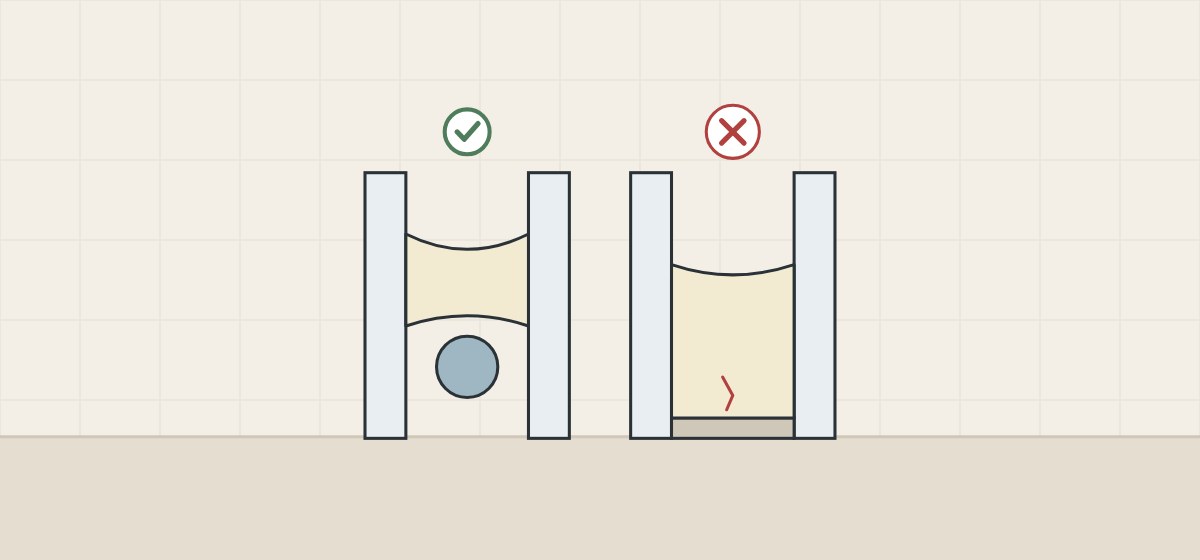
A sealant can only move with the joint if its shape and bonding allow it. Four points recur across the documents cited below.
Three-sided adhesion
Sika states that adhesion to anything other than the two joint flanks greatly reduces elasticity and movement capability and leads to failure. A backer rod defines the depth and prevents it.
Width-to-depth ratio
The ratio is set per product. Sika’s corporate guide gives 2:1 for facade joints. The Sikasil-702 data sheet asks for at least 6 mm depth or a width-to-depth of 1:0.5, and Soudal Trade Sanitary sets width at twice the depth, minimum 5 mm.
Movement capability
Sikasil-702 and Soudal Trade Sanitary state ±25%. GE rates Advanced Silicone 2 at ±35% on glass and ±25% on mortar and aluminum under ASTM C719 and C920.
Movement classes
Under ASTM C920, as summarized by Bostik, movement classes run from 12½ to 100/50; Class 25 means 25% extension and 25% compression.
- Joint width and depth for each location
- Backer rod or bond-breaker specification
- Movement capability claimed for the named sealant
- Substrates on both sides of the joint
What slows or changes the cure?
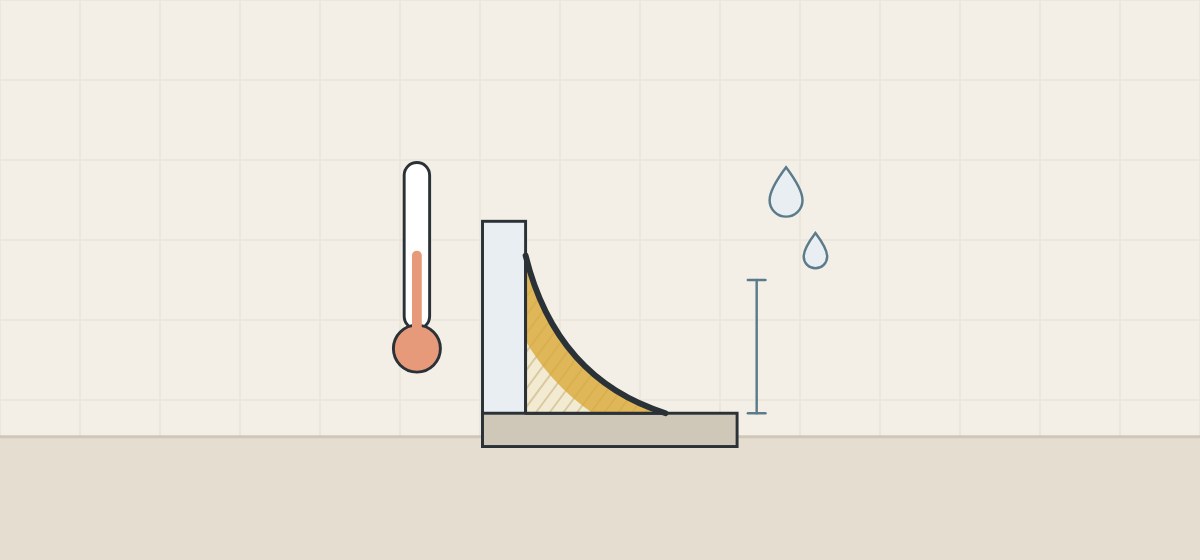
The same sealant cures at different speeds on different sites. Manufacturers state the direction of each effect, not a correction factor.
Temperature
Application windows are product-specific: +5 to +40 °C for Sikasil-702 and Sanisil, +5 to +35 °C for Soudal Trade Sanitary. GE gives an application temperature above 32 °F for Advanced Silicone 2, and its FAQ adds that cold weather means slower cure.
Humidity and moisture access
Dow states that lower humidity extends cure time. Sika says Sikasil-702 is not suitable for totally confined spaces because it needs moisture from the air.
Bead depth
Dow states that very deep sections, especially where moisture access is restricted, take longer to cure completely. GE also notes that thicker layers take longer.
Water exposure
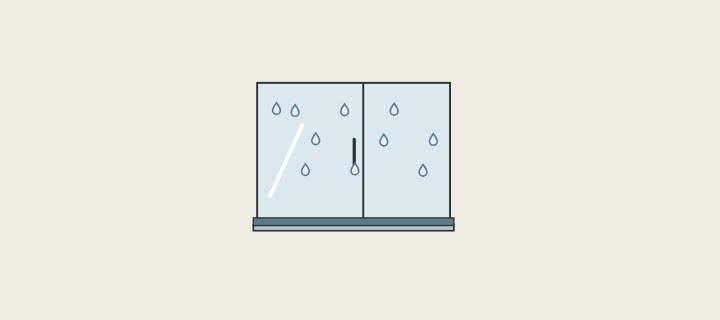
Shower door instructions differ. Kohler UK tells installers of one pivot door to allow the silicone 24 hours before use. One Kohler North American sliding door manual instead defers to the silicone manufacturer.
Several sanitary silicones exclude continuous immersion. Soudal says not to use its Trade Sanitary where continuous immersion is possible, GE does not recommend continuous underwater use, and Sika excludes swimming-pool joints under water pressure.
What do data sheet values promise, and what not?

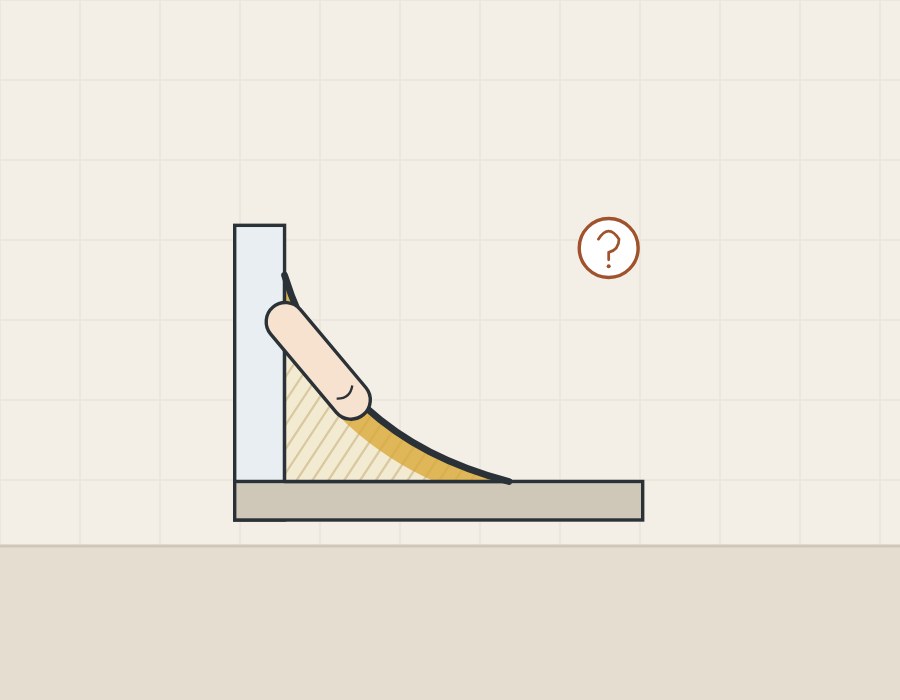
A timing on a data sheet describes a product under stated laboratory conditions. A cure rate is therefore not a release formula: dividing a joint depth by the rate does not give a guaranteed time for water exposure. The disclaimers below explain why.
| What the data sheet gives | What it does not promise |
|---|---|
| Typical properties from the manufacturer | GE states they are average data and are not to be used as, or to develop, specifications. |
| Laboratory test values | Sika states that actual measured data may vary due to circumstances beyond its control. |
| Skinning time and curing speed | Soudal notes both vary with temperature, moisture and substrate. |
| A tack-free time at standard conditions | ASTM C679 notes that the test can be run at other temperatures and humidities, to reflect where the sealant will be used. |
| A shower-door wait time | It applies to that door and sealant; other instructions defer to the sealant maker. |
How should a buyer plan the release of a sealed joint?

These steps apply the facts above to a project handover. They are procurement guidance, not installation instructions.
- Name the sealant. Record the product, not just “silicone”, because timings and substrate limits are product-specific.
- Check both substrates. Confirm the named sealant suits each surface, including stone, metal, mirror edges or gaskets.
- Design the joint. State width, depth and the backer rod or bond breaker.
- Record the conditions. Note temperature and humidity at application, because data sheet values assume set conditions.
- Record the milestones. Log application, tack-free and the maker’s water-exposure point for that bead size.
- Release by instruction. Allow use only when the named product’s instructions for those conditions are met, and record who confirmed it.
- Hand over the record. Give the end user the product name and any care limits, such as no continuous immersion.
When a joint has to be redone
GE advises removing the old bead completely rather than applying new sealant over it, cleaning off residue and letting the surface dry before resealing. The release clock then starts again for the new bead.
What should you ask before sealant is specified?
For shower enclosures, shower bases and vanity tops, the sealant is part of the installed system. These questions keep the timing and substrate decisions visible.
| Question | Why it matters |
|---|---|
| Which named sealant is proposed? | Timings, limits and ratings belong to that product. |
| Is it acetoxy, neutral-cure or hybrid? | Cure chemistry affects mirrors, metals and stone. |
| Which substrates has it been checked against? | Neutral cure does not make a sealant stone-safe. |
| What bead depth and width are planned? | Full cure depends on depth. |
| When does the maker allow water exposure? | Tack-free is not a release point. |
| Is continuous immersion excluded? | Several sanitary silicones exclude it. |
Include with your request
- Joint locations and the materials on both sides
- Planned joint width and depth
- Site temperature and humidity range
- Required handover or use date
- Any stone, mirror or metal near the joint
WNS Global confirms any offered sealant recommendation and installation scope separately in writing. This guide does not state that WNS Global supplies, tests or certifies any sealant named above.