From expectation to acceptance
Is a frameless shower enclosure watertight?
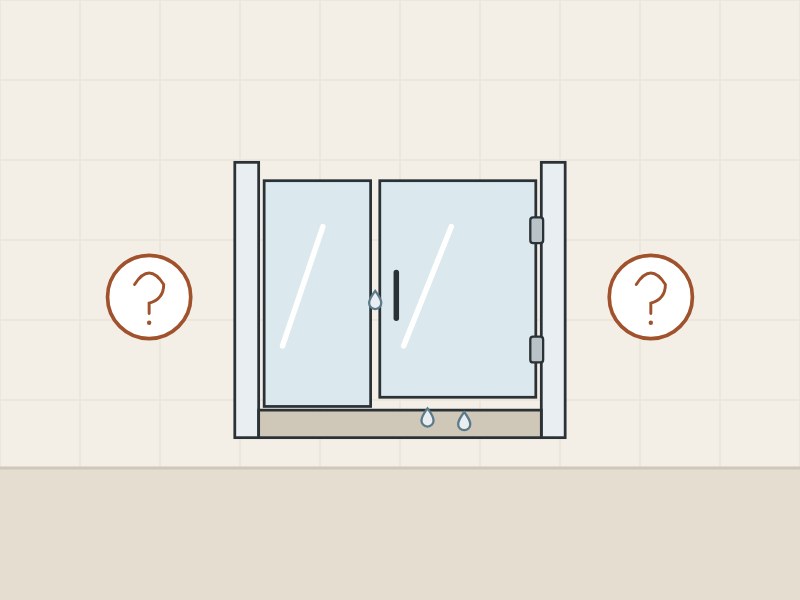
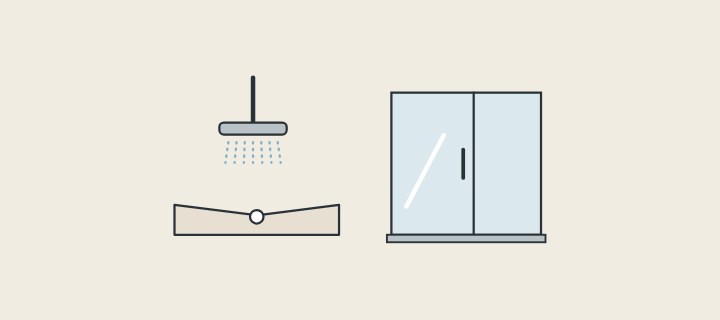
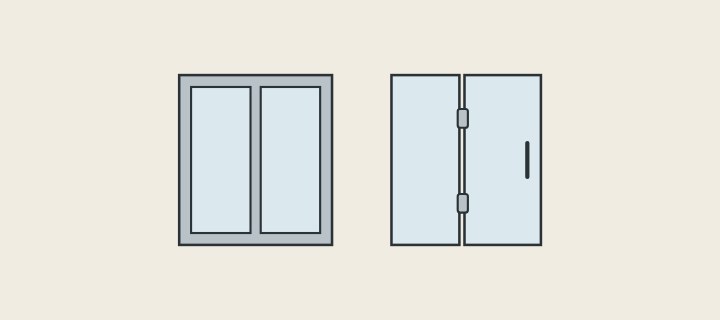
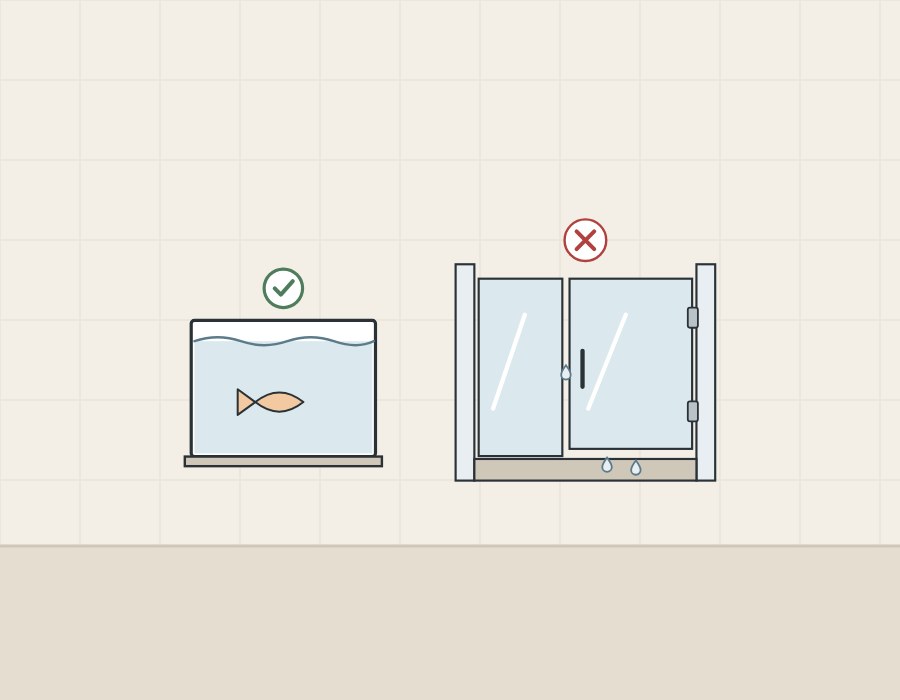
No. The NGA manual states that frameless shower enclosures are not watertight, and that a frameless enclosure is not the same as its framed or semi-frameless counterpart.
Agalite adds that heavy glass units with no or limited vinyl seals can let water escape under normal conditions.
Basco’s frameless installation page says its RODA enclosures are made with a small gap between the door and any stationary panels or walls, so they cannot be guaranteed against water escaping.
| Term | How the sources use it |
|---|---|
| Seal or wipe | NGA: polycarbonate wipes and seals may be used to help minimize water escape. |
| Gasket | Basco: provided with RODA enclosures to minimize leakage. |
| Curb | NGA: its top should slope toward the shower drain. |
| Weep hole | Agalite: hole on the inside of a horizontal channel that lets moisture out. |
| Zero-entry shower | NGA: an enclosure with no raised transition at the entrance. |
How does water get out of a frameless shower?
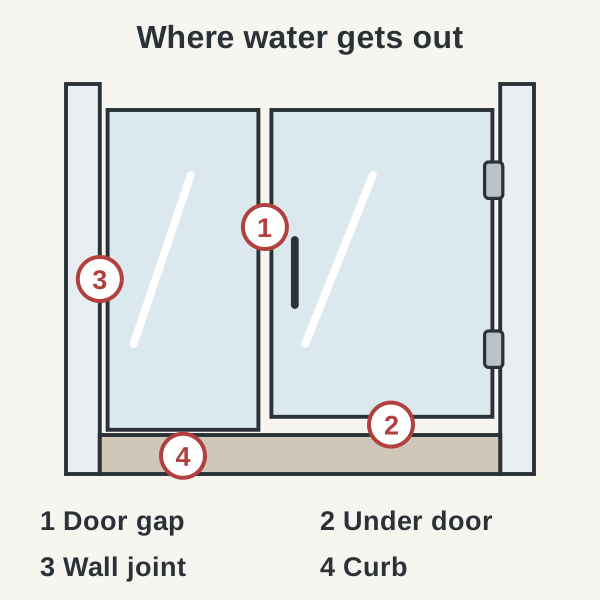
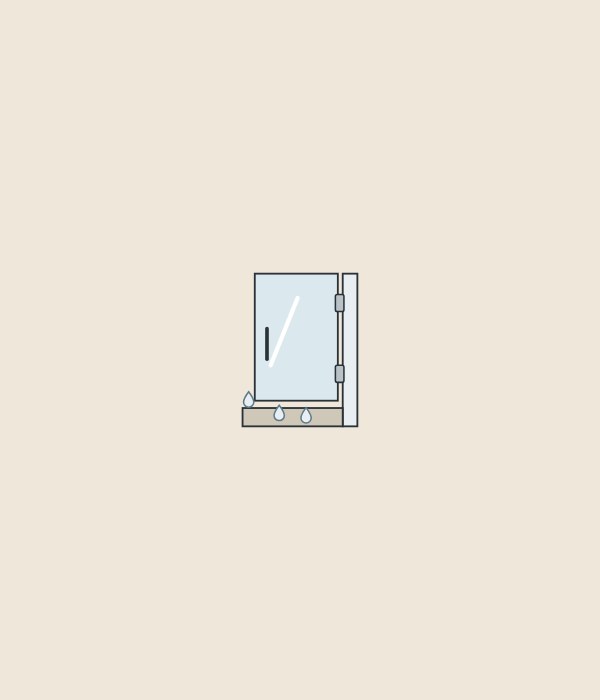
Water leaves by a few routes. The list combines the leak entries in two Kohler guides (a pivot door and a sliding door, neither described as frameless) with the NGA manual and Agalite.
- The gap between a door panel and a fixed panel, or between sliding panels.
- The gap under the door panel.
- The joint between the wall and the wall jamb.
- Over a curb that slopes away from the drain.
- Under the threshold.
- Spray aimed directly at a door or joint.
Kohler’s pivot door instructions give each location its own action: check the bottom seal, silicone the jamb, check the wedge seals or adjust the panel gap. Its sliding door guide lowers the rollers for a leak under a panel. For an outward-sloping curb, the NGA manual says caulking and plastic seals will not keep the water in. Name the route before the fix.
What decides how much water escapes?
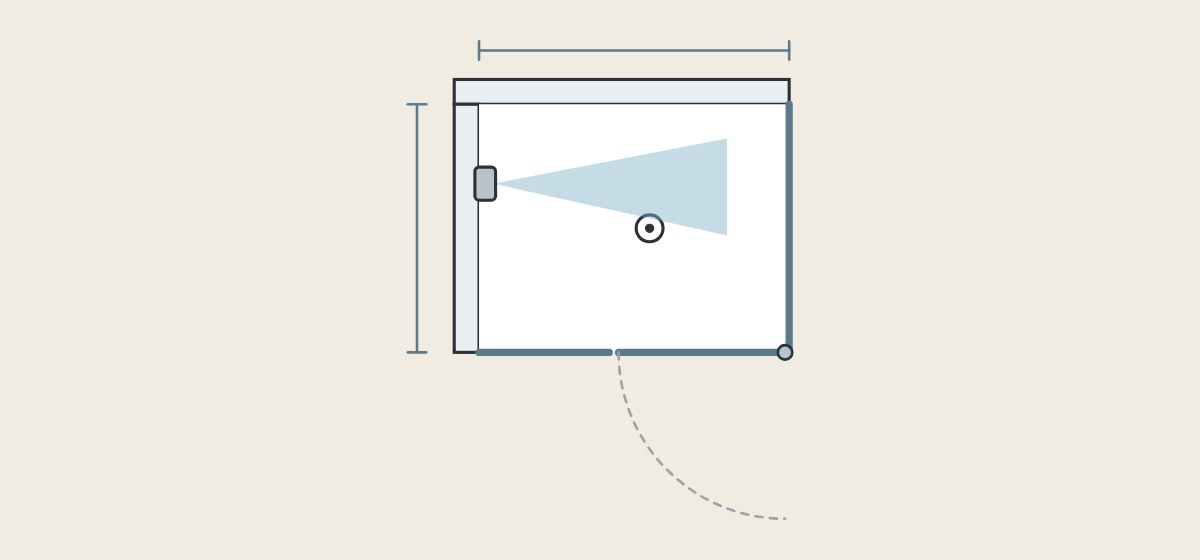
The NGA manual names the shower’s configuration and the type of enclosure as the primary factor in whether a frameless shower leaks.
| Factor | What the source says |
|---|---|
| Shower configuration | NGA: with enclosure type, the primary factor. |
| Size, heads, threshold, drain | Agalite: escape varies greatly with each, and with door type. |
| Sliding panels | NGA: gaps under the door and between the glass can let water escape. |
| Splash panel | NGA: may not minimize water escape as well as a full enclosure. |
| Wall condition | NGA: wall inconsistencies can leave leak-prone gaps. |
Agalite adds that excessive water pressure, or a shower head or hand spray aimed directly at doors or joints, is not normal use.
Where should the shower head point?
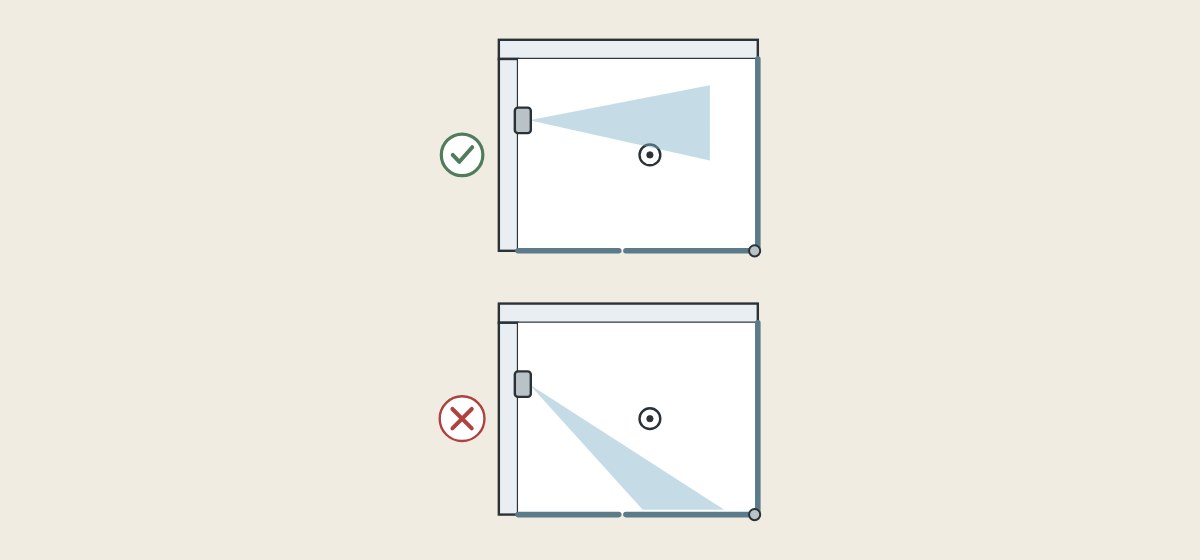
Not at the door or its joints. Agalite says spray aimed directly at them can result in leaks, and DreamLine’s troubleshooting says to direct the shower head away from a leaking area. The Kohler and NGA documents instead set the panel overlap or header-bar side by where the shower head is.
| Product type | Document | What it says |
|---|---|---|
| Sliding door | Kohler sliding door guide | The inside panel closes on the showerhead side. |
| Frameless slider | NGA manual | Shower head on the same side as the door: mount the door inside the header bar. Opposite side: outside. |
| Sliding shower or tub door | DreamLine ENIGMA-XO instructions | For water leakage: direct the shower head or water flow away from the area. |
| Shower and bath enclosures | Agalite owner’s manual | Spray aimed directly at doors or joints can result in leaks. |
Put the shower head, hand shower and door on one plan before the valve wall is closed.
What do seals, sweeps and curb slope do?
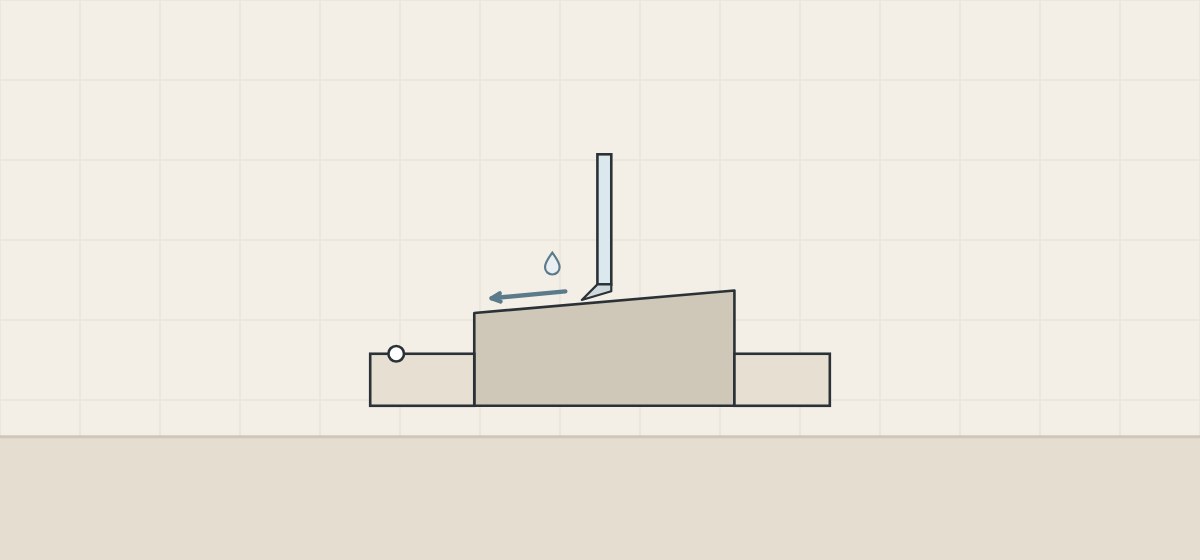
They reduce water escape; the sources do not say they stop it. Four points:
Seals change the glass sizes
The NGA manual says clearances are generally larger with seals and minimal without, so glass deductions differ. Decide on seals before glass is cut.
Direction matters
Kohler’s pivot door has a water deflector on the door bottom with its fin facing the inside of the shower. Roman’s corner enclosure manual says a deflector facing the wrong way may result in leaking.
The curb must slope inward
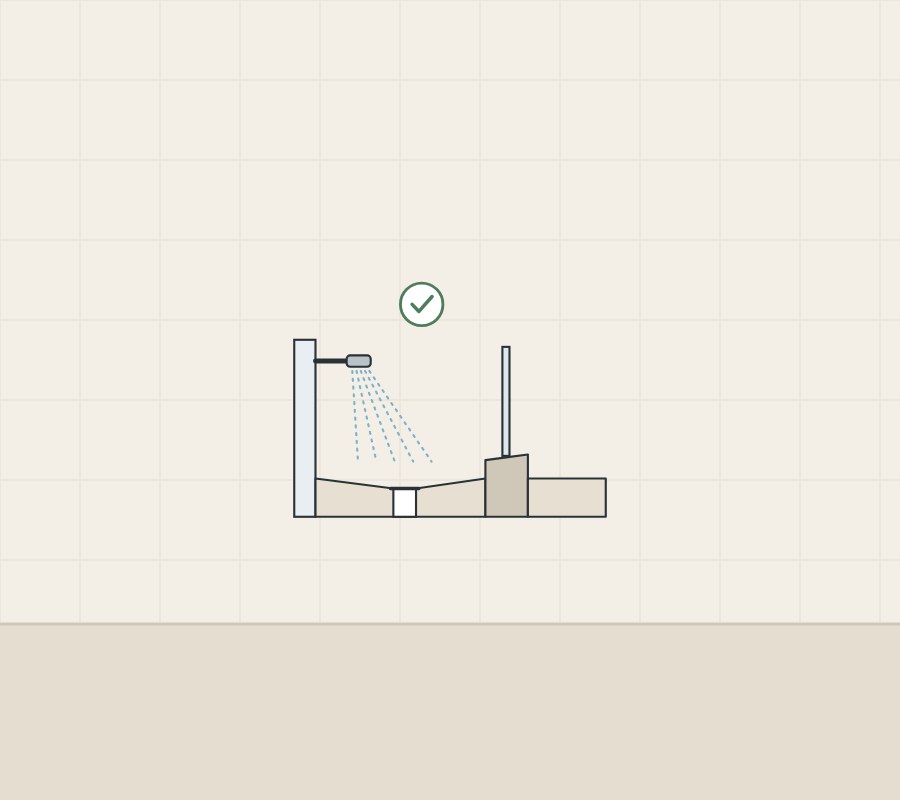
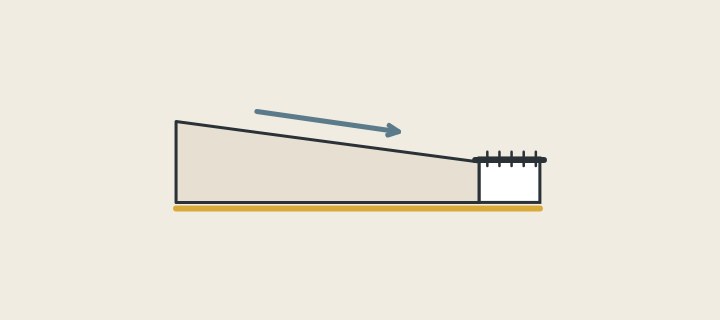
The NGA manual gives a curb slope of 1/8 to 1/4 inch over a 6-inch span, toward the drain. A perfectly level curb lets water pool and spill out, it says; too steep a slope may make the door scrape or the sweep bind. Basco makes the contractor or homeowner responsible for a threshold pitch that drains water back into the shower pan.
Seals wear
Agalite says polycarbonate seals and door sweeps may need replacing as they age and wear.
- Seals, by position
- Sweep direction
- Curb slope on site
- Spare seals
Where should silicone go, and where not?
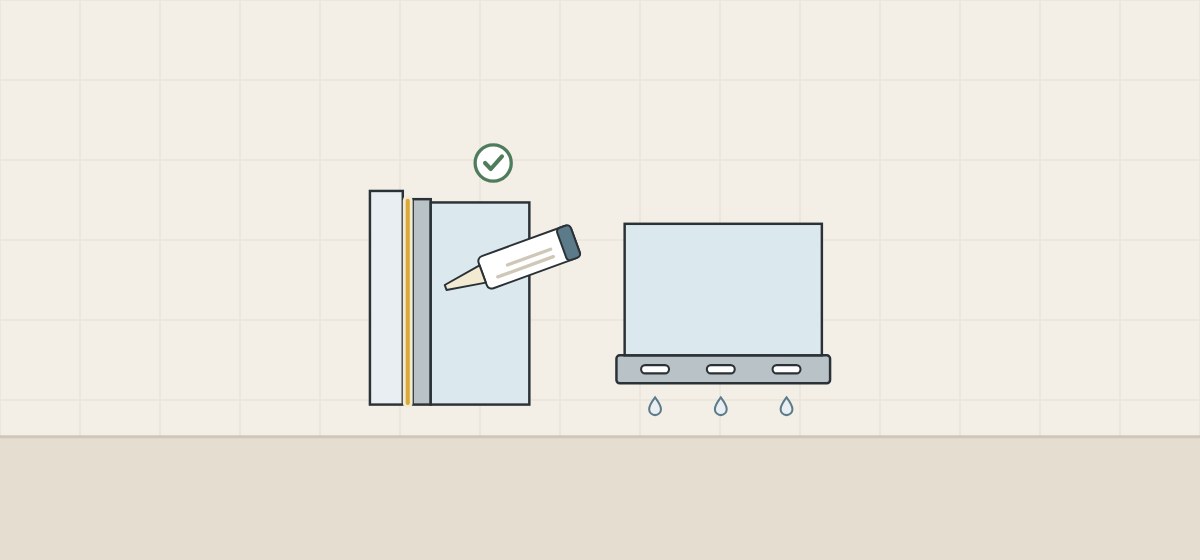
Only where the selected model’s instructions show it. The instructions below put the sealant in different places.
Outside
Kohler’s pivot door instructions put the installation bead on the exterior edges of the wall jambs and threshold. Roman’s manual seals the base to the shower base from the outside only. Crosswater explains that sealing internally can trap water.
Both sides
Kohler’s sliding door guide seals the wall jambs and the threshold inside and outside.
Leave drainage open
Agalite recommends weep holes on the inside of horizontal channels, so that moisture building up in a channel can leave it.
Wait before use
DreamLine’s ENIGMA-XO instructions allow 24 hours for the silicone to cure before first use. Roman’s manual also allows 24 hours.
Kohler’s pivot door instructions warn that sealing areas other than those shown may cause leaking.
What must the floor, curb and waterproofing do?
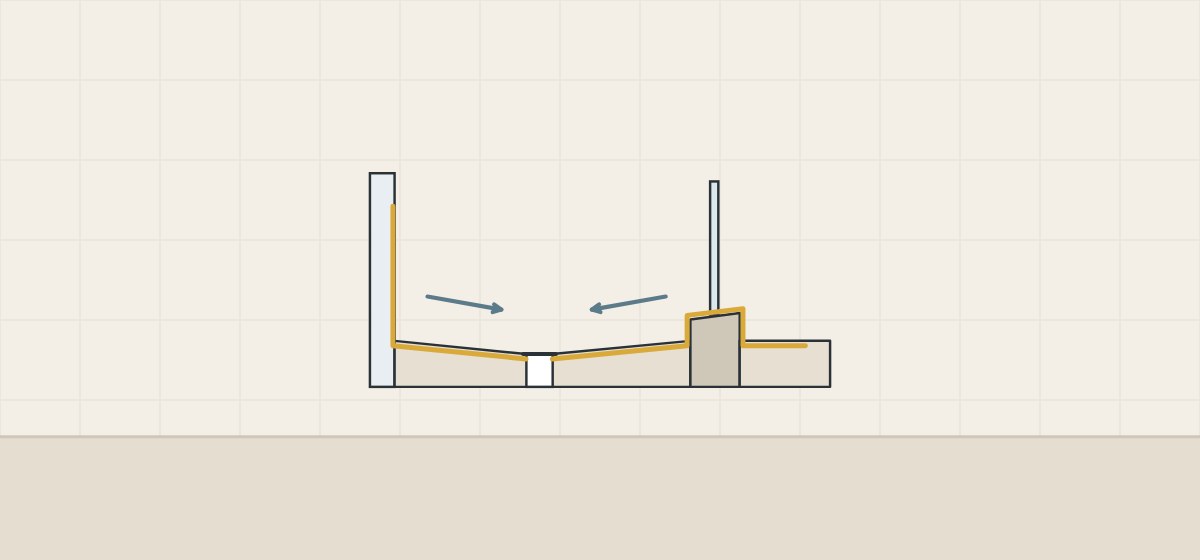
They must already drain toward the shower drain when the glass is fitted. Figures are each source’s own; confirm with the local authority.
| Source | What it says |
|---|---|
| NGA manual, zero-entry showers | Floor slopes to the drain; the area under the glass is flat, not pitched. |
| NTCA TileLetter Q&A | A reader quotes the TCNA Handbook: seats, sills and curbs must slope towards the drain. NTCA’s answer gives 1/4 to 1/2 in per 12 in for all horizontal surfaces. |
| CTEF in TileLetter | Curbless: floor and wall waterproofing continues one foot beyond the high point of the floor. |
| Contra Costa County, California | A curb, where provided, is at least 1 in above the shower floor and 2 to 9 in above the top of the drain; floor slopes 1/4 to 1/2 in per foot. |
| Kohler pivot door | Base and finished walls go in first; walls within 3/8 in of plumb. |
How should a buyer specify water containment?
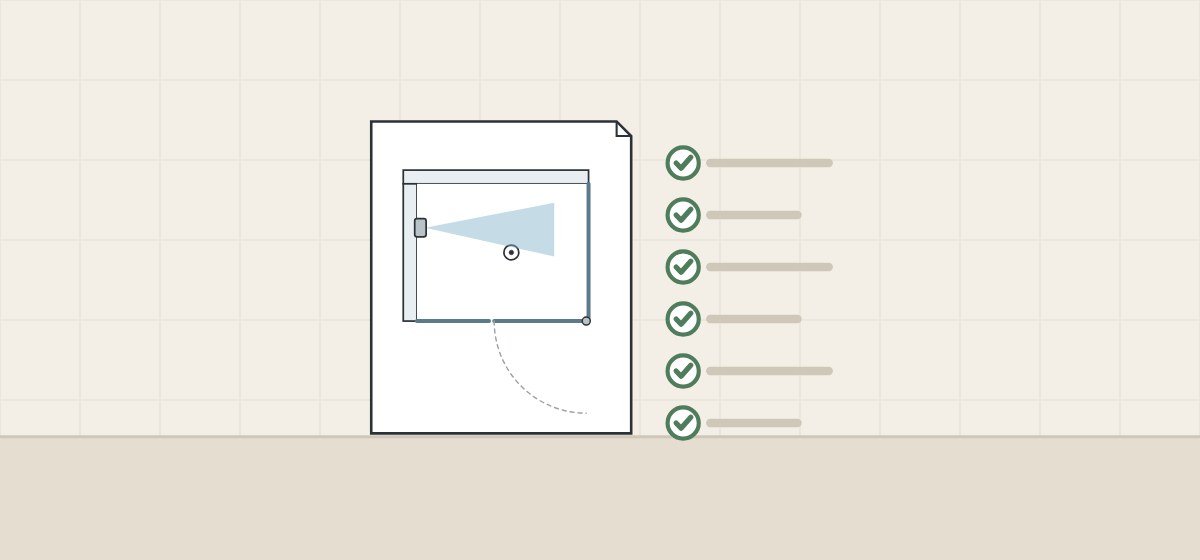
Specify the water path, not a promise. These steps are procurement guidance, not a code review.
- Draw the room in use. Shower head, spray direction, door handing, drain and dry-zone finishes.
- Approve the selected system. Door type, seals, sweep, threshold and the model’s instructions, before glass release.
- Assign each interface. Glass and seals; waterproofing and floor slope; drain; final sealant.
- Record the site. Curb slope toward the drain, wall plumb, finished surfaces.
- Agree the test. Normal shower use, where to look, when, and who records it. Avoid an unqualified “zero water” clause.
- Review each room type. Mirrored rooms or moved shower heads need their own check.
Test the finished shower
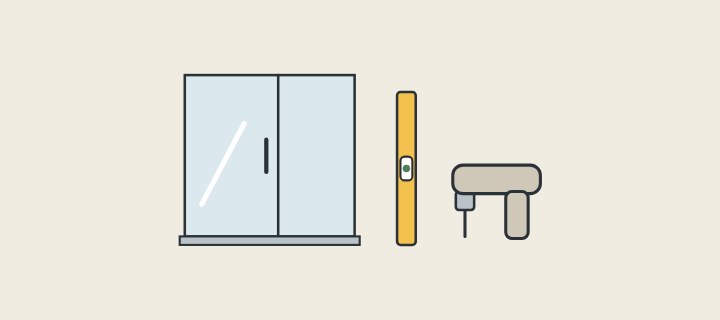
After the sealant has cured, photograph the dry floor outside. Check that each seal is present and faces the right way. Run the shower in the agreed position and watch for the first place water crosses. Correct that route with the responsible installer, then repeat the test. One passed room documents that room only.
What should you send and ask before a quotation?
A complete request shows where the water goes. Each question maps to a point above.
| Question | Why it matters |
|---|---|
| Which seals and sweep are included? | Fewer seals can mean more escape in normal use. |
| Do the glass sizes assume seals? | Seals change the deductions. |
| Where does the door or inside panel sit? | Its place relative to the shower head decides whether spray reaches the gap. |
| What curb or threshold does the model need? | NGA: a curb with no fall toward the drain, or one sloping outward, lets water out. |
| Where does the sealant go? | Kohler’s pivot door instructions: sealing areas other than those shown may cause leaking. |
Include with your request
- Plan with shower head, door and drain
- Curb or zero-entry detail, with slope
- Wall finish and plumb record
- Proposed acceptance test
- Room types and quantities
WNS Global confirms any offered enclosure, seal set and commercial terms separately in writing. This guide does not state that WNS Global products have the seals, thresholds, ratings or water performance named above.