From label to signed sample
What makes a vanity finish sample reproducible?
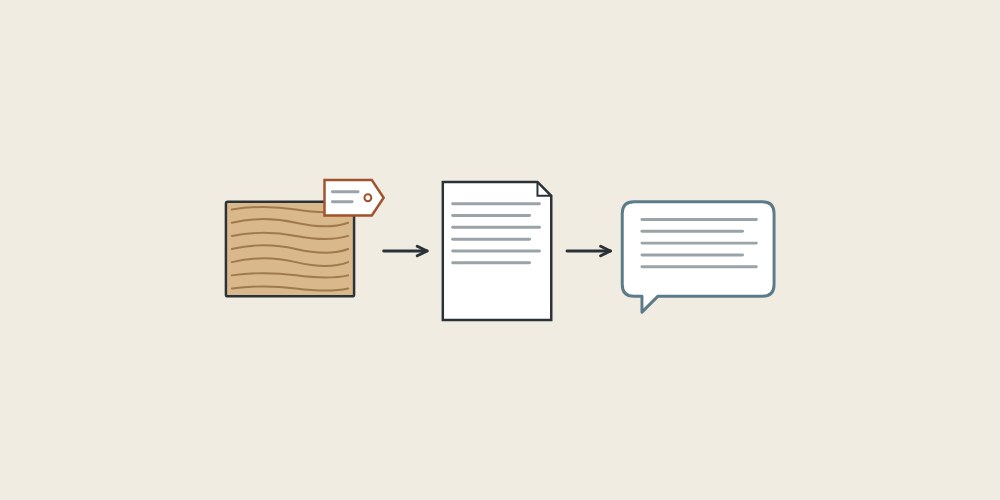
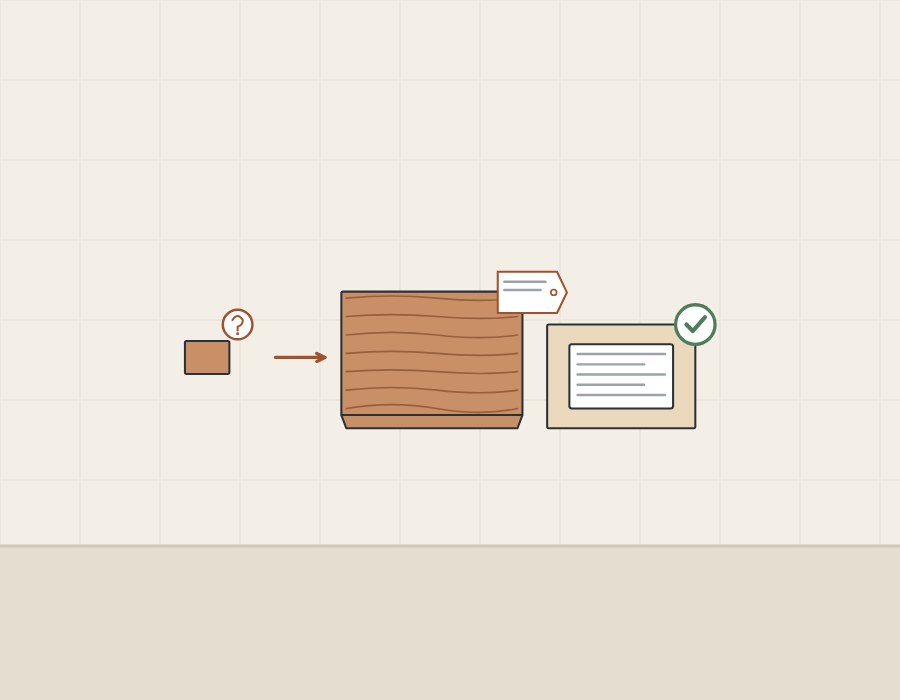
A finish sample can be reproduced when it is made on the production material and its label says what was applied. AWI 100 asks that finish samples, where required, be on material representative of the project and carry a label that includes the finish technology and the steps used.
AWI wrote that clause for architectural woodwork, not for bathroom vanities. The logic still serves a vanity order: a chip with no record of species, substrate or coating can only be approximated later.
ANSI/AWI 0400-2022, AWI’s factory finishing standard, sends sample approval back to AWI 100.
| Term | What it means |
|---|---|
| Opaque finish | AWI: paint or pigmented stain that hides the grain’s natural character and color. |
| Metamerism | AWI: an apparent color change caused by varying lighting. |
| Step sample | AWI QCP: a sample showing the individual finishing steps. |
| Specular gloss | ASTM D523-25: measured at 60°, 20° or 85°. |
How is a reproducible sample built and approved?
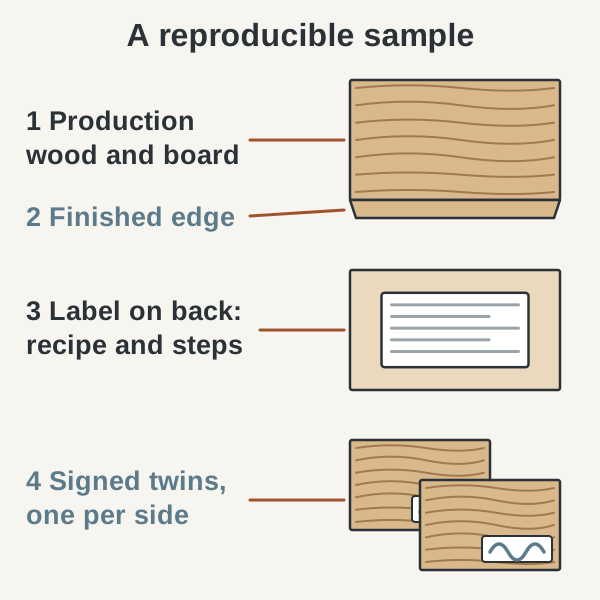
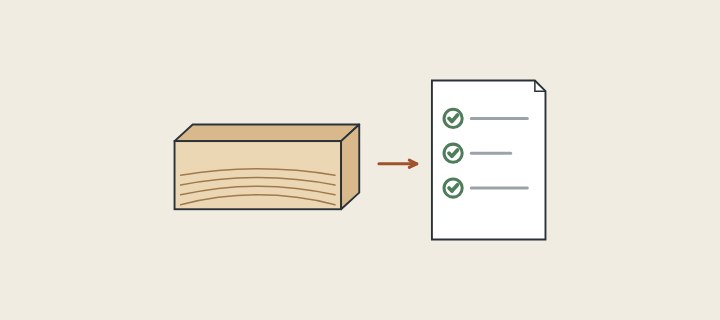
It is built on production material, labeled, sent as a set, judged as an object and accepted in writing. The eight steps are this guide’s procedure, not an AWI clause.
- Agree on the finish in words.
- Use the production species, cut and substrate.
- Include a finished edge and any profile.
- Label the back: recipe, steps, number, date.
- Make a matching pair or set in the same run.
- Send the physical samples by courier.
- Compare them in daylight and in the project’s light.
- Sign and date the twins; each side keeps one.
AWI 100 lists written acceptance of all representative visual qualities before work proceeds. ANSI/AWI 0400-2022 has the finish applier report, before starting, any condition that might affect proper application.
What should the finish sample label say?
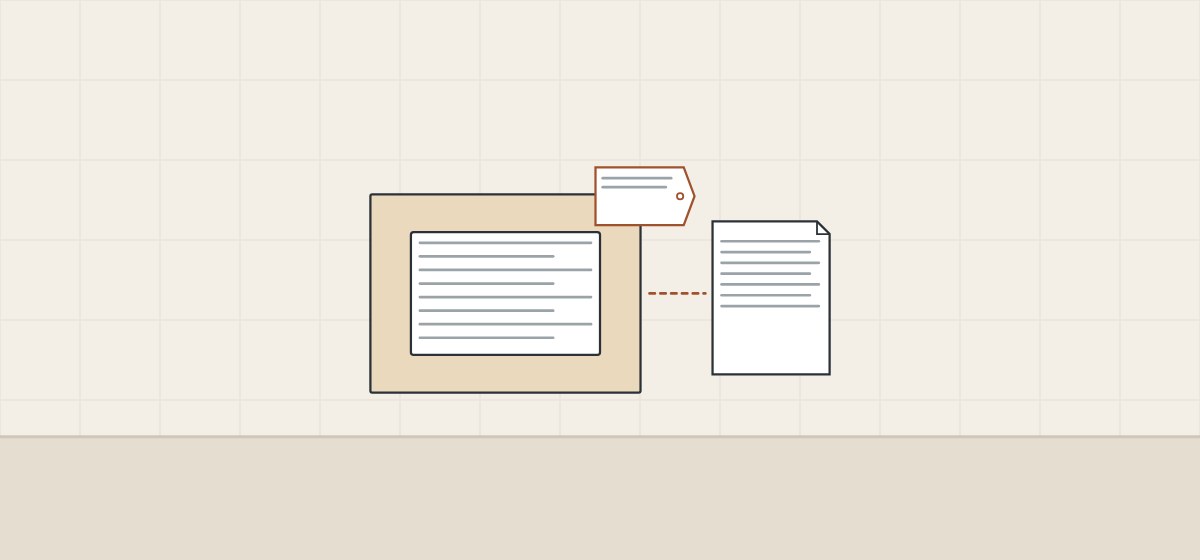
The label should let a finisher repeat the sample without asking anyone. The first five rows are the label list in AWI 100; the last three are this guide’s additions.
| Label item | Listed by |
|---|---|
| Date and project name | AWI 100 |
| Design professional and general contractor | AWI 100 |
| Manufacturer or supplier, and finisher | AWI 100 |
| Finish technology name and number | AWI 100 |
| Steps used | AWI 100 |
| Species, cut and substrate | This guide |
| Color name or code, and sheen | This guide |
| Sample number and approver | This guide |
AWI 100 puts the finish technology and the steps on the label, so a color name alone is not the record.
How large should a finish sample be, and how many are needed?
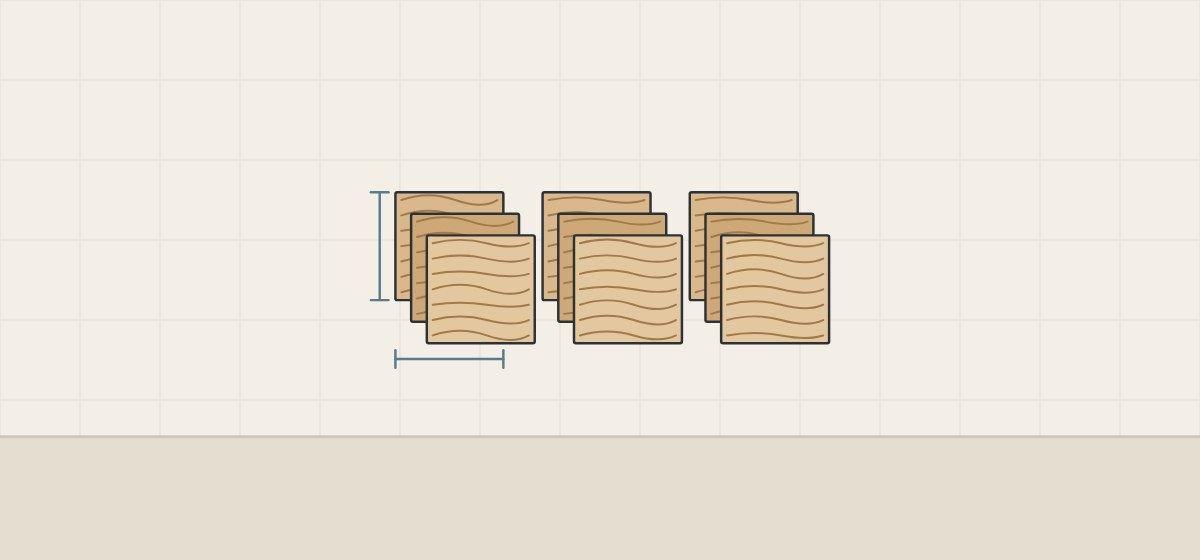
Large enough to show grain, and more than one. AWI 100 gives minimums for woodwork submittals; the AWI Quality Certification Program asks firms applying for a license for larger panels.
| Source | Sample | Minimum |
|---|---|---|
| AWI 100 | Panel product | 203 × 203 mm, 6.4 mm thick |
| AWI 100 | Lumber | 19.1 mm thick, 203 mm long, as wide as practical |
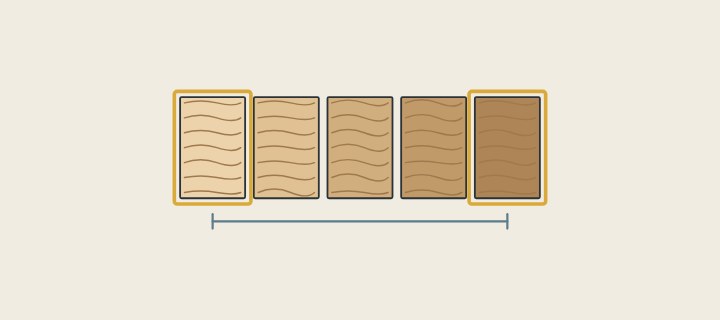
| AWI 100 | Transparent or stained finish | Three sets of three, bound together |
| AWI 100 | Opaque finish | Three samples per color |
| QCP licensing criteria | Veneer panels, transparent finish | Three, each 12 × 12 in (305 × 305 mm) |
AWI 100 says the transparent or stained sets indicate the range of color and grain to expect. The QCP criteria, effective March 1, 2015, also ask for a step sample and a label on the back of each sample.
Why must the sample be on the production species and substrate?
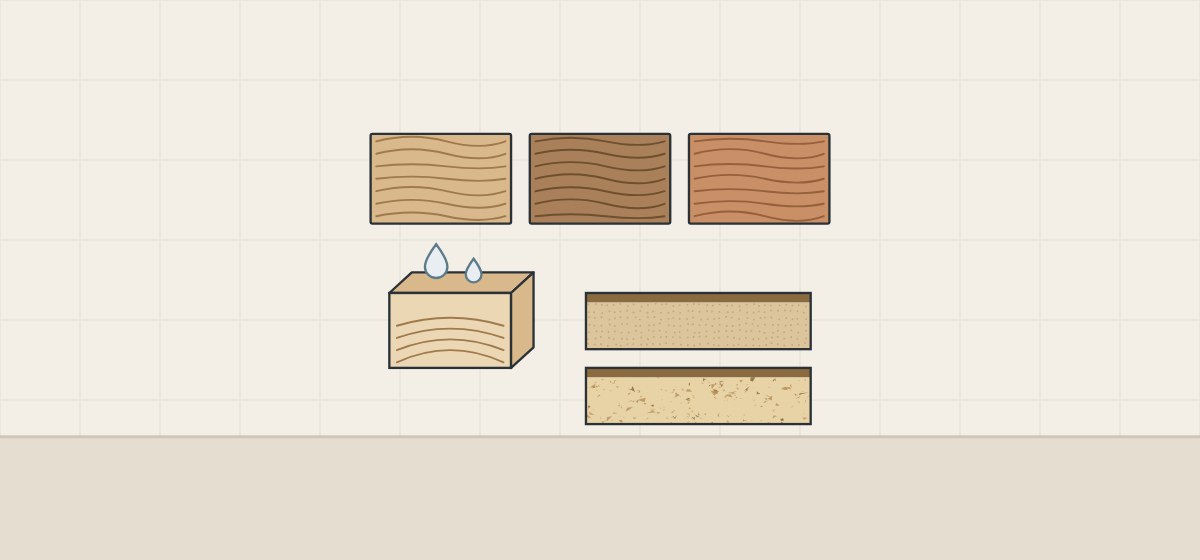
Because the material under the coating is part of what the eye sees. Four published facts about wood bear on it; none of the sources used here covers the substrate’s effect:
End grain
The USDA Forest Products Laboratory’s Wood Handbook says end grain is commonly 100 times more porous than the side of a piece of wood, so it absorbs much more stain or other finish.
Pores
AWI’s glossary names elm, oak and ash as examples of open grain species and cherry, maple and birch as closed grain. ANSI/AWI 0400-2022 requires a filled grain pore finish only if specified.
Heartwood color
The handbook says extractives give heartwood its color and sometimes migrate to the finish surface, causing unwanted colors.
Light over time
AHEC says American cherry heartwood darkens on exposure to light with time. On this guide’s reading, a retained cherry sample may also darken if it is kept in the light. So, in this guide’s view, the sample should match production in:
- Species and cut
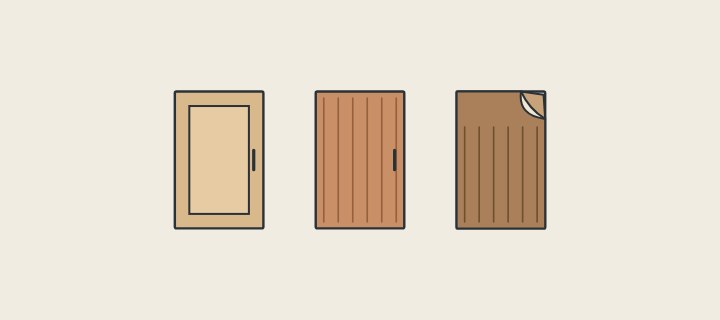
- Solid wood, veneer or panel substrate
- Edge, end grain and profile
- Coating products and number of steps
How do you judge color and sheen without a factory visit?
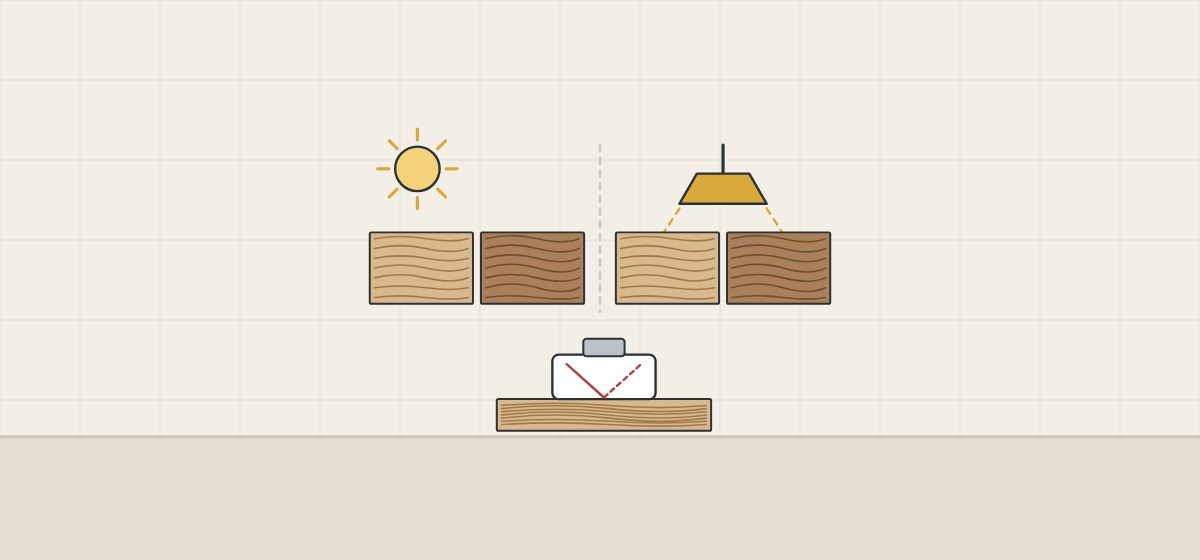
By judging the physical sample under known light and stating sheen as a measured value. Published methods exist for paints and opaque materials:
Visual check
ASTM D1729-22 notes that color matches are usually checked visually.
Light source
ISO 3668:2017 compares paint films with a standard under artificial light in a standard booth. ASTM D4086-18(2023) gives visual methods for detecting metamerism.
Gloss as a number
ASTM D523-25 measures specular gloss at 60°, 20° and 85°.
Named color systems
RAL says RAL Classic currently includes 216 shades and names its 840-HR and 841-GL registers as binding color templates.
The public summaries used here give no tolerance for a vanity order. This guide treats the delivered sample, seen in the buyer’s own light, as the approval and photographs as discussion aids; that is guidance, not a sourced rule.
What can a finish sample prove, and what can it not?
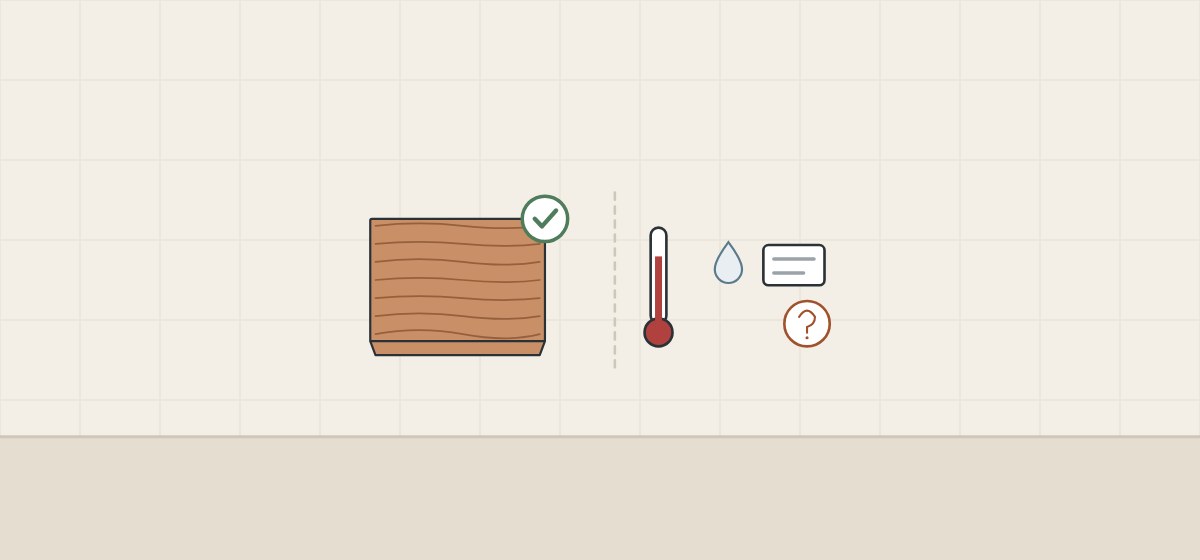
A sample shows appearance on the real material, not how the coating performs. KCMA describes separate finish tests under its A161.1 certification program: heat and humidity, a hot-then-cold test, food and drink spills, and detergent on a door edge.
| Evidence | What it can show | What it cannot show |
|---|---|---|
| Physical sample on production material | Color, grain and sheen on that material | Resistance to cleaning, heat or wear |
| Label with recipe | What has to be repeated | That production followed it |
| Written finish specification | The agreed finish in words | How it looks |
| Photos with a gray card | A shared view for discussion | True color on a screen |
| Twin kept by each side | One shared reference | That both twins age alike |
| Finish test report | Results of the named tests | Appearance of the order |
How should a buyer run a remote finish approval?
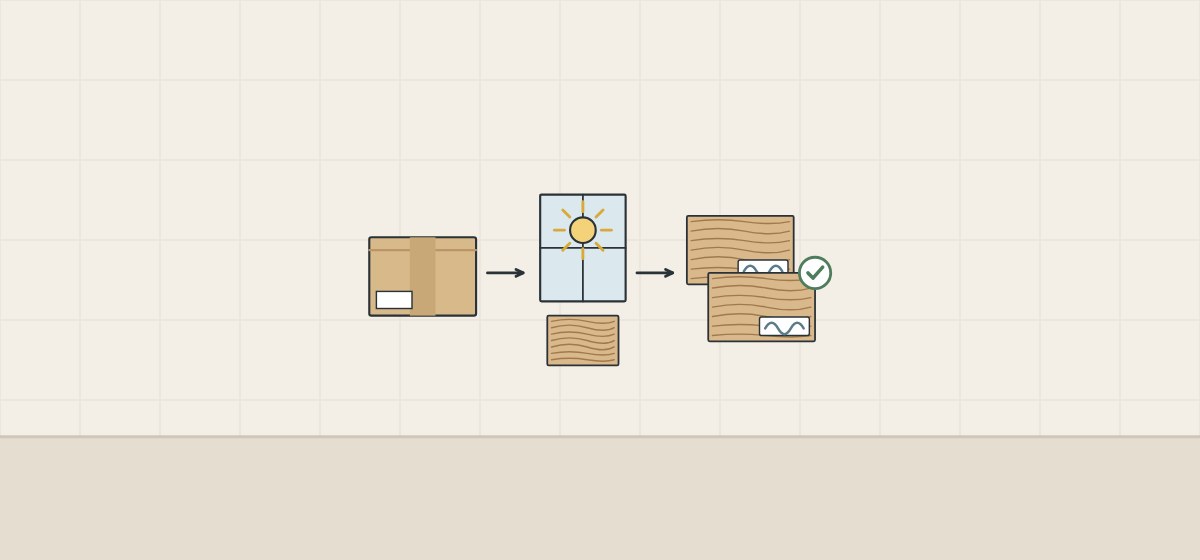
These seven steps are procurement guidance for an order approved by courier, not a standard.
- Write the finish first. Species, cut, substrate, color reference, coating type and sheen.
- Ask for production material. A sample on another wood or board is indicative only.
- Ask for the label. An unlabeled chip can only be approximated.
- Ask for size and range. Figure, end grain, lighter and darker examples.
- Wait for the courier. Approve the object, not the screen.
- View in two lights. Daylight and the project lighting.
- Sign twins. Each side keeps one; the sample number goes in the order file.
When to approve again
This guide suggests a new sample whenever the species, substrate, stain or topcoat product changes, and when the retained twins no longer match each other.
What should you send and ask before a quotation?
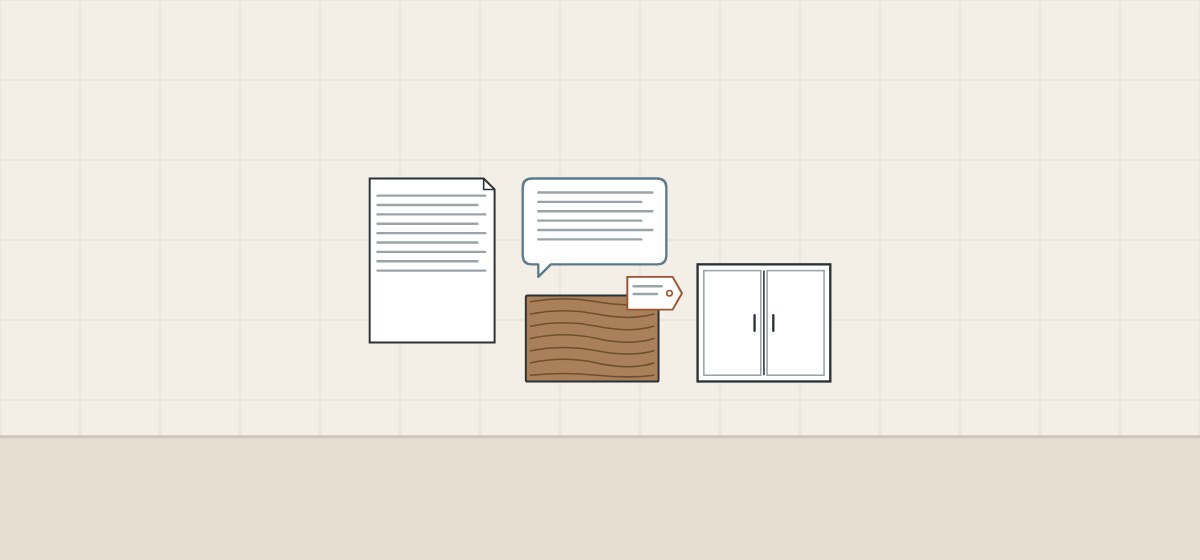
A complete request names the finish sample as a deliverable.
| Question | Why it matters |
|---|---|
| Is the sample on the production species and substrate? | The material is part of the color. |
| How many samples, and what size? | A set shows range; a chip hides grain. |
| How is sheen stated? | A gloss value needs its angle. |
| What do samples and freight cost? | Agree on it in writing first. |
| Which finish tests are reported, if any? | A sample does not show performance. |
Include with your request
- Species, cut and substrate wanted
- Color reference or physical target
- Sheen wanted
- Edge and profile drawings
- Project lighting type
WNS Global confirms any offered vanity, finish, sample arrangement and commercial terms separately in writing. This guide does not state that WNS Global products or samples have any feature, rating or listing named above, or that WNS Global works to any standard named above.