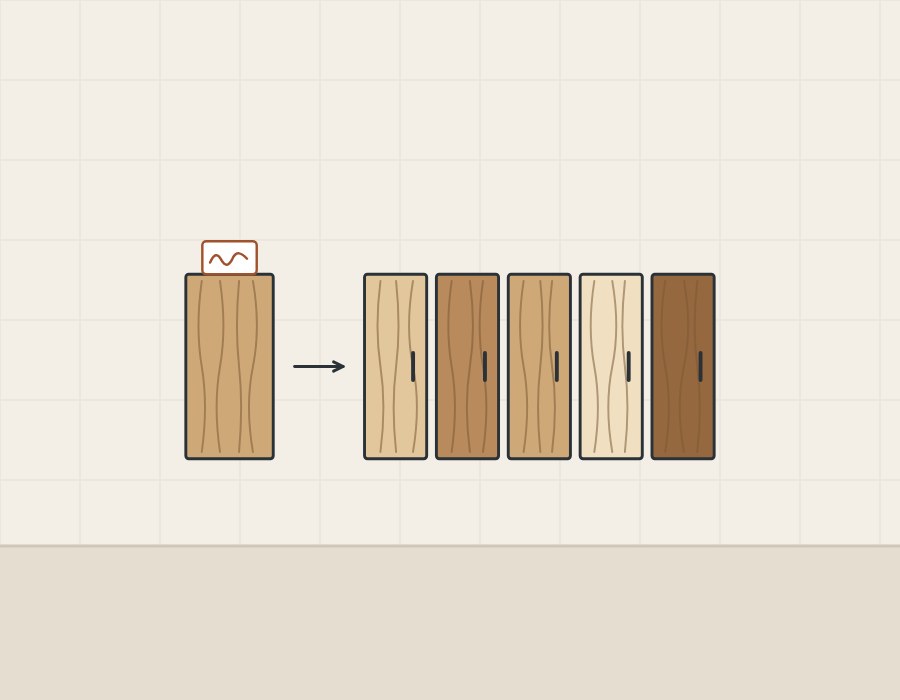
From the board to the room
Why do wood vanity fronts differ from the approved sample?
The sample is one piece of wood; an order is cut from many. The USDA Wood Handbook says the heartwood color of a single species can vary greatly with the growth history and health of the tree and with genetic differences between trees.
The same handbook says sapwood is in the white range in most species and that heartwood color depends on extractives. The AWS lumber section adds that grain patterns vary within any selected species.
| Term | What the source says |
|---|---|
| Sapwood | Wood Handbook: in the white range in most species. |
| Heartwood | AWI glossary: generally told from sapwood by its darker color. |
| Figure | AWI glossary: the natural pattern from growth rings, rays, knots and grain deviations. |
| Mineral streak | AWI glossary: an olive to greenish-black or brown discoloration in hardwoods. |
| Natural | AWI glossary: lumber or veneer not sorted for sapwood or heartwood. |
Where does the difference between two finished doors come from?
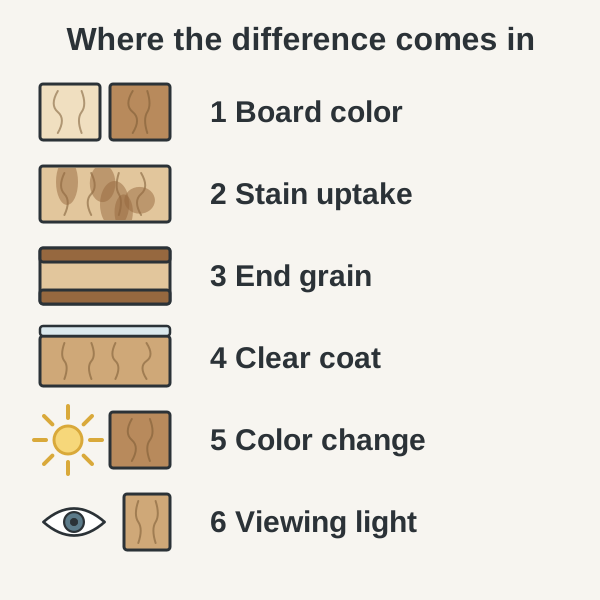
It builds up in steps, from the board to the room. The sequence draws on the Wood Handbook, the 2014 AWS finishing section and KraftMaid.
- Boards differ in color before any finish, between heartwood and sapwood and from tree to tree.
- The AWS finishing section ties blotchy appearance in some species to uneven pore distribution.
- KraftMaid says exposed end grain may accept more stain and look darker.
- The AWS finishing section says even a clear topcoat alters the natural color.
- The same section says wood changes color, especially cherry, fir, mahogany, walnut and teak.
- Perception, ambient lighting and reflectivity influence judgment, per the same section.
The AWS finishing section also says samples should always be prepared.
How much do common vanity species vary in color?
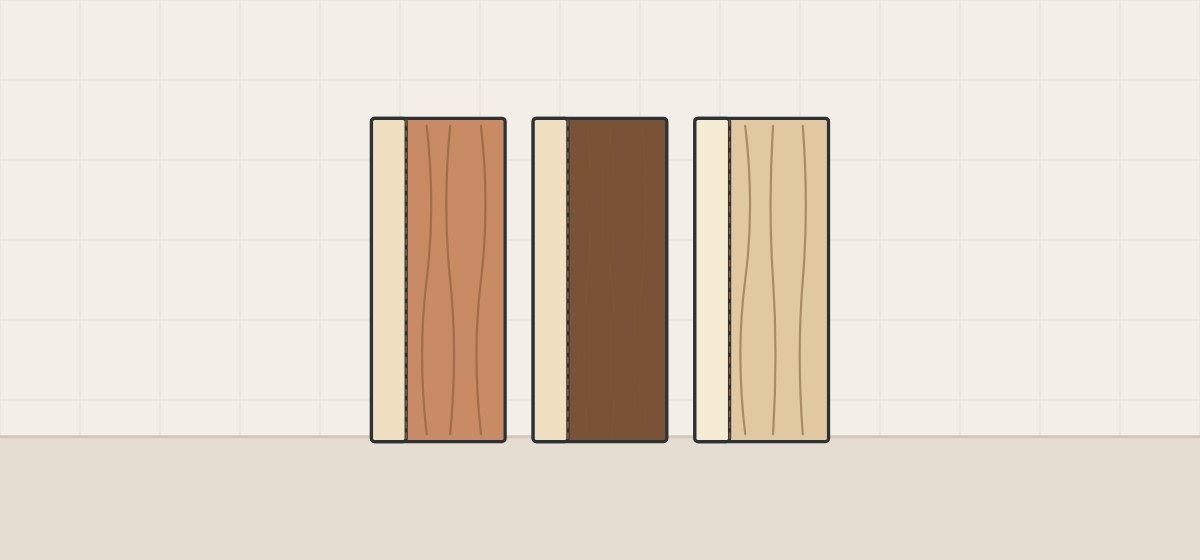
The range depends on the species. The American Hardwood Export Council (AHEC) describes the lumber of three American hardwoods as follows.
| Species | Sapwood and heartwood | AHEC note |
|---|---|---|
| Cherry | Creamy white sapwood; heartwood rich red to reddish brown | Heartwood darkens on exposure to light; may be sold selected for color |
| Walnut | Creamy white sapwood; heartwood light brown to dark chocolate brown | Generally sold un-steamed and unselected for color |
| Hard maple | Sapwood normally creamy white; heartwood light to dark reddish brown | Darkens with light over time; may be sold by white color selection |
AHEC adds that specialist producers may offer steamed walnut to darken the sapwood, and that the white color selection of hard maple normally carries a premium. Ask which selection a quotation assumes.
What do woodwork standards mean by a color and grain match?
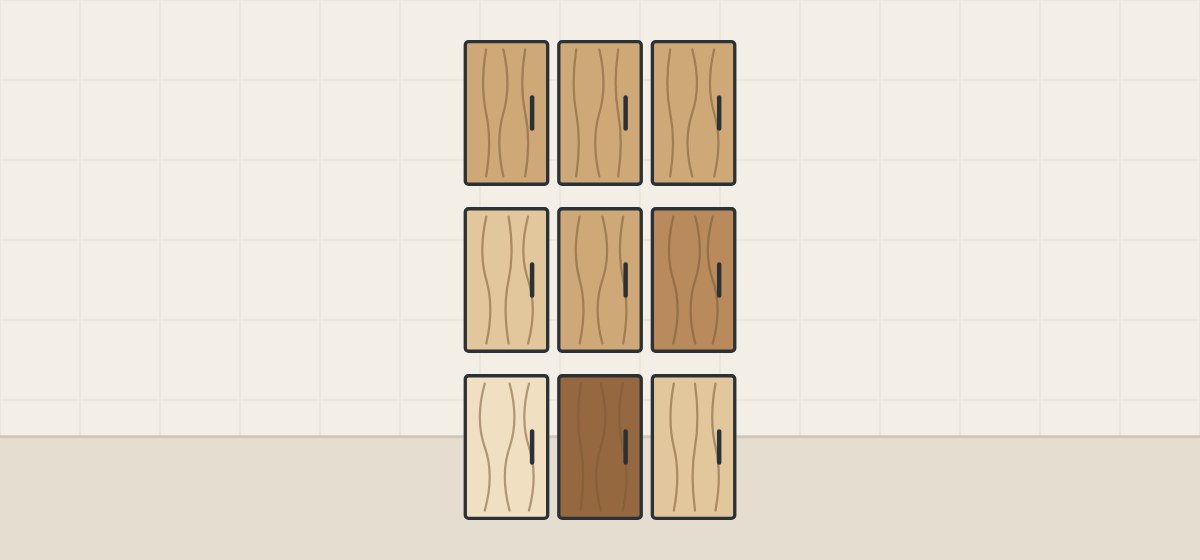
They use graded wording, not a promise of identical parts. AWI’s materials standard, in its lumber clause for transparent-finished hardwood that is glued up or veneered, and ANSI/AWI 0400-2022 Factory Finishing, in its aesthetic clause, set the following by grade.
| Grade | Hardwood for transparent finish, glued up or veneered | Finish color |
|---|---|---|
| Premium | Well-matched for color and grain | Well-matched for color |
| Custom | Compatible for color and grain | Compatible for color |
| Economy | Matching not required | Compatible for color |
The AWI glossary defines compatible for color and grain: lighter-than-average members are not placed next to darker-than-average ones, and the grain of adjacent members does not vary widely. These are AWI grades for architectural woodwork; a vanity order follows them only if the contract says so.
How is sheen specified and measured?
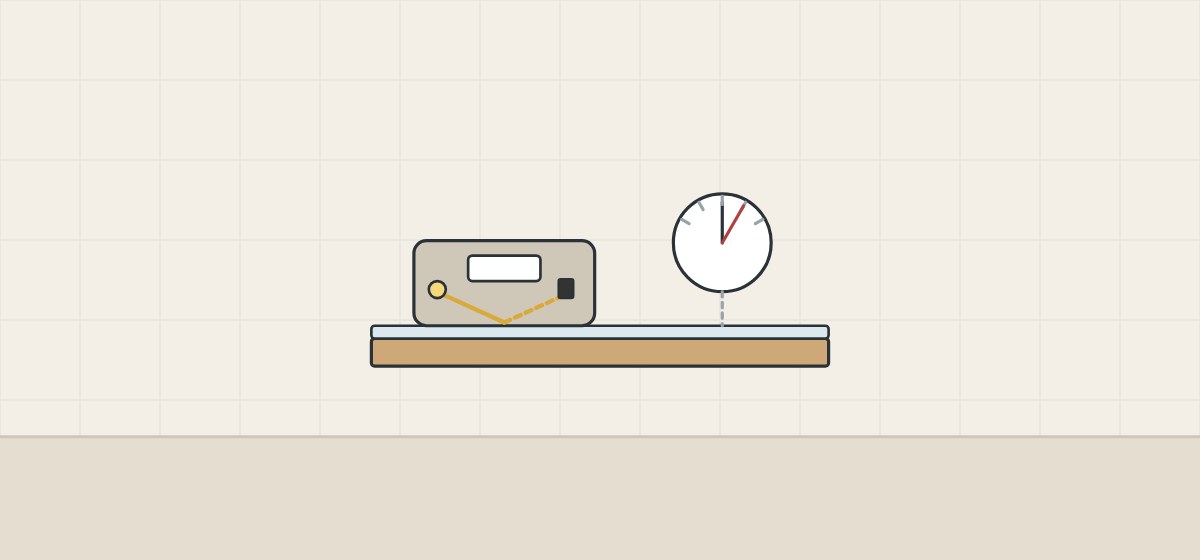
Sheen is measured as specular gloss with a gloss meter at a stated angle. Three documents show how. The list after them is this guide’s own: what an order should name.
AWS finishing section, 2014
Says its sheen ranges were developed by measuring reflectance at a 60 degree angle with a gloss meter, and lists flat 8–14, satin 15–25, satin gloss 26–49, semi-gloss 50–70 and gloss 71–90. ANSI/AWI 0400-2022 replaced this section in August 2022.
ASTM D523-25
Its published scope covers specular gloss of nonmetallic specimens at glossmeter geometries of 60°, 20° and 85°.
Elcometer guidance
The instrument maker advises starting at 60°, then using 20° for results above 70 gloss units and 85° below 10.
- The measuring angle
- The target range and its source
- The standard the meter follows
- Which faces are measured
Under what light should color be compared, and does it stay the same?
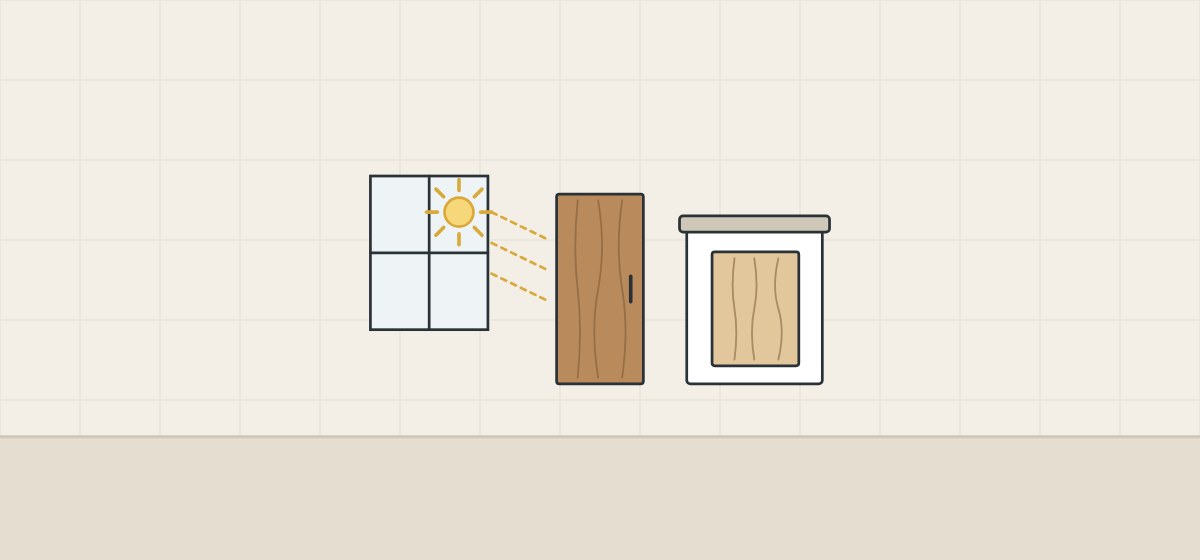
Compare parts under one stated light, because judgment shifts with lighting and the wood itself changes. Three points:
A named light
ASTM D1729-22 is a practice for visual appraisal of color differences. Its store page describes visual appraisal of diffusely illuminated opaque materials and names simulated average daylight, D65.
Wood darkens
AHEC says cherry heartwood and hard maple darken on exposure to light with time.
Finish and age
Kent Moore Cabinets says light, particularly sunlight, yellows its finish to some degree. KraftMaid says wood may change or darken as it ages.
Record where the signed panels are stored, and compare new parts against them as well as against an installed cabinet.
Which matching problems can be named before production?
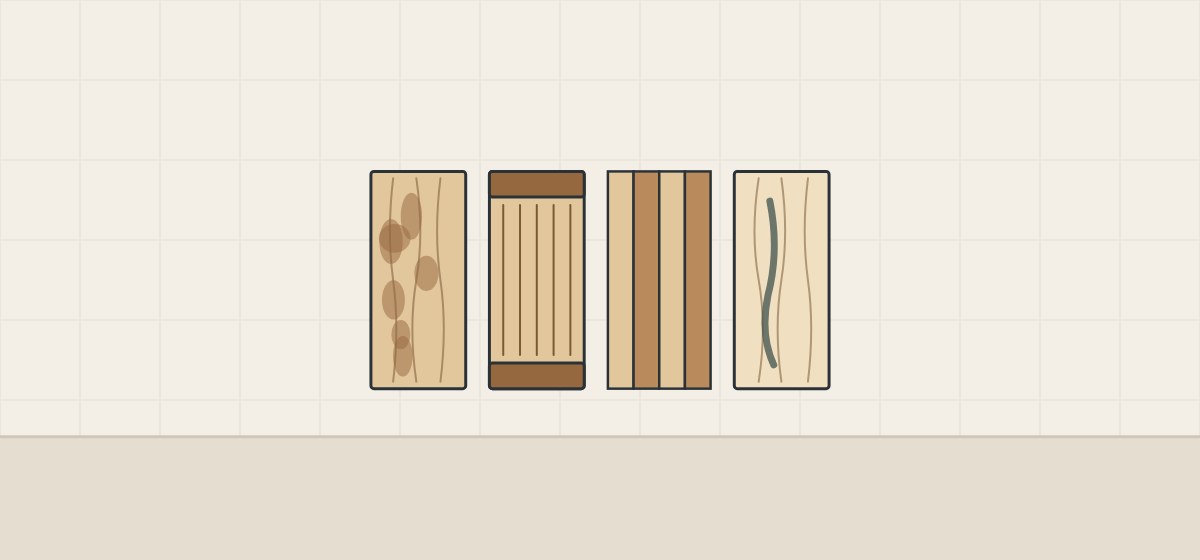
Several are described in published documents, so they can be written into the order.
| Issue | What the source says |
|---|---|
| Blotchy stain | AWS finishing section, 2014: tied to uneven pore distribution in some species. |
| Dark end grain | KraftMaid: exposed end grain may accept more stain. |
| Striped veneer | AWS sheet-products section: book-matched leaves may accept stain differently; not a manufacturing defect. |
| Sapwood in faces | AWS sheet-products section: natural veneer faces allow unlimited heartwood and sapwood. |
| Mineral streaks | KraftMaid: dark streaks parallel with the grain, from mineral deposits. |
| Late replacements | Kent Moore Cabinets: cannot guarantee exact color matching for parts ordered long after installation. |
How should a buyer set variation limits for a multi-room project?
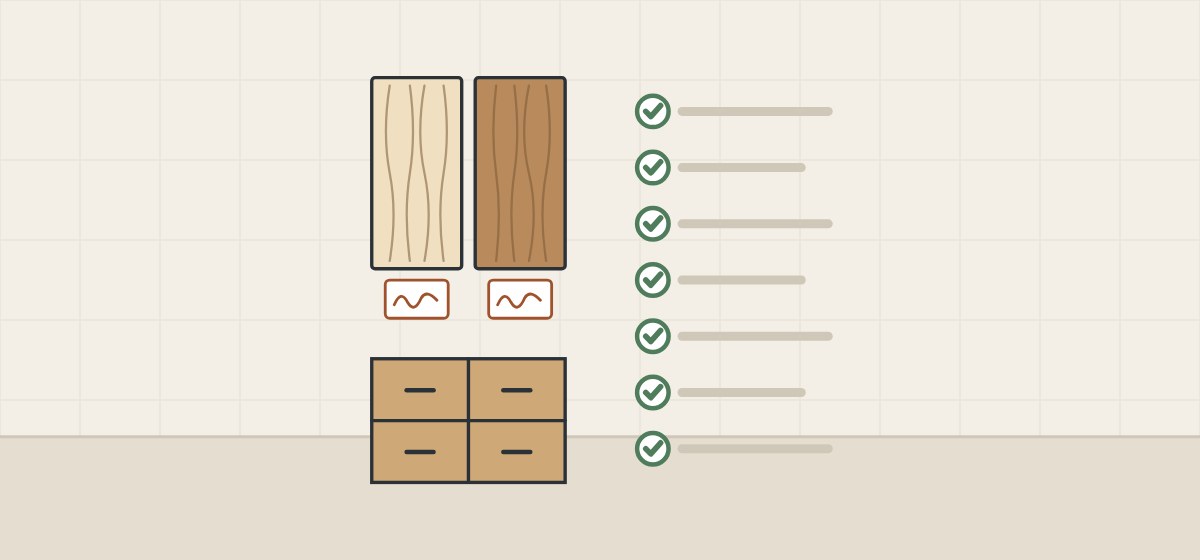
Agree on the range, the rules and the sorting before production starts. These steps are procurement guidance; no standard cited here defines them.
- Decide where variation matters. Fronts before sides; units standing side by side count as one piece of furniture.
- Approve limit samples. Sign one light and one dark panel in the approved species and finish; parts between them pass.
- Write grain rules by face. State where knots, sapwood, mineral streaks and strong figure are allowed.
- Fix the sheen method. Name the angle, the range and the reference panel.
- Match inside each cabinet. Doors and drawer fronts of one unit come from boards selected together.
- Allocate across rooms. Pack and label by room type or floor from one production run.
- Plan replacements. Order spare doors with the main run and keep them with the limit samples.
If both limits cannot be made
Without a light and a dark panel from real stock, the range is not yet understood. The AWS lumber section advises giving manufacturers large samples of the desired finish during design and bidding.
What should you send and ask before a quotation?

Send the physical references and ask how variation will be limited and recorded.
| Question | Why it matters |
|---|---|
| Which species and color selection is quoted? | Selected and unselected lumber differ. |
| Is sapwood allowed on fronts? | Sources treat it as a stated choice. |
| Can light and dark limit panels be made? | They define the accepted range. |
| How is sheen measured? | Angle and range must be named. |
| How are units sorted and labeled? | Keeps one tone per room type. |
| Will batch photos be sent before packing? | Photos flag an outlier; panels approve a tone. |
| Are spare doors from the same run included? | Later parts may not match. |
Include with your request
- Approved sample or reference panel
- Room types and unit counts
- Faces seen side by side
- Sheen target and measuring method
- Grain features allowed or excluded
WNS Global confirms any product and terms it offers separately in writing. This guide does not state that WNS Global products have the features, grades or sheen values named above.