From gate to release
What is an evidence gate on a vanity order?
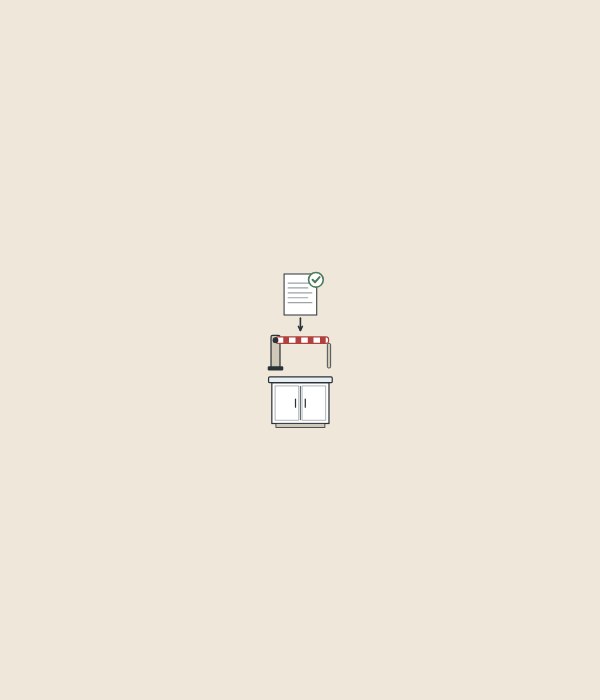
An evidence gate is a point where named evidence is checked against a written rule before the next step is released. The term is this guide’s.
NATSPEC quotes the hold point and witness point definitions below from AUS-SPEC, an Australian specification system.
| Term | What the named source says |
|---|---|
| Hold point | NATSPEC: work cannot proceed without designated authorization. |
| Witness point | NATSPEC: attendance is optional; the next activity may proceed. |
| Acceptance sampling | ASQ: inspecting a sample to decide whether to accept the lot. |
In what order do the gates fall?
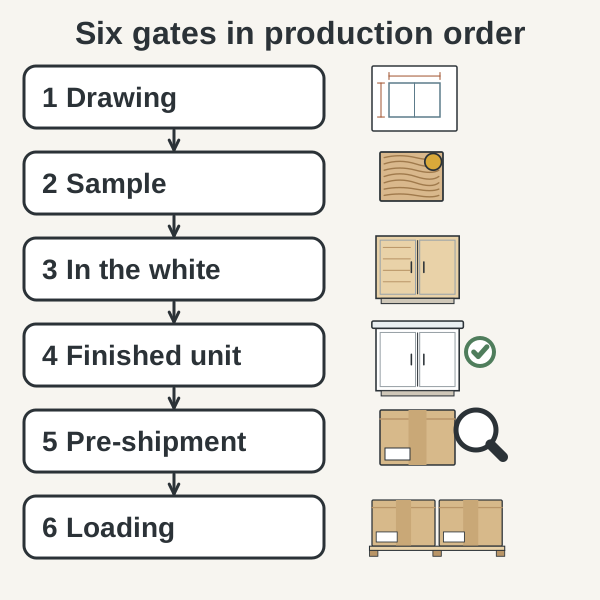
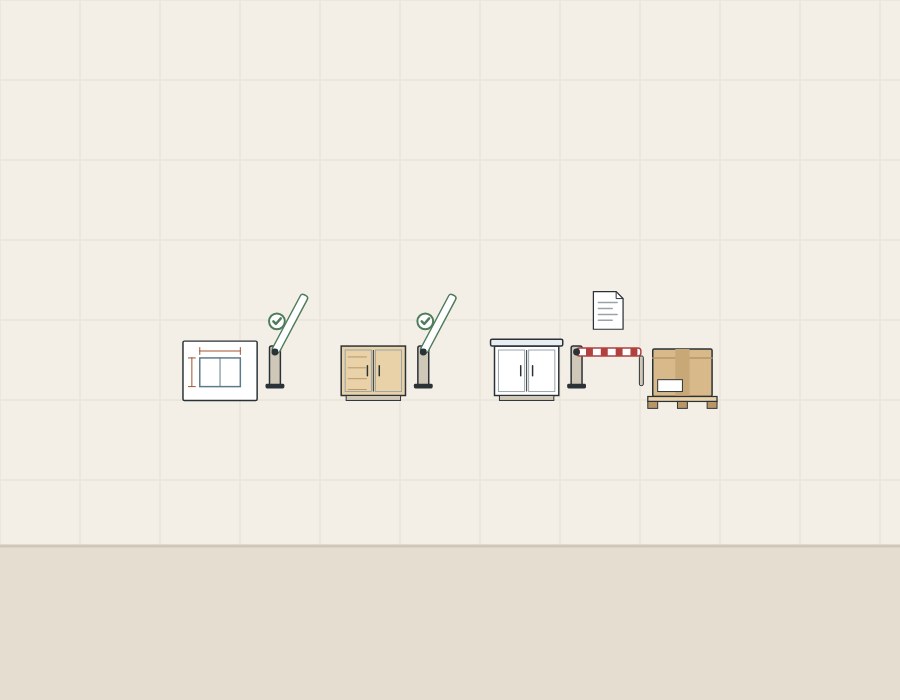
The gates follow production order, from paper to loaded cartons. This six-gate sequence is this guide’s plan for a first custom order.
- Drawing sign-off, before materials are bought.
- Sample approval: signed samples kept as the reference.
- First unit in the white, before the first coat.
- First finished unit, checked against drawing and sample.
- Pre-shipment inspection of a sample of packed units.
- Loading: quantities, labels and protection recorded.
The first two gates mirror AWI’s submittals standard. For shop drawings its review outcomes are: approved or approved as noted, proceed with production; revise and resubmit, resubmit for approval before proceeding; rejected, do not proceed with production.
What can each gate’s evidence show, and what can it not?
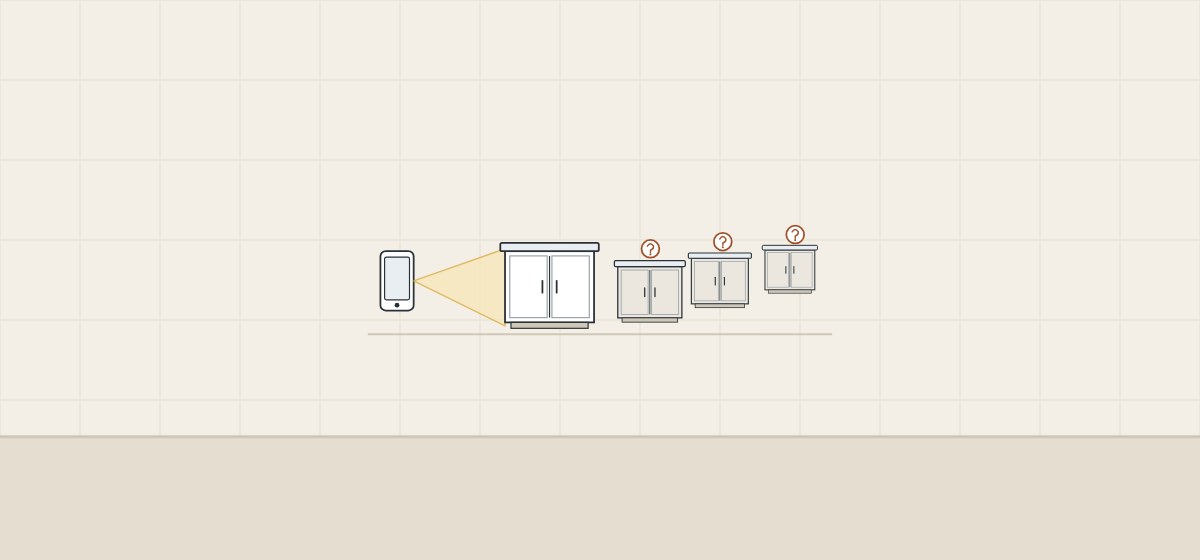
Each piece of evidence answers one narrow question. The table is this guide’s reading of six common deliverables.
| Evidence to ask for | What it can show | What it cannot show |
|---|---|---|
| Signed dimensioned drawing | Agreed sizes, layout, handing, finishes | That production will follow it |
| Materials photos with the order card | Declared materials beside the card | That they go into the units |
| Raking-light video, unit in the white | Surface faults on the parts filmed | Finish durability; the rest of the batch |
| First finished unit check sheet | Agreement with drawing and sample | That every unit matches |
| Third-party pre-shipment report | Results for the units drawn | Units not drawn |
| Loading photos with carton labels | Quantities, labels, protection | Condition inside cartons or on arrival |
ASQ’s glossary defines acceptance sampling as inspecting a sample from a lot to decide whether to accept that lot. The inspector examines only the units drawn, so a passed report is a decision about the lot, not a check of every unit. Accept photos and video only when they carry the order number.
Which published documents can a pass rule point to?
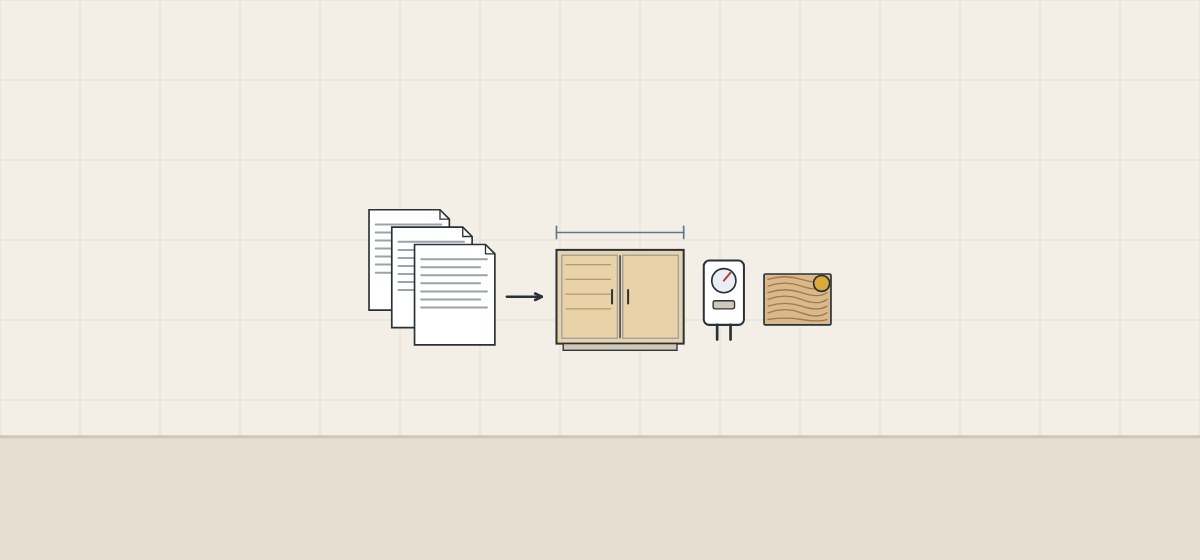
A pass rule is checkable when it names a document: the drawing, the signed sample, the material list or a published standard. These examples apply only if the order names them.
| Gate | Publisher and document | What it publishes |
|---|---|---|
| Drawing and samples | AWI 100, Submittals | Shop drawings in plan, elevation and section as needed; minimum finish sample sizes. |
| In the white | ANSI/AWI 0641-2019 | Sanding by grade; visible sanding marks (turned surfaces excepted), glue and filler to be inconspicuous. |
| Wood moisture | USDA Wood Handbook, 2021 | Recommended at installation for interior woodwork and furniture, most US areas: 8% average, 6 to 10% for single pieces. |
| Finished unit | KCMA on its A161.1 standard | Door, drawer and finish tests for kitchen and bath cabinets. |
| Panel paperwork | EPA, TSCA Title VI | A label on finished goods containing regulated composite wood. |
| Pre-shipment | ISO 2859-1:2026 | Sampling schemes indexed by acceptance quality limit, lot by lot. |
The Wood Handbook says electrical moisture meters are rapid but tend to be less precise than oven-drying, so treat a meter photo as an indication.
Which orders need the full set of gates?
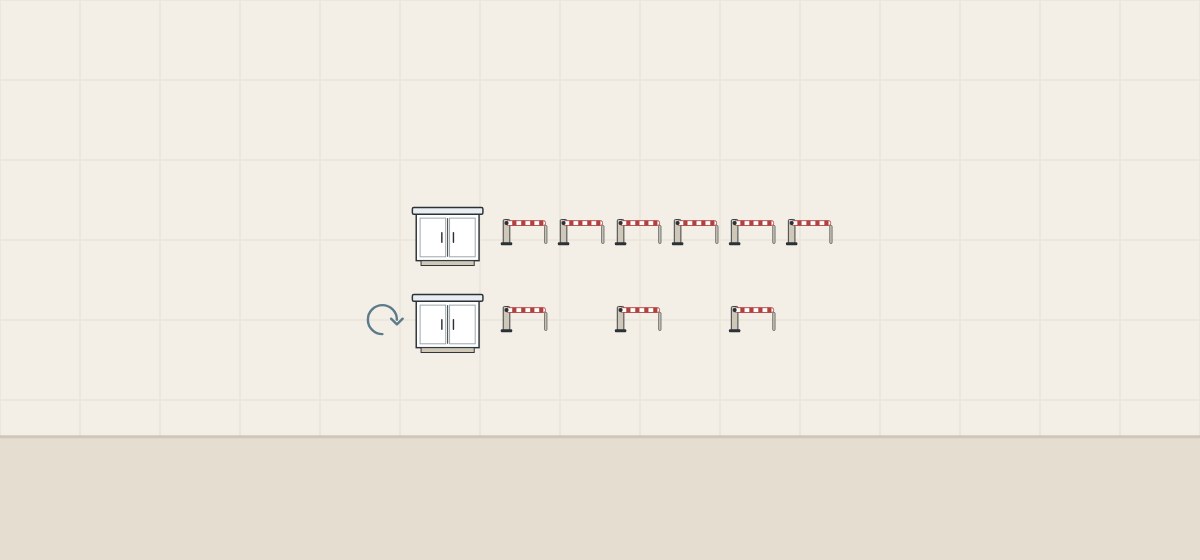
New and changed orders need the most gates. FAR 9.303, the US government’s list of when first article testing may be appropriate, gives useful triggers:
A new supplier or product
FAR lists a contractor that has not previously furnished the product to the Government: here, a first order or a new model.
A changed process or specification
FAR lists changes since earlier supply: here, a new finish, species or hardware model.
A long break in production
FAR lists production that was discontinued for an extended period.
An unchanged repeat
NATSPEC advises using hold points sparingly because each can affect time and cost. This guide suggests keeping three items:
- Written confirmation that nothing changed
- The first finished unit
- The pre-shipment check
How do gates connect to payment and shipping releases?
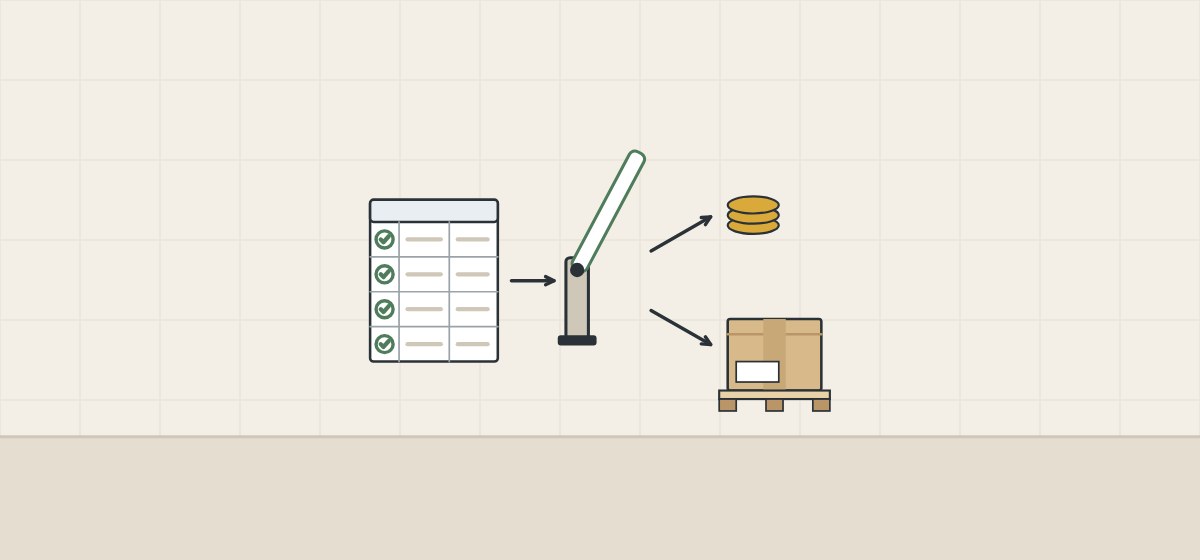
A gate has force only when a release depends on it. Public documents show how such links are worded:
Production release
FAR subpart 9.3 says that before first article approval, buying materials or starting production is normally at the contractor’s sole risk.
Payment against documents
Trade.gov describes a letter of credit as a bank’s commitment to pay once the exporter ships and presents the required documents.
Re-inspection cost
The US government’s inspection clause lets the contracting officer charge the contractor the added cost of inspection or test when a prior rejection makes re-inspection necessary.
The two FAR texts bind US government contracts, not a private vanity order, and a letter of credit applies only if buyer and supplier agree to use one. Payment amounts and timing stay as agreed in the quotation and order documents.
Where do gate plans fail at the moment of payment?
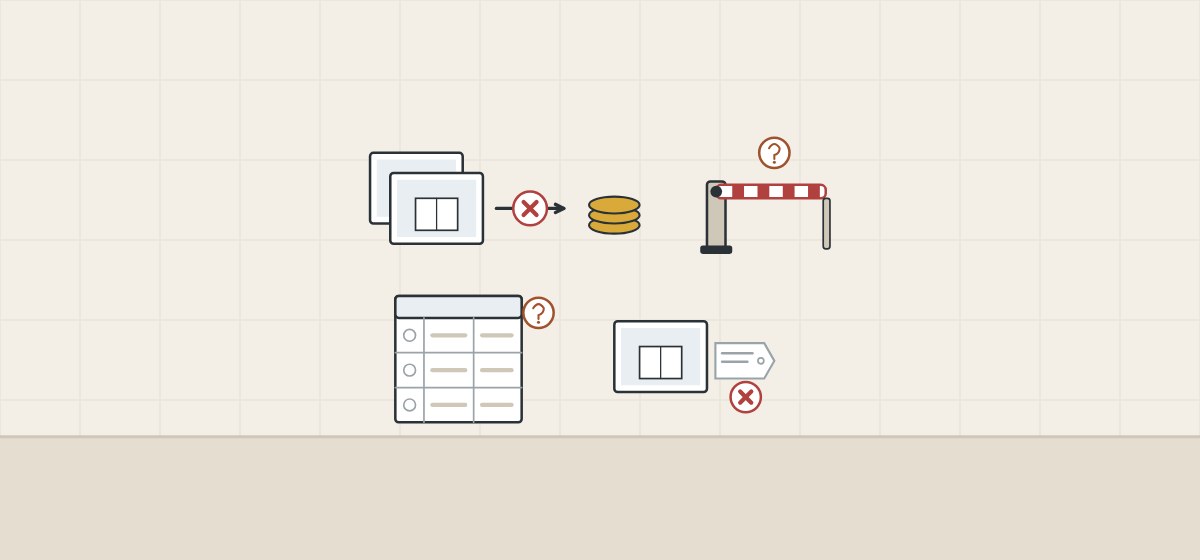
In this guide’s view, a gate plan fails when a gate has no rule, no identity or no release behind it.
| Failure | Fix |
|---|---|
| Balance paid on photos alone | Link the balance to a passed, defined check. |
| Gates without pass rules | Name the document each rule is checked against. |
| Too many gates on a small reorder | Keep only the gates that match this order’s risks. |
| Evidence not tied to the order | Require the order card in every photo set and report. |
| No check before the first coat | On a first order, hold one unit in the white. |
How should a buyer write the gate plan?
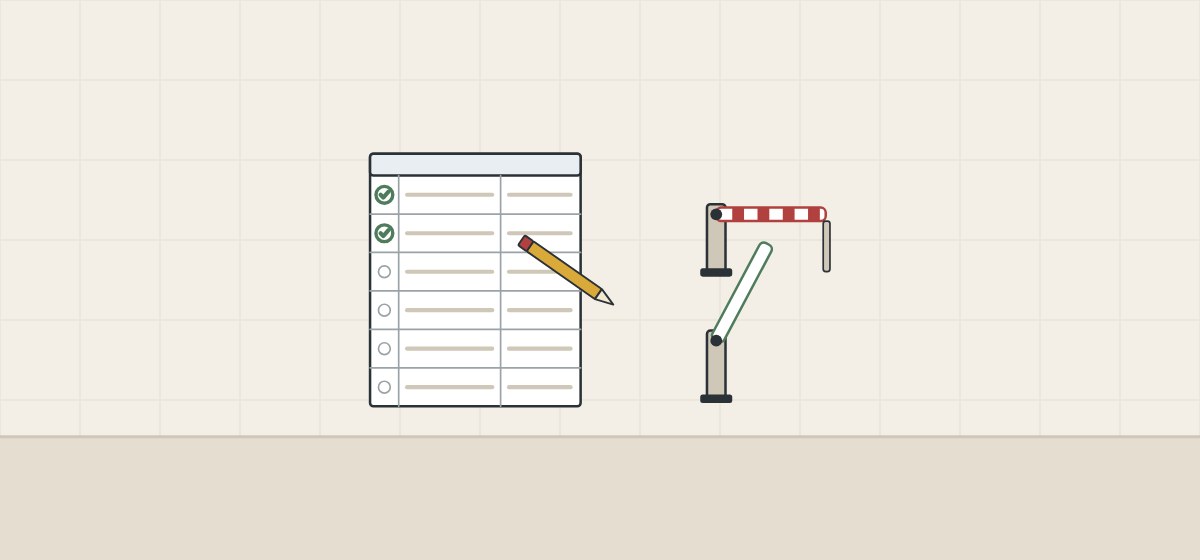
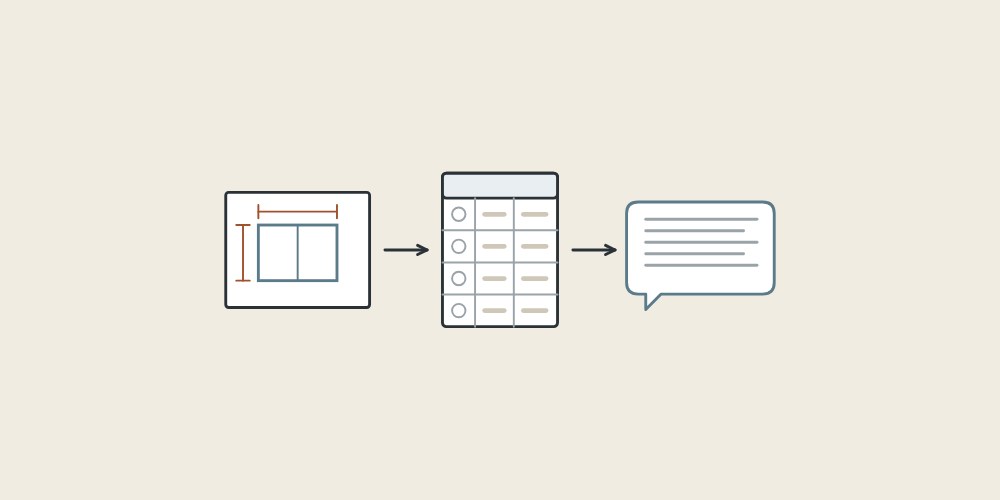
Write the plan as one table attached to the purchase order, in six steps. This is guidance, not legal advice.
- Rank the risks. First order, new model, dark stain, high gloss or many identical rooms: plan the full set.
- Place the gates. Mark each as a hold point or a witness point.
- Name the deliverable and its producer. A document, photo set, video or report, and who makes it.
- Write the pass rule. If it reads like “looks good”, rewrite it against a named document.
- Tie each gate to a release. Material purchase, production, the batch, the balance or the booking.
- Define the failure path. Correction, presenting the units again, and who pays for re-inspection.
A clause to adapt
For each gate in the attached evidence plan, the supplier provides the listed deliverable marked with the order number. A gate is passed when the buyer confirms it in writing within the agreed response period. If a gate fails, the supplier corrects the affected units and presents them again. Have this wording reviewed before use.
What should you send and ask before a quotation?
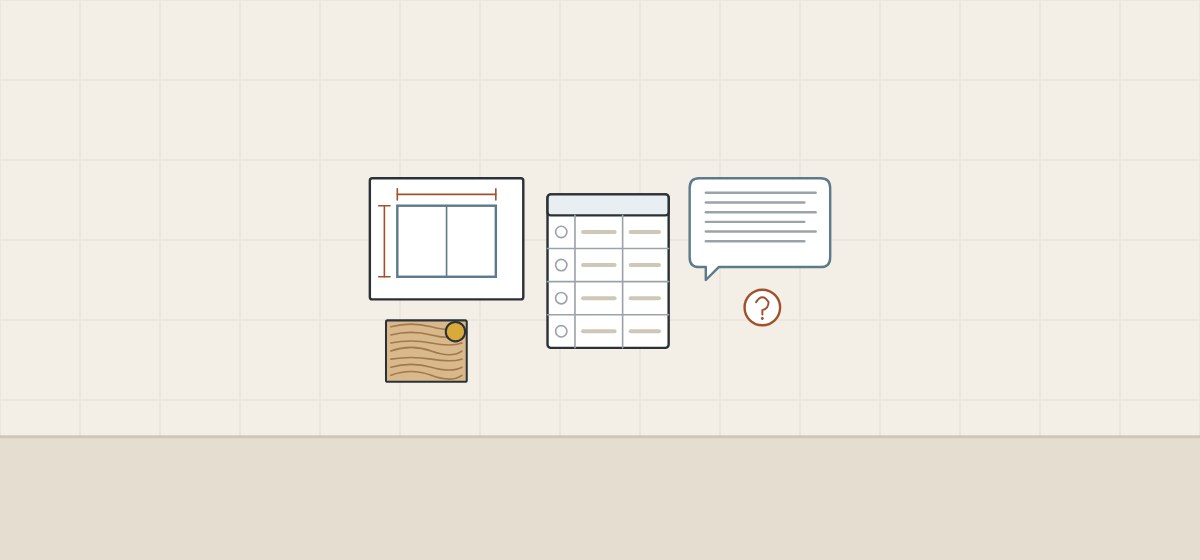
Send the draft gate plan with the request, so the supplier prices the order with the gates in it.
| Question | Why it matters |
|---|---|
| Which gates can you evidence, and how? | A hidden stage needs a substitute agreed now. |
| Do you accept an inspector we appoint? | A report gate depends on access. |
| Can a first unit be held before finishing? | That gate must be in the schedule. |
| Which payment steps can follow a passed gate? | Terms are set in the order documents. |
Include with your request
- Dimensioned drawing and material list
- Finish reference or sample
- Draft gate plan with pass rules
- Destination market
- Quantity, and whether the order is a repeat
WNS Global confirms any product and terms it offers separately in writing. This guide does not state that WNS Global runs the gates described, meets any standard named above or offers any payment term.