From core to finished part
What does a quoted cabinet panel thickness refer to?
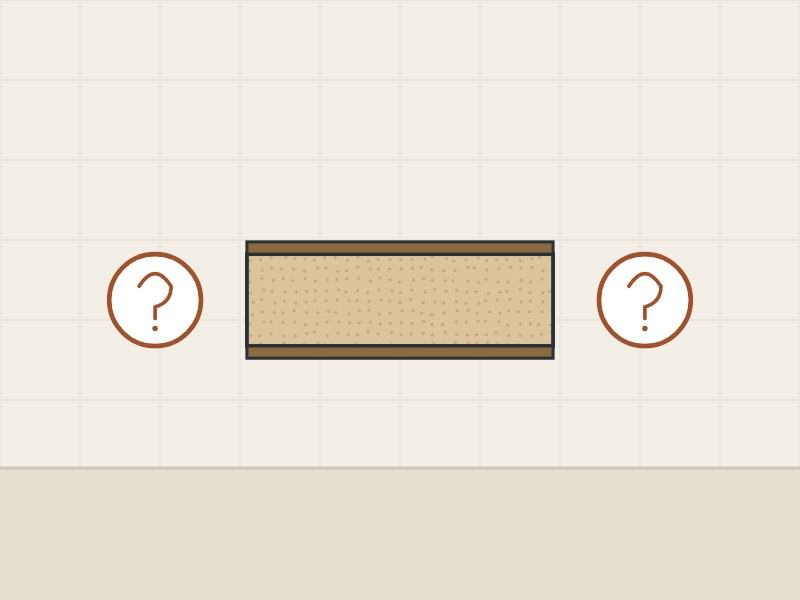
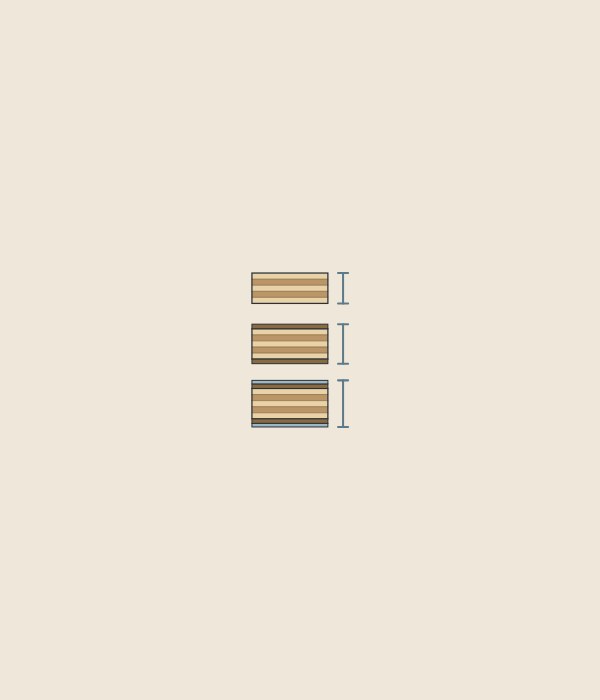
A quoted thickness refers to the core, the panel with its faces, or the finished part. The number alone does not say which.
ANSI/HPVA HP-1-2024, which covers plywood made primarily with hardwood faces, treats the stated figure as a label. It expresses thickness as a Class designation when one is used, such as 3/4 Class or 19.2 Class.
| Term | What it means |
|---|---|
| Nominal | AWI: the dimension a product is known and sold by; differs from actual. |
| Core | AWI: the panel material the exposed surface material is applied to. |
| Thickness Class | HP-1-2024: a designation such as 3/4, .750 or 19.2 Class. |
| Performance Category | APA: a designation related to a thickness range, on structural panels. |
| Calibrated panel | Columbia: core sanded to thickness before veneers go on. |
| Balancing sheet | AWI: a sheet on the secondary surface, with properties equal to the opposing surface. |
How does a core become a finished cabinet part?
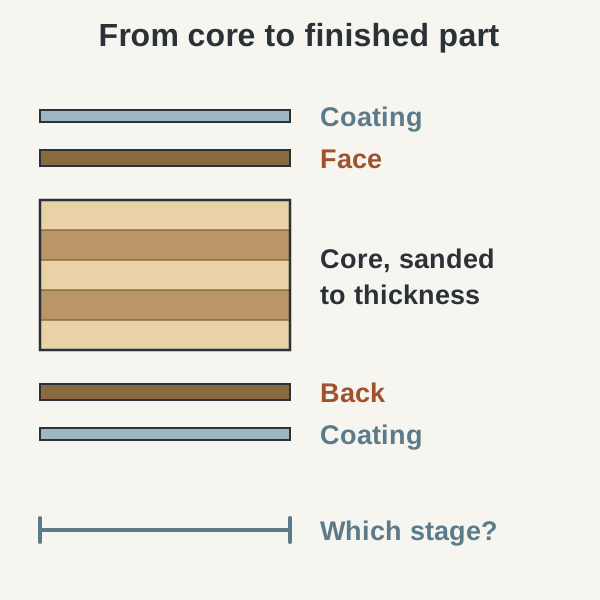
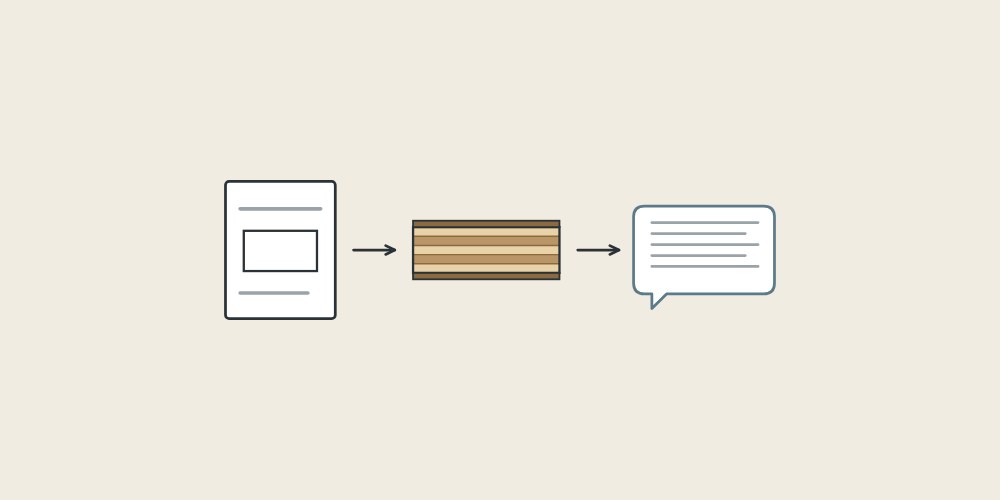
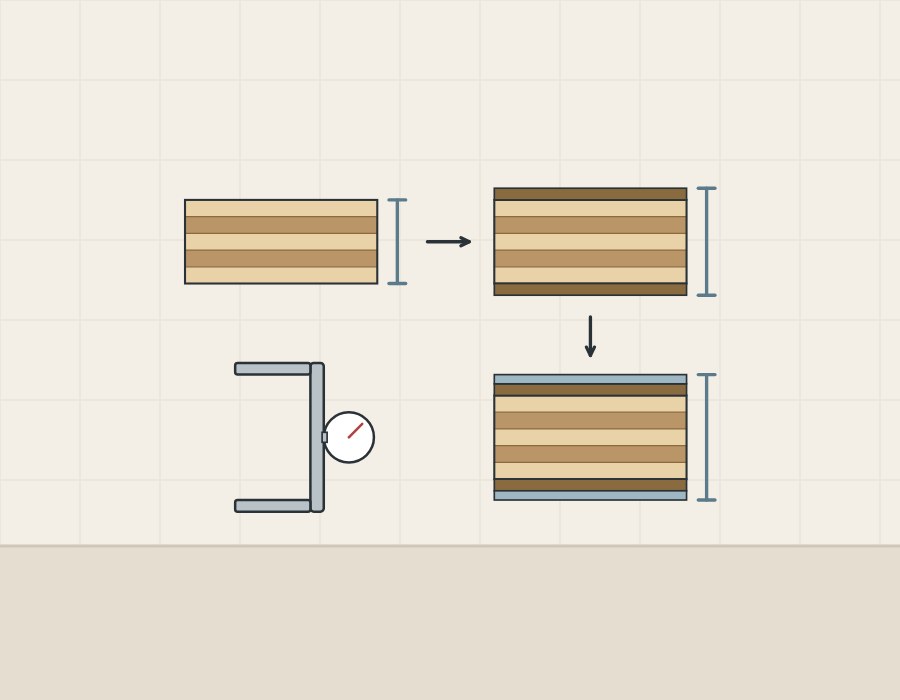
A core becomes a finished part by gaining layers. Steps 1 to 4 follow sources cited in this guide; steps 5 and 6 are this guide’s own general outline. A given product may skip steps.
- The core is made: veneer plies, particleboard, MDF or a combination.
- In a two-step product, the core blank is sanded to a set thickness.
- A face goes on one side and a back or balancing layer on the other.
- A veneered panel is sanded; a thermally fused laminate panel is ready to machine.
- This guide’s own step: the panel is cut to parts and the edges are covered.
- This guide’s own step: where the part is coated, the coating is applied.
States Industries describes the two-step route: the blank is sanded to a calibrated tolerance, then overlaid with face and back veneers. The Composite Panel Association says fusing a thermally fused laminate creates a finished panel ready to be machined.
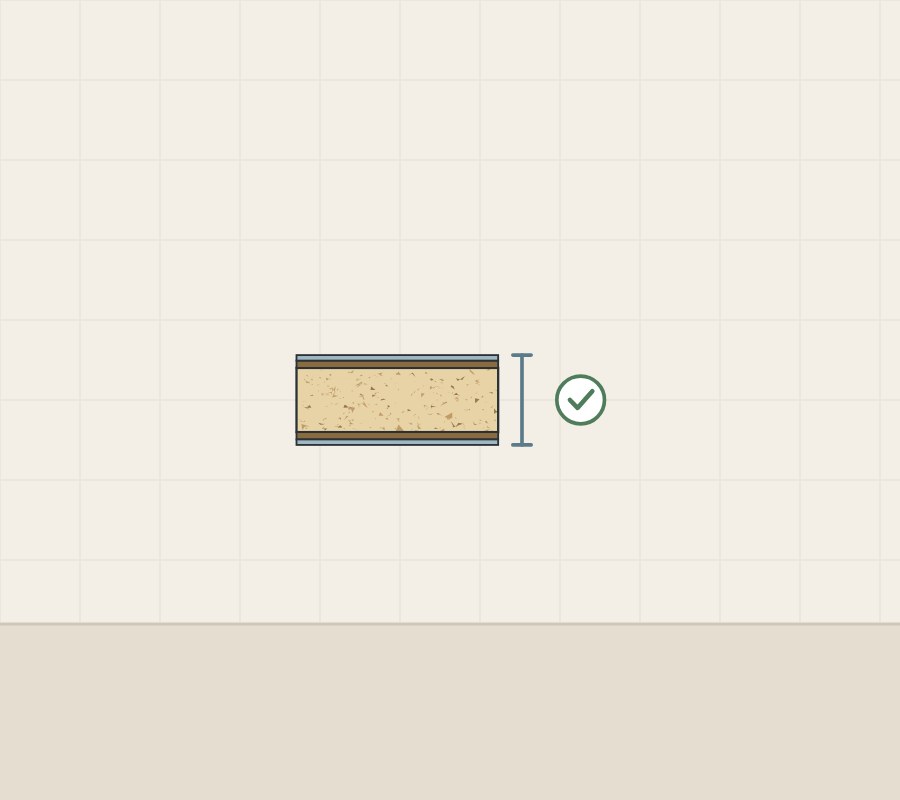
How much thickness do facing layers add?
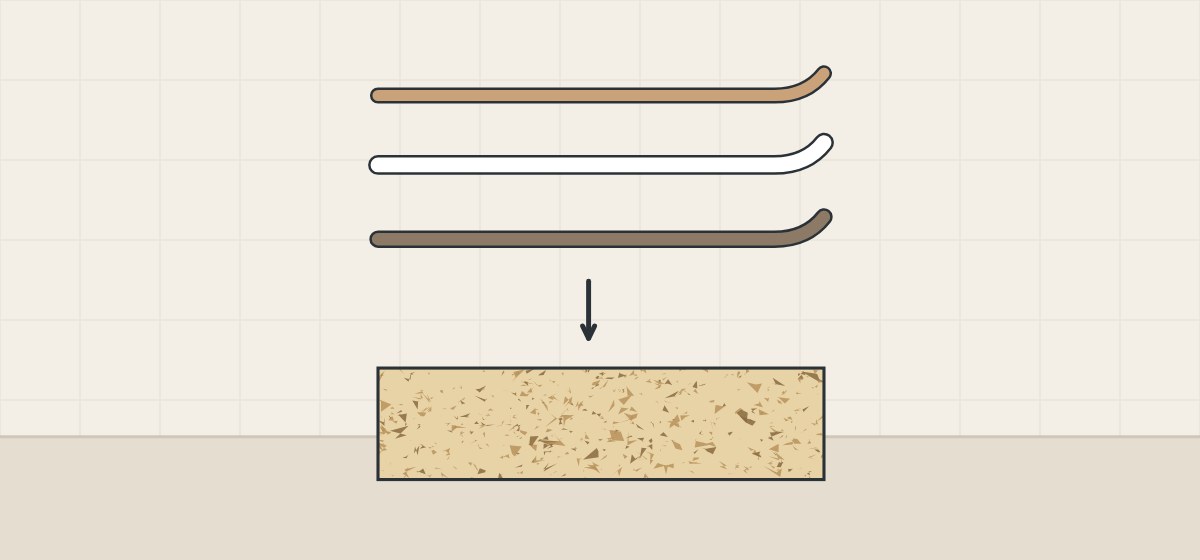
It depends on the facing. The sources give typical figures only, and each row carries its owner.
| Facing | What the source says |
|---|---|
| Decorative plywood face veneer | HP-1-2024: generally 0.65 mm (0.026 in) and thinner. |
| Sliced veneer | CPA veneer page: typically 1/25 to 1/50 in (1.0 to 0.51 mm). |
| General purpose HPL | CPA HPL page: typically 0.028 to 0.048 in (0.71 to 1.22 mm). |
| Standard HPL backer | CPA: slightly thinner than decorative HPL. |
| Lacquer or paint | No figure in the sources used here. |
The back face counts too. AWI’s materials standard requires balanced construction of faces, thickness and moisture content, and veneer thick enough to prevent exposure of the core after sanding or finishing. Sanding after facing can therefore reduce the veneer figure.
What thickness tolerances do standards and makers publish?
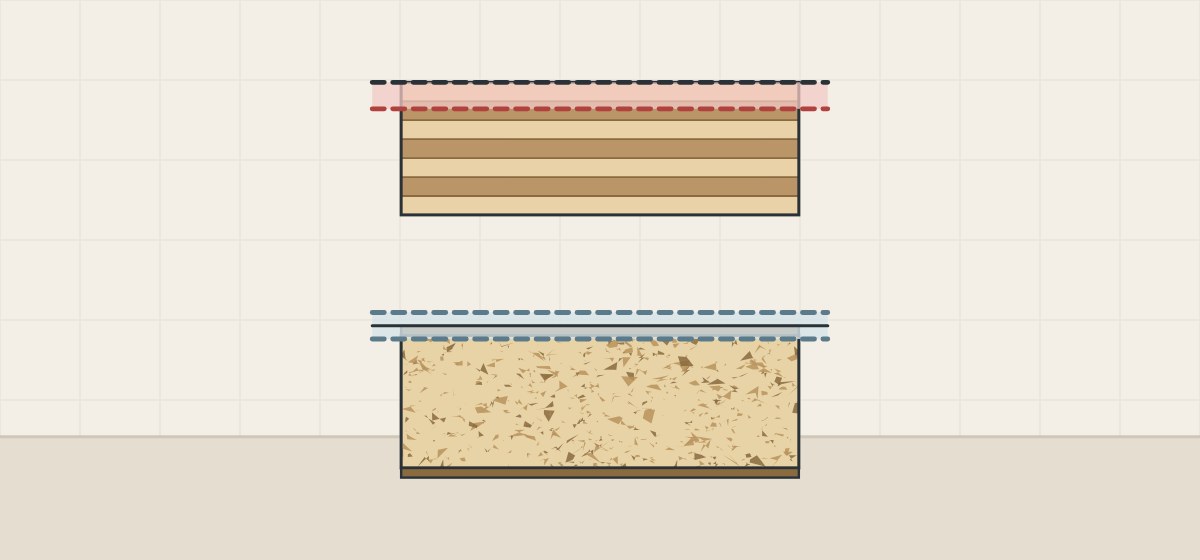
Published tolerances differ by product and by document. The rows are examples with their owners, not limits for any other panel.
| Product | Source | What it publishes |
|---|---|---|
| Hardwood plywood, Class 1/4 and above | HP-1-2024 | Minimum is the Class figure less 3/64 in (1.2 mm). |
| Hardwood plywood, Class under 1/4 | HP-1-2024 | Minimum is the Class figure less 1/32 in (0.8 mm). |
| FalconPly hardwood plywood | Timber Products brochure | Finished tolerance (DHA) +0/−.047 in. |
| Eurodekor melamine faced board | EGGER data sheet, revision 13 (2021) | Over 20 mm: ±0.5 mm. Under 15 mm: ±0.3 or +0.5/−0.3 mm, by abrasion class. |
HP-1 states a minimum, so a conforming panel may be thinner than its Class figure. Columbia says HP-1 limits thickness variation and that a calibrated panel is designed for tighter tolerance still. The EGGER sheet read here is revision 13 of 2021, and this guide could not confirm that it is the current one. Ask which edition of a standard a data sheet cites, and whether the sheet itself is current.
Does the core type or ply count fix the thickness?
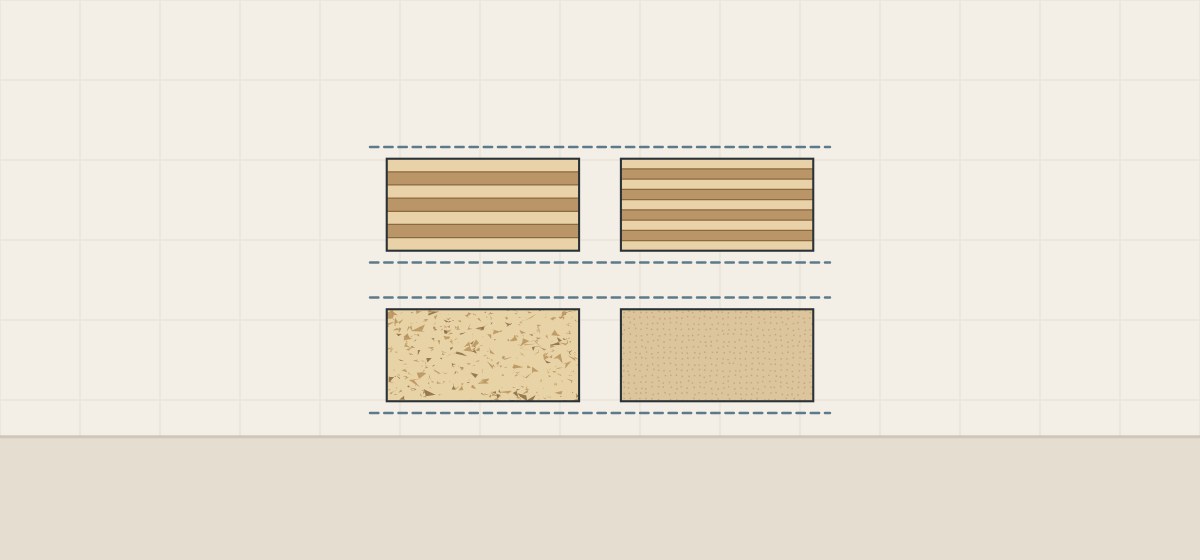
No source used here ties a thickness to a core type or a ply count. The sources describe tendencies and constructions. The list after them is this guide’s own note of what to record.
Veneer core
Columbia says veneer core typically has more potential thickness variation than engineered cores.
Two-step or calibrated core
States Industries names consistent panel thickness as an advantage of two-step construction, and calls it the more expensive route.
Composite cores
States Industries says composite cores, including MDF and particleboard, are valued for flat, smooth surfaces and tight tolerances.
Ply count
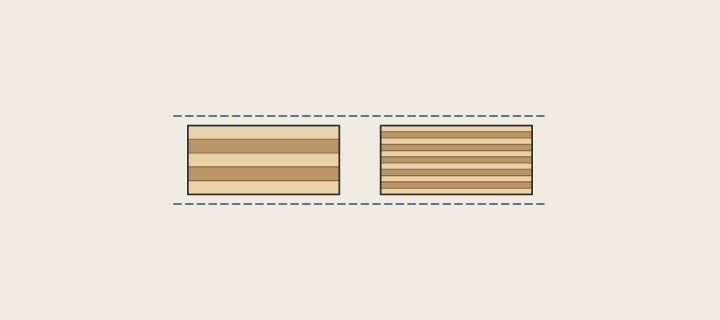
For a 3/4 in panel, Timber Products lists 7 plies for its veneer cores, 7 or 9 for Pro-Core and 3 for its particleboard and MDF cores. One thickness label, several ply counts.
- Core type, by its maker’s name
- One-step or calibrated
- Ply count, as identification
Which cabinet details depend on the finished thickness?
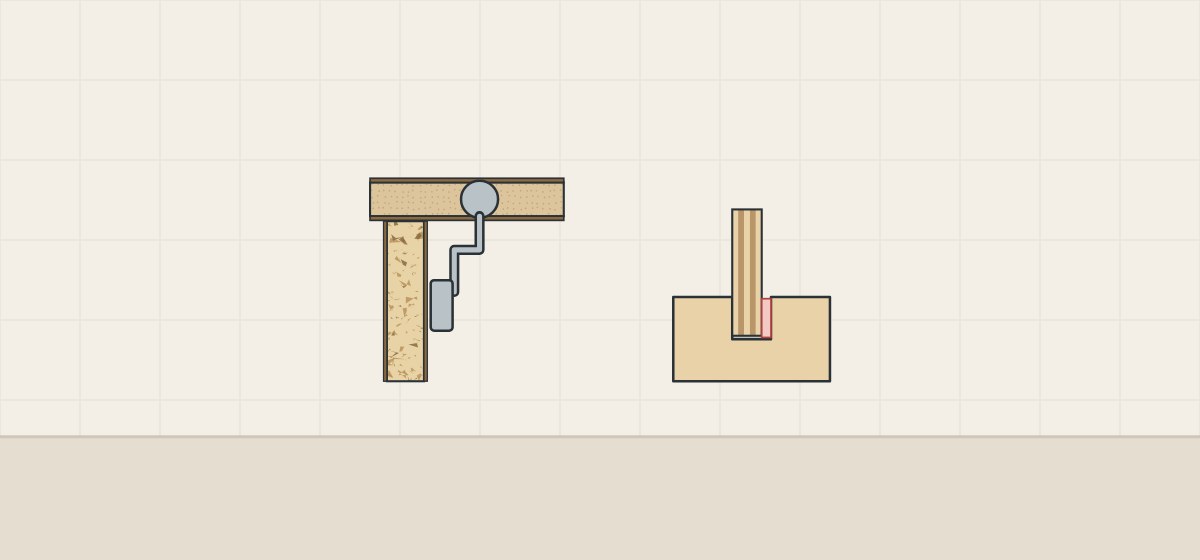
Details set from a finished surface depend on the finished thickness, not the core figure. Three examples:
Hinges
Blum’s kit instructions for its H002 CLIP top BLUMOTION 110° hinge note a door thickness range of 16 mm (5/8 in) to 26 mm (1 in). That range belongs to that kit.
Minimum part thickness
ANSI/AWI 0641-2019 sets minimums for named parts, for example 19.1 mm (.750 in) for pullout shelves. Where no thickness is specified, components must meet the minimum thickness and material requirements of the assemblies tested to establish the standard’s structural performance values; alternatives are permitted if they meet those values.
Grooves and joints
This is the guide’s own reasoning: a groove cut to the Class figure may be loose on a panel that sits at the minimum HP-1 allows.
For each detail, record which surface it is set from and which thickness it assumes. A substitution that changes the build-up can change these details even when the front looks the same.
How and when should panel thickness be measured?
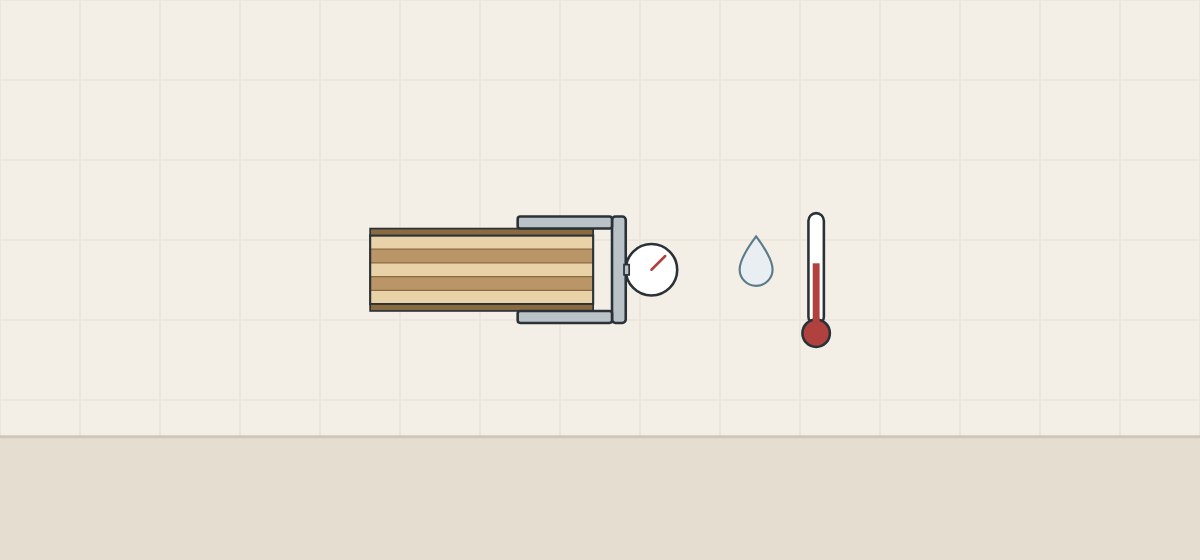
Measure with a stated instrument, at a stated stage and in a stated condition. The sources give four reference points:
| Source | What it says |
|---|---|
| HP-1-2024 | Actual thickness is measured to the nearest 0.025 mm (0.001 in) with a dial thickness gauge or micrometer. |
| Columbia | Density, moisture absorption and manufacturing variation cause thickness fluctuations in all wood panels. |
| EGGER | Store Eurodekor frost-protected, preferably at 20 °C and 65% relative humidity. |
| APA | On structural panels, the stamped decimal thickness is generally at or near the lower tolerance of PS 1 or PS 2. |
How should a buyer specify cabinet panel thickness?
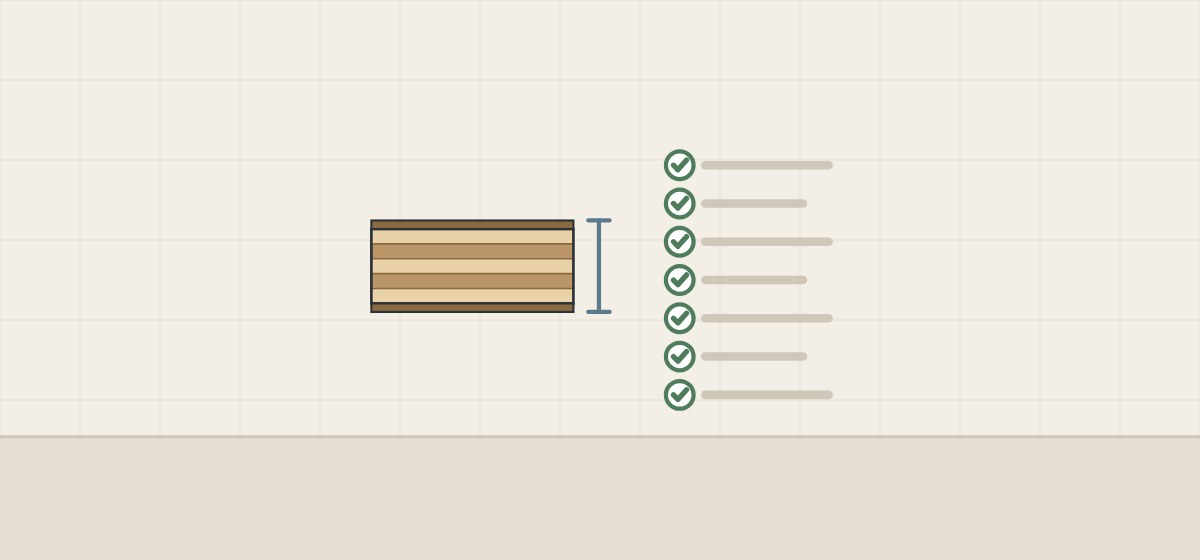
Specify the object, the number, the tolerance and the method together. These seven steps are procurement guidance.
- Name the object. Core, faced panel or finished part.
- Name the build-up. Core type, facing on each side, and any coating.
- State the number and unit. A Class, a nominal label or a required finished dimension.
- State the tolerance and its source. A standard and edition, or the maker’s data sheet.
- Tie it to the mating detail. Groove, hinge, connector or flush joint.
- Agree on the measuring method. Instrument, points and production stage.
- Record it on the drawing. A later substitution is then checked against it.
When a measurement and the quote disagree
First check that both figures describe the same part, stage, place and instrument. Record the method and the part identity before calling the difference a fault. This guide gives no blanket tolerance and no instruction to accept thin material.
What should you send and ask before a quotation?
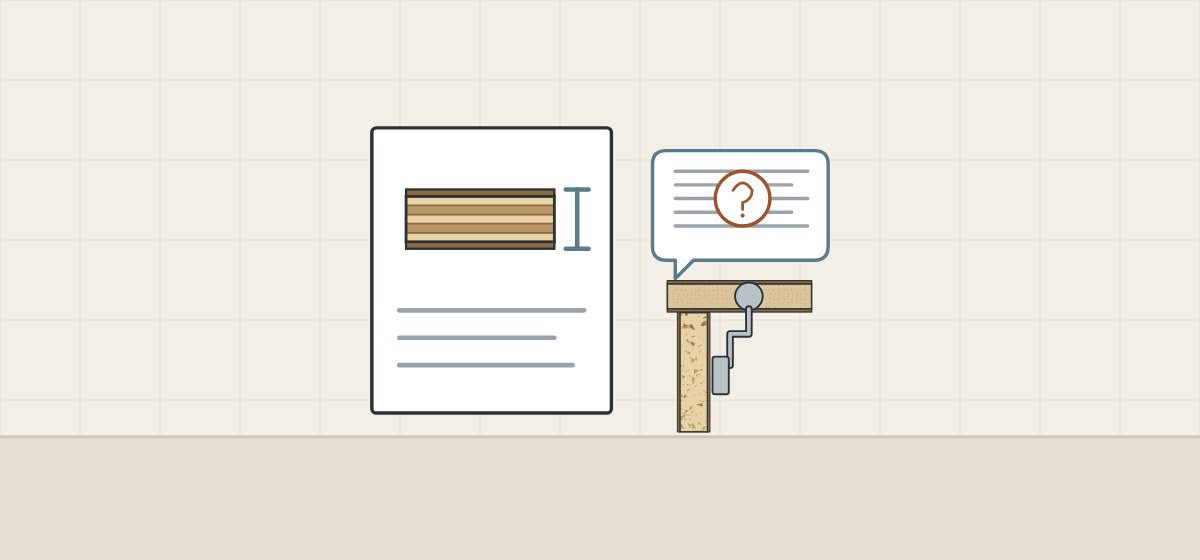
Send the detail the panel must fit, and ask what the quoted number describes.
| Question | Why it matters |
|---|---|
| Is the figure the core, the faced panel or the finished part? | They are taken at different stages. |
| What is on each face, and is the part coated? | Facings add thickness; sanding removes some. |
| Which tolerance applies, and from which document? | Tolerances differ by product and document. |
| Is the core one-step or calibrated? | Makers describe different consistency. |
| Which details are set from the finished surface? | Hinges, grooves and flush joints depend on it. |
| How and where will thickness be measured? | Two readings must be comparable. |
Include with your request
- Drawing with the mating details marked
- Required finished thickness per part
- Facing and finish on each side
- Hardware part numbers
WNS Global confirms any offered panel build-up, thickness, tolerance and commercial terms separately in writing. This guide does not state that WNS Global products use any core, facing or hardware named above, or meet any tolerance or standard named above.