From head name to hole
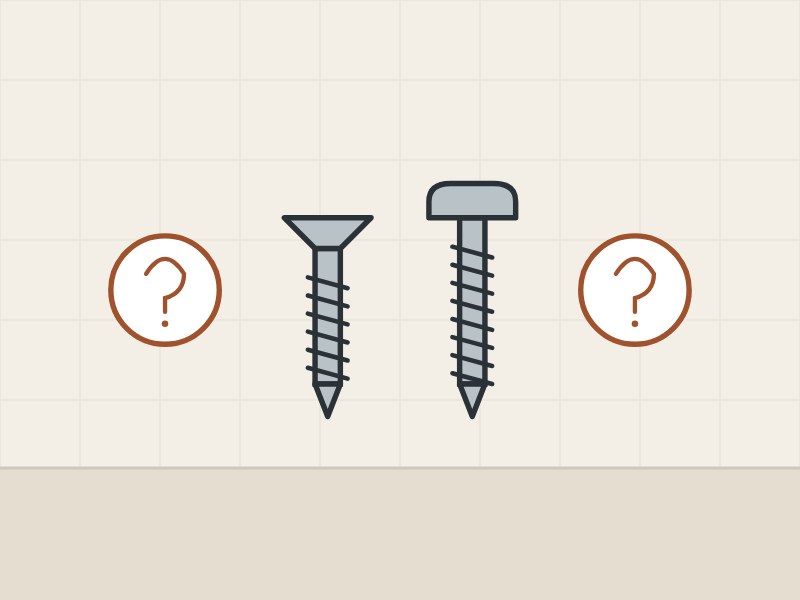
What is the difference between a countersunk and a pan head?
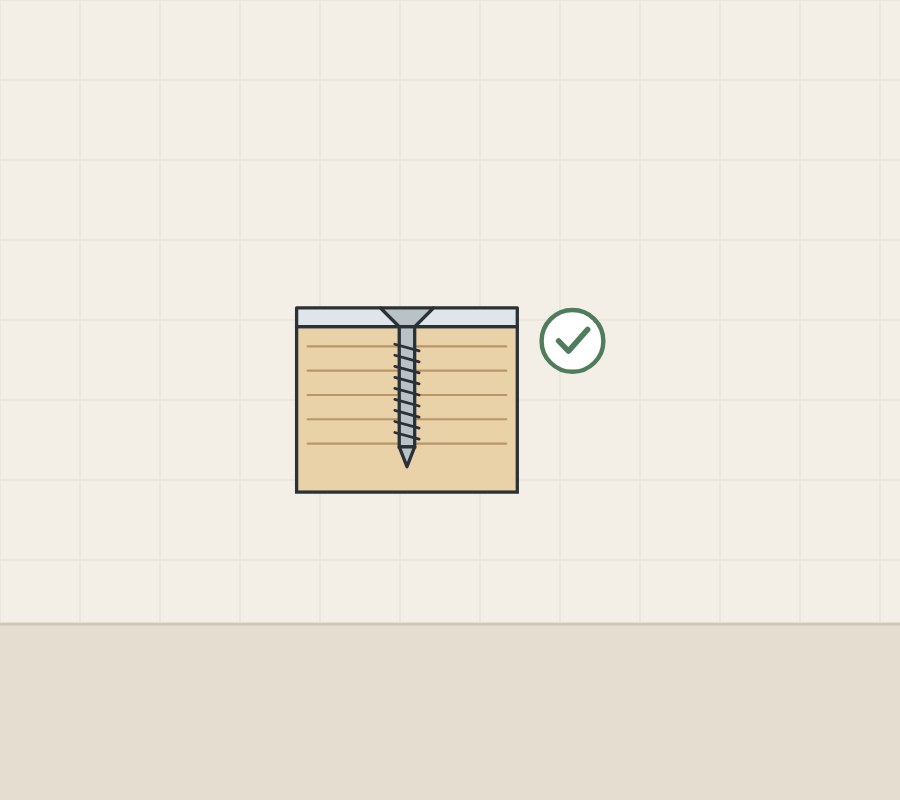
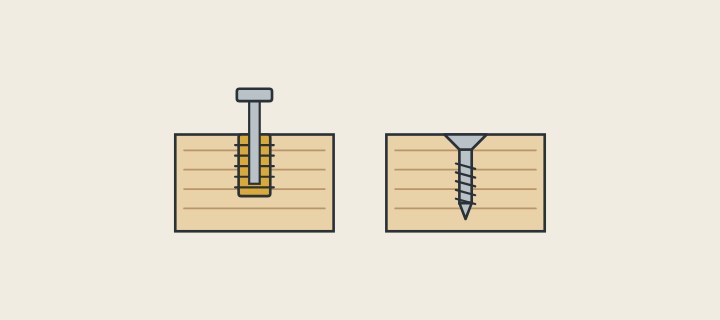
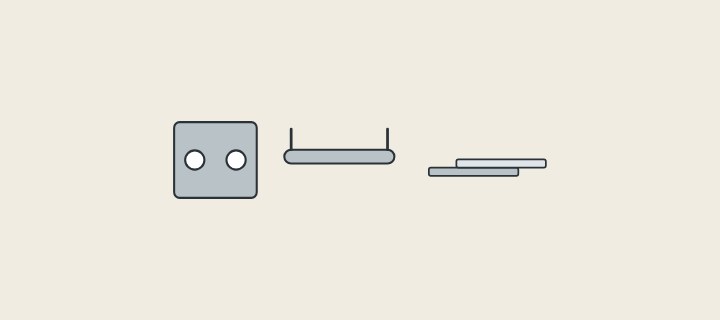
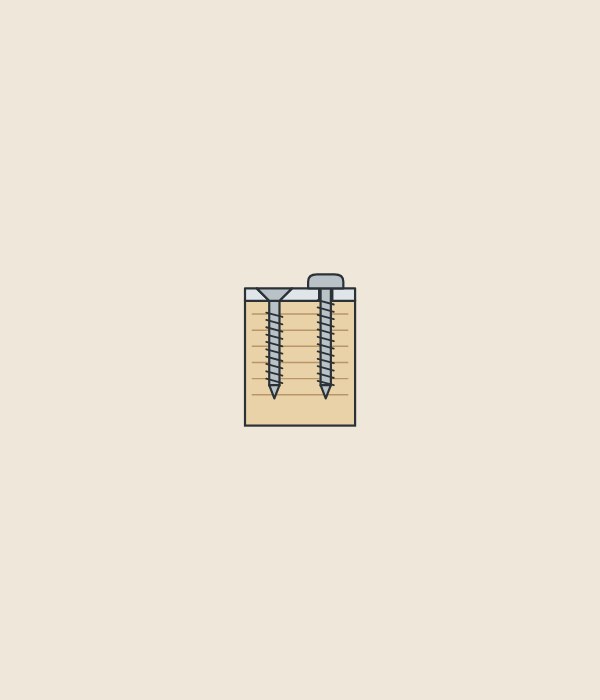
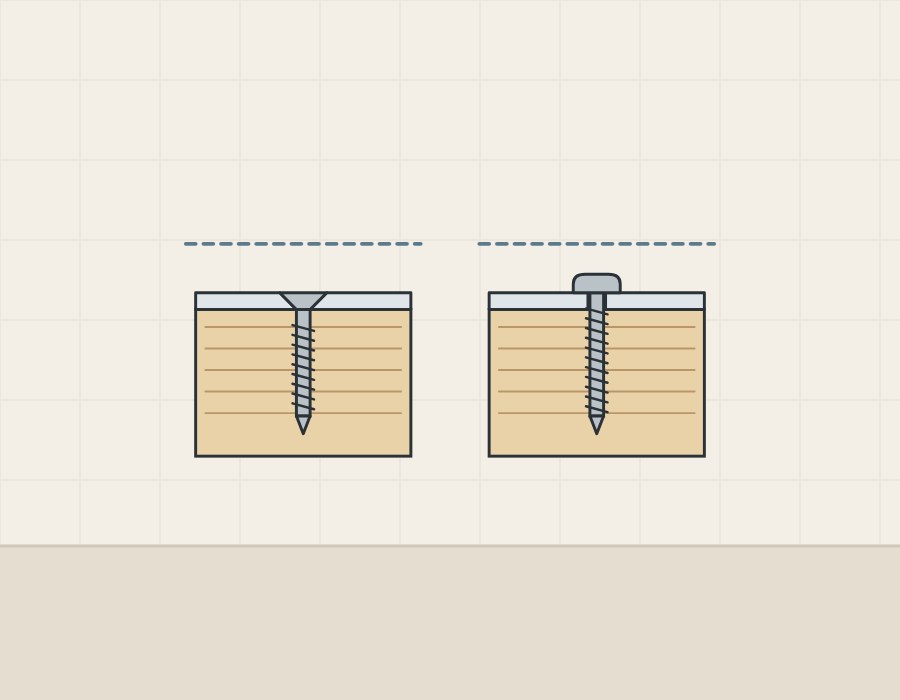
A countersunk head, also called a flat head, is made to finish flush in a countersink; a pan head bears on top of the part it holds. SPAX lists its flat head for countersinking in flush applications and says the wider pan head gives a large bearing surface.
ISO publishes the two heads as separate product standards: ISO 7050:2011 for cross-recessed countersunk (flat) head tapping screws and ISO 7049:2011 for cross-recessed pan head tapping screws. Both cover thread sizes ST 2.2 to ST 9.5, so a thread size alone does not say which head a screw has.
| Term | How the source uses it |
|---|---|
| Countersunk (flat) head | SPAX: for countersinking in flush applications. |
| Pan head | SPAX: a wider head with a large bearing surface. |
| Wafer head | SPAX: low-profile, for extra clamping force. |
| Washer head | GRK: built into its low profile cabinet screws. |
| Countersink | ISO 15065:2005 gives countersinks for countersunk head screws. |
What has to be named to identify a cabinet screw?
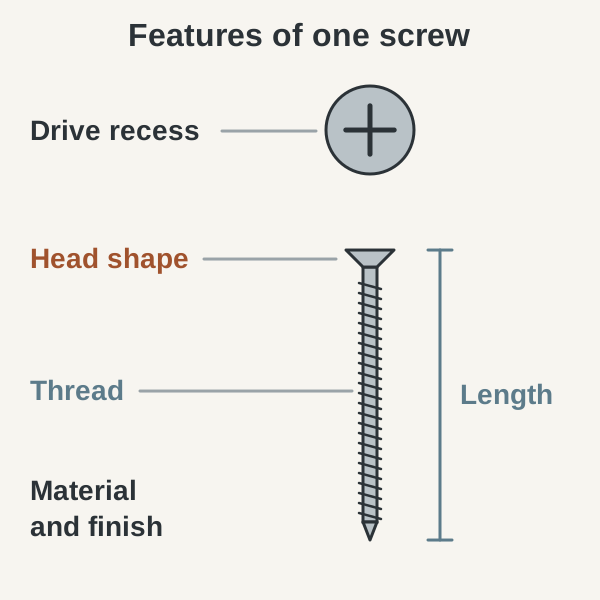
A cabinet screw is identified by several separate features, and the head is only one of them. A Häfele product page for one chipboard screw names the head, the drive, the thread and the finish, and gives dimensions that include thread diameter, head diameter and length.
- Head shape, such as countersunk or pan.
- Drive recess, such as a cross recess (PZ).
- Thread type and thread diameter.
- Length.
- Head diameter.
- Material and finish, such as zinc plating.
The same head appears with different drives in ISO’s catalog: the countersunk tapping screw has one standard for a cross recess, ISO 7050:2011, and another for a hexalobular socket, ISO 14586:2011.
Which screw do hardware makers name for their fittings?
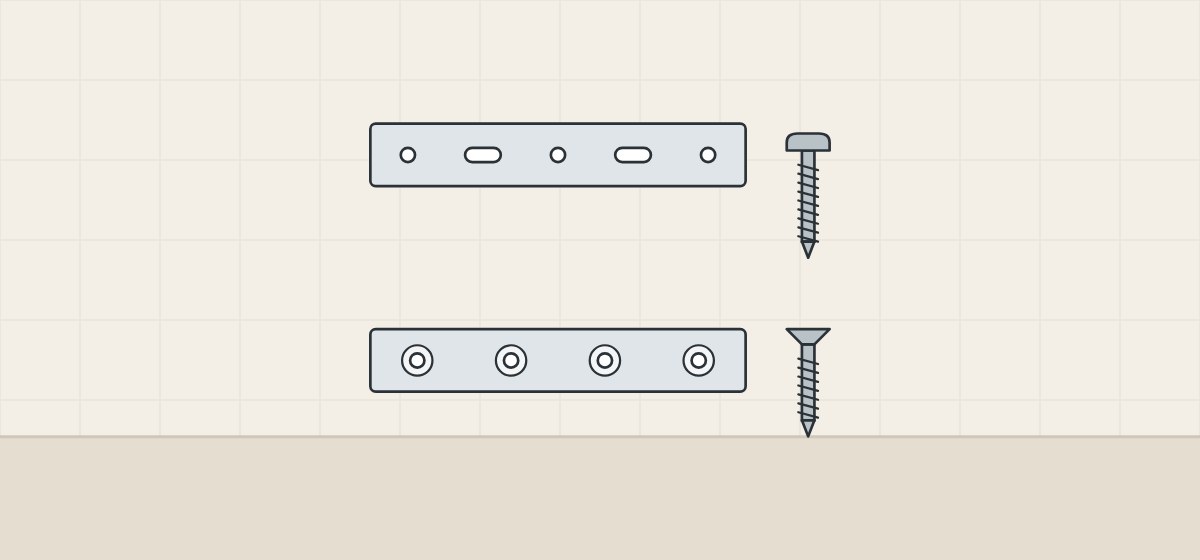
The makers below name the mounting screws in their own documents, and the named screw differs between products. Each row is that maker’s statement for that product only.
| Product | Document | Screw named |
|---|---|---|
| Knape & Vogt 8300 slide | Installation instructions | #7 pan head or binding head; the large 5 mm holes are for Euroscrews only. |
| Knape & Vogt 8355 slide | Installation instructions | #7 or #8 pan head. |
| Knape & Vogt 8810 slide | Sell sheet | #8 or #10 x 5/8 in Phillips flat head. |
| Blum cruciform mounting plates for CLIP top hinges | 2024/2025 catalog, page 153 | By plate: chipboard screws Ø 3.5 or Ø 4 mm, system screws Ø 6 x 14.5 mm, or pre-mounted EXPANDO screws. |
| Blum TANDEM 563H runner | Installation instructions | #6 wood screw 606N or 606P, or #6 system screw 662.1150.HG. |
| Hettich screw 9076418 | Product page | Self-tapping ø 4 x 12 mm countersunk, for screwing fittings together. |
The Blum entries name the screw by diameter or part number; a head shape was not in the text retrieved for this guide. In such cases the part number is the thing to quote. The CLIP row is from the 2024/2025 edition; check Blum’s latest edition before ordering.
What decides whether a countersunk head seats properly?
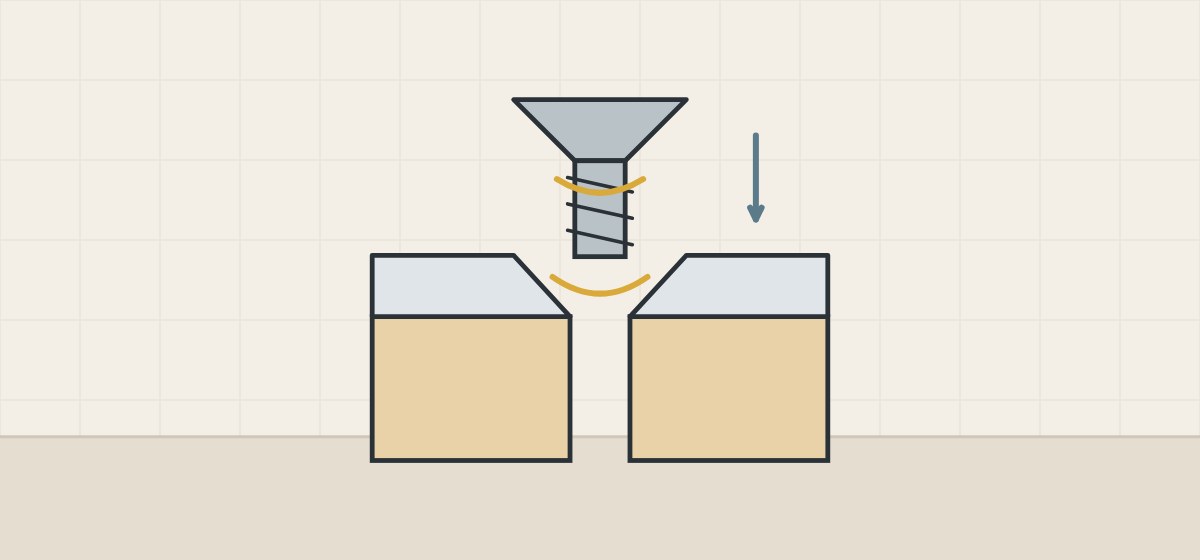
The head and the countersink have to be made to match. ISO covers them in two linked documents, and Knape & Vogt prints the countersink on its 8810 sell sheet.
| Source | What it sets out |
|---|---|
| ISO 7721:1983 | Head configuration and gauging of countersunk head screws, thread sizes M1.6 to M20. |
| ISO 15065:2005 | Countersinks for heads to ISO 7721; the screw standards it lists include ISO 7050. |
| Knape & Vogt 8810 sell sheet | All mounting holes countersunk at 82°, 0.05 in (1.25 mm) deep. |
| SPAX FAQ | Its countersunk Multi-Head is described as self-countersinking. |
| GRK catalog | Its R4 screw is described as self-countersinking, with cutting teeth under the head. |
The ISO pages used here show scope and status, not angles. The only angle in this guide is Knape & Vogt’s, for its 8810 slide; ask each fitting maker for its own.
Which other screw heads do makers name?
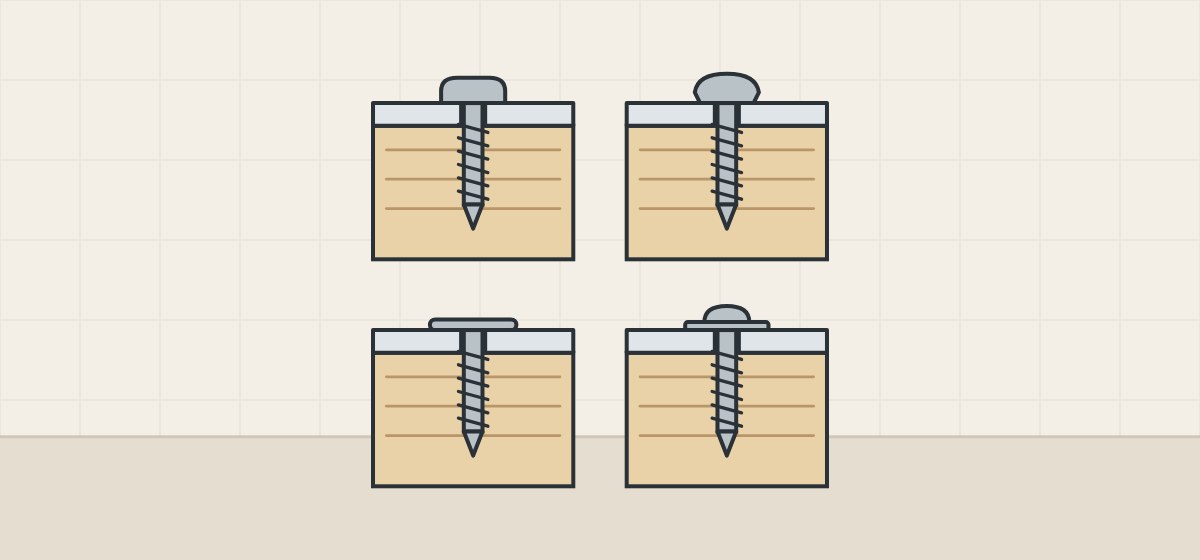
Maker documents name several heads other than the countersunk one. Four examples follow, then this guide’s own checks.
Pan head
SPAX describes its pan head fasteners for attaching thin metal fixtures and brackets to wood or concrete.
Binding head
Knape & Vogt names a binding head as the alternative to a #7 pan head for its 8300 slide.
Wafer head
SPAX lists a low-profile wafer head for uses needing extra clamping force, such as hanging cabinets.
Washer head
GRK says the built-in washer head of its low profile cabinet screws presses in flush against any material.
Checks for any of these heads
These four checks are this guide’s own, not a maker’s. For whichever head the document names, check:
- The head named in the fitting’s document
- Head diameter and head height
- The hole or slot the head bears on
- Any part that passes over the head
How do the holes in a fitting affect the screw choice?
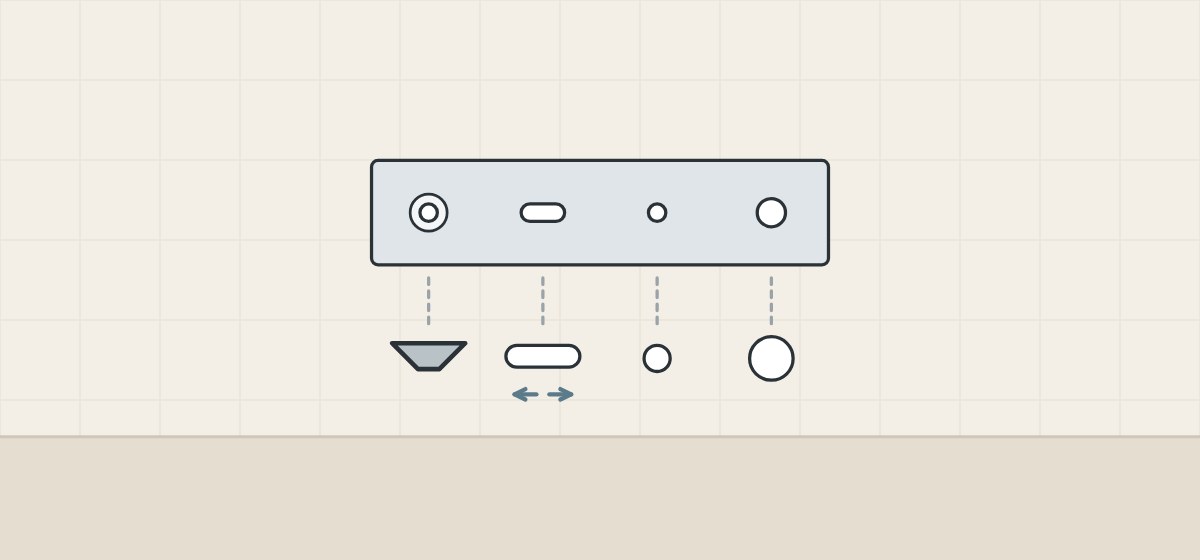
One fitting can carry several kinds of hole, each meant for a different screw or step. Knape & Vogt’s slide documents describe four:
Countersunk holes
The 8810 sell sheet notes an 82° countersink on all mounting holes and names a flat head screw.
Slotted holes
For the 8355, Knape & Vogt says to fasten through the slotted holes first and adjust later.
Round holes
After adjustment, the 8355 instructions add screws in the round holes.
5 mm system holes
The 8300 instructions reserve the large 5 mm holes for Euroscrews.
A screw schedule should therefore say which hole each screw goes in.
What does the head style not tell you?
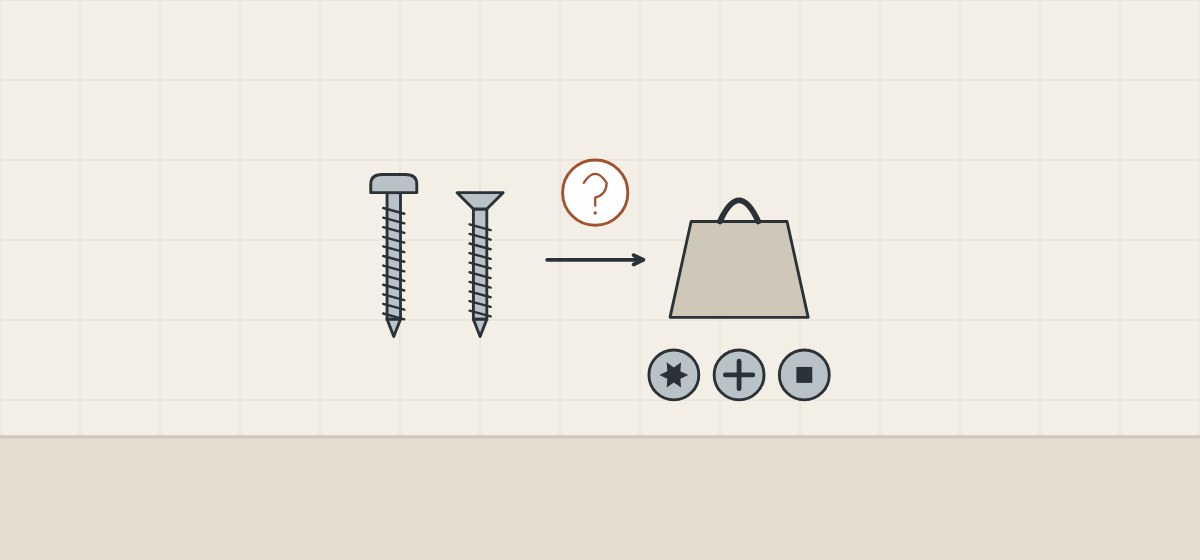
A head name alone does not give the thread, the driver bit, a load or the board a screw suits. The sources state each of these for a specific product, range or standard.
| Topic | What the sources show |
|---|---|
| Thread | ISO 7050:2011 and ISO 7049:2011 cover the same thread sizes with different heads. |
| Driver bit | SPAX says its T-STAR plus recess also takes standard Torx bits. |
| Load | SPAX refers to published allowable loads for its wafer head screws and says overdriving compromises them. |
| Board | Hettich marks its ø 4 x 12 mm screw as not suitable for use in engineered wood. |
How should a buyer review a screw substitution?
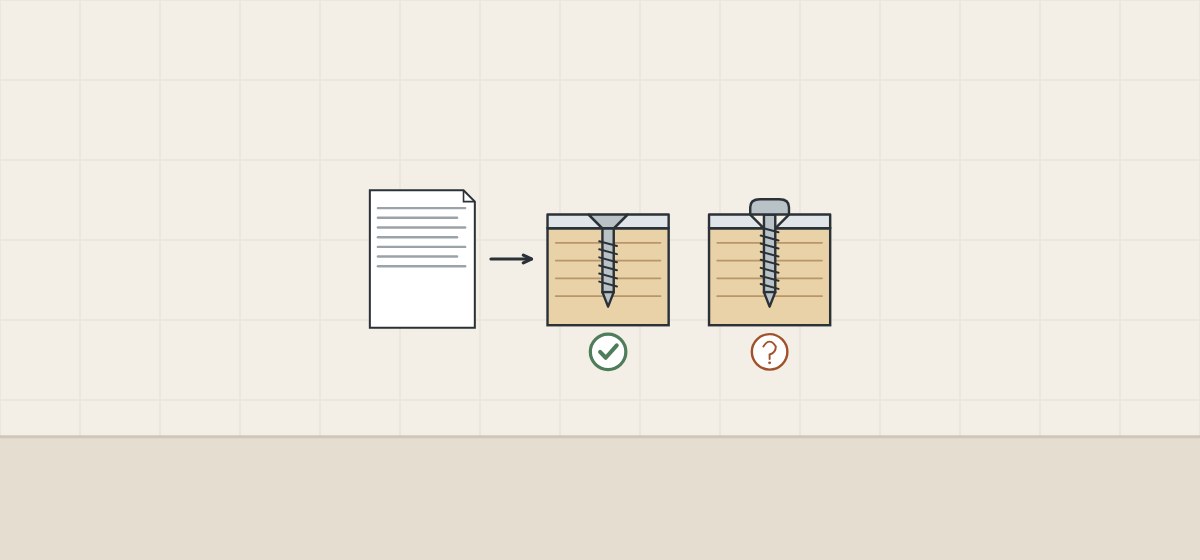
These steps are procurement guidance for a proposed or changed screw, not an installation instruction.
- Find the fitting’s document. Installation sheet or drawing for the exact fitting reference.
- Read the named screw. Head, size, part number or standard, as the maker writes it.
- Identify each hole. Plain, slotted, countersunk or system hole.
- Compare the head. Countersunk for a countersunk hole; otherwise the head the maker names.
- Check what passes the head. Work the drawer, hinge or cover with the screw installed.
- Check thread and board. Thread type, diameter and length against the panel.
- Record the change. Keep the original drawing or sample beside the proposed screw.
When a replacement “looks the same”
A screw with the same thread size can carry a different head, as the paired ISO standards show. Treat a changed head as a specification change. A flush look in one photo is not a clearance check.
What should you send and ask before a quotation?
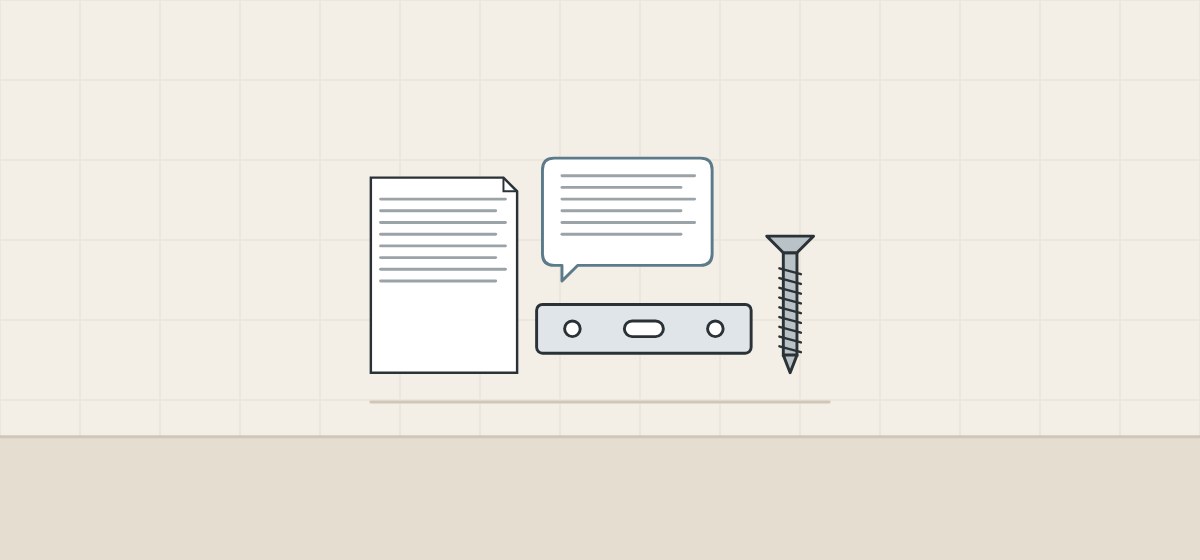
A complete request names the fitting and its screw.
| Question | Why it matters |
|---|---|
| Which fitting reference is used? | The named screw belongs to that fitting. |
| Which screw does its maker name? | Makers name the screw product by product. |
| Are the mounting holes countersunk? | One maker pairs countersunk holes with a flat head screw. |
| Which drive and bit are needed? | The drive is specified apart from the head. |
| Is any screw a substitute? | A changed head is a specification change. |
Include with your request
- Fitting references for hinges and slides
- The maker’s screw specification, if known
- A photo or drawing of the screw holes
- Panel material and thickness
- Quantity and destination market
WNS Global confirms any product and terms it offers separately in writing. This guide does not state that WNS Global products use any screw, fitting, brand or standard named above. Nothing in this guide gives a torque, pull-out value or wall-hanging capacity.