From thread to quotation
What is the difference between a threaded insert and a wood screw?
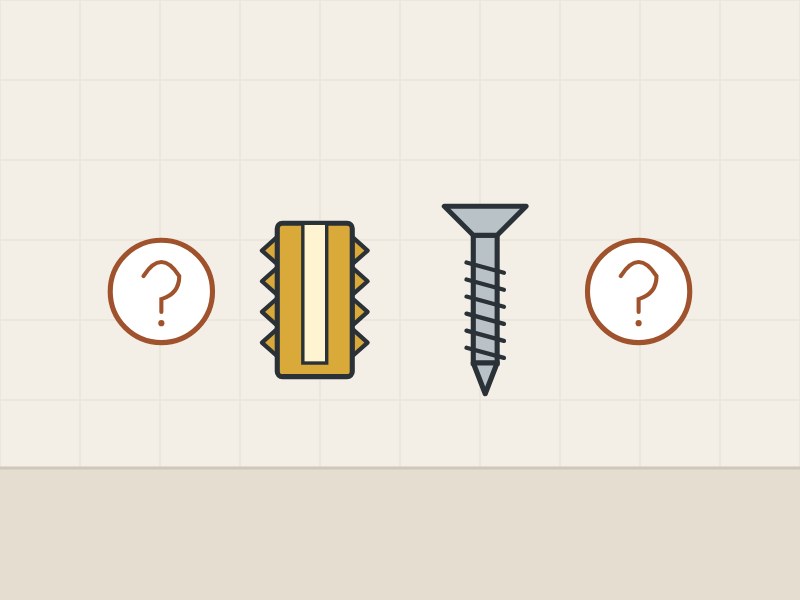
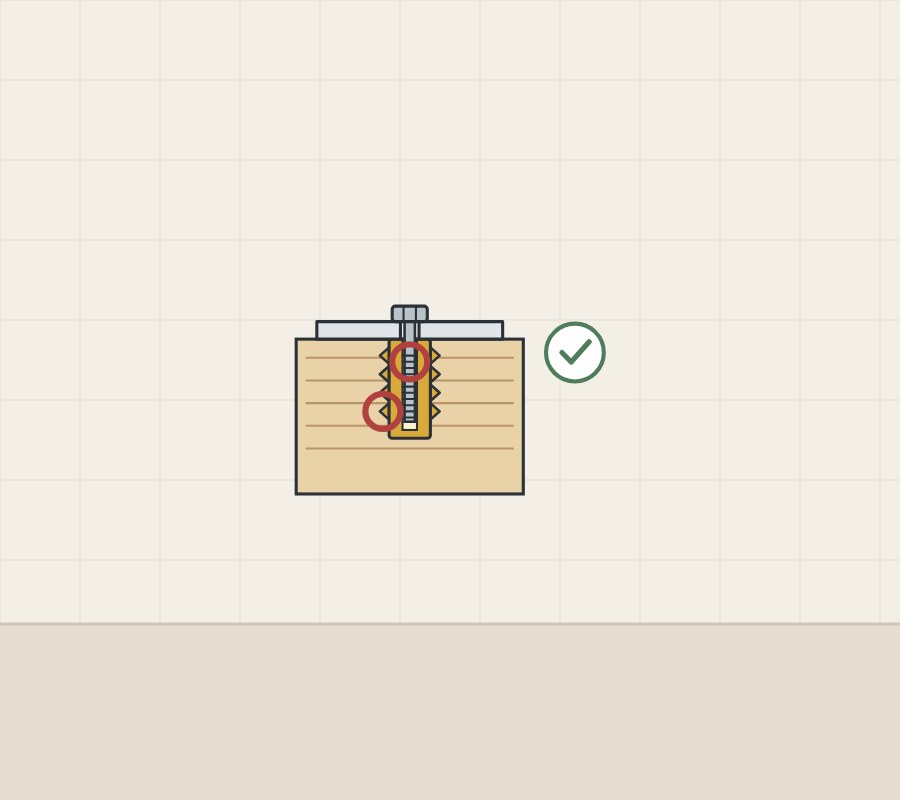
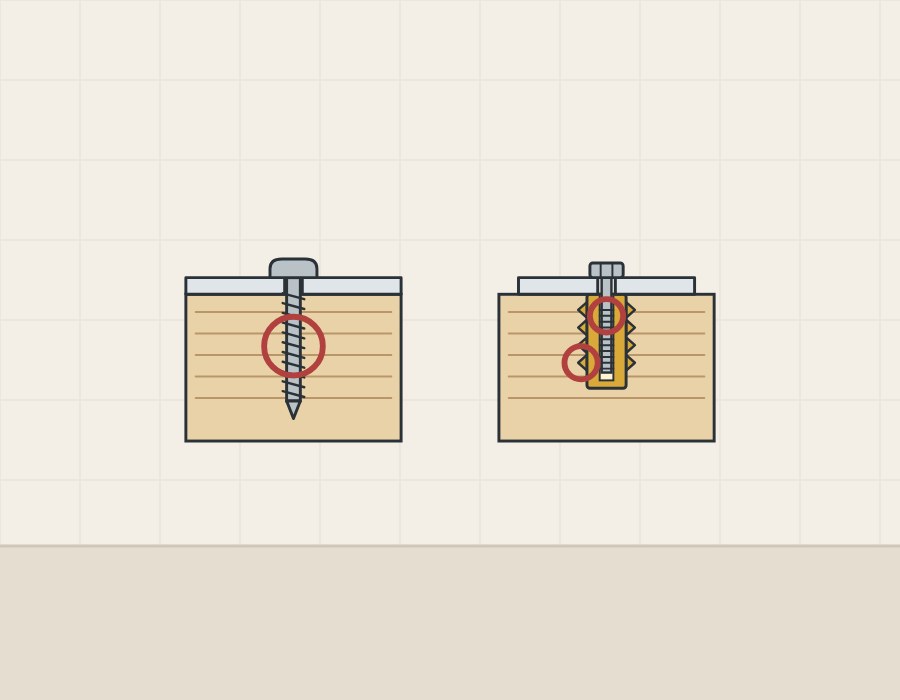
A wood screw engages the board directly; a threaded insert puts a threaded sleeve between the board and a machine bolt. The Wood Handbook says wood screws are classified by material, type, finish, head shape and shank diameter or gauge.
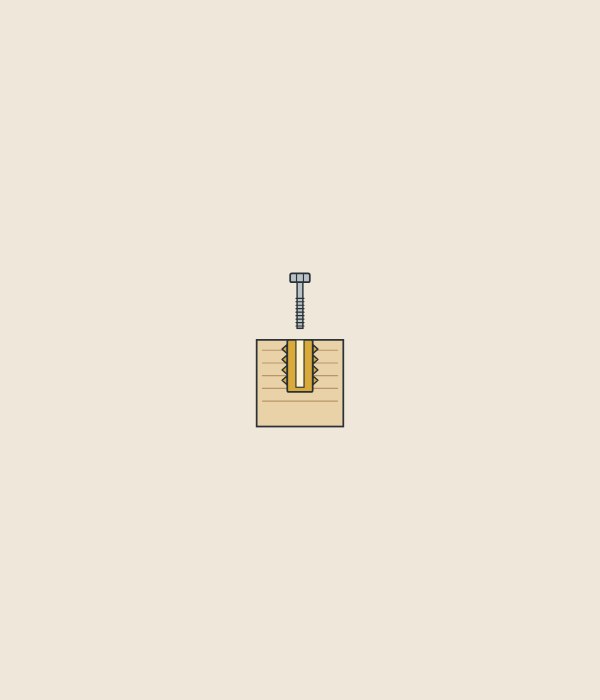
A screw-in insert has two threads. E-Z LOK’s soft-wood insert page lists UNC internal threads from #6 to 3/8, plus M6 and M8. ISO 261 is the general plan for ISO general purpose metric screw threads, which carry the letter M.
| Term | What it means |
|---|---|
| Wood screw | Wood Handbook: head, shank, thread and core; flat, oval or round head. |
| Threaded insert | A sleeve with an internal thread for a bolt; most types listed here also have an external thread that turns into the board, and one is pressed in. |
| M thread | ISO 261: an ISO general purpose metric screw thread. |
| Lead hole | The hole drilled before a wood screw is turned in. |
| Flush or flanged | E-Z LOK hex inserts: set below the surface, or with a flange at the surface. |
How is each fastener installed?
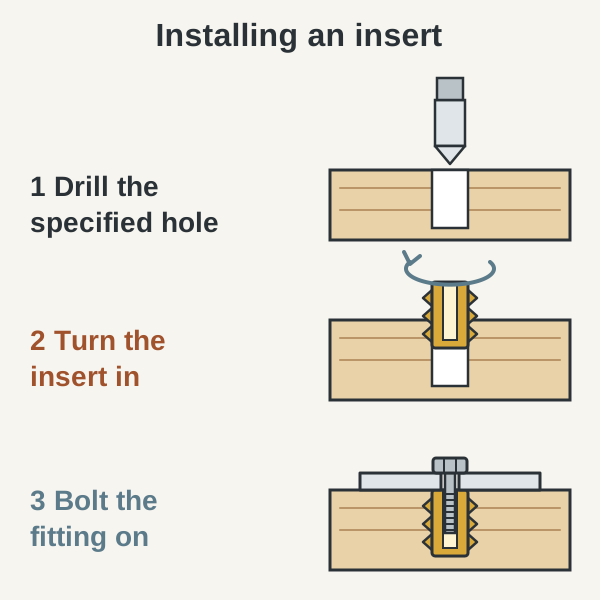
An insert is installed first and the bolt second. The points below follow E-Z LOK’s E-Z Hex guide and its hard-wood page for E-Z Knife, not any other product.
- Drill the hole size specified for that insert.
- Turn the insert in: hex-drive with an Allen wrench or the maker’s drive tool; knife-thread with a bolt and jam nut or a drive tool.
- Set a flush type below the surface; a flanged type sits at surface level.
A wood screw needs no second part. The Wood Handbook says screws should always be turned in and never started or driven with a hammer. Its withdrawal equation for wood screws assumes lead holes of about 70% of the thread root diameter in softwoods and about 90% in hardwoods.
Which insert suits which board?
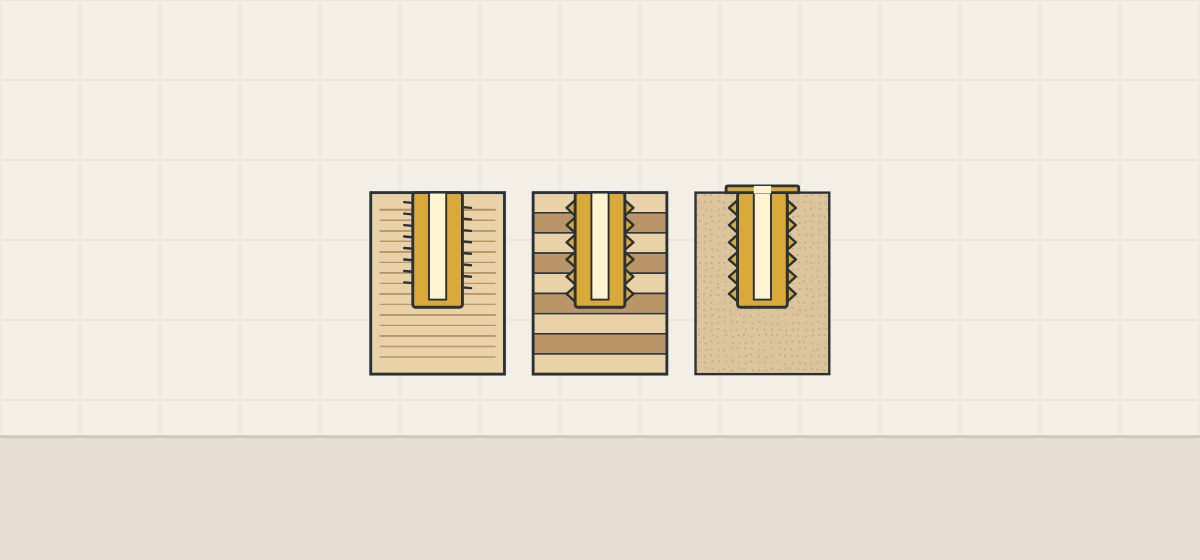
Makers describe which materials their inserts are for, by product or by range. The table gives the maker’s own description of five products.
| Insert | Maker names it for | Maker’s description |
|---|---|---|
| E-Z LOK E-Z Knife | Hardwoods like oak, cherry and maple | External knife thread; brass or stainless steel. |
| E-Z LOK E-Z Hex | Soft woods like pine; composition board, plywood, MDF | Hex drive; flush or flanged. |
| E-Z LOK E-Z Fin (Finsert) | Listed with E-Z Hex on the soft-wood page | Press-in installation. |
| RAMPA SK330 | Range page: hardwood, softwood and wood materials | Hex drive, unthreaded lead, 3-start external thread. |
| RAMPA SKDL | Not stated on its product page | Left-hand external thread, large collar, hex drive. |
For its hex inserts E-Z LOK says larger teeth give better holding power, and that a smaller size can be chosen for extremely soft materials such as particleboard and a larger one for pine and plywood.
Is there one hole size for an M6 insert?
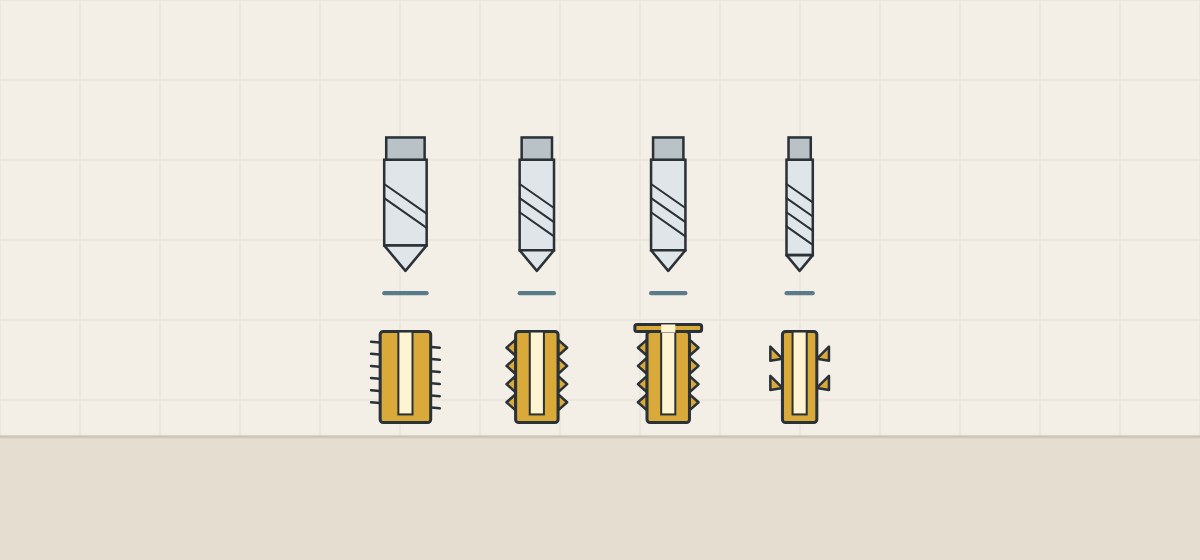
E-Z LOK’s own chart gives no single hole size for M6. Its M6 rows show three drill sizes, printed as fractions; four of those rows are below.
| E-Z LOK insert | Internal thread | Drill listed |
|---|---|---|
| Knife thread, brass (400-M6) | M6-1.0 | 25/64 |
| Hex drive, flush (800610-13) | M6-1.0 | 23/64 |
| Hex drive, flanged (900610-13) | M6-1.0 | 23/64 |
| Finsert (270-M6-BR) | M6-1.0 | 21/64 |
E-Z LOK also says hole size requirements may vary with factors including material and tools and recommends testing the application before ordering. RAMPA says its inserts for wood are self-cutting, so pre-cutting the thread is not required. Do not carry a hole size from one board or insert to another without the maker’s figure and a trial.
What does the Wood Handbook say about screws in wood and particleboard?
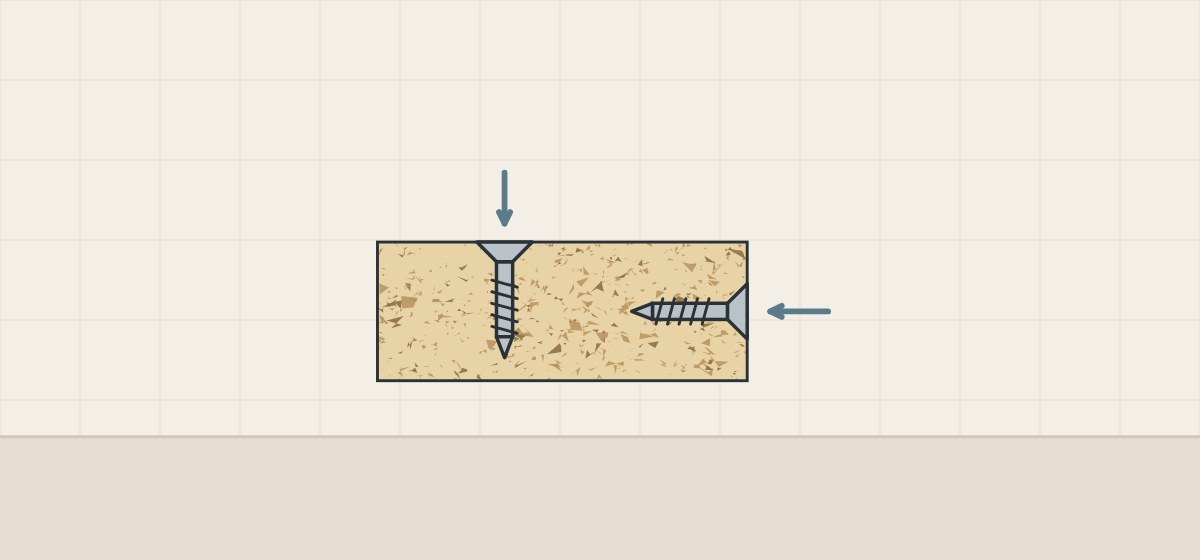
The Wood Handbook ties a screw’s hold to the material and the direction it enters. Its fastenings chapter says:
Density
Withdrawal resistance of wood screws from the side grain of seasoned wood varies directly with the square of the wood’s specific gravity.
End grain
Withdrawal loads in end grain are somewhat erratic and, when splitting is avoided, should average 75% of the side-grain load.
Particleboard
Tapping screws are commonly used in particleboard where withdrawal strength is important. The Handbook’s particleboard equation uses a lower constant for the board edge than for the face.
What to record
This guide suggests recording four things for each screw position:
- Board type and density
- Face, edge or end grain
- Lead hole used
- Screw type and gauge
Which joint is meant to come apart?
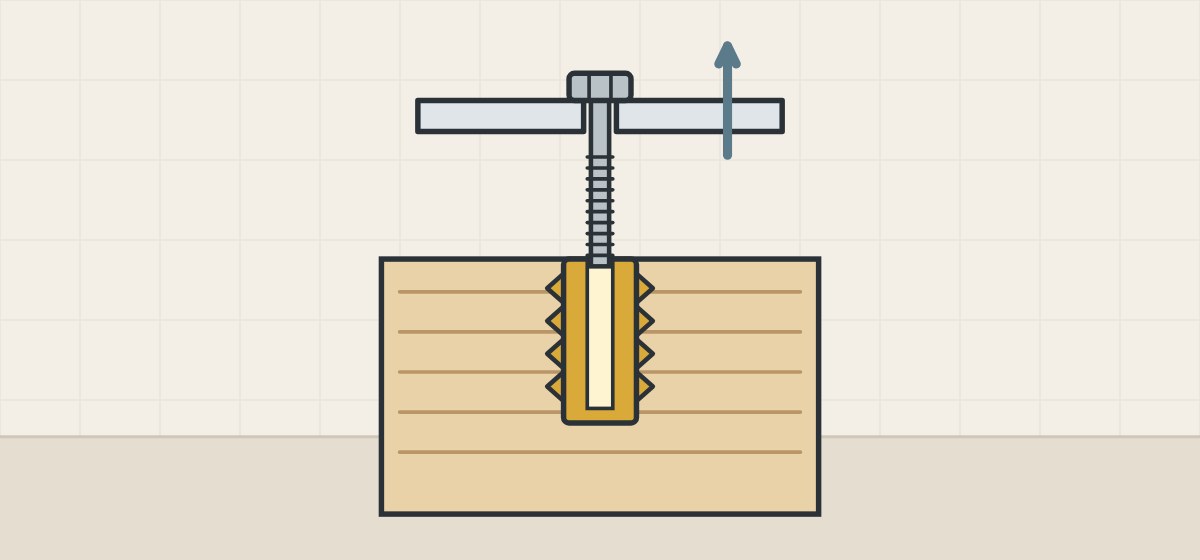
Decide it joint by joint: ask which part must be removable in service, the bolt, the fitting or the insert. The two points below are what the sources say.
Insert in board
RAMPA gives its SKDL insert a left-hand external thread and says this prevents loosening in frequent screwing applications.
Screw in board
The Wood Handbook says care must be taken when tightening screws in particleboard to avoid stripping threads. Its torque equation is for 8-gauge screws at one penetration depth, not a general limit.
The sources read for this guide do not say whether an insert can be removed and refitted in the same hole, and none gives a number of assembly cycles for either fastener. Ask the insert maker.
What do the named standards and documents cover?
Each document below covers one part of panel fastening, as its publisher’s page states. The standards themselves were not read.
| Document | What its page says |
|---|---|
| ASME B18.6.1 - 1981 (S2021) | General and dimensional data for slotted and recessed head wood screws, inch series; under stabilized maintenance. |
| ISO 261:1998 | General plan of ISO general purpose metric screw threads (M). |
| ASTM D1037-12(2020) | Test methods for particleboard, MDF and similar panels; its listed tests include direct screw withdrawal. |
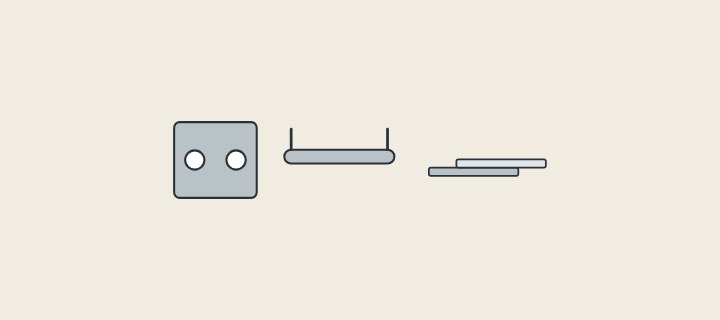
| Blum catalog, one mounting plate | Two versions: for fixing with Ø 3.5 mm chipboard screws, or with pre-mounted special screws with split dowels. |
How should a buyer specify a panel fastener?
Specify both joints and the board, then have the assembly checked. These steps are procurement guidance, not an engineering method.
- Name the fitting. Handle, foot, hinge plate or bracket, with its drawing.
- Name the board. Species or panel type, thickness, and face, edge or end grain.
- Choose the fastener type. Wood screw, or insert with machine bolt, and why.
- Specify the bolt joint. Thread size, bolt length, engagement and head.
- Specify the board joint. Insert maker, part number and drill size from the maker’s chart.
- State what comes apart. Bolt, fitting or insert, and how often.
- Ask for a trial. The insert or screw installed in the actual board, with photos.
When a quote says only “M6 insert”
The thread size describes the bolt joint only. It leaves the insert family, the board, the hole and the installation open, so ask for each in writing.
What should you send and ask before a quotation?
A complete request names the fitting, the board and what must come apart. Each question maps to a point earlier in this guide.
| Question | Why it matters |
|---|---|
| Insert or wood screw? | One joint or two. |
| Which insert, from which maker? | Makers name materials by insert or range. |
| Which board, and face or edge? | Hold depends on material and direction. |
| Which drill size, from which chart? | One M6 thread, several drill sizes. |
| What is removable in service? | Bolt and insert are different joints. |
| Has it been tried in this board? | E-Z LOK advises testing the application. |
This guide’s list for your request
- Fitting drawing or model
- Panel material and thickness
- Fastener position on the panel
- Parts that must come apart
- Quantity per cabinet
WNS Global confirms any product and terms it offers separately in writing. This guide does not state that WNS Global products have the features, ratings or listings named above, or use any insert, screw or hole size named above. It gives no torque or pull-out load.