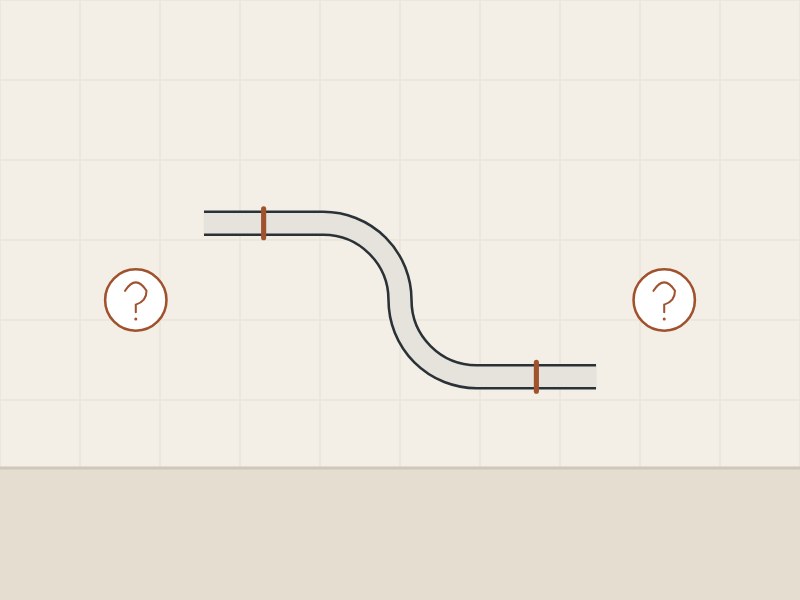
From route to seam map
How can a curved solid surface part be made?
A curved part in solid surface sheet can be heat-formed, shaped by cutting tools or assembled from bonded pieces. Corian’s thermoforming bulletin defines thermoforming as heating the sheet until it softens, forming it into a two- or three-dimensional shape and cooling it.
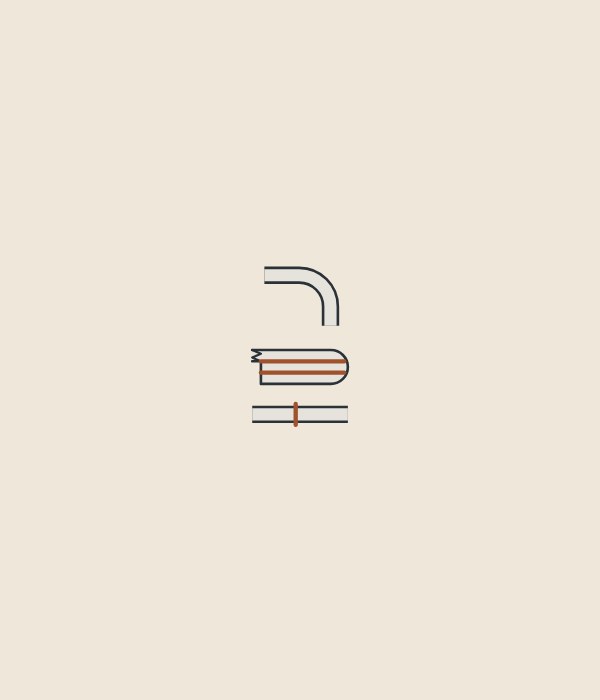
Shaping is a separate operation. Corian’s edge bulletin calls the stack edge, strips applied in layers, the basic edge build-up, and lists bull nose and roundover among edge treatments.
The ISO 19712-1:2008 abstract classifies solid surfacing materials as sheets or shapes. This guide covers sheet.
| Route | What the makers describe |
|---|---|
| Thermoformed sheet | Sheet heated until soft, formed on a mold and cooled. |
| Routed edge | Edge built up in layers, then shaped with a router. |
| Joined assembly | Separate pieces bonded with joint adhesive. |
| Combined | A formed piece seamed to other pieces after forming. |
How is a solid surface sheet thermoformed?
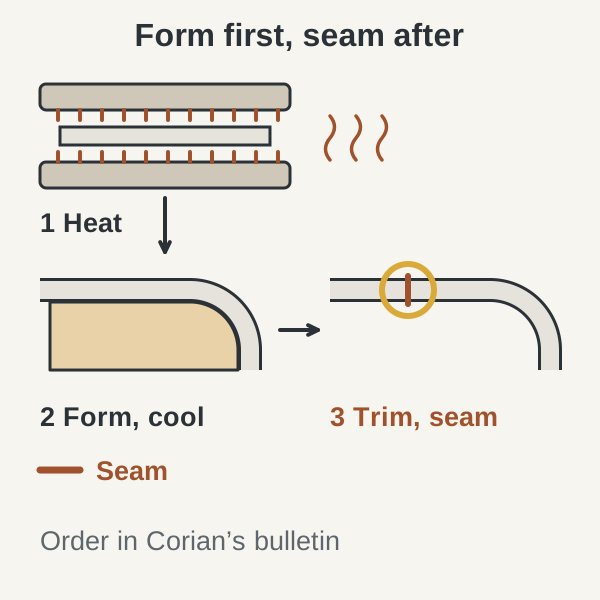
The sheet is heated as a whole, shaped on a mold, cooled and trimmed. The steps follow Corian’s thermoforming bulletin for its own sheet. Corian calls simple two-dimensional bends fairly easy and complex three-dimensional shapes fairly complicated.
- The blank is cut and its edges are eased slightly.
- The sheet is heated uniformly; Corian does not recommend spot heating.
- The soft sheet is formed on a male, female or two-sided mold.
- The part cools; Corian gives 180 °F (82 °C).
- The part is trimmed if precise dimensions are needed.
- Any seams are made after forming and trimming.
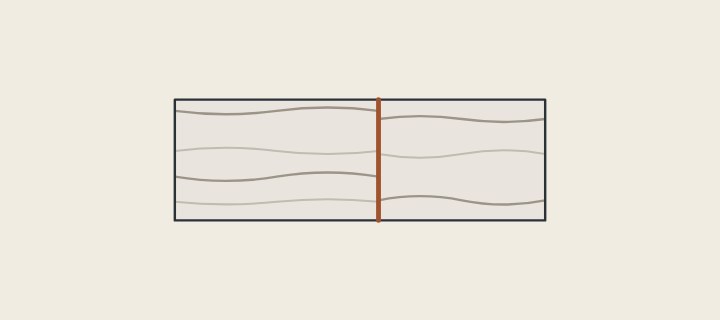
Corian says the edges of a formed part are no longer square, and that seamed sheet must not be formed.
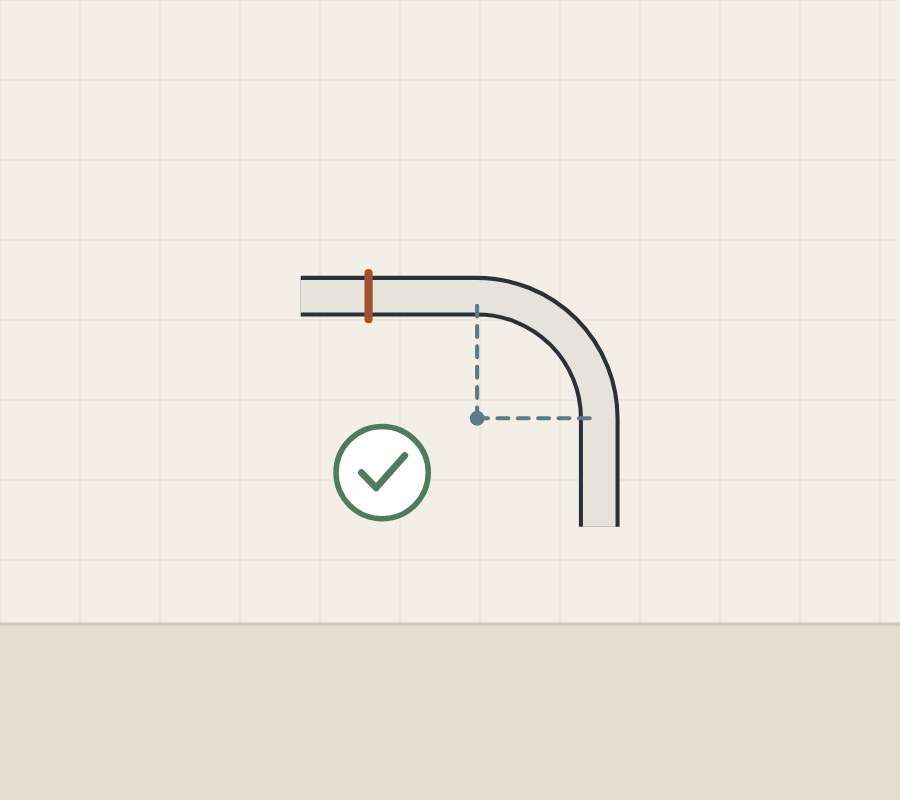
How tight can a thermoformed bend be?
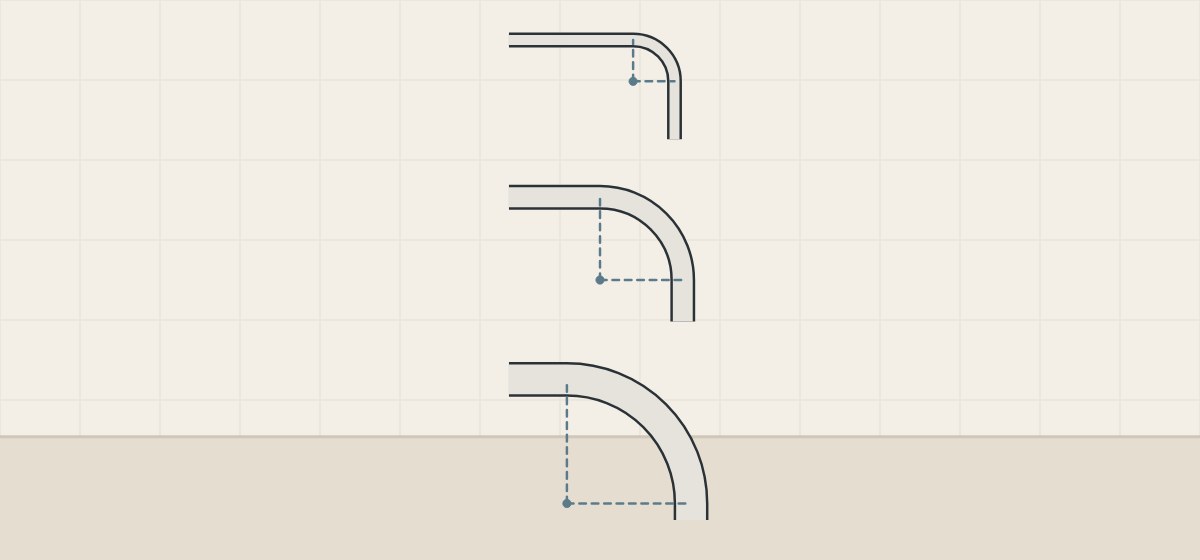
It depends on the maker, the sheet thickness and the color. Five makers publish these bend radius limits for their own sheet; no row applies to another material.
| Maker document | Sheet | Radius stated |
|---|---|---|
| Corian bulletin | 6, 12 and 19 mm | 25, 76 and 127 mm inside; best performing colors |
| HIMACS chapter 11, 2D | 6 mm Solids | 20 mm inside |
| HIMACS chapter 11, 2D | 12 mm, Solids – Lucent row | 50 mm inside |
| HIMACS chapter 11, 2D | 12 mm, Lucia / Marmo / Volcanics / Aster / Gravilla / Concrete row | 200 mm inside |
| Wilsonart guidelines | Thickness not given | 3 in (76.2 mm) bending radius limit |
| Avonite guide | 6 and 12 mm acrylic | 3 in (76 mm) and 6 in (152 mm) |
| Krion Lux article | 12 mm | By color code: 20 mm for one, 240 mm for another |
Krion says the radius is not the same for all its sheets: it depends on color code, thickness, oven type, heating time and the geometry of the piece. Check a drawn radius against the named material, thickness and color.
Which colors and patterns limit thermoforming?
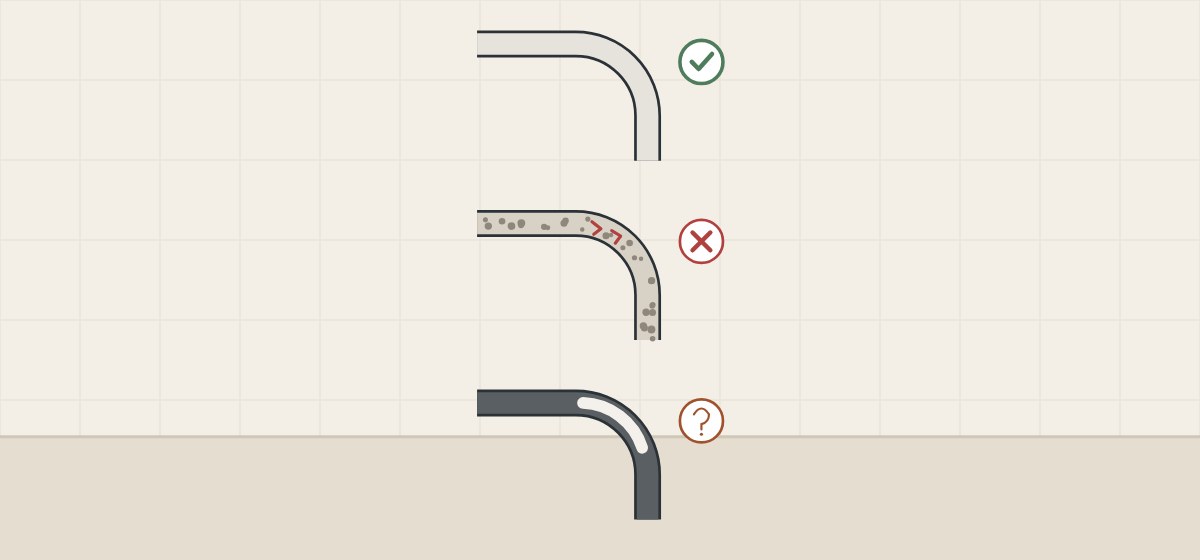
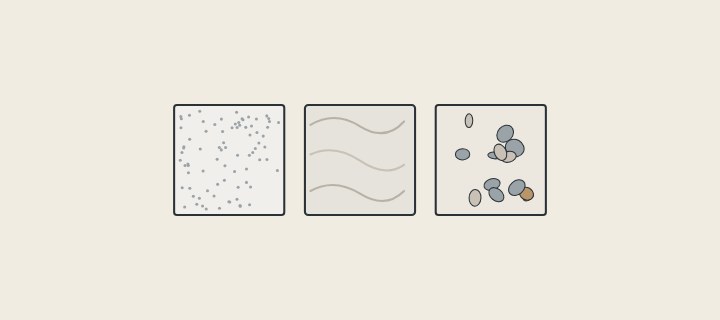
Corian and HIMACS flag darker colors and colors with large particles; Wilsonart flags certain patterns. Each speaks for its own range.
| Source | What it says |
|---|---|
| Corian bulletin | Solid, lighter colors perform better than darker colors and colors with larger particulates. |
| Corian bulletin | Some colors with large particulates may need radii of 6 in (150 mm) or more. |
| HIMACS chapter 11 | Terrazzo is not recommended at 12 mm; Lucia, Marmo, Volcanics and Aster may crack or lose chips even at 200 mm or more. |
| HIMACS chapter 11 | Whitening is more pronounced in tighter curves and darker colors. |
| Wilsonart guidelines | Certain patterns are not recommended; larger particulates and veining need longer heat times. |
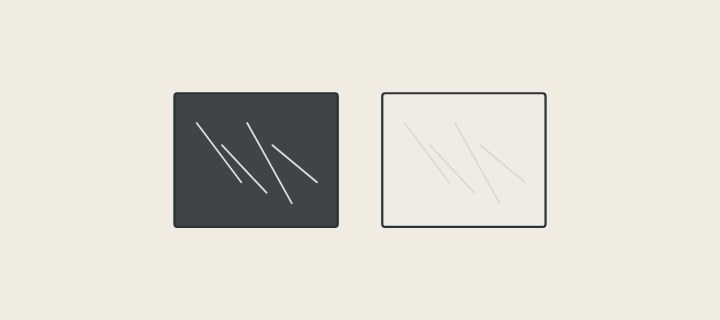
Corian describes whitening as many small failures in the part that scatter light.
Can a thermoformed part still have seams?
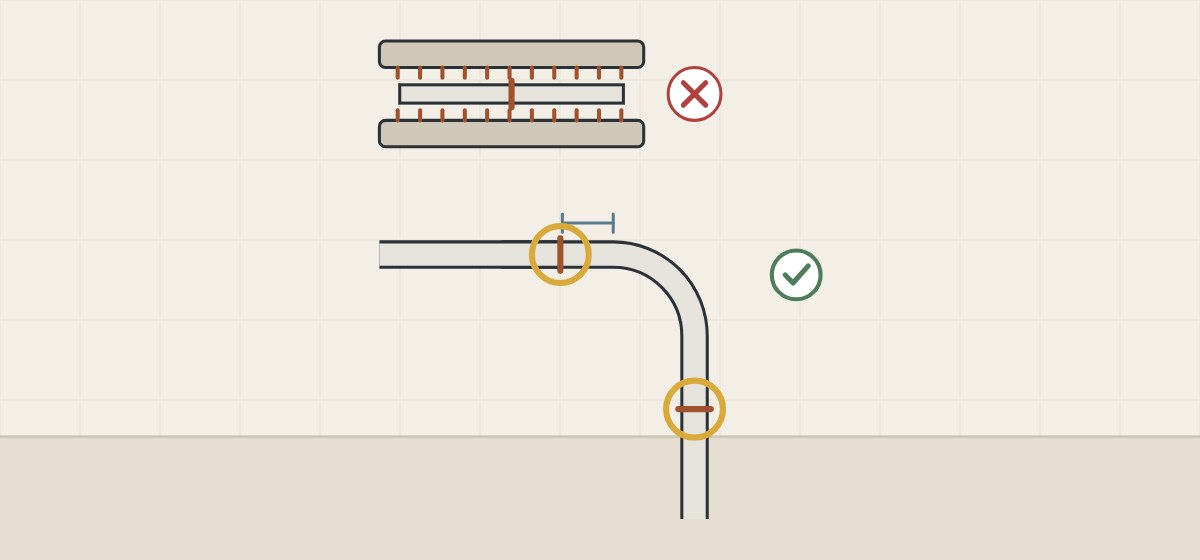
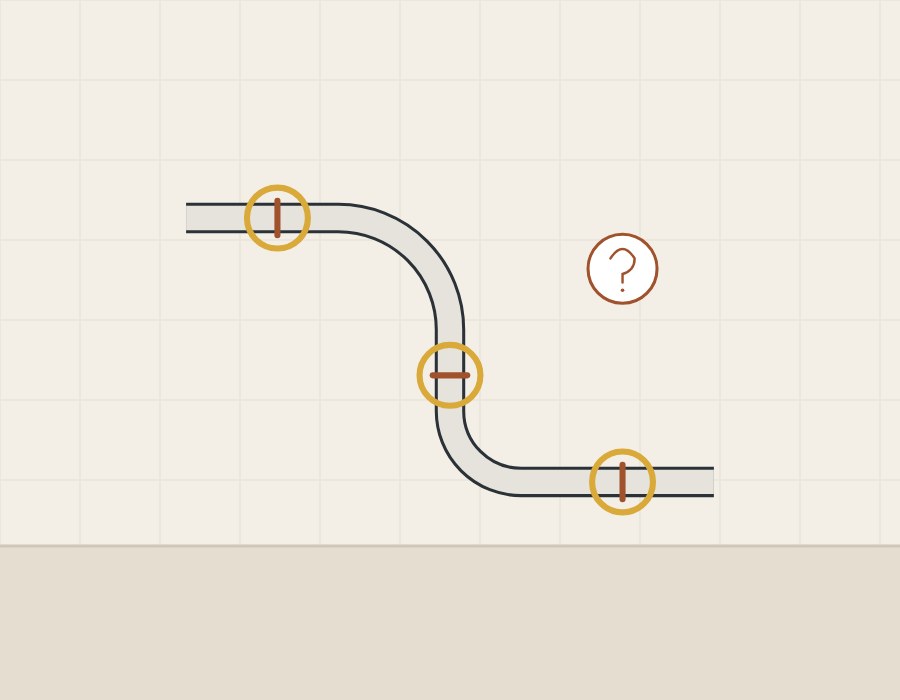
Yes. Forming one piece says nothing about how it joins the rest, so thermoformed and seamless are separate questions. Three points, then four questions for the supplier:
Form first, seam after
Corian says not to form seamed sheet. HIMACS says the same and calls the seam line structurally weaker. Wilsonart and Avonite also place seaming after forming.
Inconspicuous is not absent
Corian’s seaming bulletin says tight seams with well prepared edges are inconspicuous, except for select sheet aesthetics. ISFA 2-01 says the material “may feature inconspicuous seams”.
Flat next to the bend
HIMACS recommends at least 50 mm of flat surface beside the curved section, to make seaming easier and more accurate.
- Which pieces are formed
- Where each seam sits
- Which seams face the user
- Whether seams show more in this color
How are rounded edges and coves made without bending?
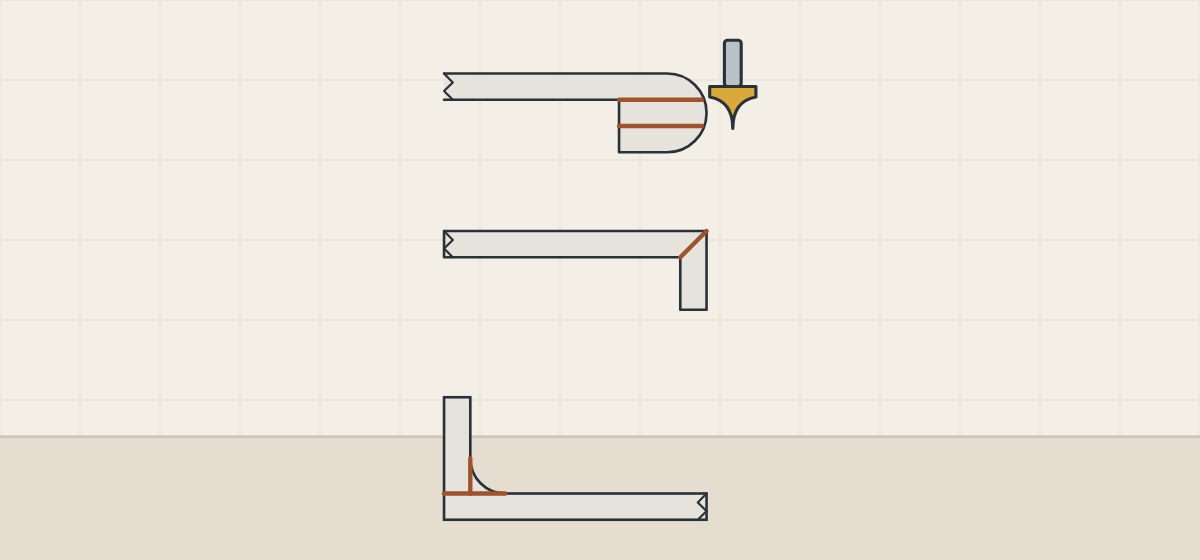
In the makers’ chapters read here, they are built up from bonded strips; Corian shapes the edges with a router. Four details:
Stacked drop edge
HIMACS describes stacking layers under the sheet to make a drop edge: for 12 mm sheet, two layers (24 mm in total) or three (36 mm).
Rounded with a router
In its no-drip front edge, HIMACS bonds an apron to the countertop and, once the adhesive has cured, uses a router to round over the top edge.
V-groove
Corian’s edge bulletin describes V-grooving, also called cut-and-fold; HIMACS says it forms a mitred joint.
Curved backsplash
HIMACS builds its curved backsplash from a strip with an 8 mm radius bonded to the backsplash piece, then sands the joint.
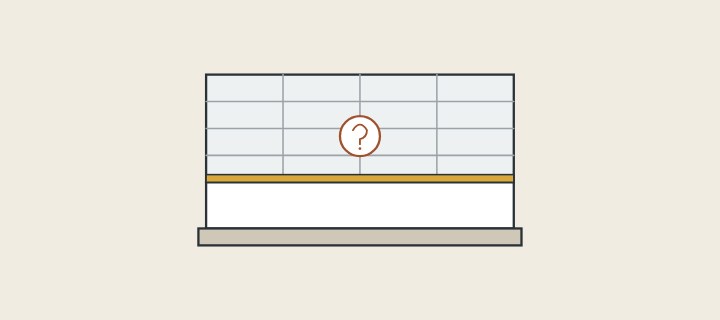
The built-up edges and the curved backsplash contain joints. Corian says build-up seams must not line up with countertop seams and asks for at least 2 in (51 mm) between them. Routes also mix: HIMACS starts one internal corner detail from a thermoformed corner block.
What process limits do the makers state?
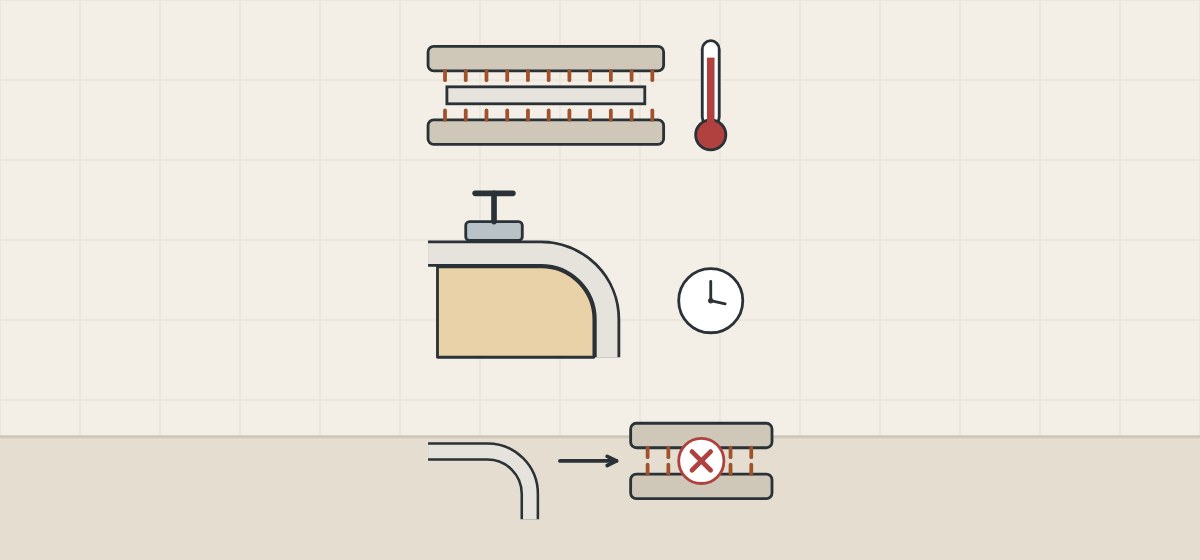
The makers limit temperature, heating method, cooling and reheating, each for its own material.
| Source | Stated limit |
|---|---|
| Corian bulletin | The sheet should not exceed 350 °F (177 °C). |
| HIMACS chapter 11 | Never exceed 204 °C; reheating is strictly prohibited. |
| Wilsonart guidelines | Heat guns, torches and CalRods will cause failure. |
| HIMACS chapter 11 | Keep under pressure on the mold until 60 °C, about 40 to 60 minutes. |
| HIMACS chapter 11 | 3D thermoforming cannot be precisely standardised. |
| Krion Lux article | Gentle curves can be cold-bent; as a guide, 900 mm radius at 6 mm and 1800 mm at 12 mm, for a 3600 mm sheet. |
How should a buyer specify a curved solid surface part?
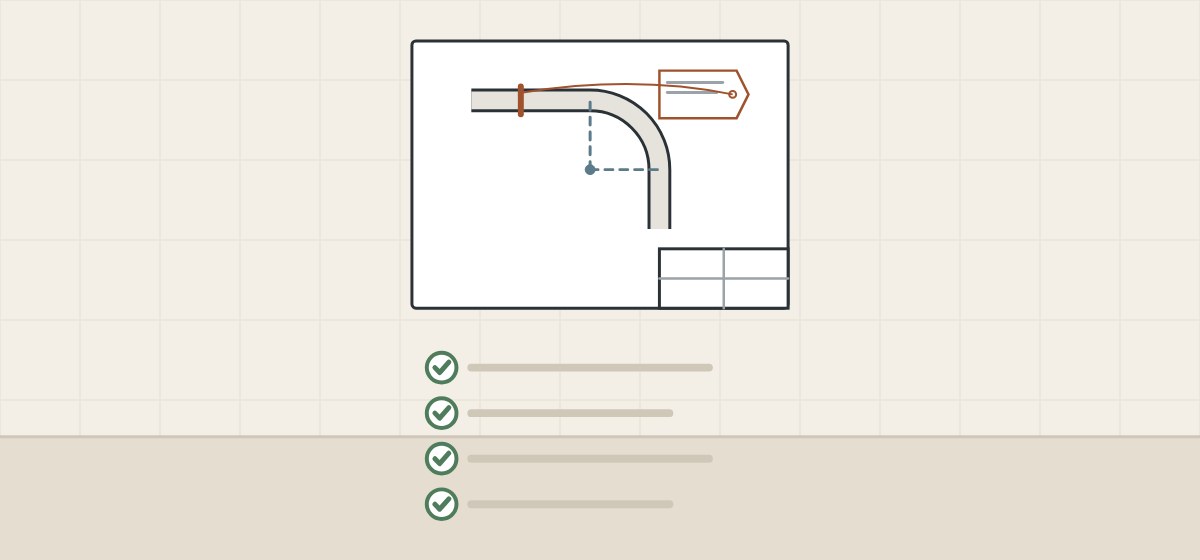
Name the material, then ask for the route and the seams feature by feature. These steps are procurement guidance.
- Name the material. Maker, color and sheet thickness.
- Mark the drawing. Each curved face, rounded edge and cove, with its radius.
- Ask for the route. Thermoformed, built up and routed, or joined, for each feature.
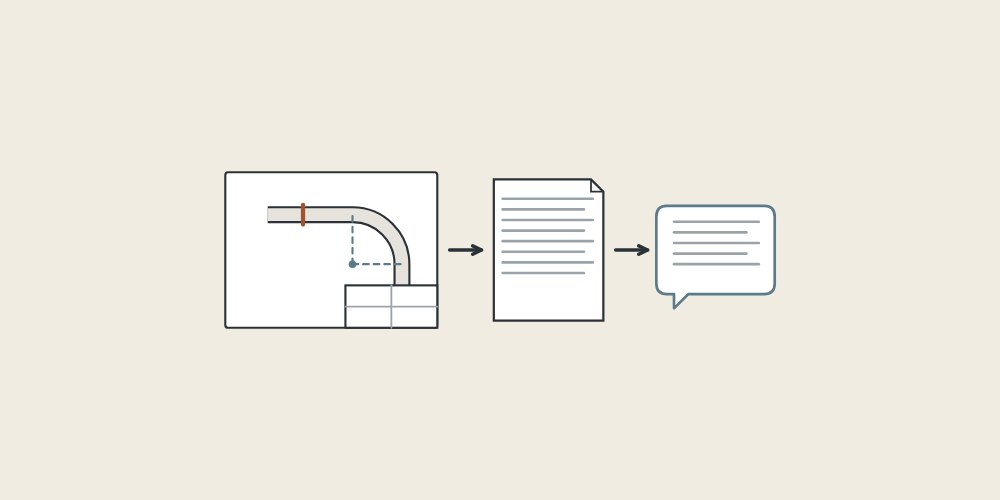
- Ask for a seam map. Every seam, including build-up seams.
- Check the radius. Against the maker’s figure for that thickness and color.
- Approve a formed sample. In the project color, with a seam, not a flat chip.
- Write the route down. Route and seam map go in the quotation.
When a photo is the only reference
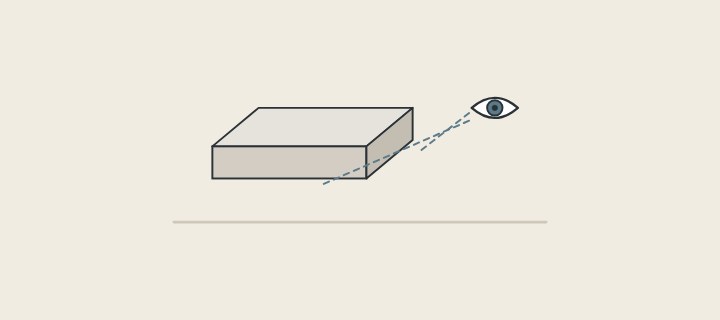
A photo does not show the route. ISFA 2-01 says many solid surface products can be thermoformed with little or no significant change to their performance properties; many is not all, so confirm it for the named product.
What should you send and ask before a quotation?
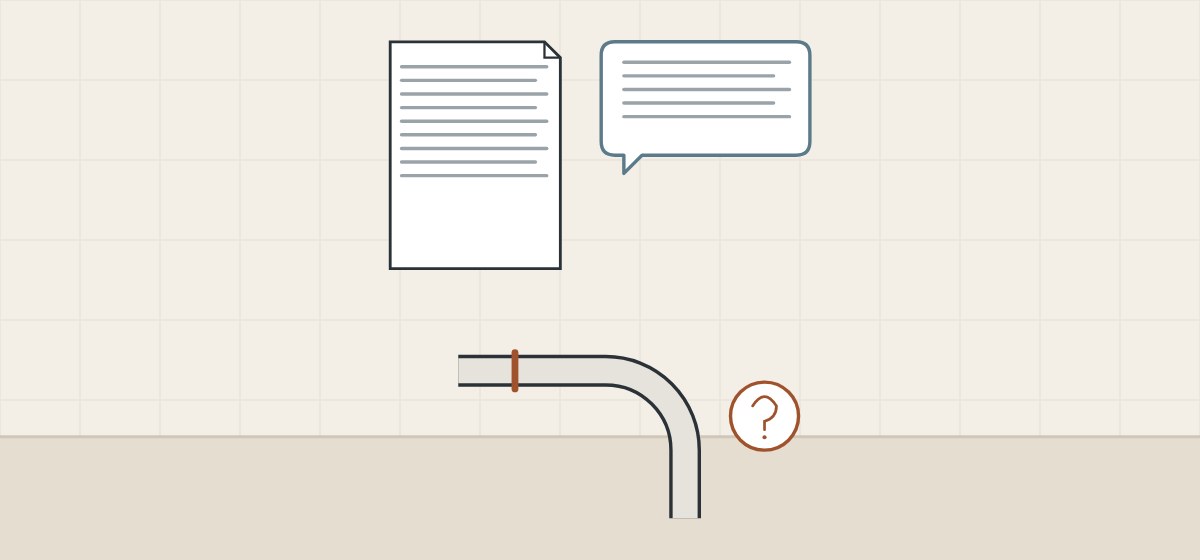
Show the shape and name the material.
| Question | Why it matters |
|---|---|
| Which route makes each curve? | Forming, routing and joining have different limits. |
| Which maker, color and thickness? | Published radii differ on all three. |
| Is the radius within the maker’s figure? | Some colors need far larger radii. |
| Where is every seam? | A formed part is seamed after forming. |
| Will a formed sample be supplied? | Whitening shows on the bend, not on a chip. |
Include with your request
- Drawing with curved faces and radii marked
- Material, color and thickness wanted
- Faces seen in normal use
- Seam positions you will not accept
WNS Global confirms any offered product, construction route and commercial terms separately in writing. This guide does not state that WNS Global thermoforms or fabricates sheet solid surface, or that its products use any material, radius or process named above.