From sheet direction to signed layout
Why does a veined sheet behave differently from a plain one?
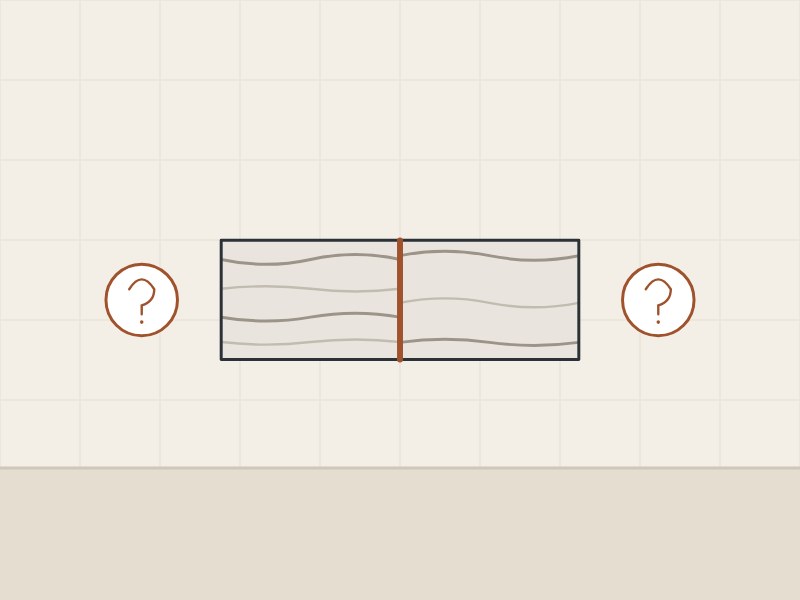
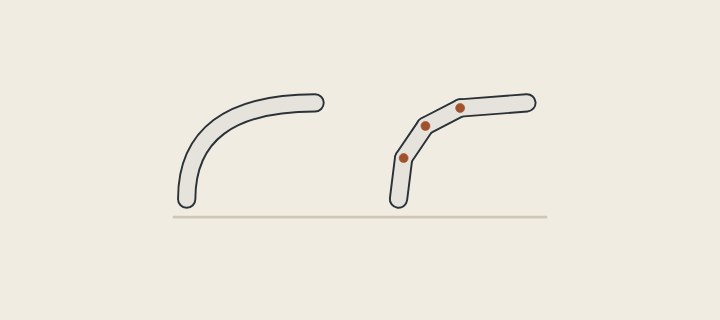
A veined sheet has a direction, and its pattern does not repeat. Corian describes random directional veining, from subtle to bold, that flows along the length of the sheet.
Avonite says every sheet in its Movement Collection is unique. LX Hausys says patterns in HIMACS veined colors will not be identical within a sheet or between sheets.
Corian adds that the veining changes through the thickness, so the sheet edge looks different from the top.
| Term | Meaning |
|---|---|
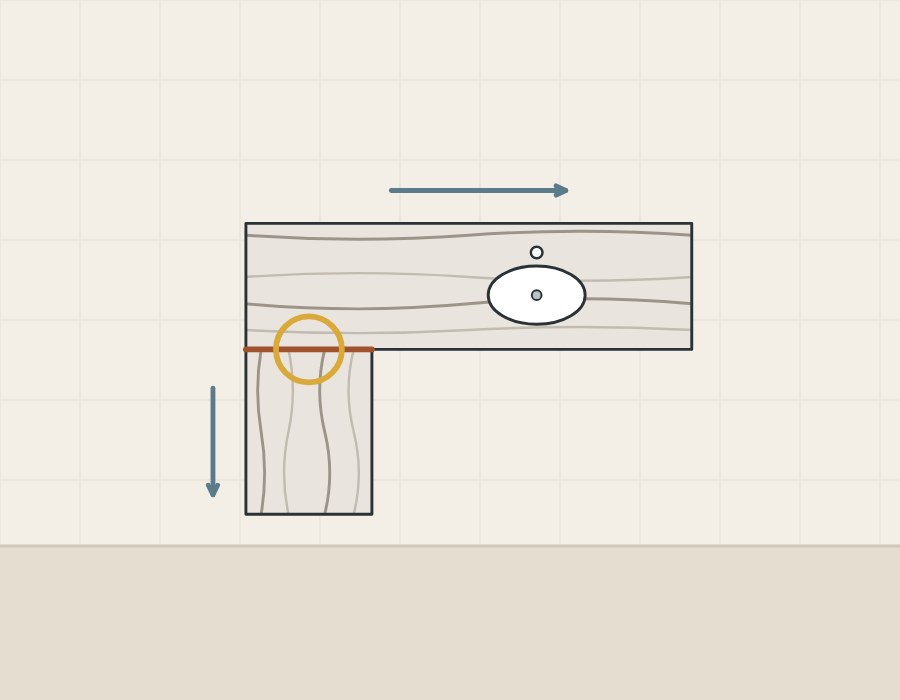
| Machine direction (MD) | Along the length of the sheet; the pattern flows this way. |
| Transverse direction (TD) | Across the width of the sheet. |
| Visual break | The interruption of the pattern where two pieces meet. |
| Same orientation | Pieces laid so their MD runs the same way. |
What happens to the pattern at a seam?
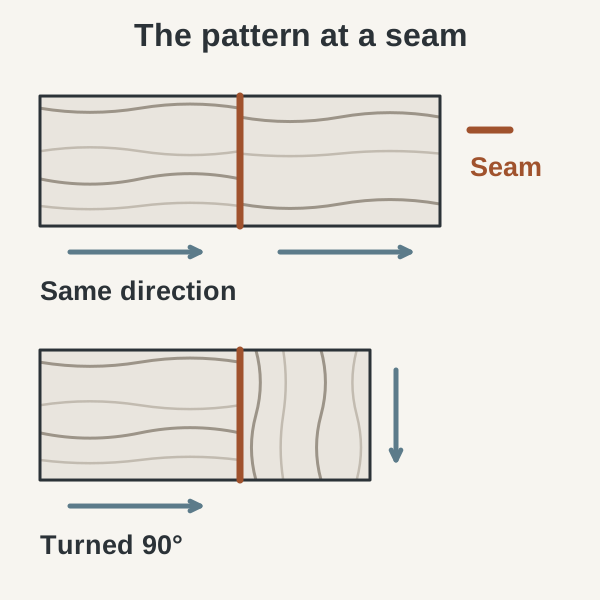
The pattern stops at the seam and a different part of it starts on the other side. Steps 1, 2, 5 and 6 are Corian’s statements about its veined colors; steps 3 and 4 describe how any top is made.
- The pattern runs along the length of each sheet.
- The pattern is random and does not repeat.
- Pieces for the top are cut from one or more sheets.
- Two pieces are joined at a seam.
- The veins on one side do not continue on the other.
- The break is more noticeable with stronger patterns.
Corian’s seaming bulletin says tight seams with well prepared edges are inconspicuous “except for select sheet aesthetics”, and tells fabricators to align veined sheets before preparing a seam.
Which seam layouts do makers describe for veined sheets?
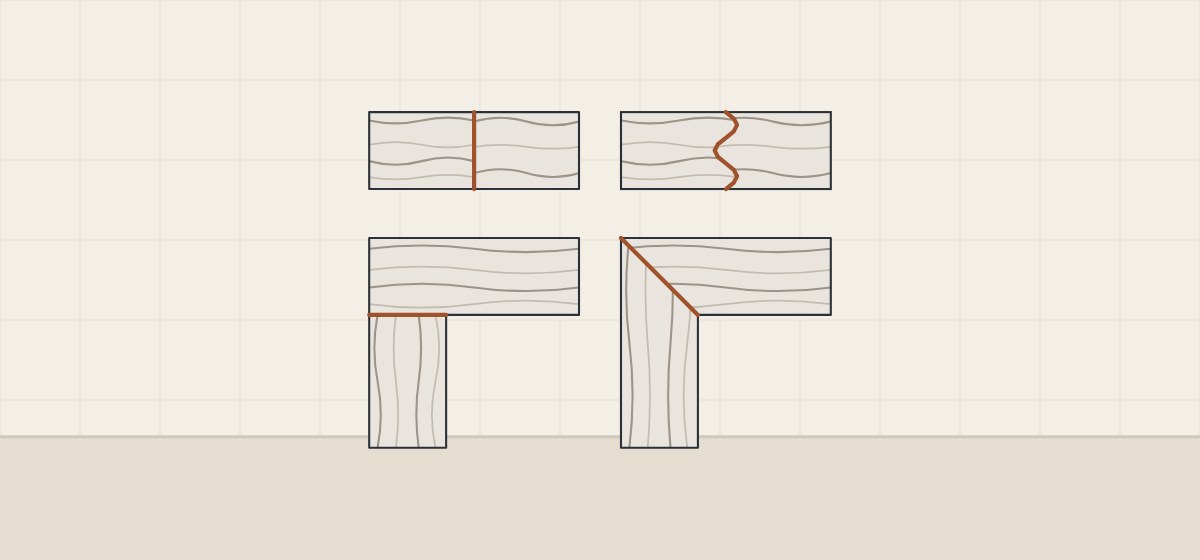
Corian recommends joining pieces that run in the same direction; the other rows are each maker’s alternatives. Each row is that maker’s statement about its own veined colors.
| Layout | Maker | What the maker says |
|---|---|---|
| End to end or side to side, same orientation | Corian | Recommended; gives the best appearance. |
| Pieces at 90°, butt seam | Corian | May suit light colors with subtle patterns; in general abrupt and highly noticeable. |
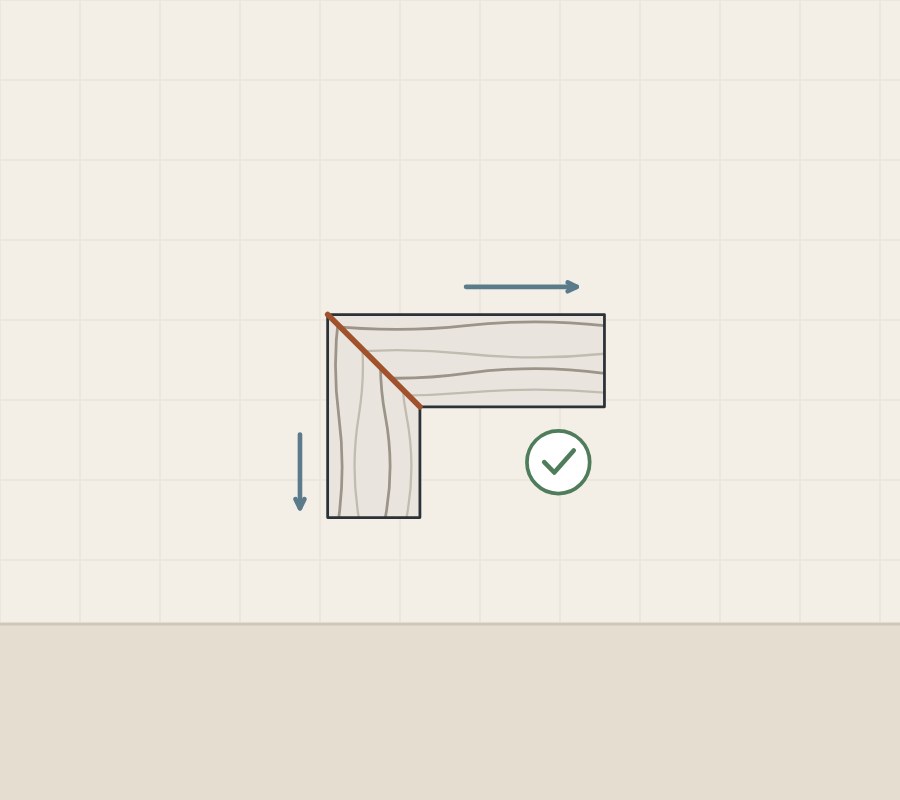
| Mitered corner | Corian | Lets the pattern wrap around the bend. |
| 45° deck seam | Wilsonart movement designs | A great option; the pattern flows in the same direction. |
| 45° miter at an inside corner | Durasein | Results in an acceptable aesthetic. |
For a short L-shaped return, Corian adds that cutting the short leg in the same sheet orientation gives the most uniform look. It also says serpentine or arc seams may blend the pattern but take extra effort to reinforce.
Will the front edge look like the top face?
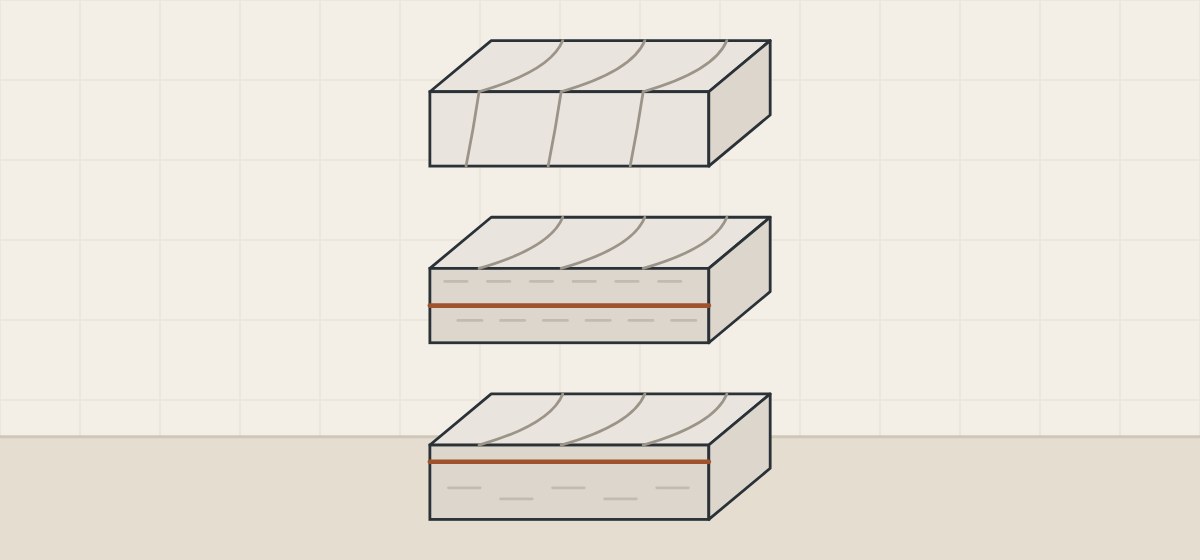
Not necessarily: the edge build-up decides whether the pattern continues. Corian says the sheet edge has a different appearance from the top.
| Edge | Maker | What the maker says |
|---|---|---|
| V-groove (folded) | Corian | The pattern wraps from the top onto the front; keep the orientation. |
| V-groove | Wilsonart; Avonite Movement | Most desirable (Wilsonart); most preferred by customers (Avonite). |
| Stacked | Corian | Edge pattern differs but the transition looks natural; often the most flexible. |
| Stacked | Avonite Movement | Shows layers and color differences; may cause objection from customers. |
| Drop | Corian | Looks distinctly different in all but the most subtle patterns; generally not acceptable. |
Corian adds that cutting into the sheet reveals a different pattern, and that coves are generally only acceptable with subtle veining.
Will one sheet match the next?
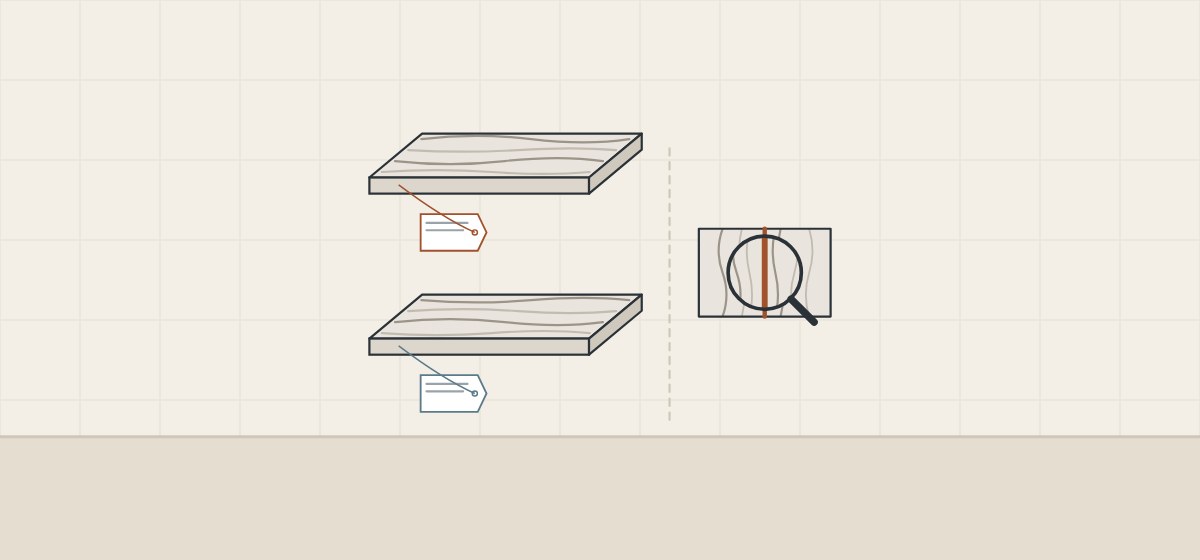
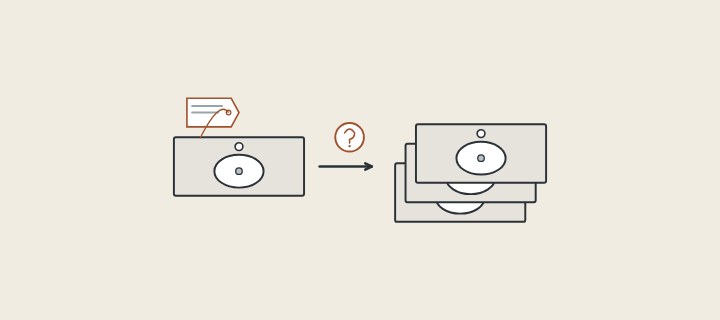
Corian says its veined pattern does not repeat. Durasein does not guarantee a color match, and LX Hausys does not guarantee one between lot numbers. What each source says:
LX Hausys (HIMACS)
No guarantee of color match between lot numbers. Its sheet information says not to join sheets from different lot numbers.
Durasein
No guarantee of color match. It advises one lot, sequence numbers no more than 25 apart, and viewing the prepared seam in lighting similar to the installation.
Avonite
Order sheets to be seamed from the same batch with consecutive numbers, then sand 12 to 16 in (305 to 407 mm) of surface to verify the color match.
Wilsonart
Sheets are color-matched by lot number and sequentially numbered; the lot number is on the sheet edge.
ISFA 2-01 (2013)
The association’s sheet standard tests color match between sheets of one lot; for that test, a distinctive pattern such as veining should not be considered a failure.
What to record for each top
Keep these four items with the approved layout. The list is procurement guidance, not a maker’s rule:
- Maker, range and color name
- Lot and sheet numbers used
- Direction of each piece
- Seam checked under site-like light
What can a sample chip show, and what can it not?
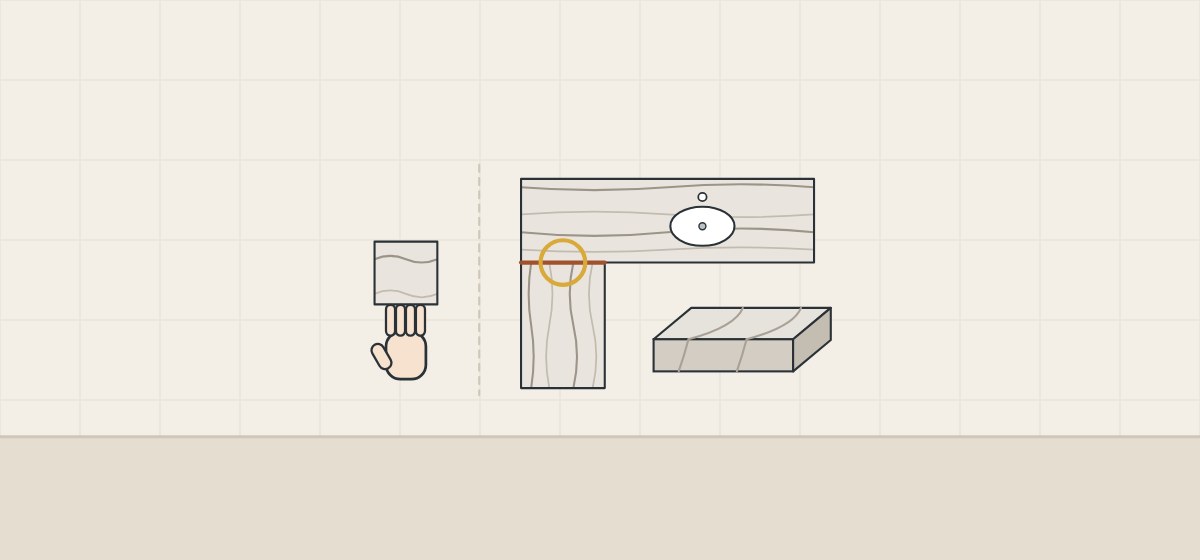
A chip cannot show a layout it does not contain. Two makers ask for more, and a third says its pattern varies within and between sheets:
Corian
Physical samples help set expectations; it is best to have samples showing alternative seaming and edge assembly methods.
Wilsonart
Provide a sample to the customer, and always review the design at seams, edge profiles and integral sinks, because patterns may vary.
LX Hausys (HIMACS)
Patterns in its veined colors will not be identical within a sheet or between sheets.
So review four things: seam positions on the plan, piece direction on both sides of each seam, the front edge as built, and the layout around basin and faucet holes.
What limits where a seam can go, and does the layout use more sheet?
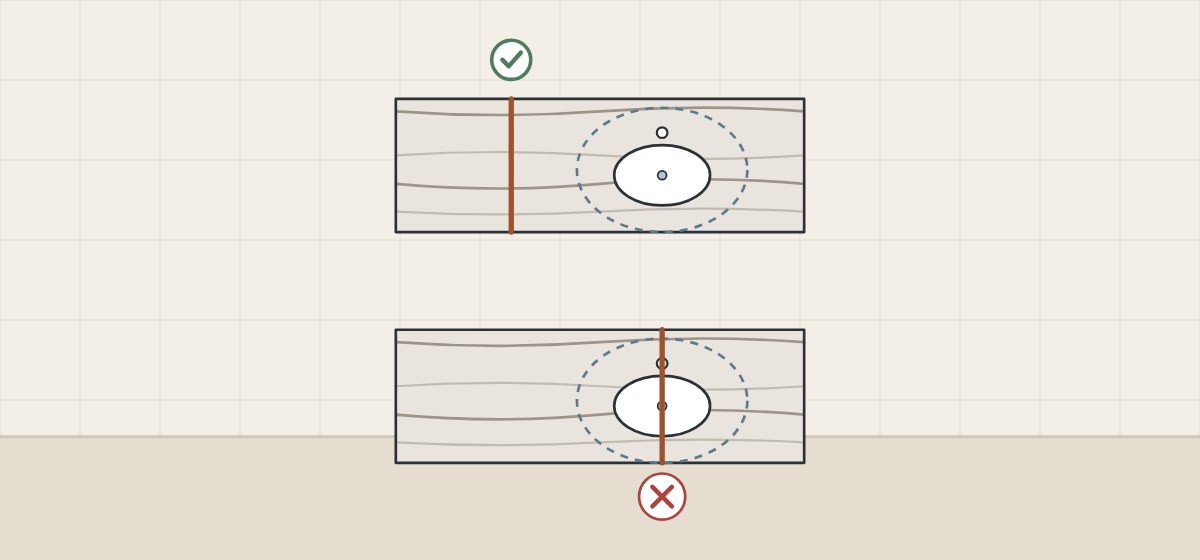
The makers below restrict seams near cut-outs and corners, or say that keeping one direction can use more sheet. None gives a yield figure.
| Maker | What it says |
|---|---|
| Durasein | Avoid seams in cut-outs or within 3 in (75 mm) of cut-outs. Its rule against seams at inside corners carries an exception for veined and directional colors. |
| LX Hausys (HIMACS) | Keep seams at least 100 mm from a sink or other cut-out and 50 mm from an inside corner. |
| Corian | Sheet yield may be lower; do not bid from sheet price and square footage alone. |
| Avonite (Movement) | Yields may be lower than standard patterns; allow for this when quoting. |
How should a buyer approve a veined top layout?
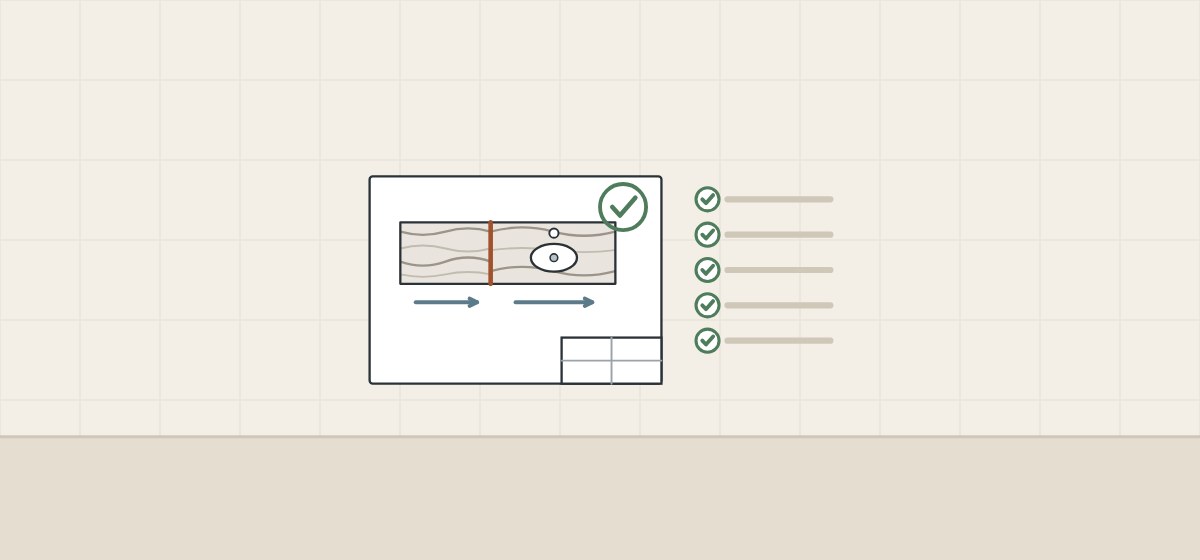
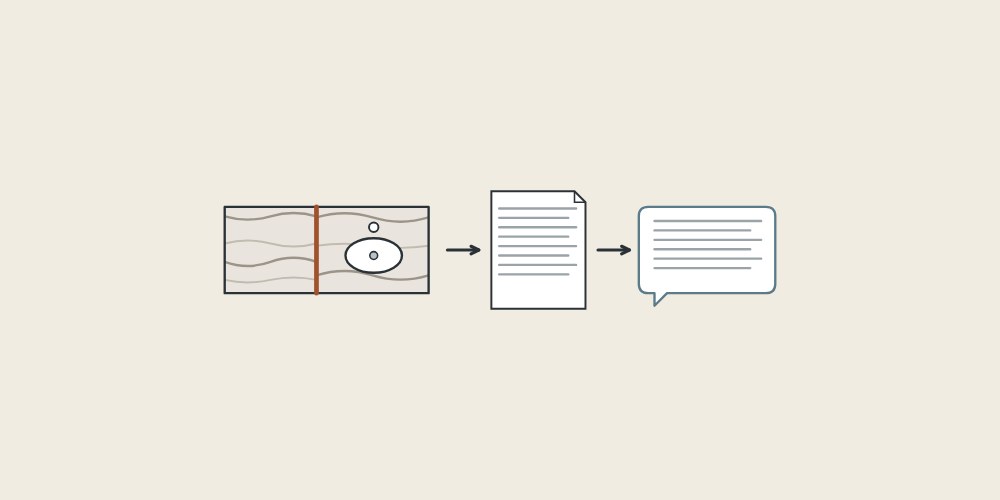
Approve the layout as a drawing with its own revision, separate from the color. These steps are procurement guidance.
- Name the material. Maker, range, color and its fabrication document.
- Mark every seam. Position and type: butt, miter or other.
- Mark the direction. An arrow on each piece.
- Choose the edge. State the build-up and review a sample of that edge.
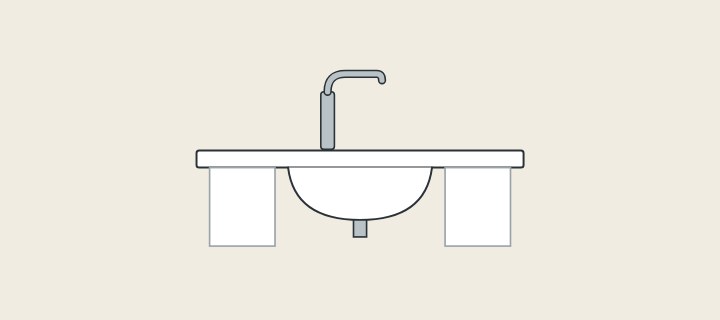
- Check cut-outs. Basin and faucet holes, with the maker’s seam distances.
- Write the accepted look. Aligned direction, an accepted break or a moved seam. Avoid “seamless”.
- Record the sheets. Lot and sheet numbers, kept with the signed revision.
Keep the approved layout for replacements
Because the makers describe a random pattern that differs between sheets, a replacement piece may not reproduce the original, even under the same color name. A signed color chip is not approval of every seam arrangement.
What should you send and ask before a quotation?
Ask about the layout before the price, because the layout changes the material needed.
| Question | Why it matters |
|---|---|
| Which maker, range and color? | Guidance is maker-specific. |
| Where is each seam, and what type? | The pattern breaks at seams. |
| Which way does each piece run? | Direction changes the look. |
| How is the front edge built up? | The edge can differ from the face. |
| Are all sheets from one lot? | Makers limit or exclude match guarantees. |
| Is the extra sheet priced in? | Keeping direction can lower yield. |
Include with your request
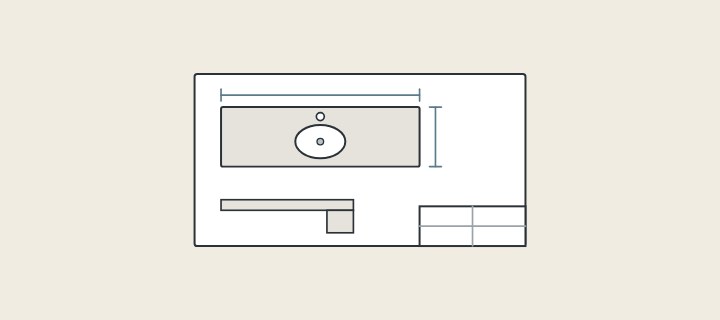
- Top drawing with basin and faucet positions
- Material and color being considered
- Where seams may and may not go
- Edge profile and exposed ends
- Quantity and room types
WNS Global confirms any offered top, material, layout and commercial terms separately in writing. This guide does not state that WNS Global supplies any named material or that its products have the features described in the makers’ documents above.