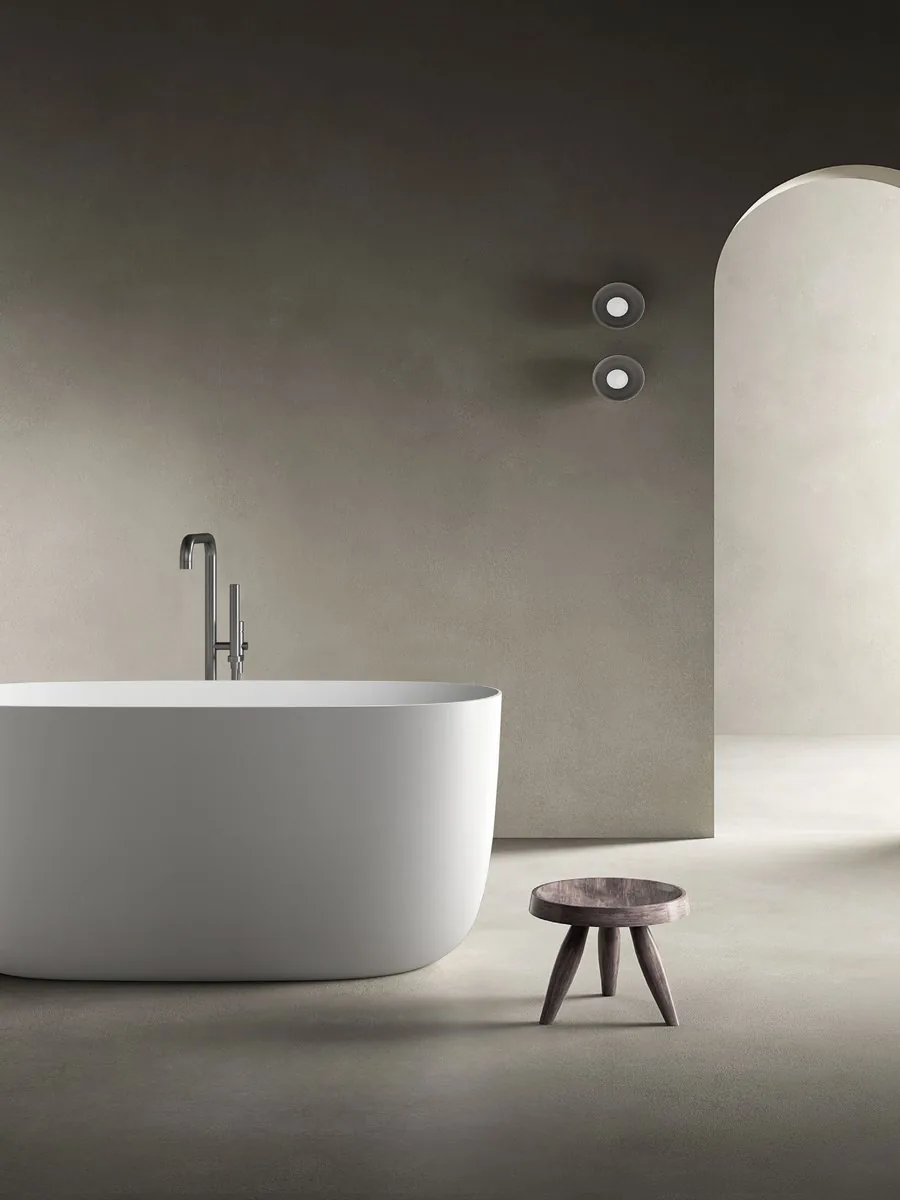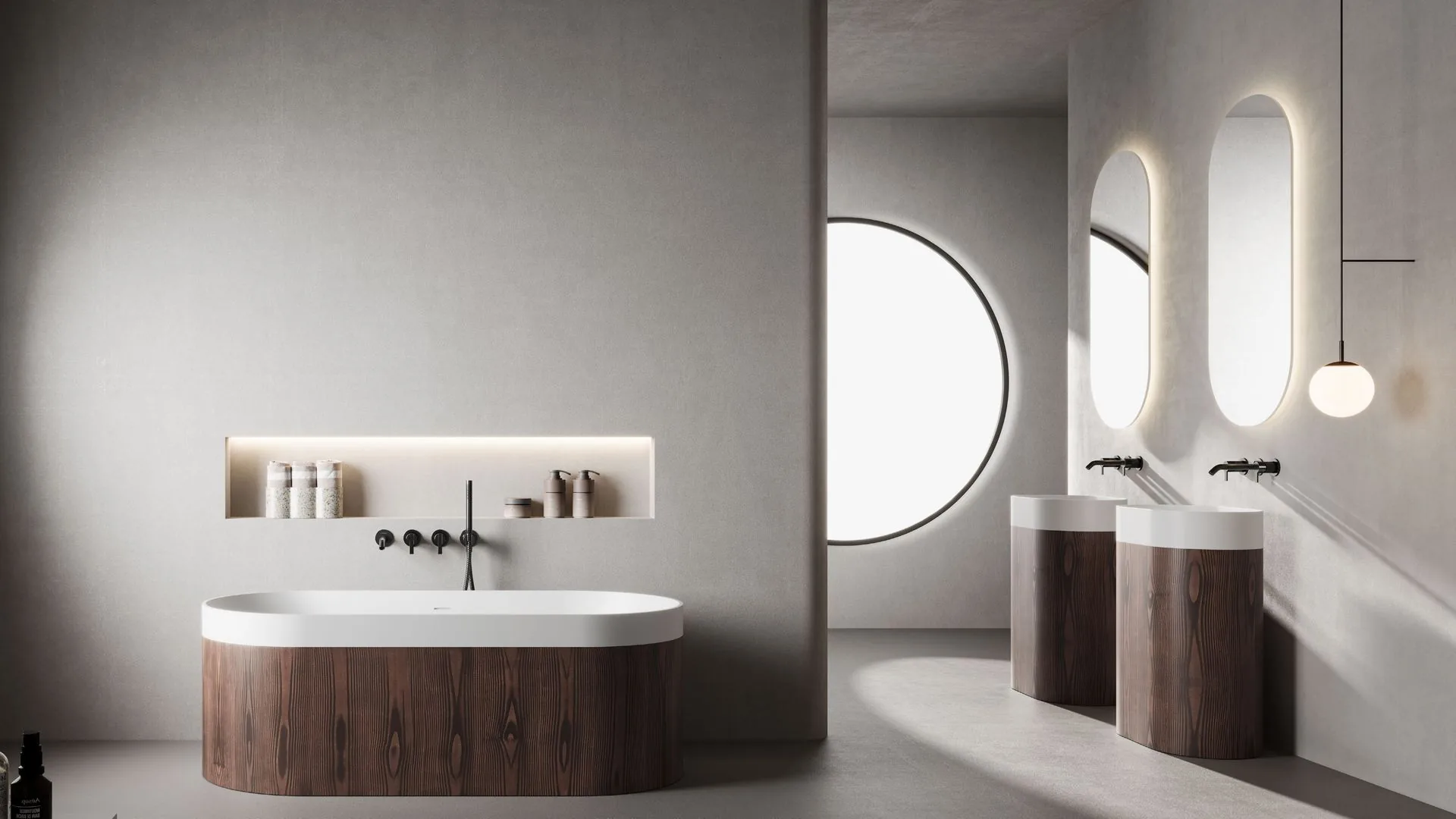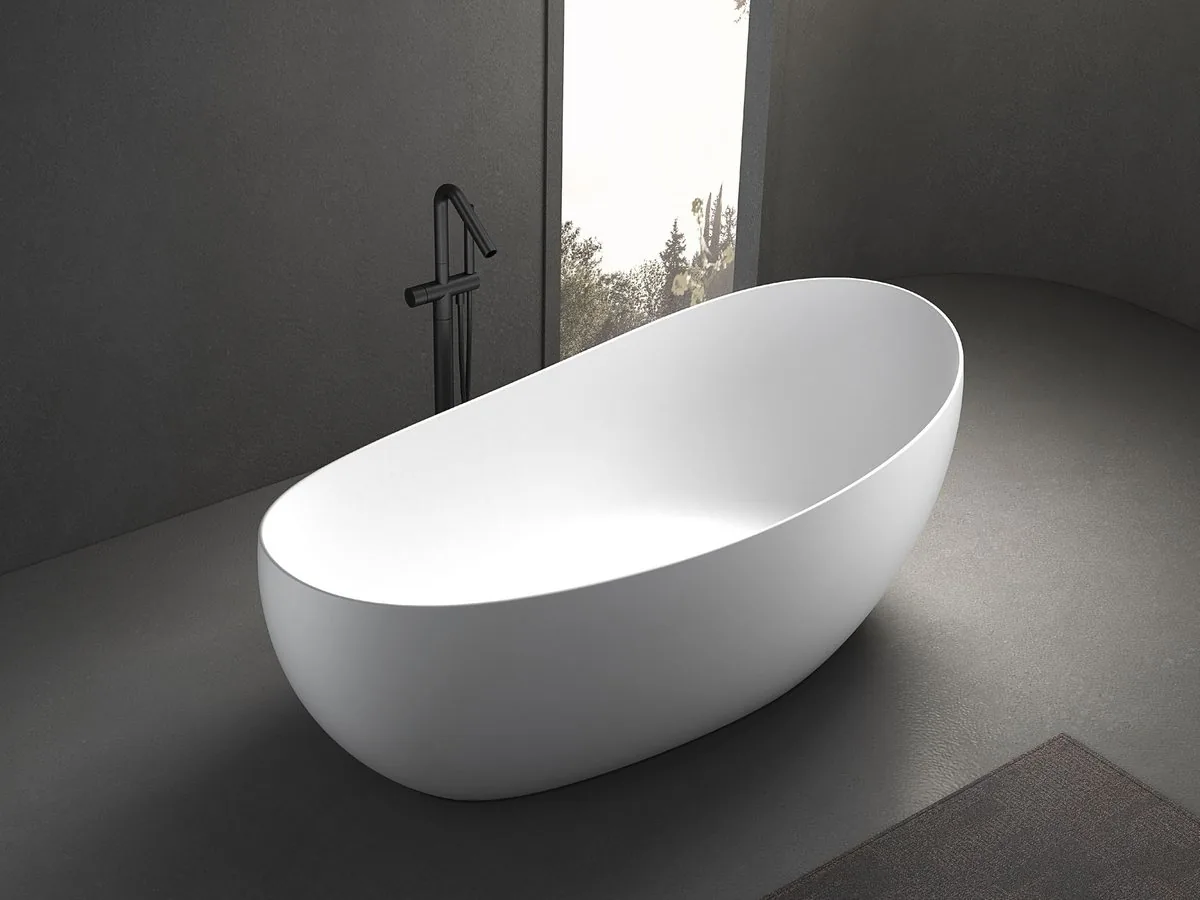
What "Artificial Stone" Means as a Category
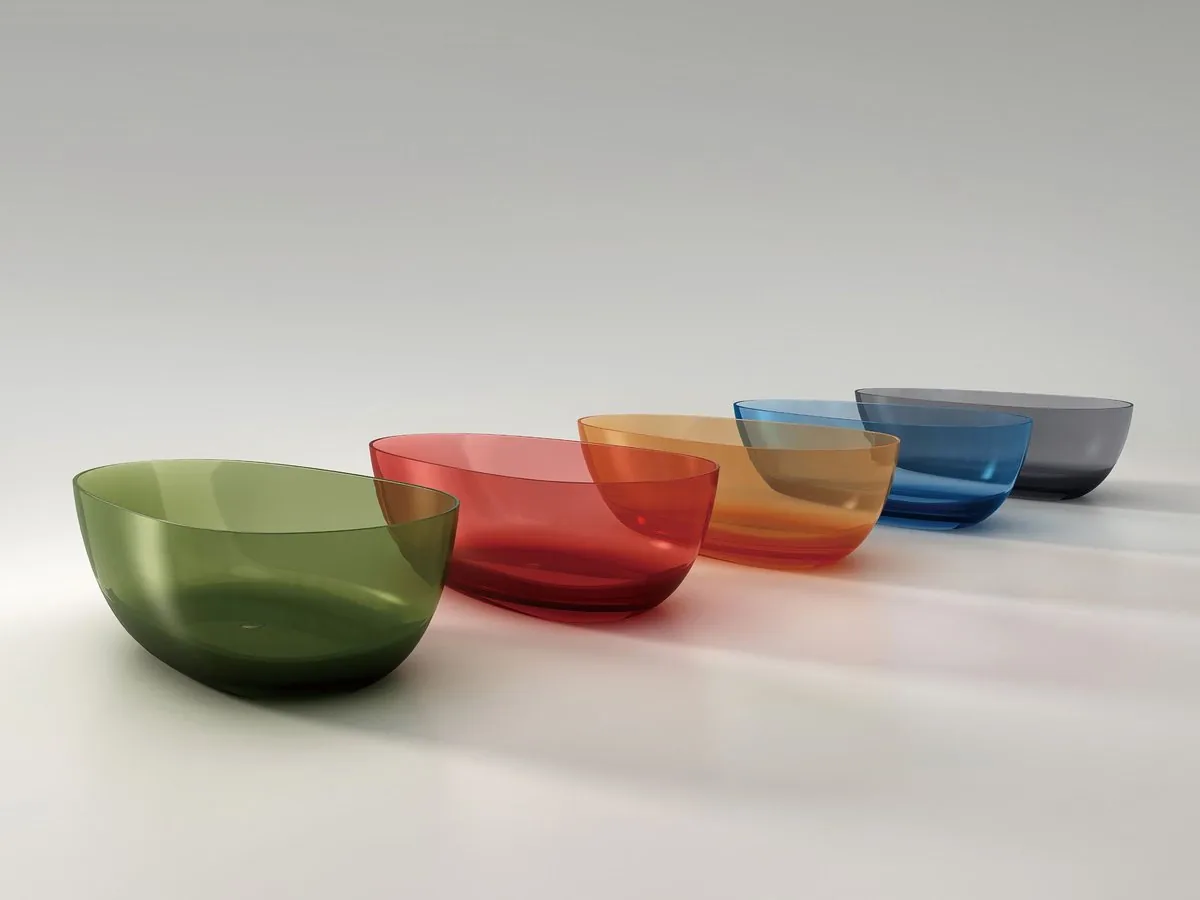
"Artificial stone" is a category name, not a single formulation. It is used across the industry to describe cast bathware made from a resin-and-mineral composite, sometimes called solid surface, cast stone or stone resin depending on the market and the supplier. The category tells you the general type of product; it does not tell you the exact resin ratio, filler type or surface treatment used in a specific model.
Before specifying an artificial stone bathtub for a project, confirm the formulation, finish and any applicable standard against the actual model being quoted, not against the category name alone. Two products both marketed as "artificial stone" can differ in weight, surface hardness and repairability, and only the confirmed specification for that model tells you which you are getting.
For a longer explanation of how these material names overlap and differ across markets, see bathtub material names explained. For the underlying material WNS Global manufactures under this category, see what is a solid surface bathtub.
- Artificial stone describes a category, not one fixed formulation
- Confirm resin ratio, filler and finish per model, not by category name
- Terminology varies by market: solid surface, cast stone, stone resin
- A confirmed specification sheet is the reference, not the category label
Freestanding vs Built-In for the Project
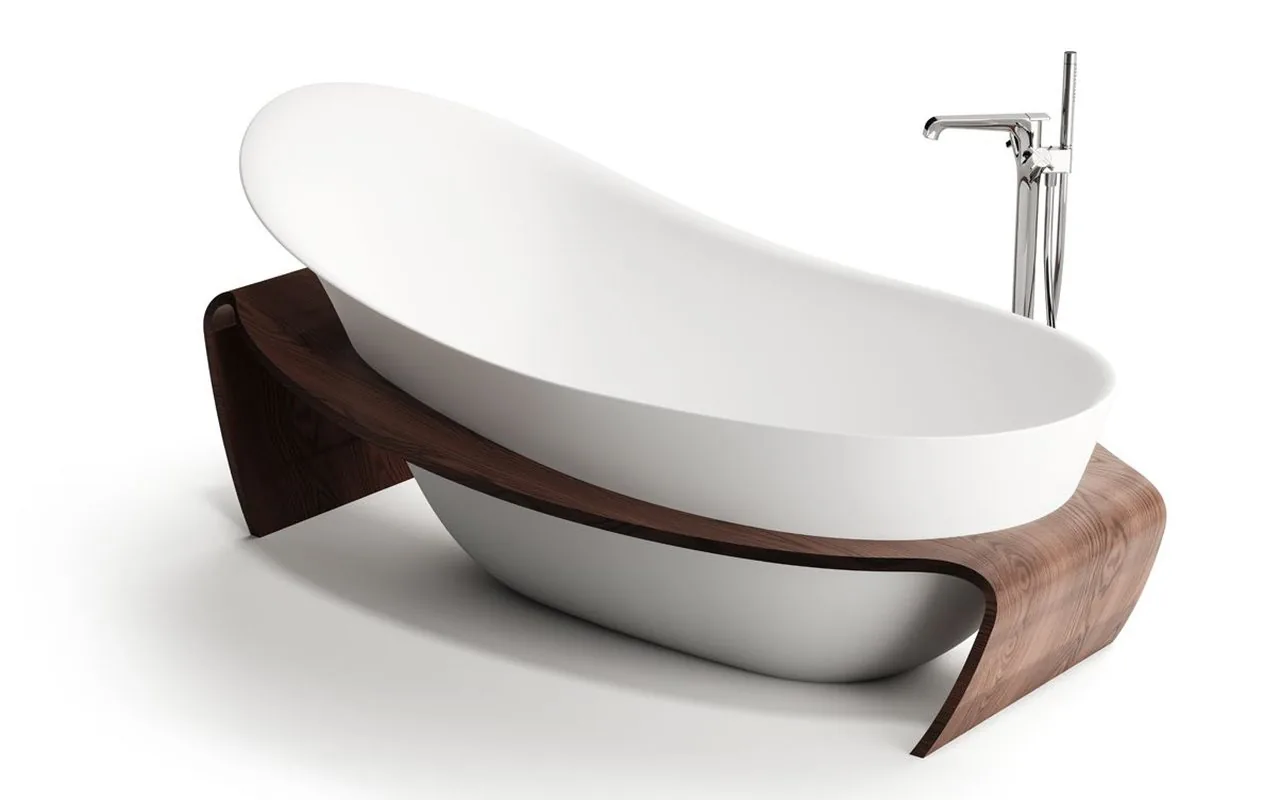
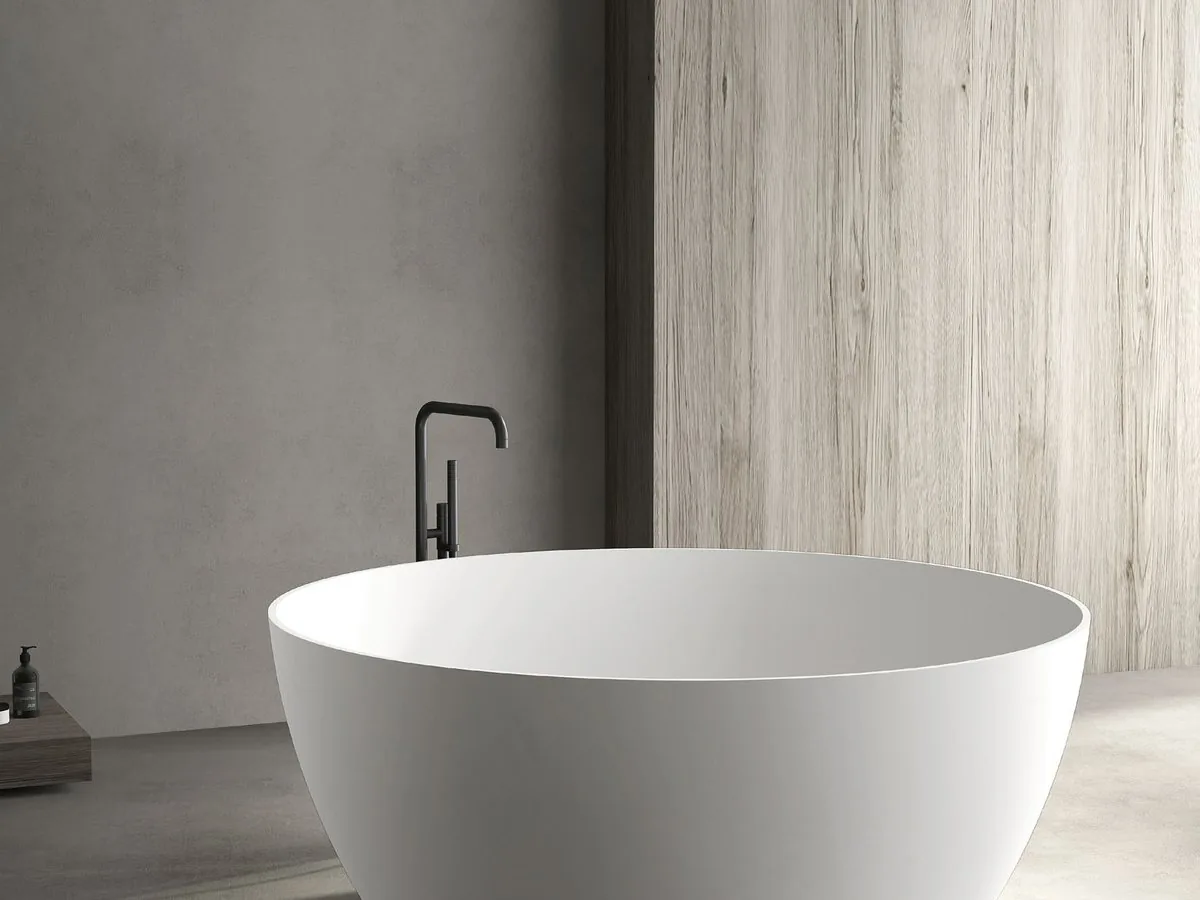
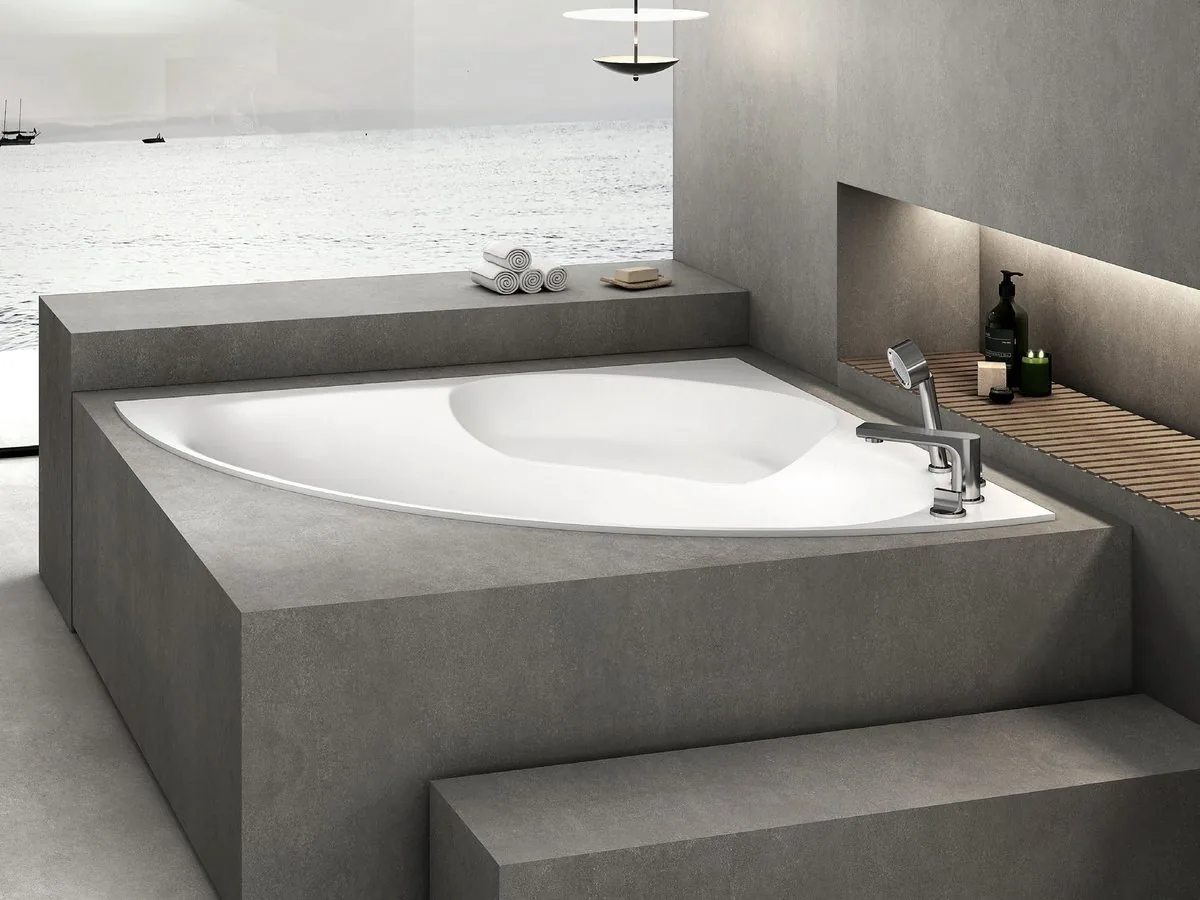
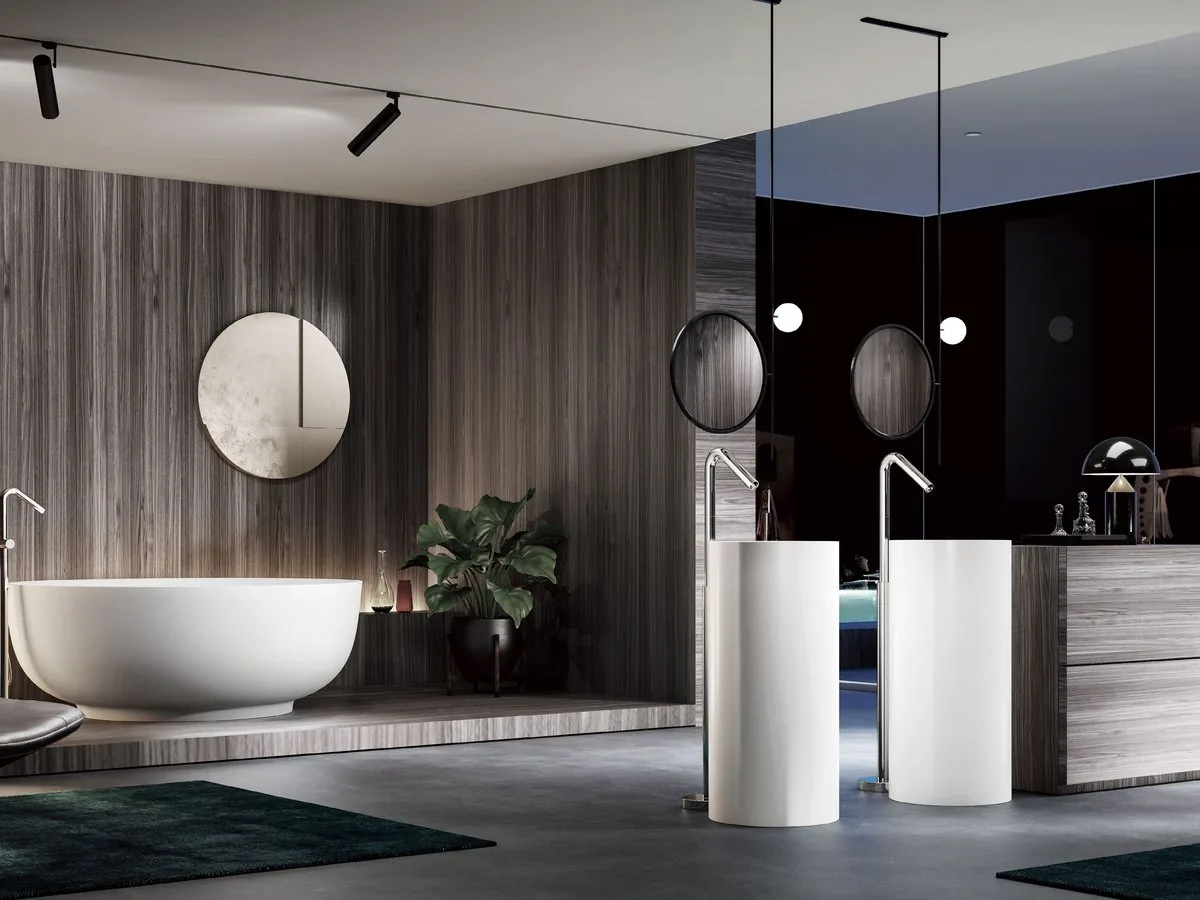
Freestanding and built-in are not just two shapes; they are two different sourcing and installation paths. A freestanding tub stands clear of the wall and needs floor space, a confirmed drain position, and often a floor-mounted or wall-mounted filler coordinated separately. A built-in tub is set into a tiled surround or a deck, which shifts some of the waterproofing and finish detail to the site rather than the product.
For a repeat-room project, the choice usually comes down to the room layout available across units and how much on-site tiling and waterproofing work the schedule can absorb. Freestanding units are quicker to swap or replace individually; built-in units integrate more tightly with the room finish.
See the freestanding bathtub buying guide for a freestanding-specific checklist, or go directly to freestanding or built-in solid surface bathtubs.
- Freestanding needs floor space and a confirmed drain position
- Built-in shifts some waterproofing and finish detail to the site
- Freestanding units are simpler to replace individually later
- Match the format to the room layout across the whole project, not one unit
Shape, Size and the Approved Specification
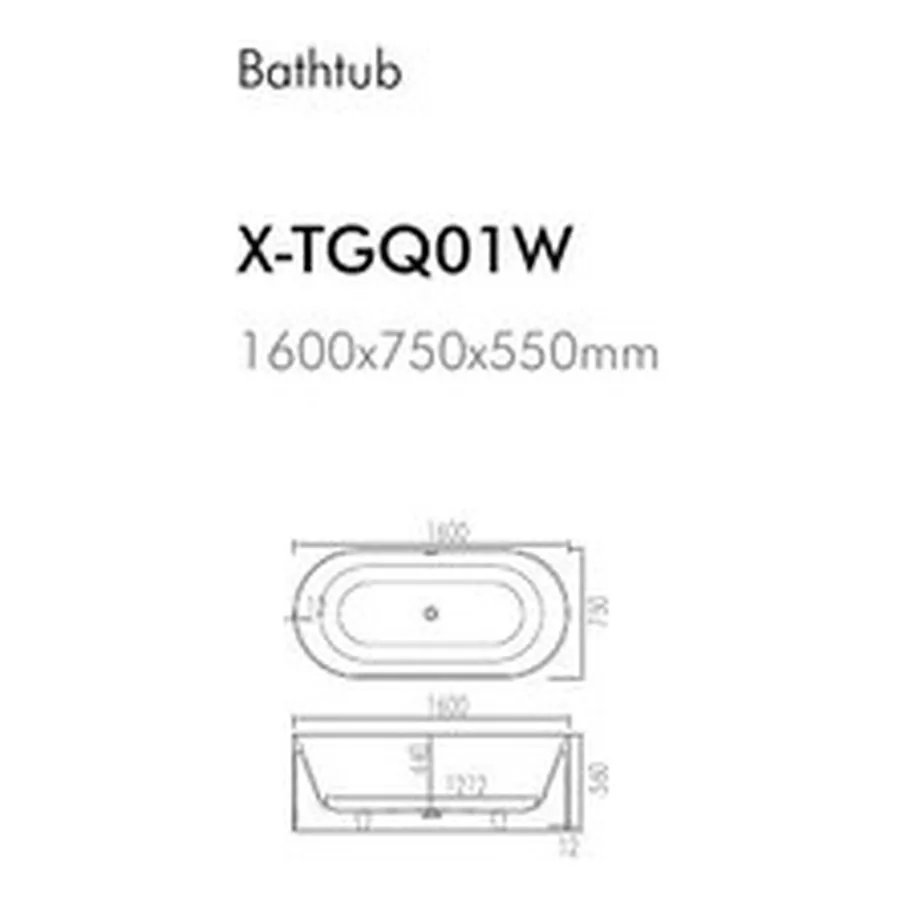
Once the format is set, shape and size should be locked against an approved specification sheet rather than a catalog photograph. Length, width, depth, wall thickness and drain position all affect whether a unit fits the room, the waterproofing detail, and the plumbing rough-in already planned for the project.
For a project that needs a size outside the standard range, or a shape adjusted for a specific room, treat this as a custom specification from the outset: confirm dimensions, wall thickness and any structural reinforcement needed, and get them onto the approved drawing before production rather than after a sample is made.
For sizing outside the standard range, see custom solid surface bathtubs, and for general dimension guidance across formats, see bathtub sizes and dimensions.
- Confirm length, width, depth and drain position against the room plan
- Wall thickness and reinforcement matter for larger or custom shapes
- Use an approved specification sheet, not a catalog photo, as the reference
- Treat an out-of-range size as a custom specification from the start
Finish and Color Confirmation
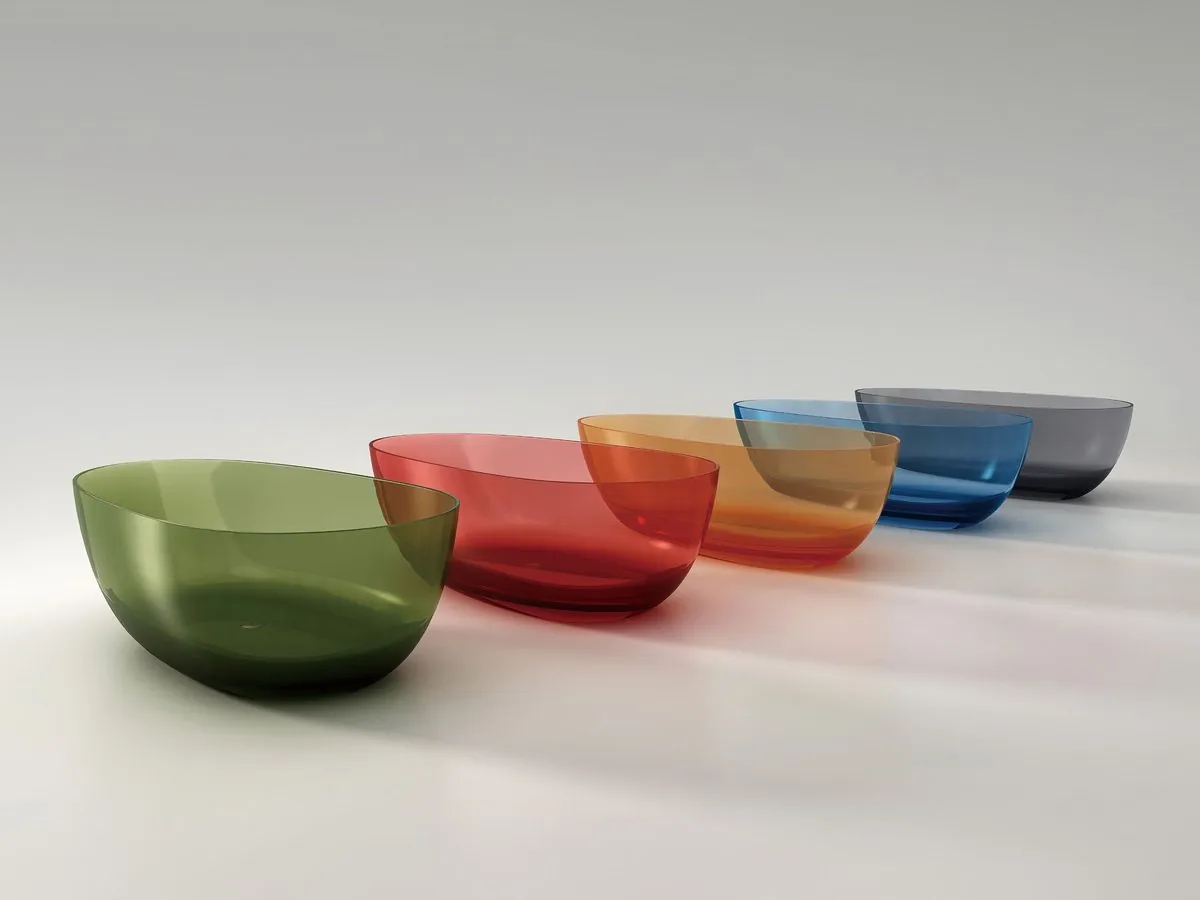
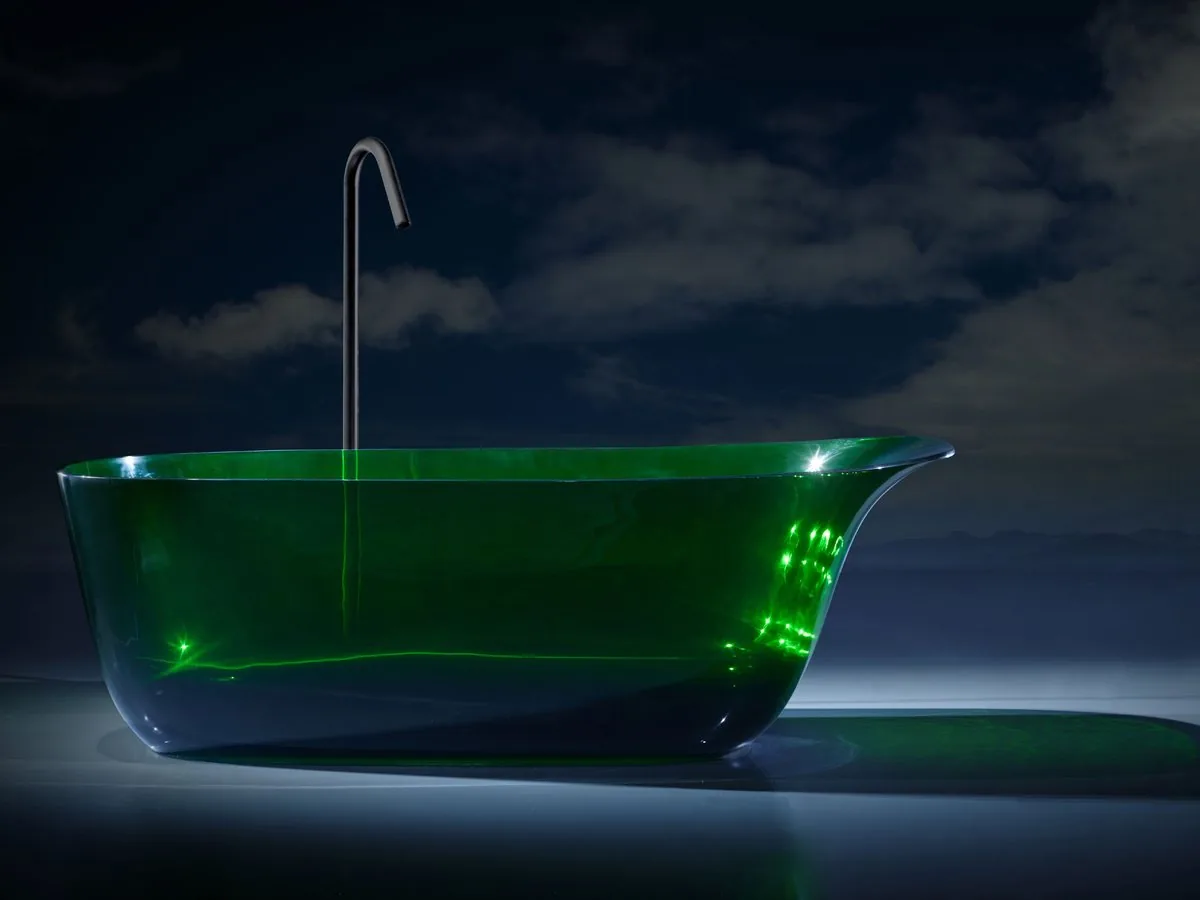
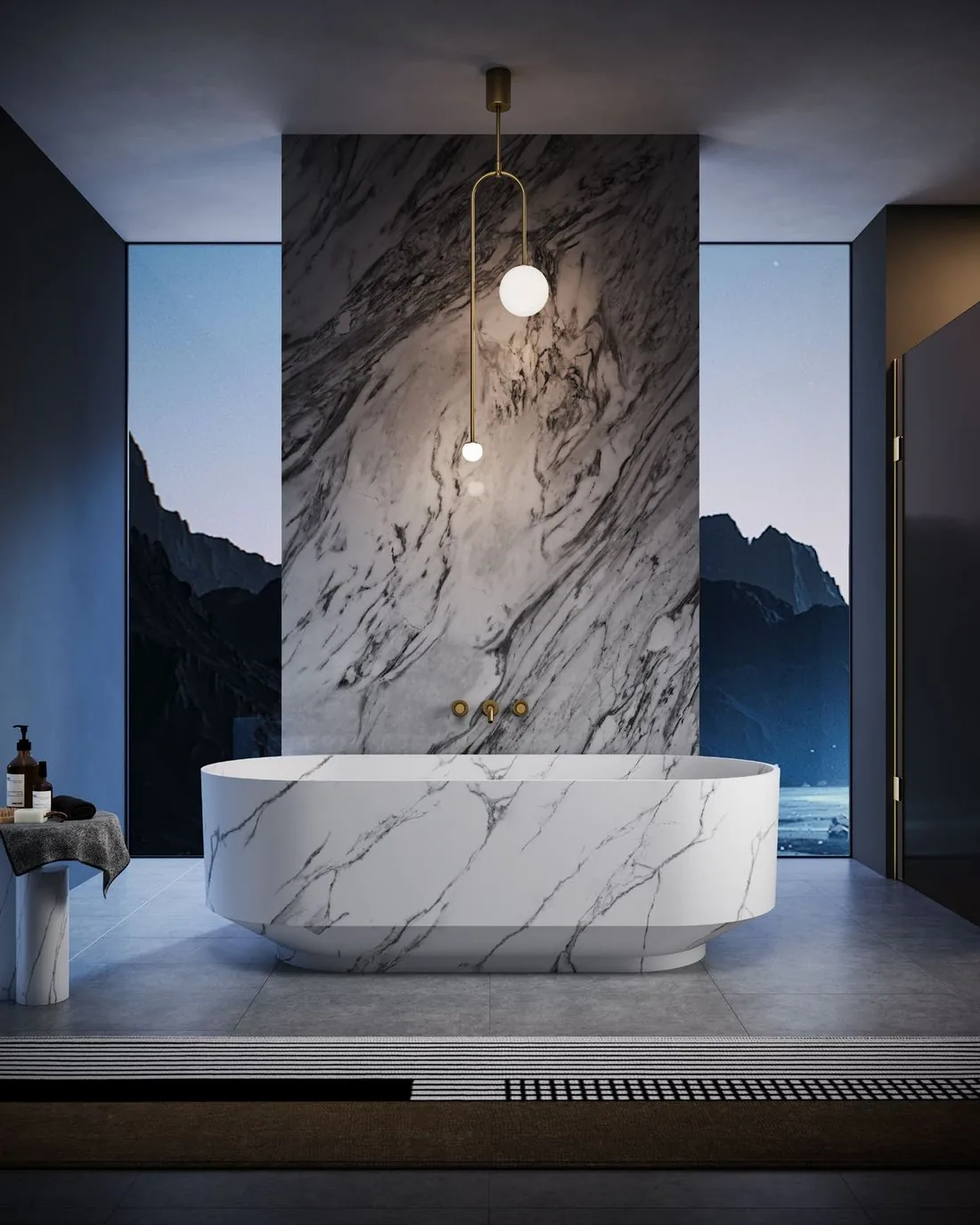
Artificial stone bathtubs are commonly offered in matte, gloss, solid color and translucent finishes, and the visual result of a translucent or custom color can vary depending on lighting and the thickness of the cast. Confirm the finish and color against a physical reference or an approved sample rather than a screen image, especially for a translucent or custom-matched color.
For a multi-unit project, agree the finish and color on one confirmed reference before the full order is placed, so every unit in the project matches rather than varying batch to batch.
See colored and translucent bathtubs for the range of finish options to discuss with your supplier.
- Confirm finish and color against a physical reference, not a screen image
- Translucent and custom colors vary with lighting and cast thickness
- Agree one reference for the whole project before the full order
- Ask whether the finish is repairable or resurfaceable for that specific model
Installation-Site Coordination and Drainage
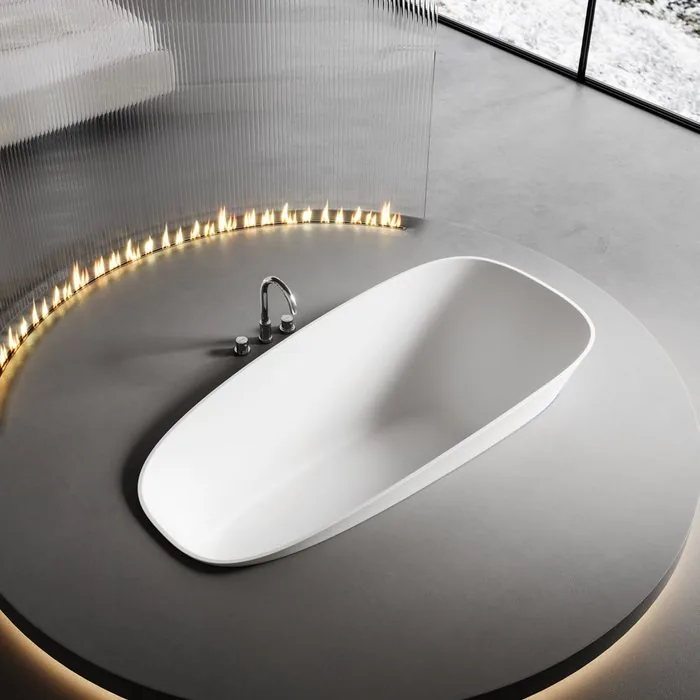
The bathtub specification and the site installation are two separate scopes of responsibility. WNS Global specifies and supplies the bathtub to the approved drawing; confirming the site's structural support, waterproofing, tiling and plumbing rough-in remains the responsibility of the installer or contractor unless otherwise agreed in writing.
Drain and overflow position, waste pipe diameter, and whether the drain is center or end-positioned should all be confirmed against the site's plumbing rough-in before the order is finalized, since these are difficult to change once the tub is delivered.
See bathtub drain and overflow explained for what to confirm on the drainage side.
- Product specification and on-site installation are separate responsibilities
- Confirm drain and overflow position against the plumbing rough-in
- Confirm structural support, especially for heavier or larger units
- Coordinate waterproofing and tiling scope with the installer directly
Packaging and Shipping

Artificial stone bathtubs are heavy, rigid and can chip or crack if inadequately protected in transit. Packaging should be confirmed as part of the order — corner protection, crating or palletizing, and how units are secured for the specific shipping mode being used, whether container, LCL or air for samples.
For a project order, ask for the packaging method and any inspection step to be documented before the shipment leaves the factory, so damage in transit can be identified against a known starting condition.
See bathtub packaging for safe shipping for a fuller checklist.
- Confirm crating or palletizing method for the shipping mode used
- Corner and edge protection matters most for artificial stone's weight
- Ask for a pre-shipment inspection step to be documented
- Packaging is a specification item, not an afterthought
Sample Confirmation Before Production
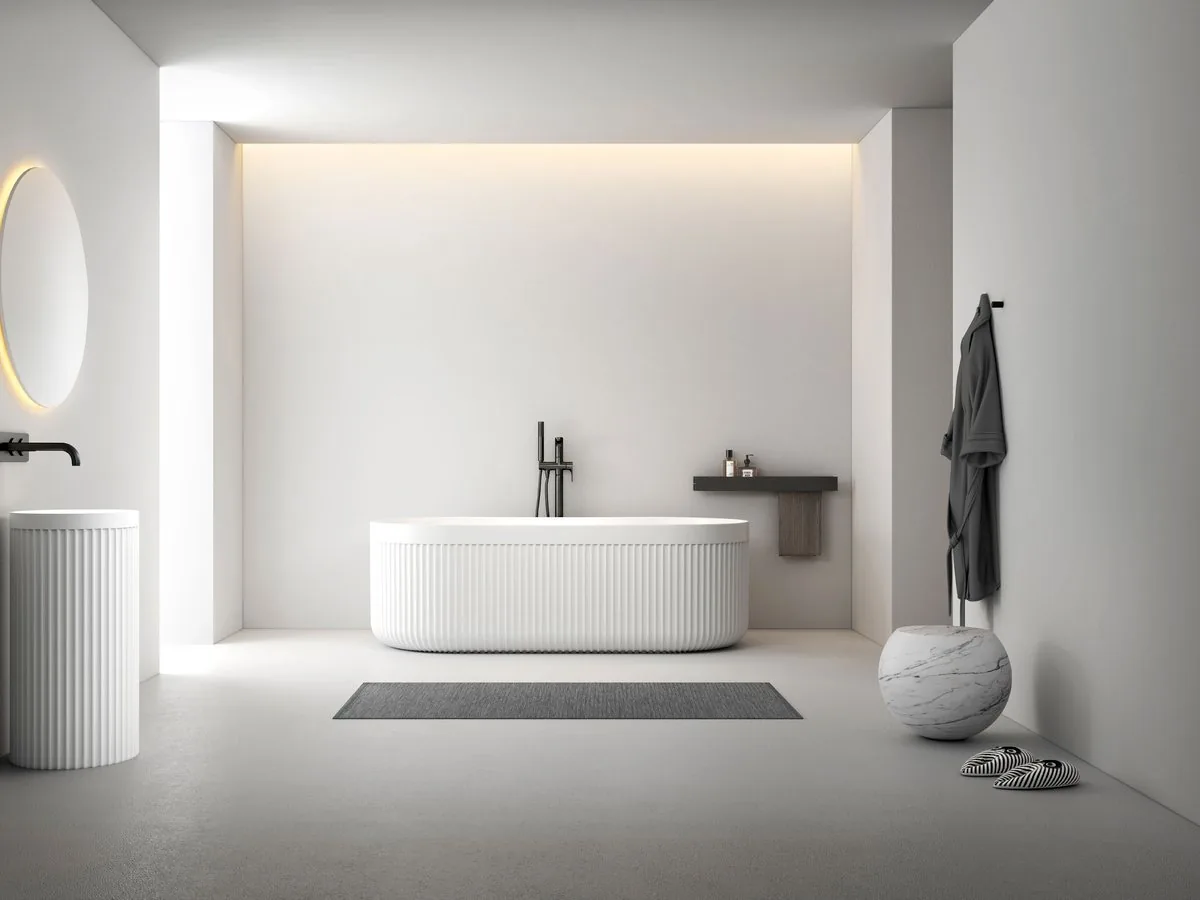
For a project order, a physical sample or a pre-production reference confirming finish, color and dimensions is the step that prevents a full order from being produced against an assumption. A sample also gives the project team something physical to check against the approved specification sheet.
Confirm with your supplier what a sample confirms and what it does not: a sample typically confirms finish, color and general dimensions for the unit produced; it does not by itself confirm certification, lead time or export documentation for the full order, which should be confirmed separately.
- Request a sample or pre-production reference before full production
- Check the sample against the approved specification sheet, not by eye alone
- Confirm what the sample does and does not verify
- Keep the approved sample as the reference for quality checks on the full order
Final Drawing Approval
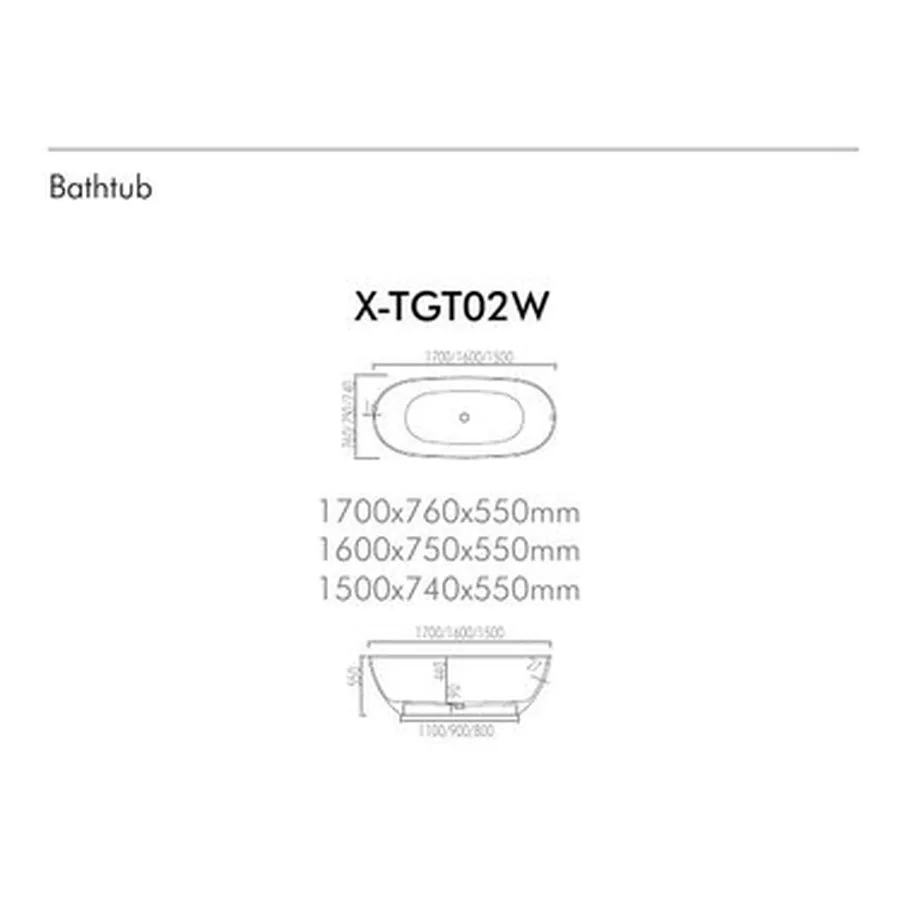
As with other built-in bathroom fittings, the final drawing — dimensions, drain position, finish, color reference, and any project-specific notes — should be reviewed and approved before production starts. An error carried into an unapproved drawing becomes a finished, difficult-to-modify product.
For a multi-unit project, one approved drawing per configuration, referenced by a model or project code, keeps every unit consistent and gives the project team a single document to check deliveries against.
- Review dimensions, drain position, finish and color on the drawing
- Approve the drawing before production, not after the first units ship
- Use one approved drawing per configuration for multi-unit projects
- Reference the approved drawing when checking deliveries on site
What to Expect During the Process

A typical project sequence runs: confirm the category and format, agree the specification and finish, approve a sample, approve the final drawing, then move to production. Lead time is subject to current production schedule, typically 45 to 60 days, and should be reconfirmed for the specific order rather than assumed from a previous project.
Certification, testing and country-specific compliance requirements should be confirmed against the destination market's actual requirements rather than assumed. WNS Global does not hold blanket third-party certifications, and any requirement should be verified against what is currently held or can be arranged for that order.
See sourcing bathtubs for hotels and projects for the fuller project-buying process.
- Confirm category, format, specification, sample and drawing in that order
- Lead time: subject to current production schedule, typically 45 to 60 days
- Reconfirm lead time for the specific order, not a previous one
- Confirm certification and compliance needs against the destination market
Artificial Stone Bathtubs vs Acrylic Bathtubs for Project Selection
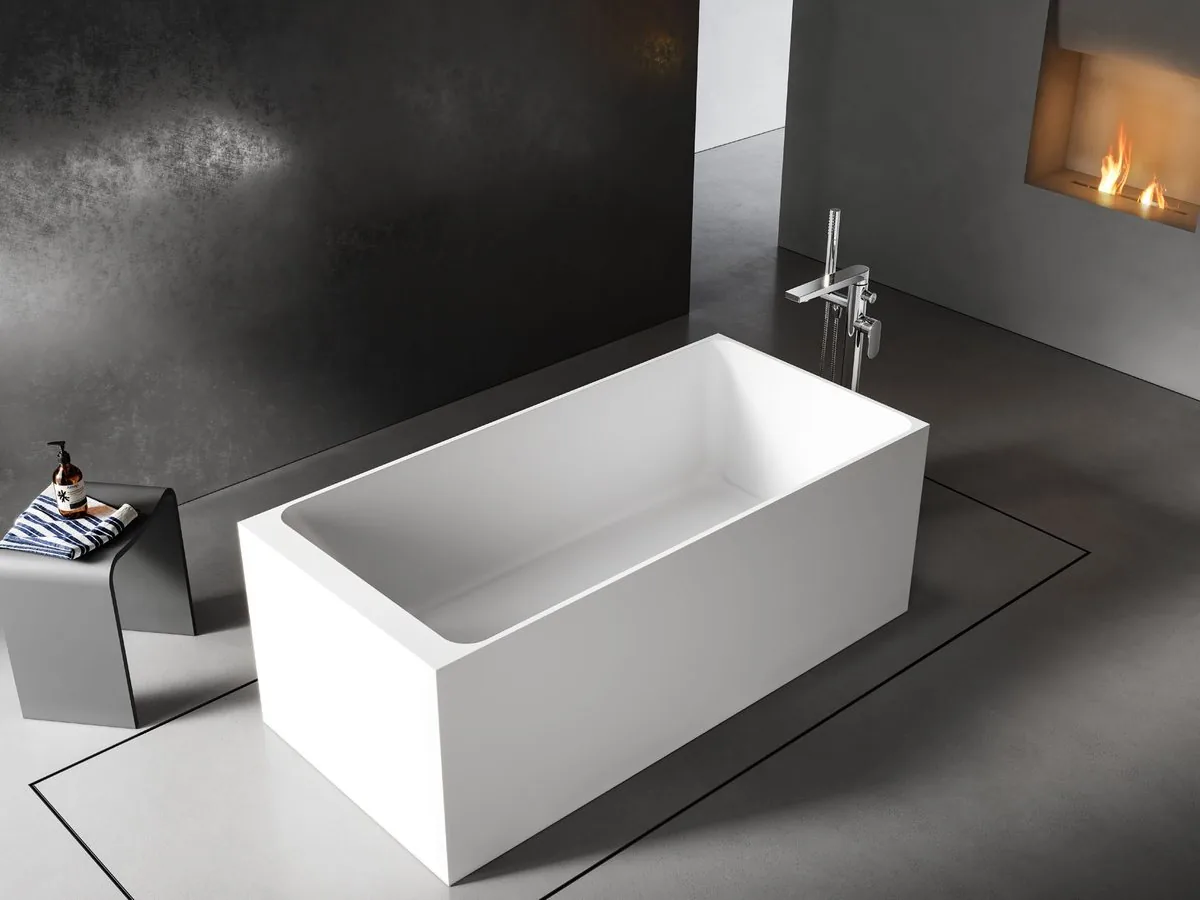
Artificial stone and acrylic are the two materials most often compared for a project order, and the right choice depends on the project's priorities rather than one material being universally better. Where a project values a heavier, more solid-feeling unit with color-through or translucent finish options, artificial stone is often the stronger fit, subject to the confirmed specification for the model in question. Where a project values lighter weight for easier handling and installation, or a lower unit cost across a large order, acrylic is often the stronger fit.
Claims about weight, repairability, heat retention, durability or warranty should be confirmed against the specific models being compared rather than assumed as a category-wide rule, since formulation and construction vary between suppliers and models on both sides of the comparison.
| If the project prioritizes... | Often leans toward | What to confirm |
|---|---|---|
| A heavier, color-through or translucent look | Artificial stone | Confirmed finish and weight for the exact model |
| Lighter weight or a large-volume order cost | Acrylic | Confirmed unit cost and handling for the project |
| Uncertain or mixed priorities | Compare confirmed samples side by side | Avoid deciding from photos alone |
For a fuller materials comparison including cast iron, steel and cultured marble, see solid surface vs acrylic bathtubs.
- Match the material to the project's priority, not a universal ranking
- Confirm weight, repairability and durability claims per model
- Artificial stone: often the choice for a heavier, color-through or translucent finish
- Acrylic: often the choice for lighter weight or a larger, cost-sensitive order