From drawing to first piece
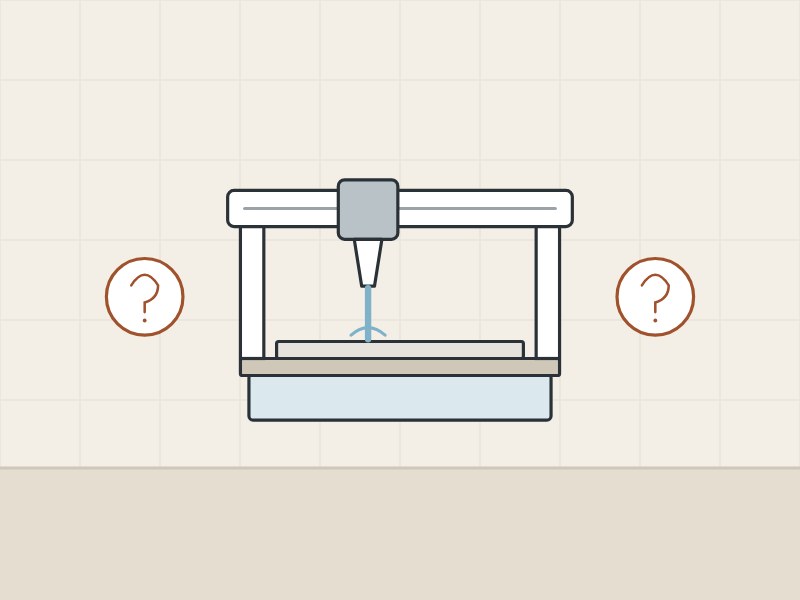
How are vanity tops cut by waterjet and CNC?
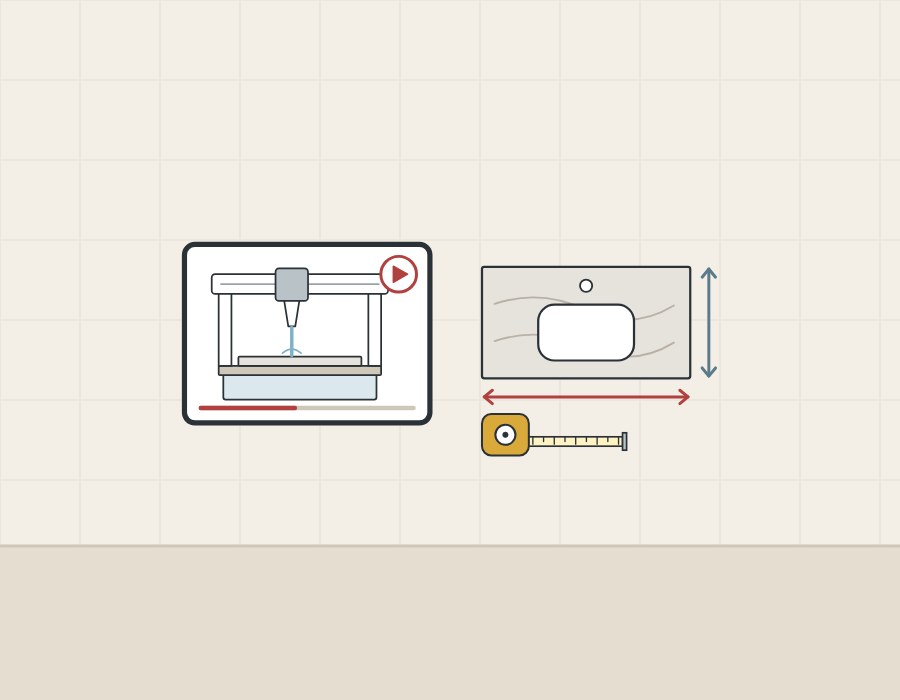
The machine makers cited here describe a saw disc, an abrasive waterjet and a router, sometimes combined on one CNC machine. Flow says an abrasive waterjet pulls garnet abrasive into the water stream so that it can cut hard materials such as stone, ceramic and glass.
Breton describes its Combi as a disc cutting centre combined with a waterjet, for kitchen tops, vanity tops and claddings. It uses the disc when possible and the waterjet otherwise. Park Industries says the waterjet on its JAVELIN sawjet cuts sinks, tightly nested parts, arcs and miters.
Park sells its TITAN as a CNC router for stone countertops, with a sink cut-out routine. For solid surface, Corian’s cutout bulletin makes cutouts with a router bit and a template guide.
| Term | Flow’s dictionary says |
|---|---|
| Kerf | The width of the cut. |
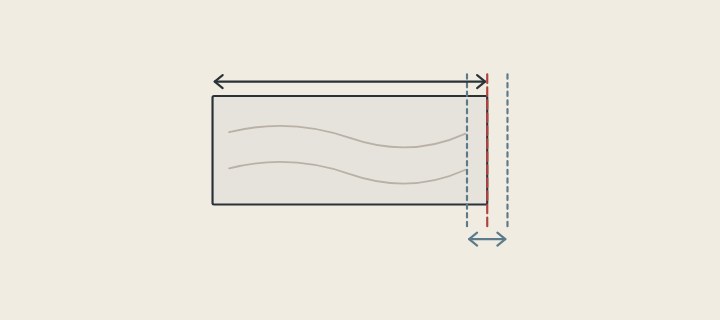
| Taper | Kerf walls that are not straight; the top is often wider. |
| Stream lag | The jet’s exit point trails behind its entry point. |
How does an approved drawing become a cut top?
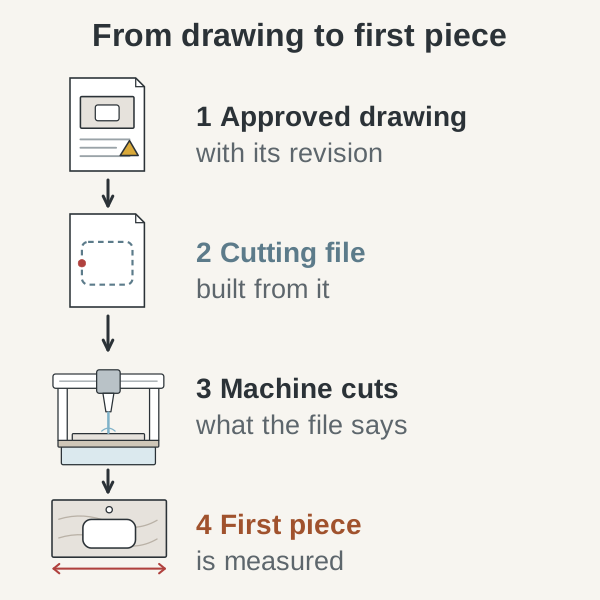
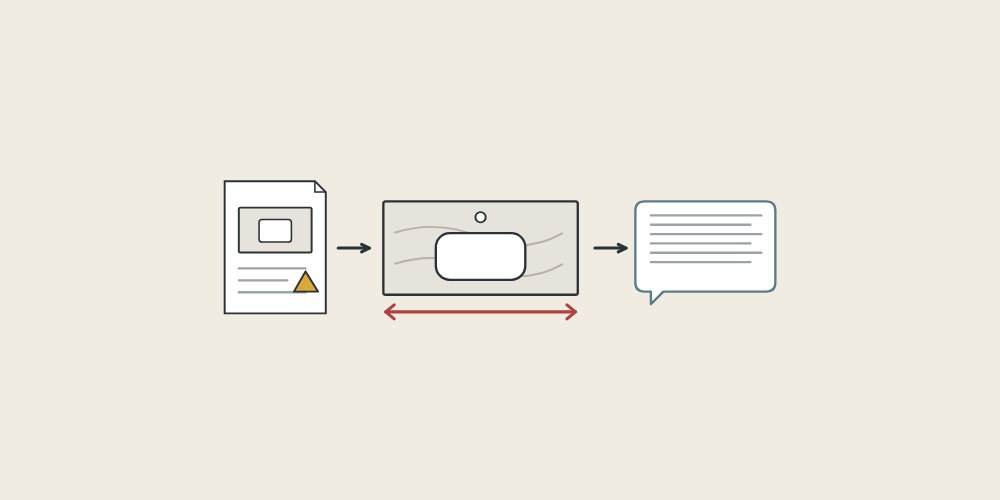
The approved drawing reaches the machine as a program file. The middle steps follow Park Industries’ descriptions of the layout and programming software it offers; the first and last are this guide’s checkpoints.
- The buyer approves a drawing with a revision mark.
- Parts are laid out on a digital slab and exported to the saw or sawjet.
- Toolpaths are applied and can be checked in simulation.
- G-code goes to the machine, with a job report for the operator.
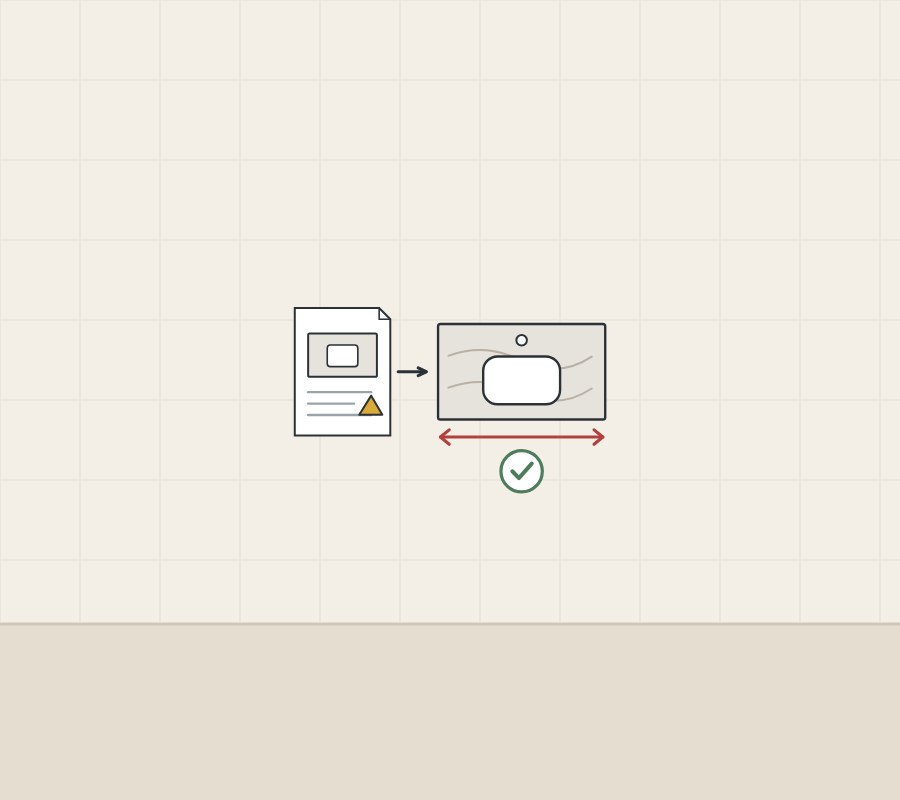
- The first piece is measured against the approved drawing.
Park says the job report includes an approximate runtime and that the operator scans a barcode to call up the program; its page does not say the report shows a drawing revision, so ask which record carries the file name and revision.
What can a cutting video confirm?
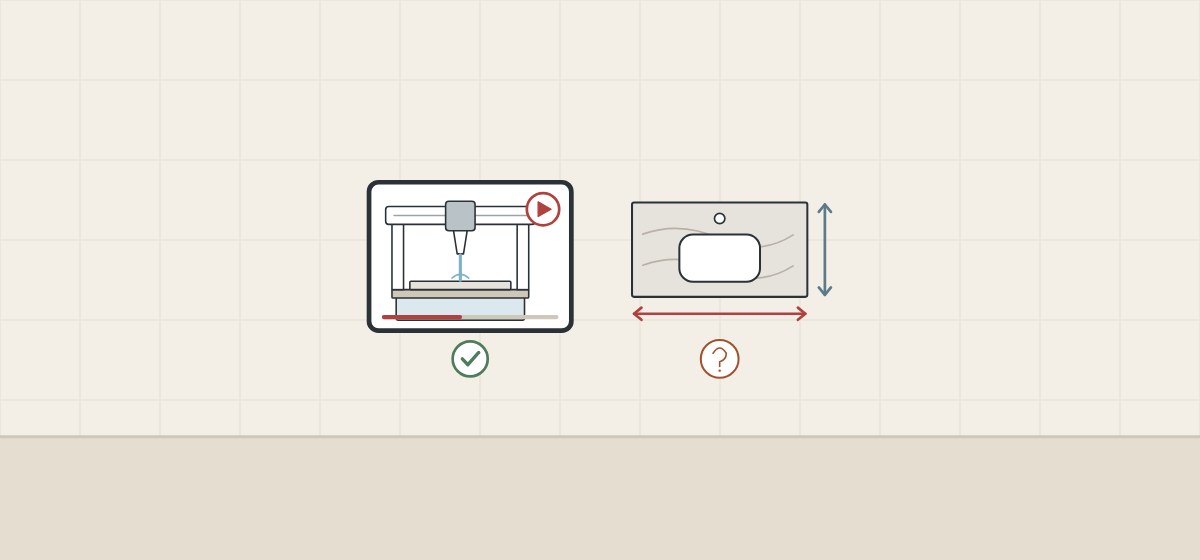
A cutting video can confirm that a machine cut a piece; it cannot confirm dimensions, the drawing revision or the finished edge. The table is this guide’s review method.
| Evidence | Can establish | Cannot establish |
|---|---|---|
| Cutting video | That cutting took place | Dimensions, revision, finished edge |
| Job record with file name and revision | Which drawing the file came from | That the file matches every detail |
| First piece measured against the drawing | Agreement at the measured points | Other pieces, unmeasured points |
| Photos of the finished top | Visible finish of edges and cut-outs | Condition of other tops |
OMAX says the jet stream bends as it moves and tapers as it cuts. A video of an accurate machine is not a measurement of the part.
What do material makers require at cut-out corners?
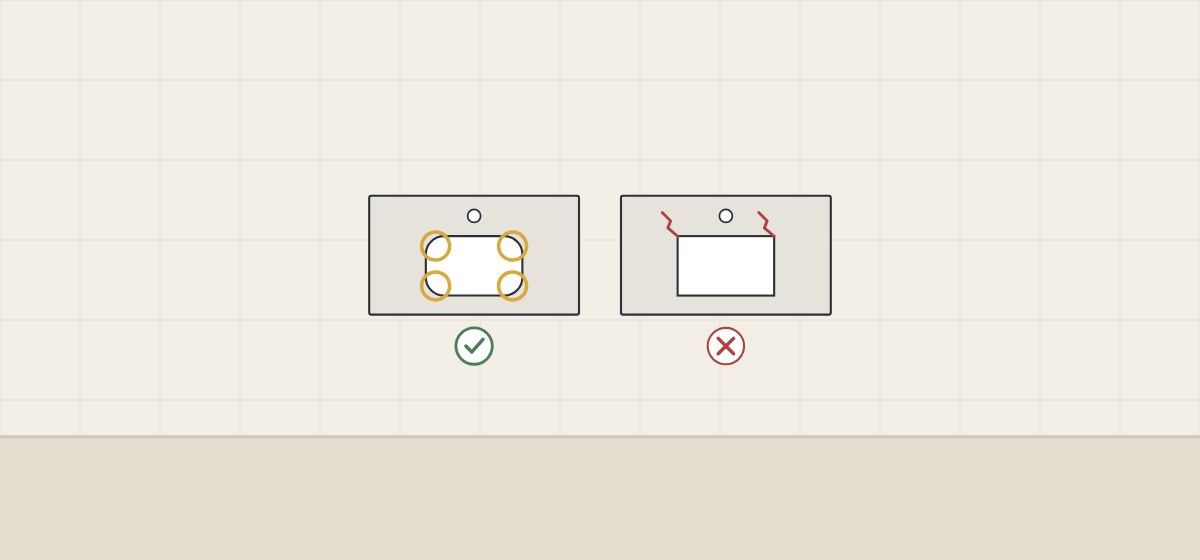
The material makers cited here call for rounded inside corners at cut-outs; the figure depends on the document, the material and the cut-out.
| Document | What it states |
|---|---|
| Cosentino, Silestone countertops manual, Rev. 03, 02/2024 | Minimum radius 10 mm (3/8 in) at the inside corners of a sink cut-out. |
| Cosentino, Silestone manual for professional use (undated) | Drilled corner holes never less than 4 mm in radius, larger where possible; cuts must not cross at the holes. Stated in the installation steps, together with unit or column cut-outs. |
| Caesarstone, Common Mistakes guide | Minimum 10 mm (3/8 in) with a core bit or cup drill; no square or cross-cut corners. |
| Corian bulletin K-25289, 12/23 | Minimum 3/16 in (5 mm) for all cutouts in Corian Solid Surface. |
Cosentino’s dated countertops manual gives 10 mm for sink cut-outs; its undated professional manual gives a 4 mm minimum for drilled corner holes. The drawing should state the radius and the document it comes from. Caesarstone adds that cutting beyond the rounded edge may lead to hairline cracks.
How accurate is machine cutting?
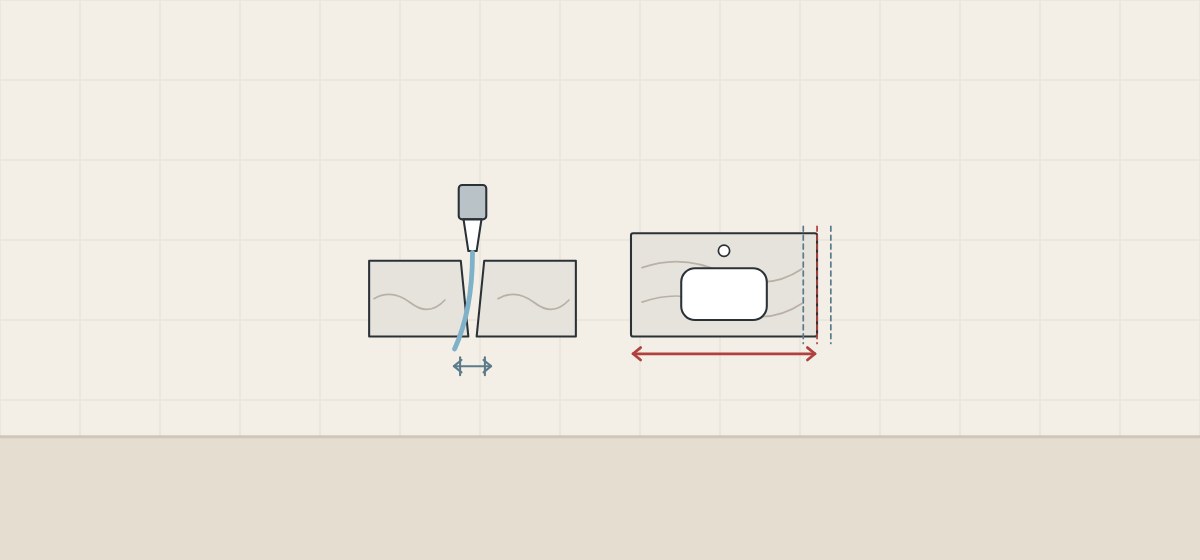
A machine maker’s accuracy figure describes the machine; a project specification, such as Caesarstone’s guide specification, states tolerances for the finished work. Three points:
Table accuracy
In its FAQ, OMAX gives table accuracy of ±0.0010 in (about 0.025 mm) for its OMAX line and ±0.0030 in (about 0.076 mm) for its MAXIEM line.
Specified tolerance
Caesarstone’s US guide specification, an editable template (Version 3.7, October 2019), gives ±1/8 in (3 mm) in component size over a ten-foot length and ±1/8 in (3 mm) in the location of openings.
Association standards
The Natural Stone Institute lists tolerances and rodding sink cutouts among the topics its standards address; its manual was not read. Ask for these on the drawing:
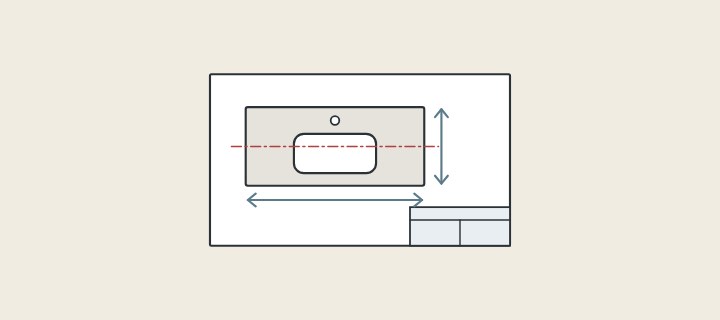
- Tolerance on overall size
- Tolerance on cut-out position
- Inside-corner radius
Does a machine-cut edge still need finishing?
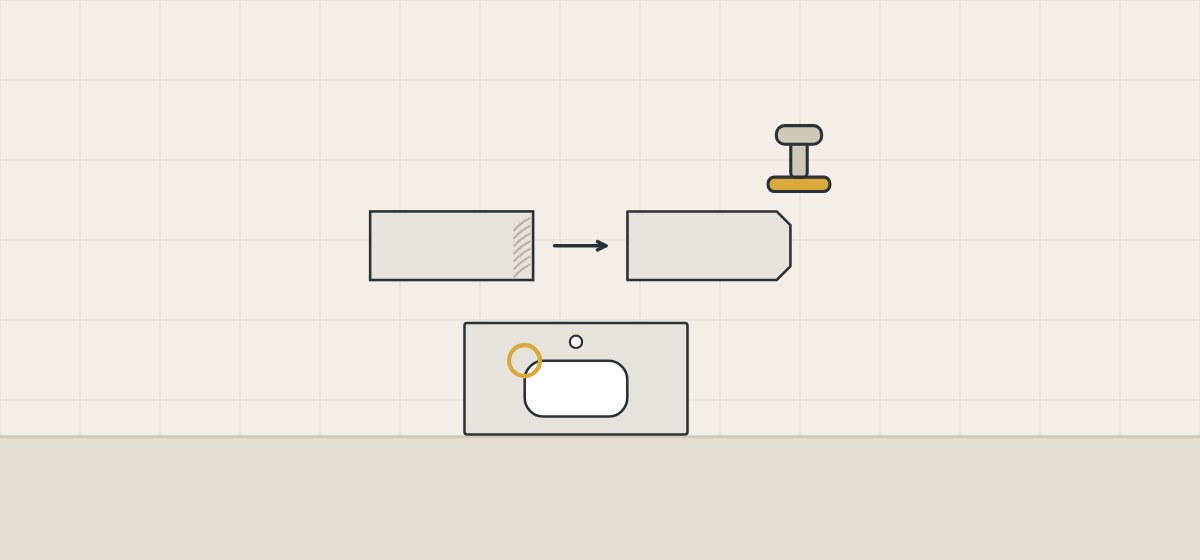
A waterjet maker claims little or no hand finishing after the cut; material makers still call for chamfers, bevels or sanding.
Waterjet maker
Flow lists “net or near-net cutting, little or no hand finishing” among the benefits for stone and tile.
Cut-outs and holes
Cosentino’s countertops manual recommends that the top and bottom edges of any cut-out or drilled hole in Silestone be slightly chamfered. Corian’s bulletin says to sand around the inside of a cutout to remove splinters and ease the edges.
Edge profiles
Under the heading of chipping, Caesarstone’s Common Mistakes guide says edge profiles should be rounded or bevelled by at least 3 mm (1/8 in), preferably 4 to 6 mm.
Review edges and cut-outs on the finished top, not in a cutting video.
How are pieces allocated to slabs before cutting?
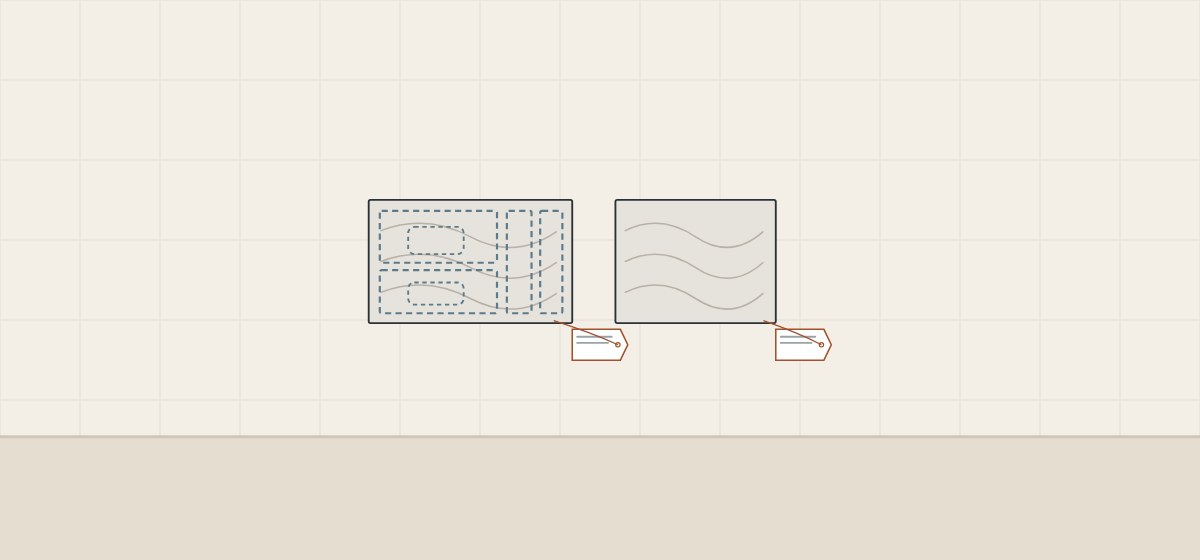
Caesarstone and Cosentino ask the fabricator to check colour and pattern before cutting, and the SlabSmith layout software Park Industries offers places a job on digital slabs.
| Source | What it says |
|---|---|
| Caesarstone, Common Mistakes guide | Same-batch slabs should ensure a colour match; still compare them visually before cutting. |
| Cosentino, Silestone manual for professional use | Check that slabs match in colour and appearance; keep each slab’s Reference Number. |
| Cosentino, Silestone countertops manual | For random-pattern colours, lay the pieces out on the slab on the cutting table first, to match joints by tone or vein pattern. |
| SlabSmith, as described by Park Industries | Lays a job out on digital slabs, for beauty or for yield. |
How should a buyer review the cutting of a vanity-top order?
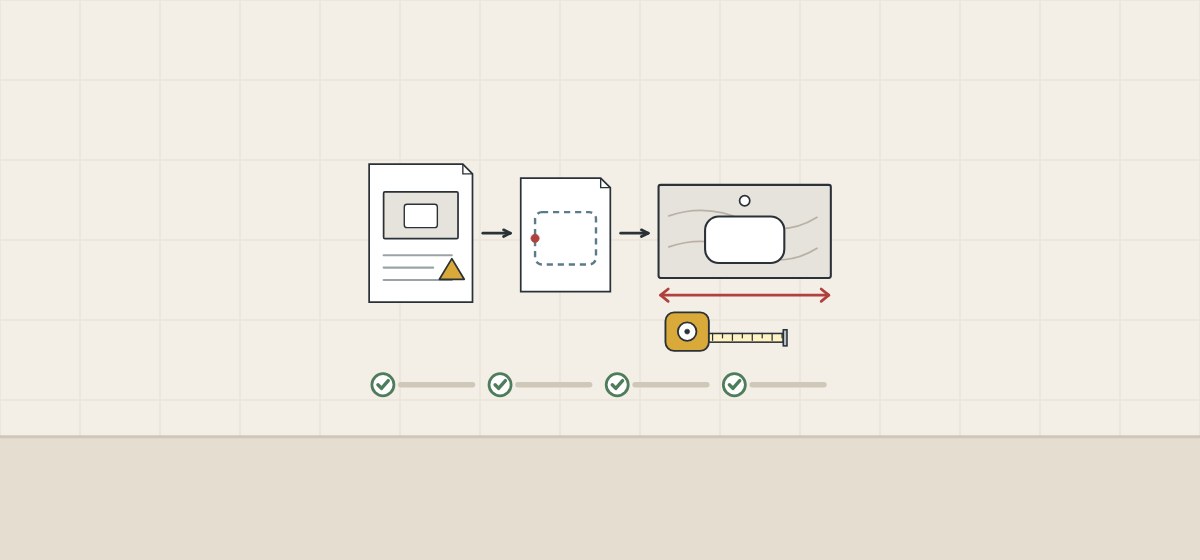
These steps are this guide’s procurement guidance, not a quality standard.
- Freeze the drawing. Settle sizes, holes and radii, and mark the revision.
- Trace the file. Ask for the record showing file name and drawing revision.
- Stop on a mismatch. If the revision shown is not the approved one, hold the run.
- Measure the first piece. Check it against the approved drawing before the rest is cut.
- Judge edges later. Review edges and cut-outs on the finished top.
- Ask about allocation. For long runs, ask how pieces are assigned to slabs or batches.
What to measure on the first piece
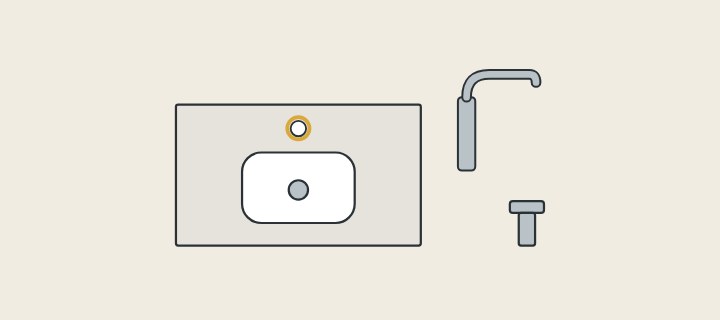
Measure overall length and depth, thickness, bowl and faucet-hole positions, cut-out size and inside-corner radii. Photograph each reading beside the drawing and compare it with the drawing’s tolerance. The result covers that piece and those points only.
What should you ask the supplier before files are released?
A change to a size or hole after cutting may mean a new piece, so ask before release.
| Question | Why it matters |
|---|---|
| Which drawing revision was the file built from? | An old file repeats its error on every piece. |
| What inside-corner radius will cut-outs have? | Material makers set their own minimums. |
| What tolerances apply to size and openings? | Table accuracy is not part tolerance. |
| How are cut edges and cut-outs finished? | Material makers call for chamfers or sanding after the cut. |
| Are all slabs from one batch? | Caesarstone and Cosentino ask for a match check. |
Include with your request
- Approved drawing and its revision
- Material and its maker
- Basin, faucet and drain models
- Edge profile and quantity
Ask WNS Global to confirm any offered vanity top, its cutting method, tolerances and commercial terms separately in writing. This guide does not state that WNS Global products are cut on any machine named above or meet any radius, tolerance or maker’s document named above.