Logistics

International Packaging for Bulk Hotel Vanity Orders

A hotel vanity order is a hundred or more wooden cabinets, tops and mirrors crossing an ocean, being handled at every transfer, and then needing to reach the right room in the right order. Packaging decides whether that arrives as furniture or as a claim. This guide covers the export packaging decisions for bulk vanity orders: carton and crate formats, moisture, protection, pallet compliance, and the labeling that makes site distribution work.

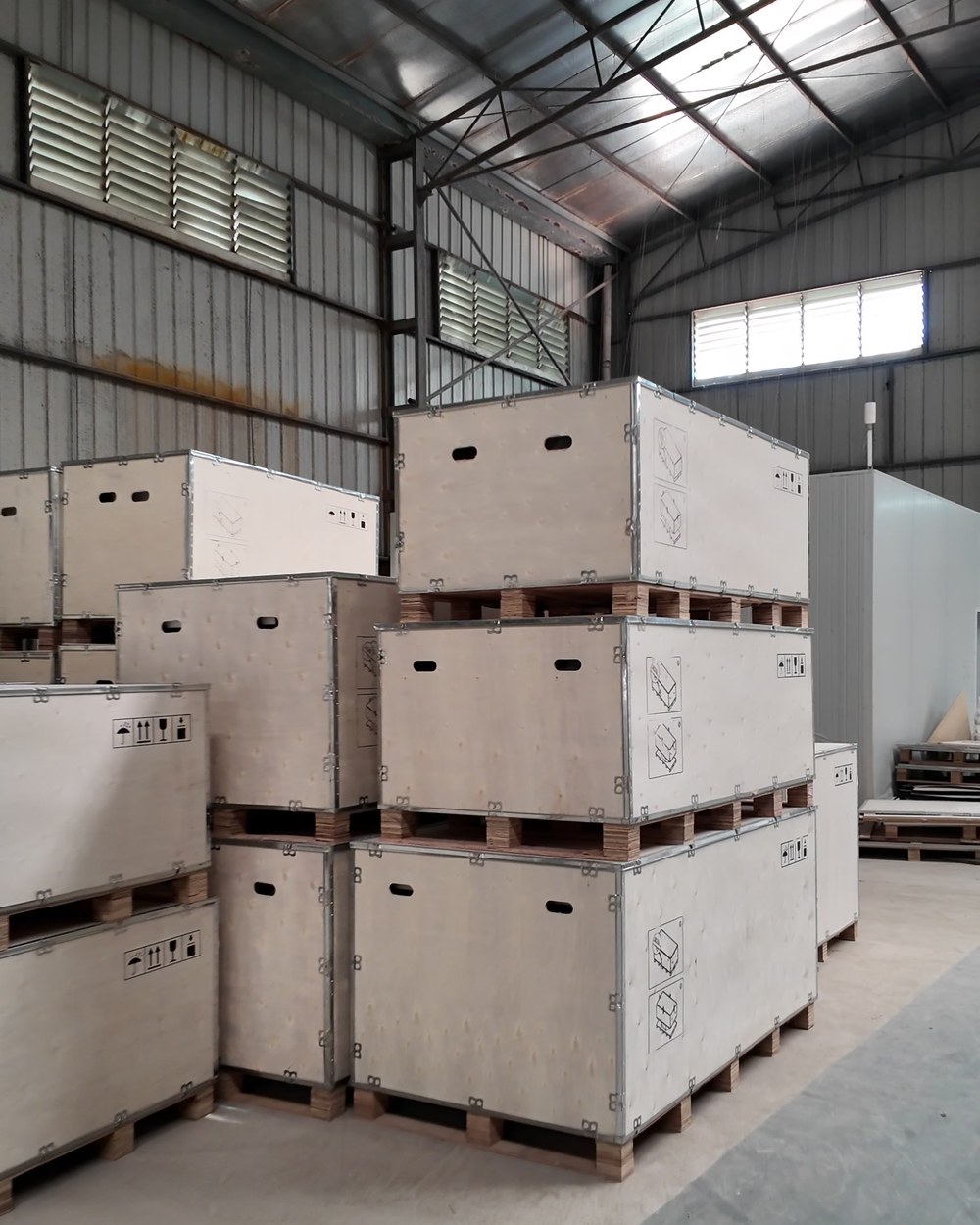
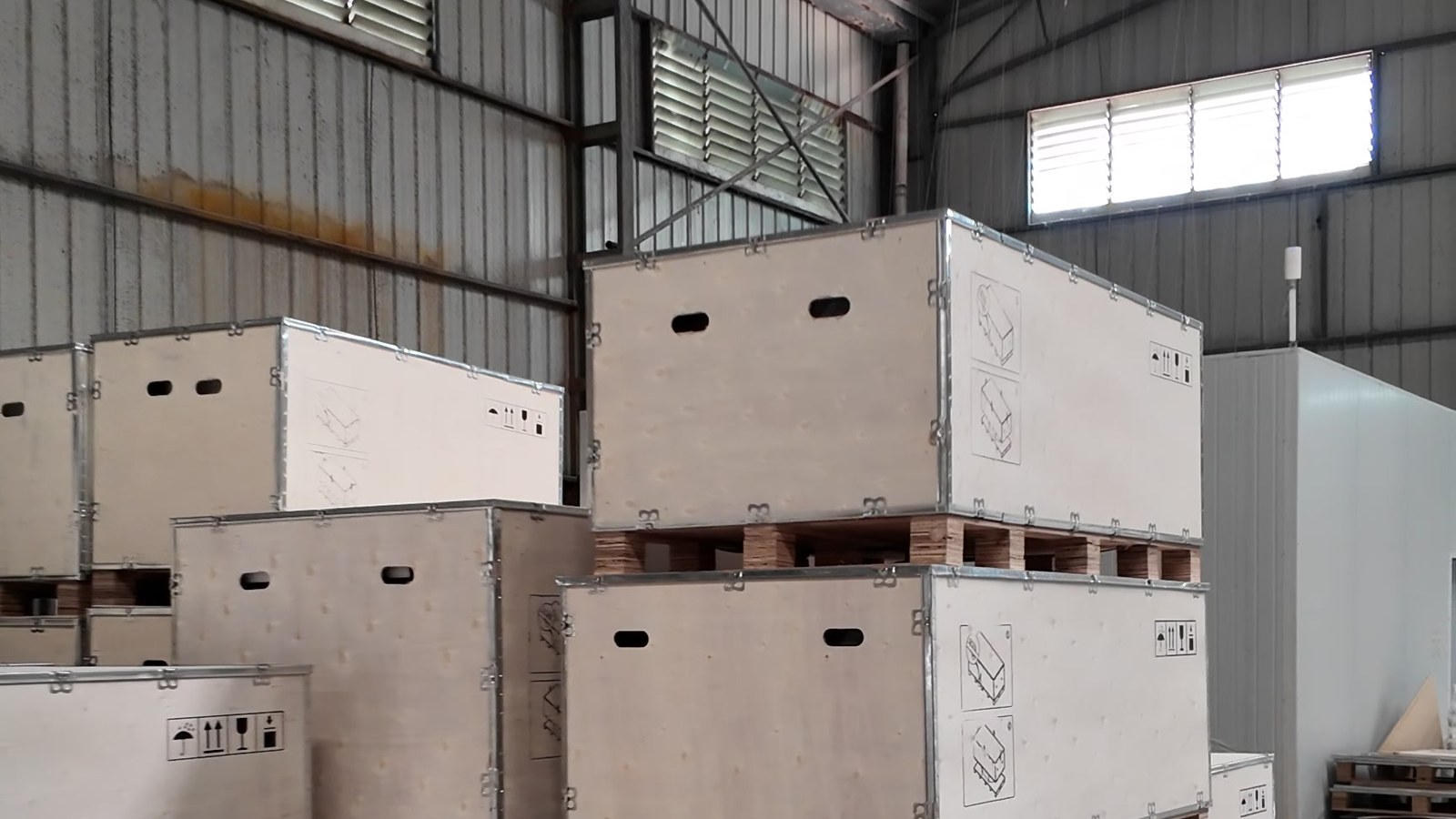
Timber crates stacked in the warehouse ready for loading

The short answer

Quick Reference

Point 01
Cabinets, tops and mirrors need different packaging: fronts and corners protected on cabinets, edge and face protection on tops, rigid crating on mirrors and glass.
Point 02
Wood is hygroscopic — pack against moisture and condensation, not only against impact.
Point 03
Any solid wood pallet, crate or dunnage must carry the ISPM 15 mark; plywood and other engineered panels are exempt from that rule.
Point 04
Palletize for forklift handling and set stacking limits so the bottom carton is not carrying the container.
Point 05
Label per room and per floor before the goods leave the factory; it is the cheapest logistics step and the one that saves the most time on site.
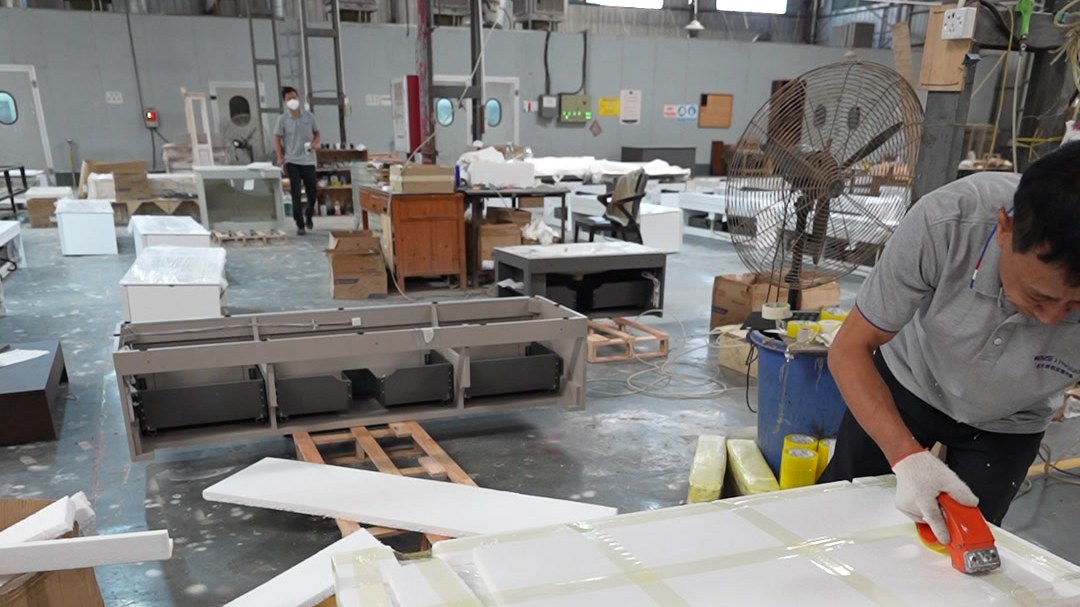
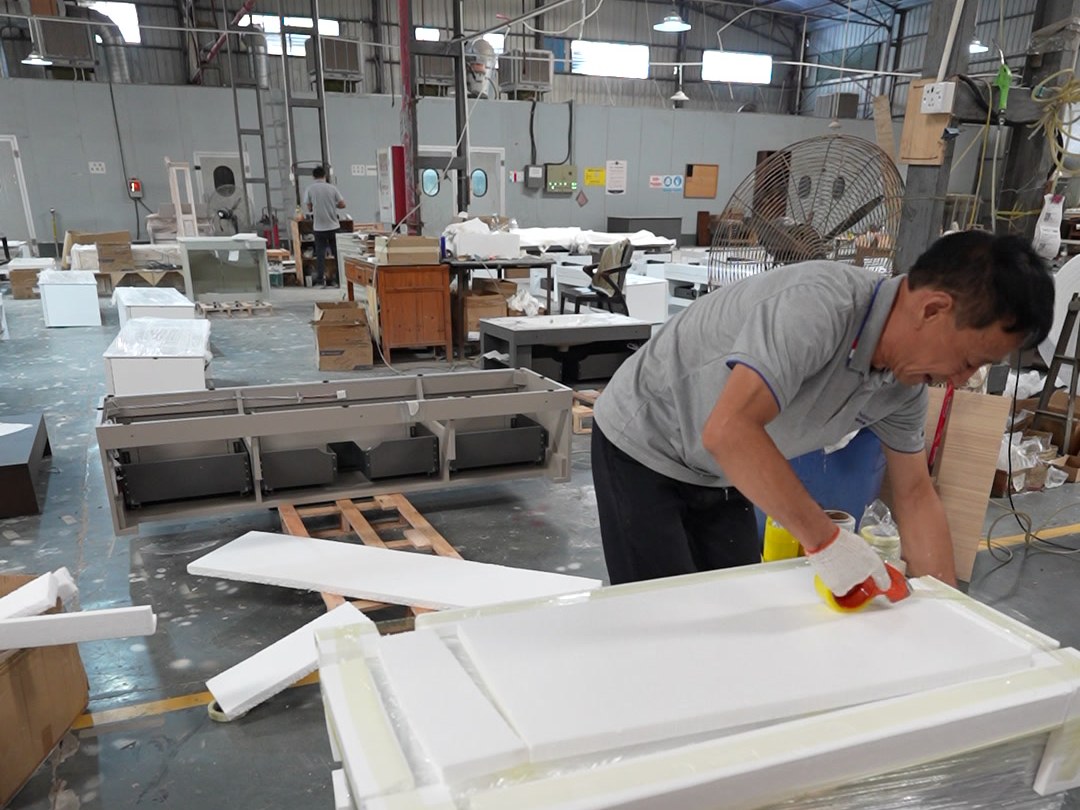
A worker stretch-wrapping a large white panel on a pallet

Start here

Three Products, Three Packaging Problems

A vanity order is really three shipments in one. Cabinets are large, relatively light for their size, and vulnerable at corners, door edges and finished fronts. Tops and basins are dense, heavy per piece, and vulnerable at edges and at any integrated basin. Mirrors and glass are fragile in the ordinary sense and need rigid crating. Packing all three as if they were the same product is how one damaged category ends up delaying the whole installation.

  • Cabinets: corner, edge and front-face protection
  • Tops and basins: edge protection and support under weight
  • Mirrors and glass: rigid crating, upright and braced

Cartons, Crates and Protection
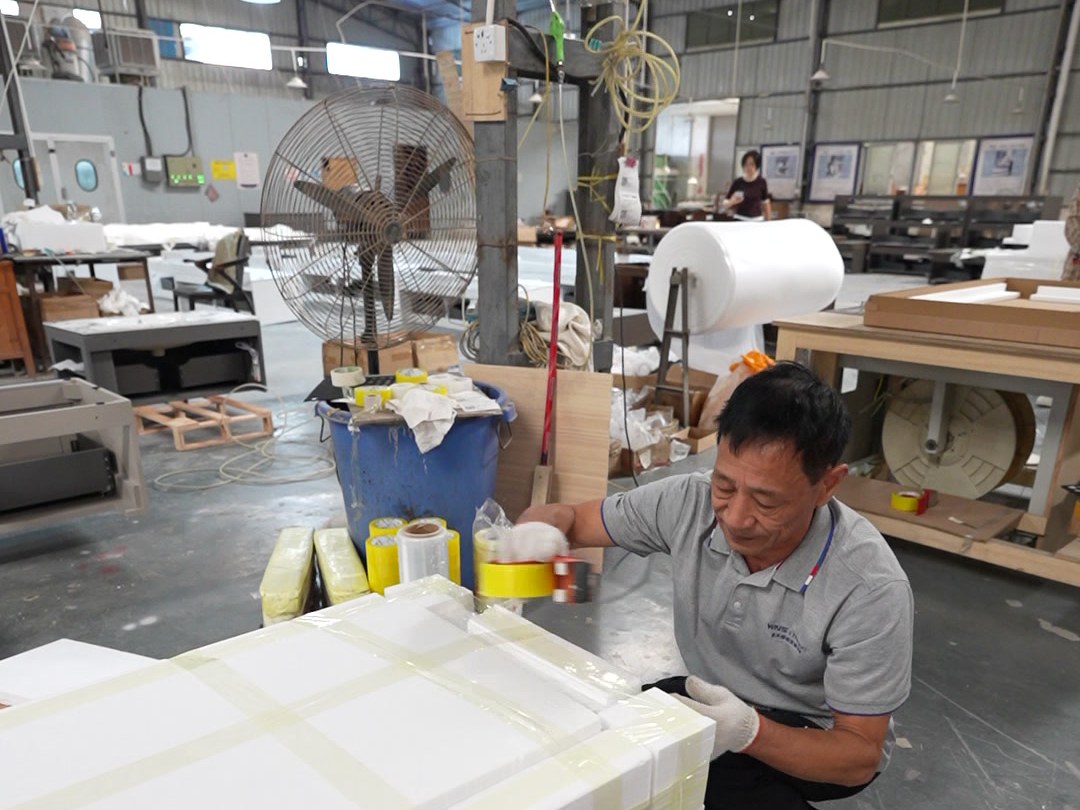
A wrapped panel resting on a timber pallet ready for packing

Cabinets travel well in double-wall cartons with corner protectors, foam or board on finished faces, and doors and drawers secured so they cannot swing or slide in transit. Hardware and loose components go in a labeled bag inside the same carton, not in a separate box that gets separated from it. Tops are packed on edge or flat with edge protectors and interleaving, and an integrated basin needs a protective insert so nothing rests on the bowl. Mirrors and mirror cabinets go into rigid crates, upright, braced against movement, with the glass face marked. For a bulk order it is worth asking the supplier for a packed sample carton to review before production, and for photographs of the packing method on the first units.

  • Double-wall cartons, corner protectors and face protection for cabinets
  • Doors, drawers and loose hardware secured inside the same carton
  • Edge protectors and basin inserts for tops
  • Rigid, braced crates for mirrors and glass
  • Review a packed sample and packing photographs before the full run

Moisture and ISPM 15

Wood cabinets absorb moisture, and a container crossing from a humid port through changing temperatures can produce condensation inside it. Pack against that as deliberately as against impact: sealed poly wrapping on cabinets, desiccant where the route justifies it, and cartons kept off the container floor on pallets. Ask the supplier what moisture protection is standard for the destination and season.

The pallets and crates themselves fall under ISPM 15, the international standard for wood packaging material. Solid wood pallets, crates, cases, skids and dunnage must be treated — heat treatment (marked HT) or methyl bromide fumigation (marked MB) — and stamped with the IPPC mark showing the country code, the treating facility's number and the treatment code. Manufactured panels such as plywood and oriented strand board are exempt because their processing makes them low-risk. The consequence of non-compliance is severe: at the US border, for example, shipments with non-compliant wood packaging are not allowed to enter and may have to be re-exported or destroyed. Confirm before booking that every wooden pallet and crate in the shipment carries a valid mark.

  • Seal cabinets against moisture and keep cartons off the container floor
  • Solid wood pallets, crates and dunnage must be ISPM 15 treated (HT or MB) and IPPC-marked
  • Plywood and other engineered panels are exempt from the ISPM 15 rule
  • Non-compliant wood packaging can mean refusal, re-export or destruction at the border

Palletizing and Labeling
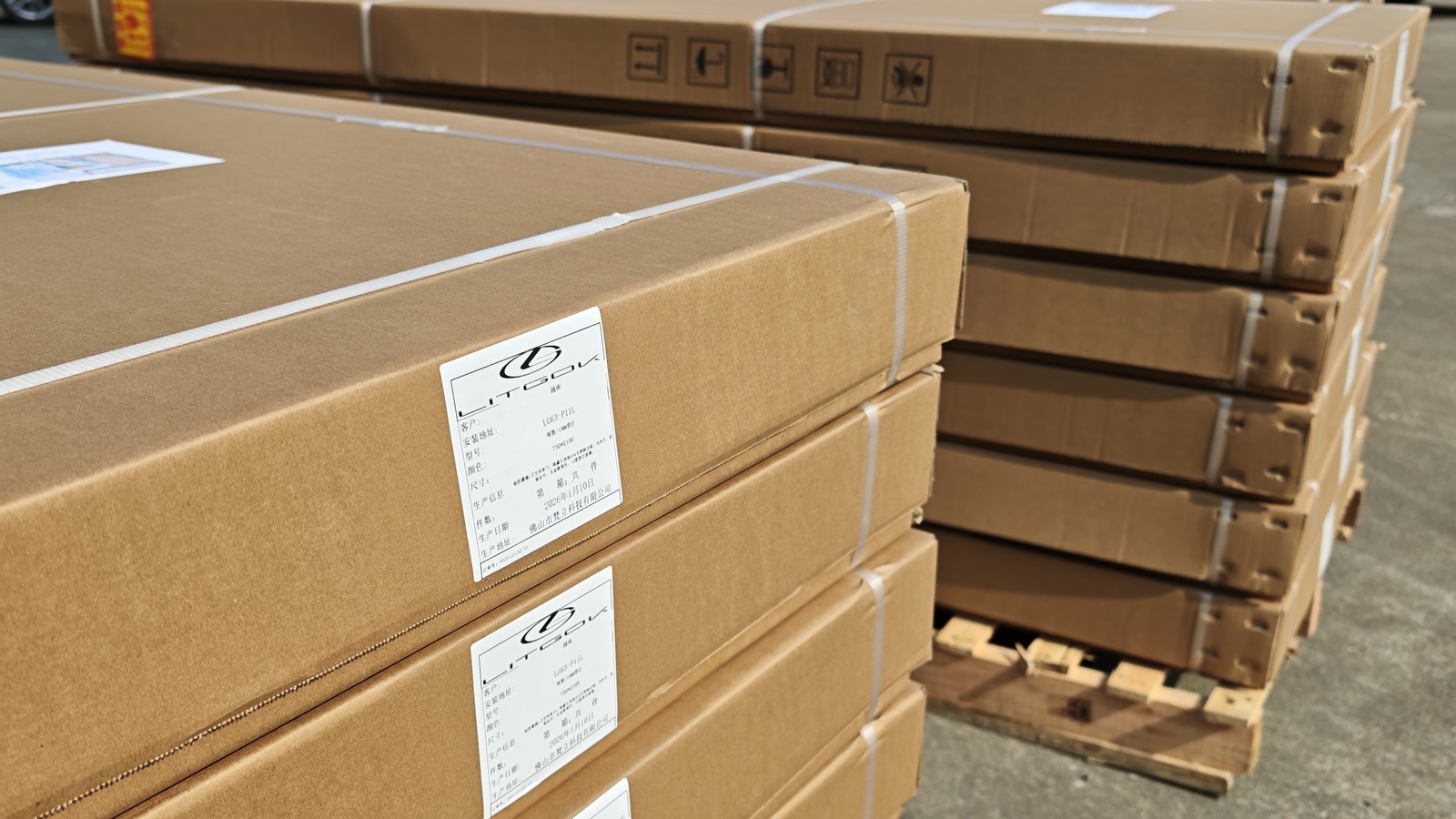
Close view of export cartons with a shipping label on each package

Palletize for forklift and pallet-truck handling at both ends, and agree stacking limits so the bottom cartons are not carrying the weight of the stack above them across the whole voyage. A container loading plan — which pallets go where, and in what order they come out — is worth having before the truck arrives at the factory.

Then label for the site, not for the port. Each carton should carry the room or floor it is going to, the item inside, and its position in the installation sequence, agreed with the supplier before production so the labels are applied at packing rather than on site. A packing list organized the same way lets the receiving team check the delivery against rooms rather than against SKUs, which is the difference between a morning and a week of sorting.

  • Palletize for forklift and pallet-truck handling
  • Agree stacking limits and a container loading plan
  • Label per room and floor at packing, agreed before production
  • Organize the packing list by room so receiving matches installation

A wrapped panel resting on a timber pallet ready for packing

Common questions

Packaging Questions

Answers to the checks buyers most often make before using this guide for a project or sourcing decision.

Do vanity cabinets need crates or are cartons enough?

Cabinets generally travel well in double-wall cartons with corner and face protection, provided doors, drawers and hardware are secured inside. Mirrors and glass are the components that need rigid crating.

What is ISPM 15 and does it apply to my order?

It is the international standard for wood packaging material. If the shipment uses solid wood pallets, crates, skids or dunnage, they must be heat treated or fumigated and carry the IPPC mark. Plywood and other engineered panels are exempt.

What happens if the pallets are not ISPM 15 compliant?

At the US border, shipments containing non-compliant wood packaging are not allowed to enter and can be required to be re-exported or destroyed under supervision. Other markets apply the same standard. Confirm compliance before booking.

How should moisture be handled for wood cabinets in transit?

Seal cabinets in poly wrapping, keep cartons on pallets off the container floor, and use desiccant where the route and season justify it. Ask the supplier what is standard for your destination.

Why label per room at the factory?

Because it costs almost nothing at packing and saves days of sorting on site. Receiving can check the delivery against rooms and distribute in installation order instead of sorting by SKU.

Can I review the packaging before the whole order ships?

Yes — ask for a packed sample carton to review and for photographs of the packing method on the first production units. That is the point at which a packaging change is still cheap.

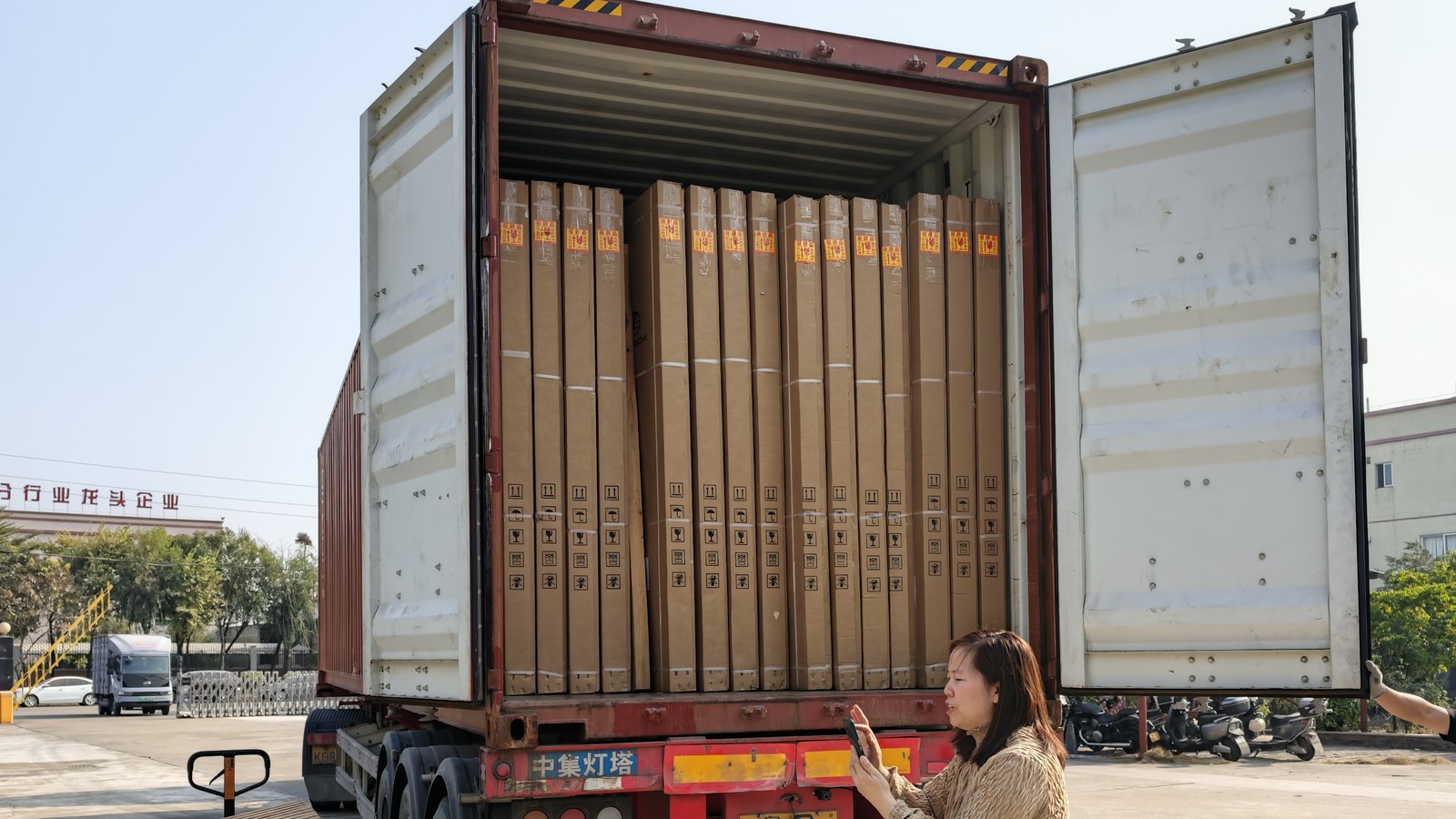
Cartons being loaded into a container, stacked to use the space efficiently

In short

Pack for the Room, Not the Port

Pack cabinets, tops and mirrors as the different products they are, protect wood against moisture as well as impact, make sure every solid wood pallet and crate carries a valid ISPM 15 mark, palletize with stacking limits, and label every carton for the room it is going to before it leaves the factory. Review a packed sample first. The packaging line is where a bulk order is either delivered or claimed.

  • Different protection for cabinets, tops and glass
  • Moisture protection for wood in transit
  • ISPM 15 marks on all solid wood packaging
  • Per-room labeling agreed before production

Verification sources

Official Sources and Further Reading

Destination-country phytosanitary and carrier requirements still govern the shipment. In particular, distinguish regulated solid-wood packaging from processed wood products before specifying crates or dunnage.

Shipping a bulk vanity order?

Talk to WNS Global

Tell us the destination, the room schedule and the container plan, and we will confirm the packaging method, pallet compliance and per-room labeling before the order goes into production.

Timber crates stacked in the warehouse ready for loading

Cartons being loaded into a container, stacked to use the space efficiently

Published: Last updated:

  • This guide is a sourcing and planning reference. Confirm the applicable product, contract, authority and project requirements before making a final decision.

START WITH THE PRODUCT DETAILS

Tell Us What You Need

Share the bathroom products, project requirements, target market, dimensions, materials, finishes, quantities, or customization details currently available. WNS Global will review the request and identify the information needed for the next step.