From the back sheet to the flatness check
What is a laminate balancer?
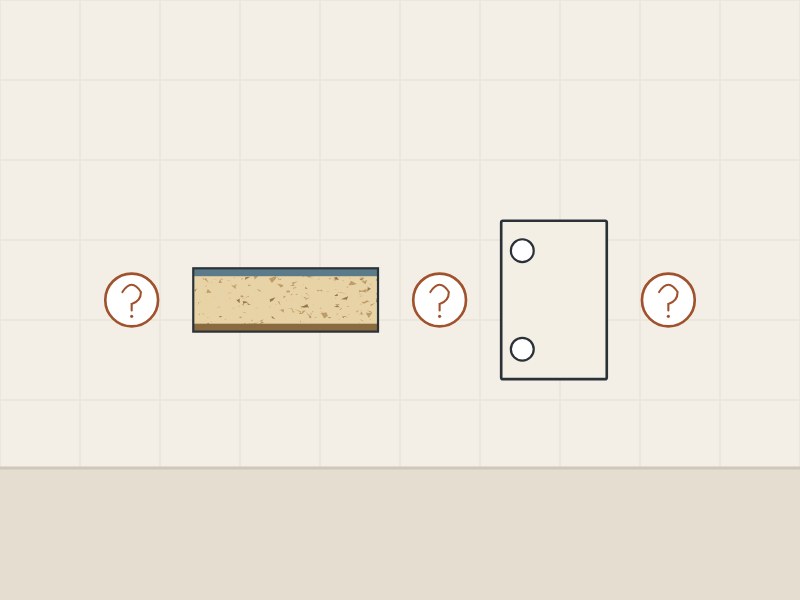
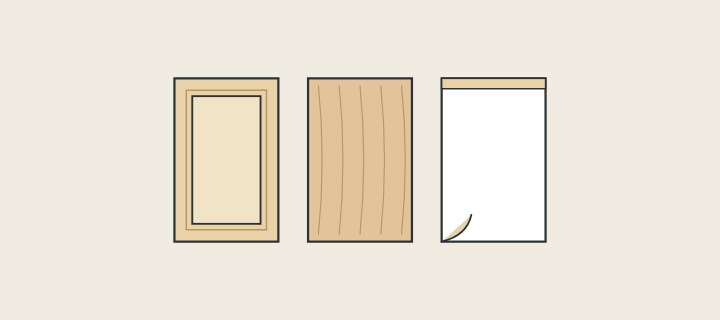
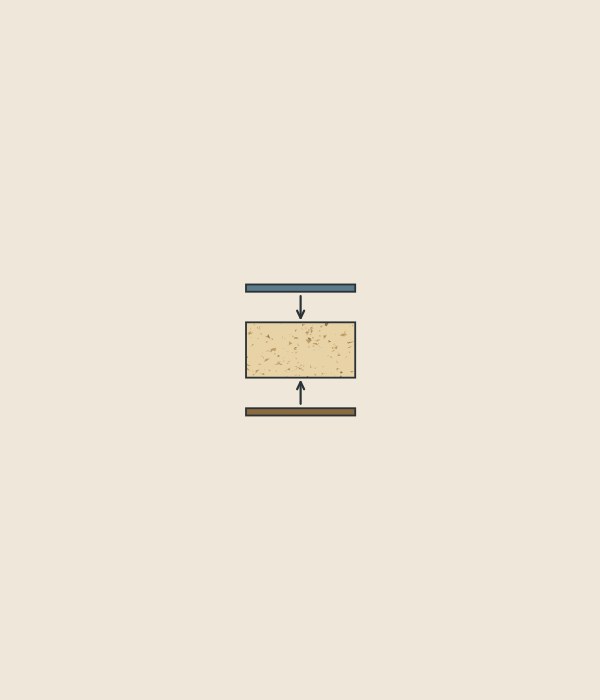
A laminate balancer is a sheet bonded to the reverse side of a laminate-faced board. EGGER’s support article says tension must be equalized with a suitable balancer. An EGGER product leaflet says its balancers give a symmetrical, tension-free structure.
North American sources use other names. CPA’s HPL page lists a backer grade: HPL produced without a decorative face. The AWI glossary defines a balancing sheet as a sheet product with performance properties equal to the opposing surface.
| Term | Meaning in the named source |
|---|---|
| Balancer | EGGER: laminate for the reverse side of a laminate bonded board. |
| Backer | CPA: HPL produced without a decorative face. |
| Balancing sheet | AWI: properties equal to the opposing surface; same adhesive and process as the face. |
| Balanced construction | AWI: an odd number of plies, with identical materials either side of the center plane. |
| Warp | CPA: deviation of a panel from an initial state of flatness. |
How does an unbalanced panel warp?
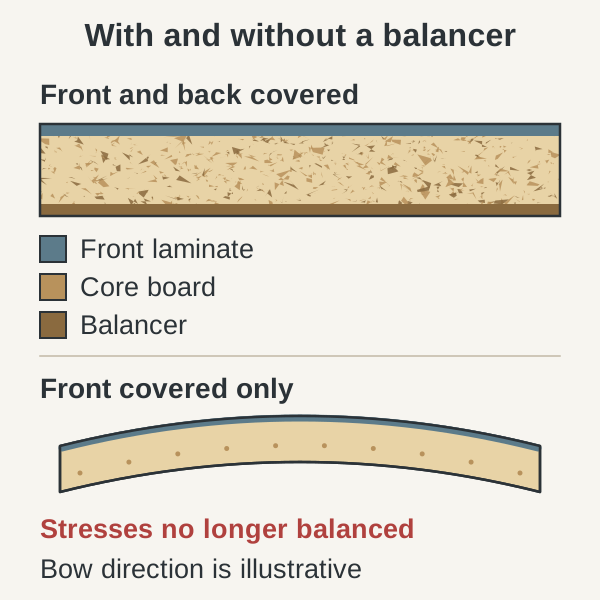
CPA’s bulletin on minimizing warp in laminated particleboard and MDF says that when different materials are rigidly bonded and their moisture content changes, they try to change dimension and stresses can build up; warp results when those stresses become excessive and no longer balance on the two surfaces. The five steps below follow that account in this guide’s wording.
- A laminate is bonded rigidly to one side of a board.
- The other side gets a different sheet, or none.
- The moisture content of the materials changes.
- The materials try to change dimension and stresses can build up.
- When the stresses become excessive and no longer balance on the two surfaces, the panel warps.
CPA calls unbalanced construction one of the most common causes of warp in laminated panel products.
What counts as a balanced build?
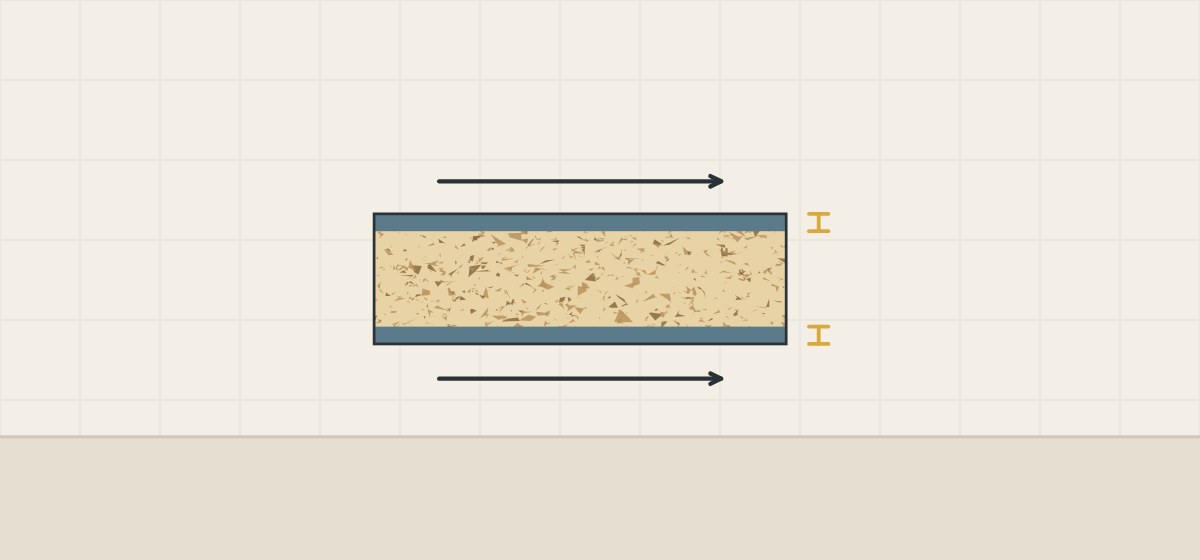
The sources below describe a balanced build by the back’s material, thickness and direction relative to the front. Each row paraphrases the named source.
| Source | What it asks of the back |
|---|---|
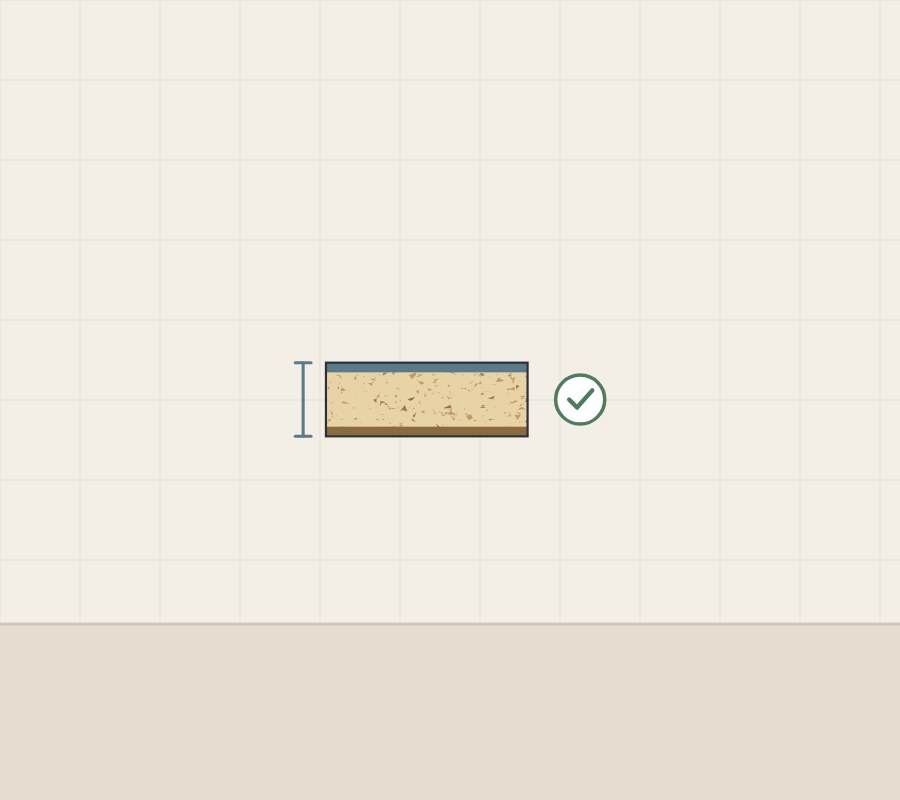
| EGGER support article | Identical laminate on the front and the reverse side, for a symmetrical build. |
| EGGER, PerfectSense Premium Matt | A balancer laminate of the same nominal thickness. |
| CPA bulletin | Similar properties on both sides, generally best achieved with the same material. |
| CPA, for HPL panels | Face and backer with similar linear expansion, stiffness and thickness; machine directions parallel. |
| AWI 300, HPDL face | Where a balance is required: material compatible with the face, thickness the same as the face. |
| Panolam | Backer thickness relatively equal to the decorative laminate on the face. |
AWI 300 states the principle for panel layup in general: balanced construction of faces, thickness and moisture content. EGGER adds that producing an asymmetrical composite element remains the fabricator’s responsibility.
What do makers sell as backer sheets?
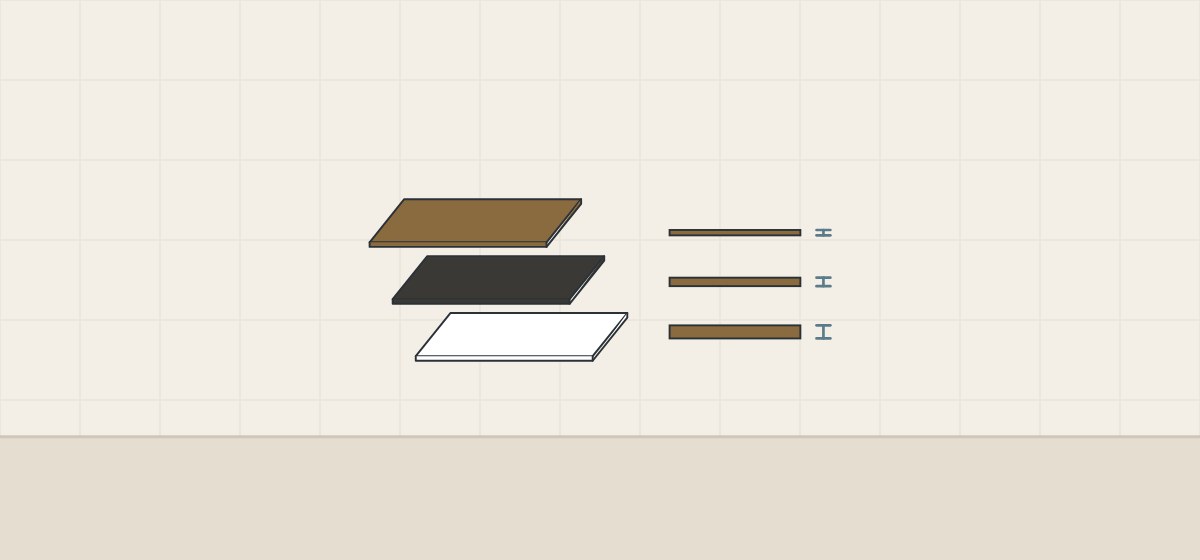
The makers cited here sell backers and balancers as separate laminate sheets. Each row gives that maker’s own description.
| Product | How the source describes it |
|---|---|
| Wilsonart phenolic backer sheets | Kraft paper impregnated with phenolic resin; “some balancing characteristics” and added protection from humidity. |
| Arborite LB20, LB30, LB45 | For three-ply fabrication behind Arborite HPL; 0.020, 0.030 and 0.048 in (0.51, 0.76 and 1.22 mm), each with a tolerance. |
| Nevamar and Pionite backers | Phenolic laminate not meant for decorative surfacing; brown or black; normally sanded on one side. |
| EGGER balancer (UK leaflet) | A white balancer laminate offered in sheet size 3050 × 1310 mm. |
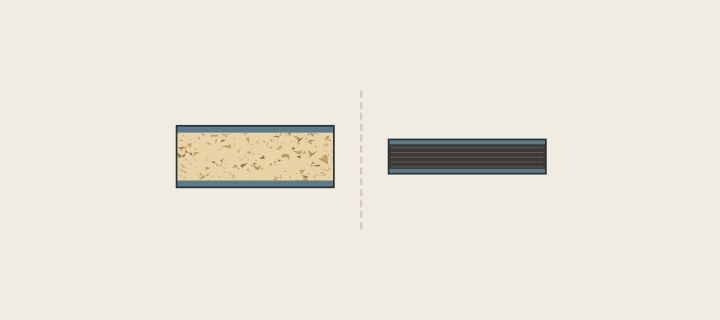
Brown, black and white backs all appear above. Color is not among the balance criteria quoted in this guide, which concern material, thickness and, in CPA’s case, direction.
What else affects flatness besides the back?
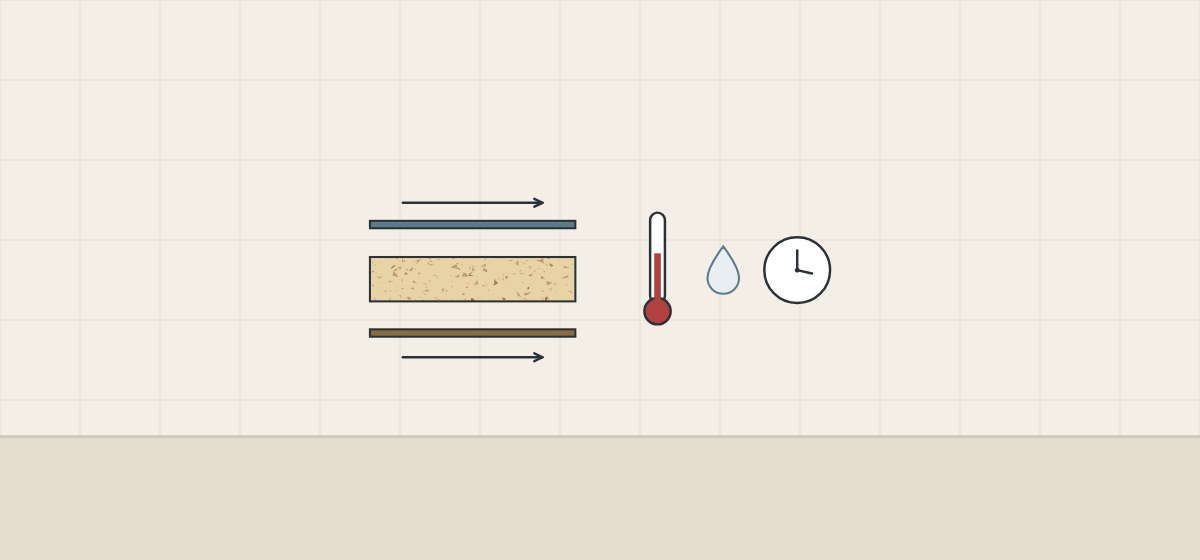
Conditioning, sheet direction and adhesive also affect flatness. The three notes below are the named sources’ own; the list after them is this guide’s suggestion for a quotation file.
Conditioning
Wilsonart’s laminate data sheet says face and backing laminates and the substrate should be conditioned in the same environment for 48 hours before fabrication; it recommends about 75 °F (24 °C) and 45% to 55% relative humidity for the laminates. CPA says reaching equilibrium can take two or more weeks.
Direction
CPA asks for face and backer machine directions to be parallel. CPA says HPL properties differ significantly between the machine and cross-machine directions.
Adhesive
AWI’s definition has the balancing sheet bonded with the same adhesive and process as the face.
- Conditioning time and climate before bonding
- Direction of the face and back sheets
- Adhesive used on each side
Does a balancer guarantee a flat panel?
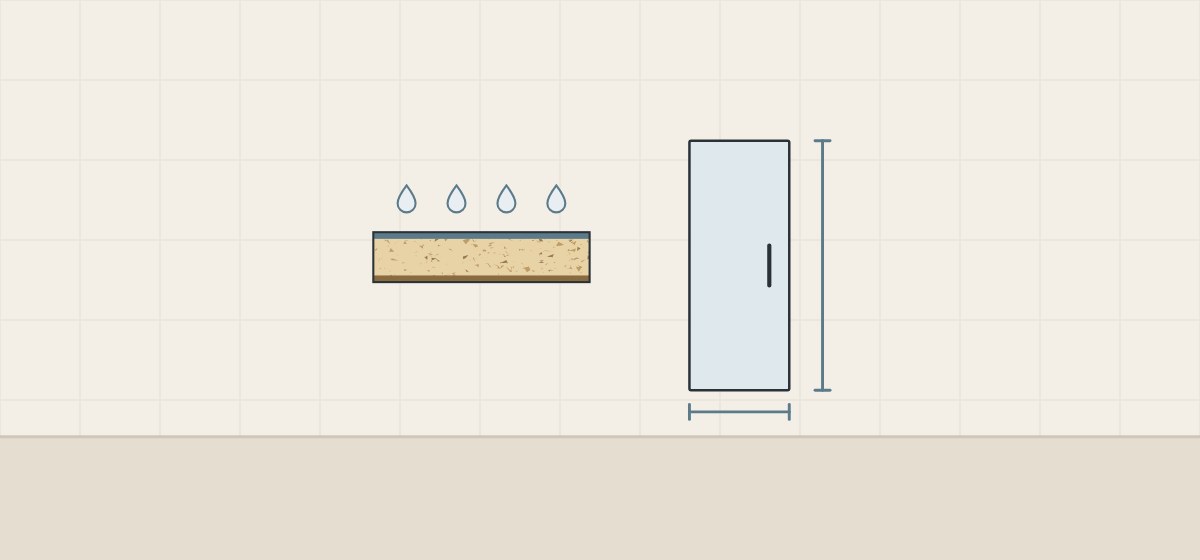
The sources used here describe balancing as a way to reduce warp, and they state limits. Four of those limits:
Maker wording
Wilsonart says its backers give the fabricated piece some balancing characteristics. Panolam says its backer sheets add stability and make warpage less likely.
Temporary warp
CPA says a well-balanced laminated panel can show temporary warp when the face and back laminates gain or lose moisture at unequal rates.
One-sided exposure
CPA says an application that exposes one surface to a warm, humid atmosphere and the other to a dry one creates a moisture imbalance that can cause warp.
Door size
ANSI/AWI 0641-2019 sets a maximum cabinet door size of 610 mm by 2134 mm (24 in by 84 in), says larger doors may be susceptible to warp and excludes them from its warp and flatness tolerances and tests.
This guide gives no allowable bow. The CPA bulletin names a separate CPA method for measuring warp in particleboard and MDF. The limit and the method for a given panel are for buyer and supplier to agree on in writing.
What changes when the hidden back is substituted?
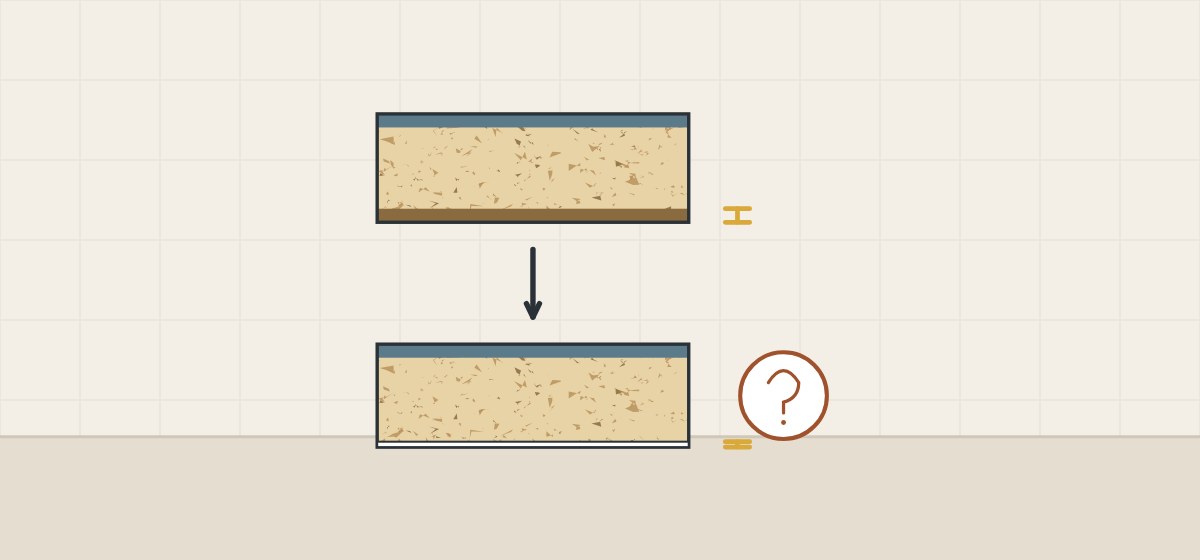
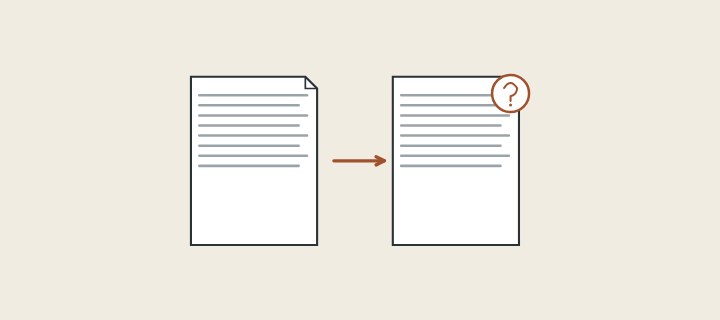
A different back is a different construction, even when the front looks the same. The left column is this guide’s wording for a proposed change.
| Proposed change | What the source says |
|---|---|
| Thinner or different backer | CPA: a backing sheet of different thickness and properties is a source of imbalance, and a common practice for cost savings. |
| No sheet on the back | CPA: one-sided panels are a source of imbalance; a one-sided laminate may act as a moisture barrier. |
| Back sheet in another direction | CPA: face and backer machine directions should be parallel. |
How should a buyer specify a laminated vanity panel?
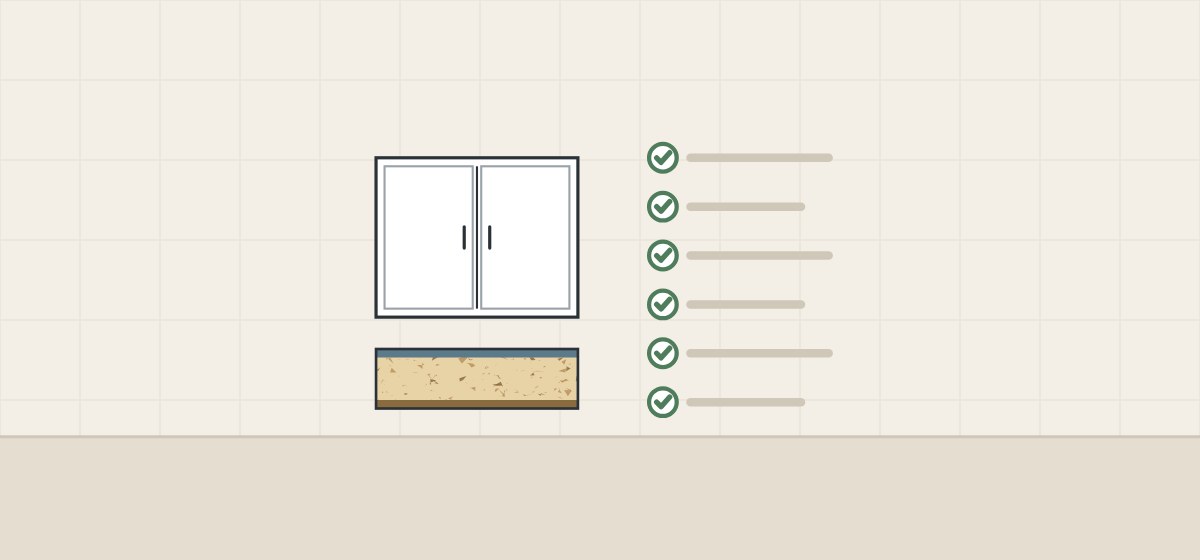
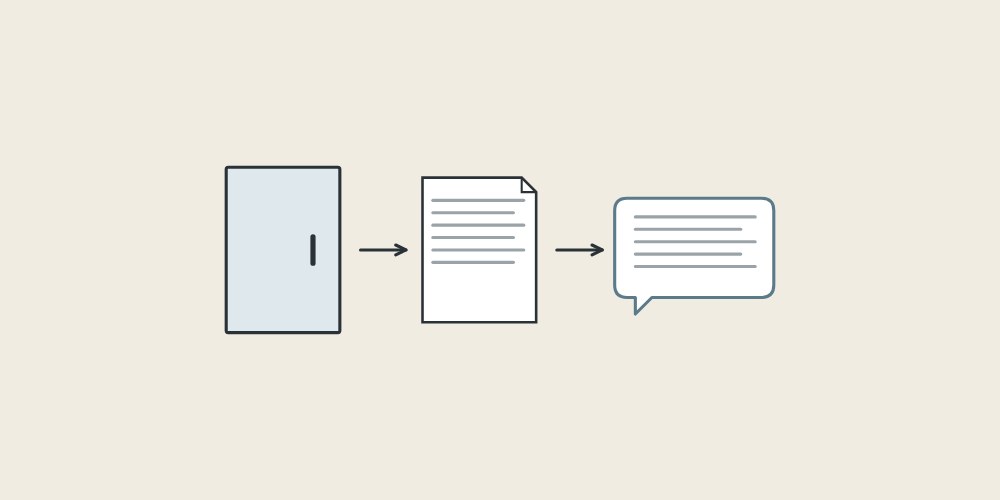
Specify the whole section of each laminated part, then the check on the finished panel. The six steps below are this guide’s procurement guidance.
- List the laminated parts. Doors, drawer fronts, end panels and shelves may be built differently.
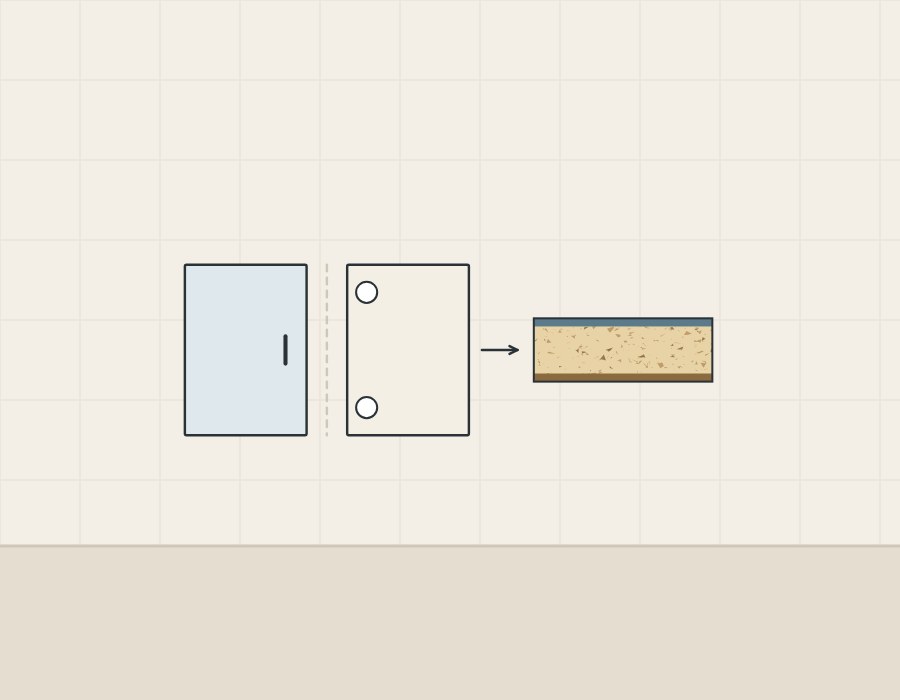
- Record front, core and back. Give a maker, a product reference and a thickness for each layer.
- Ask for the balancing basis. The same laminate, a named backer, or the laminate maker’s recommendation.
- State the flatness requirement. Agree on a limit, a method and the time of measurement.
- Tie the sample to its build. A flat sample speaks only for its own size and construction.
- Treat a new back as a change. Review the panel again before approving it.
Keep the section with the elevation
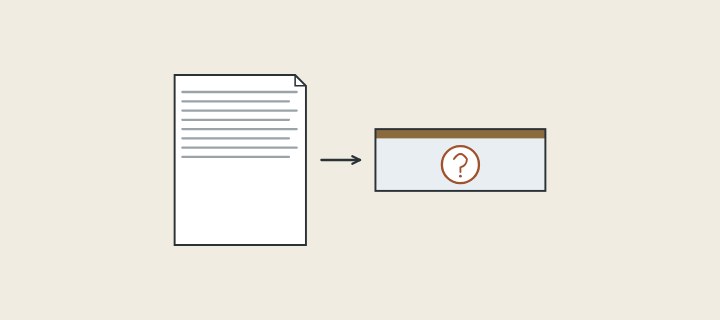
An elevation shows the look; a section shows the build. CPA’s sources of imbalance, such as backer thickness and one-sided lamination, do not show on an elevation.
What should you send and ask before a quotation?
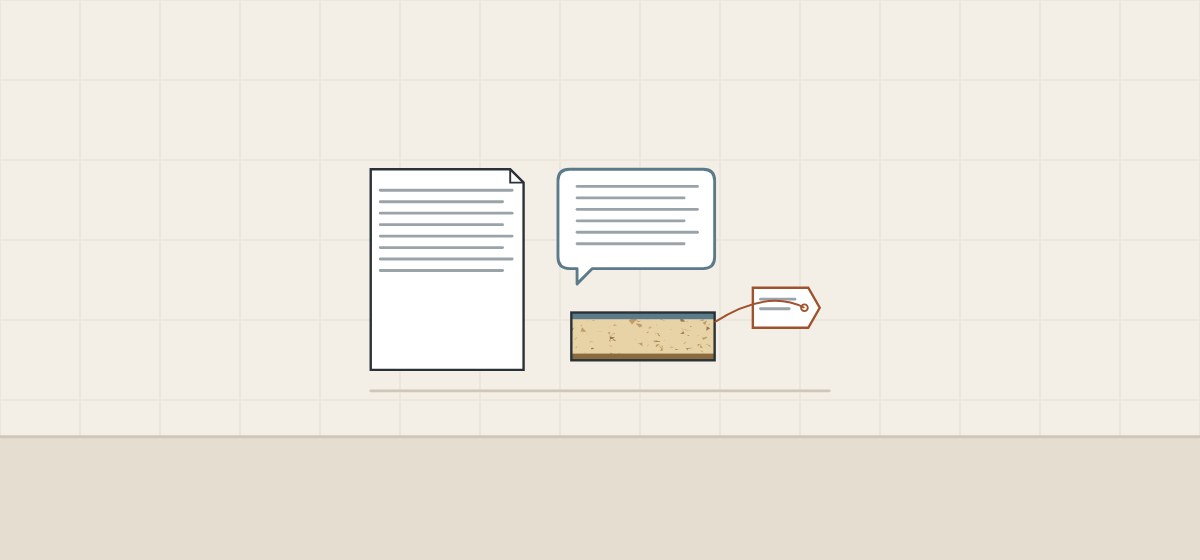
Send the panel’s use and size and the front you want, then ask for the proposed core and back. The questions and the list of what to send are this guide’s own.
| Question | Why it matters |
|---|---|
| What is the back sheet, by maker and reference? | The quoted criteria concern material, not color. |
| How thick are the face and the back? | EGGER (for PerfectSense Premium Matt), Panolam and AWI 300 tie back thickness to the face. |
| Which core board is used? | Wilsonart names particleboard, MDF or plywood as substrates for its laminate. |
| How is finished-panel flatness checked? | A named balancer is not a flatness limit. |
| Will a change of back be reported? | CPA lists a different backer as a source of imbalance. |
This guide suggests sending
- Panel use: door, drawer front, end panel or shelf
- Finished sizes of the largest parts
- Front laminate reference or sample
- Project location and room conditions
- Quantity of each part
WNS Global confirms any product and terms it offers separately in writing. This guide does not state that WNS Global products have the builds, materials or checks named above.