
From surface identity to repair scope
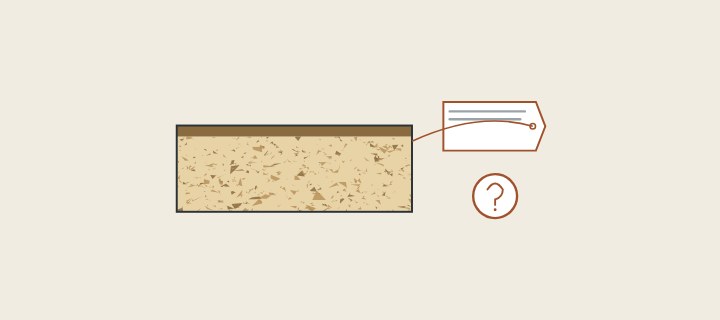
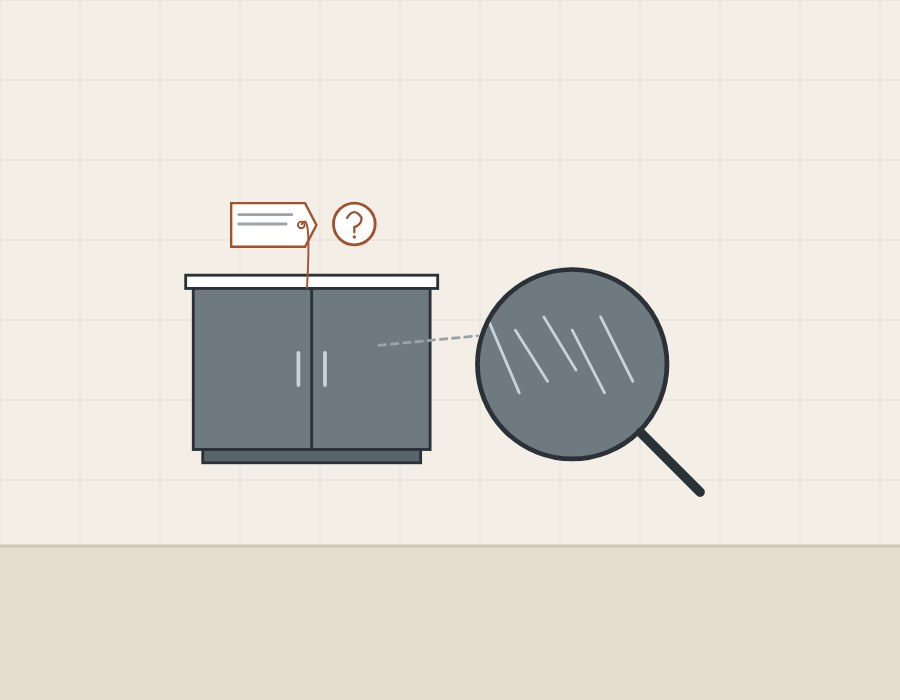
Which matte surface is on the vanity front?
A heat-repair claim belongs to one named surface product, so identify that product first. The Formica-hosted FENIX page says not all matte surfaces that look similar have the same resistance, and that the furniture supplier can clarify whether a surface is FENIX.
FENIX’s material page says its external surface uses acrylic resins hardened by an Electron Beam Curing process. The trade association ICDLI describes high-pressure laminate (HPL) in its cleaning leaflet as a resin and paper-based thermosetting composite.
A quote that says “anti-fingerprint matte” does not identify the product.
| Named surface | Maker’s description |
|---|---|
| FENIX | Acrylic-resin surface, extremely matte, soft touch, anti-fingerprint. |
| Formica Infiniti | Super matte, soft-to-touch surfacing that resists fingerprints. |
| Wilsonart Traceless, Type 128 | Decorative papers with resins over a phenolic kraft core; finish of moderate reflective value. |
| Abet Laminati Polaris | Ultra-matte, anti-fingerprint decorative laminate. |
| EGGER PerfectSense Premium Lacquered MDF Matt | MDF core with a super-matte lacquered surface. |
How does FENIX describe its heat method?
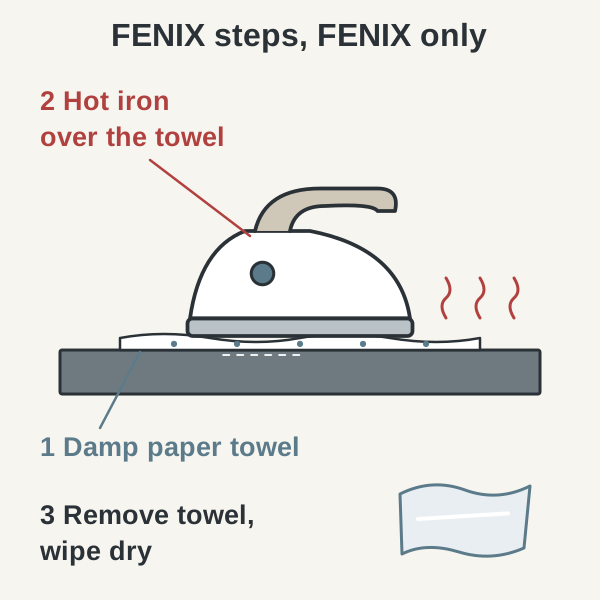
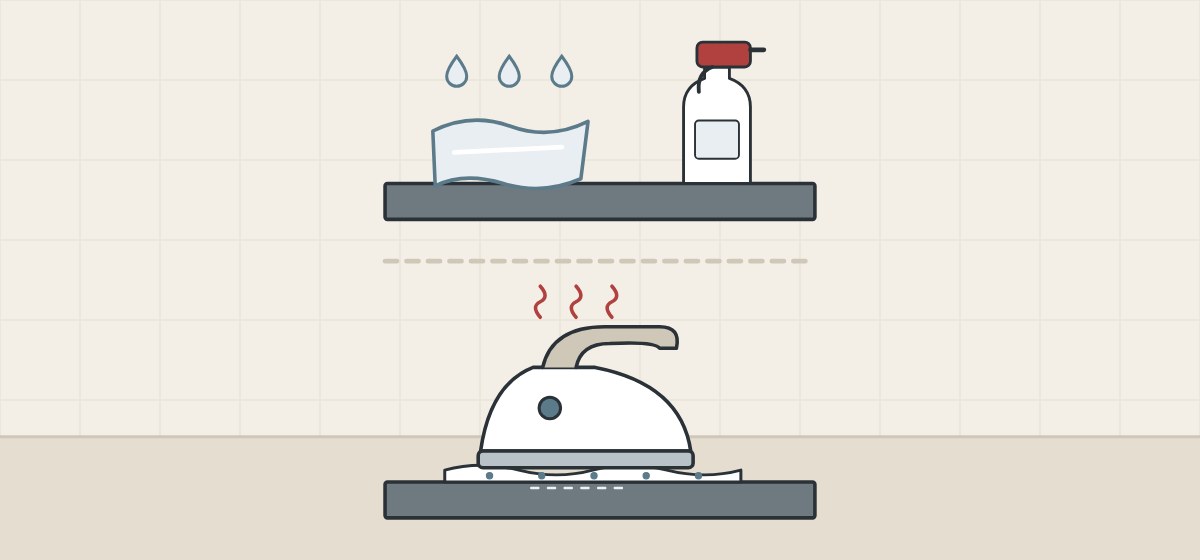
The Formica-hosted FENIX page describes a damp paper towel, a hot iron and a microfiber cloth to wipe the area dry, used on FENIX surfaces with superficial micro-scratches. The five points below are that page’s own check and steps for that material only.
- Verify that the surface is FENIX; if in doubt, ask the furniture supplier.
- Place a paper towel on the area and spray it with water.
- Iron over the paper towel using a hot iron.
- Remove the paper towel.
- Wipe the area dry with a microfiber cloth.
The page text gives no iron temperature or contact time; it refers readers to a video, as does FENIX’s own thermal healing page. Ask the material supplier for the current written instruction before anyone applies heat.
Which marks does a maker’s heat method cover?
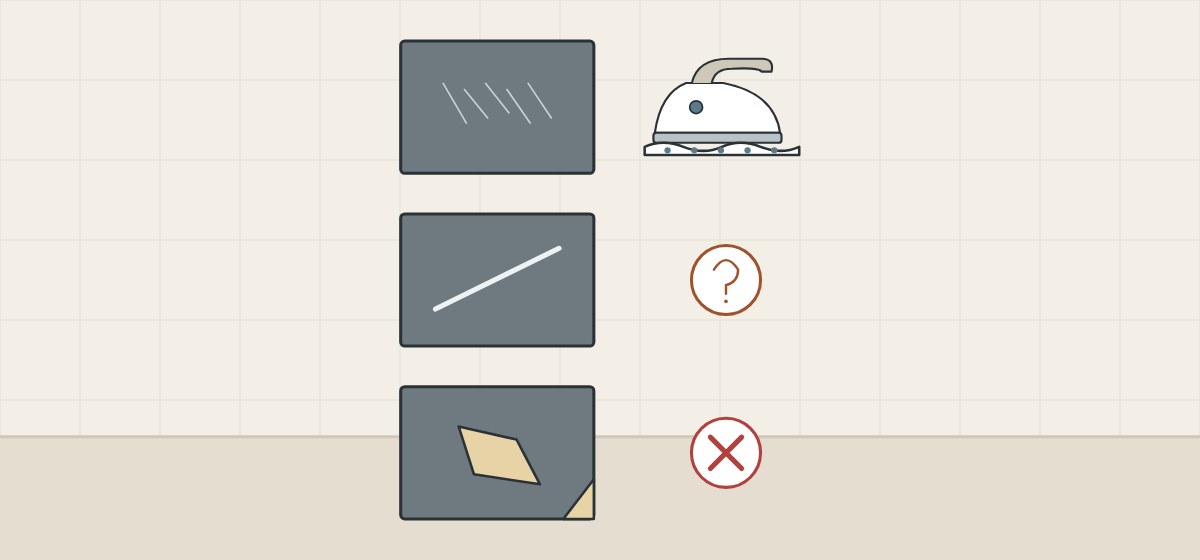
The two makers name different marks: FENIX superficial micro-scratches, Formica burnished areas. The table gives each instruction with its product and stated limit.
| Maker and product | What the maker describes | Stated limit |
|---|---|---|
| Formica-hosted FENIX page, FENIX surfaces | Thermal healing of superficial micro-scratches with a damp paper towel and a hot iron. | No guarantee that the technique works on bigger scratches. |
| Formica, Formica Infiniti | Paper towel on the burnished area, sprayed with water; iron 4 to 5 times on the highest setting; wipe dry; repeat as needed. | The process will not repair scratches and gouges. |
The FENIX page says its method applies to bathroom cabinets as long as they are made from FENIX surface materials. If repairability matters, record the condition of any sample mark and ask the material supplier to assess it.
Do other anti-fingerprint surfaces use heat?
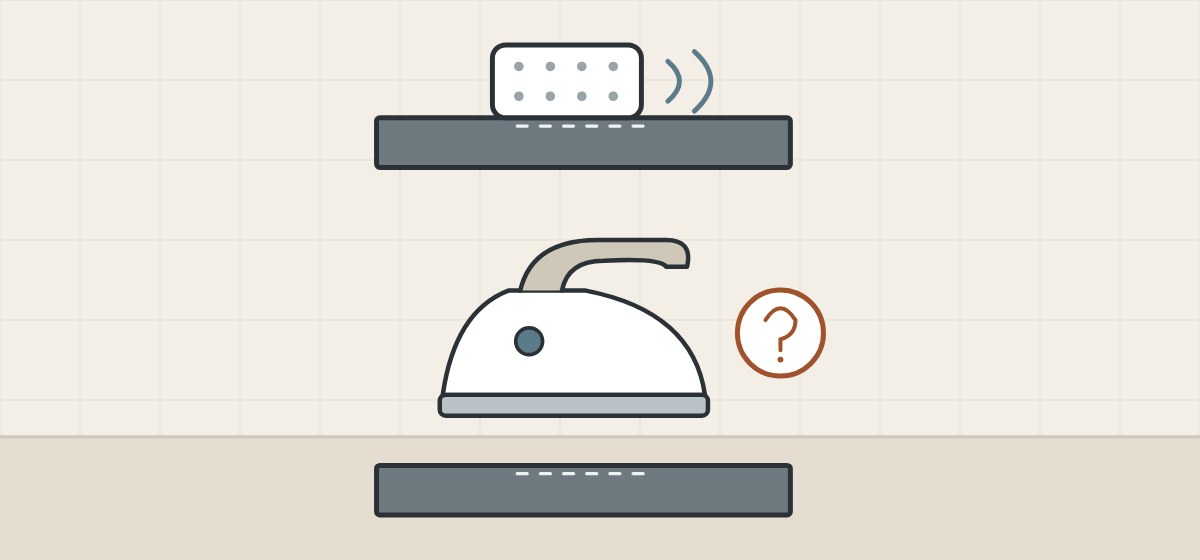
Not in the documents read for this guide: two makers name a melamine sponge for light scratches, and two EGGER product pages list scratch resistance with no repair method in the text retrieved.
| Maker and product | What the maker states |
|---|---|
| Wilsonart Traceless | Light scratches can be removed with a white melamine foam eraser; the comparison page calls the surface repairable. |
| Abet Laminati Polaris | Superficial micro-scratches can be wiped out with a melamine sponge. |
| EGGER PerfectSense Premium Lacquered MDF Matt | Fingerprint resistance and improved micro-scratch and scratch resistance. |
| EGGER PerfectSense Matt laminates | Anti-fingerprint; abrasion-, impact- and scratch-resistant. |
A fingerprint-resistant description therefore does not show which repair, if any, the maker supports.
What heat limits do makers set for two of these surfaces?
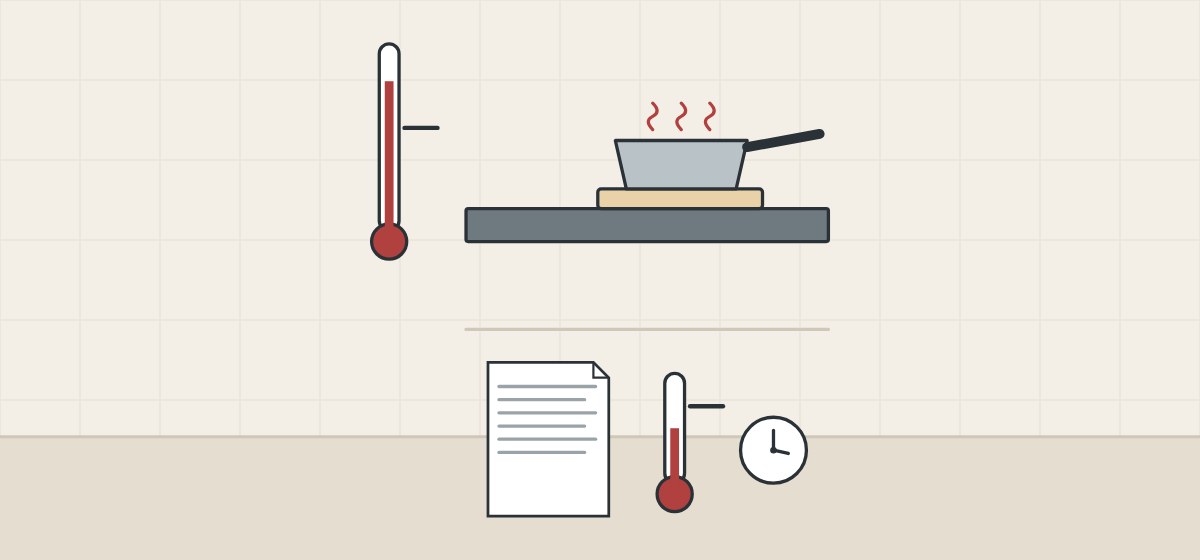
Formica and Wilsonart each state a temperature limit for one named surface. Statements from the makers, ICDLI and ISO follow, then this guide’s own request list:
Formica Infiniti
Formica’s technical guide says Infiniti should not be used where temperatures exceed 275°F (135°C) for prolonged periods of time. Its guide names ISO 4586-2 and ANSI/NEMA LD3-2005.
Wilsonart Traceless
Wilsonart’s data sheet says not to subject Traceless to temperatures higher than 275°F (135°C) for substantial periods of time.
Wilsonart laminate countertops
Wilsonart’s care brochure says hot pans and heat-producing appliances set directly on a countertop can mar it.
HPL as ICDLI and ISO describe it
ICDLI’s product data sheet names melamine-formaldehyde resin for the surface layer of HPL and, describing fire behavior, says HPL is difficult to ignite and does not melt or drip. Neither statement is a heat limit for repair. ISO 4586-2:2018 specifies the test methods for HPL properties.
What to request
This guide suggests asking for:
- The maker’s heat limit for the named surface
- The maker’s current repair instruction
- Whether edges and adhesive are covered
Is routine cleaning the same as repairing a mark?
Routine cleaning is a separate instruction: the makers read here publish cleaning rules apart from any repair method. Three examples:
FENIX everyday cleaning
FENIX’s everyday cleaning page tells users not to scrub with abrasive cream, a scouring pad or a hard brush, and names a wet melamine eraser for a tougher stain.
FENIX deep cleaning
FENIX’s deep cleaning page says that if the surface has not been cleaned correctly over time, dirt can build up inside the microstructure and change its appearance, and asks users to verify that the surface is FENIX.
Formica Infiniti
Formica’s technical guide says abrasive cleaners, powders, scouring pads, steel wool and sandpaper damage the finish and can permanently reduce stain and chemical resistance.
“Easy to maintain” is a cleaning statement; it is not evidence of a repair method.
What does a heat-repair claim still leave open?
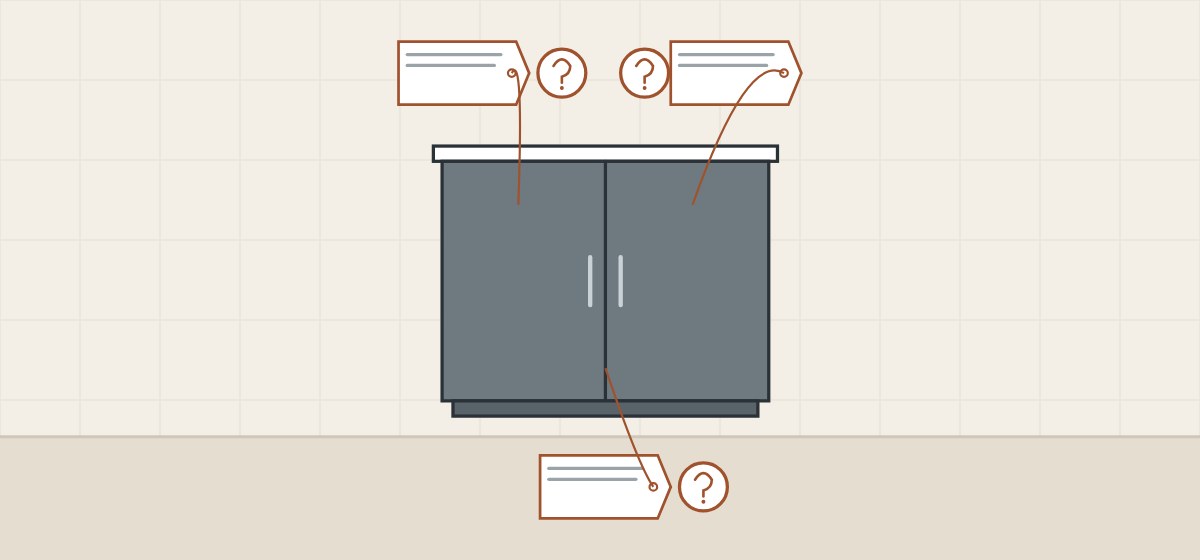
A repair claim leaves the product, the mark and the method open until each is named.
| Claim offered | What still needs confirming |
|---|---|
| Heat-repairable matte | The exact surface product and its maker’s instruction. |
| Scratches disappear | Which marks: the FENIX page gives no guarantee for bigger scratches. |
| Thermal healing | The limit: Formica excludes scratches and gouges for Infiniti. |
| Anti-fingerprint | The repair named: for Traceless and Polaris the makers name a melamine sponge. |
| Heat resistant | The maker’s temperature limit and its duration wording. |
| Easy to maintain | Routine cleaning, which is separate from repairing damage. |
| Suitable for bathrooms | Whether the claim covers the surface or the whole cabinet. |
How should a buyer record heat repair in a vanity order?
Keep the agreed repair scope with the approved sample. These six steps are this guide’s procurement guidance.
- Name the surface product. Maker, product name and reference.
- Get the maker’s documents. Care and repair instructions, with revision dates.
- Record the marks covered. Use the maker’s own words.
- Record the heat limit. The maker’s figure and duration wording.
- List the parts outside the claim. Ask about edges, handles, adhesive and the board core.
- File it with the sample. Reference, supplier’s assessment and permitted method together.
When a demonstration is offered
A demonstration on one mark is a record of that demonstration, not a promise for later damage. Do not try an iron on an unidentified finished vanity. If the surface cannot be identified, mark heat repair as unconfirmed.
What should you send and ask before a quotation?
Ask for the surface product by name and for its maker’s documents. Each question maps to a point above; both lists are this guide’s own.
| Question | Why it matters |
|---|---|
| Which surface product is offered? | Heat methods belong to named products. |
| Does its maker publish a repair method? | Some makers name heat, others a sponge. |
| Which marks does the method cover? | Stated limits differ by maker. |
| What is the maker’s heat limit? | Each figure belongs to its product. |
| Are edges and other parts covered? | The instructions address the surface. |
| Which care document applies? | Cleaning rules are separate from repair. |
Include with your request
- Matte finish and color wanted
- Where the vanity will be used
- How much repairability matters
- Any surface product the contract names
- Quantity and project location
WNS Global confirms any product and terms it offers separately in writing. This guide does not state that WNS Global products have the features, ratings or listings named above.